Hundreds of people who successfully secured Canadian citizenship under a landmark law designed to resolve the decades-long ‘Lost Canadians’ issue are now facing sudden uncertainty, after immigration authorities ordered dozens of approved applicants to surrender their newly issued citizenship certificates pending a fresh case review.
The policy controversy centers on the 2024 Canadian law passed to grant citizenship to descendants of Canadian citizens who were stripped of their nationality through generations of outdated legislation, a group long known as the Lost Canadians. The law allows people with a verifiable ancestral tie to Canada to claim citizenship, even if they did not qualify under previous rules. Since the law entered into force last December, immigration data shows more than 12,000 people submitted applications in just the first six weeks, with a majority of applications coming from the United States, followed by smaller groups from Mexico and the United Kingdom.
But in recent weeks, dozens of applicants who already received formal approval and physical citizenship certificates have been sent formal letters from the Office of the Registrar of Canadian Citizenship, stating they “may not be entitled” to the citizenship they were already granted and ordering them to return the documents for re-evaluation. Immigration authorities have confirmed only that a “limited number of files” are under review, but have declined to release the exact number of people affected by the sudden review.
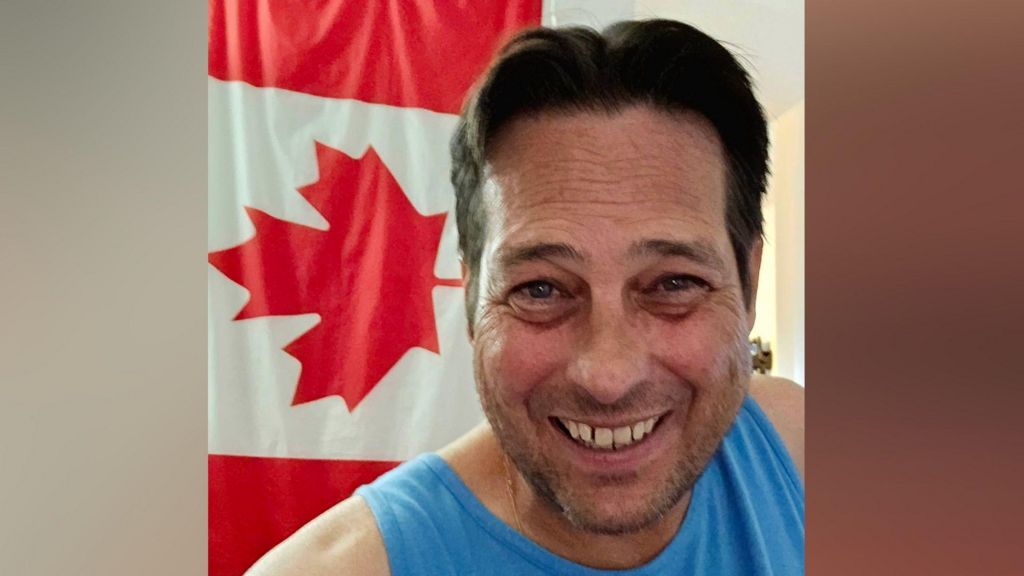
For affected applicants, the order has upended long-held plans and created deep emotional distress. Shawn Davis Mooney, who permanently relocated from California to Victoria, British Columbia, with his husband earlier this year after securing citizenship approval, called the notice devastating. Mooney, who applied after the new law passed, submitted 114 pages of documentation proving his great-great-grandparent was born in New Brunswick, and received urgent approval and his citizenship certificate in February. When he received the surrender letter signed by Registrar Peggy Sun, which claimed he had failed to submit sufficient qualifying documentation, he said he was left disoriented. “I had to read it three times, I couldn’t understand it,” Mooney told reporters. “The worst part is it’s making us feel like frauds, or we’ve done something wrong. Now I have no clear idea what my legal status in this country actually is.”
Another affected applicant, Rana Charron of Cleveland, Ohio, described the notice as one of the biggest disappointments of her life. Charron used available census records to prove her great-great-grandmother was a French-Canadian born in Quebec, since 19th century birth and baptismal records for her ancestor were no longer accessible. Her application was approved, and she received her physical citizenship certificate earlier this month, before being ordered to return it. “I was very excited to be formally Canadian,” Charron said. “Growing up, my family was very aware of our Canadian heritage… it mattered a lot to me. Now the experience has left me distrustful of the entire process. If they can just yank that back, what’s going to stop them from doing it two years from now, or 10 years from now, when people have really settled down and put roots?” Charron added that she still plans to fight to retain her citizenship, but the uncertainty has left her future plans in limbo.
Immigration lawyers say the situation is unprecedented and damaging to Canada’s reputation as a welcoming country for new citizens. Lisa Middlemiss, a Montreal-based immigration lawyer who represents several affected applicants, noted that Canadian law only allows citizenship revocation in very rare, exceptional circumstances, such as cases of proven fraud. All the people now receiving surrender letters, she emphasized, completed every step of the application process as required by current immigration law, and had already passed official review to receive their certificates. “This sends such a bad message for Canada,” Middlemiss said.
In a statement provided to the BBC, a spokesperson for Immigration, Refugees and Citizenship Canada defended the ongoing review, saying that the process is intended to guarantee all cases are evaluated consistently and in compliance with current law. The spokesperson confirmed that all applications were initially reviewed by trained immigration officers before certificates were issued, and that applicants who received surrender requests will have the opportunity to submit additional evidence to support their claim. If the review confirms an applicant is entitled to citizenship, the spokesperson noted, the certificate will be returned.
Still, for affected applicants like Mooney and Charron, the damage of the uncertainty has already been done, leaving their plans for work, family, and permanent residency hanging in the balance while they wait for a final decision on their status.