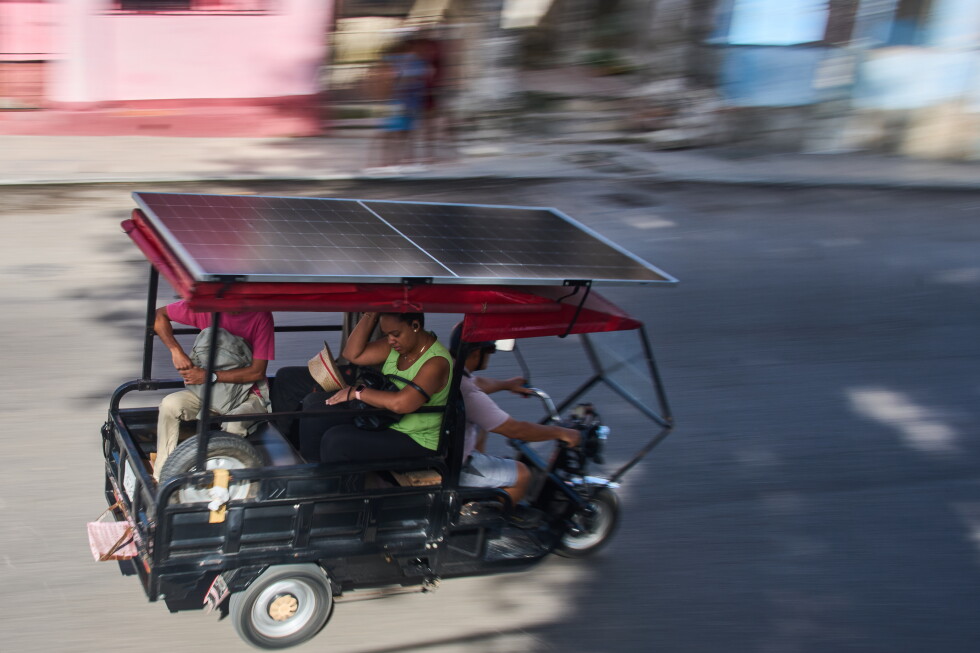
HAVANA – For decades, Cuba’s colorful vintage gasoline-powered cars were as much a symbol of the island nation as the blue waters of the Caribbean. Today, those iconic classics have nearly vanished from city streets, displaced by a new workhorse of daily transit: small electric tricycles, most originating from Chinese manufacturers. This quiet transportation revolution has been driven by a years-long economic crisis that has spiraled into a crippling fuel shortage, pushing hundreds of thousands of Cubans to adapt to new realities of movement and commerce.
The shift traces back to early 2025, when former U.S. President Donald Trump announced new threats of tariffs against any nation that exported oil to Cuba. The island has long produced just 40% of the petroleum it requires to meet domestic demand, relying on regular monthly shipments to keep its economy moving. Before the announcement, Cuba received an average of eight oil tankers per month. In the months following the threat, only one tanker arrived on its shores in late March. The sudden drop in fuel supplies sent shockwaves through every sector of Cuban life.
Public transit schedules were gutted, food and medicine shortages deepened, and rolling blackouts across the island exacerbated strains on an already fragile power grid that has struggled for decades. Even the vintage cars that once defined Havana’s streetscape were left idling, as gasoline became prohibitively expensive and nearly impossible to find.
It is in this context that compact electric tricycles have risen from a niche import to an indispensable part of daily life. Unlike the heavy smoke-belching vintage cars they replaced, these three-wheeled vehicles produce no tailpipe emissions, and can serve multiple purposes: many are used to cover fixed bus routes abandoned by state transit systems, haul commercial goods for small businesses, and even collect garbage in Havana neighborhoods. For Cubans who need to travel with heavy grocery loads, the tricycles fill a gap that has been left by collapsed public transit.
Most tricycles retail for between $2,000 and $4,000, a steep sum for Cubans where average monthly salaries hover around just $10 for state employees and $40 for private sector workers. Even so, thousands have found ways to obtain the vehicles: many sold their old gas-powered cars to raise funds, others received them as gifts from relatives living abroad where the tricycles are far cheaper, and small business owners have invested their profits to purchase the vehicles, calculating they can recoup the cost through fare and delivery revenue.
Major Chinese brands including Zonsen and Jinpeng dominate the market. Most units are purchased in third countries like Panama, then shipped to Cuba by relatives or independent importers for resale, running on gel or lithium batteries. Under a bilateral trade agreement with China, the Vedca brand is even assembled domestically on the island.
To adapt to the island’s persistent rolling blackouts and strained power grid, many tricycle owners have taken modifications into their own hands: outfitting their vehicles with small solar panels mounted on the seat awnings that allow them to recharge while parked or on the move, eliminating reliance on the unstable domestic grid. The solar panel upgrade adds roughly $500 to the total cost, but owners say the investment pays for itself quickly by letting them keep operating through fuel shortages and extended blackouts.
“There are so many tricycles in Havana that you can’t spend 10 minutes on a street without seeing countless numbers of them pass by,” said Carlos Álvarez, a 29-year-old engineer who runs a local workshop specializing in electric vehicle modifications, as he worked to install a solar panel mounting bracket on a customer’s tricycle.
Liecer de la Cruz, a 40-year-old tricycle owner, summed up the new reality: “This is how people get around now.” The rides are far from luxurious: slow, un-airconditioned, and often cramped, riders say, but it remains a far better option than walking for miles.
For Berta Ferrer, a 52-year-old store clerk who works four days a week in central Havana, the 500 Cuban peso (less than $1) fare for a tricycle ride is a major monthly expense, but one she cannot avoid. “If you can pay for it, you just take it; otherwise you can’t go anywhere,” she explained.
Ricardo Quintero, an engineer who uses his tricycle to haul fresh produce to the family vegetable stand he operates, said he believes the shift to electric three-wheelers is permanent. “I think this is here to stay,” he said.