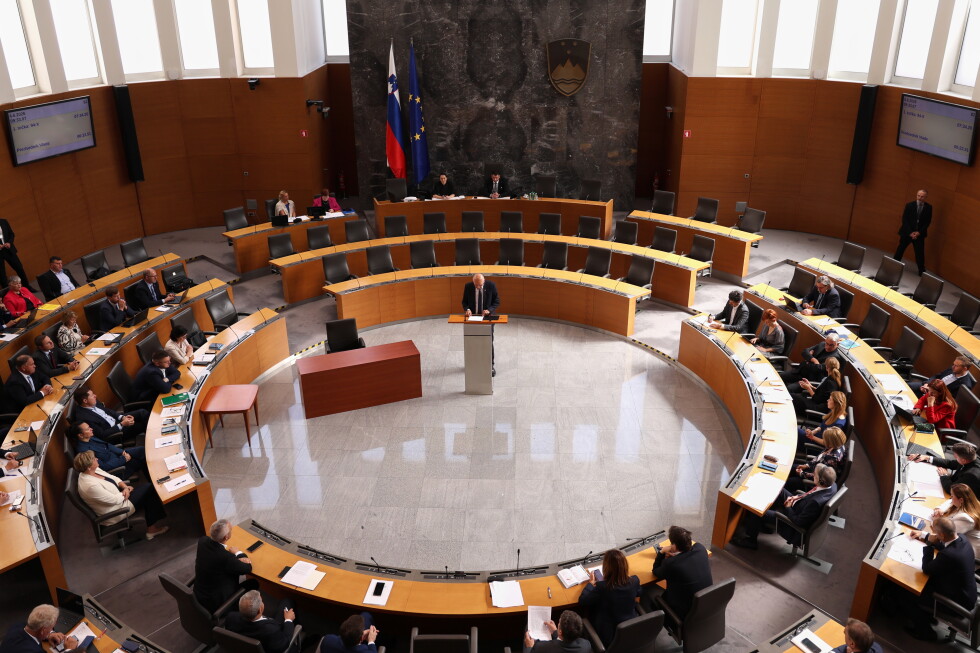
LJUBLJANA, Slovenia — In a decisive parliamentary vote that reshapes the political trajectory of this small Alpine European Union member state, Slovenia’s national legislature formally approved a new right-wing coalition government led by veteran populist leader Janez Jansa on Thursday.
The 90-seat national assembly cast 49 votes in favor of the new administration and 30 against, clearing the threshold for Jansa’s fourth term as prime minister. The approval wraps up months of political deadlock that followed the country’s March parliamentary election, which delivered no party an outright governing majority. Former liberal prime minister Robert Golob’s Freedom Movement secured the largest share of seats in the vote, but failed to build a cross-party coalition to take power.
Appointed prime minister-designate last month, the 67-year-old Jansa, leader of the populist Slovenian Democratic Party, negotiated a governing agreement with multiple other right-leaning parliamentary groups. His coalition also holds the backing of the non-establishment Truth party, a political faction that originated as an anti-vaccination protest movement during the COVID-19 pandemic.
A longstanding ideological ally of former Hungarian populist prime minister Viktor Orbán — who suffered a landslide election defeat in April — and an open admirer of former U.S. President Donald Trump, Jansa brings a well-documented conservative policy platform to the new administration. Like Orbán, Jansa took a hardline anti-immigration stance during the 2015 European migration crisis, and his 2020-2022 previous term was marked by widespread accusations that he undermined independent democratic institutions and restricted press freedom. Those controversies sparked large public protests across Slovenia and triggered formal scrutiny from EU institutional bodies.
In his first public remarks after the parliamentary vote, Jansa struck an inclusive tone, framing his new 15-member cabinet as a government “for all of Slovenia and for all generations.” He highlighted the accumulated governing experience across his ministerial team, laid out a policy agenda focused on cutting taxes and rolling back what he called an “incredibly overblown bureaucracy” that he says bloats Slovenia’s public sector compared to other EU economies. Jansa also extended an invitation to opposition parties to participate in cross-party cooperation on key national issues.
Notable appointments to the new cabinet include former Slovenian ambassador to the U.S. Tone Kajzer as foreign minister, and Jansa’s personal former lawyer Franci Matoz as interior minister — a pick that has already drawn public criticism from political and civil society groups. On foreign policy, Jansa, a staunch supporter of Israel, has repeatedly condemned the previous Golob government’s 2024 recognition of a Palestinian state, and the new administration is widely expected to repair the currently strained bilateral ties between Ljubljana and Jerusalem.
The March 22 election that paved the way for Jansa’s return to power was itself marred by allegations of foreign interference and corrupt campaign practices. Slovenia, a nation of roughly 2 million people, remains deeply politically divided between liberal and conservative blocs, a split that is expected to shape domestic debate through Jansa’s new term.