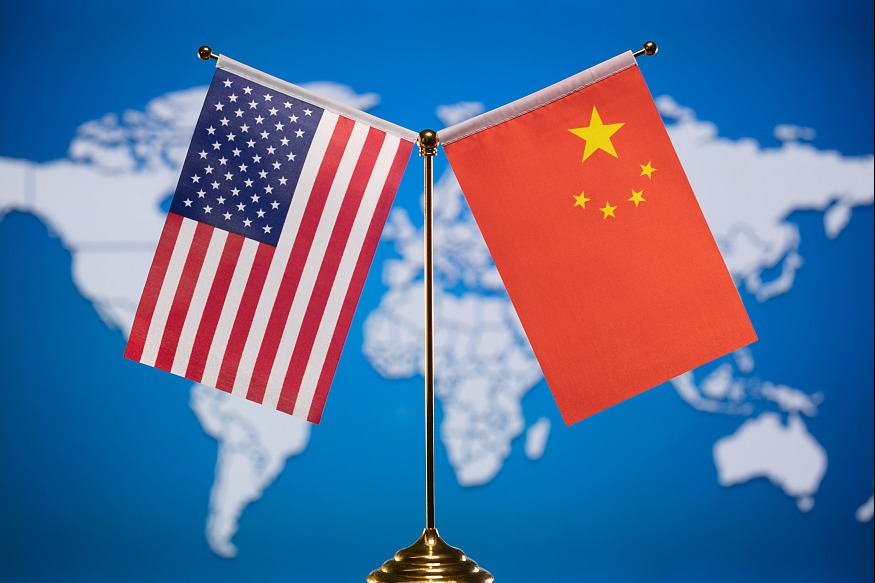
Against a backdrop of growing global volatility and cross-border uncertainty, relations between the United States and China – the world’s two largest economies – are undergoing a gradual evolution, with geopolitical friction, economic strategic interests, and high-level political timelines emerging as core determinants of the bilateral relationship’s long-term trajectory, experts concluded during a recent high-level discussion. The event, hosted by the New York-based National Committee on United States-China Relations, gathered senior policymakers and seasoned diplomatic veterans to dissect the current state of Sino-US engagement and its far-reaching implications for the entire global order.
Moderated by committee President Stephen Orlins, the discussion featured contributions from two veteran US diplomats: Stephen Biegun, former US Deputy Secretary of State, and Sarah Beran, the former Deputy Chief of Mission at the US Embassy in Beijing. The pair explored the shifting global geopolitical landscape and prospects for upcoming high-level exchanges between the two nations.
One of the most pressing topics on the agenda was the spillover effect of growing Middle East tensions on Sino-US ties, particularly as Washington has ramped up pressure on Iran, including sharp warnings over escalating activity in the critical Strait of Hormuz – a global chokepoint for 20% of the world’s daily oil trade. Beran noted that the widespread regional instability directly conflicts with China’s long-term strategic and economic interests. “This is a conflict that China would never have chosen for the United States to pursue,” she said, explaining that sudden volatility in global energy markets and disruptions to established global supply chains would carry severe cross-border consequences.
“The volatility coming out of the Middle East – the disruption to energy supplies, petrochemical production, and global trade and investment – does not serve Beijing’s long-term goals,” Beran added. She also acknowledged that China has proactively taken steps in recent years to boost its economic resilience, including diversifying its global energy import partners and building out large strategic energy reserves, to help cushion the impact of sudden external shocks like Middle East supply disruptions.
Biegun argued that both Washington and Beijing share a common incentive to push for de-escalation of the Middle East conflict before the planned upcoming summit between the two nations’ leaders. “Expectations in Washington are that President Donald Trump wants this conflict resolved before he boards a plane for Beijing,” Biegun said. The planned Sino-US leadership summit is widely viewed by observers on both sides as a critical opportunity to reset and stabilize bilateral relations, even though most analysts remain cautious about expectations of major, transformative breakthroughs at the meeting.
Beran emphasized that both sides are already dedicating significant resources not only to negotiating the substantive agenda of the summit but also to shaping how the event will be perceived by global audiences. “A summit is a one-of-a-kind moment that can motivate both sides to move stalled initiatives forward,” she said, stressing that ongoing pre-summit working-level channels are critical for addressing complex issues that extend far beyond bilateral trade tensions.
Beyond the immediate timeline of the summit and Middle East tensions, speakers underscored that Sino-US relations are defined by deep, persistent structural challenges rather than temporary short-term fluctuations. Beran framed the current moment as a period of transition, marked by what she called a “tactical truce” or temporary stalemate, where both sides are actively leveraging strategic and economic choke points to advance their respective interests.
She explained that the long-term trajectory of the relationship will depend on a web of interconnected variables, including shifts in the global balance of power, domestic economic performance in both countries, and the lasting strategic fallout of ongoing conflicts like the Iran standoff. Beran added that the broader international context – particularly alliances between the US and its global partners – will also shape bilateral dynamics, noting that growing divisions between Washington and its allies in Europe and Asia have raised serious concerns. “Fissures in the trans-Atlantic relationship, and between the US and its allies in Asia, will be extremely difficult to repair,” she said, adding that these internal divisions will weaken coordinated US policy toward China.
The discussion also turned to bilateral cross-border investment, a sector that remains both a key untapped opportunity and a persistent point of friction in the current political climate. Both speakers agreed that pervasive policy uncertainty is the single largest barrier to expanded bilateral investment. Beran pointed out that Chinese firms are increasingly cautious about committing capital to the US market without ironclad guarantees of long-term policy consistency. “If you are a Chinese enterprise, you want certainty that your investment will remain protected and welcome not just through the next midterm elections, but through the next presidential transition,” she explained.