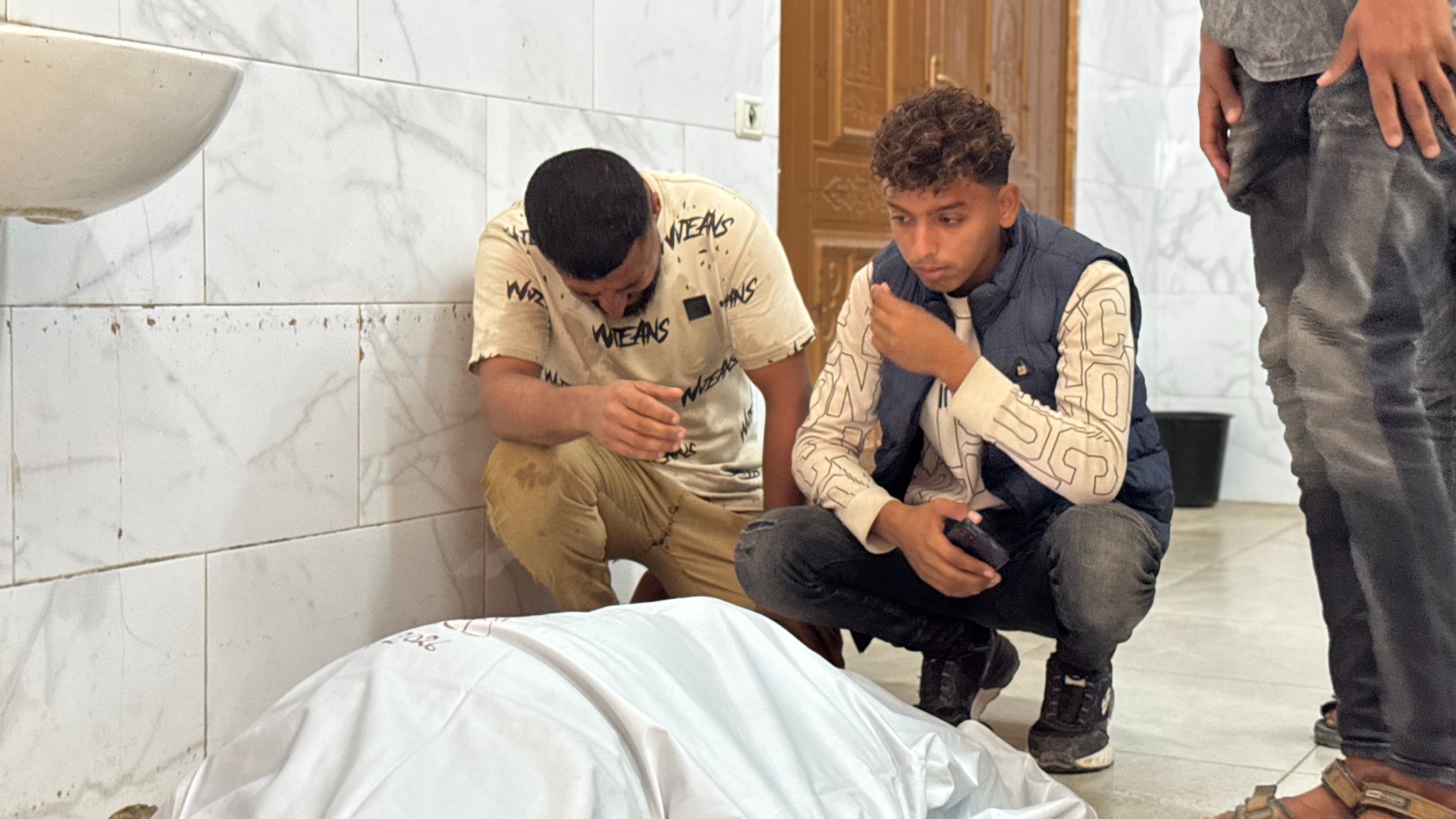
On November 5, 2025, 54-year-old Palestinian woman Noura Sheikh al-Eid walked away from the Palestine Red Crescent departure center in southern Gaza’s Khan Younis, having just said a temporary goodbye to her ailing husband Atallah Abu Athra and 18-year-old daughter Hiba. The pair had secured rare approval to cross into Egypt: Atallah, who suffered from advanced diabetes and heart disease, had already undergone amputations of five toes and part of his foot after developing life-threatening gangrene, while Hiba, fresh off completing her secondary school exams, was registered as his medical companion, with a long-held shared family dream of pursuing a medical degree abroad that her mother had nurtured for years. As the family prepared for the pre-dawn journey to the departure point, Noura’s 46-year-old brother Mohammed Sheikh al-Eid urged her to skip the long walk and say her goodbyes from their displacement tent, but she refused, determined to wait until the bus carrying her husband and daughter pulled away. After kissing Hiba and whispering her final wish, “Come back to us as a doctor,” Noura began the trek back to their makeshift tent, accompanied only by her 18-year-old daughter Rula. Unable to find a working vehicle for the return trip, the pair accepted a free ride from a local man with a donkey-drawn cart, but the rough, war-ravaged road proved too strenuous for the animal to carry both of them. The driver offered to take the unwell, diabetes-stricken Noura the rest of the way, while Rula walked alongside the cart. Moments after Noura climbed aboard, Rula heard what she initially mistook for a small popping noise or a thrown ball, before watching her mother’s teeth clatter to the ground and blood gush from her mouth as she collapsed off the cart. Rula first assumed her mother had slipped into a severe diabetic coma, but bystanders rushed Noura to the nearby British field hospital in al-Mawasi, where a medical examination revealed a fatal bullet wound: the projectile had entered beneath her lower jaw and exited behind her right ear, fired by an Israeli sniper positioned near the so-called “yellow line” – the demarcation boundary for areas under Israeli military control across Gaza. A post-mortem photograph verified the small entry wound beneath her lower lip, consistent with the sniper fire. Medical staff rushed Noura to the resuscitation room, but she was pronounced dead shortly after arrival, her body already wrapped in a burial shroud by the time Rula was allowed into the treatment area. The killing is part of a documented pattern of unprovoked Israeli fire on Palestinian civilians across Gaza in the months following the October 2025 ceasefire agreement. According to data from the United Nations’ Independent International Commission of Inquiry on the Occupied Palestinian Territory, Israeli forces have killed at least 1,600 Palestinians across Gaza since that ceasefire took effect, pushing the total death toll from the ongoing conflict past 74,000. Between October 10, 2025, and early April 2026 alone, 196 Palestinians – including 18 women, 32 boys, and 11 girls – were shot dead near the yellow line, with indiscriminate gunfire coming from soldiers, military vehicles, armored lifters, and surveillance quadcopters even in civilian areas far from the demarcation boundary, as residents attempted to carry out routine daily tasks. Noura’s body was transported to Nasser Hospital in Khan Younis for burial arrangements, and she was laid to rest in the area where she had lived as a displaced person for more than two years, far from her original home in Rafah. Her husband and daughter, already in Egypt for treatment, remained unaware of the tragedy until the following day, when Hiba stumbled on local news reports of the killing after receiving an unexplained condolence message online. The family was too distraught to answer her frantic calls, eventually asking relatives in Egypt to visit and comfort her. In the months after Noura’s death, Rula has remained in a state of profound shock, unable to speak at length or shed tears over her mother’s passing. Noura’s three remaining unmarried daughters – 18-year-old Rula, 16-year-old Saba, and 14-year-old Ruwaida – now live alone in the family’s displacement tent, with their uncle arranging for his wife to stay with them most days for safety and support. Mohammed Sheikh al-Eid, who already lost his 14-year-old son to starvation while the boy was attempting to collect humanitarian aid during Gaza’s widespread famine, told reporters from Middle East Eye that his grief over his sister has eclipsed even that earlier devastating loss, as she had raised him from childhood after their own parents passed, acting as his second mother.
She saw her husband and daughter off to Egypt. An Israeli sniper killed her on the way home