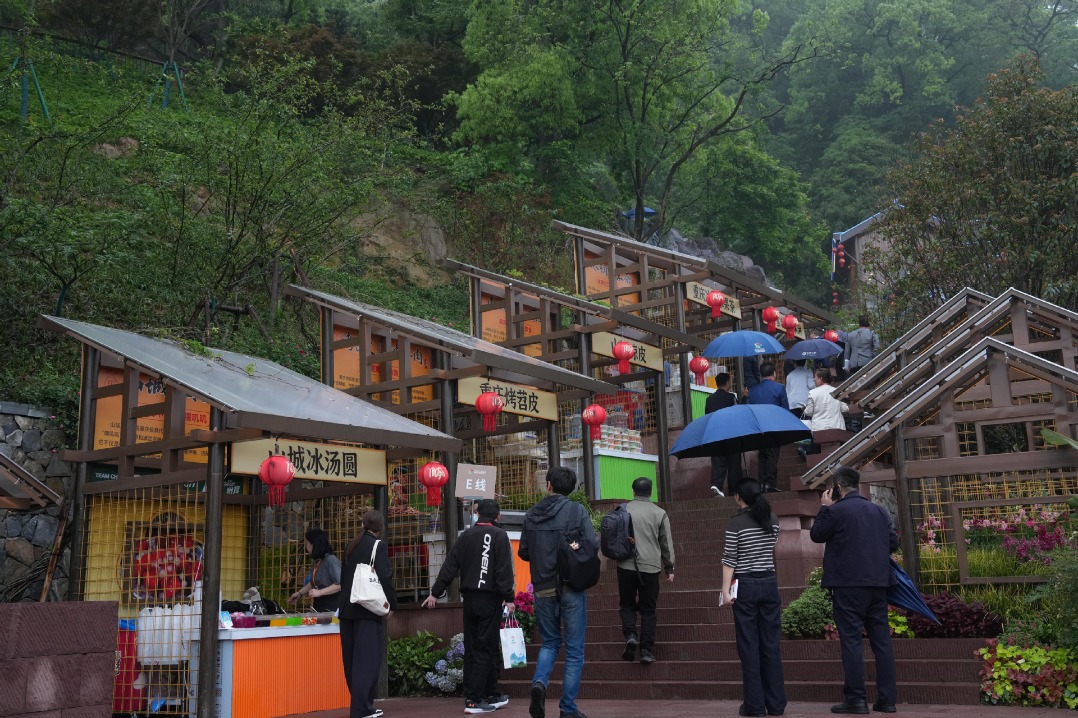
The 15th iteration of the China International Garden Expo kicked off officially on Wednesday in Wenzhou, a coastal city in East China’s Zhejiang province. This opening marks a historic milestone for the event, which was first launched in 1997: it is the first time the expo has ever been hosted within Zhejiang’s borders.
Speaking at the expo’s opening ceremony, Zhejiang Governor Liu Jie highlighted the natural alignment between the event and the province’s long-term development priorities. For years, Zhejiang has prioritized the construction of the ‘Beautiful Zhejiang’ initiative, a comprehensive campaign that expands accessible green public spaces and advances ecological conservation across the region. Liu noted that these ongoing investments have already delivered tangible improvements to public well-being, noticeably boosting residents’ overall sense of fulfillment and happiness. He added that Zhejiang will leverage the Garden Expo as a catalyst to further elevate traditional and contemporary garden culture, and contribute new progress to China’s modernization model centered on harmonious coexistence between humanity and nature.
Convenience for visitors stands out as a key design feature of this year’s expo. The main venue, Wenzhou Garden Expo Park, sits less than 800 meters from Wenzhou South Railway Station — closer than any previous main venue in the expo’s 29-year history. A purpose-built landscaped skybridge connects the station directly to the park entrance, allowing guests to reach green space within 10 minutes of disembarking from their trains, giving both local residents and out-of-town visitors instant access to the expo’s natural and artistic offerings.
At the core of the main park sits Ouyue Garden, a 12,500-square-meter landscape installation that draws inspiration from a panoramic landscape scroll created by Wang Zhenpeng, a court painter from China’s Yuan Dynasty (1271-1368). Through careful artistic abstraction, the garden reinterprets the poetic depictions of Wenzhou’s natural scenery and vibrant historical daily life captured in the centuries-old artwork, blending traditional cultural heritage with modern landscape design.
Qin Haixiang, Vice-Minister of China’s Ministry of Housing and Urban-Rural Development, used the opening to outline the nation’s evolving approach to urban development. China’s urbanization process, he explained, has shifted from a phase of rapid expansion to an era of steady, high-quality growth that prioritizes upgrading existing urban spaces rather than building new ones. The nation’s current goal, Qin noted, is to advance the development of modern, people-centered cities that are innovative, livable, ecologically beautiful, resilient, culturally vibrant, and digitally smart — changes designed to make daily urban life more convenient, comfortable, and enjoyable for all residents.
Organizers emphasized that the 2026 expo is designed to be a truly public, ‘people’s expo’, with a distributed structure that includes one main venue, 13 secondary sub-venues, and 49 exhibition sites spread across all 12 of Wenzhou’s counties and districts, bringing garden art and green space directly to communities across the city.
The expo also features robust international participation: 11 dedicated international city gardens showcase landscape designs from global partners including Liverpool, the United Kingdom, the Syrdarya region of Uzbekistan, and Ishinomaki, Japan. In a notable first for China, the International Federation of Landscape Architects (IFLA) has opened its first ever themed garden in the country at the Wenzhou expo, and will establish a permanent ‘IFLA International Cooperation and Exchange Center’ at the site to foster global collaboration in landscape architecture.
Designed to be accessible to all, the 100-day expo offers free entry to all visitors, and will run through July 2026.