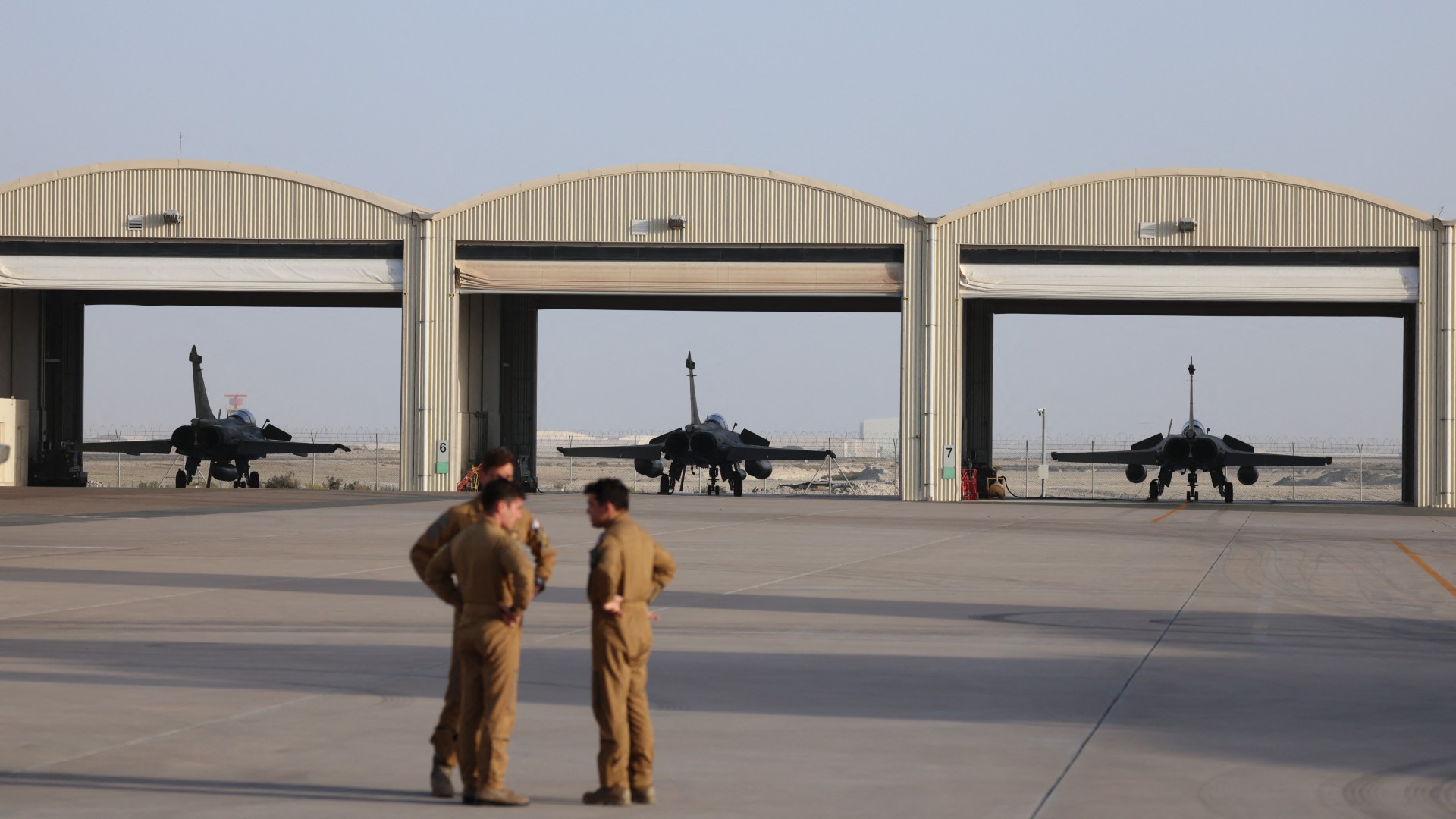
Against a backdrop of escalating regional conflict that has inflicted severe economic and security damage on the United Arab Emirates, a senior Emirati academic with close ties to the country’s leadership has sparked renewed debate over the future of U.S. military presence in the Gulf by calling on Abu Dhabi to shutter all American bases, arguing they have become a liability rather than a strategic advantage.
Abdulkhaleq Abdulla, one of the UAE’s most prominent public scholars, first shared the position in an interview with Reuters, before doubling down on the claim in a post on the social platform X on Sunday evening. Abdulla argued that the UAE has evolved beyond its reliance on U.S. security guarantees, pointing to the country’s capable defense against waves of Iranian attacks in recent months. “The UAE no longer needs America to defend it, as it has proven during the Iranian aggression that it is capable of defending itself with distinction,” Abdulla wrote. He added that the UAE’s only remaining priority for its defense partnership with Washington is access to the United States’ most advanced military hardware, not permanent basing for foreign troops. “Therefore, it is time to think about closing the American bases, as they are a burden and not a strategic asset,” he concluded.
The proposal comes amid a wider reevaluation of U.S. military posture across the Middle East. According to data from the Council on Foreign Relations, the U.S. maintains at least 19 military sites across the region, eight of which are classified as permanent installations. Prior to the outbreak of the current regional war, U.S. defense officials estimated there were roughly 40,000 American troops deployed across the Middle East. Around 3,500 of those personnel are stationed in the UAE, which hosts the strategic al-Dhafra Air Base, a joint facility used by the U.S., UAE, and French militaries.
The current conflict, which began on February 28 with joint Israeli and U.S. strikes on Iran, has triggered retaliatory attacks from Tehran targeting Israel and Gulf states that support Washington’s regional agenda. The UAE has borne the brunt of these retaliatory strikes, facing hundreds of drone and missile attacks since the war began. By late March, Iranian forces had launched 398 ballistic missiles, 1,872 drones, and 15 cruise missiles targeting positions across the UAE.
While the vast majority of incoming projectiles have been intercepted by UAE defense systems, falling debris has still caused damage to key civilian and economic infrastructure in major Emirati cities including Abu Dhabi and Dubai. Affected sites include iconic landmarks such as the Burj Al Arab hotel and the Palm Jumeirah development, as well as critical infrastructure like Dubai International Airport and the Fujairah oil industrial zone.
Beyond physical damage, the wave of attacks has triggered the UAE’s most severe economic crisis in decades. The country’s economy is built largely on four sectors that are acutely vulnerable to security instability: tourism, real estate, logistics, and international finance. Over the past few weeks, combined market capitalization on the Dubai and Abu Dhabi stock exchanges has fallen by more than $120 billion. More than 18,400 commercial flights to and from Emirati airports have been canceled as airlines reroute services to avoid the conflict zone. By the end of March, Dubai’s key real estate index had dropped by at least 16% since the start of the war, erasing billions of dollars in property value as investor and buyer confidence plummeted.
This report was originally published by Middle East Eye, a media outlet that provides independent, on-the-ground coverage of the Middle East, North Africa, and broader global affairs.