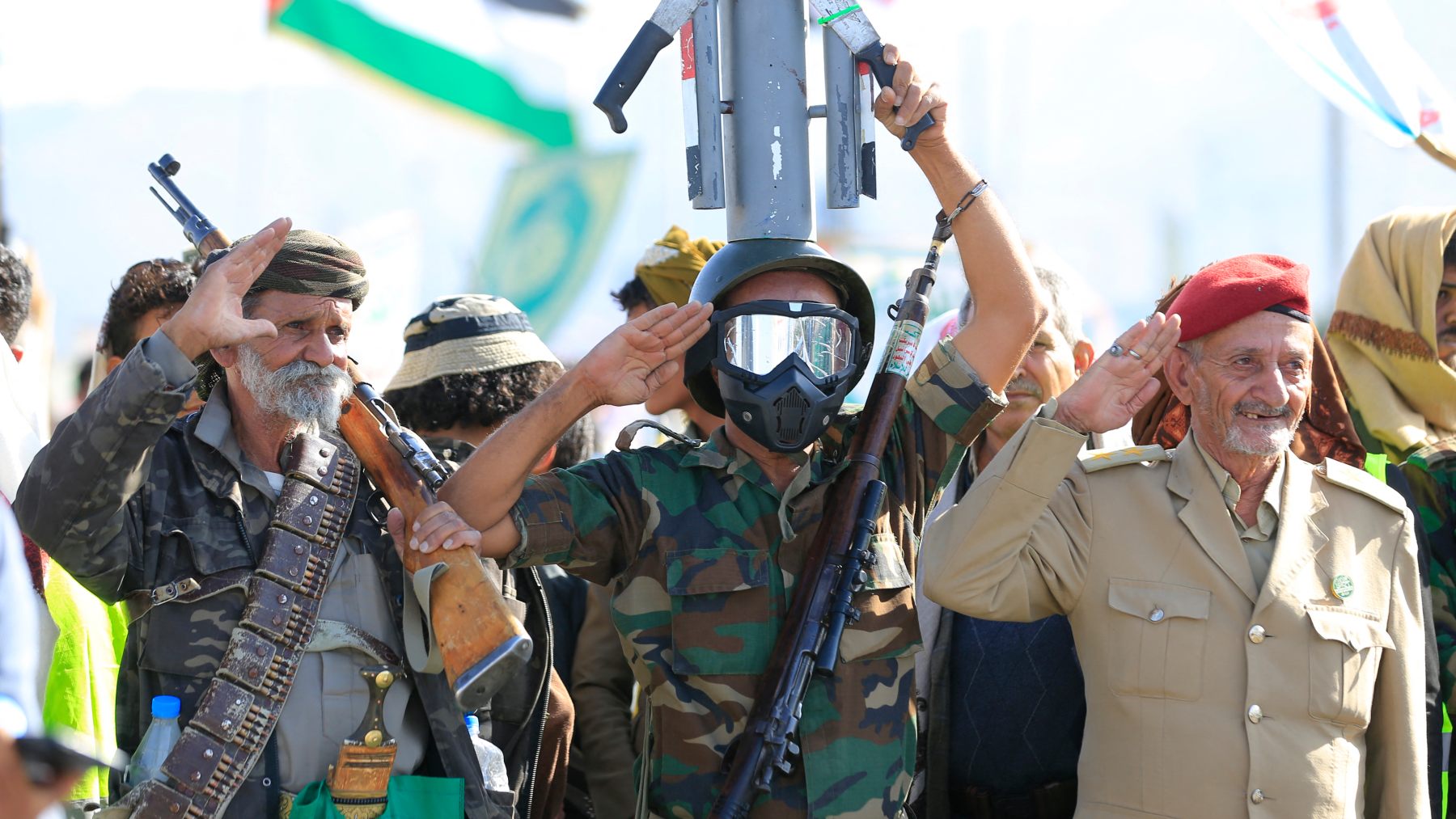
A significant military shift has unfolded across Yemen’s volatile southern coastal front, as Saudi Arabia-aligned Southern Armed Forces — units fighting under the banner of the internationally recognized Yemeni government — announced a full redeployment of troops from key positions overlooking the strategically irreplaceable Bab al-Mandab Strait on Sunday. The withdrawn positions include Dhubab airport and adjacent coastal zones directly adjacent to the narrow waterway, a move the government coalition framed as a deliberate tactical adjustment rather than a battlefield defeat. In an official public statement, Southern Armed Forces leadership outlined that the redeployment was prioritized to shore up defensive perimeters around the Yemeni interim capital Aden, reinforce frontline positions in nearby Lahij governorate, and redirect operational capacity to break the weeks-long Houthi siege of Taiz, Yemen’s third-largest urban center. A senior source within the Yemeni presidential office, speaking to regional outlet Asharq Al-Awsat, further emphasized that the troop repositioning was designed to seize more geographically advantageous strategic locations, and did not represent a full abandonment of the Red Sea coastal front. However, the Houthi movement, formally known as Ansar Allah, offered a sharply contrasting account of the developments via its state-run Saba news agency. A Houthi military source claimed their fighters had executed a 60-kilometer flanking operation across the rugged mountainous terrain spanning Taiz and Lahij governorates, severing all rear supply lines for the Saudi-backed government units and forcing their chaotic retreat from Dhubab airport, the outskirts of Kahbub, and all surrounding positions near Bab al-Mandab. The redeployment marks a tangible operational setback for the Saudi-led coalition and the internationally recognized Yemeni government, which had launched a Saudi air power-supported counteroffensive in October to recapture Red Sea coastal territory seized by Houthi fighters starting in September, when the group overran large swathes of the western coast including key positions near the port city of Mokha. While government forces initially retook footholds around Dhubab and the strait, they were never able to dislodge Houthi units from Mokha and other critical coastal strongholds. The shift in control hands the Houthi movement unprecedented leverage over the Bab al-Mandab Strait, one of the world’s most economically vital maritime chokepoints that connects the Red Sea to the Gulf of Aden, serving as a key transit artery for vessels heading to and from the Suez Canal, a route that carries roughly 12% of global seaborne trade. Yemeni government military spokesman Colonel Majed al-Nuzaili has since issued a public appeal to the international community to step in and support military operations to restore full government control over the strait, warning that unregulated Houthi dominance of the waterway poses severe, widespread risks to global maritime security and cross-border commerce. Parallel to the coastal front developments, the Saudi Press Agency reported on Sunday that the Saudi-led coalition had intercepted and destroyed two explosive-laden drones launched by Houthi forces targeting the Mecca region, an unrelated security incident separate from the Bab al-Mandab fighting. The recent escalation of hostilities has triggered a catastrophic humanitarian toll across southern Yemen: the United Nations High Commissioner for Refugees has confirmed active fighting has reached the Kharaz refugee camp in Lahij, putting an estimated 9,600 displaced civilians at immediate risk and further blocking already restricted humanitarian aid access. Since widespread clashes erupted across the region in August, nearly 330,000 Yemenis have been forced to flee their homes, with 48,000 new displacements recorded in just the most recent weeks. Trapped under Houthi siege for over a month, residents of Taiz have been cut off from incoming aid shipments, with strict movement bans preventing most civilians from escaping the active combat zone.