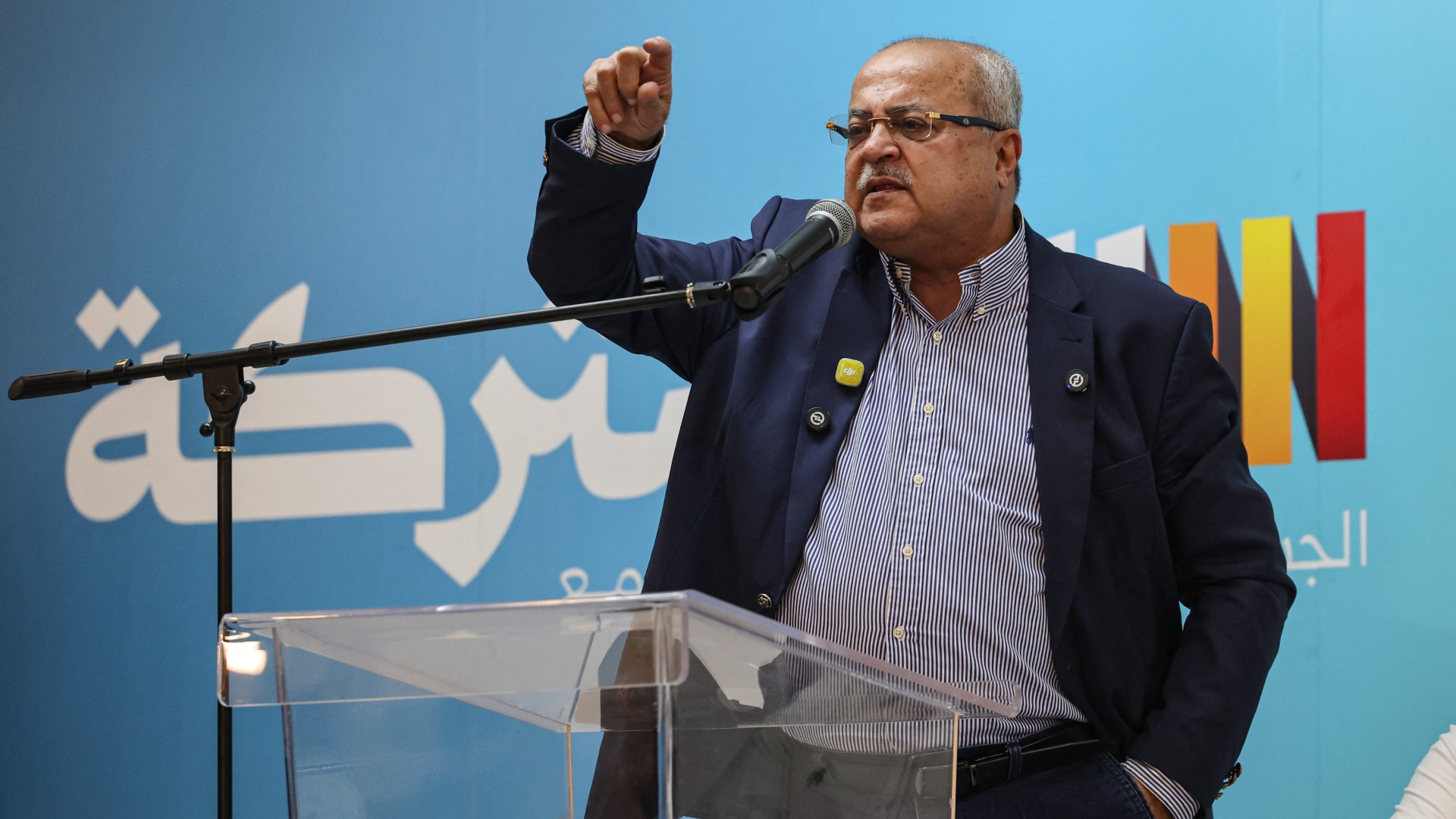
In a landmark move following last month’s Israeli legislative elections, veteran Palestinian-Israeli lawmaker Ahmad Tibi was formally named one of nine temporary deputy speakers of the Knesset, Israel’s 120-seat parliament, on a Monday vote. The appointment came on the heels of unprecedented electoral gains for political blocs representing Palestinian citizens of Israel, who now hold a combined 19 parliamentary seats, up from previous cycles, after the October 27 national poll.
The Knesset’s influential Arrangements Committee greenlit the full roster of temporary deputy speakers via a narrow 13-9 vote, following a fiery, hours-long debate that exposed deep partisan rifts across the legislature. The full approved list of temporary deputies spans nearly every major political faction: alongside Tibi, who leads the pan-Arab Joint List alliance and the Ta’al party, the group includes United Arab List (Ra’am) MP Walid Taha, B’Yachad MP Eitan Ginzburg, Democrats MP Yair Fink, Yisrael Beytenu MP Oded Forer, United Torah Judaism MP Yitzhak Pindrus, Likud MP Yaakov Bardugo, far-right Otzma Yehudit MP Limor Son Har-Melech, and Shas MP Michael Malkieli. These temporary officeholders will retain their posts until a formal, permanent slate of deputy speakers is confirmed by the full Knesset in subsequent votes.
The debate leading up to the committee vote was marked by sharp, hostile pushback from hardline members of former prime minister Benjamin Netanyahu’s right-wing bloc. Likud lawmaker Ofir Katz took to the floor to denounce the appointment process, claiming the body was “normalising terror supporters” by advancing Tibi’s placement in a senior parliamentary role, while Otzma Yehudit MP Yitzhak Kroizer framed the decision as a dangerous “Rubicon that must not be crossed” for the Israeli legislature.
Moments after the vote was finalised, Tibi spoke to Al Jazeera to frame the appointment as a hard-won, legitimate victory for his Joint List alliance, which secured 11 seats in the October election. He went on to note that Netanyahu’s Likud party and far-right National Security Minister Itamar Ben Gvir had waged a fierce campaign of reckless incitement to block his appointment, but had ultimately failed to derail the outcome. “The Joint List will be represented across all Knesset committees, as is our democratic right,” Tibi confirmed, outlining his faction’s upcoming parliamentary priorities.
The appointment drama unfolds against a backdrop of explosive pre-election misconduct allegations targeting Netanyahu and his inner circle, which Tibi had called for a full criminal investigation into just one day prior, on Sunday. The call followed an investigative exposé from Israel’s Channel 12, which alleged that Netanyahu’s chief of staff Ido Norden reached out directly to the Israeli police commissioner’s office in the lead-up to polling day, claiming three Ra’am activists operating in southern Israel were in possession of large caches of cash and voter incentive vouchers intended to sway electoral outcomes. Police subsequently raided the activists’ residences and took them into custody, with the report noting the operation relied on intelligence from a source who was a former employee of the prime minister’s own office. The Channel 12 investigation further alleged that Shin Bet chief David Zini had sought formal approval to wiretap the personal phones of five Arab-Israeli lawmakers on election day itself, a request that Israel’s attorney general ultimately rejected out of hand. Tibi posted on social media platform X on Sunday to emphasise that “No one is above the law, not even Netanyahu,” while Netanyahu’s Likud party has issued a full, categorical denial of all the misconduct claims levelled against the prime minister and his staff.
This is far from Tibi’s first tenure in the deputy speaker role: first elected to the Knesset in 1999, he previously served as deputy speaker continuously from 2006 through 2022, and follows a long line of Palestinian and Arab-Israeli lawmakers to hold the senior post, including Ra’am party leader Mansour Abbas, who occupied the position between 2020 and 2022.
The high-stakes appointment comes at a critical juncture for Israeli government formation, as neither Netanyahu’s right-wing bloc nor the centrist alliance led by former IDF chief of staff Gadi Eisenkot managed to cross the 61-seat threshold required to secure a governing majority after the October vote. President Isaac Herzog formally tasked Eisenkot with forming the next governing coalition earlier this month, and the Joint List has already announced its formal backing for Eisenkot’s efforts, meaning the 19 combined seats held by the two Arab-led factions now hold decisive leverage over the weeks of coalition negotiations ahead.