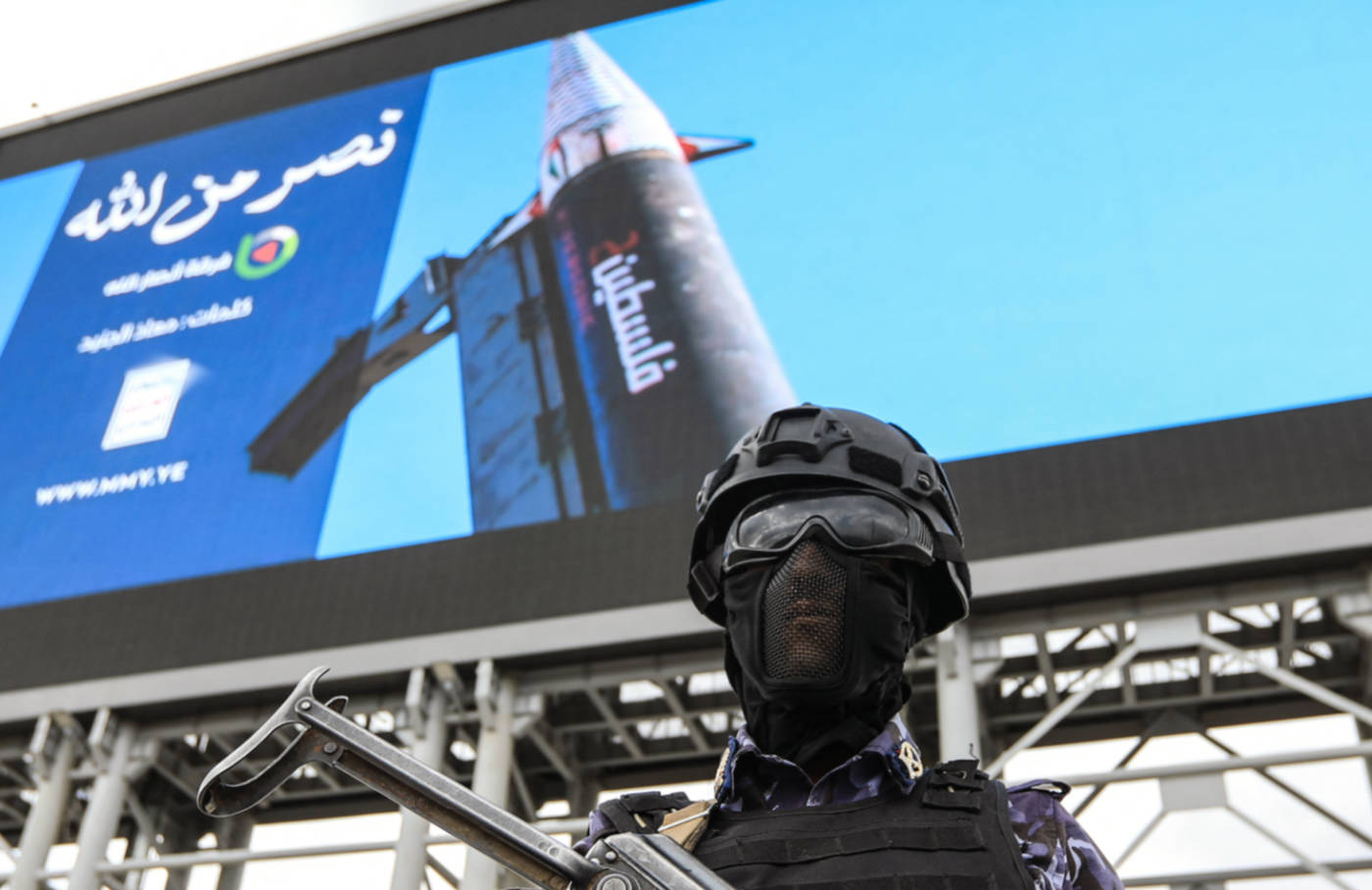
Yemen’s long-running civil war has entered a dangerous new phase following a sweeping Houthi offensive that has sent shockwaves through global energy markets and raised urgent questions about the militia’s growing military clout. What was once widely dismissed as an irregular ragtag fighting force has evolved dramatically over two decades into a well-armed militia capable of projecting power across the Middle East and disrupting one of the world’s busiest maritime trade chokepoints.
Originally founded in 1994 by Zaydi Shia cleric Hussein al-Houthi under the official name Ansar Allah (Helpers of God), the movement emerged to demand greater political autonomy for Yemen’s densely populated northern region. Following Hussein al-Houthi’s death, leadership passed to his brother Abdul-Malik al-Houthi, who led a series of insurgencies against former Yemeni president Ali Abdullah Saleh throughout the 2000s. The group seized Yemen’s capital Sanaa and most of the country’s northwest between 2014 and 2016, expanding its fighting ranks from an estimated 30,000 fighters in 2015 to roughly 350,000 by 2024, according to the most widely cited projections.
Since 2023, the Houthis have launched more than 100 attacks on commercial vessels transiting the Red Sea and Gulf of Aden, framing the operations as a response to Israel’s military campaign in Gaza. Most targeted ships are linked to Israel or Saudi Arabia, whose 2022 airstrike on Sanaa International Airport collapsed a UN-brokered informal ceasefire that had left the Houthis in control of 30% of Yemen’s territory, home to 80% of the country’s population, under a continuing Saudi-led blockade. Following the end of the ceasefire, the Houthis formally declared a maritime blockade and resumed attacks on shipping in the strategic Bab el-Mandeb strait, the 26-kilometer-wide chokepoint that connects the Gulf of Aden to the Red Sea and Suez Canal, a critical route for 12% of global maritime trade and roughly 30% of global oil shipments.
While the Houthis operate as an independent actor, multiple international analysts and UN reports confirm the group has received substantial military support from Iran, which counts the Houthis as a core member of its regional Axis of Resistance network alongside Hamas and Hezbollah. Iranian support was historically overseen by Quds Force commander Qasem Soleimani, up until his 2020 assassination in a U.S. drone strike. More recently, Russia has also cultivated ties with the militia: Middle East Eye revealed in August 2024 that Moscow has provided targeting intelligence and deployed military intelligence officers to Yemen, and has repeatedly used its UN Security Council veto to block proposed arms embargoes on the group. Even commercial open-source tools have aided the Houthis’ operations: the group uses freely available maritime traffic data from public intelligence platforms to locate target vessels, and AI firm Anthropic confirmed in September 2024 that the militia has used its Claude large language model to develop missile navigation systems.
Contrary to early assessments of the group as an undisciplined militia, the Houthis now maintain a diverse, increasingly advanced arsenal that ranges from small arms to medium-range ballistic missiles capable of striking targets 2,000 kilometers away. The militia has already used these missiles to hit targets in northern Israel, including Tel Aviv’s Ben Gurion Airport, putting most of the Middle East within striking range. Analysts widely agree that the Houthis lack the domestic industrial capacity to produce these complex systems indigenously, pointing to direct supply and component provision from Iran. The group claims to possess the Palestine-2, a hypersonic precision-guided missile with a 2,150-kilometer range that can travel at Mach 5, but independent analysts have cast doubt on these assertions, noting that only a handful of major world powers currently operate operational hypersonic weapons, none matching the claimed specifications. The militia also fields the Hatem-2, a documented variant of Iran’s advanced Kheibar Shekan medium-range ballistic missile with a 1,450-kilometer range and 500-kilogram warhead.
Alongside longer-range systems, the Houthis have repurposed older weapons seized from retreating pro-government forces, including decades-old Soviet-era air-to-air and surface-to-air missiles converted into anti-ship ballistic missiles. They have also deployed anti-ship cruise missiles (based on Iran’s Quds series, with a range of at least 800 kilometers) and even small anti-tank missiles to strike ships in the narrow Bab el-Mandeb strait, with analysts noting that in many cases components are shipped from Iran as ready-to-assemble kits for final construction inside Yemen.
Traditional heavy armour once formed a core part of the Houthi ground force, but most Soviet-era tanks and armoured vehicles inherited from the Yemeni military after the 2014 seizure of Sanaa have been destroyed by Saudi-led coalition airstrikes. This has pushed the group to rely heavily on drones for offensive operations: models including the Jaffa and Samad can reach targets over 2,000 kilometers away and have been repeatedly used to strike Israel, though most are intercepted by Israeli air defences such as Iron Dome. Recent evidence also suggests the Houthis are developing domestically assembled hydrogen-powered drones that can carry larger payloads over longer distances, with core components still imported from Iran. For maritime targeting, drones serve as a low-cost political tool rather than a decisive weapon, analysts note: while they rarely sink large commercial vessels, they create enough risk to push up insurance costs and divert trade routes, achieving the Houthis’ goal of disrupting global shipping. As one of the world’s most heavily armed societies, Yemen also has an abundant supply of small arms for Houthi infantry: many men in Houthi-controlled areas carry unregistered firearms, with large stockpiles of Iranian-supplied machine guns, rocket-propelled grenades, and even German-made G3 rifles seized from pro-government forces during battlefield victories.
The Houthis remain severely limited in traditional air and naval capabilities. Intelligence assessments suggest the militia only possesses one fighter jet, a 1970s-vintage U.S.-built Northrop F-5 seized from pro-government forces that has not been publicly sighted in more than two years and is likely destroyed. The group does operate a small number of aging Soviet-era helicopters, which it used during the high-profile November 2023 hijacking of the container vessel Galaxy Leader in the Red Sea. Without a traditional navy, the Houthis have built a fleet of uncrewed explosive drone boats, most purpose-built in Yemen using commercially available boat engines imported from China, Japan, and Europe with little regulatory restriction. This creates a unique challenge for global arms control, analysts note: restricting components would harm Yemen’s civilian fishing industry, which relies on the same parts.
The unknown size of the Houthi arsenal remains one of the biggest sources of regional uncertainty. “We really know next to nothing about the numbers of each missile system that they have, until they fire them,” explained Wolf-Christian Paes, a global security consultant and senior fellow at the International Institute for Strategic Studies. Despite this uncertainty, analysts agree that foreign backing, particularly from Iran, has been transformative for the Houthi movement. “Iranian support has been crucial to the buildup of Houthi military capabilities,” said Fabian Hinz, senior analyst at Conflict Armament Research (CAR). “Tehran has managed to secure a seemingly steady flow of technology to the Houthis and has proven willing to share even some of its most advanced capabilities, such as the Kheibar Shekan.”
As Houthi attacks on Red Sea shipping continue, the rapid expansion of the group’s military footprint has escalated the Yemeni civil war and created sustained disruption for global energy and trade markets, cementing the militia’s role as a major disruptive force in Middle East security.