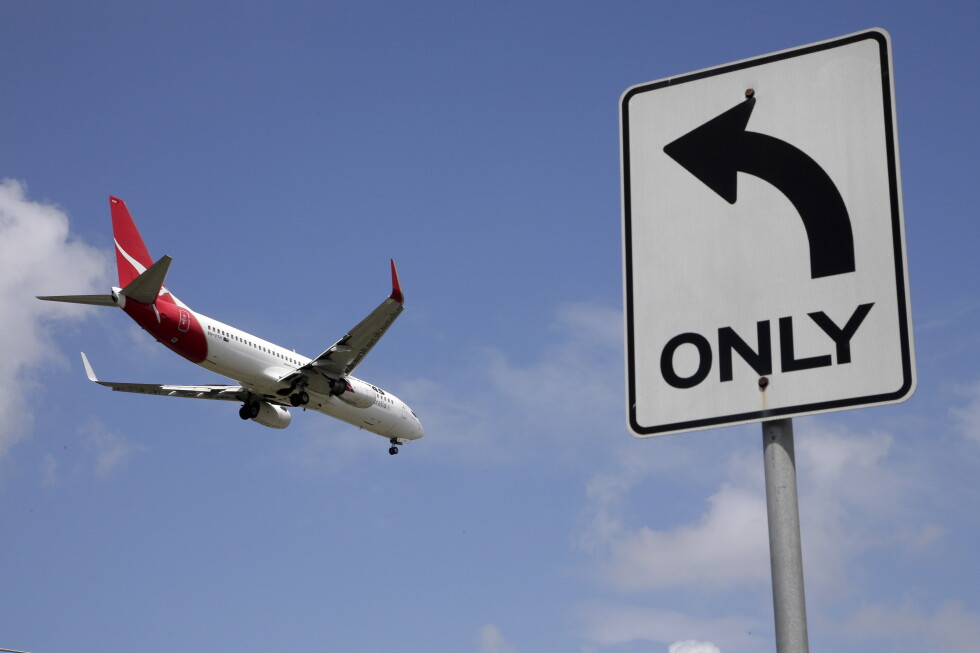
Australia’s flag carrier Qantas Airways is set to make aviation history next year, when it launches what will be the longest regularly scheduled nonstop commercial flight on the planet: a nonstop service connecting London and Sydney that will clock in at between 19 and 22 hours in the air, covering a total distance of 10,573 miles (17,015 kilometers).
On Thursday, the Sydney-based airline publicly revealed the first of its modified Airbus A350-1000 aircraft, customized specifically for the ultra-long-haul project. The new route is scheduled to begin commercial operations in October 2025, with tickets set to go on sale starting this February.
For context, the current title-holder for the world’s longest regular nonstop flight belongs to Singapore Airlines, which operates a route between its Singapore hub and New York City. That journey covers 9,537 miles (15,349 kilometers) and takes less than 19 hours to complete, and crucially, it does not offer economy class seating at all—only premium cabin options. That makes Qantas’ upcoming route a landmark for long-haul budget-conscious travelers, who will for the first time be able to fly nonstop between the two cities in economy.
To accommodate the massive fuel load required for the 20+ hour journey, Qantas has heavily customized its A350-1000 jets, dubbed the A350-1000ULR (ultra-long-range). While a standard A350-1000 can carry up to 480 passengers, Qantas’ version only seats 238 total, 140 of which are economy seats. The reduced passenger count also makes room for an added 20,000-liter (5,283-gallon) extra fuel tank to power the transcontinental journey.
Before this launch, the longest nonstop flight available to economy passengers was already operated by Qantas, between London and Perth on Australia’s west coast, a 9,009-mile (14,499-kilometer) trip that takes between 16 and 18 hours. Extending the route to Sydney, on Australia’s east coast, cuts total travel time for passengers heading to the country’s largest city by up to four hours compared to the common one-stop route through Singapore.
Sharon Petersen, CEO of Australia-based global airline rating platform AirlineRatings, notes that Qantas’ new economy configuration offers more legroom than the average long-haul flight from other carriers. The airline has also added a dedicated Wellbeing Zone between the economy and premium economy cabins, where passengers can stand, stretch their legs, and access complimentary drinks and snacks during the flight.
Even with these comfort upgrades, however, Petersen acknowledges that a 22-hour continuous flight in economy is a daunting prospect for most travelers. She pointed out common in-flight discomforts that become far more taxing over 22 hours: being seated next to a sick passenger, a crying infant, or an oversized traveler that encroaches on personal space. For economy passengers, Petersen says splitting the journey into two shorter legs remains a more appealing and manageable option, giving travelers a chance to stretch, reset, and avoid the cumulative fatigue of a full day in the air.
In terms of business model, Petersen explained that Qantas relies heavily on premium cabin passengers to turn a profit on the route, rather than cargo. The extra weight of the fuel tank leaves little capacity for cargo, so all revenue comes from passenger fares, with premium tickets making up the bulk of the route’s profit margin. Qantas has confirmed that tickets for the new nonstop route will be priced higher than comparable one-stop tickets through Singapore, reflecting the time savings for travelers.
Once the London-Sydney route is fully operational, Qantas has already announced its next ultra-long-haul project: a nonstop service connecting Sydney and New York City, which will cover 9,950 miles (16,013 kilometers), a slightly shorter distance than the London-Sydney route.