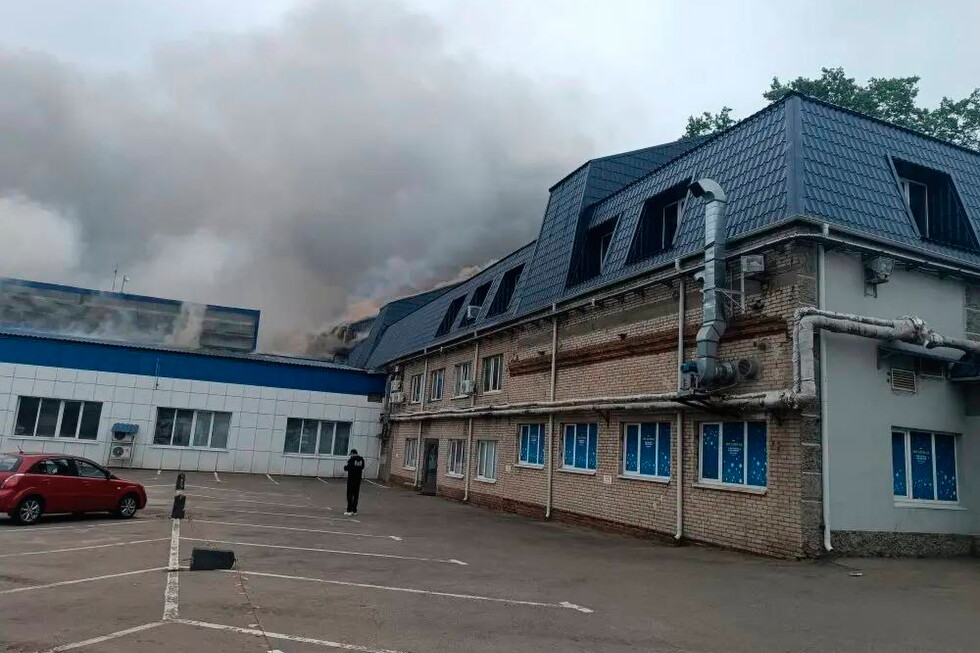
In one of the most extensive Ukrainian drone strikes against Russian infrastructure since Moscow launched its full-scale invasion more than four years ago, Ukraine targeted a critical Moscow oil refinery for the second time in seven days and forced a temporary suspension of commercial flights at multiple capital airports, senior Russian officials confirmed Thursday.
The coordinated attack unfolded just hours after Ukrainian President Volodymyr Zelenskyy announced he had completed a high-stakes coordination call with his counterparts from the United States and France, and secured firm new commitments of additional military and diplomatic backing from G7 leaders gathering for their annual summit. Later Thursday, Zelenskyy was scheduled to arrive in Brussels for urgent talks with NATO and European Union leadership, where a top agenda item will be negotiating the framework for a pan-European ballistic missile defense shield. Russia has launched relentless barrages of these hard-to-intercept missiles against Ukrainian civilian and military infrastructure for months.
For months, Ukraine has systematically targeted Russian energy facilities as part of a deliberate strategy to erode the Kremlin’s war revenue and bring the tangible consequences of the invasion home to ordinary Russian citizens. The tactic has already led to localized fuel shortages across multiple Russian regions.
Images and footage circulated by Russian state and independent media outlets showed intense infernos raging at the Moscow Oil Refinery, a sprawling complex located just 9 miles from the Kremlin core. The facility is one of Russia’s largest refining operations, supplying more than one-third of all fuel consumed in the Moscow region per its official public data. It suffered a previous drone strike just two days earlier on Tuesday, which sparked a smaller fire that Russian emergency services extinguished quickly.
Russian transport and aviation authorities confirmed that all incoming and outgoing flights from four major Moscow-area airports were paused for several hours as air defense units responded to the drone incursion, disrupting travel for thousands of passengers.
Beyond the refinery strike, in the broader Moscow region, a drone crashed into a multi-story residential building in the city of Zhukovsky, triggering a full evacuation of the structure, regional governor Andrei Vorobyov confirmed. Debris from intercepted drones damaged multiple other structures across the region, leaving 16 people injured including two young children, Vorobyov added.
The Russian Defense Ministry reported that its air defense systems intercepted and destroyed 555 Ukrainian drones across multiple Russian regions overnight, with nearly 200 of the unmanned vehicles shot down as they approached the Moscow capital area. For context, Ukrainian air force data recorded that Russia launched roughly half that number of drones at Ukrainian targets in the same 24-hour window.
This latest attack marks another public setback for Russian President Vladimir Putin, coming less than a month after a Ukrainian drone strike hit his hometown of St. Petersburg during a high-profile international economic forum that hosted foreign dignitaries. On the day of the Moscow attack, Putin was 430 miles east of the capital in Kazan, hosting a summit of Association of Southeast Asian Nations leaders as the Kremlin courts deeper economic and political ties with the bloc to offset Western sanctions.
In a voice message sent to a journalist group chat, Zelenskyy framed the strike as part of Ukraine’s campaign to pressure the Kremlin into entering good-faith peace negotiations. The Ukrainian leader recently accepted an unconditional ceasefire proposal put forward by former U.S. President Donald Trump, but Putin has rejected the offer, and U.S.-led peace initiatives have since stalled. “If Putin does not want to end this war and wants to continue it, we will not sit quietly — we will respond,” Zelenskyy emphasized.
Ukrainian Foreign Minister Andrii Sybiha leaned into the public impact of the attack in a post on the social platform X, writing: “One of the most popular questions asked by Muscovites this morning is ‘What is going on?’ I can answer. Your country started a war of aggression against ours. For years, it has been killing our people. Now that you know what’s going on, ask Putin when he is planning to end it.”
Western military analysts and senior officials note that, alongside the new commitments of backing from the G7, Ukraine has gained growing tactical momentum against Russia’s larger conventional military in recent weeks, driven largely by its expanding fleet of domestically produced and Western-supplied high-tech drones. Longer-range drone strikes have not only disrupted Russian domestic oil production but have also severely choked Russian supply lines in Ukrainian territories occupied by Moscow forces.
French President Emmanuel Macron described the just-concluded G7 summit as a critical milestone for Ukraine, noting that Western backers — led by the United States — had reaffirmed their long-term commitment to supporting Kyiv’s defense, though he declined to share specific details of new aid packages. Under the second Trump administration, U.S. military assistance to Ukraine has been scaled back significantly, leaving European countries as the largest suppliers of military and financial support to Kyiv, a shift that has come amid well-documented tensions between Trump and Zelenskyy. Despite that shift, Macron stressed after leaving the G7 venue at the Palace of Versailles that “America is with us on Ukraine, that is very important.”