One week after a powerful magnitude 7.1 earthquake shook Japan’s southwestern Kumamoto Prefecture on the island of Kyushu, the disaster-battered region is facing a cascading series of new crises: sweltering near-40°C heat, critical shortages of basic supplies, and growing public anger over missteps from both political leaders and a local business.
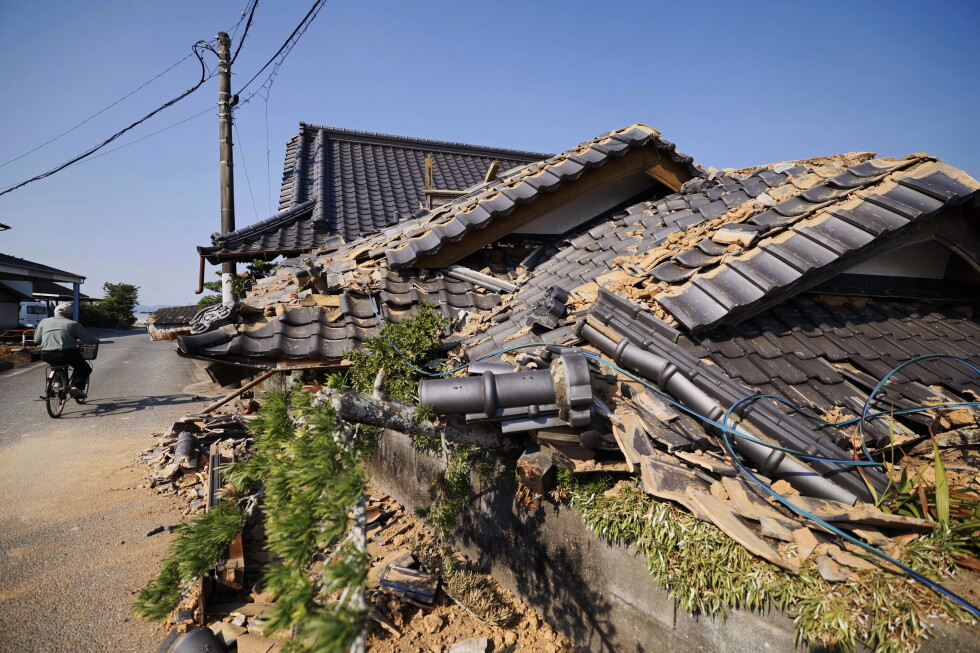
As of Monday, prefectural officials confirmed the earthquake’s death toll has reached 38. Among those fatalities is one resident who died of apparent heat stroke while sheltering in a vehicle amid the ongoing high temperatures, and another victim whose cause of death is still undergoing official investigation. An additional 114 people across the prefecture have been confirmed injured, with infrastructure damage widespread: official data shows 700 residential properties have been completely destroyed, and more than 11,300 other buildings have sustained varying degrees of damage.
In communities across the quake zone, residents have begun the slow first steps of recovery: stacking mounds of splintered debris, broken household furniture and water- or impact-damaged appliances on curbs for municipal collection crews. In the smaller towns of Uki and Hikawa, construction crews have broken ground on the first batches of temporary housing for residents left homeless by the disaster.
But recovery efforts are being severely hampered by extreme weather and crippling supply shortages. The Japan Meteorological Agency forecast that temperatures would climb as high as 35°C to 40°C (104°F) across the region on Monday, and more than 46,000 households remain cut off from running water. Shortages of fuel for generators and vehicles have also been widely reported, leaving communities without reliable power for cooling. As of Monday, more than 8,500 displaced people are still staying in overcrowded emergency shelters converted from public facilities including community centers, school gymnasiums and classrooms, and the vast majority of these shelters lack working air conditioning. Other displaced residents have been forced to sleep in uncooled vehicles in public parking lots and parks, or camp outside the ruins of their damaged homes.
Disaster experts have long warned that this combination of overcrowding, insufficient cooling, poor sanitation and limited privacy creates deadly health risks for displaced populations following major natural disasters. The death of a heat stroke victim in a shelter vehicle has already amplified fears that more lives could be lost to heat-related illness, compounding the earthquake’s initial death toll.
On Monday, Japanese Prime Minister Sanae Takaichi made her first visit to the quake-hit region since the disaster struck. However, the trip quickly sparked public backlash: Takaichi toured one of the area’s best-resourced shelters, which offers residents cardboard beds, privacy partitions and full air conditioning. Critics on Japanese social media quickly argued that the carefully selected visit did not reflect the grim reality facing most displaced people in the prefecture, and that the prime minister’s trip amounted to performative politics that ignored the scale of the crisis.
A separate controversy has also emerged surrounding the deaths of two employees at a local general store inside the collapsed Aeon Mall in Kashima. Officials confirmed that an explosion, believed to be caused by a gas leak that followed the initial earthquake, killed the pair after roughly 3,000 shoppers had already been evacuated to a nearby parking lot. Seven total deaths were reported at the mall, with rescuers recovering seven bodies and pulling five survivors from the rubble.
The store’s operator, local firm Habita, has confirmed that it instructed the two employees to re-enter the damaged shopping mall after the initial quake to retrieve sales proceeds and lock them in a safe. On Sunday, two Habita executives attended the wake of 22-year-old Kurumi Otake, one of the two dead employees, to offer a formal apology to her family. “I wish someone had stopped her,” Otake’s mother told reporters through tears, after meeting with the executives. “My daughter is not coming back.”