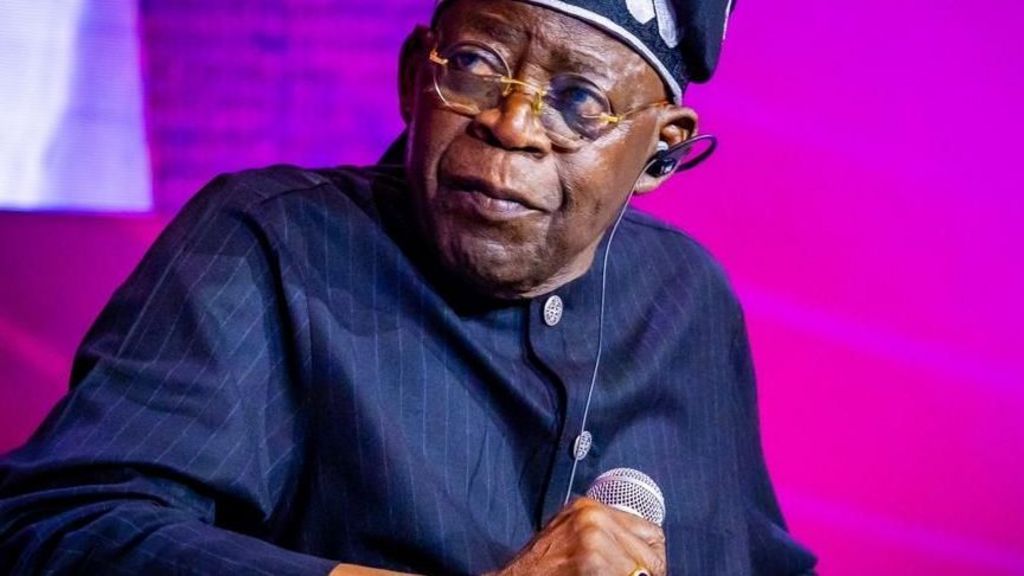
During a private, family-hosted special prayer gathering held in Lagos on Sunday, Nigeria’s incumbent President Bola Tinubu made a rare, unscripted disclosure: even the country’s most exclusive official compound, Aso Rock Presidential Villa in Abuja, is not spared from the crippling water and electricity failures that have plagued ordinary Nigerian households and businesses for decades.
Tinubu shared a vivid personal anecdote to illustrate the systemic gaps, recounting that just last Wednesday, he was mid-shaving in the villa when the running water supply cut out abruptly. Using local Nigerian pidgin to drive his point home, he noted, “In the villa, you won’t know punishment dey dia too,” emphasizing that no tier of the nation’s leadership is insulated from the infrastructural breakdowns that millions of citizens navigate daily. “No light, no water, no electricity, no development,” he told attendees, framing the dual crises as foundational barriers to national progress. “We have just started. We can do it, and we will do it for Nigeria,” he pledged, referencing his upcoming re-election campaign slated for January 2027.
Aso Villa, which sits at the foot of Abuja’s iconic Aso Rock formation, functions as both the official workplace and private residence of Nigeria’s sitting head of state, a compound long assumed to have priority access to critical public utilities. Tinubu’s public admission breaks with decades of precedent where federal leaders rarely acknowledged that top-tier government facilities face the same utility failures that have become a defining hardship for the general population.
The country’s current wave of severe electricity shortages stems from two distinct, overlapping pressures: widespread under-supply of natural gas to power generation plants, and a sharp drop in hydropower output, diverging from the more familiar pattern of full national grid collapses that marked earlier eras of Nigeria’s power crisis. Distribution firms across major population centers including Lagos and Abuja have been forced to implement strict, rolling load-shedding schedules, leaving most residents to rely on expensive, carbon-intensive private generators to power homes and small businesses. Parallel to the power crisis, Nigeria faces a chronic national water shortage driven by a structural mismatch: rapid, unplanned urban population growth has far outpaced investment in aging, underfunded public water supply infrastructure, leaving millions without consistent access to piped clean water.
Tinubu first ran for office on a high-profile pledge to overhaul the country’s failing power sector during his 2023 presidential campaign, when he defeated two major rivals: former Vice President Atiku Abubakar and labor party figure Peter Obi. All three men are widely expected to be the top contending candidates in the upcoming January 2027 presidential poll, and the lack of measurable progress on Tinubu’s earlier utility reform promises has emerged as a central point of public debate and opposition criticism in the lead-up to the vote.
Presidential villa also hit by water and power cuts, Nigerian leader says