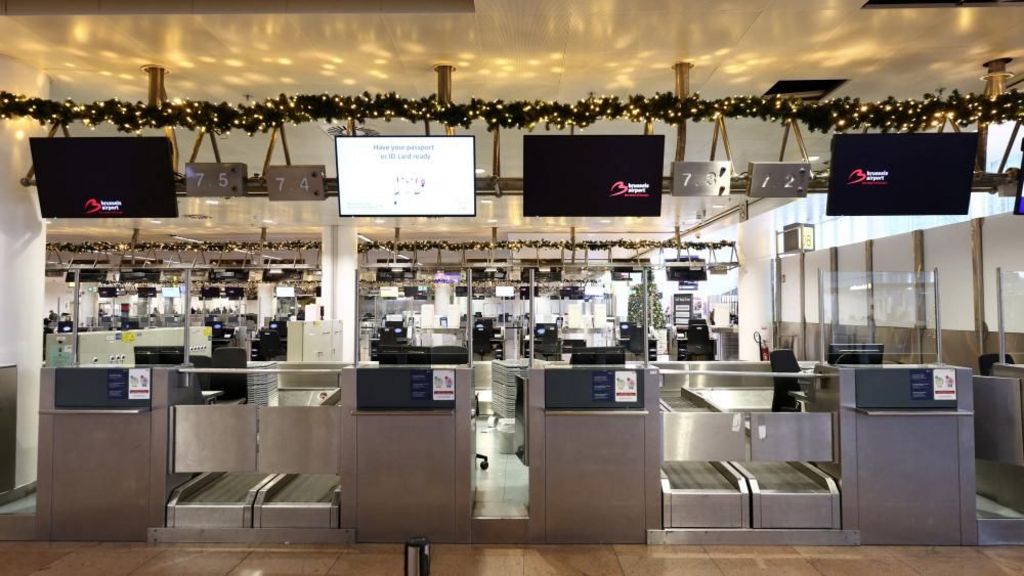
A sweeping nationwide industrial action across Belgium, launched to push back against the federal government’s proposed harsh austerity measures, has triggered cascading travel chaos, with two major national airports fully suspending operations for 14 consecutive hours on Monday and widespread public transport shutdowns paralyzing the capital Brussels. Starting at 7 a.m. local time (6 a.m. GMT) and running through 9 p.m. the same day, Brussels Airport in Zaventem has banned all takeoffs and landings entirely, with the shutdown extending to Charleroi Airport, the key hub for low-cost carriers including Ryanair. Prior official warnings from airport operators noted that the total absence of air traffic control staff during the coordinated strike would make any flight operations impossible, predicting catastrophic ripple effects for passenger itineraries that have already left more than 50,000 travelers stranded, with additional disruptions projected to spill over into overnight services and Tuesday operations. Even Charleroi Airport’s public flight tracking system continued to list all trips as “scheduled” despite the full operational freeze, creating further confusion for passengers attempting to confirm their plans. The industrial action coincides with a mass protest march drawing tens of thousands of demonstrators into central Brussels, as organized labor leaders push back against a months-long deadlock in Prime Minister Bart De Wever’s five-party ruling coalition over a long-delayed cost-cutting federal budget. Earlier this month, King Philippe formally rejected De Wever’s offer of resignation, granting the prime minister an extended window to negotiate a compromise with fractious coalition partners. The left-leaning Vooruit party, the only coalition member resisting the proposed austerity framework, has demanded scaled-back cuts to pension and public health funding paired with higher tax rates for high-income earners, a position that top union leaders have openly praised. Bert Engelaar, head of Belgium’s largest union federation FGTB, outlined viable alternative fiscal pathways that avoid rolling back social safety nets, including the introduction of a targeted wealth tax, progressive tax reform, and the closure of widely exploited corporate tax loopholes, emphasizing that governing should not prioritize preserving a coalition at the expense of household financial security. Ann Vermorgen, a leader with major union CSC, also condemned a separate controversial policy provision that would eliminate public bank holidays that fall on weekends. Beyond aviation and rail networks, Brussels’ entire underground metro system has been fully suspended, with additional disruptions hitting public school operations and other core public services across the country as the strike action unfolds.