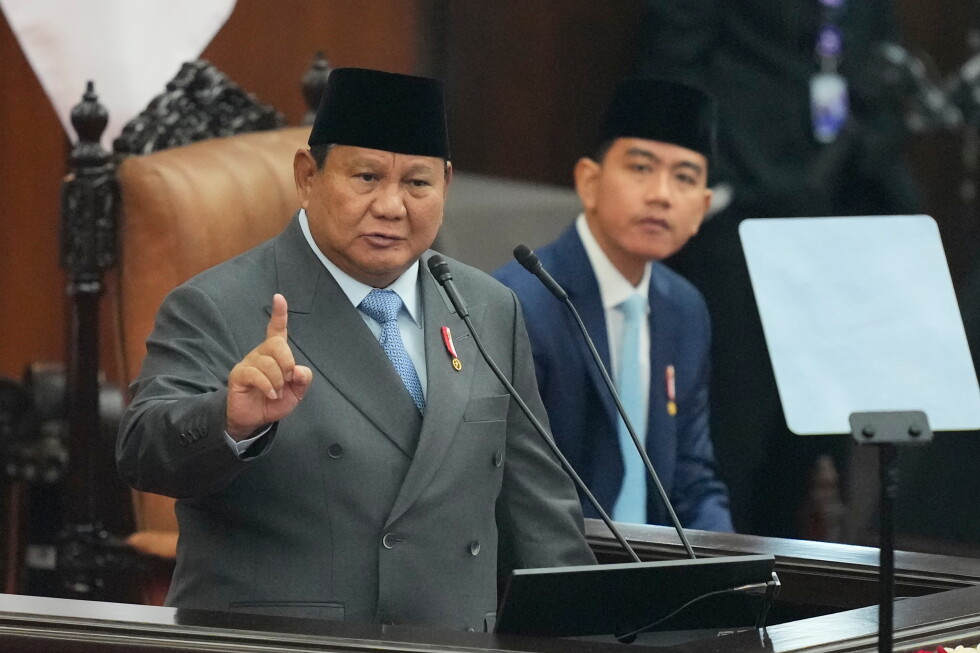
In a nationally televised annual State of the Nation address delivered to Indonesia’s parliament in Jakarta on Friday, President Prabowo Subianto highlighted the Southeast Asian nation’s strongest first-half economic expansion in 13 years, projecting that full-year growth could hit 6% despite persistent global economic volatility. However, his optimistic outlook has drawn pushback from economists, who argue headline growth numbers are disconnected from the everyday struggles of ordinary Indonesians.
Prabowo outlined that Indonesia’s economy grew 5.61% in the first quarter of 2024, followed by a 5.45% expansion in the first half of the year. This marks the highest first-quarter and first-semester growth rate the country has recorded since 2011. “With the right policies, rational policies and policies based on common sense, I am confident our economic growth can reach 6% by the end of this year,” the president told the assembled lawmakers, striking a confident tone in his speech.
Notably, Prabowo emphasized that robust GDP growth and rising investment are not ends in themselves. He stressed that the true measure of economic success lies in whether expansion translates to improved welfare for the general population, particularly low-income households. “For me, growth and investment are not the final goal. Our goal is the welfare of our people,” Prabowo said. “High growth that cannot be enjoyed by most of our people is of no benefit to us.”
The address came ahead of Indonesia’s 81st Independence Day celebrations on Monday, with the president outlining that every rupiah of incoming investment should be directed toward creating formal employment, expanding access to critical public services, and boosting government support for vulnerable communities. He cited recent investment data to back up his administration’s track record: realized investment hit 1,931 trillion rupiah (equivalent to $108 billion) in 2023, generating more than 2.7 million new jobs, while first-half 2024 investment reached 1,010 trillion rupiah ($56.7 billion), creating an additional 1.4 million positions.
Prabowo also highlighted several flagship social and economic policies his administration has rolled out, which he said are already delivering tangible benefits to Indonesians. These include the signature Free Nutritious Meals program, expanded social assistance schemes, and regulatory policies designed to boost downstream processing of Indonesia’s abundant natural resources, moving the country beyond exporting unprocessed raw materials. “Our promise of nutritious meals, social assistance and down-streaming is no longer merely a plan on paper,” he said. “It is already underway, and the people are feeling the benefits.”
Launched in 2023 to address widespread malnutrition, the Free Nutritious Meals program aims to deliver free daily meals to nearly 90 million school-aged children and pregnant women across the archipelago. Beyond improving public nutrition, the government designed the initiative to stimulate demand for local agricultural goods and support employment across the domestic food supply chain. However, the program has faced growing public and regulatory scrutiny in recent weeks following a string of food poisoning incidents that have sickened thousands of students nationwide. Most recently, on Thursday, 269 students from three high schools in Karo Regency, North Sumatra, fell ill after eating meals supplied through the government program.
Beyond concerns over the free meals initiative, some independent economists have questioned whether the government’s strong growth figures align with the economic realities facing most Indonesian households. Nailul Huda, a researcher at Jakarta-based think tank the Center of Economic and Law Studies (Celios), pointed to slowing household consumption, rising layoffs, and persistent challenges in securing stable formal work as evidence that the benefits of recent growth have not been widely shared.
Huda noted that softening consumer confidence and ongoing labor market concerns point to a clear gap between headline GDP growth and the daily experiences of most Indonesians, especially those in lower income brackets. “The government always claims the economy is growing strongly, but lower-income communities do not feel it,” Huda said.