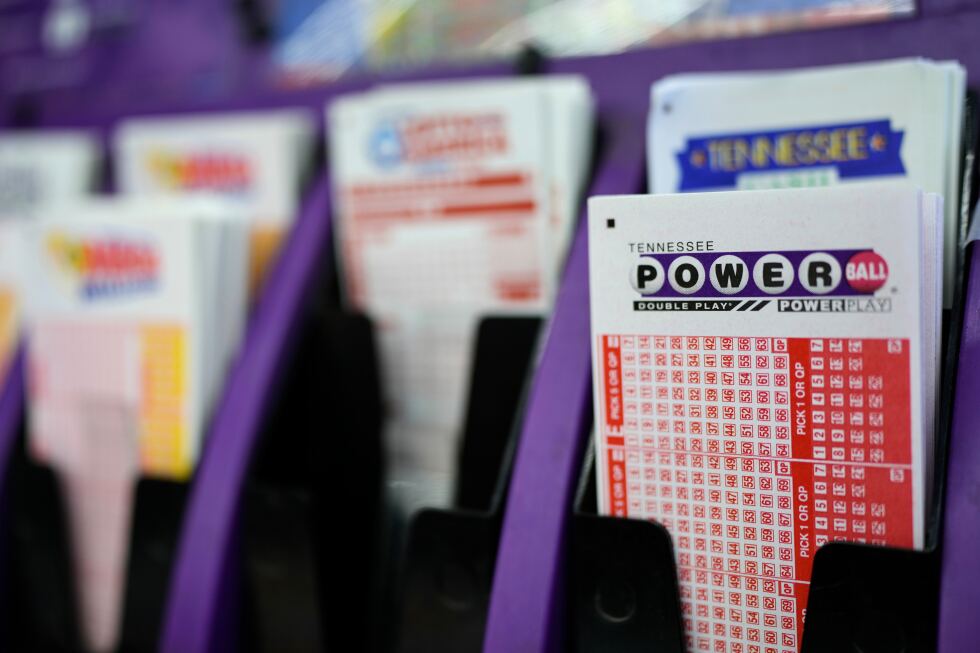
One of the United States’ most famous lottery brands is making its historic leap across the Atlantic. Powerball, the game that has created thousands of millionaires across American states and territories, will officially welcome players from England, Scotland and the entire United Kingdom to its player pool starting this summer, under a newly announced partnership agreement.
The landmark deal was revealed Tuesday by the Multi-State Lottery Association (MUSL), the U.S.-based organization that manages Powerball, and Allwyn UK, the current operator of the U.K. National Lottery. Regulators still need to greenlight the expansion: the agreement requires final approval from the U.K. Gambling Commission before the first U.K. Powerball tickets can go on sale.
If approved, the expansion will mark a first for the 30-plus year old Powerball game: for the first time since its launch, players outside the United States will be able to participate and contribute to the game’s rolling jackpot pool.
Matt Strawn, CEO of the Iowa Lottery and leader of the Powerball product team, framed the cross-border expansion as a natural evolution for the game. “We’re constantly looking for ways to make sure that we’re keeping Powerball culturally and commercially relevant,” Strawn said in comments after the announcement. “And this really is the next natural progression in doing just that.”
For existing Powerball players in the United States, the expansion will bring no changes to how the game works. The $2 price per ticket will remain unchanged, and the long odds of claiming the top jackpot – 1 in 292.2 million – will also stay the same. The biggest benefit for U.S. players will be faster jackpot growth: adding millions of potential U.K. participants to the player pool means more ticket sales, which pushes the top prize up more quickly between rollovers.
“Players consistently tell us in survey after survey that faster growing Powerball jackpots is what they’d like to see,” Strawn explained. “Not surprisingly, the higher the jackpots grow the more people play the game in a particular drawing. The more people play, the higher sales grow. The higher sales grow, the higher the jackpots get, the more people play.” It’s a self-reinforcing cycle that Powerball leaders expect will boost engagement on both sides of the ocean.
For U.K. players, the launch of Powerball will unlock access to far larger top prizes than any existing domestic or European lottery currently offers. In 2022, a single winning Powerball ticket sold in California claimed a record jackpot of just over $2 billion, an amount that dwarfs the largest European lottery win on record. That same year, the biggest U.K. EuroMillions prize – a pan-European lottery also operated by Allwyn UK – hit £195 million (equal to roughly $265 million at the time), less than 15% of the record Powerball payout.
Allwyn UK leaders say adding Powerball to the U.K. National Lottery roster aligns with their goal of bringing fresh excitement to British players. “Our ambition is to bring more games, more innovation and more excitement to The UK National Lottery — and it doesn’t get more exciting than Powerball, with its transformative jackpots and life-changing contribution to good causes,” Allwyn UK Chief Executive Andria Vidler said in a statement announcing the deal.
While all players will compete for the same base jackpot amount, there are key differences between the U.S. and U.K. versions of the game to align with local regulatory and market norms. Estimated jackpot values will be listed differently in each country, due to fluctuations in currency exchange rates and differing advertising conventions: the U.S. advertises jackpots as the pre-tax value of the full annuity payout, while the U.K. advertises post-tax prizes. Additionally, U.K. jackpot winners will only be able to claim their prize through a 30-year annuity, unlike U.S. winners who can choose between the annuity or a one-time lump-sum cash payment – a option that nearly all U.S. jackpot winners choose. Secondary smaller prizes for non-jackpot winners will also have different values and structures in the two countries.
Powerball is currently available to players in 45 U.S. states, plus Washington D.C., Puerto Rico and the U.S. Virgin Islands. The core game rules will remain unchanged after expansion: players still select five numbers from a pool of 1 to 69 for the white balls, and one number from 1 to 26 for the red Powerball, and drawings will continue to be held three times a week on Mondays, Wednesdays and Saturdays. More than 31 million people participate in at least one U.K. National Lottery game each year, representing a massive potential new player base for Powerball. The expansion will have no impact on the operation of Mega Millions, Powerball’s main rival large U.S. lottery game, which will remain exclusive to U.S. players.