For nearly 90 years, the disappearance of pioneering aviator Amelia Earhart has captivated researchers, historians, and aviation enthusiasts around the world, spawning dozens of competing theories about where her plane went down. One of the most persistent hypotheses placed her wreckage on the remote Pacific atoll of Nikumaroro, part of the Republic of Kiribati, and a new on-site investigation has now closed one chapter of the search — while leaving the larger mystery very much open.
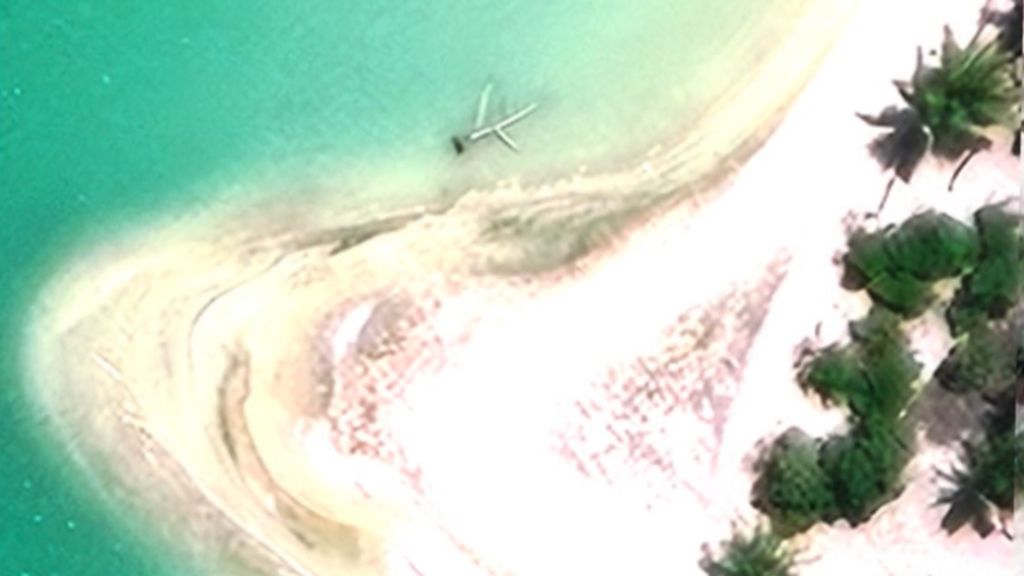
The latest search began in 2020, when analysts working with the Archaeological Legacy Institute spotted a bright, distinct object on satellite imagery of a lagoon off Nikumaroro’s Taraia Peninsula. Dubbed the Taraia Object, the formation appeared to match the rough size and shape of aircraft wreckage resting in shallow coastal waters. Follow-up reviews of historical archives even confirmed the object had been visible in aerial photography of the area dating as far back as 1938, just one year after Earhart’s disappearance, further fueling excitement that the long-sought answer had finally been found.
Leading the investigation was a team of researchers headed by Purdue University, a key institutional partner in efforts to solve the Earhart case. After a five-day sea voyage to reach the remote atoll, the team faced an additional setback: rough ocean swells and strong gusty winds forced them to remain anchored offshore for several days, delaying their on-site search. Once conditions calmed, the researchers spent four days working on the peninsula’s sandspit, examining the site of the satellite anomaly up close.
When the team reached the target area, they discovered that much of the formation that had appeared on satellite imagery had already broken apart and been washed out to sea by tidal action. All that remained was a single, Y-shaped segment of debris. After on-site analysis, the research team concluded that the object was never Earhart’s plane at all. Instead, it is most likely an accumulation of large drift trees that washed onto the sandspit and became lodged over time.
Despite this disappointing result, project director Rick Pettigrew, who spoke to reporters from near the investigation site, remains optimistic that the mystery will one day be solved. “This mystery has been ongoing for 90 years and the mystery continues,” Pettigrew said. “The island has been holding on to its secrets and it continues to do so. I think eventually someone will find conclusive evidence here.”
To recap the case that has gripped the world for generations: In 1937, Earhart and her navigator Fred Noonan set out to complete the first ever circumnavigation of the globe by air. By the time the pair reached Lae, Papua New Guinea, they had already completed a successful journey across the United States, South America, Africa, and South Asia. Their next planned leg was a flight to the tiny, uninhabited coral atoll of Howland Island, roughly 400 miles northeast of Nikumaroro, where they planned to refuel before continuing on to Hawaii and ultimately back to California. But contact with Earhart and her twin-engine Lockheed Electra was lost mid-flight, and no confirmed trace of the plane or its crew has ever been found.
One of the leading modern theories of the disappearance holds that Earhart and Noonan drifted off course while searching for Howland Island, and ultimately landed their damaged plane on Nikumaroro, where they survived for a time as castaways before dying. Dozens of archaeological expeditions have explored the atoll over the past 30 years searching for evidence to support this claim, but so far, no conclusive proof of Earhart’s presence there has been confirmed. The latest investigation closes off one promising lead, but the search for answers continues.