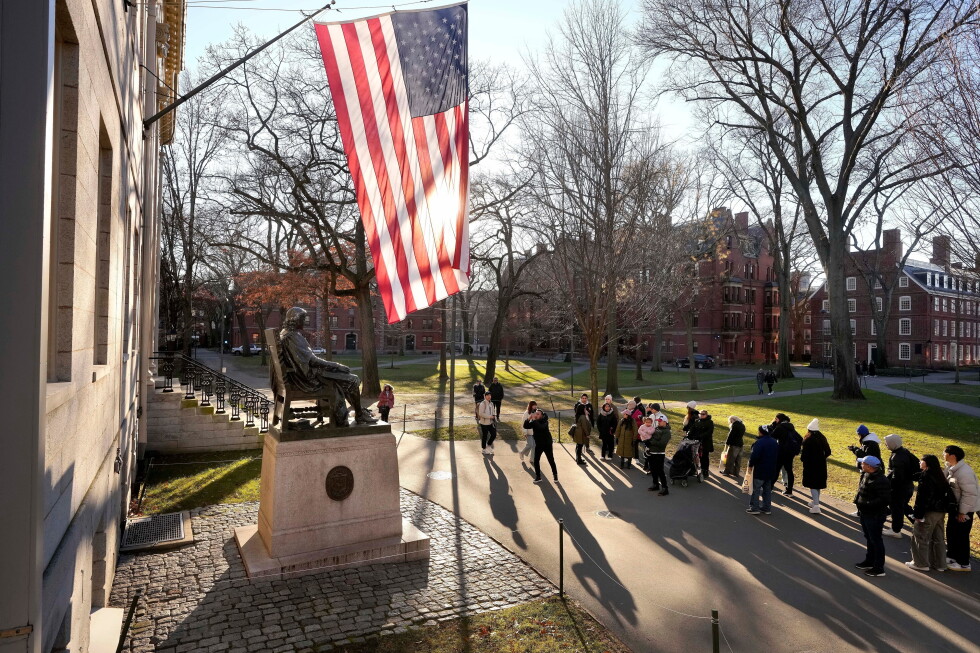
In a sweeping move to escalate the Trump administration’s scrutiny of China’s expanding global influence, the U.S. Department of Defense has issued an ultimatum to 30 American universities: complete a full audit of collaborative partnerships with Chinese academic and military-linked institutions within 14 days, or risk losing federal taxpayer funding. The Pentagon framed the mandate, announced Monday, as a critical step to safeguard U.S.-funded research from unauthorized exploitation and intellectual property theft.
“The Department of Defense has zero tolerance for academic partnerships that compromise our national security,” Emil Michael, the Pentagon’s chief technology officer, stated in an official news release. While the department did not publicly disclose the names of targeted institutions in the release, an anonymous U.S. official with knowledge of internal deliberations confirmed that top-tier institutions including Harvard University, the Massachusetts Institute of Technology, and Johns Hopkins University are among those ordered to conduct the review. None of the named universities issued an immediate response to requests for comment from The Associated Press.
The new audit order builds on a move the Pentagon made just one month prior, when it released an updated list of 130 foreign organizations flagged for activities that raise the risk of misappropriating U.S. government-funded research and development. The overwhelming majority of institutions on the updated list are Chinese, including the University of Science and Technology of China and the Chinese Academy of Military Medical Sciences, though a small number of Iranian and Russian entities were also included.
Sarah Spreitzer, vice president of the American Council on Education (ACE), an organization representing U.S. college and university presidents, pushed back against the new mandate. Spreitzer noted that the initial version of the foreign entity list was developed during Trump’s first term with direct input from ACE, and that most member institutions have already cut ties with the flagged institutions over the past years. She raised sharp concerns that the new order implicates U.S. universities in wrongdoing without presenting concrete evidence, and warned that schools could be penalized for partnerships formed long before the list was first published. “We don’t appreciate the implication that we are not good partners on research security, given that we helped create this list, and given that we’ve always partnered with the federal government when there has been national security concerns,” Spreitzer said.
The audit order comes as part of the Trump administration’s broader, escalating campaign to counter Chinese influence across the Americas. In recent months, the administration has pushed back against Chinese ownership of port infrastructure at both ends of the Panama Canal, opposed Chinese-funded infrastructure projects linked to the Belt and Road Initiative in the region, and cracked down on Chinese investment in the U.S. telecommunications sector. The new mandate also adds to a string of federal investigations targeting Harvard University: the U.S. Department of Justice is already probing allegations that Chinese donors have funded scholarships at the Ivy League institution that exclude American students.
In an official response, a spokesperson for the Chinese Embassy in the U.S. condemned the move, saying Beijing opposes the politicization of what it calls “normal scientific, educational, and academic exchanges.” The statement urged U.S. policymakers to abandon what it described as a Cold War mentality and work to build “an open, fair, and non-discriminatory environment for educational, scientific, and people-to-people exchanges between China and the United States.”
Associated Press writer Collin Binkley contributed reporting to this article. The AP’s education coverage receives funding from multiple private foundations, with the AP retaining full editorial control over all content.