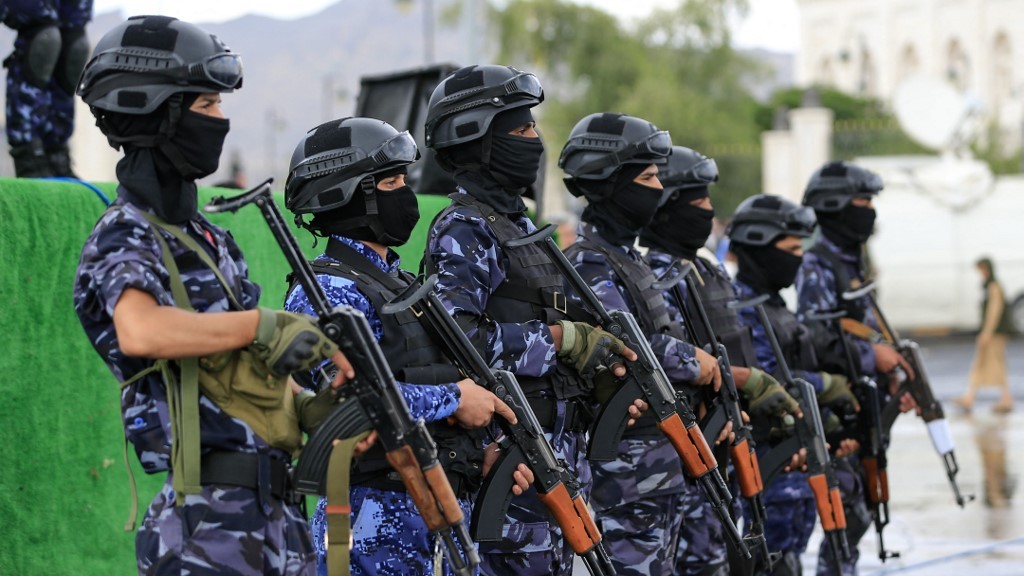
Since the start of September, the resurgent military conflict between the Saudi-led coalition and Yemen’s Houthi movement has pushed at least 130,000 Yemenis to flee their homes, the United Nations Refugee Agency (UNHCR) cautioned in an official statement released Tuesday.
Intensive Saudi airstrikes paired with persistent frontline clashes between Houthi forces (officially Ansar Allah) and Yemen’s internationally recognized government have triggered widespread population displacement across western and central regions of the war-torn country.
For the month of September alone, UNHCR confirmed at least 110 civilian casualties, including 28 fatalities, emphasizing that non-combatants continue to absorb the worst harm from the nearly decade-long conflict. The agency identified the southwestern governorate of Taiz as the current epicenter of the crisis, where more than 60 percent of the newly recorded displacement has occurred. Thousands of families remain trapped in active combat zones there, cut off from emergency aid and safe passage out.
Displacement has also been documented in the northern and central governorates of Al Jawf, Marib, and Al Hodeidah, a pattern that underscores the expanding, multi-front scope of the renewed fighting, UNHCR added.
On the same day of the UN warning, Yemeni government forces announced that the Saudi coalition had conducted new airstrikes targeting Houthi military positions and weapons storage facilities west of Taiz. Just hours after that announcement, Saudi civil defence authorities issued an urgent alert for the Najran region along the Saudi-Yemen border, warning of an imminent incoming Houthi strike. No casualties were ultimately reported in the incident, and local authorities urged residents to stay indoors, avoid public gatherings and refrain from filming attack sites to comply with safety protocols.
In an interview with Saudi-based newspaper Okaz, Yemeni Prime Minister Shaya al-Zindani, who leads the internationally recognized government, acknowledged that the Houthi seizure of the strategic Bab al-Mandab Strait — a critical global shipping chokepoint connecting the Red Sea and the Gulf of Aden — has created an extremely high-risk situation, but pushed back against claims it represents a final defeat for pro-government forces. He added that Saudi-backed pro-government troops are currently reorganizing their frontline deployments and boosting combat readiness to retake territory lost to recent Houthi advances.
Active artillery duels and ground clashes have also been confirmed in Al Jawf and Marib. Roughly 3,000 displaced people have arrived in Marib city, located around 120 kilometers east of the Houthi-held capital Sanaa, after fleeing escalating violence in surrounding areas.
Zindani’s Ministry of Human Rights has accused Houthi forces of deliberately targeting civilian infrastructure: specifically, the Bab al-Mandab Commercial Complex in Lahj governorate. According to the ministry, the busy public market was struck by two ballistic missiles fired an hour apart, during midday hours when crowds of shoppers and passersby are typically present.
As military operations intensify across the country, the already catastrophic humanitarian situation in Yemen is deteriorating at an alarming rate. Carl Skau, acting executive director of the World Food Programme (WFP), warned that widespread hunger is spreading rapidly across the country, with civilians left unable to access adequate food or basic healthcare. Tens of thousands of newly displaced people are arriving at overcrowded, resource-stretched refugee camps with no personal belongings or access to basic support, Skau added.
Yemen relies on imports for roughly 90 percent of its total food supply, leaving the vast majority of the population extremely vulnerable to port closures and supply chain disruptions caused by ongoing fighting. Currently, more than 18 million Yemenis — nearly half of the country’s total population — face acute food insecurity, and approximately 2.2 million children under the age of five suffer from life-threatening acute malnutrition.