博客

  • All the winners at the 2026 Grammy Awards

    All the winners at the 2026 Grammy Awards

    The 68th Annual Grammy Awards ceremony unfolded in Los Angeles with a night of spectacular victories and unexpected upsets, headlined by Kendrick Lamar’s remarkable five-award sweep and Bad Bunny’s triumphant capture of the coveted Album of the Year honor.

    Kendrick Lamar solidified his status as a contemporary music titan by securing five golden gramophones, making him the ceremony’s most decorated artist for the second consecutive year. His collaborative masterpiece ‘Luther’ with SZA earned Record of the Year, while his innovative rap collection ‘GNX’ claimed Best Rap Album. Despite this dominance, the evening’s most prestigious award eluded him as Puerto Rican global phenomenon Bad Bunny captured Album of the Year for his critically acclaimed work ‘Debí Tirar Más Fotos’.

    The British music scene celebrated early success with Yungblud’s victory for Best Rock Performance alongside legendary musicians Nuno Bettencourt and Frank Bello for their electrifying live rendition of ‘Changes.’ This win marked a significant moment for the UK artist on music’s biggest international stage.

    In the pop categories, Lady Gaga’s ‘Mayhem’ secured Best Pop Vocal Album, while emerging talent Lola Young earned Best Pop Solo Performance for her raw and emotional track ‘Messy.’ The collaboration between Cynthia Erivo and Ariana Grande on ‘Defying Gravity’ received recognition for Best Pop Duo/Group Performance.

    The ceremony highlighted remarkable diversity across genres, with Tyla winning Best African Music Performance for ‘Push 2 Start,’ and Natalia Lafourcade taking home Best Latin Pop Album for ‘Cancionera.’ The jazz world celebrated Samara Joy’s ‘Portrait’ as Best Jazz Vocal Album, while Sullivan Fortner’s ‘Southern Nights’ claimed Best Jazz Instrumental Album.

    In the visual media categories, Ludwig Göransson’s score for ‘Sinners’ earned Best Score Soundtrack, while the animated film ‘K-Pop Demon Hunters’ produced the winning track ‘Golden’ by Huntr/x for Best Song Written for Visual Media.

    The awards also recognized technical excellence, with Cirkut earning Producer of the Year and Amy Allen receiving Songwriter of the Year honors for their contributions to multiple chart-topping projects throughout the eligibility period.


  • Epstein files show Kaaba cloth pieces from Makkah shipped to Epstein via UAE contacts

    Epstein files show Kaaba cloth pieces from Makkah shipped to Epstein via UAE contacts

    Newly unsealed court documents from the Jeffrey Epstein case have revealed a startling transaction involving sacred religious artifacts from Islam’s holiest site. The records detail how pieces of the Kiswa—the elaborately embroidered black cloth that covers the Kaaba in Makkah—were systematically shipped to the convicted sex offender’s Florida residence in early 2017.

    The correspondence, dating from February to March 2017, exposes a coordinated effort between Emirati businesswoman Aziza Al-Ahmadi and an associate named Abdullah Al-Maari to transport three distinct pieces connected to the sacred covering. The shipment included one fragment from inside the Kaaba, another from the previously used outer covering, and a third piece crafted from identical materials but never actually deployed on the structure.

    Notably, the emails reveal strategic classification of these religious artifacts as ‘artworks’ to facilitate customs clearance and international transport. The items traveled via air freight from Saudi Arabia to Florida through British Airways, with meticulous attention given to logistical details including invoices and delivery arrangements.

    The spiritual significance of these objects was explicitly acknowledged in communications, with Al-Ahmadi directly informing Epstein that the black cloth fragment ‘was touched by minimum 10 million Muslims of different denominations.’ She elaborated on its profound religious meaning, noting how pilgrims embed ‘their prayers, wishes, tears and hopes on this piece’ during circumambulation of the Kaaba.

    The documents further reveal an ongoing relationship between Al-Ahmadi and Epstein, evidenced by her concerned communications following Hurricane Irma’s devastation of his Caribbean island in September 2017. Despite repeated attempts to ascertain his wellbeing through his secretary, the correspondence provides no clarity on how their association originated or why these specifically Islamic relics were directed to Epstein.

    In a separate development, an FBI memorandum included in the release suggests intelligence connections, stating Epstein ‘trained as a spy’ under former Israeli Prime Minister Ehud Barak and maintained operational ties with both U.S. and Israeli intelligence agencies.

  • Watch: the must-see moments from the 2026 Grammy Awards

    Watch: the must-see moments from the 2026 Grammy Awards

    The 66th Annual Grammy Awards ceremony unfolded as a spectacular showcase of musical excellence and unexpected highlights that captivated global audiences. This year’s event will be remembered for its blend of breathtaking performances and spontaneous occurrences that defined the evening’s narrative.

    Among the most discussed moments was the powerful ‘ICE out’ presentation, where artists united in a visually striking statement that resonated throughout the entertainment industry. In another unforgettable incident, music icon Cher experienced a charmingly human moment when she momentarily forgot her lines during a presentation, handling the situation with grace and humor that endeared her to viewers worldwide.

    The ceremony featured extraordinary collaborative performances that crossed generational and genre boundaries, creating unique musical fusion moments that highlighted the evolving landscape of contemporary music. Several emerging artists delivered breakthrough performances that signaled their arrival as significant forces in the industry, while established legends demonstrated why they continue to shape musical trends.

    Viewership metrics indicate that these highlight moments generated unprecedented social media engagement, with clips from the ceremony achieving viral status across multiple platforms. The organic nature of these occurrences provided authentic entertainment that scripted events often fail to deliver, contributing to what industry analysts are calling one of the most memorable Grammy ceremonies in recent history.

    The production team’s ability to seamlessly integrate these unplanned moments into the broadcast demonstrated a new level of technical expertise in live entertainment presentation, setting new standards for awards show productions moving forward.

  • Bad Bunny says ‘ICE out’ in forceful Grammy speech

    Bad Bunny says ‘ICE out’ in forceful Grammy speech

    The 2026 Grammy Awards ceremony transformed from a celebration of musical excellence into a powerful platform for political protest, with multiple artists using their acceptance speeches to condemn the Trump administration’s immigration enforcement tactics.

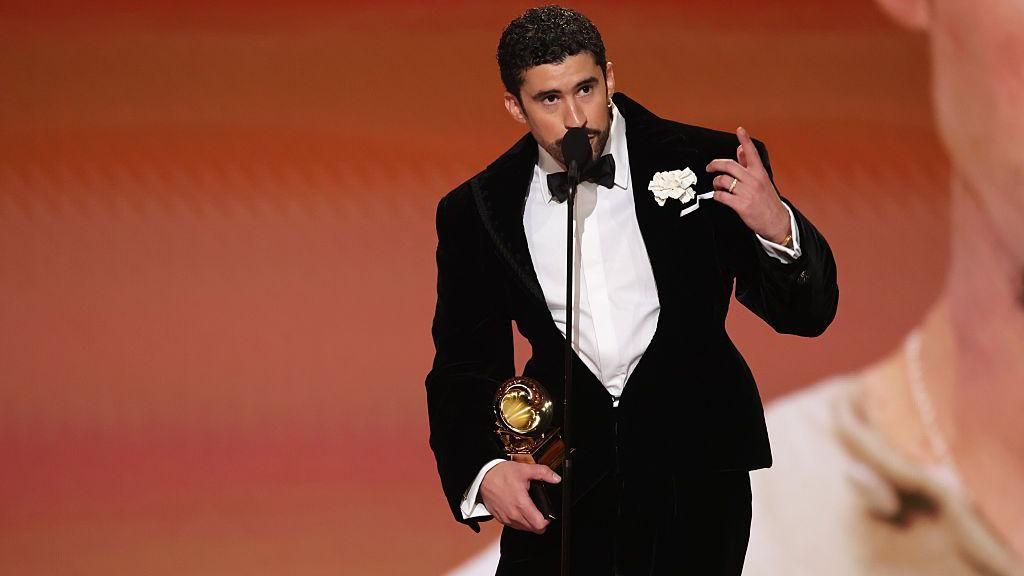
    Puerto Rican superstar Bad Bunny delivered the evening’s most explicit political statement upon winning Best Música Urbana Album. Before offering thanks, he demanded ‘ICE out’ in reference to Immigration and Customs Enforcement officers. ‘We’re not savages, we’re not animals, we’re not aliens – we’re humans,’ he declared from the stage, advocating for love over hate in addressing national divisions.

    The protests followed weeks of escalating tension across American cities, particularly in Minneapolis where federal agents recently shot and killed two Americans—37-year-old nurse Alex Pretti and Renee Good—sparking nationwide outcry and a Justice Department civil rights investigation. These incidents have intensified scrutiny of administration tactics that have targeted both criminal migrants and those without criminal histories.

    The political messaging extended throughout the event. British singer Olivia Dean, honored as Best New Artist, celebrated her immigrant heritage as the granddaughter of Windrush generation immigrant Carmen. Country artist Shaboozy dedicated his first Grammy win for Best Country Duo Performance to immigrants, acknowledging his Nigerian mother who worked multiple jobs to support her family.

    Even before the ceremony began, the red carpet showcased solidarity with many artists wearing white ‘ICE OUT’ pins. R&B winner Kehlani articulated the artistic imperative to ‘reflect the times,’ while legendary performer Gloria Estefan expressed deep concern about America’s direction backstage, emphasizing that those being arrested ‘have contributed to this country for decades.’

    Billie Eilish, winning Song of the Year for ‘Wildflower,’ encouraged continued activism: ‘Our voices really do matter, and the people matter.’ Despite administration officials suggesting potential de-escalation in Minnesota, the night belonged to artists determined to use their platform for social commentary.

  • Takeaways from AP’s report on Latin American markets flooded by cheap Chinese goods

    Takeaways from AP’s report on Latin American markets flooded by cheap Chinese goods

    Latin American nations are implementing protective economic measures as competitively priced Chinese manufactured goods, particularly electric vehicles, rapidly capture market share across the region. This development comes amid China’s strategic expansion into emerging markets while facing domestic economic headwinds.

    Brazil has witnessed remarkable penetration of Chinese electric vehicles, with industry data revealing that over 80% of the 61,000 EVs sold during 2024 originated from Chinese manufacturers, primarily BYD and GWM. Meanwhile, Mexico reported approximately 15% market saturation by Chinese automotive brands last year, signaling a significant shift in regional automotive dynamics.

    The competitive pricing of Chinese exports, enabled by substantial government subsidies and cost-efficient production capabilities, has prompted defensive responses from several Latin American governments. Mexico has imposed tariffs reaching 50% on various Chinese imports including automobiles, appliances, and clothing. Brazil has moved to eliminate tax exemptions for low-value international parcels and increased levies on electric vehicle imports. Chile similarly implemented tariff adjustments and introduced a 19% value-added tax on low-value parcels beginning October.

    This economic tension exists within a complex bilateral relationship framework. China provided approximately $153 billion in loans and grants to Latin American and Caribbean nations between 2014-2023, substantially exceeding United States’ contributions of roughly $50.7 billion during the same period. This financial influence, coupled with China’s extensive investments in regional infrastructure projects including dams and mining operations, creates a multifaceted economic interdependence.

    Trade imbalances have become increasingly pronounced, with Mexico recording a $101 billion trade deficit with China in the first ten months of 2025 alone. Argentina’s trade deficit with China reached $8.2 billion last year, reflecting broader regional trends as China’s global trade surplus hit a record $1.2 trillion in 2024.

    Experts note that China’s export profile has evolved significantly beyond basic manufactured goods. José Manuel Salazar-Xirinachs of the Economic Commission for Latin America and the Caribbean observed that China now demonstrates advanced technological capabilities, particularly in innovative sectors like electric vehicle production. This technological advancement, combined with competitive pricing, presents both opportunities and challenges for Latin American economies seeking to balance economic cooperation with domestic industrial protection.

  • A mix of hope and fear settles over Venezuela after US-imposed government change

    A mix of hope and fear settles over Venezuela after US-imposed government change

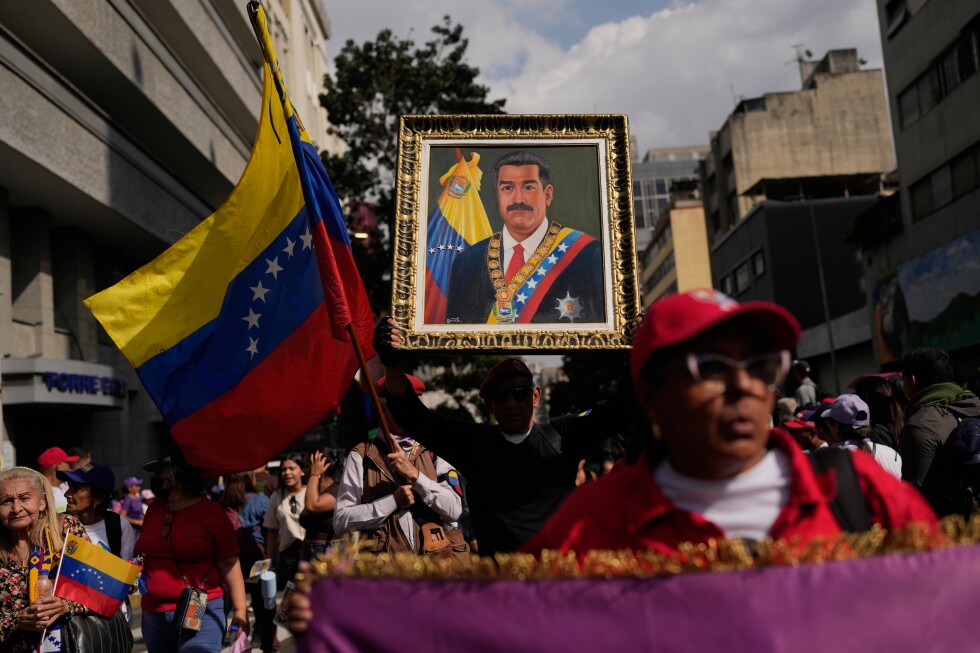
    Venezuela remains suspended in a state of paradoxical temporality following the dramatic capture of former President Nicolás Maduro by U.S. forces thirty days ago. The nation experiences both accelerated political transformation and agonizing stagnation as citizens grapple with profound uncertainty under the acting presidency of Delcy Rodríguez.

    In Caracas, government propaganda demands Maduro’s release while residents question whether Rodríguez exercises genuine autonomy or capitulates to White House directives. The acting president attempts to project authority, insisting Venezuela ‘does not accept orders from any external factor,’ yet her administration has swiftly enacted sweeping reforms previously unthinkable under Chavismo.

    The most significant policy shift came Thursday with the legislative approval of Rodríguez’s energy sector overhaul, effectively abandoning a core tenet of Chavismo by opening state-owned oil resources to privatization. This strategic pivot follows President Trump’s assertion that his administration would control Venezuelan oil exports to revitalize the industry through foreign investment.

    Meanwhile, the political landscape shows tentative signs of transformation. Long-silent opposition figures have begun reemerging, with privately-owned media airing segments featuring opposition leader María Corina Machado for the first time in years. Dozens of citizens maintain vigils outside prisons demanding release of political detainees.

    Despite these developments, pervasive fear persists among the population. Many Venezuelans practice rigorous self-censorship, avoiding political discourse on social media and even during video calls. No large demonstrations demanding governmental change have materialized, and wanted posters of opposition figures remain displayed at official facilities.

    The human dimension of this crisis manifests in personal stories like that of Margaret García, a teacher whose son experienced severe trauma following the January 3rd operation that killed dozens. While condemning the violence, García acknowledges potential economic improvements under Rodríguez’s administration, capturing the complex dichotomy of hope and apprehension defining Venezuela’s current reality.

    As the nation balances between potential economic relief and ongoing political repression, the fundamental question remains whether Rodríguez’s leadership represents genuine change or merely Maduro’s legacy under a different name.

  • Indonesia lets Elon Musk’s Grok back online under tight supervision

    Indonesia lets Elon Musk’s Grok back online under tight supervision

    JAKARTA, Indonesia — In a significant reversal, Indonesian authorities have permitted the resumed operation of Elon Musk’s artificial intelligence chatbot Grok on a conditional basis, ending a weeks-long suspension initially imposed over concerns regarding explicit sexual content generation. The decision follows intensive negotiations between Indonesian regulators and X Corp, resulting in the company providing written commitments to enhance service quality and ensure strict compliance with local regulations.

    The Indonesian Communications Ministry confirmed the conditional reinstatement in an official statement released Sunday, noting that X Corp has implemented specific technical measures to prevent misuse of Grok’s capabilities. These measures include feature restrictions and enhanced content filtering systems designed to block the generation of sexually explicit and non-consensual imagery that prompted the original ban.

    This development comes after Indonesia and Malaysia became the first nations worldwide to block access to Grok in January, citing serious concerns about AI-generated explicit content. Malaysia has similarly lifted its temporary restriction following X Corp’s implementation of security enhancements, with regulators indicating ongoing monitoring of the situation.

    Alexander Sabar, Director General of Digital Space Supervision at Indonesia’s Communications Ministry, emphasized that the normalization of Grok’s operations remains subject to strict verification. Indonesian authorities will conduct thorough testing to validate X Corp’s claimed improvements, particularly regarding the prevention of illegal content distribution and violations of child protection principles.

    Sabar issued a stern warning that any detected inconsistencies or further regulatory violations would trigger immediate corrective actions, potentially including service suspension reinstatement. This conditional approach reflects Indonesia’s broader strategy of balancing technological innovation with robust digital governance and content moderation requirements.

  • Flooded by cheap Chinese goods, Latin America is fighting back to protect its industries

    Flooded by cheap Chinese goods, Latin America is fighting back to protect its industries

    China is dramatically expanding its economic footprint across Latin America through a flood of low-priced exports, particularly automobiles and e-commerce goods. This strategic pivot comes as Chinese manufacturers seek alternative markets in response to U.S. trade restrictions and domestic demand slowdown.

    The world’s second-largest economy has emerged as a dominant trading partner for numerous Latin American nations, leveraging their abundant natural resources while simultaneously expanding its influence in a region historically considered within America’s sphere of influence. With exports to the United States declining by 20% last year, Chinese businesses have turned their attention to Latin America’s market of over 600 million people.

    Margaret Myers, director of the Asia and Latin America program at the Inter-American Dialogue, notes: “Latin America possesses a solid middle class, relatively high purchasing power and genuine demand. These conditions create an ideal environment for China to redirect its excess industrial production.”

    The influx of Chinese-made vehicles, clothing, electronics and home furnishings has generated significant economic tensions. Countries including Mexico, Chile and Brazil have implemented protective measures including tariff increases to shield their domestic industries from what they perceive as unfair competition.

    E-commerce platforms Temu and Shein have accelerated market penetration, with Temu experiencing a remarkable 165% year-on-year growth in monthly active users during the first half of 2025. Chilean restaurant manager Lady Mogollon exemplifies the consumer appeal: “I use Temu consistently for clothing and household items. The identical products available in brand-name stores appear on Temu at significantly reduced prices.”

    The impact on local economies has been substantial. In Mexico City, traditional retailers like lamp shop manager Ángel Ramírez report severe challenges: “The Chinese have inundated us with merchandise.” The number of shops selling Chinese-made goods in the city’s downtown has more than tripled in recent years, forcing many established Mexican stores out of business.

    Argentina’s manufacturing sector, employing nearly one-fifth of the workforce, has been particularly affected. E-commerce imports—primarily from China—surged 237% in October compared to the previous year. Luciano Galfione, president of the Pro Tejer Foundation representing textile manufacturers, states: “We’re operating at historically low capacity as imports break record highs. We’re under indiscriminate assault.”

    The automotive sector reveals similar patterns. Chinese automakers including BYD and GWM have made significant inroads, with over 80% of electric vehicles sold in Brazil during 2024 being Chinese brands. Mexico has become the largest destination for Chinese auto exports, receiving 625,187 vehicles last year—surpassing even Russia.

    Jorge Guajardo, partner at DGA Group and former Mexican ambassador to China, explains: “In an industry where scale proves crucial, China possesses distinct comparative advantages in electric vehicles, supported by affordable pricing and substantial government backing.”

    Despite growing trade deficits across the region—Mexico’s reached $120 billion in 2024—China’s economic influence continues expanding through substantial infrastructure investments and financing. According to AidData research, China provided approximately $153 billion in loans and grants to Latin America and Caribbean nations between 2014-2023, tripling U.S. contributions during the same period.

    Andy Mok, senior research fellow at the Center for China and Globalization, identifies Latin America as “a cornerstone of China’s ‘Global South’ strategy aimed at countering Western influence.” This includes major projects like Peru’s $1.3 billion megaport in Chancay, which opened in 2024.

    While countries are implementing protective measures—Mexico imposing tariffs up to 50% on Chinese imports, Brazil eliminating tax exemptions for low-value parcels—their leverage remains limited. Leland Lazarus, founder of Lazarus Consulting, observes: “Nations face a delicate balancing act with protectionist policies. Excessive measures could trigger Chinese retaliation, constraining their response options.”

  • China executes four more Myanmar mafia members

    China executes four more Myanmar mafia members

    In a landmark judicial ruling, Chinese authorities have executed four principal members of the Bai organized crime syndicate following their convictions for operating extensive transnational fraud and violence networks. The executions represent the most severe penalty in China’s comprehensive campaign against cyber scam operations based in Myanmar that primarily target Chinese citizens.

    The Intermediate People’s Court of Guangdong Province convicted 21 individuals connected to the Bai criminal organization on multiple charges including organized crime, homicide, assault, and large-scale fraud operations. Among those executed were key leadership figures from one of Myanmar’s most powerful crime families that controlled illicit activities in the border town of Laukkaing.

    This judicial action comes just weeks after China executed 11 members of the rival Ming crime family, signaling Beijing’s intensified crackdown on cross-border criminal enterprises. The Bai syndicate maintained 41 fortified compounds housing cyber scam centers and casino operations where violence and torture were routinely employed against workers and victims alike.

    According to court documentation, the family’s criminal activities directly caused six Chinese deaths, one suicide, and numerous injuries. The group rose to prominence in the early 2000s when Bai Suocheng, the family patriarch who later died of illness after conviction, allied with Myanmar’s military leadership following the ouster of Laukkaing’s previous warlord.

    The collapse of the Bai criminal empire occurred in 2023 when Beijing, frustrated by Myanmar’s inadequate response to scam operations targeting Chinese citizens, indirectly supported ethnic insurgents in the region. This military operation resulted in the capture of numerous crime family members who were subsequently extradited to China for prosecution.

    United Nations estimates indicate hundreds of thousands have been trafficked to operate scam centers throughout Southeast Asia, with Chinese nationals comprising both the primary perpetrators and victims of these schemes that have defrauded billions of dollars.

  • Premier League: City held by Solanke stunner, Sesko delivers ‘best feeling’ for United

    Premier League: City held by Solanke stunner, Sesko delivers ‘best feeling’ for United

    In a dramatic Sunday of Premier League action, the title race witnessed a significant shift as Manchester City dropped crucial points while Manchester United secured a last-gasp victory. The unfolding events have dramatically altered the landscape at the top of the table.

    Manchester City’s championship aspirations suffered a major setback at the Tottenham Hotspur Stadium, where they surrendered a two-goal advantage against a resilient Spurs side. Despite establishing commanding control through first-half strikes from Rayan Cherki and Antoine Semenyo, Pep Guardiola’s squad collapsed in the second period. The remarkable comeback was orchestrated by Dominic Solanke, whose spectacular scorpion-kick equalizer secured a 2-2 draw and sent shockwaves through the title race.

    This result marks a concerning trend for the defending champions, who have managed just a single victory in their six Premier League outings this calendar year. The dropped points have enabled Arsenal to establish a potentially decisive six-point cushion at the summit as they pursue their first league championship in over two decades.

    Meanwhile, at Old Trafford, Manchester United continued their resurgence under interim manager Michael Carrick with a breathtaking 3-2 triumph over Fulham. The match followed a similar narrative of squandered advantages and late drama. United appeared comfortable with goals from Casemiro and Matheus Cunha, but Fulham mounted a furious comeback through Raul Jimenez’s penalty and Kevin’s spectacular equalizer.

    Just as Fulham seemed to have secured a point, summer signing Benjamin Sesko delivered a moment of pure brilliance, spinning onto Bruno Fernandes’ precise pass before unleashing an unstoppable drive into the top corner during stoppage time. The dramatic winner sparked euphoric celebrations and extended United’s winning streak to three matches under Carrick’s guidance, propelling them into the coveted top four positions.

    In other Sunday fixtures, Aston Villa’s outside title hopes diminished further with a disappointing 1-0 home defeat to ten-man Brentford. Despite Kevin Schade’s first-half dismissal, the Bees secured all three points through Dango Ouattara’s strike before half-time. Villa’s frustration was compounded when a Tammy Abraham equalizer was disallowed by VAR review.

    The day’s results have fundamentally reshaped the Premier League landscape, with Arsenal emerging as clear favorites while their rivals encounter varying degrees of struggle and resurgence.