GENEVA — Ahead of the upcoming G7 summit set to kick off on Monday near Lake Geneva, French and Swiss law enforcement and border officials are rolling out strict, pandemic-style border controls to counter anticipated large-scale and potentially violent protests against the attending leaders, including former U.S. President Donald Trump. The three-day gathering, which runs from June 15 to 17 in the French lakeside town of Evian-les-Bains, brings together the heads of government from the world’s seven largest advanced economies to deliberate on key global issues ranging from Middle East stability and the ongoing conflict in Ukraine to growing global economic imbalances.
The threat of unrest stems from a long history of disruptive protests at elite global summits, and local stakeholders in nearby Geneva, Switzerland are determined to avoid a repeat of the violent clashes that damaged downtown storefronts during the 2003 G8 summit, when Russia was still a member of the group. This year, a broad coalition of activist groups has organized demonstrations to channel widespread frustration across multiple flashpoints: from Trump’s policy stances on trade tariffs and Middle East conflicts to perceived inaction on climate change, as well as renewed scrutiny of his past ties to convicted sex offender Jeffrey Epstein.
The coalition of anti-capitalist, environmental, feminist, and progressive activist groups, which brands itself the No G7 coalition, framed the gathering as a meeting of global powers that perpetuates exploitation and inequality. “As the G7 meets in Evian, France, to plan the destruction of peoples, the exploitation of life and the domination of bodies, let us organize our resistance against fascism and imperialism,” the coalition said in an official call for large-scale international protest mobilization. The standoff between authorities and activists centers on competing priorities: the right of demonstrators to gather and voice dissent, and the right of residents and businesses to be protected from damage and unrest targeting symbols of political and corporate power.
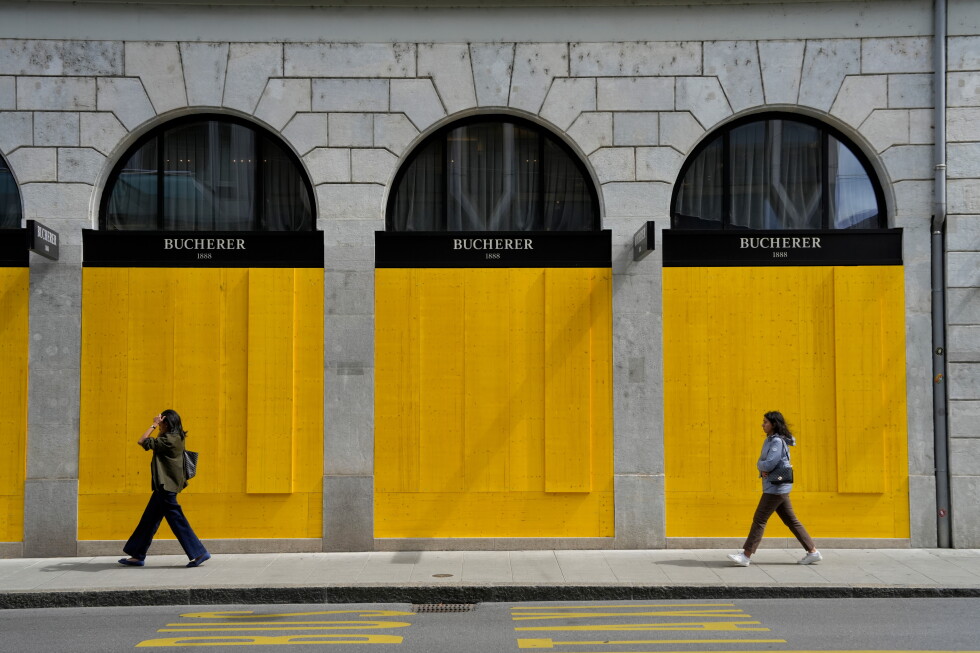
In preparation for potential unrest, businesses across central Geneva, a major hub for United Nations and global intergovernmental agencies, have already boarded up their storefronts. Several key institutions, including the World Trade Organization — which was the target of massive anti-globalization protests in Seattle in the 1990s — have closed their downtown offices and ordered all non-essential staff to work remotely for the duration of the summit. While Switzerland is not a G7 member state, the close proximity of Geneva to the summit host town makes it a natural gathering point for traveling activists.
To coordinate security, the two neighboring nations have signed a new military cooperation agreement tailored to the summit. Because Geneva’s main international airport is 95% surrounded by French territory, all arriving G7 leaders will travel through French-controlled airspace and border checks before entering Switzerland. The Swiss federal government confirmed it will deploy roughly 4,000 armed forces personnel to support local police operations, which include sweeping airspace restrictions, floating patrols across Lake Geneva, and targeted closures on cross-border road routes. Only seven of the 35 existing road border crossings between the two countries will remain open for the week, and Geneva officials have permanently closed a major downtown park that activists had selected as their primary protest gathering spot.
On the French side of the border, security will be even more stringent: more than 13,000 police and gendarmerie officers will be deployed to secure the summit perimeter, with 800 dedicated border control officers on duty — a major jump from the 60 officers that work the crossing on a typical day. French authorities have implemented a special resident permit system for Evian, a town best known globally for its branded bottled water, and cordoned off a large secure exclusion zone around the Hotel Royal, where G7 leaders will hold their closed-door meetings. Only one pre-authorized protest march has been approved, scheduled for June 14 ahead of the summit’s official start, and all unapproved public gatherings are banned for the week.
Not all observers agree that the harsh security measures are justified. Cedric Dupont, a professor of international relations at the Geneva Graduate Institute, argues that authorities are overreacting to the protest threat, pointing to widespread economic disruption and long border delays similar to those experienced during COVID-19 pandemic restrictions. “It seems that they have not learned the lesson,” Dupont said, noting that protesters can easily enter Geneva from other regions of Switzerland regardless of border restrictions. “It’s just creating more problems than actually solving them.”
The restrictions are already set to upend daily life for cross-border communities. According to the French Foreign Ministry, more than 110,000 commuters cross the France-Switzerland border daily to work in Geneva. French officials have advised all residents to cancel non-essential travel to the region and work from home where possible. Commuter ferry crossings across Lake Geneva that normally stop in Evian have been rerouted to other docks outside the restricted zone, though authorities have confirmed recreational activities such as swimming and paddleboarding will remain permitted in non-restricted areas as the summer tourist season gets underway. To offset expected economic losses for local businesses, the Geneva cantonal government has allocated a 6 million Swiss franc ($7.6 million) compensation fund for any properties damaged during protests. Officials have acknowledged that violent unrest cannot be ruled out entirely, even with the sweeping security measures in place.