博客

  • Sweden requires public workers to report migrants not authorized to live there

    Sweden requires public workers to report migrants not authorized to live there

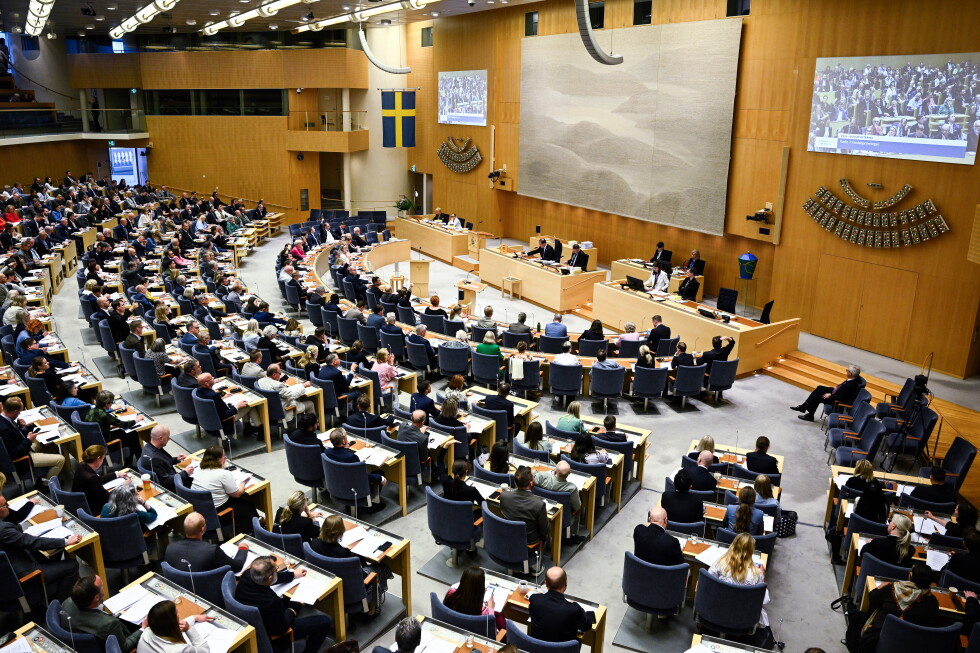
    On Monday, Sweden’s national parliament approved a deeply divisive new piece of legislation that requires most public sector employees to alert police to any undocumented migrants they encounter during the course of their work. The policy marks the latest step in Sweden’s broader push to toughen its national migration rules, arriving amid a continent-wide overhaul of the European Union’s migration framework focused on speeding up deportation processes for people denied residency.

    Following widespread public and expert pushback, a small set of professions were carved out as exemptions to the mandate: teachers, primary care doctors, and social workers will not be required to report undocumented individuals they serve. The mandatory reporting rule still applies to staff across a wide range of other public bodies, including tax agencies, employment services, social insurance departments, and prison and probation systems.

    The vote itself exposed deep rifts within Swedish society over the policy, passing by an extremely narrow margin of just two votes: 174 parliamentarians supported the bill, while 172 voted against it. John Stauffer, a representative of Swedish civil rights nonprofit Civil Rights Defenders, emphasized that this razor-thin result makes clear how widespread opposition to the law remains across the country.

    Migration experts and human rights advocates have roundly criticized the new regulation, warning it will have severe social and public health consequences. Jacob Lind, a migration researcher at Malmö University, called the policy the latest addition to a growing slate of problematic migration restrictions in Sweden. He noted that the law carries unique symbolic weight, framing it as a mandate that forces core state institutions to act as informants on the people they serve.

    A coalition of researchers from three leading Swedish universities issued a warning earlier this year that the law directly undermines undocumented migrants’ fundamental human rights and creates systemic incentives for racial profiling, the discriminatory practice of targeting individuals for suspicion based on race or ethnicity rather than concrete evidence. In interviews with public servants ahead of the vote, the research team documented widespread ethical unease among workers who would be required to enforce the rule.

    Louise Bonneau, a policy advisor at Brussels-based migrant advocacy nonprofit PICUM, explained that the reporting mandate will foster a pervasive climate of fear that harms not just undocumented migrants, but any community member that relies on public services. Even with medical professionals exempted, she noted, the cross-agency flow of information still creates dangerous deterrents to accessing care. For example, if an undocumented mother gives birth in a Swedish hospital, the attending midwife is not required to report her. But the birth registration is automatically shared with the tax agency, which is bound by the new law to report the entire family to immigration authorities.

    “This creates a huge deterrence effect to be in contact with a healthcare professional,” Bonneau said. “We’ll see what happens in practice. Will we see people fearing to be in contact with authorities, issues of maternal health, of the children being born?”

    In defense of the policy, the Swedish government has argued that additional enforcement measures are necessary to ensure that all people denied legal residency can be properly deported to their home countries.

    This mandatory reporting requirement remains an unusual policy across the European continent. Only a small handful of EU member states have enacted similar rules. Germany adopted a limited version of the policy in 2005, requiring a narrow set of public bodies including welfare offices to report undocumented migrants, while also exempting schools and hospitals. Even with those exemptions, data and anecdotal evidence show that many undocumented migrants in Germany avoid accessing necessary medical care, because accessing care requires paperwork from welfare offices that exposes them to deportation. To address this gap, grassroots organizations in major German cities like Berlin have set up separate, confidential healthcare services exclusively for undocumented migrants.

    The United Kingdom offers another recent case study of the risks of such policies. In 2018, the British government rolled back a policy that allowed immigration officials to access confidential patient records from the National Health Service, after widespread outcry that the rule deterred sick migrants from seeking care and violated core patient confidentiality protections. Under the revised framework, UK immigration officials are only permitted to access personal information for individuals suspected or convicted of crimes who are actively part of deportation proceedings.

    Contributions to this reporting were provided by Associated Press correspondents Kirsten Grieshaber in Berlin and Brian Melley in London.

  • Iranians greet deal to end war with relief, suspicion and uncertainty

    Iranians greet deal to end war with relief, suspicion and uncertainty

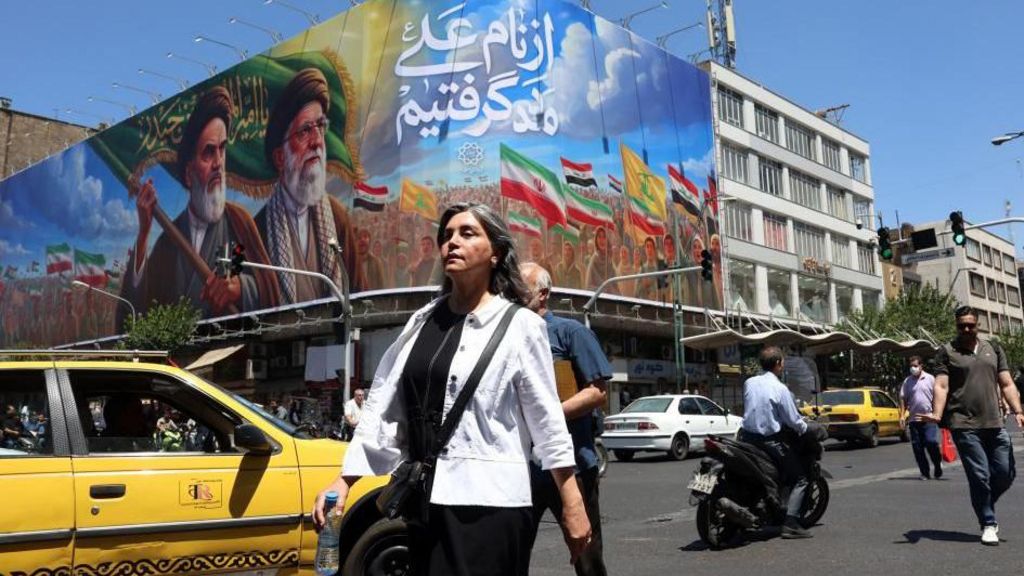
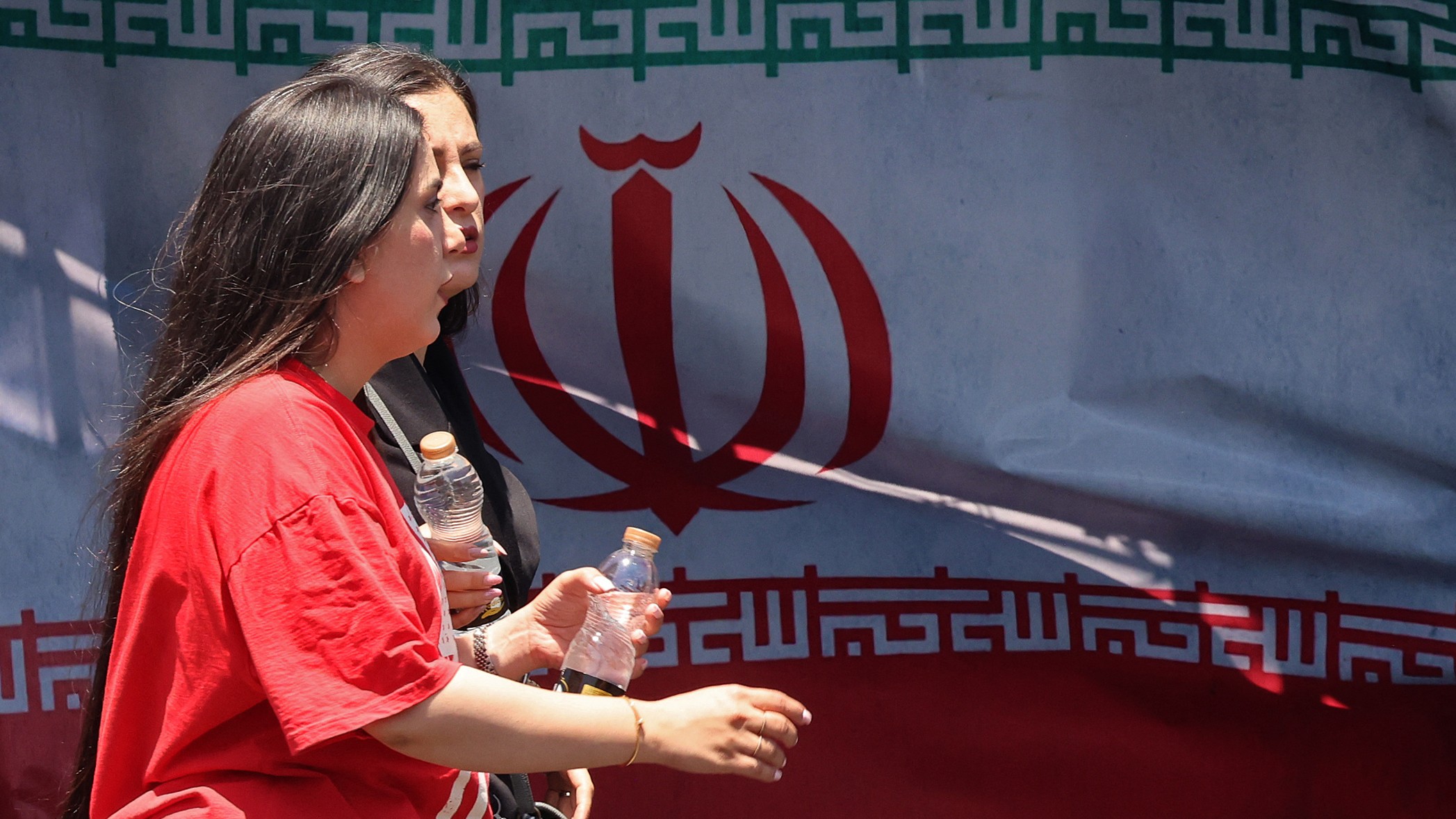
    After months of open military conflict between the United States, Israel and Iran, the announcement of a preliminary agreement to end hostilities has sparked a tangled spectrum of reactions across Iran, ranging from cautious relief and guarded hope to deep distrust, anger and outright opposition. For millions of ordinary Iranians who endured months of disrupted daily life, economic chaos and the constant threat of escalating full-scale war, the news brought a long-awaited moment of release, though many still struggle to believe the violence is truly over. Sepideh, a 32-year-old Tehran-based online handmade jewellery seller, summed up the common feeling of cautious joy in an interview with Middle East Eye. “Has it really ended? I can’t believe it,” she said. “Thank God. I still can’t believe it’s over. I just hope everything goes back to normal. We were exhausted. I’m so, so happy.” Sepideh’s small business was pushed to the brink of collapse by the months of conflict. Like thousands of other micro-entrepreneurs across Iran, she relied almost entirely on Instagram to reach customers and process sales. Widespread internet shutdowns implemented amid the conflict froze her operations entirely, and as anxiety about the war dominated public consciousness, consumer demand for non-essential goods like handcrafted jewellery evaporated entirely. Now, after weeks of back-channel diplomatic talks that produced the preliminary ceasefire and framework for broader negotiations, Sepideh is finally allowing herself to plan for the future again. She holds out hope that the tentative agreement will hold, opening the door to a broader pact that eases crippling economic sanctions and creates space for small businesses like hers to recover and grow. Across the country, reactions to the deal split sharply along political and generational lines. While many Iranians are simply grateful for an end to the cycle of missile strikes and military escalation that pushed the region to the edge of full-scale war, others doubt the agreement will survive long term, with some viewing it as a dangerous betrayal of national interests and others seeing it as the only viable alternative to catastrophic regional conflict. For 28-year-old Darya, from the northern Iranian city of Sari, the deal could unlock a life-changing opportunity that has been stuck in limbo for months. Darya has already been accepted to a university program in France, but visa processing ground to a halt amid the uncertainty of war. Now, she says, there is finally a clear path forward for her plans. “It feels like a miracle,” she told MEE. “I know almost nothing about politics, but for months all I did was follow the news.” The constant uncertainty took a severe emotional toll on Darya, who says she was particularly panicked by Israeli strikes on Lebanon just days before the deal was announced, fearing the attacks would derail the fragile diplomatic process entirely. “I was sure [Israeli Prime Minister] Netanyahu was trying to sabotage everything,” she said. “When I heard about the new Israeli attacks on Lebanon, I thought it was over. I thought we were back to square one. Iran would respond, then Israel would respond again, and eventually the United States would get involved.” Even as she welcomes the end of hostilities, Darya says she still plans to leave Iran to complete her studies, at least temporarily. “Yes, I want things to improve in Iran,” she said. “I want sanctions to be lifted. Most of our problems come from sanctions. If sanctions are removed, jobs, businesses and the economy will improve too.” She says she still wants the experience of living and studying in Europe, but holds out hope that when she completes her degree, Iran will be a far more stable and prosperous place. Not all Iranians share Darya’s guarded optimism. For 43-year-old Mohammad, the tentative deal does little to convince him that a lasting, comprehensive agreement is within reach. “Just look at how long it took them to reach this small understanding, which is really more of a ceasefire extension than anything else,” he said. “During that time, the United States attacked, Israel attacked and Iran attacked. All of that makes it difficult for me to be optimistic. People want to believe all their problems are over, but I don’t think Iran and the United States will be able to reach an agreement on difficult issues like the nuclear programme and sanctions relief.” The announcement also sparked deep frustration among opposition activists opposed to the Islamic Republic, many of whom had pinned hopes that sustained external military and political pressure would force fundamental political change inside Iran. Amir, a 19-year-old from Karaj, is one of those disappointed activists. “We were fooled,” he told MEE. “We were lied to. Reza Pahlavi said he was on his way to Tehran. Trump said help was coming soon. Netanyahu said he would change the situation in Iran. Was this the help Trump promised? To make a deal with the clerics?” Amir says the deal has left him feeling more hopeless than before. “I could not have imagined worse news,” he said. “Once the agreement is in place and the Islamic Republic no longer worries about war, it will turn its attention back to the people. More repression will follow.” His frustration reflects a broader disappointment among opposition circles, which had hoped the recent conflict would fundamentally weaken the Iranian political system, only to see Tehran and Washington return to the negotiating table. The harshest criticism of the deal, however, comes from hardline supporters of the Islamic Republic, who have organized public rallies and gatherings in recent weeks to denounce negotiations, with some branding Iranian negotiators as traitors to the nation. Emad, a 38-year-old Tehran resident, is one of those hardline opponents. “God curse Araghchi and Ghalibaf for throwing us into another trap like the nuclear deal,” he said. “Only 10 years have passed since the disgraceful agreement between Rouhani and Obama. How can people fall for this again? Especially when the other side is led by the man responsible for killing our leader.” Emad, who is still grieving the death of former Supreme Leader Ali Khamenei, remains deeply pessimistic about the diplomatic process and argues another military confrontation is inevitable. He points to the timing of the ceasefire, which runs for two months, as proof the deal is a cynical political ploy by Trump. “Look at the timing. Why two months from now? Because Trump wanted peace of mind during the World Cup. After that, he will come back for us,” he said. “And under what conditions? We reopened the Strait of Hormuz, oil prices returned to normal, and the United States and Israel have had time to update their plans for another attack on Iran.” Emad argues the entire diplomatic process is a coordinated performance by Trump and Netanyahu, designed to mislead Iran. “Do you really believe Netanyahu drinks a glass of water without American approval?” he asked. “This whole good cop, bad cop act was designed to fool us into thinking Israel opposed the agreement.” He argues Israeli leaders actually benefit heavily from the preliminary deal, because they recognized another prolonged war would be impossible to sustain. “They knew they could not continue resisting Iran and the groups that make up the Axis of Resistance forever,” he said. For many other Iranians, it is simply too early to draw any firm conclusions about the deal, and public reactions on both sides have been overly emotional. Maryam, a 59-year-old political science graduate, argues the deal essentially returns Iran to the status quo that existed before the 40-day war started, raising difficult questions about the human cost of the conflict. “When you read the commitments made by both sides, you realise we have basically returned to where we were before the 40-day war,” she said. “But was it really necessary for so many innocent civilians to die? Did schools, universities and hospitals need to be destroyed just so the Strait of Hormuz could return to normal and the American military could end its siege of Iran?” Maryam also argues the conflict offers clear proof of the outsized influence of pro-Israel lobbying groups on US foreign policy, a point made decades ago in a book by scholars Stephen Walt and John Mearsheimer. “I remember reading a book years ago by Stephen Walt and John Mearsheimer about the influence of the Israel lobby on American foreign policy,” she said. “Nothing has illustrated the arguments in that book more clearly than what we have seen in Gaza and in the two wars fought by the United States and Israel against Iran.” That perspective leaves her skeptical that a final comprehensive deal will ever be reached. “Israel, Aipac and pro-Israel lobbying groups will not allow a final agreement between Iran and the United States unless the Islamic Republic changes its approach towards Israel,” she said. For now, that shift appears unlikely. As Iranians across the country process the news of the deal, many are focused on the simplest, most immediate outcome: an end to months of uncertainty and fear. For Sepideh, the Tehran jewellery seller, the larger political debates can wait. After months of living on the edge of war, she says her only priority is getting back to a normal life. “I just want life to feel normal again,” she said.

  • Rwanda opposition leader Ingabire says she’s physically unfit for trial

    Rwanda opposition leader Ingabire says she’s physically unfit for trial

    KIGALI, Rwanda – The much-watched trial of prominent Rwandan opposition leader Victoire Ingabire, who stands accused of plotting civil unrest against the sitting government of President Paul Kagame, has been delayed by one day. The postponement came Monday after Ingabire told the Kigali High Court that 12 months of pre-trial detention had left her physically and mentally unprepared to face the proceedings against her.

    Ingabire, a longstanding critic of Kagame’s administration, has repeatedly denounced the charges against her as unfounded, framing the case as a deliberate politically motivated effort to suppress her pro-democracy advocacy and neutralize opposition to the ruling government. If convicted on the current charges, she could spend decades behind bars.

    During her initial court appearance Monday, Ingabire confirmed that her legal team had formally requested a delay from prosecutors ahead of the trial’s scheduled launch, backing up her claim that her physical condition left her unfit to proceed. The presiding judge granted the one-day adjournment.

    Beyond preparation concerns, Ingabire also raised additional grievances against Rwandan authorities during the session. She accused officials of blocking her from communicating with family members residing outside Rwanda’s borders, as well as restricting contact between her and co-defendants named in the same case. Prosecutors allege Ingabire engaged in unauthorized communications with nine other suspects, all tied to her unregistered opposition group DALFA-Umurinzi, which the Rwandan government does not recognize as a legitimate political organization.

    This is not Ingabire’s first confrontation with the Rwandan legal system over her political activity. A veteran dissident who spent 16 years in exile in the Netherlands, she returned to Rwanda in 2010 to run for the presidency, only to be imprisoned before she could appear on the ballot. She was ultimately convicted in that earlier case of conspiracy to destabilize the government and genocide denial, charges she has consistently rejected. Sentenced to 15 years in prison, she was released in 2018 after receiving a presidential pardon. Prior to founding DALFA-Umurinzi, Ingabire led FDU-Inkingi, another opposition coalition that was also never granted legal registration by the Rwandan government.

    Unlike most of Kagame’s political opponents, who have been forced into exile to avoid repression, Ingabire has remained in Rwanda to continue her activism, making her one of the most high-profile domestic critics of the administration.

    Kagame’s ruling party has held power in Rwanda since the aftermath of the 1994 genocide, and the government has been widely recognized for its work advancing ethnic reconciliation and delivering two decades of relative stability and economic growth. However, the administration has also faced sustained international criticism from human rights organizations, which document widespread human rights abuses, the silencing of independent journalism, and systematic suppression of all political opposition. Kagame and his government have repeatedly denied these accusations.

  • Greek minister calls criticism of tougher migration policies a ‘badge of honor’

    Greek minister calls criticism of tougher migration policies a ‘badge of honor’

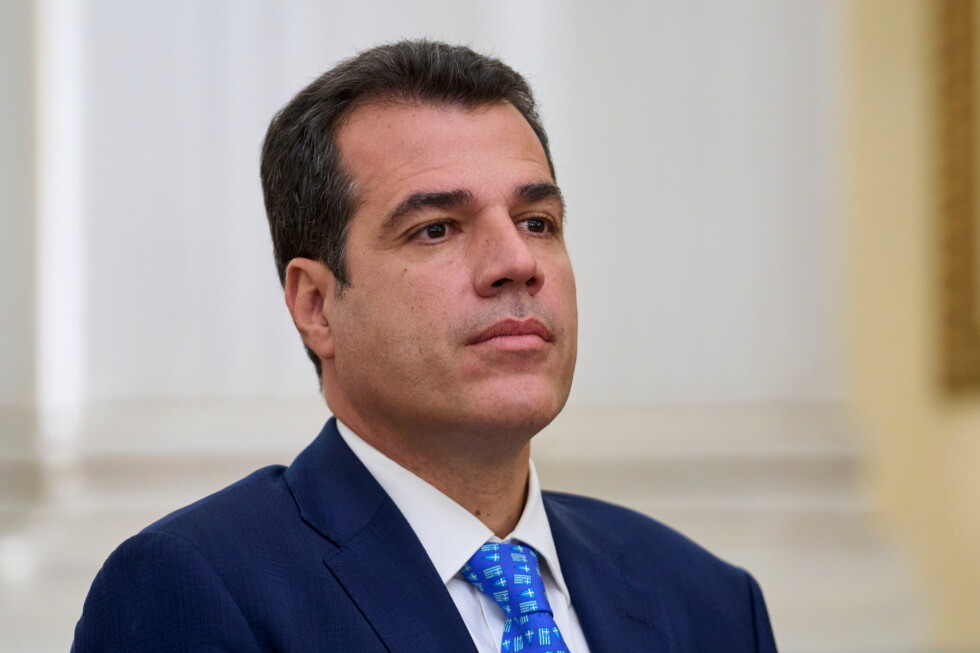
    In a bold public address to private broadcaster Action 24 on Monday, Greek Migration Minister Thanos Plevris framed growing condemnation from international human rights organizations over his government’s restrictive approach to migration as a mark of pride, while vowing to advance what he calls one of the most uncompromising migration frameworks across the entire European continent.

    Plevris’s hardline remarks come as Greece’s ruling conservative administration confronts a sharp uptick in irregular migrant crossings across the Mediterranean from eastern Libya, and pursues deeper bilateral cooperation with eastern Libyan authorities to stem departures. The Greek government has also thrown its full weight behind broader stricter migration regulations being advanced across the European Union.

    “The era when unelected bureaucrats from Brussels or United Nations agencies could arrive in Athens and dictate how we manage our migration crisis is finished,” Plevris stated emphatically. “Every time a United Nations envoy raises concern over my legislation, it only reinforces my pride in that policy. The more groups like Amnesty International, the UN High Commissioner for Refugees and UN envoys express irritation with our approach, the more I see that criticism as a badge of honor.”

    Plevris also made clear that human rights organizations and charities that provide support to migrants have no place in shaping Greece’s sovereign migration policy, a stance that puts his government at odds with much of the international human rights community. Currently, Greece and several like-minded EU member states are in negotiations with a number of African nations to establish regional processing centers on the continent for migrants whose asylum applications have been rejected by European authorities. This proposal has already drawn sharp condemnation from global rights groups, who warn it risks exacerbating dangerous conditions for vulnerable migrants.

    The push for closer cooperation with eastern Libya came into sharp focus on Monday, with Saddam Hifter, deputy commander of eastern Libya’s armed forces, visiting Athens for high-level meetings with Greek Foreign Minister George Gerapetritis and Prime Minister Kyriakos Mitsotakis. To strengthen collaboration on migration control, Athens is offering eastern Libyan authorities specialized coast guard training, alongside support for local employment programs and foreign investment initiatives aimed at cutting off the profit streams of human smuggling networks.

    Just last week, the European Union formally approved a package of stricter EU-wide migration measures, even as overall crossings from North Africa and the Middle East have declined year-over-year. Greece, however, has bucked this broader trend: official data released by Greek authorities on Monday shows that arrivals and interceptions of migrants off the island of Crete, the most common landing point for departures from eastern Libya, have jumped more than 20% to 5,500 in the first five months of 2024 compared to the same period in 2023. The rate of crossings has accelerated even further since the start of June, according to the official figures.

    Libya has emerged as a key transit hub for tens of thousands of migrants from across Africa and the Middle East who aim to reach European shores. More than a decade of political instability following the 2011 overthrow of Muammar Gaddafi has allowed well-organized human trafficking networks to flourish, taking advantage of porous borders with six neighboring countries: Chad, Niger, Sudan, Egypt, Algeria and Tunisia to move migrants toward coastal departure points.

    Jalel Harchaoui, an independent analyst focused on Libyan politics and security, noted that eastern Libyan authorities are actively seeking closer formal diplomatic ties with European nations, alongside much-needed financial assistance to shore up their control over the region – a dynamic that has paved the way for the current migration cooperation agreement with Athens.

  • World Cup 2026: Saudi football’s star-studded revolution has yet to lift the national team

    World Cup 2026: Saudi football’s star-studded revolution has yet to lift the national team

    It has been nearly three years since that iconic sunny winter afternoon at Qatar 2022’s Lusail Stadium, when Saudi Arabia pulled off what remains one of the most shocking upsets in men’s FIFA World Cup history. Trailing Argentina by a single goal at the halftime break, the Green Falcons roared back with two quick second-half strikes to secure a 2-1 win over the side that would eventually lift the tournament trophy. For Saudi football, that result erased the painful memories of past World Cup humiliations: the 8-0 rout by Germany in 2002 and the 5-0 opening-match defeat to Russia in 2018 were no longer the first story the world associated with the kingdom’s national side. Instead, global attention turned to Saudi Arabia’s passionate fanbase and its rapidly evolving football culture.

    Buoyed by the global hype generated by the Argentina upset, the Saudi Pro League (SPL) moved quickly to capitalize on its newfound momentum. Within months, top-flight club Al-Nassr secured the high-profile signature of Portuguese icon Cristiano Ronaldo. Six months after the World Cup, Saudi Arabia’s sovereign wealth vehicle, the Public Investment Fund (PIF), acquired controlling stakes in the kingdom’s four biggest clubs and began bankrolling the signings of dozens of global football superstars.

    Three years on from that massive cash injection, the transformation of Saudi domestic football is impossible to ignore. SPL sides now consistently dominate Asian club competition, and the starting lineups of the kingdom’s top clubs feature some of the biggest household names in the global game. The gap between the SPL and established top European leagues was highlighted last year when Riyadh powerhouse Al-Hilal pulled off a stunning 4-3 upset over European champions Manchester City in the Club World Cup round of 16.

    Yet for all the glitz, success and global attention the SPL has earned, one gaping hole remains: the massive investment has yet to translate to any tangible improvement in the performance of Saudi Arabia’s national men’s team.

    Many long-time observers and fans remain optimistic that change is on the horizon, especially with the 2034 FIFA World Cup set to be hosted on Saudi soil. “It is great that we have some of the best players and coaches now in Saudi Arabia. It has only been a couple of years [since PIF invested], but maybe we will see a jump by the time we host the World Cup,” Nasser Khalfan, an Al-Hilal supporter who plans to attend the club’s pre-season tour matches in the U.S. this summer, told Middle East Eye.

    In many ways, the legendary 2022 win over Argentina covered over deep structural flaws in Saudi football. When the Saudi football authorities increased the foreign player quota from five to eight then 10 per starting lineup, requiring just three domestic Saudi players on the pitch at any time, the crisis for the national side only deepened. The stark disconnect between big-spending domestic club investment and stagnant national team performance has drawn widespread comparisons to China’s failed top-flight experiment a decade earlier.

    Back in 2017, the Chinese Super League (CSL) outspent the English Premier League in the transfer market, with total expenditure crossing €1 billion. The big-money project ultimately failed to lift the quality of China’s national team, and authorities abandoned the approach in favor of financial sustainability, introducing a 600 million yuan (€76 million) annual cap on total club football spending and strict salary limits for both domestic and foreign players.

    To avoid falling into the same unsustainable debt trap, PIF has actively sought outside investment to reduce the kingdom’s financial exposure. Already, a 70% stake in Al-Hilal has been sold to prominent Saudi investor Prince Al-Waleed bin Talal, and a number of smaller top-flight clubs including Al-Riyadh, Abha, Al-Fateh, Al-Tai and Al-Shoulla have been listed for sale to private investors. The move comes after Saudi football required a $333 million government bailout in 2018, and policymakers have made clear they have little appetite for repeating that exercise.

    Despite the structural concerns, most Saudi fans remain enthusiastic about the transformation of their domestic game. Khalfan argues that even with the slow progress on the national side, the investment has already changed football for the better in the kingdom. “Yes, the government spent a lot of money, but I think it is changing sport in Saudi Arabia for the better. I remember before the 2018 World Cup we sent players to Spain [on loan] and they did not play for their clubs. Now Saudi players have some of the best players in the world as their teammates,” he explained.

    Tangible results for the national team have yet to materialize, and the Green Falcons’ recent competitive record remains underwhelming. Just days after the historic 2022 win over Argentina, Saudi Arabia lost consecutive group-stage matches to Poland and Mexico, crashing out of the tournament in the opening round. The team has also struggled in continental Asian competition.

    For long-time Saudi football fans, top-tier success is not an unrealistic dream: the kingdom made its Asian Cup debut in 1984 and won the tournament in its first appearance, before going on to reach five more finals and claim two additional titles between 1988 and 2007. That run of success captured the imagination of football fans across the Arab world, so much so that when the iconic Japanese football anime *Captain Tsubasa* was dubbed into Arabic, it was renamed *Captain Majed* in honor of legendary Saudi striker Majed Abdullah. But today, these historic triumphs are largely lore for most Saudis: the kingdom’s median age sits just under 24, meaning the majority of the population was not alive the last time the national side won a knockout-stage match at the Asian Cup, two decades ago.

    The road to 2026 World Cup qualification has been fraught with turmoil. In a high-profile hire, the Saudi Football Federation poached manager Roberto Mancini from the Italian national team in August 2023, luring the coach who led Italy to a surprise 2020 European Championship title with a four-year contract worth $100 million. Mancini’s remit was simple: replicate his Italian magic with the Green Falcons and turn them into a global contender. But the Italian manager lasted just 14 months in the role, leaving the side stuck in mid-table of World Cup qualifying with just five points from four matches. In his final press conference, he publicly blamed star player Salem al-Dawsari for missed penalties in disappointing draws against Indonesia and Bahrain.

    Facing the very real prospect of missing out on 2026 World Cup qualification, the federation turned to a familiar face, reappointing former manager Herve Renard. Renard steadied the ship just enough to secure qualification, but was dismissed shortly after a lopsided 4-0 defeat to Egypt in March 2025. His replacement, Giorgios Donis, was hired specifically for his experience coaching in the SPL, but has been given less than six weeks to prepare the side for its 2026 World Cup opener.

    This year marks Saudi Arabia’s seventh appearance at the FIFA World Cup, where it has been drawn into a tough group with European powerhouse Spain, South American giant Uruguay and African contender Cape Verde. The national side’s most pressing flaws are visible at both ends of the pitch: despite billions in investment, the Green Falcons have struggled to find goals, managing just 10 strikes in their last 12 World Cup qualifying matches.

    “I would be more concerned if they weren’t creating chances,” Paul Williams, founder of Asian football outlet *The Asian Game*, told Middle East Eye. “The issue comes down to finishing … and you can’t fix finishing in a week. That’s going to be an issue.” At the other end of the pitch, none of the three goalkeepers called up to the 2026 World Cup squad is a regular starter for their SPL club, raising serious questions about the side’s ability to withstand the high-powered attacks of Spain and Uruguay.

    Williams remains cautiously pessimistic about the team’s 2026 chances: “I’m not downbeat on their chances. I’m not bullish on their chances, either. They have the talent. Let’s see if they can deliver.”

    With the 2027 Asian Cup set to be hosted in Saudi Arabia in just six months’ time, and the 2034 World Cup just nine years away, Saudi fans are hoping a strong run at this year’s World Cup can kickstart a new era of regional and global football dominance for the Green Falcons.

  • Ukraine to start EU membership talks, ushering in years of reforms while fighting Russia’s war

    Ukraine to start EU membership talks, ushering in years of reforms while fighting Russia’s war

    On Monday, a landmark moment in European geopolitics unfolded as Ukraine and Moldova formally initiated European Union membership negotiations, opening a years-long process of political and regulatory alignment that progresses even as Ukraine continues its defense against Russia’s full-scale invasion.

    The official opening of talks was led by Ukrainian Deputy Prime Minister Taras Kachka at an intergovernmental conference held in Luxembourg, where negotiators opened the first cluster of policy chapters — foundational areas that anchor the EU’s core founding values: the rule of law, protection of fundamental rights, and the functioning of democratic institutions. This first grouping covers five specific negotiating areas: judiciary and fundamental rights, justice freedom and security, public procurement, statistics, and financial control. The priority placed on these chapters reflects widespread concern among existing EU member states about Ukraine’s ability and commitment to rooting out systemic corruption, a longstanding barrier to the country’s European integration.

    Weeks ahead of the negotiation launch, two Ukrainian national anti-corruption agencies named President Volodymyr Zelenskyy’s former chief of staff as an official suspect in a large-scale graft investigation, though authorities stressed Zelenskyy himself faces no suspicion in the case.

    For Ukraine, EU membership is framed as a critical long-term security guarantee that will anchor the country’s stability once the war with Russia concludes. While Kyiv views full NATO membership as its ultimate security safeguard, that path remains blocked for the moment: former U.S. President Donald Trump has repeatedly stated Ukraine cannot join the alliance while active fighting continues, and other global and European powers share that cautious stance.

    Moldova, the second nation launching membership talks this week, has also sought to escape Russia’s historic sphere of influence. Last year, Moldovan authorities accused Moscow of running a large-scale AI-powered disinformation campaign to interfere in the country’s national elections, a move widely seen as an attempt to keep Moldova aligned with Russian interests.

    Accession to the EU requires candidate countries to complete negotiations across 35 distinct policy chapters, spanning everything from agriculture and taxation to energy and trade, a process that typically takes a decade or longer to finalize. Within the EU, there is sharp disagreement over the pace of Ukraine’s integration. A bloc of member states, including those that see Ukraine as central to long-term European security, have pushed for accelerated accession, with German Chancellor Friedrich Merz recently urging fellow EU leaders to consider offering Ukraine associate membership as a way to reinvigorate the peace process. France and the Netherlands have also floated alternative pathways that would bring Ukraine closer to the bloc faster without granting the full rights of full membership.

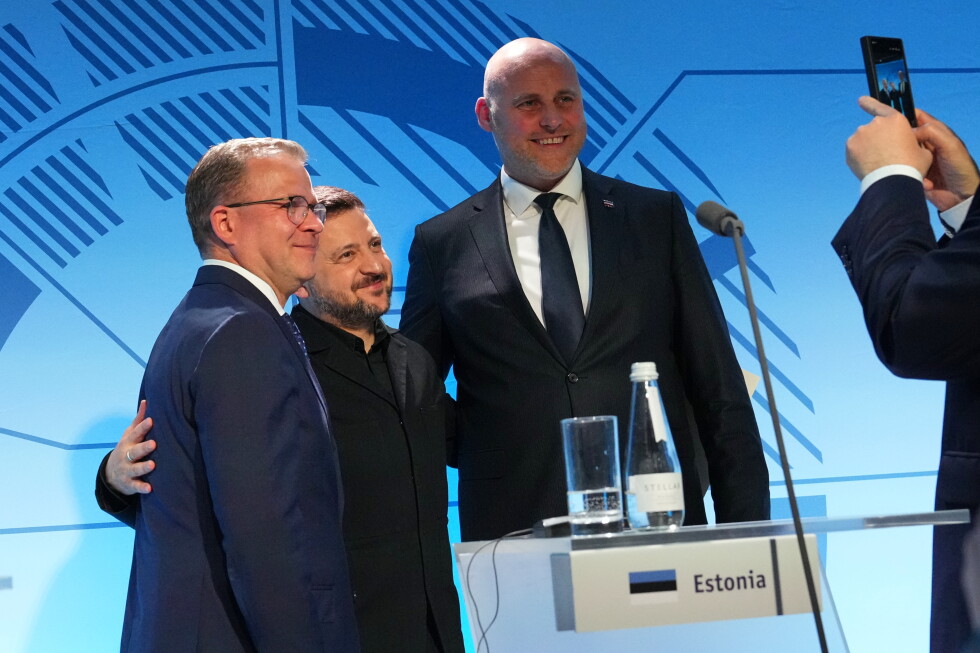
    EU institutional leaders and other candidate countries waiting in the accession queue, however, have pushed back against shortcuts, insisting the process must remain strictly merit-based and ultimately lead to full membership. “Membership is not simply about securing a club card for the EU,” Finland’s Foreign Minister Elina Valtonen told reporters ahead of Monday’s conference. “What Ukrainians truly are after is freedom, democracy and a transparent market economy without any corruption, and completing the full reform process is vital to delivering that.”

    A key lingering concern for the bloc is the risk of future obstruction along the same lines as Hungary, whose former nationalist Prime Minister Viktor Orbán — long viewed as Moscow’s closest ally within the EU — regularly used the bloc’s requirement for unanimous member state approval to block progress on sanctions, political statements, and even accession negotiations. Orbán’s government stymied Ukraine’s accession launch for months, and the European Commission has frozen billions of euros in cohesion funds for Hungary over widespread democratic backsliding under Orbán’s rule. Even with Orbán no longer holding the prime ministership, anxiety remains that a single discontented member can derail the entire accession process. “We need to be very cautious in the future and make sure that these are countries that really want to be a part of Europe, and a part of the European Union, and are willing to work with us,” Swedish Foreign Minister Maria Malmer Stenergard said. “In order for the EU to be really strong, we need to make sure that this doesn’t happen again.”

  • Dozens walk out as Google boss Pichai addresses Stanford graduates

    Dozens walk out as Google boss Pichai addresses Stanford graduates

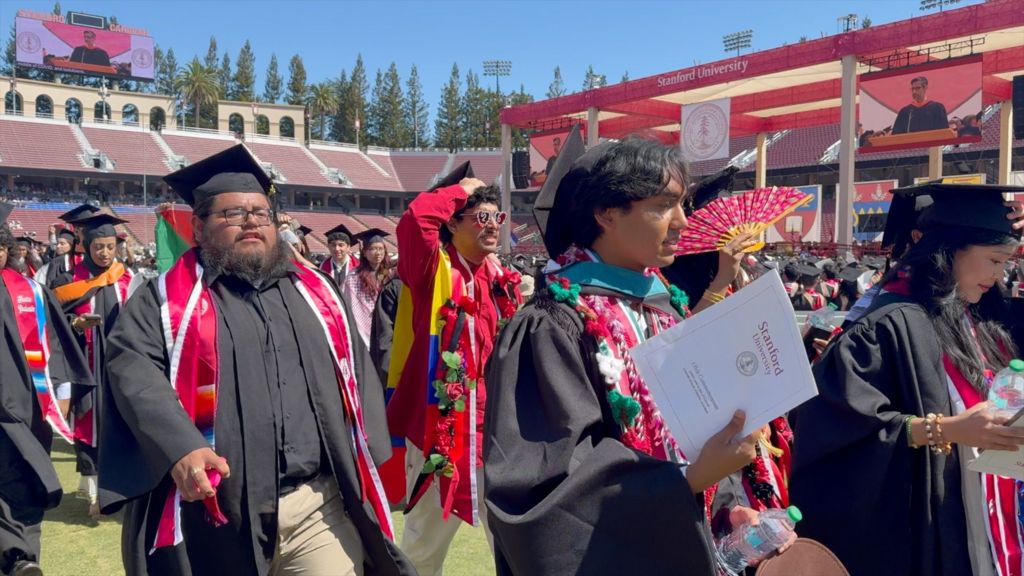
    When Google CEO Sundar Pichai stepped up to deliver the keynote address at Stanford University’s 2026 commencement ceremony on June 15, dozens of graduating students chose to exit the venue in protest, kicking off a high-profile demonstration that reflects growing tensions between U.S. college campuses and leading tech industry figures. Footage captured by the BBC shows protesters holding signs reading “ICE spies with Google AI”, highlighting their opposition to Google’s contentious contractual partnership with U.S. Immigration and Customs Enforcement (ICE).

    This walkout is not an isolated incident, but part of a rising wave of commencement protests across the United States this graduation season, rooted in overlapping student concerns ranging from corporate-government collaboration to the far-reaching impacts of artificial intelligence on employment and civil liberties. While most recent campus protests against tech leader commencement speakers have centered on anxiety over AI-driven job displacement, the Stanford demonstration adds another layer of grievance tied to Google’s work with federal immigration agencies. Though the total number of students who participated in the walkout remains unconfirmed by university officials, local outlet SFGate has placed the estimate at roughly 200. Reports also note that not all departing students shared the same core motivation: some protesters were spotted carrying Palestinian flags, indicating overlapping participation in broader campus activism around the Israel-Gaza conflict.

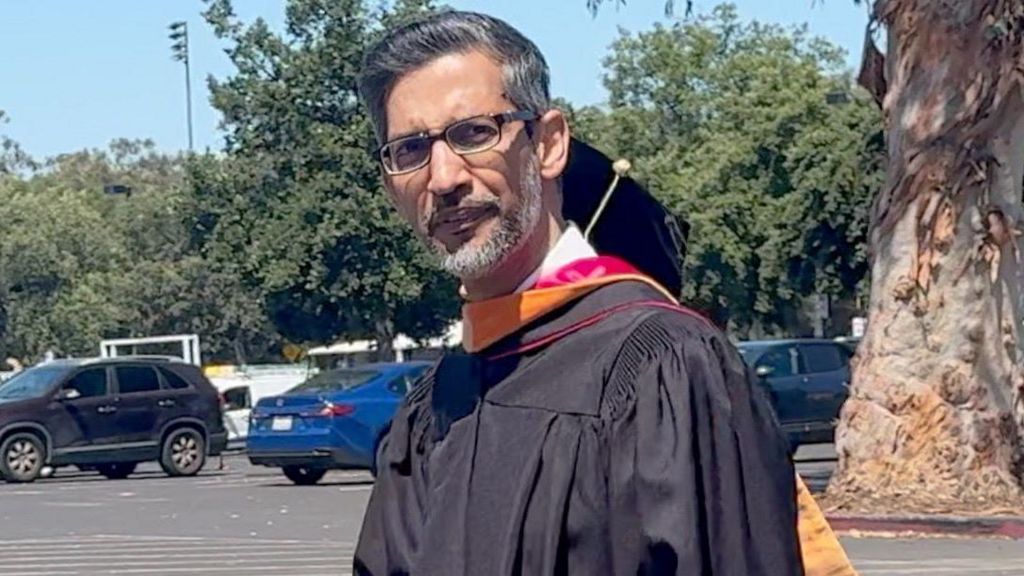
    Pichai, an engineering graduate of Stanford who holds both a master’s degree and an MBA from the institution, made light of the anticipated protest in his opening remarks, choosing to sidestep direct engagement with student concerns about AI and Google’s government contracts. “People thought it would be really difficult for me,” he joked to the remaining audience. “It is the last two letters of my last name, after all.” The Google CEO has not issued any formal response to the protest following the ceremony, after declining to comment to the BBC following the event.

    The Stanford demonstration is the latest in a string of hostile receptions for public figures who bring up AI during U.S. college commencement speeches this year, signaling broad, cross-campus unease with the rapid proliferation of unregulated artificial intelligence. Back in May, former Google CEO Eric Schmidt faced sustained boos from graduates when he discussed the growth of the AI sector during his commencement address at the University of Arizona. Schmidt, who compared the current AI boom to the advent of personal computing four decades prior, acknowledged the crowd’s anger mid-speech, saying, “I know what many of you are feeling about that. I can hear you.”

    Similar scenes unfolded at other institutions across the country. At the University of Central Florida, real estate executive Gloria Caulfield was met with crowd booing when she described the rise of AI as “the next industrial revolution” during her commencement remarks. At Middle Tennessee State University, Big Machine Records CEO Scott Borchetta also faced jeers when he mentioned AI in his address, prompting a blunt pushback to graduates: “Deal with it, like I said, it’s a tool.”

    This wave of protests underscores a growing rift between the tech industry, which has framed AI as an unprecedented driver of economic growth, and a younger generation of students who increasingly voice concerns about job security, ethical misuse of AI by government agencies, and the lack of meaningful regulation for fast-moving AI development. As graduation season 2026 continues, clashes over AI and corporate partnerships with government are expected to remain a flashpoint for campus activism across the United States.

  • Bowen: Iran deal ends Trump’s war that revealed limit of US dominance

    Bowen: Iran deal ends Trump’s war that revealed limit of US dominance

    More than three months after the United States and Israel launched a surprise war against Iran, a tentative preliminary agreement has emerged to end a conflict that has already reshaped regional power dynamics and exposed the limits of American military dominance. Widely regarded as the most damaging foreign policy failure of the Trump presidency to date, the war has left lasting scars on alliances, global supply chains and countless civilian lives.

    To understand how the region arrived at this new ceasefire agreement, one must revisit the deceptive lead-up to the February 28 invasion. On February 27, just 24 hours before the first strikes, Iranian and American negotiators were meeting in Geneva for what both sides had framed as serious talks to regulate Iran’s nuclear program. Multiple sources confirm Iranian negotiators entered the discussion in good faith, putting both concessions and policy demands on the table. At that time, the Strait of Hormuz—the strategic waterway that carries roughly 20% of the world’s daily oil and natural gas supplies, along with critical petrochemical inputs ranging from agricultural fertilizers to semiconductor components—remained fully open to commercial shipping.

    What followed was a coordinated surprise attack that upended the entire region. Israel struck first, killing Iran’s long-serving supreme leader Ayatollah Ali Khamenei and his top inner circle of advisers. Parallel to the Israeli strike, a U.S. airstrike destroyed a school in the southern Iranian city of Minab, an attack that independent investigations have confirmed killed more than 150 civilians, at least 120 of whom were girls under the age of 12. Then-President Trump and Israeli Prime Minister Benjamin Netanyahu delivered televised addresses announcing the start of what they promised would be a short, decisive war that would topple the Islamic Republic regime in Tehran.

    That prediction proved to be a catastrophic miscalculation. Instead of collapsing, the Iranian regime rapidly reorganized: Khamenei was quickly replaced by his son Mojtaba as supreme leader, with a new generation of hardline Islamic Revolutionary Guard Corps commanders taking top leadership roles. Far more ideologically aggressive and less risk-averse than their predecessors, the new leadership executed a pre-planned retaliatory strategy that closed the Strait of Hormuz, struck U.S. military assets across the Middle East, attacked American regional allies, and launched direct strikes on Israeli territory. Claims from U.S. Defense Secretary Peter Hegseth that American strikes had crippled Iran’s military capacity quickly proved to be wildly exaggerated.

    The human and economic costs of the three-month conflict have been staggering. Thousands of civilian lives across the Middle East have been lost, countless homes and businesses have been reduced to rubble, and the closure of the Strait of Hormuz disrupted global fertilizer supplies, threatening widespread hunger in low-income nations later this year—with sub-Saharan Africa facing the most severe risk.

    Now, after months of fighting, the two-page, 14-point preliminary memorandum of understanding—still unreleased to the public—brings a temporary end to hostilities. The agreement, pending no last-minute disruptions, reopens the Strait of Hormuz, extends an existing ceasefire across all front lines, and lifts the U.S. Navy’s blockade of Iranian ports. The most intractable sticking points, including the future of Iran’s nuclear program and the scale of sanctions relief Iran would receive for nuclear concessions, have been deferred to future negotiations. For millions of civilians caught in the crossfire, the end of active fighting will come as an enormous relief.

    The agreement has already upended regional political dynamics, starting with the damage it has done to long-standing U.S. alliances with Gulf Arab monarchies. For these states, which have marketed themselves as islands of stability amid Middle East chaos, the crisis has undermined their core political and economic model. Private diplomatic briefings from Gulf officials already reveal plans to diversify geopolitical allegiances and explore new arrangements to coexist with Iran, their immediate neighbor across the Persian Gulf. The conflict has also given China a major strategic opening: Beijing has closely watched the war drain U.S. stockpiles of precision weapons and expose the practical limits of American hard power in the region.

    For Israel, the agreement has sparked acute political crisis. Though Israel was a full co-partner in launching the war, it was entirely excluded from the negotiations that produced the deal, and Netanyahu’s government has reacted with open dismay. Netanyahu, who claimed ahead of the invasion that he had waited his entire political career to destroy the Islamic Republic, now faces fierce recriminations from political opponents who accuse him of undermining Israeli national security. With a national election scheduled for October, Netanyahu is caught between competing pressures: hardline cabinet allies are demanding continued offensive operations in Lebanon and even annexation of southern Lebanon, where Israeli forces have expelled tens of thousands of civilians and destroyed thousands of structures, while U.S. President Trump has openly vented frustration with Netanyahu in recent interviews, creating a rift in the bilateral alliance. A recent Israeli airstrike on Beirut’s southern suburbs, widely seen as an attempt to derail the ceasefire talks, ultimately backfired and accelerated the negotiation process.

    While the deal brings an urgent pause to active fighting, there is no guarantee this preliminary memorandum can evolve into a comprehensive long-term peace agreement between the U.S. and Iran. A lasting grand bargain would fundamentally reshape the Middle East, but decades of ideological hostility and a total lack of mutual trust make that outcome a distant prospect for now.

    The conflict leaves a troubling legacy for all parties. The Iranian people, who were promised freedom by Trump ahead of the invasion, remain under the rule of a hardline regime that just months ago killed thousands of domestic protesters during January’s nationwide unrest. The war has not weakened the Iranian regime; if anything, the failed regime-change attempt has consolidated its power and emboldened its new hardline leadership. For the United States, the conflict reveals that while Washington retains enormous global economic and military power, Trump’s impulsive decision to launch the war has emerged as a clear sign of a declining superpower struggling to maintain its dominance in a rapidly shifting global order.

  • Dozens of Stanford grads walk out on Google CEO’s speech

    Dozens of Stanford grads walk out on Google CEO’s speech

    In a striking display of public dissent that has drawn widespread attention, dozens of graduating students from Stanford University walked out of the commencement speech delivered by Google’s CEO mid-address. The demonstration, captured on camera by BBC journalists, saw protesters leave the ceremony venue carrying handcrafted signs that highlighted their deep unease over Google’s controversial partnership with the United States government.

    The walkout, which unfolded in front of thousands of fellow graduates, guests, and university faculty, spotlights growing tension between big tech firms and younger tech professionals over the ethical implications of corporate work for government agencies. Critics of the partnership have raised a range of concerns, from questions about data privacy and civil liberties to the potential misuse of artificial intelligence and other Google technologies in government programs. Many of the protesting students, who are set to join the tech workforce in the coming months, say they cannot in good conscience stay silent while their future industry leader engages in work they view as ethically compromised.

    This demonstration is not an isolated incident: in recent years, Google employees and student tech groups have repeatedly organized walkouts and petitions to protest the company’s business decisions, from workplace inequality to international government contracts. Monday’s walkout at one of the world’s most prestigious universities signals that this grassroots opposition within the tech community continues to gain traction, even as the company maintains its government partnerships and defends its policy decisions.

  • Russia was behind arson attacks targeting PM, BBC reveals

    Russia was behind arson attacks targeting PM, BBC reveals

    A months-long open-source investigation by the BBC has uncovered damning new evidence linking a series of arson attacks targeting properties connected to UK Prime Minister Sir Keir Starmer to an extensive, state-aligned Russian campaign of sabotage, division and provocation on British soil.

    The plot unraveled hours after 22-year-old Ukrainian builder Roman Lavrynovych set fire to the entrance of Starmer’s former home – a property rented to the prime minister’s sister-in-law after his move to Downing Street. Lavrynovych, who was recruited remotely via the messaging app Telegram by an anonymous handler going by the initials EL, was arrested within hours of the attack. In pre-arrest messages, EL, who had already promised Lavrynovych thousands of dollars in payment and Russian citizenship for carrying out attacks, urged him to flee the city immediately after the arson.

    The BBC’s investigation has traced EL’s identity to 23-year-old Evgeny Lyukshin, a young Russian diplomat-in-training and the son of a senior Russian foreign ministry official. Multiple lines of open-source evidence tie Lyukshin directly to the campaign: his initials match the handler’s alias, he appears in official Russian foreign ministry photos alongside top diplomatic leadership, he studied information warfare at a Kremlin-run training program taught by veteran Russian spies, and he was a core administrator for multiple Russian-backed fake extremist channels operating in the UK. When contacted by the BBC with the full body of evidence linking him to the plot, Lyukshin did not respond. Within hours, multiple channels linked to Lyukshin – including a disinformation outlet tied to the sanctioned Russian media network Rybar – disappeared from Telegram, and an official photo of Lyukshin with Russia’s deputy foreign minister was removed from a Russian state media website.

    The arson attacks on Starmer’s properties are just one small piece of a far larger campaign, the investigation found. Russian operatives led by Lyukshin built a network of completely fake extremist groups online, designed to stoke intercommunal division and fear among British communities. The first of these, the bogus Takbir Foundation, posed as an extremist Islamic organization that paid non-Muslim artists to spray Islamic graffiti on public British buildings – a deliberate ploy to inflame far-right anger. The second, Direct Action UK, was framed as a homegrown British far-right group that paid vulnerable job seekers to carry out Islamophobic vandalism against mosques and Islamic schools across London. Between autumn 2024, when the group launched after the Southport riots, and the arson attacks on Starmer’s properties, at least six London mosques and one Islamic school were vandalized under Direct Action’s direction, with the group sharing clips of the attacks online to amplify fear.

    Crucially, neither group had any genuine grassroots support in the UK. Both were entirely constructed by Russian operatives working remotely from Moscow. Metadata from posts in the Direct Action UK Telegram channel carried Moscow timestamps, used Cyrillic typography conventions, and placed currency symbols at the end of numerical values – a formatting quirk unique to Russian language use. Extremist content from the group was amplified by far-right British figures like Tommy Robinson, who was knowingly or unknowingly used to spread Russian-aligned disinformation. Even the false narrative that the Starmer arson suspects were sex workers tied to a personal scandal for the prime minister was spread by Robinson, before being reposted by a senior Putin administration envoy.

    Two leading UK anti-hate organizations – Hope Not Hate and Tell Mama – warned counter-terrorism police about the Russian links to Direct Action UK months before the arson attacks on Starmer’s properties, but neither received any meaningful follow-up. Nick Lowles, CEO of Hope Not Hate, told the BBC his organization received no response at all after submitting a full report. Tell Mama CEO Iman Atta added that Muslim communities had been left vulnerable by authorities’ failure to act on the warnings, noting that what began as online disinformation quickly escalated to on-the-ground criminal violence.

    A recent trial at the Old Bailey resulted in convictions for Lavrynovych and 27-year-old Stanislav Carpiuc, a Ukrainian-born Romanian national, on charges of conspiracy to commit arson. A third defendant, 35-year-old Petro Pochynok, was acquitted. The trial deliberately avoided any mention of the handler’s ties to Russia, focusing solely on the alleged financial motive for the attacks. The Metropolitan Police, which is currently investigating seven anti-Muslim hate crime incidents linked to Direct Action UK, has said it has no conclusive evidence of state backing for the plot, but multiple senior UK and Ukrainian sources have confirmed to the BBC that authorities have privately concluded the Russian state is behind the campaign.

    This operation fits a long-established pattern of Russian hybrid warfare across Europe and North America, where Russian operatives recruit vulnerable young people – often displaced Ukrainians – as proxy actors to carry out low-level criminal attacks. Senior Ukrainian investigator Vitaliy Sova told the BBC that a recent joint EU-Ukraine operation uncovered a Russian sabotage network operating in 11 countries including the UK, with roughly a third of recruited proxies being Ukrainian nationals. The tactic allows Russia to discredit Ukraine in the eyes of Western allies while maintaining plausible deniability for its own actions.

    Lyukshin’s training places him directly at the heart of the Kremlin’s modern information warfare apparatus. He is a graduate of a two-year-old information warfare program created on the direct orders of the Kremlin, jointly run by Putin’s presidential administration and sanctioned Putin ally Andrey Sushentsov. The program’s teaching staff includes veteran Russian spies: Andrey Bezrukov, a deep-cover spy who operated in the US for decades under a stolen Canadian identity before being uncovered in 2010, and Sergey Nalobin, a former Russian embassy London official widely accused of espionage activity.

    Former UK Conservative Defence Secretary Ben Wallace, who oversaw the British government’s response to the 2018 Salisbury nerve agent attack, said the targeting of the UK prime minister’s property marks a deliberate escalation of Russian aggression against Britain. “This would not have just come from a low-level individual, it would have come from the very top,” Wallace told the BBC.

    The Russian embassy has denied all allegations of involvement, saying in a statement that Russia “poses no threat to the United Kingdom or its people and harbours no aggressive intentions towards Britain.”

    Anyone with additional information on the campaign can contact the BBC Investigations team via email or anonymous secure whistleblowing tool SecureDrop.