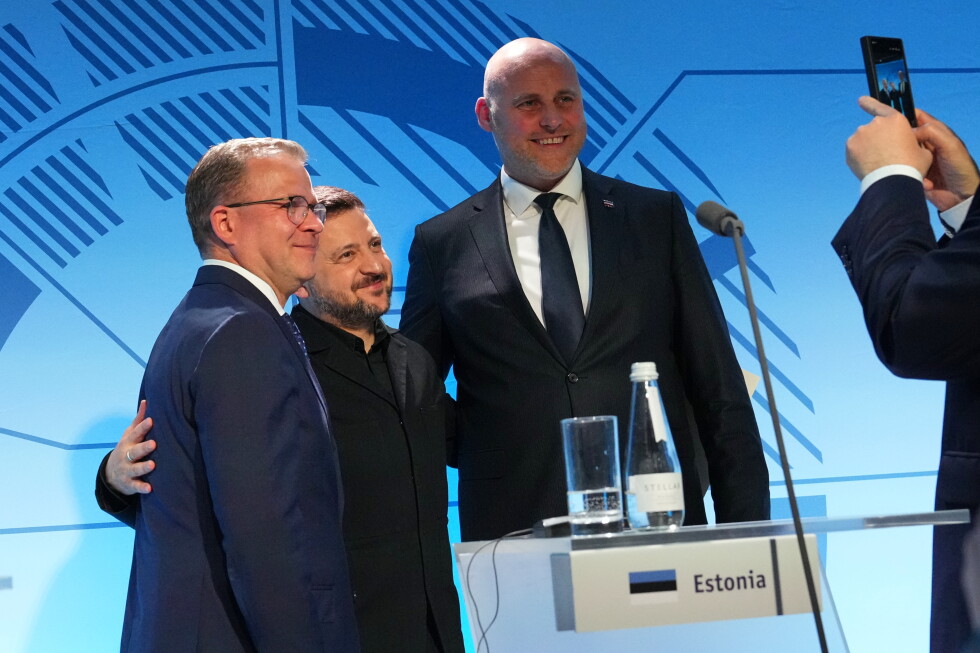
On Monday, a landmark moment in European geopolitics unfolded as Ukraine and Moldova formally initiated European Union membership negotiations, opening a years-long process of political and regulatory alignment that progresses even as Ukraine continues its defense against Russia’s full-scale invasion.
The official opening of talks was led by Ukrainian Deputy Prime Minister Taras Kachka at an intergovernmental conference held in Luxembourg, where negotiators opened the first cluster of policy chapters — foundational areas that anchor the EU’s core founding values: the rule of law, protection of fundamental rights, and the functioning of democratic institutions. This first grouping covers five specific negotiating areas: judiciary and fundamental rights, justice freedom and security, public procurement, statistics, and financial control. The priority placed on these chapters reflects widespread concern among existing EU member states about Ukraine’s ability and commitment to rooting out systemic corruption, a longstanding barrier to the country’s European integration.
Weeks ahead of the negotiation launch, two Ukrainian national anti-corruption agencies named President Volodymyr Zelenskyy’s former chief of staff as an official suspect in a large-scale graft investigation, though authorities stressed Zelenskyy himself faces no suspicion in the case.
For Ukraine, EU membership is framed as a critical long-term security guarantee that will anchor the country’s stability once the war with Russia concludes. While Kyiv views full NATO membership as its ultimate security safeguard, that path remains blocked for the moment: former U.S. President Donald Trump has repeatedly stated Ukraine cannot join the alliance while active fighting continues, and other global and European powers share that cautious stance.
Moldova, the second nation launching membership talks this week, has also sought to escape Russia’s historic sphere of influence. Last year, Moldovan authorities accused Moscow of running a large-scale AI-powered disinformation campaign to interfere in the country’s national elections, a move widely seen as an attempt to keep Moldova aligned with Russian interests.
Accession to the EU requires candidate countries to complete negotiations across 35 distinct policy chapters, spanning everything from agriculture and taxation to energy and trade, a process that typically takes a decade or longer to finalize. Within the EU, there is sharp disagreement over the pace of Ukraine’s integration. A bloc of member states, including those that see Ukraine as central to long-term European security, have pushed for accelerated accession, with German Chancellor Friedrich Merz recently urging fellow EU leaders to consider offering Ukraine associate membership as a way to reinvigorate the peace process. France and the Netherlands have also floated alternative pathways that would bring Ukraine closer to the bloc faster without granting the full rights of full membership.
EU institutional leaders and other candidate countries waiting in the accession queue, however, have pushed back against shortcuts, insisting the process must remain strictly merit-based and ultimately lead to full membership. “Membership is not simply about securing a club card for the EU,” Finland’s Foreign Minister Elina Valtonen told reporters ahead of Monday’s conference. “What Ukrainians truly are after is freedom, democracy and a transparent market economy without any corruption, and completing the full reform process is vital to delivering that.”
A key lingering concern for the bloc is the risk of future obstruction along the same lines as Hungary, whose former nationalist Prime Minister Viktor Orbán — long viewed as Moscow’s closest ally within the EU — regularly used the bloc’s requirement for unanimous member state approval to block progress on sanctions, political statements, and even accession negotiations. Orbán’s government stymied Ukraine’s accession launch for months, and the European Commission has frozen billions of euros in cohesion funds for Hungary over widespread democratic backsliding under Orbán’s rule. Even with Orbán no longer holding the prime ministership, anxiety remains that a single discontented member can derail the entire accession process. “We need to be very cautious in the future and make sure that these are countries that really want to be a part of Europe, and a part of the European Union, and are willing to work with us,” Swedish Foreign Minister Maria Malmer Stenergard said. “In order for the EU to be really strong, we need to make sure that this doesn’t happen again.”