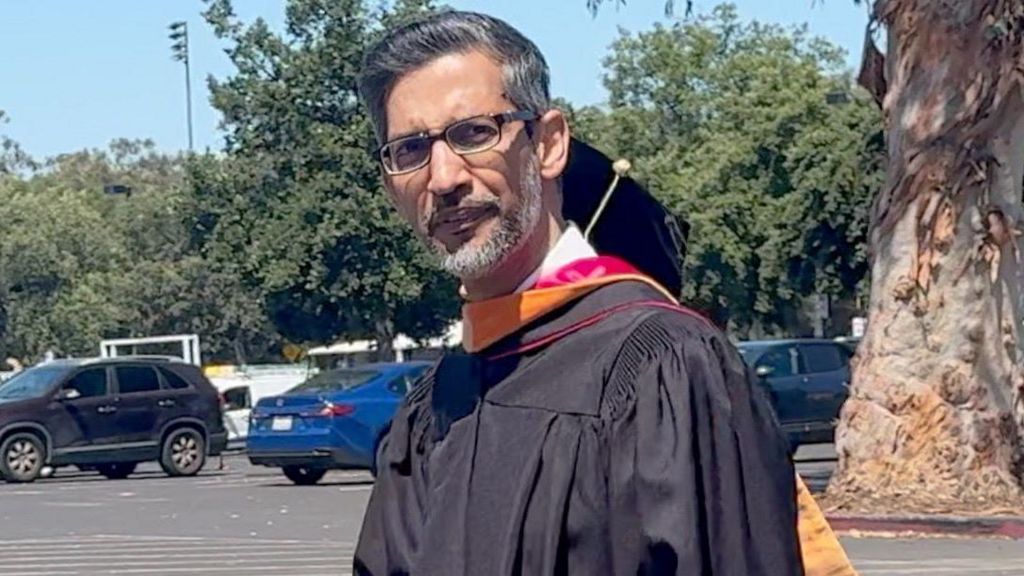
When Google CEO Sundar Pichai stepped up to deliver the keynote address at Stanford University’s 2026 commencement ceremony on June 15, dozens of graduating students chose to exit the venue in protest, kicking off a high-profile demonstration that reflects growing tensions between U.S. college campuses and leading tech industry figures. Footage captured by the BBC shows protesters holding signs reading “ICE spies with Google AI”, highlighting their opposition to Google’s contentious contractual partnership with U.S. Immigration and Customs Enforcement (ICE).
This walkout is not an isolated incident, but part of a rising wave of commencement protests across the United States this graduation season, rooted in overlapping student concerns ranging from corporate-government collaboration to the far-reaching impacts of artificial intelligence on employment and civil liberties. While most recent campus protests against tech leader commencement speakers have centered on anxiety over AI-driven job displacement, the Stanford demonstration adds another layer of grievance tied to Google’s work with federal immigration agencies. Though the total number of students who participated in the walkout remains unconfirmed by university officials, local outlet SFGate has placed the estimate at roughly 200. Reports also note that not all departing students shared the same core motivation: some protesters were spotted carrying Palestinian flags, indicating overlapping participation in broader campus activism around the Israel-Gaza conflict.
Pichai, an engineering graduate of Stanford who holds both a master’s degree and an MBA from the institution, made light of the anticipated protest in his opening remarks, choosing to sidestep direct engagement with student concerns about AI and Google’s government contracts. “People thought it would be really difficult for me,” he joked to the remaining audience. “It is the last two letters of my last name, after all.” The Google CEO has not issued any formal response to the protest following the ceremony, after declining to comment to the BBC following the event.
The Stanford demonstration is the latest in a string of hostile receptions for public figures who bring up AI during U.S. college commencement speeches this year, signaling broad, cross-campus unease with the rapid proliferation of unregulated artificial intelligence. Back in May, former Google CEO Eric Schmidt faced sustained boos from graduates when he discussed the growth of the AI sector during his commencement address at the University of Arizona. Schmidt, who compared the current AI boom to the advent of personal computing four decades prior, acknowledged the crowd’s anger mid-speech, saying, “I know what many of you are feeling about that. I can hear you.”
Similar scenes unfolded at other institutions across the country. At the University of Central Florida, real estate executive Gloria Caulfield was met with crowd booing when she described the rise of AI as “the next industrial revolution” during her commencement remarks. At Middle Tennessee State University, Big Machine Records CEO Scott Borchetta also faced jeers when he mentioned AI in his address, prompting a blunt pushback to graduates: “Deal with it, like I said, it’s a tool.”
This wave of protests underscores a growing rift between the tech industry, which has framed AI as an unprecedented driver of economic growth, and a younger generation of students who increasingly voice concerns about job security, ethical misuse of AI by government agencies, and the lack of meaningful regulation for fast-moving AI development. As graduation season 2026 continues, clashes over AI and corporate partnerships with government are expected to remain a flashpoint for campus activism across the United States.