博客

  • Colombia stopped energy exports to Israel – so why did South Africa and Brazil not do so?

    Colombia stopped energy exports to Israel – so why did South Africa and Brazil not do so?

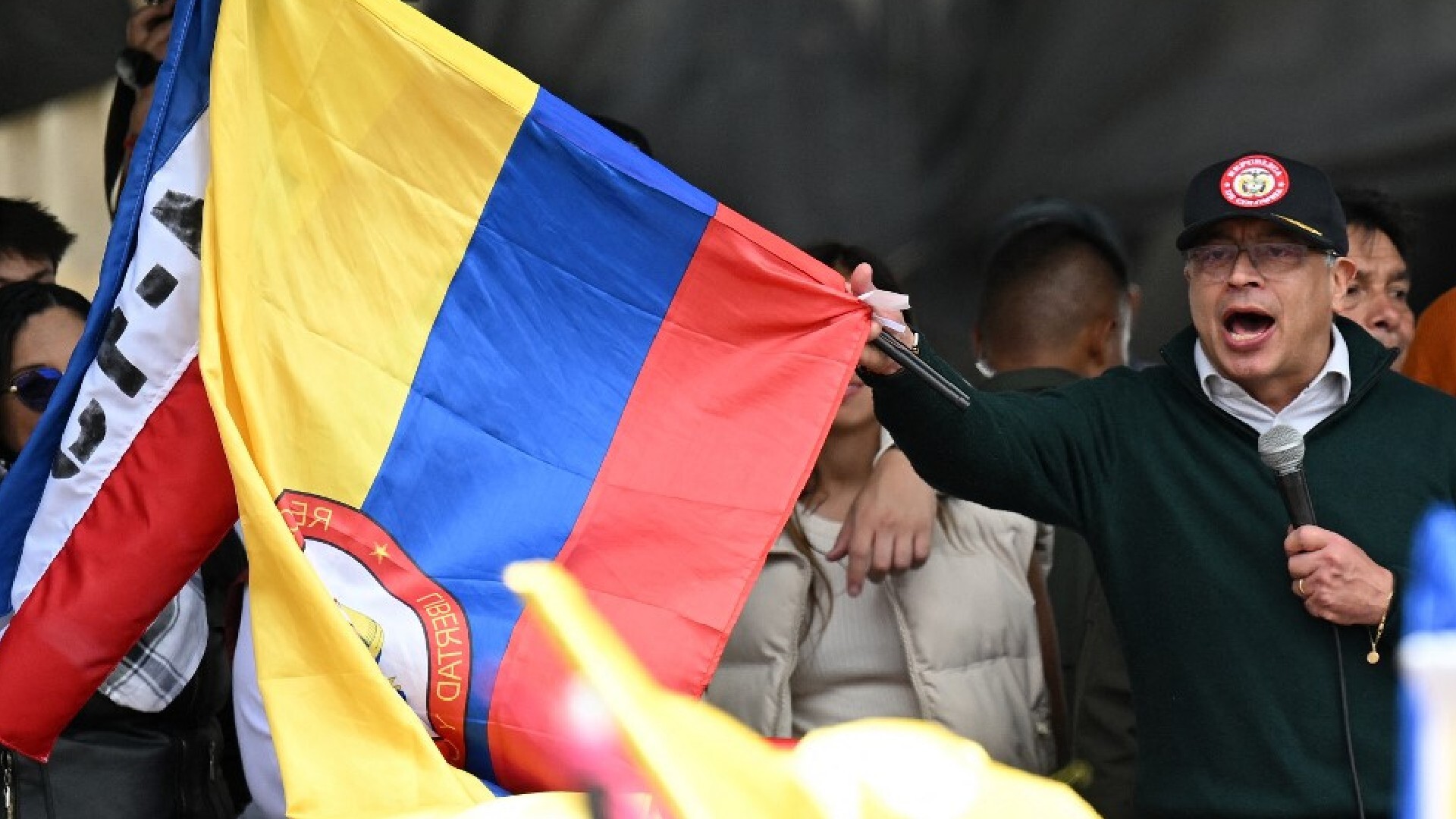
    Against the backdrop of growing international outrage over Israel’s military campaign in Gaza, Colombian President Gustavo Petro has made history by implementing a complete, ironclad ban on all coal exports to Israel – a move that campaigners say proves an energy embargo on Israel is achievable with sufficient political will, while also laying bare the gap between rhetoric and action from other high-profile nations that have publicly backed Palestinian rights.

    The road to the full embargo began in 2024, when Petro first issued a decree banning Israeli-bound coal exports. But a critical loophole allowed multinational mining corporations to continue shipments to honor pre-existing contracts. By July 2025, that loophole was being actively exploited: the Maltese-flagged cargo vessel *Fortune*, loaded with coal mined by U.S. firm Drummond, departed Colombia’s Puerto Drummond bound for Israel’s Hadera port in open defiance of the spirit of the 2024 ban. Within hours of the *Fortune*’s departure, Petro ordered the Colombian navy to intercept and block all further coal supplies to Israel. On August 28, 2025, a revised, closed-loophole decree entered into force, cutting off all Colombian coal exports to Israel entirely.

    “Not a ton of coal leaves for Israel, and I take responsibility,” Petro pledged. As Colombia was Israel’s single largest supplier of coal for electricity generation, exports dropped to zero within months. By November 2025, the ban was fully enforced.

    The push for the embargo originated from grassroots pressure, not just presidential policy. Weeks after the outbreak of Israel’s military operation in Gaza in October 2023, Palestinian trade unions called on Colombia to end energy exports, a demand quickly taken up by Sintracarbon, Colombia’s largest mineworkers union. When the 2024 loophole allowed 28 Drummond ships to deliver coal to Israeli ports between October 2024 and April 2025, a broad coalition of union organizers, Indigenous groups, and BDS activists raised the alarm, forcing the government to close the regulatory gap.

    Indigenous communities in Colombia’s coal-producing regions have framed the issue as a “double genocide,” linking the extraction of coal for Israel’s military to their own long-running displacement and environmental harm. In La Guajira, the Wayuu people have spent decades fighting the Cerrejon mine, one of the world’s largest open-pit coal operations, run by Anglo-Swiss mining giant Glencore. The Global Legal Action Network (GLAN) has documented more than 336,000 cases of respiratory illness in the region directly tied to toxic mine dust, with elevated long-term risks of cancer and genetic damage. Glencore has denied wrongdoing, saying it upholds international human rights standards and runs community development programs, but the company faces ongoing legal action: in 2017, Colombia’s constitutional court ordered a halt to Cerrejon’s expansion over plans to divert a critical water source for the Wayuu, prompting Glencore to launch an international arbitration claim against the Colombian state for millions in compensation.

    Colombia’s coal sector also carries a legacy of paramilitary violence against organized labor. The country is the deadliest in the world for trade unionists, with more than 3,000 organizers murdered since the 1990s. Both Drummond and Glencore (via its subsidiary Prodeco) have been accused of financing and colluding with far-right paramilitary groups between 1996 and 2006, sharing intelligence on targeted union leaders. A 2014 report collected testimony from ex-paramilitaries, victims, and former employees supporting the allegations, which both companies have repeatedly denied, calling testimonies unreliable. In 2023, Colombia’s attorney general’s office announced it would put Drummond’s current and former chief executives on trial for conspiracy to finance paramilitarism, a charge the company continues to reject. Campaigners also note a historical link between Israeli mercenaries and Colombian paramilitaries: Yair Klein, an Israeli ex-soldier, was convicted by a Colombian court in 2001 for training AUC militias in the 1980s.

    Today, the Colombian embargo faces political uncertainty: the country will hold its second round of presidential elections in June 2026, and far-right candidate Abelardo de la Espriella, who won 43.7% of the first-round vote, has pledged to reverse the ban, restore full diplomatic ties with Israel, and open a Colombian embassy in Jerusalem. Even so, campaigners celebrate the embargo as proof that political will can cut off energy supplies that enable military operations.

    In March 2026, Colombia co-chaired a landmark meeting of 40 nations in The Hague, convened by The Hague Group, a coalition working to enforce international law amid the Gaza conflict. At the meeting, participating governments including China, Saudi Arabia, and Spain committed to ban fuel exports to Israel, implement stricter port and transit controls, and restrict the movement of arms, military supplies, and dual-use goods bound for Israel. But a closer look at trade data reveals that many signatory nations have failed to follow through on their commitments, with some even increasing energy exports to fill the gap left by Colombia.

    The most prominent example is South Africa, which co-chaired the The Hague meeting and is the lead claimant in the landmark genocide case against Israel at the International Court of Justice (ICJ). As Colombian exports fell to zero, South Africa’s coal shipments to Israel surged by 87% to fill the gap. Even before the full Colombian embargo, South Africa was Israel’s second-largest coal supplier in the first half of 2024, accounting for 60% of all Israeli coal imports. Most of this coal powers Israel’s national electricity grid, which supplies energy to Israeli Defense Force bases, weapons manufacturing facilities, surveillance infrastructure, and illegal settlements in the occupied West Bank – even as Israel restricts electricity access for Palestinian civilians in Gaza and the West Bank.

    South African activists from the BDS Coalition have called on the government to enforce a ban, pointing out that the government is legally obligated under its own constitution and the Genocide Convention to prevent trade that supports alleged international crimes. South African attorney Sirhaan Che Khan notes that the government already has the power to implement export restrictions without new parliamentary approval, using the same International Trade Administration Act powers it invoked to restrict medical supply exports during the COVID-19 pandemic. The WTO’s trade rules also include security exceptions for actions taken to uphold UN Charter obligations for peace and security – a standard Colombia has already invoked without facing legal challenge.

    Despite this, the South African government has failed to act. BDS coordinator Roshan Dadoo said activist requests for meetings with trade officials have yielded no commitments, with Trade Minister Parks Tau arguing a ban could face legal challenges under WTO rules and that political consensus is impossible in the country’s unity government, which includes the pro-Israel Democratic Alliance alongside the ANC. A government source, speaking anonymously to Middle East Eye, said businesses harmed by a ban could sue the state without new legislation, even though activists say existing law already grants the executive sufficient power. The South African Department of Trade, Industry and Competition did not respond to requests for comment by publication time, leaving a stark contradiction between the country’s bold international legal stance against Israel’s actions and its ongoing trade in energy.

    Brazil, another high-profile signatory that has publicly backed South Africa’s ICJ case and recalled its ambassador to Israel after Lula compared Israel’s actions to the Holocaust, has similarly continued supplying energy to Israel via indirect routes. In 2024, Brazil became Israel’s fourth-largest crude oil supplier, accounting for 9% of Israel’s imports. State-owned Petrobras claims it never sells crude directly to Israel, only to third-party refineries, and has no control over the final destination of refined products. But union leaders say that is a deliberate loophole.

    Leandro Lanfredi, a leader of Brazil’s National Federation of Oil Workers, told Middle East Eye that Brazilian crude is redirected to Italian refineries, which then process and ship it to Israel. In June 2025, after a combination of an Iranian drone strike on Israel’s largest refinery in Haifa (which took the facility offline for months) and scheduled maintenance at Ashdod’s refinery crashed Israeli domestic refining output to a 30-year low, demand for imported refined fuel surged. Data collected by Lanfredi shows that the share of Brazilian crude in the blend at Italy’s Saras refinery in Sardinia jumped from a historical average of 7% to 47% in June 2025, just as the refinery began exporting an estimated 45,000 tons of refined petroleum to Israel. “Of course Petrobras knows who their clients are,” Lanfredi said, noting that the Brazilian government owns more than 50% of voting shares in the state oil giant and has the regulatory power to enforce a ban, but has resisted to avoid friction with private investors. Brazil’s foreign ministry did not respond to requests for comment.

    Activists say Brazil has a clear precedent for such action: in 1985, center-right President Jose Sarney implemented a full oil and arms embargo against apartheid South Africa, proving that even moderate administrations can enforce energy embargoes for human rights. “If it was possible for him to do it, it is more than possible for President Lula,” Badra El Cheikh of the Palestine Institute for Public Diplomacy told MEE.

    The core barrier to broader action, activists say, is fear of U.S. retaliation. “I think most of all, they are afraid of the backlash that could come from Israel’s biggest partner in crime, which is the US. They’re afraid of sanctions, and afraid of anything that the US might do against their economies,” El Cheikh explained. Ana Sanchez, general coordinator of Global Energy Embargo for Palestine (GEEP), added that energy deals face far less international regulation than arms sales, which are at least constrained by the Arms Trade Treaty. Many governments also hide behind the false claim that an energy embargo targets civilians, she said, ignoring that energy powers the military machine that drives the conflict.

    For campaigners, Colombia’s successful implementation of a full embargo proves that the gap between global rhetoric on Palestinian rights and action is not inevitable – it is a choice, rooted in political priorities rather than legal or economic constraint.
  • Ebola cases increase almost 40% in a week as death toll passes 200

    Ebola cases increase almost 40% in a week as death toll passes 200

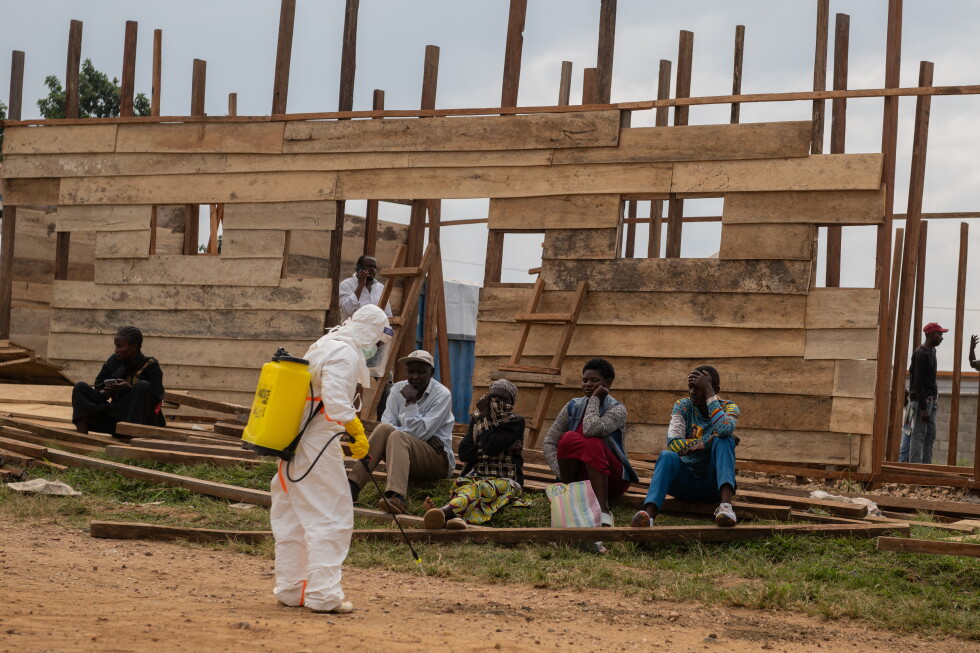
    DAKAR, SENEGAL – Just one month after the Ebola outbreak was formally detected across the Democratic Republic of Congo’s eastern region and neighboring Uganda, the death toll has surpassed 200, marking it the most severe early-stage Ebola outbreak on record, the Africa Centres for Disease Control and Prevention (Africa CDC) confirmed in a Thursday briefing.

    Dr. Wessam Mankoula, a medical epidemiologist with Africa CDC, told reporters that the outbreak has already recorded 894 confirmed cases as of this week—three times the caseload seen at the same 30-day mark during Uganda’s 2000 Ebola outbreak, which registered 224 cases at the corresponding point. The higher current count is partially explained by delayed detection: health authorities only confirmed the outbreak’s existence on May 15, weeks after community transmission was first suspected. Since last week alone, confirmed cases have jumped 38%, and the virus has already spread to 32 separate health zones across eastern Congo.

    What makes this outbreak particularly dangerous is its strain: it is caused by the rare Bundibugyo Ebola virus, for which no approved vaccines or specific antiviral treatments exist. Early testing did not screen for this less common variant, as most of Congo’s 16 previous Ebola outbreaks were linked to the Zaire strain, a more widespread variant for which effective vaccines are already available. As of this week, 74 infected patients across the affected region have recovered, and researchers are currently advancing development of experimental treatments including targeted monoclonal antibodies for Bundibugyo.

    Over 90% of all confirmed cases are concentrated in Congo’s eastern Ituri Province, with additional cases detected in North Kivu and South Kivu provinces. The virus has already crossed the international border into Uganda, where 19 confirmed cases and two deaths have been documented to date.

    Public health officials are facing steep barriers to bringing the outbreak under control, starting with critical gaps in contact tracing. Africa CDC estimates that for the 894 confirmed cases, between 17,000 and 35,000 close contacts should be monitored for symptoms. As of Thursday, only roughly 4,000 contacts—less than 15% of the projected total—have been located and are under active evaluation.

    “We are still far from controlling the situation of this outbreak,” Mankoula said, noting that long-running insecurity and geographic isolation in Ituri have hobbled tracing efforts. Decades of armed conflict in the province have displaced nearly one million people, according to the United Nations’ Office for the Coordination of Humanitarian Affairs, leading to constant population movement as communities flee violence. Ituri’s dense forests, underdeveloped road infrastructure, and scattered remote villages mean accessing affected communities can take multiple days of travel. Tracing efforts are further complicated by the large population of artisanal miners working in the region’s mineral-rich interior, who move frequently between isolated mining sites with little official oversight.

    Compounding these challenges are critical gaps in funding and personnel. Of the more than $900 million in international pledges committed to the outbreak response, only $90 million has actually been disbursed to frontline response teams, Mankoula said. Africa CDC estimates it requires 540 trained response personnel to fully address the crisis, and currently has only 84 staff deployed to the affected region.

    Mankoula added that the organization is working urgently to accelerate the release of committed funds, saying: “We’re keeping our fingers crossed those new pledges will be fast tracked, and we’ll be following up with different member states and different partners about their commitment to turn those pledges into actual money released to their affected countries or partners.”

  • Federal regulators back Trump’s plan to speed power to energy-hungry AI data centers

    Federal regulators back Trump’s plan to speed power to energy-hungry AI data centers

    WASHINGTON – In a landmark move tailored to the explosive growth of artificial intelligence, federal energy regulators have greenlit new rules to speed up connections between large power users — most critically AI-focused data centers — and the nation’s aging electric transmission system. The vote comes as U.S. policymakers race to meet surging energy demand for AI infrastructure and shore up American competitiveness against China in the fast-expanding tech sector.

    The policy shift was initiated eight months ago, when U.S. Energy Secretary Chris Wright called on the Federal Energy Regulatory Commission (FERC) to take bolder action to clear interconnection bottlenecks that have delayed data center development. In a unanimous vote by the five-member commission, FERC passed an order requiring that large power loads such as AI data centers gain timely, orderly access to high-voltage transmission lines. This marks the second major regulatory adjustment FERC has made in less than a year to accommodate AI infrastructure, following a December order that allowed data centers to connect directly to independent power plants.

    FERC Chair Laura Swett, a Trump administration appointee, framed the decision as a historic step to modernize the U.S. electricity market while shielding ordinary consumers from unexpected costs. Under the new order, data center operators are required to cover 100% of the costs for transmission upgrades needed to support their connections, addressing widespread concerns that general ratepayers would be forced to foot the bill for expanding the grid to serve AI facilities. “Many Americans are increasingly concerned that adding large power loads like data centers will push up their electricity bills, and that concern is shared by this commission,” Swett said. “We take very seriously our congressional mandate to ensure rates remain reasonable for American households.”

    The policy has drawn a mixed reception from stakeholders across the energy and political landscape. Tech giants and data center developers have welcomed the reform, which cuts through years-long interconnection backlogs that have left major AI companies scrambling to secure enough power to expand their operations. Major industry players including xAI, Google, Microsoft, Meta, Oracle, OpenAI and Amazon have already backed the administration’s efforts by signing the Ratepayer Protection Pledge, a voluntary commitment to build or purchase new power generation to match their data center demand, cover all grid upgrade costs, provide emergency backup power to avoid blackouts, and prioritize local hiring for construction projects.

    But the rule has sparked significant pushback from utilities, state governments, and regional grid operators, who argue that the new federal framework erodes their existing authority to manage local transmission planning and interconnection processes. Clean energy advocates have also raised alarms, warning that the policy could undermine state-level requirements to power new data centers with renewable energy sources, slowing progress on national decarbonization goals.

    Beyond regulatory and policy disputes, the FERC vote comes amid a growing grassroots backlash against data center development across the country. Local communities are increasingly pushing back against proposed facilities, citing fears that concentrated data center demand will drive up regional electricity prices, strain local water supplies, and cause environmental harm. Many residents have also protested the loss of open space and farmland to massive data center complexes, which have grown dramatically in size to meet AI’s extreme power requirements.

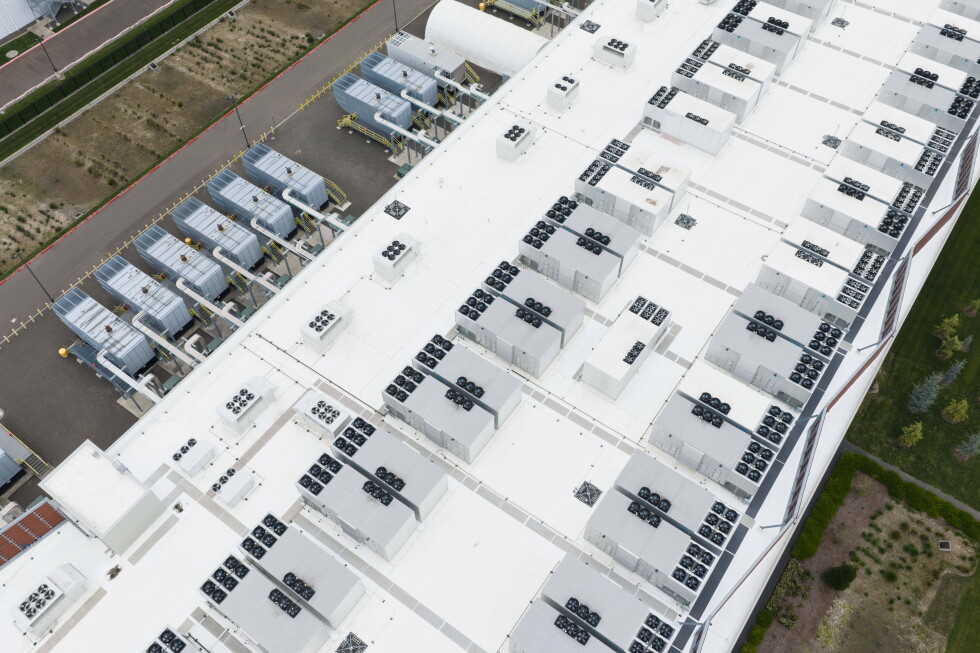
    Current industry data underscores the scale of AI’s growing energy footprint. An estimated 4,000 data centers are already operating across the U.S., with another 3,000 planned or under construction — some of which consume as much electricity as a small entire city. The Electric Power Research Institute estimates that data centers already account for roughly 5% of total U.S. electricity demand, a figure that could triple by 2035. In Virginia, a major hub for data center development, facilities already make up more than 25% of the state’s total electricity demand, a share projected to climb above 40% by 2030.

    Even with the new FERC rules, however, major structural challenges remain to matching AI’s power demand with available supply. The order does not address the growing gap between data center construction and the buildout of new power generation plants. In many regions, data center development is outpacing the addition of new generation capacity, leading to tightening energy supplies, rising retail electricity prices, and increased warnings of potential future blackouts.

    Industry analysis also shows that even with clearer interconnection rules, overall data center capacity buildout is lagging far behind projected demand. A recent J.P. Morgan report, which analyzed satellite imagery of planned projects, found that more than 60% of data center capacity scheduled for completion by 2027 has not yet broken ground, and an additional 7% of projects have already been delayed. The report cited persistent permitting bottlenecks, supply chain delays for critical equipment including gas turbines and transformers, and widespread shortages of skilled construction labor as the primary causes of backlogs.

    For the Trump administration, accelerating AI data center development is a core priority to maintain U.S. economic and military leadership in AI, a sector the White House views as critical to outcompeting China. President Trump has made AI competitiveness a central policy focus, recently signing an executive order to establish a 30-day national security vetting framework for the most advanced AI systems before they can be released to the public, while framing the sector as a magnet for global foreign investment into the U.S.

  • Should the US impose a teen social media ban like the UK?

    Should the US impose a teen social media ban like the UK?

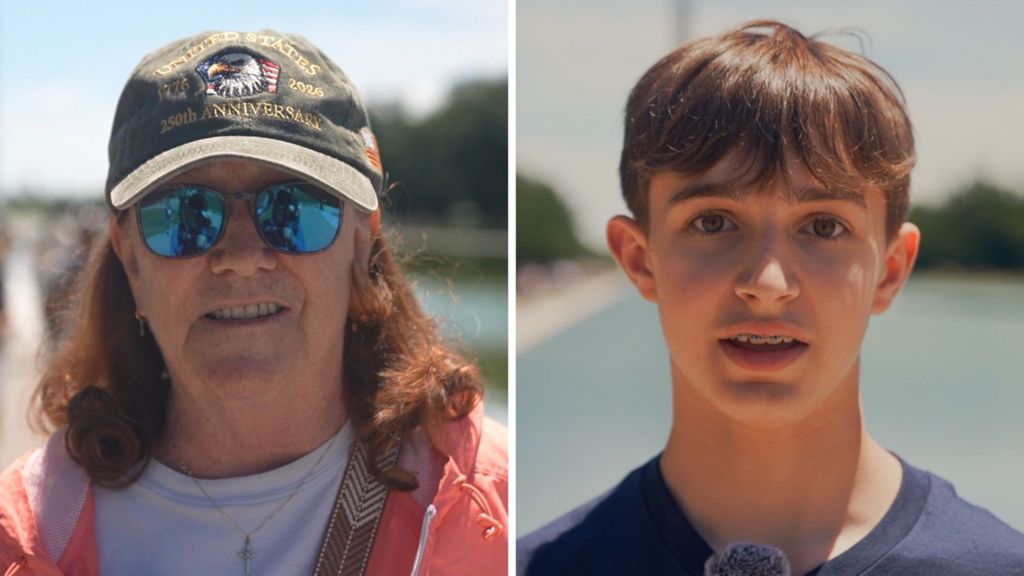
    A new policy restricting minors’ access to social media rolled out in the United Kingdom, which bars all users under the age of 16 from major platforms, has crossed the Atlantic to ignite a fiery public conversation in the United States. As policymakers and parents across the country grapple with growing concerns over underage digital wellness, the British Broadcasting Corporation set out to capture a cross-generational snapshot of American opinion, asking respondents from multiple age groups whether the U.S. should follow the UK’s lead and implement an identical ban.\n\nThe question could not be more timely: for years, public health researchers, child advocacy groups, and lawmakers have raised urgent alarms about the impacts of endless social media scrolling on adolescent mental health, including rising rates of anxiety, body image disorders, and sleep disruption. The UK’s bold policy move represents one of the most aggressive regulatory actions to date to address these harms, making it a natural test case for other nations weighing similar restrictions.\n\nInterviews with American respondents revealed deep divides along both generational and ideological lines. Many parents and older Americans voiced strong support for the ban, arguing that persistent exposure to algorithm-driven social media content poses irreversible damage to developing brains and that regulatory intervention is long overdue. They point to growing bodies of research linking heavy adolescent social media use to poor mental health outcomes as irrefutable evidence that drastic action is needed.\n\nOn the other side of the debate, many younger respondents and digital rights advocates argue that an outright age ban is both unenforceable and an overreach of government authority. Young people themselves note that social media has become a core space for social connection, education, and organizing, particularly for marginalized teens who may not find accepting communities offline. Critics also point out that a ban does not address the root causes of adolescent mental health struggles, and would push underage users onto unregulated, less safe platforms that lack even the basic content protections major social media companies currently offer.\n\nAs the debate unfolds, the UK’s policy will be closely watched in the U.S. and across the globe, offering critical data on how such a ban works in practice and what its actual impacts on adolescent well-being and digital access turn out to be.

  • A UK border official and a former Hong Kong cop sentenced for spying on China’s behalf

    A UK border official and a former Hong Kong cop sentenced for spying on China’s behalf

    LONDON – In a landmark national security ruling that has escalated diplomatic tensions between London and Beijing, two men – a former United Kingdom border official and a retired Hong Kong police officer – have received lengthy prison sentences on charges of orchestrating a spy operation targeting Beijing’s critics based on British soil. The convictions mark one of the highest-profile cases prosecuted under the U.K.’s post-Brexit National Security Act, underscoring growing concerns over transnational political surveillance on Western territory.

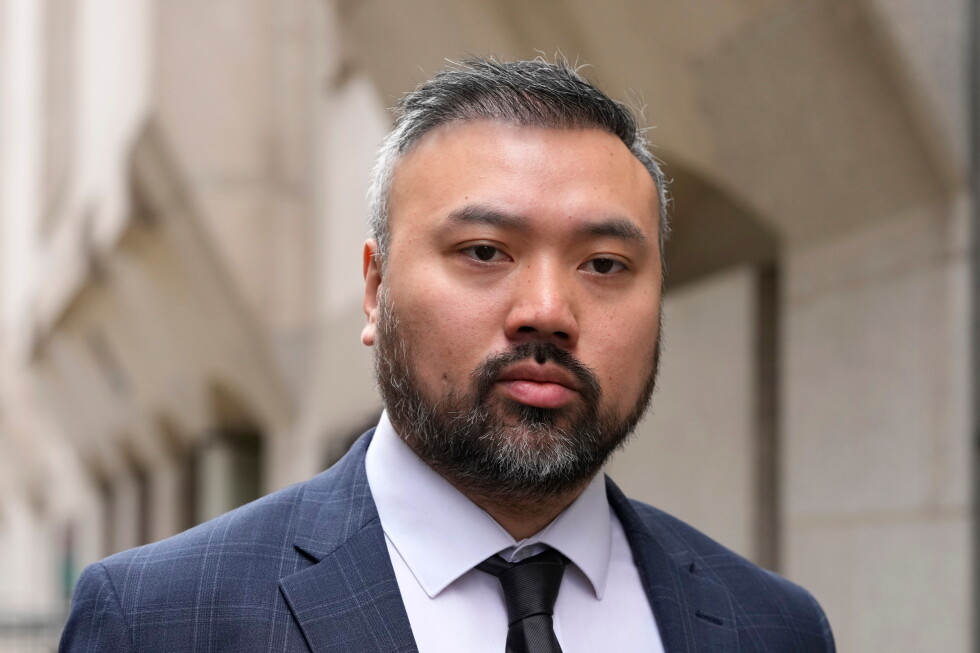
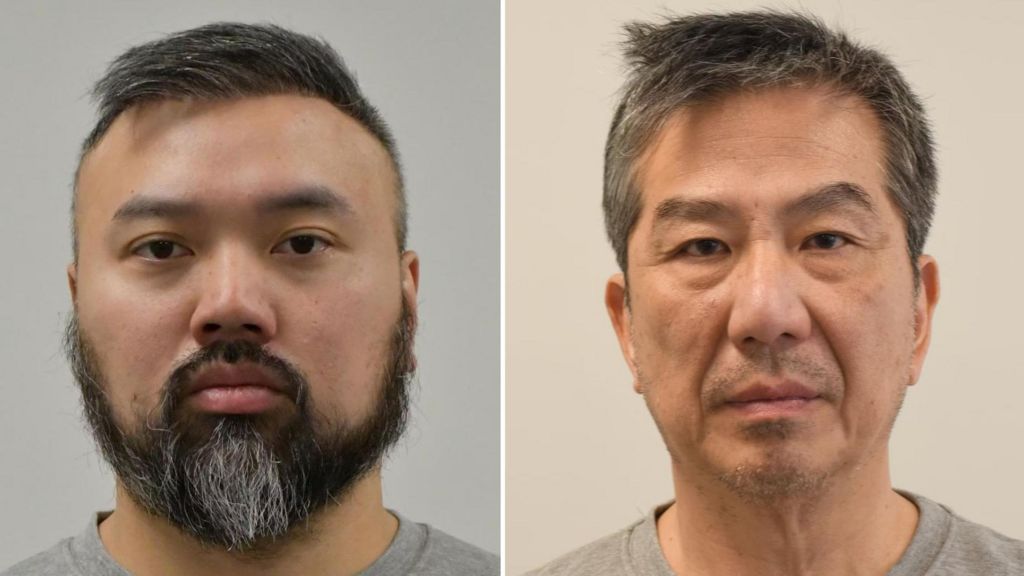
    Sixty-six-year-old Bill Yuen, a former Hong Kong Police superintendent who went on to work as office manager at the Hong Kong Economic and Trade Office (HKETO) in London – the regional government’s official U.K. representative – and 41-year-old Peter Wai, a former Metropolitan Police officer who later joined U.K. Border Force, were handed down their sentences Thursday at London’s Central Criminal Court. Judge Bobbie Cheema-Grubb imposed a 10-year prison term on Wai and an eight-year term on Yuen, condemning the pair’s actions as deliberate, coordinated and severely damaging to the safety of those they targeted.

    According to prosecution arguments, the two Chinese-British nationals operated a covert surveillance network between 2020 and 2022, posing as legitimate law enforcement or intelligence personnel to monitor and collect intelligence on Hong Kong pro-democracy dissidents and Beijing critics residing in the U.K. Their list of targets included prominent high-profile figures: Nathan Law, a former Hong Kong opposition lawmaker who fled to the U.K. after Beijing’s imposition of the 2020 national security law, and multiple British parliamentarians who have publicly criticized Chinese policy. Prosecutors also revealed that the pair referred to the pro-democracy activists they targeted with the dehumanizing slur “cockroaches”, a term widely adopted by pro-Beijing factions to describe opposition supporters during Hong Kong’s 2019 pro-democracy protests.

    Last month, a jury found both men guilty on charges of violating the National Security Act for providing assistance to a foreign intelligence service. Wai received an additional conviction for misconduct in public office, after he abused his position as a border official to access a secure government computer and pull personal information on individuals of interest to Hong Kong authorities. In her sentencing remarks, Cheema-Grubb emphasized that the pair’s repeated covert operations had inflicted ongoing fear and psychological harm on the people they monitored, who had sought safety in the U.K. after fleeing political persecution.

    Helen Flanagan, commander for Counter Terrorism Policing London, described the defendants’ activities as “truly chilling” in a post-sentencing statement. She noted that the targets of the spy ring were peaceful pro-democracy campaigners who had fled to the U.K. to seek sanctuary, only to be tracked and targeted for their political beliefs.

    The case has sparked immediate diplomatic friction between the U.K. and China. Following the guilty verdict last month, British foreign ministry officials summoned Chinese Ambassador Zheng Zeguang to formally raise concerns over the transnational surveillance operation. In response, China’s Embassy in London denounced the proceedings as a politically motivated “farce” manufactured to provide cover for anti-China forces that had relocated to Britain. The Hong Kong government also issued a statement rejecting all links between the espionage operation and the Hong Kong administration or HKETO, claiming British authorities had launched the investigation on “groundless accusations”, abused legal processes and manipulated judicial proceedings to secure a conviction.

    The verdict comes amid a steady deterioration in Sino-British relations over issues including Hong Kong’s political crackdown, increased Chinese assertiveness in the Indo-Pacific, and repeated allegations of transnational repression targeting dissidents based in Western countries.

  • ‘My brother hid in a rice sack’: The refugee stars playing at the World Cup

    ‘My brother hid in a rice sack’: The refugee stars playing at the World Cup

    As the 2026 World Cup unfolds across North America, three standout players taking the pitch for Australia, Germany, and Canada share a powerful, little-told common bond: all descend from African refugee families who fled devastating conflict to build new lives abroad. For these athletes, their presence on football’s biggest global stage is more than a personal achievement — it is a platform to amplify the stories of displaced people everywhere, even as growing policy shifts around the world roll back access to refugee resettlement.

    For Germany defender Antonio Rüdiger, a 33-year-old Real Madrid stalwart and two-time Champions League winner, the road to the World Cup began long before he was born. His parents fled Sierra Leone’s brutal 11-year civil war in the 1990s, making a treacherous 340-kilometer trek from their home district of Kono to the capital Freetown in search of safety. Rüdiger’s uncle took extraordinary measures to protect his young nieces and nephews from rebel factions that kidnapped thousands of children to serve as child soldiers: he hid the group inside a sack of rice, and on multiple occasions, the family pretended to be dead to avoid gunfire or abduction. After securing refugee status in Germany, Rüdiger was born in Berlin, growing up in a shared government refugee center. That early experience shaped the work ethic that carried him to the top of global football. “Nothing is given in life. You have to work for things, you have to sacrifice a lot to get where you want to go,” he told BBC Sport Africa.

    Rüdiger is far from alone among World Cup participants in carrying a refugee heritage. Canadian captain and Bayern Munich star Alphonso Davies spent his earliest years in a Ghanaian refugee camp after his family fled civil war in Liberia, a conflict that ravaged the West African nation alongside Sierra Leone in the 1990s and early 2000s. Today, Davies is part of the United Nations High Commissioner for Refugees’ (UNHCR) symbolic “Game Changing Team,” a group of elite refugee-background athletes assembled to demonstrate what displaced young people can achieve when given safety, opportunity, and a warm welcome. “Canada gave me the opportunity to be who I am and to be what I want to be in life,” Davies told UNHCR, recalling his first days in the country: going to school for the first time, playing the sport he loves, and building new friendships.

    The Australian men’s national squad, the Socceroos, fields three forwards with African refugee roots: 20-year-old Nestory Irankunda of Watford, Mohamed Toure of Norwich City, and Awer Mabil of Spain’s Castellón. All three were either born in African refugee camps or grew up in them before resettling in Australia, and Irankunda recently made history as the Socceroos’ youngest-ever World Cup goalscorer after netting in a 2-0 group stage win over Turkey. Australia’s professional footballers association has leaned into the squad’s extraordinary multicultural identity, releasing a video featuring every player naming their birthplace or family heritage to highlight the tangible benefits of immigration.

    Rüdiger, Davies, Irankunda, and dozens of other participating players have lent their names to the UNHCR campaign, alongside other high-profile athletes such as Rüdiger’s Real Madrid teammate Eduardo Camavinga (whose family fled Angola for France), former Chelsea winger Victor Moses (whose parents resettled in Nigeria from the UK), former Bosnia goalkeeper Asmir Begovic (who found refuge in Germany as a child escaping Balkan conflict), and Iraqi striker Ali Al-Hamadi (whose family fled after his father was imprisoned under Saddam Hussein’s regime).

    UN High Commissioner for Refugees Barham Salih noted that children make up a disproportionate share of the world’s displaced population, with an estimated 48.8 million displaced children globally. Many face family separation, trauma, and abuse while fleeing war, violence, and persecution.

    Despite the widespread celebration of these players’ success at the tournament, Rüdiger and other campaign participants warn that global public and political attitudes toward refugees have shifted dramatically in recent years, with growing stigma targeting displaced people. “The narrative goes a bit more blaming the refugees,” Rüdiger said, arguing that public empathy for those escaping conflict has eroded. “Obviously, you have always the good and the bad. This is life, we all are not perfect. But the thing is, if one person does bad, are all bad? You cannot smear it on everyone, because that’s not fair. Because you have people who come here, they really want to change their life, they’re doing good, they’re trying to learn. They learn the language, they go to school, they achieve something in life.”

    That shifting political landscape is particularly visible in the United States, one of the 2026 World Cup’s three co-hosts. Immediately after his inauguration in January 2025, Republican President Donald Trump signed an executive order suspending the U.S. Refugee Admissions Programme (USRAP), the country’s formal resettlement system that has admitted more than 3.7 million refugees since its launch in 1980, including more than 500,000 from African nations. Later that year, the Trump administration capped annual refugee admissions at just 7,500 for the current fiscal year — a historic low — and rearranged priority rules to favor white South African refugees, based on Trump’s widely discredited claims of a “genocide” against Afrikaners.

    State Department data shows that in the first seven months of the fiscal year (October to April), just 6,069 refugees were admitted to the U.S., and all but three of those resettled people came from South Africa. That marks a stark reversal from the final full year of former Democratic President Joe Biden’s term, when the U.S. admitted 100,034 refugees total, 34,017 of whom came from 32 different African nations. The Democratic Republic of the Congo topped that list with 19,923 resettled refugees, followed by Somalia, Eritrea, and Sudan.

    The Trump administration has defended the cuts, arguing they are “justified by humanitarian concerns or is otherwise in the national interest,” but humanitarian organizations have roundly condemned the policy. Krish O’Mara Vignarajah, president and CEO of resettlement non-profit Global Refuge, told BBC Sport Africa that the policy is a devastating betrayal of the values the World Cup represents. “Sadly, right now, the most vulnerable in Africa and across the world have been shut out entirely,” she said. “What we will see [at the World Cup] is the US spending this summer celebrating, as they should, what humans can achieve when they’re given a chance. US policymakers have spent the past year making sure fewer people get that chance, and it is a stark and deeply troubling contradiction.”

    O’Mara Vignarajah drew a contrast to 1994, the last time the U.S. hosted the World Cup, when the country resettled more than 100,000 refugees. “We knew back then that hosting the world and welcoming the world were not separate ideas,” she said. “But we have seem to have forgotten that.”

    While U.S. policy has grown dramatically more restrictive, Canada — another World Cup co-host — has seen its annual refugee acceptance numbers rise over the past decade, even as it has shifted toward stricter immigration rules in recent years. Data from Canada’s Refugee Protection Division shows that 9,972 refugee claims were approved in 2016, a figure that grew to 50,067 by 2025. Thirty-eight African nations are represented among recent approved claims, with Nigeria recording the highest number.

    For stars like Rüdiger and Davies, their performances on the World Cup pitch are meant to serve as a reminder of what welcome can achieve: they are playing for the countries that gave their families a second chance at life, and in doing so, they hope to reignite global empathy for refugees around the world.

  • As Hungary’s Magyar joins EU summit, sidelined Orban meets with far-right allies in Brussels

    As Hungary’s Magyar joins EU summit, sidelined Orban meets with far-right allies in Brussels

    BRUSSELS — For the first time in 16 years, one of European politics’ most polarizing figures was absent from the room when European Union heads of state gathered for their flagship summit in Brussels on Thursday. Over nearly two decades, through countless rotations of national leadership across the bloc, Hungarian nationalist Viktor Orbán stood as an unshakable fixture in Brussels’ corridors of power. His political brand of illiberal nationalist populism not only shifted Europe’s ideological center sharply to the right but also became a template for far-right movements across the continent, even earning admiration from America’s Make America Great Again wing.

    Orbán’s exit from the top table of EU summits comes after he lost Hungary’s national parliamentary election in April, which pushed his Fidesz party into the country’s main opposition bloc. For years, Orbán built his political brand around open confrontation with EU institutions: he repeatedly vilified bloc leaders, violated EU regulations, and systematically eroded checks and balances on executive power within Hungary. He also emerged as the most consistent and high-profile barrier to the EU’s core geopolitical priority of integrating Ukraine into the bloc, leveraging his position as Hungarian prime minister to repeatedly veto EU progress on Kyiv’s accession bid.

    Now, with Orbán on the political sidelines for the first time in a generation, his successor as Hungary’s leader, Prime Minister Péter Magyar, is taking his seat at the summit alongside EU heavyweights including French President Emmanuel Macron, Spanish Prime Minister Pedro Sánchez and German Chancellor Friedrich Merz — advancing policy priorities that directly contradict Orbán’s long-held agenda. While Orbán was locked out of the main EU summit focused on expanding military and political support for Ukraine, he remained in Brussels to lead a gathering of his new far-right political alliance, Patriots for Europe. The coalition, which unites Euroskeptic and nationalist parties from across the bloc, holds the third-largest number of seats in the European Parliament, giving it significant leverage to shape EU legislation.

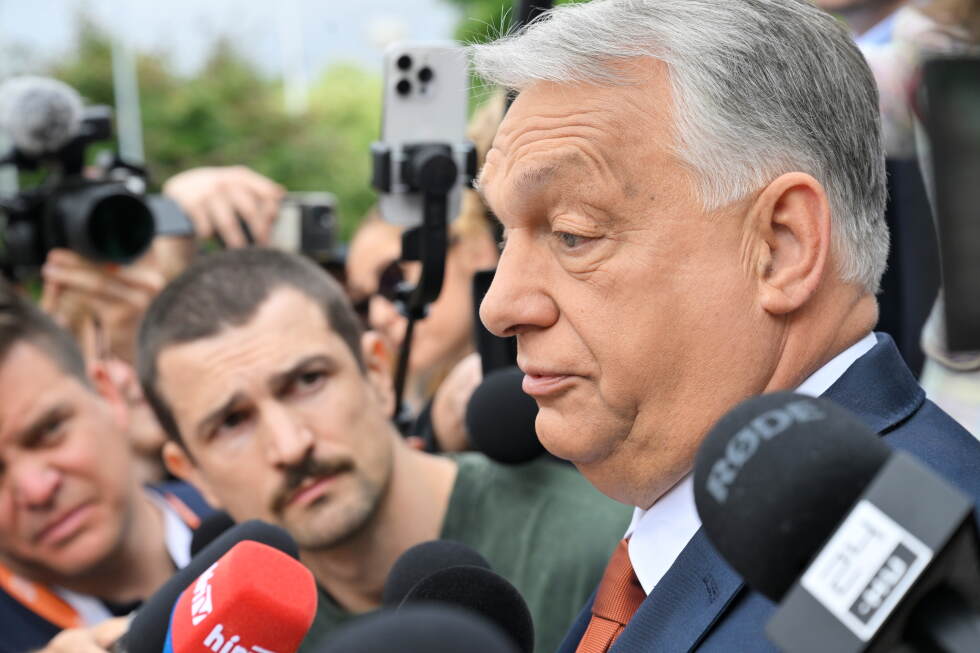
    Despite his bruising election defeat — a result widely greeted with relief by EU leaders, who saw it as a popular rejection of Orbán’s hostile stance toward the bloc and his close ties to the Kremlin — the former prime minister shows no sign of abandoning his ideological project. Speaking to reporters on Wednesday ahead of the Patriots for Europe summit, Orbán framed his April loss as a temporary setback, arguing it would do nothing to slow the rise of nationalist forces across the continent. “No one election loss can stop this historical process,” he said. “Anti-migration and sovereigntist political forces in Europe will continue to grow stronger in the coming months and years.”

    Orbán has positioned Patriots for Europe as the vehicle to reshape the EU in his illiberal image. Key policy goals for the alliance include rolling back EU oversight of national rule of law and democratic standards, implementing a harsh zero-tolerance policy on irregular migration, and forging deeper strategic ties with Russia and China. But a major shift is already underway under Hungary’s new leadership: just last week, Magyar’s government lifted Orbán’s long-held veto on the formal opening of Ukraine’s EU accession negotiations, following weeks of bilateral talks with Kyiv that resolved longstanding disputes over minority rights for ethnic Hungarians in western Ukraine.

    The removal of Orbán’s veto clears the biggest single barrier to accelerating Ukraine’s accession path, a process set to pick up speed when Ireland takes over the EU’s rotating six-month presidency in July. “Hungary obviously had issues that they were able to resolve to allow this to happen this week,” said Thomas Byrne, Ireland’s Minister for European Affairs.

    Orbán’s confidence in a far-right breakthrough is not entirely unfounded. The movement has notched notable electoral gains across the bloc in recent months: Marine Le Pen’s National Rally party picked up significant ground in French municipal elections earlier this year, while Germany’s far-right Alternative for Germany (AfD) has climbed steadily in national opinion polls. Andrej Babiš, a Czech populist and close Orbán ally, returned to the office of prime minister last year, making him the only leader from the Patriots for Europe alliance to currently hold the reins of government in an EU member state.

    Most recently, the far-right secured a major policy win last week, when a joint voting bloc of Patriots for Europe and the center-right European People’s Party passed sweeping EU migration reform. The legislation, which has been fiercely condemned by human rights groups, expands bloc-wide surveillance powers, increases deportation targets for irregular migrants, and establishes offshore migrant detention centers labeled “return hubs” outside EU borders. When the reform passed the European Parliament in Strasbourg, far-right and center-right lawmakers celebrated with chants of “Send them back.”

    Still, the European far-right is not without internal rifts. Fractures have emerged in recent months over key geopolitical issues, including conflicting stances on the Israel-Hamas conflict and reactions to former U.S. President Donald Trump’s repeated threats to annex Greenland, an autonomous territory belonging to EU member Denmark. For the EU and Ukraine, however, one major barrier has already been removed: with Orbán no longer holding the Hungarian prime ministership, he can no longer use veto power over EU policy to block Kyiv’s accession path, opening a new chapter in the bloc’s expansion and geopolitical direction.

  • Hegseth announces US review of Europe forces, says some allies will fail

    Hegseth announces US review of Europe forces, says some allies will fail

    At a recent gathering of NATO defense ministers in Brussels, U.S. Defense Secretary Pete Hegseth delivered a sharp rebuke to alliance members he accuses of free-riding on American security investment, while unveiling a sweeping six-month review of U.S. military posture across Europe. The announcement comes on the heels of Washington’s decision to scale back its commitments to the NATO Force Model (NFM), the alliance’s high-readiness rapid-response force.

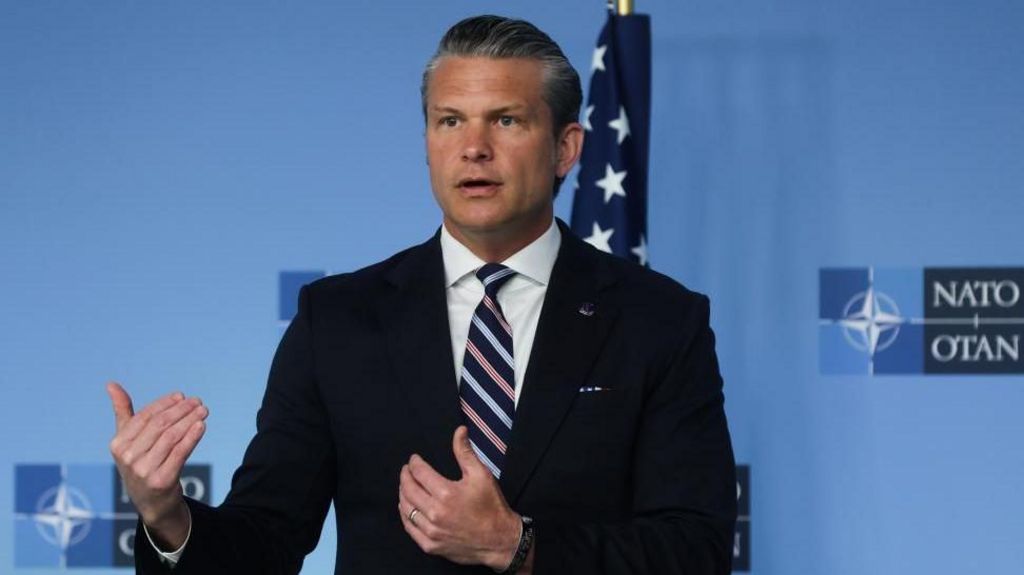
    Hegseth drew a clear line between compliant and non-compliant allies during his address, stating bluntly: “Some countries will fail, and others will pass with flying colours.” He saved particular criticism for NATO members that restricted operational support for U.S. forces during the ongoing conflict with Iran, a point of tension that has already roiled U.S. diplomatic relations with multiple European allies. The six-month review, branded by Hegseth as “NATO 3.0”, is framed as a push to accelerate a shift toward European-led security on the continent.

    At the core of the standoff is defense spending: Washington is demanding all NATO members meet a binding target of allocating 5% of gross domestic product to defense by 2035, with 3.5% earmarked for core defense capabilities and 1.5% for defense-related infrastructure. Hegseth warned that U.S. financial contributions to NATO’s annual budget would now be tied directly to progress on this target. “Where other allies do not spend with urgency, our dues contributions will go down,” he said, calling out wealthy major economies that continue to pay lip service to the rules-based international order while clinging to decades of free-riding on U.S. security. He declined to name specific countries facing criticism.

    The fissures within the alliance were on clear display throughout the meeting. UK Defense Secretary Dan Jarvis attended the summit without a finalized British defense investment plan, following the resignation of his predecessor John Healey, who stepped down after warning the draft plan fell “well short” of the UK’s required commitments under the 5% target.

    NATO Secretary-General Mark Rutte pushed back on the most severe U.S. criticism, noting that alliance members already increased collective defense spending by €90 billion ($103 billion) in 2025, an almost 20% year-over-year rise. He emphasized that European allies are already “backfilling” the air and naval capabilities the U.S. plans to withdraw from the NFM, though senior NATO officials have conceded that not all withdrawn U.S. capabilities can be fully replaced immediately. Rutte confirmed that the U.S. drawdown is already in effect, and he called on all members to present clear, credible roadmaps to hit the 5% target ahead of the alliance’s July summit in Ankara.

    Tensions between Washington and European capitals have been building for months over the Iran conflict. In May, the Trump administration announced it would withdraw 5,000 U.S. troops from Germany amid a public dispute with German Chancellor Friedrich Merz over German policy on the Iran war. The same month, Washington initially announced a 4,000-troop withdrawal from Poland, before President Trump reversed the decision and pledged instead to deploy an additional 5,000 troops to the country. Poland currently hosts up to 10,000 rotational U.S. troops, and Polish Defense Minister Władysław Kosiniak-Kamysz confirmed Thursday that Washington is actively considering Warsaw’s offer to host a permanent U.S. military base, with a final decision pending negotiations on agreement terms.

    Earlier this year, President Trump also threatened to cut off all trade with Spain after Madrid refused to allow U.S. forces to use Spanish air bases for strikes on Iran, where the U.S. maintains two key military installations: Naval Station Rota and Morón Air Base.

    A NATO official explained the role of the NFM, noting it is a pre-allocated set of high-readiness forces that the alliance’s Supreme Allied Commander in Europe can rely on for rapid deployment in crisis scenarios. The U.S. drawdown from this framework marks one of the most significant shifts in transatlantic security burden-sharing in modern alliance history.

  • Men jailed over work for Chinese intelligence in UK

    Men jailed over work for Chinese intelligence in UK

    On Thursday, a landmark sentencing at London’s Old Bailey delivered severe punishment to two men convicted of working on behalf of Chinese intelligence to target Hong Kong pro-democracy dissidents on British soil. After a month-long trial, 40-year-old Chi Leung “Peter” Wai received a total 10-year prison term, while 65-year-old Chung Biu “Bill” Yuen was sentenced to eight years behind bars. Both were found guilty of assisting a foreign intelligence service under the UK’s National Security Act, marking one of the most high-profile foreign interference cases in recent British legal history.

    Wai, a former Metropolitan Police officer who joined UK Border Force at Heathrow Airport in December 2020 after years of public service roles including eight years in the Royal Navy and a volunteer constable position with City of London Police, abused his official access to the Home Office’s national database of foreign nationals to track Hong Kong residents who fled the territory’s crackdown on pro-democracy activism. Beyond the charge of assisting a foreign intelligence service that carries a six-year sentence, he was also convicted of misconduct in public office, which added an extra four years to his punishment. In one message sent to Eddie Ma, a former chief superintendent of Hong Kong Police’s Criminal Intelligence Bureau who maintained ties to Chinese authorities, Wai infamously wrote, “Will not let any cockroaches in,” referencing the dissidents he was tasked to monitor.

    Yuen, a former Hong Kong police officer who served as office manager at the Hong Kong Economic and Trade Office in London, acted as the critical liaison between Wai and Chinese state authorities, coordinating the illegal surveillance network that prosecutors described as a coordinated “shadow policing operation” run for Hong Kong authorities and ultimately the Chinese government. During the trial, the court revealed that the operation did not only target exiled dissidents – it also extended special surveillance attention to high-profile British politicians, including senior Conservative MP Sir Iain Duncan Smith.

    The court also heard that Wai recruited another Border Force officer, former Royal Marine Matthew Trickett, to participate in the surveillance. In November 2023, Trickett was ordered by Wai to follow prominent exiled Hong Kong activist Nathan Law – one of eight dissidents that Hong Kong chief executive John Lee placed a HK$1 million (£100,000) bounty on that year – while Law spoke at the Oxford Union. Shortly after the pair were apprehended by counter-terrorism police, Trickett was found dead in an apparent suicide, with an official coroner’s inquest scheduled for November this year.

    Delivering the sentencing remarks, Mrs Justice Cheema-Grubb emphasized the severity of the men’s crimes, stating their actions “threaten the sovereignty of the state.” Several Hong Kong pro-democracy activists, including one who currently has a HK$1 million bounty placed on her by Hong Kong authorities, attended the sentencing in the Old Bailey’s public gallery to observe the ruling.

    While the jury returned guilty verdicts on the main charges, it could not reach a consensus on an additional count of foreign interference linked to an alleged break-in at the West Yorkshire home of a Hong Kong-origin fraud suspect.

    UK law enforcement and prosecution officials have framed the convictions as a stark warning against any foreign interference activity on British territory. Commander Helen Flanagan, Head of Counter Terrorism Policing London, made clear in an official statement that this kind of covert activity will not be tolerated. “I want to be really clear that if you are working on behalf of a foreign state, that we in counter-terrorism policing and with our partners will identify who you are and bring the full force of the National Security Act upon you,” Flanagan said.

    Bethan David, Head of the Counter Terrorism Division at the Crown Prosecution Service, echoed that sentiment, noting that Wai and Yuen’s actions were “deliberate, coordinated and carried out with full knowledge of who it would benefit.” She added that the convictions send an unmistakeable message: “transnational repression, foreign interference, unauthorised surveillance, and attempts to operate outside the law will not be tolerated on British soil.”

    The case has sparked renewed official and public scrutiny of transnational repression operations run by hostile states within UK borders, raising urgent questions about the vulnerability of sensitive government systems and the safety of exiled dissidents who have relocated to Britain to escape persecution.

  • The European Union has quietly sought to reopen communication with Russia

    The European Union has quietly sought to reopen communication with Russia

    Four years into Russia’s full-scale invasion of Ukraine, the European Union has initiated quiet, low-level diplomatic contact with Moscow to reestablish communication channels, multiple senior anonymous EU officials confirmed Thursday. The tentative move comes as the bloc aims to ensure it is not sidelined from any future negotiations to end the devastating ongoing war.

    The disclosure of the EU’s outreach coincided with fresh developments on the battlefield: Russian officials announced Thursday that Ukraine had carried out one of its largest drone assaults since the 2022 full-scale invasion. The attack targeted a key oil refinery outside Moscow, marking the second strike on the facility in just seven days, and forced widespread disruptions to commercial flight operations at multiple Moscow-area airports.

    This quiet diplomatic opening unfolds against a complex geopolitical backdrop. The 27-nation bloc has simultaneously ramped up its military, political and humanitarian support for Kyiv, even as Russian President Vladimir Putin has worked to cut European leaders out of talks, prioritizing direct negotiations with Washington over Ukraine’s future.

    Two EU officials, speaking on condition of anonymity due to the sensitivity of the diplomatic maneuver, confirmed the contact had occurred in recent weeks. “In the past few weeks, brief contacts were made at diplomatic level to open communication channels but nothing was discussed on substance,” the first official stated. The official clarified that the bloc is not seeking to act as a mediator, but rather to protect its own strategic interests in any future peace process: “In any future scenario, the EU has specific interests that will need to be defended, therefore it is important to have established diplomatic channels with Russia. The EU is not a mediator. It supports Ukraine in its efforts to achieve a just and lasting peace.”

    The Kremlin has not yet issued an official response to requests for comment on the EU outreach. Putin has previously pushed back against European mediation efforts but has not closed the door entirely on communication with the bloc. Earlier this month, he noted, “We have never refused contacts with representatives of the European Union in any format. We are not rejecting contacts. If they want to talk, they know how to reach us. They can pick up the phone and call. If they want to come, they are welcome to do so. It is not Russia that is refusing engagement.”

    According to EU insiders, European Council President Antonio Costa has been leading coordination across EU member states on the framework for potential future engagement with Moscow, aligning on core issues to be addressed when conditions for substantive talks are deemed appropriate.

    The revelation comes just as EU leaders gather in Brussels for their annual summer summit, where Ukraine’s war and its long-term relationship with the bloc will top the agenda. Ukrainian President Volodymyr Zelenskyy is scheduled to address the gathering of leaders, who are expected to advance discussions on deeper political and economic integration with Kyiv. Just weeks ago, Ukraine officially launched accession negotiations with the EU, a years-long process that will require sweeping political and governance reforms even as the country continues to fend off Russian aggression.

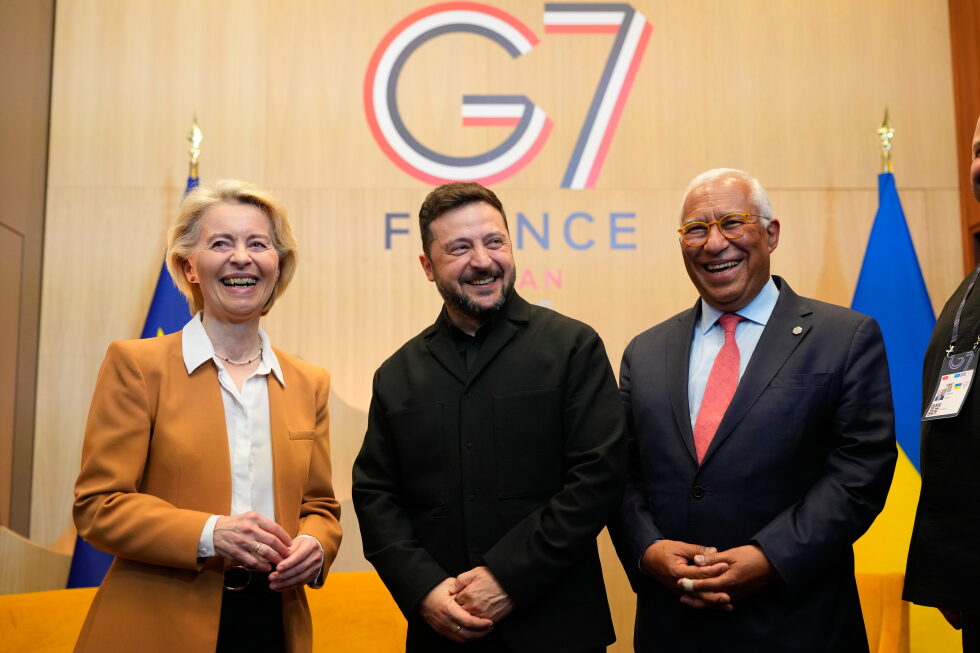
    The EU move also follows this week’s G7 summit in Evian-les-Bains, France, where European negotiators secured a joint commitment from former U.S. President Donald Trump to join other G7 leaders in reaffirming unwavering support for Ukraine. Zelenskyy, who attended the summit, hailed the gathering as a success, saying Ukraine had secured key new pledges of military and political support from attending leaders, including the United States.