
HOUSTON & KANSAS CITY, Mo. – For King Willem-Alexander and Queen Maxima of the Netherlands, the 2025 FIFA World Cup has delivered a unique, double-sided cheering opportunity that few other royal spectators can claim. On a packed Saturday of match action, the royal couple pulled off a cross-country U.S. sprint to support two separate teams under the Dutch kingdom’s banner, swapping team gear and stadiums in a single day of global football.
博客
-
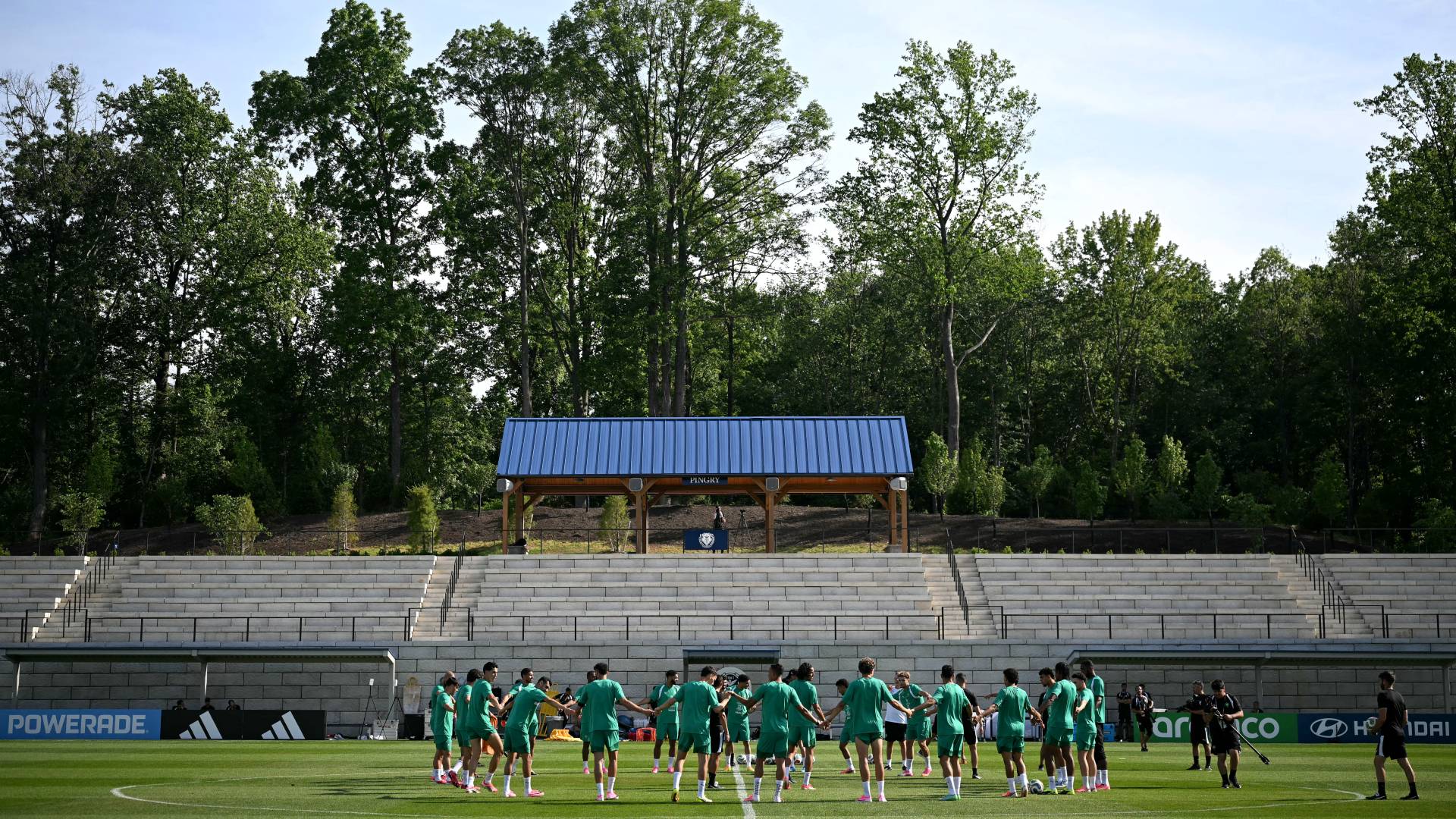
How a New Jersey town has struggled to embrace Morocco’s World Cup team
The 2026 FIFA World Cup, hosted in part across the United States, has brought two of global football’s most dynamic teams to an unexpected corner of the country: the quiet, affluent suburban town of Basking Ridge, New Jersey. For lifelong residents like 22-year-old Rutgers graduate Caroline Corley, the arrival of Brazil and Morocco changed everything – including her longstanding disinterest in the beautiful game.
Corley never watched a full football match before the tournament kicked off in mid-June, but her curiosity sparked when she learned the two squads had selected her small hometown as their first-round base camp. Located just under an hour outside New York City, the community – population roughly 10,000 – was an intentional pick for its strategic location: it offers easy travel to regional tournament stadiums, and sits within reach of large Brazilian and Moroccan diaspora communities across the New York-New Jersey-Connecticut tri-state area. The sixth-ranked Moroccan national team, known as the Atlas Lions and the top-ranked side in Africa, has taken up residence at the Somerset Hotel and trains daily at the local Pingree School. Five-time World Cup champions Brazil are staying at The Ridge Hotel and using the Columbia Park Training Facility in nearby Morristown for practices.
For many young local residents, the presence of the two global powerhouses has been a thrilling once-in-a-lifetime experience. Corley, along with Basking Ridge natives Anya and Fiona Cebulski, say watching the Moroccan team parade through town with a police escort, and spotting fans lingering near training grounds or local restaurants hoping for a glimpse of star players, has injected unexpected energy into their normally quiet daily routines. “Growing up in what you think of as just a small town, having something this huge come to your home is really shocking,” Corley told Middle East Eye. After attending the USA-Paraguay friendly and the Brazil-Morocco group stage match, she’s now a full football convert.
But beneath the quiet excitement of local fans, a sharp divide has emerged over how the town has welcomed its high-profile guests. During a visit ahead of Morocco’s group stage match against Scotland, Middle East Eye found little visible fanfare across Basking Ridge: only one cafe displayed tiny national flags in outdoor potted plants, a single aging banner hung over a main street to mark the earlier Brazil-Morocco fixture, and just one welcome sign stood outside the Moroccan team’s hotel. The overall atmosphere was far more subdued than many residents expected, especially after seeing how other host communities like the Algerian team’s base in Missouri rolled out a warm public welcome.
Young local activists and residents say the muted welcome is no accident – it reflects deep-seated divisions within Basking Ridge, rooted in local politics, demographics and a long history of exclusion that locals refer to as the “Basking Ridge bubble.” Largely white, affluent and known for its tree-lined historic streets, corporate headquarters for giants like Verizon and Barnes & Noble, and sprawling country estates, Basking Ridge sits within Bernards Township, a long-conservative area that only flipped to Democratic control in 2025 for the first time in 90 years. Even after the leadership change, the 2024 presidential election saw former President Donald Trump carry 47 percent of the local vote, leaving the town deeply politically split. Older, more conservative residents tend to lean away from open engagement with diverse communities, young residents say, creating a culture that avoids discussion of contentious social and political issues.
Anya Cebulski notes that this culture of silence extends to some of the most divisive issues splitting modern America, from debates over racial justice to the ongoing war in Gaza. Local history backs up this claim: in 2023, the town’s Board of Education made national headlines when it rejected two proposed sociology textbooks for Ridge High School over claims they were too ideologically extreme on topics of race and police brutality. The fight to build Basking Ridge’s first and only mosque was met with years of virulent opposition, marked by anti-Muslim rhetoric that invoked 9/11 and terrorism; the town ultimately paid a $3.25 million legal settlement to the Islamic Society of Basking Ridge after the group filed a discrimination lawsuit.
“When you grow up here, you see that conversations about race or difference are just shoved under the rug,” Anya explained. “People here haven’t had to think about what it feels like to be an outsider, so they don’t know how to reach out and welcome outsiders.”
Bernards Township Mayor Ana Duarte McCarthy pushes back against this characterization, arguing the town has embraced the opportunity to host the two teams with open arms. She told Middle East Eye the local government organized a range of public events during the tournament’s opening week, including a community watch party for the Brazil-Morocco match and a youth soccer tournament that drew 2,500 players and their family members to the area. “Our local community has many soccer enthusiasts,” McCarthy said. “It has been a once-in-a-lifetime opportunity to play host to Morocco. Personally my husband and I saw Morocco vs Saudi Arabia in 1994, so it’s extraordinary to be in our community, at this time, 30-plus years later, as mayor, and being part of the efforts made to welcome the team to Basking Ridge.” Hundreds of local fans have also attended open training sessions for the Moroccan team at Pingree School, she added.
Beyond debates over inclusion, the economic promise of hosting two World Cup teams has yet to materialize for many local businesses, with outcomes split across the town. A cafe employee on main street reported a clear uptick in footfall from visiting fans, while another small business owner nearby said he had seen no significant increase in customers. Near the Somerset Hotel, a restaurant hostess said young fans have frequently stopped by asking if the Moroccan team plans to dine at the restaurant, creating a quiet buzz that hasn’t translated to major revenue gains. Even so, many young residents say the mere presence of the teams is a historic moment for their small town. Two local high school students told Middle East Eye it felt “cool” to host a global event, even if football is not their sport of choice.
As Morocco stands on the cusp of qualifying for the knockout stage – with a chance to top the group if they outperform Brazil in their final group match – young local residents say the moment represented a missed opportunity to break Basking Ridge out of its longstanding bubble. Corley argues that hosting the two teams could have been a rare chance to build cross-community dialogue at a time of deep national division, especially for fans who faced prohibitive travel costs and visa hurdles to attend the tournament in person. Anya agrees that the team’s arrival could have served as a catalyst for greater openness, but worries that the town’s history of closed-mindedness will keep that potential from being realized.
“I hope it does turn into that, but I feel like there might just be too much closed-mindedness for it to take full form,” Anya said.
-

France bans alcohol consumption at music festival events under red headwave alert
As Europe grapples with an extraordinary early-season heatwave that has sent temperatures soaring far above normal seasonal averages, French authorities have implemented a targeted alcohol ban for select events at the country’s iconic annual Fête de la Musique, a move designed to reduce strain on overstretched medical services amid dangerous heat conditions.
Held every year on the summer solstice, Fête de la Musique is one of France’s most beloved public celebrations, drawing millions of attendees out onto streets and public spaces across the country to enjoy free live performances. In 2025 alone, nearly two million people participated in events within Paris, making crowd and public health management a top priority for officials even under normal weather conditions. This year, however, the celebration coincides with one of the most intense early heatwaves in recent memory, prompting urgent public safety interventions.
Thirty-five of France’s administrative departments are currently under the highest-level red heatwave alert, a classification that triggers strict public safety protocols. Prime Minister Sébastien Lecornu’s office confirmed that all state-organized events and their affiliated partners have received formal instructions to halt alcohol service to attendees. The government’s official guidance frames the ban as a critical measure to “preserve emergency and healthcare services and allow medical staff to focus on caring for the most vulnerable” who are at greatest risk of heat-related illness.
Meteorological forecasts paint a stark picture of the coming days: on Sunday, temperatures between 39°C and 40°C are projected to stretch across a wide swathe of the country, from the southwestern regions through the Paris basin and into Burgundy, with isolated pockets potentially hitting 41°C. The heatwave, which has already built across much of Western Europe, is delivering temperatures 10°C to 15°C higher than the long-term average for this time of year. Temperatures are expected to peak on Monday, with Météo-France warning that readings could match or exceed historic national records.
The extreme heat has already disrupted daily life across France for days. Dozens of train services have been canceled due to safety risks associated with high temperatures warping rail tracks, and schools across affected regions have suspended in-person classes to protect students and staff. Roughly three-quarters of France’s total population is currently living under heatwave conditions, but Météo-France says it remains uncertain how long the extreme weather event will persist.
To help residents and visitors cope with the oppressive heat, Paris authorities have taken the unusual step of keeping all municipal parks and gardens open throughout the night, giving people a cool, open-air space to escape overheated indoor environments. As the country prepares for the peak of the heatwave, the alcohol ban at Fête de la Musique stands as one of the most visible adjustments to a beloved national tradition, highlighting the growing impact of extreme heat events on large public gatherings in Europe.
-

At CrimeCon true crime obsessives come face-to-face with real loss
Beneath the hum of thousands of conversations inside a sprawling Las Vegas convention center, CrimeCon 2026 brings together a one-of-a-kind crowd: true-crime podcasters rubbing elbows with veteran prosecutors, casual fans in playful themed apparel, and grieving family members who have traveled thousands of miles to keep their loved ones’ cases in the public eye. Attendees wander the exhibit floor carrying branded conference bags printed with the provocative slogan “unsolved crime is a choice,” many wearing custom T-shirts that range from tongue-in-cheek quips like “True Crime And Wine” and “I’m Only Here For An Alibi” to solemn tributes to missing and murdered loved ones. The annual gathering, now owned by Fox News following its 2025 acquisition of organizer Red Seat Ventures, has grown dramatically alongside America’s decade-long obsession with true-crime media, but it continues to navigate a tense, fine line between commercial popularity and respectful advocacy for victims.
For many participants, attendance is far more than a recreational outing—it is a deeply personal mission to keep cold cases from fading into obscurity. Dr. Maggie Zingman, a trauma psychologist whose daughter Brittany Phillips was murdered in an unsolved 2004 killing, has spent years crisscrossing the country in a pink-and-purple wrapped vehicle to draw attention to her daughter’s case, and CrimeCon has become a key stop on her advocacy journey. Standing stoically behind a booth lined with photos of Brittany, Zingman acknowledges the inherent contradictions of a for-profit event built around real-life tragedy. “It’s a balance,” she says. “I wouldn’t get 8,000 people learning about my story if it wasn’t here.”
The rise of CrimeCon tracks directly with the explosion of mainstream true-crime culture that transformed the genre from a niche interest to a global pop-culture phenomenon. Industry observers trace the current craze to groundbreaking early hits: 2014’s breakout podcast *Serial*, followed by 2015’s hit docuseries *The Jinx* and *Making a Murderer*, which turned true crime into a watercooler topic and mainstream entertainment. Since its 2017 debut, which drew just 800 attendees, CrimeCon has expanded exponentially: attendance jumped to 2,400 in 2018, and this year’s Las Vegas iteration drew 6,500 guests, with some paying upwards of $1,600 for premium VIP access.
As the genre has grown, so has criticism that many true-crime platforms center perpetrators over victims, profiting from the pain and loss of grieving families. But long-time participants and event organizers argue CrimeCon has intentionally shaped its space to center victims and advocacy. Numerous victim-rights and missing-person organizations operate booths on the exhibit floor, including the foundation founded by the parents of Gabby Petito, the young travel blogger whose 2021 murder by her boyfriend sparked a national manhunt. Wearing T-shirts that read “Victim exploitation does not equal victim advocacy,” Joe and Nichole Petito have attended since 2023, and Joe notes the event has evolved steadily to prioritize advocacy over sensationalism. The convention hosts major national groups including the National Center for Missing and Exploited Children and the Black and Missing Foundation, giving them space to connect with audiences and raise awareness for their work. “It does a really good job of toeing the line… for pushing the advocacy side and not the exploitative side of victims and their families and loved ones,” Joe Petito says.
Event co-founder Kevin Balfe explains that organizers have intentionally curated the event to weed out visitors drawn only by sensationalized fascination with serial killers. “Over the years, we’ve had people who show up expecting this to be serial-killer this and that, and they just realise quickly this event’s not for them,” he says. “And we ultimately have curated an audience of people who, I think, really care.”
That said, the unmistakeable energy of a pop-culture convention permeates the space. Steps from an entry arch welcoming guests to CrimeCon 2026, a wall is covered in missing-person posters and a guide to “8 Simple Rules for Being an ETHICAL True Crime Fanatic,” but just five minutes away, a branded merchandise store sells everything from CrimeCon shot glasses to $80 event sweatshirts, with staff roaming the hallways promoting next year’s event and the premium CrimeCon Cruise experience. Some attendees fully embrace the playful side of the theme: one guest wears form-fitting leggings printed with crime-scene tape, while two best friends show off homemade handbags lined with blood-spatter fabric. The crowd is overwhelmingly female, with many fans lining up for selfies with high-profile true-crime personalities like Nancy Grace, who is presenting new theories on the unsolved disappearance of Nancy Guthrie, and for meet-and-greets with Steve and Kristi Goncalves, parents of University of Idaho murder victim Kaylee Goncalves. This year’s annual Clue Awards, which honor outstanding true-crime content, named three Jeffrey Epstein survivors and their non-profit as Crimefighters of the Year.
For many repeat attendees, the draw goes far beyond curiosity about unsolved mysteries. Ruth-Ann Labrecque, 52, traveled from Maine for her sixth CrimeCon alongside her 67-year-old aunt Roberta Randall, and each has spent roughly $3,000 on the trip. Brandi Barrett Elkins, a 53-year-old from Idaho who first developed an interest in true crime as a child, says many fans are drawn to the genre out of a desire to learn how to stay safe. “You want to learn what happened so you’ll know how to recognize it,” she explains. “I know for a fact if somebody came up to me with a broken arm and asked me to help them load a sailboat, aka Ted Bundy, I would be like: ‘Mmmm, sorry dude.’” Amy Dixon, an Illinois teacher and mother of three who created a CSI summer camp for her students, agrees, noting that learning about crime helps people prepare for unexpected danger. “It can happen anywhere,” she says. This is Dixon’s third CrimeCon, and she has upgraded her ticket each year, purchasing a $1,200 platinum badge for this year’s event.
Even the small number of male attendees often find themselves won over by the event’s mission. Jim McConnell, 71, a Texan who accompanied his wife Susan, a youth pastor, to the convention, says he never expected to enjoy the experience but has been impressed by the community’s commitment to advocacy. Susan McConnell has wanted to attend CrimeCon for years, and came hoping to connect with podcasters to raise awareness for the local unsolved 2021 murder of Missy Bevers, who was killed in a Texas church near her home. A photo of Bevers is printed on her T-shirt, and she says just getting the case more exposure makes the trip worthwhile.
For first-time attendee Greg Wallace, an Indiana father whose 23-year-old daughter disappeared nearly eight years ago, the convention is both emotionally exhausting and deeply hopeful. Struggling with PTSD from his daughter’s disappearance, the large crowd and loud noise pushed him to his emotional limits on the first day, but he says the opportunity to share his daughter’s story with a global audience makes the discomfort worth it. “But I’m really glad I did it, because, you know, I’ve got her name out there globally now, and that just gives me more hope,” he says.
Zingman, who has attended multiple CrimeCons, acknowledges the event still has growing pains, and has experienced firsthand the hierarchy that places more attention on families of high-profile victims. During a 2018 Nashville event, she says she felt uncomfortable watching attendees pass her booth to reach families of more well-known victims, overhearing visitors whisper “Who is that?” as they walked by. “And I was like: I don’t know if I can handle this, because it is very commercial,” she recalls. Over time, however, she has learned to separate the commercial aspects of the event from the valuable platform it provides, and says she has watched CrimeCon evolve to prioritize victims and their families far more than it did in its early years.
The Goncalves, attending their first CrimeCon this year, have been overwhelmed by the support they have received from attendees, and are already planning to return next year with a booth for their Murder Has a Name foundation, which raises funds for DNA testing in cold cases. “You can’t beat the people that are here,” Kristi Goncalves says. “The media people that are here, the citizens that are here, the true crime families.”
Nicole Earnest-Payte, a first-time attendee, sexual assault survivor and speaker who waited 27 years for justice after being attacked by the NorCal rapist, says CrimeCon often gets an unfair reputation because of its name’s similarity to the pop-culture convention Comic Con. “They think, ‘Oh, this is just a bunch of people that are obsessed with murder that come there,’” the 56-year-old Californian says. “And I don’t think that’s what this is.” Instead, she sees the event as a space for education and connection, where attendees can leave with a better understanding of criminal behavior and investigative work. “It’s really important for fans to understand that these are real human beings, real lives, real parents, real children, real spouses whose lives have been completely destroyed,” she says. That understanding, she argues, is the key to keeping the event focused on respect, not exploitation.
-

Why an AI company cleaned my New York City apartment for free
Across bustling New York City, a unusual new advertising campaign is turning heads: billboards and street displays feature cleaners outfitted with head-mounted cameras, offering city residents a free, no-obligation home clean. What many passersby may not immediately realize is that this offer is the frontline of a bold new AI initiative that is reshaping how robotics companies collect real-world training data, while stoking fierce debate over personal privacy in the age of artificial intelligence.
The project, called Shift, is the brainchild of AI startup Micro AGI. Its premise is straightforward: participating homeowners get complimentary deep cleans and even private chef visits to their residences. In exchange, every member of the service team wears a camera mounted to their cap, wired to a mobile device that records every action taken inside the home — from wiping down kitchen counters to organizing living room shelves to preparing meals. Every inch of the participating property is captured, with all footage anonymized before being packaged as training data for the next generation of autonomous humanoid robots.
Tech industry leaders have long pinned their hopes on versatile autonomous robots that can handle everything from routine household chores like washing dishes to full-time in-home care for elderly and disabled people. The biggest barrier to bringing these robots to market, however, is the lack of high-quality, real-world data to teach robotic hands how to navigate the infinite variation of human homes. Unlike large language models such as ChatGPT, which can train on trillions of words of publicly available text online, physical robots need to learn how different kitchens are laid out, how different cleaning tools work, and how to adapt to changing lighting, object placements and home layouts — all things that cannot be simulated in a lab.
A BBC reporter who participated in the Shift program at their Upper East Side apartment was greeted by two young graduates in their mid-20s who had previously worked in the startup ecosystem and joined Shift for steady work. With demand for the free cleaning service far outstripping the company’s capacity, the team is permanently stationed in New York, cleaning up to five homes per day, five days a week. During the clean, the pair focused heavily on the movements of their hands, as every dexterous action is exactly what the AI model needs to learn from.
Shift founder Bercan Kilic told the BBC that the company’s entire mission is aimed at advancing AI capability for the public good. “In the real world, every object is different, the lighting is different and nothing is the same as it was a couple of hours earlier,” he explained. “Models need to learn how their hands, cameras and environments work together.” To reach that goal, the company needs to collect massive volumes of data — a hurdle the free service model is designed to solve. Kilic added that Shift’s long-term vision extends far beyond residential cleaning: the company already collects data from mechanics performing car repairs in Turkey, and eventually hopes to record nearly every skilled task humans perform, offering free or discounted services in exchange for the data. Its business model centers on selling the anonymized datasets to robotics firms and other AI developers working on commercial humanoid robots.
Not everyone, however, is welcoming Shift’s approach. Leading data privacy and human rights advocates have sounded the alarm over the model of trading free services for access to the most private space a person has: their own home. Rory Mir, director of open access and tech community engagement at digital rights group Electronic Frontier Foundation, said the initiative is part of a growing worrying trend of “data bribes” that trade small short-term benefits for long-term privacy risk. “While it might come with money or a service upfront, the data you share has a way of coming back to bite you,” Mir warned. “Even if you trust the business collecting it, there is always a risk of them sharing that information with other businesses or governments. We have just lived through decades of our data being used to manipulate us with advertising and predatory practices like surveillance pricing.”
Calli Schroeder, director of the AI and human rights program at the Electronic Privacy Information Center, went even further, calling Shift’s model “a diabolically creative way to sell privacy invasion.” Schroeder pointed out two overlapping risks: first, the sensitive personal information captured by in-home recordings is far more detailed than most people realize, and the profits from selling that data dwarf the small value of a free clean. Second, the end product of this data collection — fully autonomous cleaning and household robots — could ultimately displace millions of working people who rely on household service jobs for income.
Kilic pushes back against these criticisms, arguing that Shift is far more transparent than the countless other companies that collect user data every single day without users’ knowledge or consent. “Clearly your data is being used every single day, but you don’t know what for and you are not being paid,” he said. “But a free service means at least you are being paid, and it is as honest and as transactional as that. If you don’t want to do it, you don’t have to. We don’t expect everyone to like it and that is fine.”
Despite the privacy concerns, the model has found willing participants. Many New York residents have jumped at the chance to get a free clean while contributing to cutting-edge AI development, and even Shift’s own cleaning staff are enthusiastic about the project. The team, made up largely of Gen Z workers, are paid above the standard cleaning rate in New York, and many see themselves as early pioneers in the coming AI revolution. One cleaner even sent a recording kit home to his own mother, who now records herself doing daily chores around her house to contribute to the dataset. For proponents, Shift is a transparent, mutually beneficial model that accelerates the development of transformative AI technology — for critics, it is a dangerous new frontier of privacy exploitation that trades long-term personal security for short-term convenience.
-
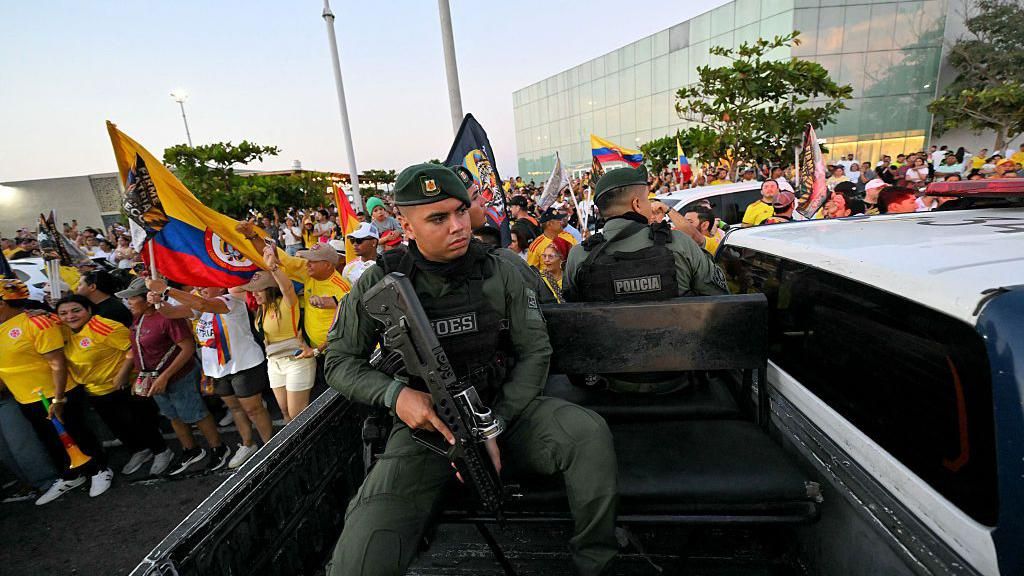
Colombia’s escalating, brutal internal conflict is defining its presidential election
As Colombia prepares for its decisive presidential runoff election on Sunday, spiraling violence and widespread insecurity have emerged as the defining issue splitting voters and overshadowing the entire campaign. For countless Colombians displaced by criminal conflict, the stakes of this election are not just political — they are a matter of survival.
Edilma Martinez Flores, now staying at a support center for internally displaced people in Bogotá, knows this reality all too well. After armed criminal groups distributed leaflets ordering residents to abandon their homes on the outskirts of Cali or face deadly retaliation, she lost her brother to assassination when he refused to pay extortion fees — killed in front of his own children. “We had no choice but to leave our things behind. They started placing bombs along the routes people travel,” she explains. She is one of tens of thousands of Colombians forced from their homes by escalating clashes between illegal armed factions that have seized control of vast swathes of rural territory.
Colombia’s history of armed conflict stretching back 60 years has already claimed hundreds of thousands of lives. What makes the current crisis unprecedented is the rapid expansion of illegal groups over the past half-decade: their membership has roughly doubled since 2021, with FARC dissident factions, the National Liberation Army (ELN), and the Clan del Golfo criminal network fighting for control of land critical to drug trafficking and illegal mining. A 2025 brutal offensive between ELN and FARC dissidents near the Colombia-Venezuela border alone displaced tens of thousands of people. Official data confirms the scale of the crisis: forced displacement surged 300% between 2024 and 2025, a level not seen in 20 years.
Isabelita Mercado Pineda, a Bogotá-based government advisor focused on peace, victim support and reconciliation, attributes the crisis to multiple overlapping factors. Growing cocaine production has created massive profit incentives for armed groups, while the Colombian military failed to fill territorial vacuums left after the 2016 peace deal demobilized most FARC fighters. Mercado Pineda also criticizes the outgoing government’s peace strategy, arguing it offers only incentives to criminal groups without sufficient enforcement to curb their expansion. Support centers across the capital bear witness to this human cost: Erin Gamboa, from the violence-plagued Pacific Chocó region, still has no news of his half-brother, abducted by FARC fighters amid constant battles for control of illegal mining and cocaine routes. Another anonymous couple running a small food delivery business told of extortionists claiming ties to the FARC demanding 5 million pesos (roughly $1,500) from their children, leaving them too afraid to leave their home in peace.
This election offers voters two starkly contrasting visions to address the crisis, put forward by candidates who finished neck-and-neck in the first round of voting, with conservative outsider Abelardo de la Espriella holding a narrow lead over left-wing senator Iván Cepeda. The campaign has already been marred by violence, including the assassination of a lower-tier presidential candidate, widespread homicides, kidnappings, and bomb attacks across the country.
Cepeda, a key architect of outgoing President Gustavo Petro’s flagship “total peace” strategy and a central figure in the 2016 FARC peace accord, prioritizes negotiated settlements with armed groups over all-out military confrontation. Critics argue the current peace approach has failed, allowing criminal factions to exploit ceasefires to expand their territory and power. But supporters argue negotiation prevents the mass loss of life that comes with full-scale conflict. Cepeda has pledged to pursue urgent social transformations to address the roots of violence, while committing to review and adjust the existing peace strategy to fix its shortcomings. Among young Colombians, the candidate has built strong support by framing his approach as a break from failed hardline security policies of the past. “Cepeda’s proposal for security not only contemplates the coercive forces of the state to stop crime, but also takes into account the structural roots of insecurity — the lack of state presence, poverty, inequality, that push many young people into joining criminal groups,” explains student Catalina La Grande, a Cepeda supporter. “We don’t want to repeat security models from previous governments that have left thousands of victims and not solved the problems. We believe in negotiated security: combining repression of armed groups with social programmes.”
His challenger, de la Espriella — a right-wing businessman and lawyer who goes by the nickname “El Tigre” (The Tiger) and holds dual US-Colombian citizenship — has taken a hardline stance, promising to end all negotiations with armed groups and crush criminal networks through military force. A high-profile endorsement from former US President Donald Trump has amplified his outsider campaign, though the left has decried the endorsement as unacceptable foreign interference, amid a growing interventionist US stance on Latin American criminal networks. Trump has framed the election as critical to US-Colombia relations, saying “if Abelardo wins…[Colombia] will have the total support and strength of the United States behind him,” while labeling Cepeda a “radical left Marxist.”
De la Espriella’s signature policy proposal is the construction of 10 mega-prisons to hold incarcerated gang members, and he has pledged that any criminal who refuses to surrender will be killed. Raised on Colombia’s Caribbean coast, where he retains strong regional support, his backers frame his tough tone as exactly what the country needs after years of rising violence. “He has achieved everything he has set out in life, he is a man with very strong convictions. He has that character, courage, it’s what we need for Colombia, a person who is tough on drug-trafficking, tough on guerillas,” says Maria Luisa Sanchez, a childhood neighbour and family friend. Sandra Caballero, a supporter from a village outside Barranquilla, adds: “He will work with the United States to fight drug trafficking and doesn’t plan to speak with criminals — which has not given results in four years. He wants to change taxes to help companies generate more jobs and invest in security and health.”
As Colombians gathered last week to celebrate their national football team’s 2-1 opening win over Uzbekistan at the World Cup, the streets of Bogotá briefly rang with unified celebration. But the coming election will lay the country’s deep divides bare: with two candidates offering fundamentally different paths to address the country’s decades-long violence, Sunday’s vote will shape the future of security and peace for millions of Colombians for years to come.
-

One Extraordinary Photo: Las Vegas pool watch party of the Australia-US match
LAS VEGAS — For 12 years, award-winning Associated Press veteran photographer John Locher has called Las Vegas home, covering beats ranging from high-stakes professional sports to sudden breaking news, in-depth human interest features and original enterprise reporting. When the 2022 FIFA World Cup rolled around, Locher approached his assignment with a creative eye that set his work apart from typical tournament coverage.
Unlike traditional match-day photography that centers on action inside stadiums, Locher set out to capture the far-reaching passion the World Cup sparks across the globe, even in cities not hosting any tournament games. For the Friday matchup between Australia and the United States, he turned his lens to local fan gatherings to showcase the widespread excitement that extends far beyond match venues. Known for its one-of-a-kind approach to entertainment, Las Vegas offered the perfect unconventional backdrop: a poolside watch party.
Locher’s first stop was Circa Resort and Casino, a venue that had already built a reputation for hosting large-scale sports watch parties on a massive outdoor screen above its swimming pool. Anticipating the scene would be unlike any standard viewing event, he planned his shoot to highlight this uniqueness. After capturing close-up shots of cheering fans reacting to game moments, he began searching for an elevated vantage point that could frame the full scope of the gathering. Using a wide-angle lens, Locher captured a sweeping shot that included hundreds of fans gathered in the pool alongside the iconic casino skyline of downtown Las Vegas, emphasizing the unusual setting of this World Cup viewing experience.
In reflecting on the power of the image, Locher noted that the photograph succeeds because it embodies Las Vegas’ signature tendency to turn ordinary events into extraordinary experiences. While bars and restaurants across the United States hosted watch parties for the highly anticipated Australia-US clash, this poolside gathering offered a distinctly Las Vegas twist that could not be replicated anywhere else. The image stands as a testament to how deeply the World Cup’s cultural pull penetrates communities across the country, even far from the tournament’s host stadiums.
This photo is part of The Associated Press’ ongoing comprehensive coverage of the FIFA World Cup. More of AP’s award-winning World Cup reporting can be viewed on their dedicated coverage hub.
-

Undav scores twice, saves Germany with 2-1 World Cup win over Ivory Coast
TORONTO — In a dramatic turn of events that sealed Germany’s place in the World Cup knockout round, second-half substitute Deniz Undav delivered a stellar two-goal performance to secure a 2-1 comeback victory over Ivory Coast on Saturday.
The game’s decisive moment came in the fourth minute of stoppage time, when Undav got on the end of a pinpoint pass from Felix Nmecha just in front of the goal. The striker fired a clinical shot past Ivory Coast goalkeeper Yahia Fofana, putting Germany ahead for good and sparking wild celebrations from the German camp.
Undav’s first goal, which leveled the scoreline for Germany, came in the 68th minute. Nadiem Amiri launched a long ball forward that Germany striker Kai Havertz intentionally let run through to Undav, who hit a powerful shot straight into the back of the net. Both Amiri and Undav had only entered the match as substitutes eight minutes before that equalizing goal, a substitution move that would ultimately pay off massively for the German side.
For four-time World Cup champion Germany, the milestone marks a major redemption after consecutive devastating group stage exits at the 2018 and 2022 tournaments. The last time Germany advanced past the group stage of the World Cup, they went on to lift the trophy in 2014, giving the side plenty of momentum as they move into the knockout round.
As for Ivory Coast, the heartbreaking defeat leaves them still chasing their first ever appearance in the World Cup knockout stage. Their campaign is not yet over, however, as they still retain a mathematical chance to qualify for the next round in their final group match.
This report was contributed by Lexie Linderman, a journalism student at Penn State, and comes via the Associated Press’ ongoing World Cup coverage.
-

Iran recloses Strait of Hormuz after Israeli attacks on Lebanon
Tensions in the Middle East have escalated sharply once again after Iran ordered a full closure of the strategically critical Strait of Hormuz, a retaliatory move triggered by Israeli military attacks on southern Lebanon that violated a newly brokered ceasefire. The closure order was first issued by Iran’s Khatam-al Anbiya Central Headquarters in an official statement carried by the country’s state-run Mehr News Agency, with confirmation and a formal security warning later issued by the Islamic Revolutionary Guard Corps (IRGC).
In its official announcement, the Khatam-al Anbiya headquarters confirmed that all commercial vessel traffic through the key waterway has been suspended, framing this measure as an initial, proportional response to what it described as the enemy’s breach of signed ceasefire commitments. The statement warned that if Israeli aggression continues, Iran will implement additional, more far-reaching countermeasures to force adversaries to uphold their international agreements. The IRGC echoed this warning, advising all civilian and commercial vessels to avoid approaching the strait for their own safety, noting that any unauthorized entry would put vessels and crews at severe security risk. In its justification for the closure, the IRGC explicitly named two triggering factors: ongoing Israeli strikes against Lebanese territory and repeated violations of the ceasefire framework by the United States.
The Strait of Hormuz is one of the world’s most vital energy chokepoints, carrying roughly 20 percent of the global supply of crude oil and liquefied natural gas every day. This is not the first closure of the waterway in 2025: Iran effectively shut down the strait for nearly four months starting in late February, when Israel and the United States launched large-scale military operations across the region. The strait was only reopened earlier this week, after U.S. President Donald Trump and Iranian President Masoud Pezeshkian signed a preliminary truce agreement to end hostilities across all fronts, including the Lebanese-Israeli border.
The latest closure followed a deadly wave of Israeli air and ground strikes across southern Lebanon launched on Saturday, just one day after Israel and the Lebanese armed group Hezbollah reached a Qatari- and U.S.-mediated ceasefire deal. The civilian death toll from Saturday’s attacks has risen to at least 29, according to multiple Lebanese official sources.
Lebanon’s civil defense agency confirmed that 16 people were killed and 12 more wounded in a series of targeted strikes on the southern city of Nabatieh. Lebanon’s National News Agency (NNA) reported that an Israeli strike on the village of Barish, located near the coastal city of Tyre, killed four members of a single civilian family. Near the major southern city of Sidon, another Israeli attack on a local village left at least seven people dead and 13 others injured. Additional strikes claimed one life in the Shehour municipality of Tyre, another in the town of Sohmor in Lebanon’s western Beqaa Valley, and one Lebanese army officer was killed in an air strike targeting the Kfar Rumman-Nabatieh road, according to an official statement from the Lebanese military.
In its official statement following the officer’s death, the Lebanese army condemned the unprovoked attacks, noting that the continued brutal Israeli assaults have the clear goal of derailing any diplomatic effort to restore lasting stability to Lebanese territory.
The breaches of the ceasefire come at a critical diplomatic moment, as Iran and the U.S. move forward with efforts to implement a broader memorandum of understanding (MoU) designed to end cross-regional hostilities. The Friday ceasefire between Israel and Hezbollah was secured after weeks of mediation by Qatari and U.S. diplomatic teams, with follow-up implementation talks scheduled to take place over the weekend at a secure venue in Switzerland. Iran’s foreign ministry confirmed that its official negotiating delegation planned to travel to Switzerland to follow up on the agreement and demand that all counterparties meet their signed commitments, according to comments from ministry spokesperson Esmail Baghaei carried by the official Islamic Republic News Agency.
Switzerland’s foreign ministry confirmed Saturday that it had prepared a discreet, secure venue at Burgenstock to host the implementation talks, describing the location as a neutral, reliable setting for the sensitive negotiations. Citing the confidentiality of the discussions, the ministry declined to release further details on participating delegations or the specific content of the talks under way.
The closure of the strait is expected to send immediate shockwaves through global energy markets, given the waterway’s outsize role in global fossil fuel trade, and raises fears of a further widening of hostilities across the Middle East that could disrupt global energy supplies for an extended period.
-

World Cup what to know: Spain and Belgium are looking for their 1st wins after opening with draws
As the 2026 FIFA Men’s World Cup moves into its second round of group-stage play on Sunday, June 21, all eight teams competing across the four scheduled fixtures head into the day still searching for their first victory of the tournament – all having opened their campaigns with hard-fought draws.
Four opening matches on the previous Monday produced four draws, a rare result that marks the most draws on a single men’s World Cup matchday since 1958. This historic run of stalemates has left both Group G and Group C completely open, with no team yet able to lock in an early advantage going into the second round of group play.
Sunday’s first fixture, kicking off at 12 p.m. EDT in Atlanta, Georgia, pits second-ranked Spain against Saudi Arabia in a Group H showdown. Spain kicked off its tournament with a surprising 0-0 stalemate against Cape Verde, while Saudi Arabia earned a 1-1 draw against Uruguay, with defender Abdulelah Al-Amri netting the Arab side’s opening goal of the competition. Young star Lamine Yamal will lead Spain’s line as the European side looks to lock in its first win and cement its status as a title contender.
The second match of the day, at 3 p.m. EDT at SoFi Stadium in Inglewood, California, sees 10th-ranked Belgium take on Iran in a Group G clash. Belgium will be missing key starting winger Jérémy Doku, who has been ruled out of the fixture due to an illness. The Manchester City speedster, who played 86 minutes of Belgium’s opening 1-1 draw with Egypt, has been in the headlines in recent days after revealing he would leave the tournament temporarily if needed to attend the birth of his first child, due in early July during the knockout stage. Without Doku, the Red Devils will rely heavily on star forward Romelu Lukaku to secure a crucial three points to stay on track for group advancement. Iran opened its run with a 2-2 draw against New Zealand, and will also be hungry for its first win of the competition.
At 6 p.m. EDT in Miami Gardens, Florida, Uruguay faces off against Cape Verde, the tournament’s debutant side from the small archipelago off West Africa, in the second Group H fixture of the day. Already holding a draw against second-ranked Spain, a win for Cape Verde would go down as one of the biggest upsets of this World Cup, catapulting the underdog debutants into the knockout stage conversation. Uruguay, for its part, will look to bounce back from its opening draw with Saudi Arabia and lock in the win to climb the group table.
The final fixture of Sunday closes out the day at 9 p.m. EDT in Vancouver, British Columbia, with New Zealand facing Egypt in the remaining Group G matchup. New Zealand held Iran to a 2-2 draw in its opener, while Egypt also opened with a 1-1 stalemate against Belgium. All four of the day’s games will be broadcast across Fox, FS1, Telemundo and Peacock.
In other World Cup news from Saturday, the Netherlands became just the eighth national men’s side in World Cup history to hit the 100-goal milestone at the tournament, after striker Brian Brobbey netted a first-half brace in the Oranje’s 5-1 lopsided win over Sweden. The Dutch side joins elite company including Brazil, Germany, Argentina, France, Italy, Spain and England as the only nations to reach the 100-goal mark in World Cup competition.