博客

  • Ten years on, Brexit still divides Britain and casts a pall over its economy

    Ten years on, Brexit still divides Britain and casts a pall over its economy

    LONDON – It has been 10 years since United Kingdom voters cast the historic referendum that split the nation, upended decades of European integration, and continues to define British politics to this day. The 2016 vote that birthed Brexit – shorthand for British exit from the European Union – delivered a narrow but transformative result: 52% of voters, totaling more than 17 million people, backed leaving the bloc. That slim margin triggered the most sweeping restructuring of Britain’s economy and society since the end of World War II. Like any complex marital dissolution, the formal separation was far from instantaneous: the full process stretched out over nearly five years before Brexit became official.

    The Brexit campaign grew from mounting public frustration, fueled not just by discontent with EU governance but also the lingering economic fallout of the 2008 global financial crisis. Leave campaigners channeled that widespread anger, promising that an independent Britain would be reinvigorated, free to set its own priorities and focus entirely on domestic needs. Conversely, Remain supporters warned that exiting the bloc would trigger severe economic chaos and erode Britain’s global standing. A decade on from the 2016 vote, the outcomes of the historic decision are coming into sharp focus.

    ### Unmet Economic Promises and Lingering Stagnation
    Brexit backers, commonly called Brexiters, once outlined a bold vision: outside the EU, Britain would unleash the entrepreneurial, buccaneering spirit that once made it the world’s preeminent global power and build a thriving independent economy. While overlapping global shocks – the COVID-19 pandemic, the war in Ukraine, and escalating Middle East tensions – have muddied outcomes, the promised economic revitalization has failed to materialize.

    The 27-nation EU remains the UK’s largest trading partner by a wide margin, but British businesses have faced persistent new hurdles to cross-Channel trade. Though no tariffs apply to most British goods entering the bloc, a thick web of non-tariff barriers has slowed commerce: burdensome customs documentation, strict border certification requirements, and new visa restrictions that increase time and cost for traders. Most of the ambitious new trade deals that Brexiters touted – most prominently a comprehensive bilateral agreement with the United States – have never been finalized.

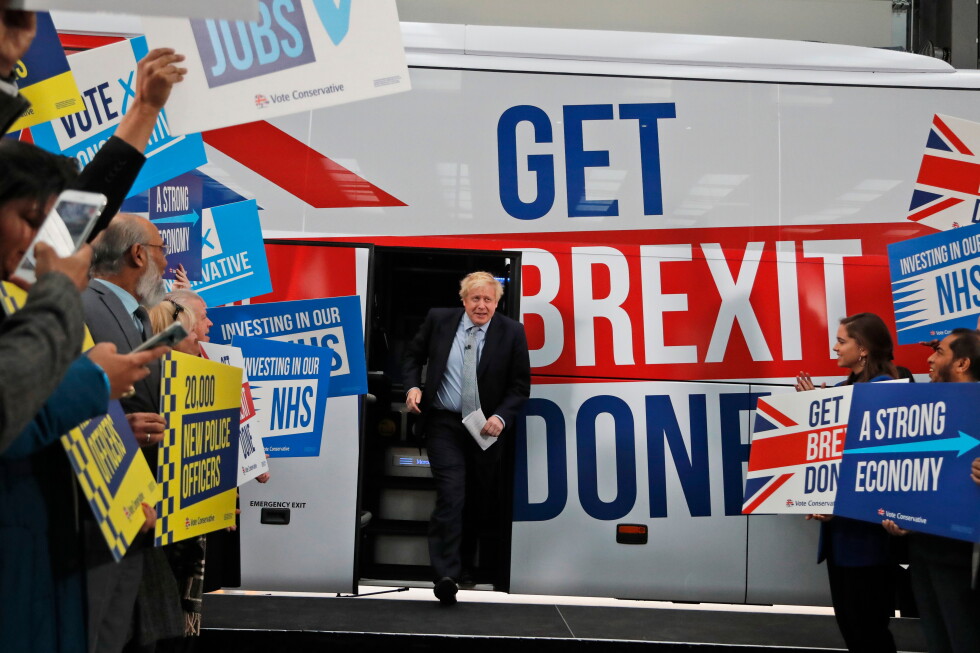
    Independent economic analysis confirms the UK has paid a steep price for the split. Experts estimate the British economy is between 4% and 8% smaller today than it would have been if the country had voted to remain in the bloc. That gap translates to lower household living standards and billions of pounds in lost revenue that could have been directed to public services – including the country’s beloved National Health Service (NHS). During the campaign, Brexit leaders infamously promised a 350 million pound weekly boost to NHS funding, a claim emblazoned on their iconic red campaign bus that has never come to fruition.

    “Brexit has made the U.K. economy smaller than it otherwise would have been,” explained Jonathan Portes, a professor at King’s College London. Writing for the UK in a Changing Europe think tank, Portes noted: “The effect has not been a sudden collapse, but a gradual and cumulative drag on trade, investment and productivity.”

    Brexit supporters push back against short-term criticism, arguing that the benefits of leaving the bloc can only be measured over decades. They maintain that short-term economic disruption was a predictable tradeoff for regaining full control over key policy areas, most notably immigration rules.

    ### Immigration: A Broken Promise of Border Control
    Ending the free movement of people between the UK and EU was a core policy goal of Brexit, but the push to “take back control” of Britain’s borders has delivered mixed results at best. While net migration from European countries has plummeted as promised, overall net migration from non-EU nations has surged. That sharp rise is partly a product of visa rule changes enacted by the former Conservative government, designed to fill critical labor gaps in sectors heavily dependent on foreign workers, such as elder care.

    In recent years, the UK government has moved to tighten overall immigration rules, and net migration has fallen sharply from a peak of more than 900,000 in 2023 to just 171,000 in 2024. Even as overall numbers decline, public anger has erupted over illegal migration, particularly the small boat crossings of the English Channel that bring asylum seekers – many fleeing war and persecution in Afghanistan, Sudan, and other conflict zones – to British shores.

    Though these crossings account for a tiny fraction of total migration to the UK, the issue has become one of the country’s most divisive political flashpoints. Crossings peaked at 46,000 in 2022, and remained high at 41,000 in 2023. Public outrage has centered on the cost of housing asylum seekers at public expense, and in some cases, violent protests have erupted outside hotels that house asylum seekers, including attempted arson attacks on facilities.

    ### Shifting Political Tides and Growing Public Regret
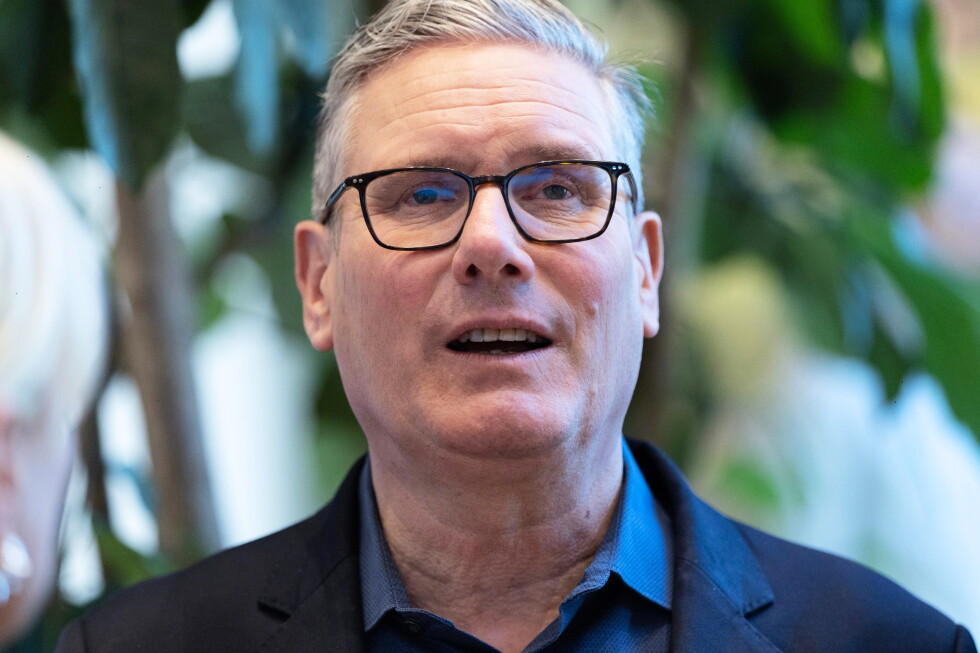
    In the decade since the referendum, Britain’s political landscape has fractured dramatically, with support collapsing for the two long-dominant parties: the Conservatives and Labour. The Conservative Party, which held power for 14 years and spent most of its final term mired in intractable debates over UK-EU relations, was voted out of office in 2024. The new Labour government has failed to win over public confidence, with widespread expectations that Prime Minister Keir Starmer will announce his resignation in the near future.

    Many disillusioned voters have flocked to Reform UK, the right-wing party led by iconic Brexit campaigner Nigel Farage. Farage’s party has held the lead in nearly every national opinion poll for more than a year.

    Alongside this political upheaval, a growing consensus has emerged across the UK that the Brexit project has failed. Recent polling from Ipsos finds that 52% of British voters now favor rejoining the EU, compared to just 33% who oppose re-entry. The poll also found that 48% of respondents believe Brexit has performed worse than they expected, while only 9% say it has gone better than expected. Nearly half of voters – 48% – support holding a second referendum on EU membership, compared to just 27% who oppose a new public vote.

    ### A Path Forward Remains Elusive
    Against this backdrop, the ruling Labour Party has navigated a precarious political tightrope since winning the 2024 general election. Party leaders have explicitly ruled out reversing Brexit, or even rejoining the EU’s frictionless single market, leaving little room for major policy shifts. Starmer has pushed for a limited “reset” of UK-EU relations focused on easing trade barriers, built up after years of acrimonious negotiations. He is expected to announce new easing measures at an upcoming summit with EU leaders next month – if he still holds the office of prime minister by that time.

    Andy Burnham, widely seen as Starmer’s most likely successor, has softened his stance on re-entry while campaigning ahead of a recent key special election. Burnham defeated a Reform UK challenger in a constituency that heavily backed Brexit in 2016. “I am not proposing that the U.K. considers rejoining the EU,” Burnham said. “I respect the decision that was made at the referendum and it is going to undermine everything I have said about strengthening democracy if we don’t respect that vote.”

    Associated Press writer Jill Lawless contributed reporting from London.
  • Tight security as Indian students resit medical exam after alleged paper leak

    Tight security as Indian students resit medical exam after alleged paper leak

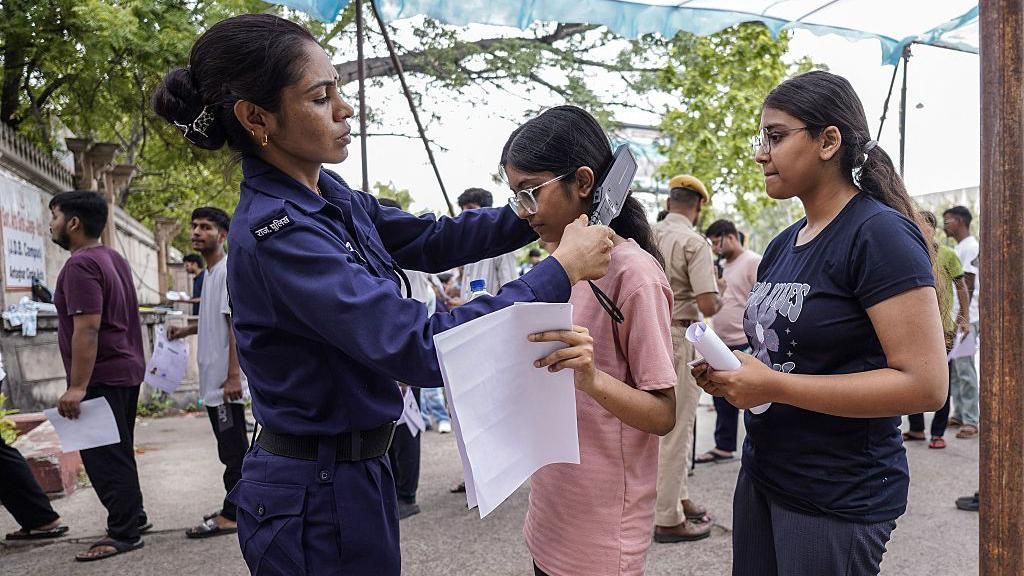
    Millions of aspiring medical students across India sat for a high-stakes do-over entrance exam on Sunday, with authorities rolling out sweeping, unprecedented security measures to prevent a repeat of the paper leak scandal that forced the cancellation of the original test in May.

    The National Eligibility cum Entrance Test (Undergraduate), better known as NEET-UG, is the mandatory gateway for admission to all government and private medical colleges across India. For the millions of test-takers that compete annually, only a tiny fraction earn one of the extremely coveted spots at top institutions. The notoriously tough exam requires months, and often years, of intensive preparation, making the May cancellation a devastating blow for the 2.28 million candidates who had already sat the initial test.

    Allegations that the original exam paper had been illegally leaked and sold to test-takers sparked mass public protests across the country, with widespread calls for Indian Education Minister Dharmendra Pradhan to step down. Pradhan rejected the demands and addressed candidates ahead of Sunday’s retest, urging them: “Sit fearlessly, without worry, and you will definitely do well.”

    This time around, authorities left no room for security gaps, deploying a multi-layered defense against cheating across 5,440 test centers nationwide, which contain more than 95,000 individual exam rooms. To eliminate the risk of tampering during transit, the Indian Air Force was tasked with flying new question papers to remote and high-risk regions. Uniformed police and paramilitary personnel were posted at every center, with drone patrols and specialized canine squads scanning perimeters for unauthorized activity.

    Upon arrival, every candidate underwent biometric identity verification, full body frisking, and searches by security personnel that included inspections of hair, jewelry, and clothing. In a controversial policy, strict dress codes were enforced: enclosed shoes were banned, and many women candidates were required to remove nose pins, earrings, and traditional sacred wrist threads to avoid any risk of hiding electronic cheating devices. A total of nearly 39,000 screening staff were hired nationwide, with 40 to 50 security personnel stationed at each individual center.

    Inside exam rooms, every space was covered by closed-circuit television, adding up to more than 1.3 million security cameras across the country. 51,311 signal jammers were activated at all centers to block mobile phone signals and prevent electronic interference that could aid cheating. As an additional precaution, the popular messaging platform Telegram was temporarily blocked nationwide through Monday, over concerns that the app had been used to coordinate illegal paper sharing in the May leak. Officials also warned candidates to ignore false paper leak rumors circulating on social media, which they said were designed to cause unnecessary stress and mislead test-takers.

    Despite the unprecedented security deployment, many candidates remained anxious about the repeat exam, recalling that this is not India’s first high-profile exam cheating scandal. One student, Diksha, told reporters: “There is fear because the exam paper has leaked once already. This is not a one-off thing, it happens every year. This time the authorities got to know about it and are holding the exam again, which is in a way a good thing because the students who worked hard should get fair results. But to study and prepare again in one month… to stay consistent is difficult.”

    NEET-UG is a 3-hour-and-15-minute multiple-choice exam covering physics, chemistry, and biology, with intense competition that pushes many candidates to pay for expensive private tutoring to boost their chances. The high stakes have created a profitable black market for organized crime networks that run exam fraud schemes, selling leaked question papers to well-funded candidates for large sums.

    The investigation into the May paper leak has been handed over to India’s top federal law enforcement agency, the Central Bureau of Investigation (CBI). This incident also comes amid a string of recent testing controversies in the country: in 2024, NEET-UG was already roiled by allegations of paper leaks, fraud, and irregularities in grace mark awarding that sparked nationwide protests after thousands of candidates received unusually high scores. Earlier this year, thousands of 12th-grade students – the equivalent of UK A-level candidates – raised complaints of widespread marking errors after the rollout of a new digital grading system.

  • New Zealand crush England by 253 runs in 2nd test at The Oval as Henry rips through the tail

    New Zealand crush England by 253 runs in 2nd test at The Oval as Henry rips through the tail

    On the fifth and final day of the second Test between New Zealand and England at London’s iconic Oval ground, fast bowler Matt Henry produced a career-defining performance to deliver a crushing 253-run victory for the Black Caps, pushing the three-match series to a decisive decider in Nottingham kicking off this Thursday.

    England resumed play on Sunday morning at 182 for five wickets, chasing an improbable 463 runs to secure victory. What followed was a relentless masterclass in fast bowling from Henry, who ripped through the hosts’ lower order to claim the final five wickets in just 31 balls, a stretch that yielded only three runs. By the end of the innings, Henry finished with sensational figures of six wickets for 29 runs, combining this with his first-innings five wickets for 80 runs to end the match with 11 wickets for just 109 runs.

    This extraordinary haul marks the best match bowling figures ever recorded by a New Zealand seamer against England, and also marks Henry’s first 10-wicket match haul across his 35-Test career. He is also the first bowler to claim 10 wickets in an Oval Test since legendary Australian spinner Shane Warne during the 2005 Ashes series, and the first fast bowler to hit the milestone since Devon Malcolm’s 1994 performance against South Africa.

    Henry’s late-match spell included two consecutive double-wicket maidens that removed England star Joe Root, Jofra Archer, Matthew Fisher and Josh Tongue. The seamer even came within one delivery of a hat trick, only for Jordan Cox to successfully defend the final ball. Root, who carried England’s last faint hope of a comeback overnight on 75, added just two more runs before he was trapped lbw between bat and pad, ending his innings at 77 off 145 balls. His review of the decision was rejected, and England’s chances of a win departed with him.

    Archer fell to an unplayable delivery that skidded under his bat, ending his innings on a two-ball duck, while Fisher chopped onto his own leg stump and Tongue edged a catch to first slip—both batters gone without scoring. Henry celebrated his milestone five-wicket innings haul and 10-wicket match haul with a quiet roar before he was mobbed by his celebrating teammates. Cox, who resumed on zero, managed a quick 25 runs before he was bowled attempting a sweep, bringing the match to a close just 48 minutes after play began on the final day. Tailender Sonny Baker failed to score.

    This win marks only New Zealand’s seventh Test victory in England across 95 years of touring, and just their second at the Oval, with the last coming back in 1999. It follows a dominant England victory at Lord’s in the first Test of the series, setting up an all-or-nothing decider in Nottingham.

    For Henry, the historic performance marked a personal redemption arc. The senior seamer suffered back spasms on the first morning of the Lord’s Test, leaving him sidelined and unable to contribute meaningfully to the team’s effort. A 10-day break between matches allowed him to make a full recovery heading into the second Test.

    “It feels bad when you let the guys down on day one at Lord’s,” Henry told reporters after receiving the Player of the Match award. “It was great to come here and get my quota out. I didn’t expect it to unfold like that today but probably saved a hot day in the field.”

    Henry credited his wicketkeeper Tom Blundell for a key tactical contribution that unsettled England’s batters, noting Blundell’s decision to stand up to the stumps while he bowled kept batters guessing at the crease. “Having a world-class operator like Tom is huge,” he said. “He’s always up for it. You can’t do it unless you’ve got someone good behind the stumps. We know England like to create a flow of runs.”

    Beyond Henry’s magical bowling performance, the Black Caps’ win was built on strong contributions across the side, Henry noted. Kyle Jamieson claimed four wickets in the match after a standout bowling spell on Saturday evening, while Glenn Phillips hit his maiden Test century in New Zealand’s first innings to put the Black Caps in a commanding position. Henry Nicholls added a second century in the second innings, combining with Rachin Ravindra for a massive partnership that effectively batted England out of the contest before the final day.

    “Little moments in the first innings set the platform for the ball to get soft and Glenn to do his thing,” Henry said. “Top order did a job for us. The way the guys applied themselves with the ball, we talked about being relentless and different from each end. We stuck at it and got the rewards.”

  • We’ve got so many hidden gems – Semenyo

    We’ve got so many hidden gems – Semenyo

    Ahead of the upcoming 2026 FIFA World Cup, Ghanaian international forward Antoine Semenyo has shared bold confidence in the depth and potential of his national team’s squad, stating the group contains a number of little-known rising talents set to make their mark on the global stage.

    In comments made following the team’s recent late 1-0 friendly win over Panama – a result that saw Ghana snatch victory in the closing minutes to break Panama’s hopes of an upset – Semenyo emphasized that the current Ghana roster stands out as an exceptionally tight-knit and talented group. Beyond the established names that already draw global attention, the squad harbors what Semenyo calls “hidden gems” – underrated players whose skill and impact will become widely recognized by the time the 2026 World Cup kicks off.

    The pre-World Cup confidence from Semenyo comes as Ghana continues to build and test its squad in international friendly matches, using the warm-up fixtures to unearth new talent and gel as a unit ahead of the quadrennial tournament. The late winning goal against Panama already gave a preview of the team’s fighting spirit, and Semenyo’s comments hint that fans can expect more surprises from the African side when they compete in 2026.

  • Fuel sales halted in occupied Crimea as Ukraine targets oil facilities

    Fuel sales halted in occupied Crimea as Ukraine targets oil facilities

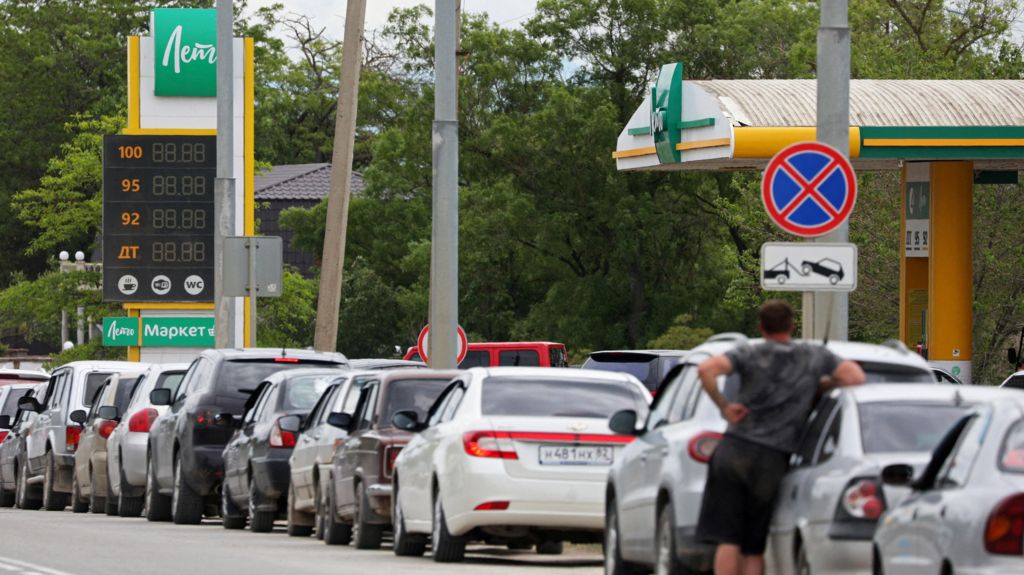
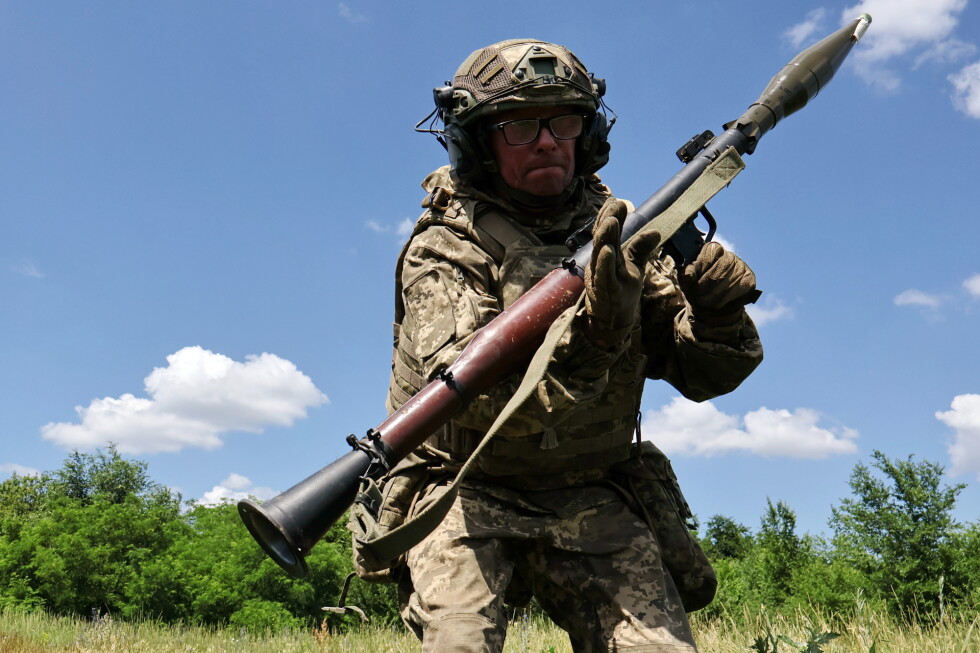
    More than four years into Russia’s full-scale invasion of Ukraine, escalating military strikes on both sides have created a growing humanitarian and logistical crisis in the illegally Russian-annexed Crimean Peninsula, where Moscow-backed occupation authorities have implemented a total ban on public fuel sales.

    The suspension of fuel access for private individuals and local businesses comes after weeks of growing supply chain disruptions, which were already forcing limited fuel rationing across the region. Ukraine’s ongoing targeting of key supply routes into Russian-occupied territories has severely cut off fuel deliveries to the peninsula, worsening existing shortages. Occupation governor Sergey Aksyonov announced that starting immediately, all fuel at Crimean petrol stations will be reserved exclusively for government entities tasked with maintaining the region’s basic operations and security framework.

    The latest round of strikes on the peninsula began overnight before the fuel ban announcement, when a Ukrainian drone attack hit a major oil depot in the Crimean port city of Kerch. Aksyonov confirmed the attack left four civilians dead and 28 others wounded. Ukrainian President Volodymyr Zelensky framed the strike as a justified retaliation for ongoing brutal Russian attacks on Ukrainian territory.

    Zelensky also confirmed that Ukrainian forces struck an oil transportation logistics facility in Russia’s Krasnodar region, which sits across the Kerch Strait directly adjacent to Crimea. Local Russian authorities reported one person was killed on a passenger ferry near the targeted site. The Ukrainian leader added that multiple Russian military logistics sites and radar installations were also hit in the coordinated wave of attacks, though he did not disclose exact locations of all targets.

    “Russia understands only strength, and our long-range strength is certainly working for peace,” Zelensky wrote in an official statement posted to the social platform X. He also noted that at least seven Ukrainians had been killed in Russian strikes over the preceding weekend, with more than 30 people injured – several of whom were children. In response to the Ukrainian attacks, Russia’s defense ministry claimed its air defense forces shot down 239 Ukrainian drones overnight.

    Crimea, which Russia illegally annexed from Ukraine in 2014, has faced persistent logistical failures and commodity shortages in recent months as Ukraine intensifies strikes against key infrastructure supporting Russian military operations in the region. The peninsula holds major strategic importance for Russia, serving as a launch base for Russian strikes on other parts of southern Ukraine. It is also a traditional summer holiday destination for Russian tourists, many of whom have already reported widespread difficulties accessing fuel for their vehicles to return to mainland Russia.

    Kyiv has deliberately targeted Russian energy and oil infrastructure in recent months as part of a deliberate strategy to disrupt the fuel supplies that underpin Russia’s war effort. Just last week, a Ukrainian strike on a Russian oil refinery triggered a massive oil spill that rained black crude onto parts of Moscow, marking the largest single Ukrainian attack on Russian domestic infrastructure since the full-scale invasion began. Moscow has already vowed to carry out retaliatory strikes for the attack.

  • Argentina may have America to thank for Lionel Messi’s latest World Cup heroics

    Argentina may have America to thank for Lionel Messi’s latest World Cup heroics

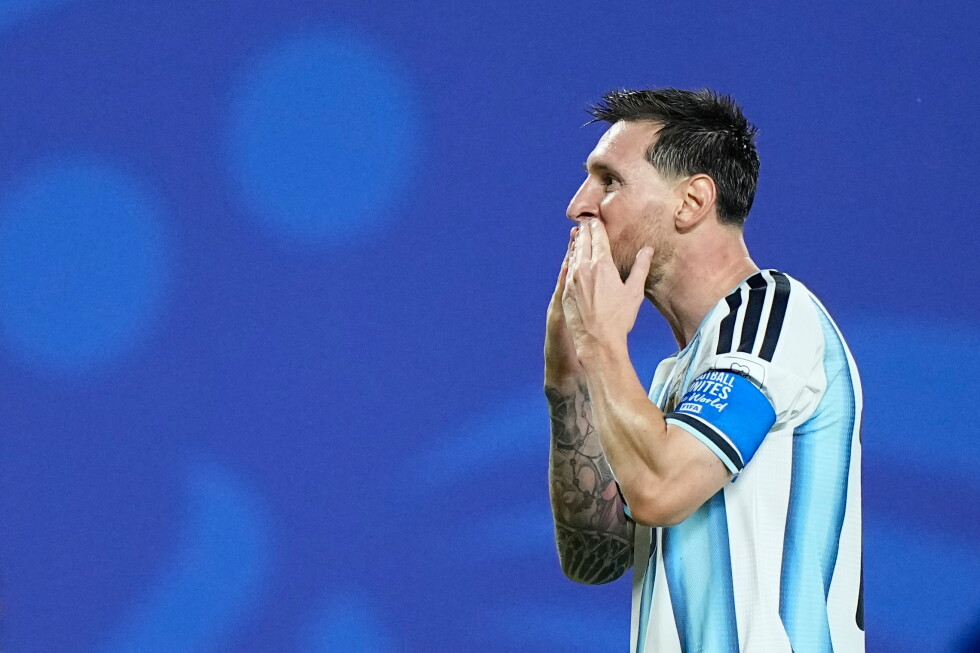
    As the FIFA World Cup kicks off, soccer legend Lionel Messi’s 2023 decision to leave European top-flight football for Major League Soccer’s Inter Miami is emerging as a potential game-changer for Argentina’s quest to secure back-to-back World Cup titles. Already, the move has delivered sweeping benefits across the board: it has supercharged the growth of soccer in the United States, delivered a first major title for Inter Miami, and opened a vibrant new late-career chapter for the eight-time Ballon d’Or winner. But if Argentina lifts the trophy this year, the South American nation will stand as the move’s biggest beneficiary, with the 38-year-old arriving at what is widely expected to be his final World Cup still playing at an otherworldly peak of form.

    Argentina manager Lionel Scaloni has long defended his star’s enduring dominance, noting, “Leo will be the best for as long as he wants; he has been doing it every single match for the last 20 years.” That form was on full display in Argentina’s opening warm-up match against Algeria, where Messi netted a hat trick that left soccer icon-turned-pundit Thierry Henry stunned. Henry told Fox Sports after the match: “He is on the moon. Leo is just different. It’s just a different topic.” That hat trick pushed Messi’s World Cup goal total to 16, tying the all-time tournament record set by Germany’s Miroslav Klose.

    Critics once questioned whether Messi could retain his sharpness after stepping away from the relentless intensity of European top leagues to join MLS, where the competitive standard is lower. The 2022 World Cup was billed as his final tournament, and few expected the 38-year-old to still be the central creative and attacking force of the national side four years on. But what critics misread is the strategic benefit of the move for the star’s longevity. In an era when elite players across the globe increasingly warn of crippling burnout from soccer’s overcrowded annual fixture list, Messi’s move to Inter Miami has reduced his match load: he now plays far fewer games per season than he did at the peak of his Barcelona tenure, when he often featured in more than 50 matches a year. Even without weekly matchups against the world’s top defenders, his opening World Cup form confirms his sharpness remains fully intact.

    Messi himself framed his preparation as a continuation of the work ethic that has defined his 20-plus-year career. “I tried to prepare myself in the best possible way to feel good physically, to feel useful, and to be able to help the group,” he said. “I love to play, to compete. And no matter where it is, today I find myself at another World Cup, which brings extra happiness, but I prepare myself just as I have done throughout my entire career.”

    This is not the first time a late-career step down in club competition has set Messi up for World Cup glory. After leaving Barcelona, where he won four Champions League titles and set countless scoring records but repeatedly fell short of international glory with Argentina, he joined Paris Saint-Germain ahead of the 2022 Qatar World Cup. While domestic competition in France’s top flight did not demand the same weekly intensity as Spain’s La Liga, that reduced pressure allowed him to peak for the global tournament. He went on to score seven goals in Qatar, including a brace in the final against France, leading Argentina to a dramatic penalty shootout win and claiming the only major trophy that had previously eluded him—an achievement that cemented his reputation as the greatest men’s soccer player of all time.

    Today, that pattern is repeating itself. For the 2026 cycle, Messi has leaned into extra preparation alongside Inter Miami and Argentina teammate Rodrigo De Paul to reach peak physical condition for the tournament. “We killed ourselves to, physically, arrive in the best way,” De Paul explained. Messi added that he has drawn extra inspiration from tennis legend Rafa Nadal’s recently released Netflix docuseries, which chronicles the Spaniard’s relentless drive to compete at the top despite his advancing age. “I am very similar in that sense. I always want to feel good. As long as I can and I am well, I will be there,” Messi said.

    For his teammates and coaching staff, Messi’s impact extends far beyond goals and records. Scaloni summed up the irreplaceable influence the captain has on the national squad, saying: “What Leo transmits is spectacular, it is hard to explain. His teammates view him both as a God and as a kid from the neighborhood. Honestly, you just run out of words. Beyond the goals he scores, it is what he transmits—both to his teammates and to the fans. We will miss him.” US soccer analyst Alexi Lalas echoed that sentiment after the Algeria win, noting, “If you ever needed any more confirmation that when it comes to Argentina, Messi is the system, he is the tactic, he’s the formation, he’s the identity and he is the heart. It was something to behold.”

    As the tournament progresses, all eyes will remain on Messi: if he can lead Argentina to back-to-back titles, his move to the United States will go down as one of the most brilliant career decisions in soccer history.

  • Ukrainian attacks prompt Russian-held Crimea to halt civilian gasoline sales

    Ukrainian attacks prompt Russian-held Crimea to halt civilian gasoline sales

    A new and severe chapter of disruption has hit Russian-occupied Crimea, as local occupation authorities announced a full suspension of civilian gasoline sales starting Sunday, following a sharp escalation of Ukrainian targeting of fuel and energy infrastructure across the Black Sea peninsula and adjacent southern Russian regions.

    Sergey Aksyonov, the Moscow-appointed head of Crimea’s occupation administration, confirmed that overnight Ukrainian strikes left four civilians dead and 28 others injured, though he declined to publicly disclose the exact sites targeted in the attacks. Shortly after releasing the casualty update, Aksyonov announced the fuel sales restriction via social media, noting the suspension would remain in place for an unspecified period. Under the new rule, fuel distribution is limited exclusively to state-affiliated entities tasked with maintaining basic operations and security for the occupied republic. “I ask everyone to remain calm and to only trust official sources of information,” he added in his statement.

    Ukrainian President Volodymyr Zelenskyy later publicly acknowledged the targets of the attacks, confirming that a Crimean oil depot and an oil transportation facility in Russia’s southern Krasnodar Krai were among the sites hit. Zelenskyy framed the strikes as a component of Ukraine’s so-called “long-range sanctions” campaign aimed at undermining Russia’s military energy infrastructure. “Russia understands only strength, and our long-range strength is certainly working for peace,” he wrote in a public statement.

    Earlier the same day, Russian officials in Krasnodar Krai reported that a Ukrainian drone attack had ignited a large fire at a Black Sea oil terminal in the village of Chushka. The strike also hit a passenger and cargo ferry operating in the area, killing one person, according to local Russian authorities.

    This suspension of civilian fuel sales marks the culmination of weeks of repeated Ukrainian strikes on Crimean fuel supply lines, creating the most acute energy crisis the peninsula has faced since Russia’s illegal 2014 annexation. While localized fuel shortages have occurred after previous attacks, the current disruption is unprecedented in scale. As far back as late May, occupation authorities already implemented strict rationing, capping sales at 20 liters of fuel per vehicle per week via prepaid coupons. These allocations sold out within moments of being released on an official Telegram channel, leaving motorists waiting in multi-hour queues to refuel.

    Social media platforms have been flooded with local residents sharing pleas for fuel updates and tips for available supplies, while authorities have opened a dedicated hotline to assist stranded tourists visiting the peninsula. Some drivers have resorted to transporting fuel back to Crimea from Krasnodar Krai via the Kerch Strait Bridge, though regulations limit personal carry to 100 liters per vehicle. Unregulated fuel speculation has also flourished amid the shortage, with black market sellers charging twice the official market rate for gasoline.

    In an unusual public admission of the crisis’s severity, the Kremlin has acknowledged the scope of the fuel shortage and pledged to roll out emergency measures to resolve the issue quickly. The latest Ukrainian successes on the energy front have underscored Kyiv’s growing ability to inflict meaningful damage on Russian logistical and infrastructure targets amid the ongoing full-scale invasion, even as Russian offensive advances across Ukraine have stalled in recent months. On June 11, the war marked its 1,569th day, surpassing the total duration of World War I.

  • DR Congo reports 956 confirmed Ebola cases, 247 deaths

    DR Congo reports 956 confirmed Ebola cases, 247 deaths

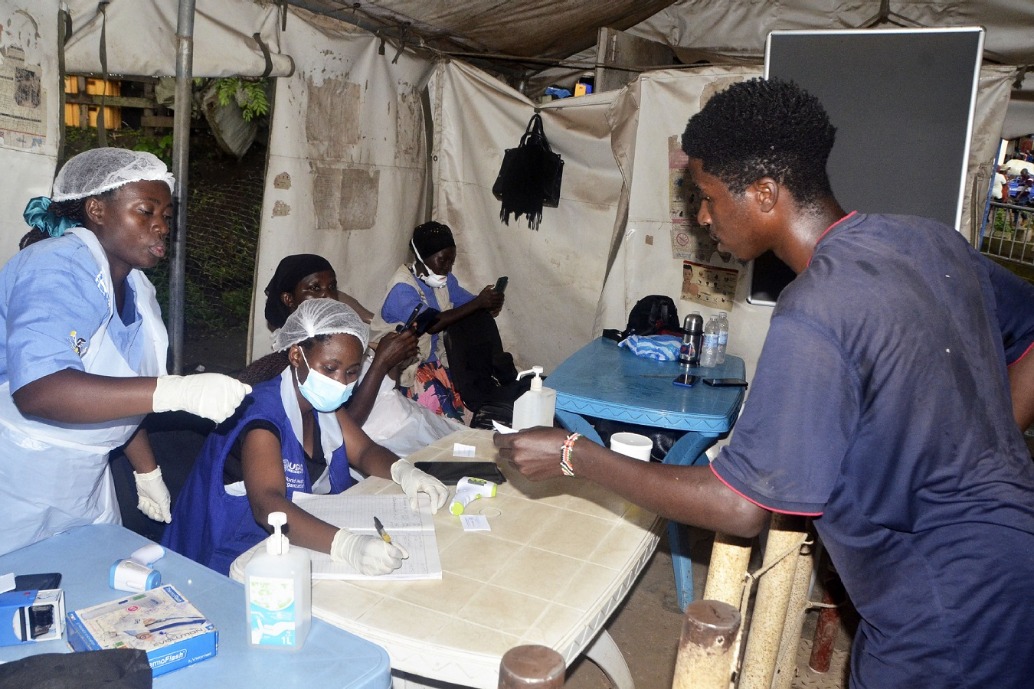
    KINSHASA – A public health emergency in the eastern Democratic Republic of the Congo (DRC) continues to escalate, with official data releasing Saturday showing confirmed Ebola infections have climbed to 956, and the cumulative death toll from the outbreak has reached 247. The update comes from the country’s national health authorities in their latest epidemiological situation report.

    On Friday alone, 23 new positive Ebola diagnoses and two additional fatalities were recorded across two high-risk eastern provinces: Ituri and North Kivu. Ituri, the current epicenter of the outbreak, bears the overwhelming majority of the national caseload, with 874 confirmed infections and 201 deaths accounting for over 91 percent of all confirmed cases nationwide.

    Per the report, 92 patients have successfully recovered from the virus and been discharged from care, while 361 confirmed patients are currently undergoing isolation or inpatient treatment at designated health facilities. An additional 162 people are under investigation as suspected cases as of Friday. One key gap in the national outbreak response has been identified: the contact-tracing rate, which currently sits at just 69.3 percent, far below the 95 percent target health officials set to effectively interrupt chains of virus transmission.

    During a press briefing held Friday evening, DRC Health Minister Roger Kamba confirmed that the outbreak is still in an expansionary phase. Kamba noted that as response teams scale up active case searching operations and extend their reach into more remote, heavily affected communities, further increases in confirmed case counts are expected in the coming weeks.

    The health minister added that public health officials will not be able to declare the outbreak has reached its peak, plateaued, or entered a decline until weekly case counts show consistent stabilization or a sustained downward trend. Until that point, Kamba emphasized, all core response efforts including aggressive case detection, immediate patient isolation and treatment, and deeper community engagement must be sustained and expanded.

    This current outbreak, caused by the rare Bundibugyo strain of the Ebola virus, was first officially declared by DRC public health authorities on May 15 this year.

  • Starmer is on the precipice as pressure builds for the UK leader to resign

    Starmer is on the precipice as pressure builds for the UK leader to resign

    The United Kingdom is facing yet another period of political upheaval, as sitting Prime Minister Keir Starmer confronts an existential challenge to his leadership of the governing Labour Party that could end his tenure just months after he won a landslide general election victory. The crisis erupted after Andy Burnham, the wildly popular former Greater Manchester mayor, secured a resounding win in last week’s special parliamentary election for the Makerfield constituency in northwest England, clearing the way for him to launch a formal challenge to Starmer’s top post.

    Burnham will be sworn in as a Member of the House of Commons on Monday, and growing speculation across Westminster suggests Starmer could use that same day to announce a timeline for his resignation. While the prime minister has repeatedly vowed publicly to defend his position and fight any leadership challenge, internal pressure within the Labour Party has mounted rapidly in recent weeks, with a growing number of sitting Labour lawmakers concluding Starmer’s time in Downing Street has run its course.

    As of Sunday, Starmer has remained out of the public eye, spending the weekend with his family at Chequers, the official country residence of the British prime minister. The only public statement he released over the weekend came via social media for Father’s Day, where he wrote, “Being a dad is my greatest joy. Today, I’m thinking about my dad, and the father I am to my children because of him.” Business Secretary Peter Kyle, one of Starmer’s remaining cabinet allies, told the BBC on Sunday that the prime minister is “making time to reflect on the political realities, challenges and opportunities that he finds himself in.” Kyle pushed back on immediate resignation reports, framing them as unconfirmed speculation, while adding that Starmer “always puts his country first” in his decision-making.

    The roots of the current leadership crisis stretch back months, following Starmer’s landslide general election win in July 2024 that brought Labour back to power after years of Conservative rule. Since taking office, Starmer has failed to deliver on his core campaign promises: he has been unable to jumpstart promised economic growth, fix strained public services that have yet to recover from years of austerity and the COVID-19 pandemic, or bring meaningful relief to households grappling with persistent cost-of-living pressures. His tenure has also been marred by a string of damaging missteps, most prominently his controversial appointment of Peter Mandelson — a figure with long documented ties to disgraced financier Jeffrey Epstein — as British ambassador to the United States.

    This string of failures has sent Labour’s poll numbers plummeting. The party is haemorrhaging liberal voters to the surging Green Party, while the Nigel Farage-led anti-immigration party Reform UK has pulled into a consistent lead in national opinion polls, a startling shift for a government just months into its first term. If Starmer steps down now, he will become the sixth British prime minister to leave office in just a decade, marking an unprecedented level of leadership turnover that has deepened public distrust in UK political institutions.

    Burnham’s decisive election win last Thursday cemented his position as the leading challenger. He captured nearly 55% of the vote, beating the second-place Reform UK candidate by more than 9,000 votes, a margin that sent shockwaves through the Labour Party. In his victory speech, Burnham made his ambitions for the top job clear, leaving no doubt he is ready to lead. “Everyone knows that politics isn’t working,” he told supporters. “Everyone can feel that the country isn’t where it should be. Tonight could, just could, be the turning point.”

    Now that he holds a seat in the Commons, Burnham meets the eligibility requirements to launch a leadership challenge. What comes next remains uncertain: if Starmer resigns, it is unclear whether Burnham will be endorsed as the consensus successor or face a competitive contest. Wes Streeting, who resigned from Starmer’s cabinet as Health Secretary last month in protest of his leadership, has already confirmed he will run for the leadership if a vacancy opens up.

    While Starmer congratulated Burnham on his election win last Friday, he reaffirmed his commitment to holding onto power. “I will run, I will stand,” he said, noting that he has “repeatedly said I’m not going to walk away from that.” But senior party figures have already abandoned support for the prime minister. Charlie Falconer, a veteran Labour peer in the House of Lords, told the BBC Saturday that Starmer has “absolutely no authority” left to govern. Falconer called for an orderly transition, saying, “There should be an agreed transition process in which Andy and Keir cooperate as to when the handover should take place.”

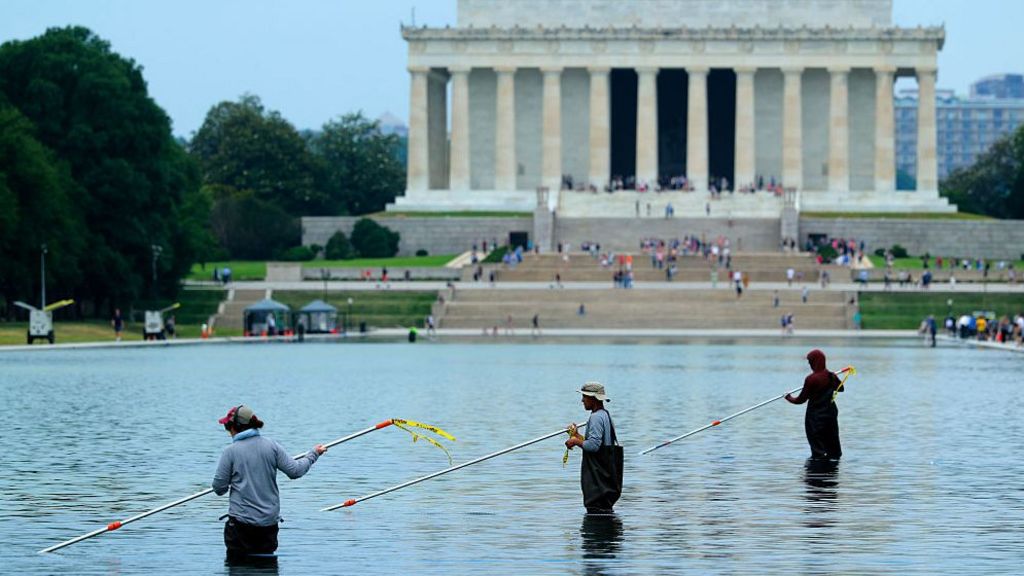
  • Former Olympian denies vandalising Washington Reflecting Pool after arrest

    Former Olympian denies vandalising Washington Reflecting Pool after arrest

    A decorated former American Olympic canoeist is fighting misdemeanor vandalism charges following his arrest last week at Washington DC’s iconic Reflecting Pool, a high-profile renovation project tied to the Trump administration’s preparations for the United States’ 250th anniversary celebrations.\n\nSixty-seven-year-old Davey Hearn, a three-time Olympian and two-time world slalom canoe champion, was taken into custody Friday at the edge of the landmark pool just after completing a long-distance bike ride. He has publicly pushed back against the accusation that he damaged the newly refinished structure, telling reporters his only action was touching a loose, delaminated strip of paint that had already separated from the pool’s bottom.\n\nThe 2,030-foot Reflecting Pool, positioned between the Lincoln Memorial and Washington Monument, has suffered decades of systemic issues including chronic leaks, crumbling infrastructure, clogged pipes, persistent algae overgrowth and accumulated bird waste. To revitalize the historic site ahead of the upcoming 250th Independence Day celebrations, the Trump administration backed a $13 million resealing and repainting project, which the president has personally promoted as a centerpiece of his initiative to beautify the nation’s capital. Trump personally selected the custom “American Flag Blue” paint color for the renovation, and awarded the work through no-bid contracts to selected vendors.\n\nHowever, even before the project was finalized, problems emerged. Visitors and journalists have widely documented large patches of the new blue paint peeling away from the pool’s base, and persistent algae blooms have continued to plague the water despite the overhaul. Just days before Hearn’s arrest, media and visitors repeatedly shared images and footage of the peeling paint and discolored water, sparking public criticism of the costly renovation.\n\nIn a Saturday post on his Truth Social platform, Trump confirmed that multiple people had been arrested for vandalizing what he called the “nation’s magnificent Reflecting Pool.” He called the alleged acts “very serious crimes against national monuments” and announced that immediate repair work would get underway, sharing a story about Hearn’s arrest to his followers. Without providing verifiable evidence, Trump also claimed that unknown vandals had poured corrosive chemicals into the pool and used sharp blades to damage surrounding lawn areas. He added that contractors inspecting the site over the weekend would likely drain most of the pool’s water to complete repairs, with work slated to proceed as quickly as possible. As of Monday, U.S. Park Police had not responded to multiple requests for comment on the case.\n\nHearn, who has decades of experience designing watercraft, paddles and waterproof outdoor gear, told BBC News that he never damaged, removed or altered any part of the pool’s paint or structure. “The condition of any part of the reflecting pool didn’t change,” he said. “It wasn’t affected. It was the same before I got there as when I walked away from it.” He added that he was merely curious about the materials used in the new paint coating, after seeing a national news anchor touch the same loose material during a televised report on the pool’s problems. A park worker cleaning algae from the pool asked him to stop, he said, and he complied immediately.\n\nFootage of the arrest circulating on social media shows Hearn speaking to a bystander near a water pumping hose laid across a footpath, before he walked away to retrieve his bike. Two National Guard troops then approached him, placed him in handcuffs, and U.S. Park Police officers took him into custody. Some social media posts have claimed Hearn grabbed the hose from a park worker, but Hearn denied this to The Washington Post, suggesting his bike tire may have accidentally shifted the hose as he moved past. Hearn told reporters he took a photo of the peeling paint just minutes before his arrest, which matches the timeline of the incident.\n\nHearn said he was detained for roughly five hours in jail before being released, and was not permitted to make a phone call during that time. He dismissed the charges against him as an “arbitrary, capricious prosecution,” suggesting that “somebody high up decided to make an example of me.” Despite the controversy, Hearn maintained that the Reflecting Pool remains a striking landmark, noting “it’s really pretty regardless of the colour of the water. It’s the reflective surface that gives it its most important quality, especially when it’s not windy.”\n\nIn recent statements, the Trump administration has pushed back on criticism of the renovation, with the president saying Friday that 75% of the algae problem has been resolved, and that all remaining issues will be fully fixed soon. Crews have already begun pumping out discolored water for cleaning ahead of the planned repairs.