博客

  • ‘When will Baba come back?’ Gaza’s widows and orphans struggle to survive

    ‘When will Baba come back?’ Gaza’s widows and orphans struggle to survive

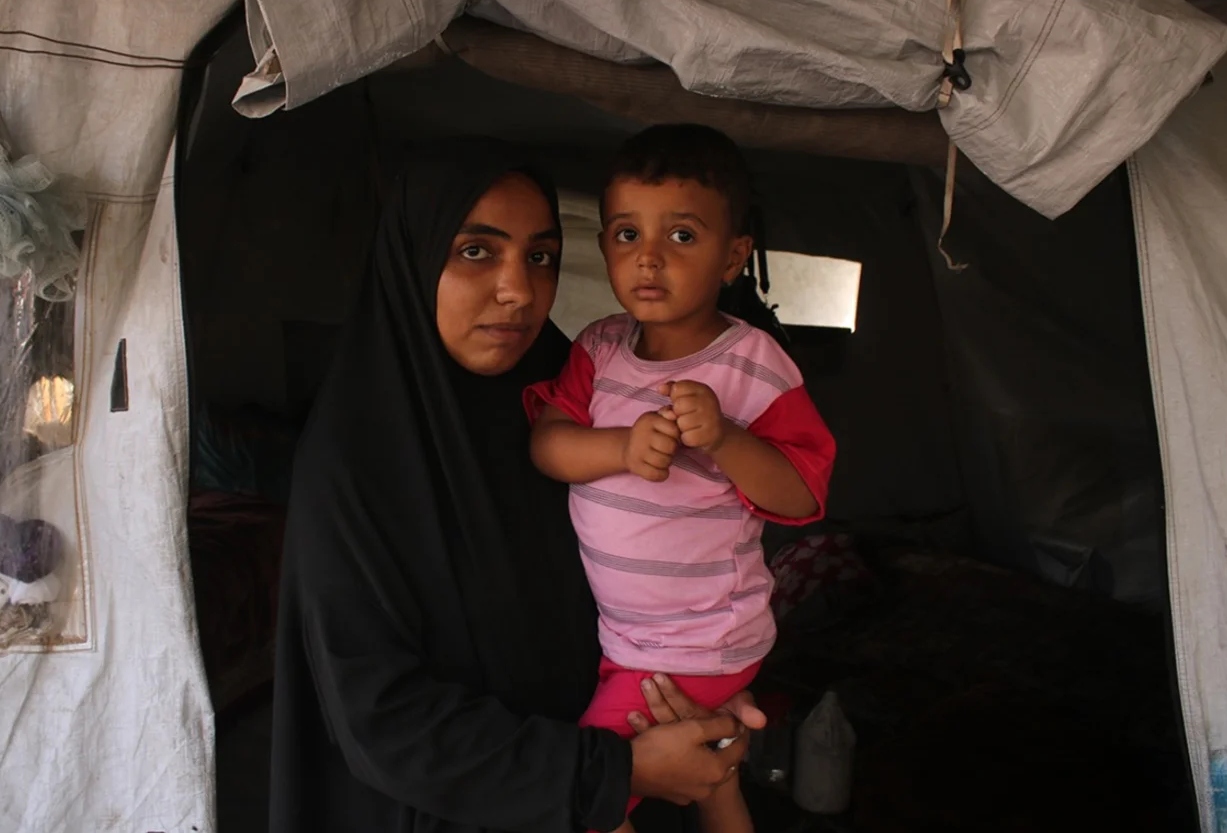
    In the rubble-strewn courtyard of a decimated school in Gaza City’s al-Zaytoun neighborhood, four-year-old Zain al-Halawani maintains his daily vigil at the tent entrance, awaiting a father who will never return. His mother, 25-year-old Nada al-Halawani, watches with a heart heavy with the knowledge that her son’s childhood mirrors her own—growing up parentless in a conflict zone.

    This poignant scene encapsulates the invisible humanitarian crisis unfolding among Gaza’s most vulnerable populations. Since Israel’s military offensive began in October 2023, official statistics reveal over 16,000 women have been widowed and more than 44,000 children orphaned amidst a death toll exceeding 71,424 Palestinians. These numbers only hint at the profound social catastrophe emerging from the rubble.

    The personal tragedies are countless. Ashraf al-Halawani, Zain’s father, was killed by an Israeli sniper while attempting to reach an aid distribution point last September. His body remains unrecovered, officially categorized among Gaza’s 11,000 missing persons. For Nada, this administrative limbo compounds her tragedy—without a death certificate, she cannot register for essential aid distributions that require paternal documentation.

    Twenty-seven-year-old Rawand Salim embodies another dimension of this crisis. After losing her husband Mohammed during a February 2025 ceasefire violation, she now navigates the impossible calculus of survival—selling precious wedding jewelry to feed her children, standing in endless lines for contaminated water and meager food portions, and witnessing the psychological deterioration of her young sons.

    The trauma manifests physically and emotionally in Gaza’s children: psoriasis outbreaks, hair loss, weakened immune systems, and severe anxiety disorders. Six-year-old Abdelrahman Salim’s attempt to excavate his father’s grave with bare hands represents the profound psychological damage inflicted upon an entire generation.

    Compounding these personal tragedies is the systematic destruction of Gaza’s support infrastructure. More than 80% of educational institutions lie in ruins, including specialized schools operated by the Al-Salah Charitable Society that previously provided orphans with free education, meals, and psychological support. Local and international aid organizations have either been destroyed by military operations or forced to suspend services indefinitely.

    The United Nations has documented Israel’s ‘systematic obliteration’ of Gaza’s education system—a crucial lifeline for vulnerable populations. Meanwhile, Israel’s continued blockade severely restricts humanitarian aid, creating what UN experts term a ‘policy of starvation’ that disproportionately affects female-headed households.

    Despite these overwhelming challenges, Gaza’s widows demonstrate extraordinary resilience. Nada al-Halawani dreams of pursuing graduate studies to provide better opportunities for her son, while Rawand Salim finds solace in her children’s gradual emotional recovery through educational initiatives. Their stories reveal not only the depth of human suffering but also the remarkable endurance of maternal love amidst unimaginable adversity.

    As one widow poignantly observed: ‘The world has forgotten about us. Our children have seen horrors no child should ever witness. They are all I have—I give them all my love, time, and effort just to see them smile, to give them a chance for a better future.’
  • Ugandans vote in tense election as Museveni seeks seventh term

    Ugandans vote in tense election as Museveni seeks seventh term

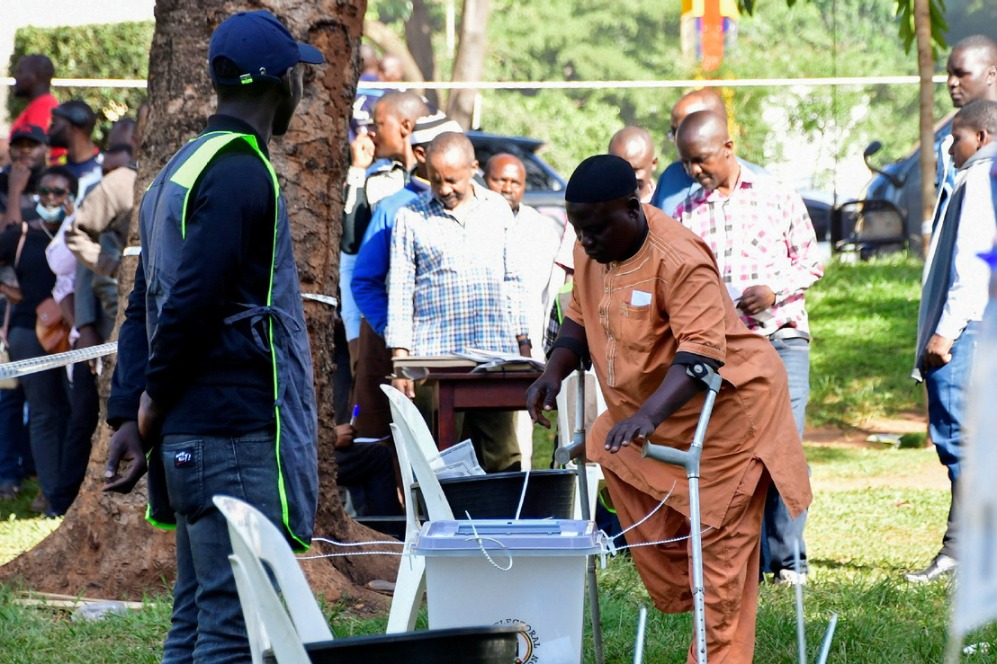
    Uganda embarked on a pivotal electoral process Thursday amid heightened tensions as long-serving President Yoweri Museveni pursued an unprecedented seventh term in office. The East African nation’s general election pits the 81-year-old incumbent against charismatic opposition leader Robert Kyagulanyi Sentamu, popularly known as Bobi Wine, who has mobilized the country’s substantial youth demographic in his bid for power.

    The electoral contest features eight presidential candidates competing to lead Uganda for the next five years, with approximately 21.7 million registered voters participating across 50,739 polling stations nationwide. Beyond the presidency, Ugandans are simultaneously selecting representatives for 353 parliamentary constituency seats, 146 District Woman Representative positions, and numerous local government roles.

    Campaign rhetoric has highlighted starkly different visions for Uganda’s future. President Museveni, representing the National Resistance Movement, has positioned himself as the guardian of national stability and continued development. Conversely, Bobi Wine’s National Unity Platform has centered its campaign on combating systemic corruption and implementing comprehensive governmental reforms.

    The electoral environment has been marked by significant digital restrictions, with Ugandan authorities implementing an internet blackout citing concerns about misinformation dissemination, potential electoral fraud, and prevention of violence incitement. This decision by the Communications Commission has drawn international scrutiny as polling commenced.

    Voting procedures will continue until 4 PM local time Thursday, with electoral officials confirming that any voters in queue at closing time will be permitted to cast their ballots. The electoral commission anticipates announcing presidential results within approximately 48 hours after polling concludes, setting the stage for a potentially contentious outcome declaration.

    The 2026 election represents a critical juncture in Uganda’s political evolution, testing the durability of Museveni’s 40-year administration against growing demands for change from the country’s youthful majority population.

  • Report on tailings dam collapse in Yunnan suggests accountability for 26 individuals

    Report on tailings dam collapse in Yunnan suggests accountability for 26 individuals

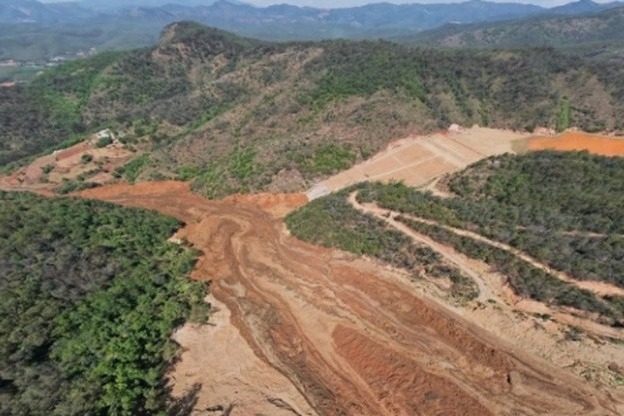
    A comprehensive government investigation into the catastrophic tailings dam collapse in Lufeng city has uncovered systemic operational violations and regulatory negligence that culminated in the deadly incident. The official report, released by Chuxiong Yi Autonomous Prefecture’s emergency management bureau, details how prolonged illegal practices at the Jianfeng Trading facility directly caused the structural failure that claimed five lives on May 5, 2025.

    The investigative committee determined that the Wuding county-based operation consistently engaged in unauthorized extraction and improper stacking of mining waste materials. These practices created dangerously steep slopes that compromised the structural integrity of the dry-stack tailings facility. Over an extended period, water seepage gradually infiltrated and softened the tailings composition, ultimately triggering the catastrophic collapse.

    The report highlights critical failures across multiple oversight dimensions, noting that relevant regulatory departments neglected their supervisory responsibilities while local Party and government authorities demonstrated significant negligence in addressing evident safety hazards. This collective institutional failure allowed preventable risks to persist despite clear warning signs.

    Accountability measures have been initiated against 26 individuals connected to the disaster. Five principal figures have been transferred to judicial authorities for criminal prosecution, with four already under arrest or facing formal charges. An additional 21 public officials have been referred to disciplinary inspection and supervision departments for administrative accountability.

    The incident has been formally classified as a production safety responsibility accident, emphasizing the avoidable nature of the tragedy had proper protocols been followed. The findings underscore ongoing challenges in industrial safety enforcement within China’s mining sector and highlight the consequences of regulatory complacency.

  • Iran postpones execution of 26-year-old protester, family and rights group say

    Iran postpones execution of 26-year-old protester, family and rights group say

    In a significant development amid ongoing civil unrest, Iranian authorities have postponed the execution of 26-year-old demonstrator Erfan Soltani, according to human rights organizations and family sources. The decision emerges against a backdrop of violent clashes between protesters and security forces that have resulted in substantial casualties across the country.

    The postponement follows stern warnings from U.S. President Donald Trump, who threatened “strong action” if Iran proceeded with executions of protesters. Trump subsequently acknowledged receiving assurances through diplomatic channels that executions had been halted, though Iranian Foreign Minister Abbas Araqchi denied any planned hangings, characterizing such reports as misinformation designed to provoke American engagement.

    Soltani’s case has drawn international attention due to the accelerated judicial process surrounding his detention. Arrested on January 8 at his residence west of Tehran, the young protester was denied legal representation and faced a death sentence just four days after his arrest, according to the Norway-based Hengaw Organization for Human Rights.

    The protests, initially sparked by economic grievances, have evolved into the most significant challenge to Iran’s clerical establishment in years. Human rights organizations report between 2,500-3,400 fatalities since the unrest began, though accurate assessment remains difficult due to extensive internet restrictions that persisted for nearly a week.

    Iranian officials have increasingly adopted a hardline stance toward demonstrators, with Chief Justice Gholam-Hossein Mohseni-Ejei calling for expedited trials and executions of what authorities term “rioters.” State television has broadcast numerous forced confessions, typically showing blurred faces of detainees alongside footage allegedly depicting attacks on security forces.

    The geopolitical implications continue to escalate, with Trump indicating continued monitoring of Iranian actions while Tehran has restricted its airspace to pre-approved international flights. Senior Iranian officials have responded with counter-threats, referencing previous missile strikes against U.S. bases in the region and emphasizing Iran’s capacity to respond to any aggression.

  • Will Michelle Yeoh appear in ‘Avatar’ films? Here’s what James Cameron thinks

    Will Michelle Yeoh appear in ‘Avatar’ films? Here’s what James Cameron thinks

    Academy Award-winning filmmaker James Cameron has revealed definitive plans for Michelle Yeoh’s involvement in the expanding Avatar cinematic universe, contingent upon the commercial performance of the upcoming third installment. During promotional activities for Avatar: Fire and Ash, Cameron disclosed that the celebrated actress would join the cast of Avatar 4 and potentially Avatar 5 should the franchise receive approval for extended production.

    Cameron expressed cautious optimism regarding the franchise’s future, noting the current depressed state of the film industry and the substantial financial investment required for these ambitious projects. “Michelle is definitely going to be in 4, if we make 4,” the director stated, emphasizing the conditional nature of these plans based on box office returns.

    The visionary director outlined the production strategy, indicating that should the fourth film move forward, both the fourth and fifth installments would be filmed concurrently as a single continuous narrative, mirroring the production approach used for the second and third films. This back-to-back filming method allows for cohesive storytelling across multiple chapters of the Pandora saga.

    Yeoh’s character has been identified as Paktuelat, a performance-capture Na’vi role that marks her official entry into the Avatar universe. This casting represents the culmination of a multi-year association with the franchise that began in 2019 when she was initially announced as Dr. Karina Mogue. Despite previous appearances on set during Avatar 3 filming and early reports suggesting her involvement in the third installment, Cameron clarified that her participation was always intended for later chapters.

    The director explained the complex production timeline, revealing that portions of Avatar 4 were filmed years in advance due to aging concerns with younger cast members. Cameron praised Yeoh’s significance to the project, describing her evolution from established movie star to cultural phenomenon following her Oscar win.

    Yeoh herself has expressed enthusiasm for the collaboration, having already completed several weeks of filming. Her dedication to the project was evident in her humorous declaration that she would even serve as “the tea lady” for the opportunity to work with Cameron, whom she characterized as a “walking genius.” Avatar: Fire and Ash is currently showing in theaters worldwide.

  • BBC reports from Uganda polling station hit by technical problems

    BBC reports from Uganda polling station hit by technical problems

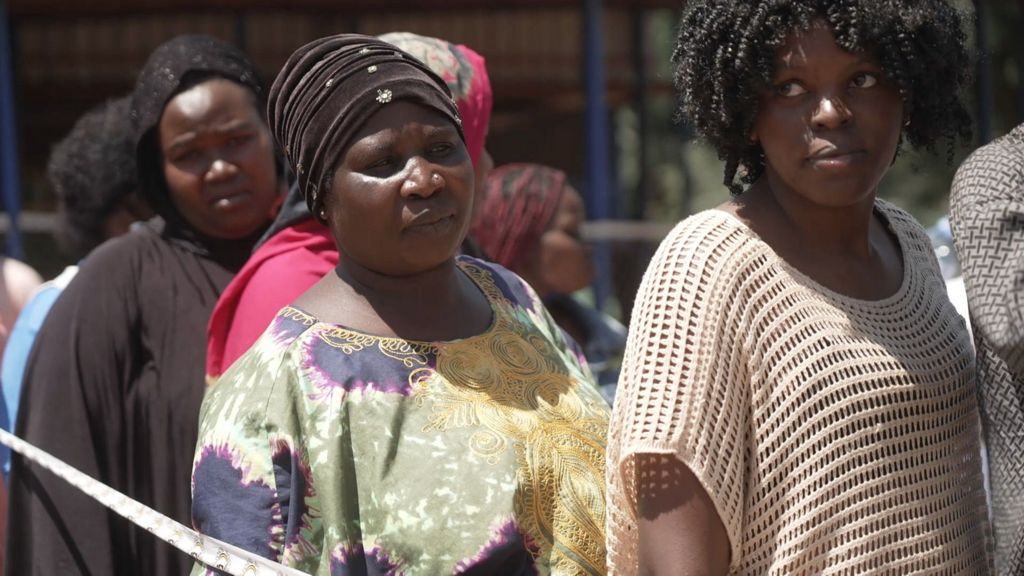
    Uganda’s pivotal presidential election encountered significant operational hurdles on polling day, with widespread technical failures disrupting the electoral process across multiple voting stations. Reports from various constituencies indicate that biometric voter verification systems, crucial for authenticating voter identities, experienced systemic malfunctions, resulting in extensive delays and growing voter discontent.

    The technological breakdown precipitated long, snaking queues at numerous polling centers, testing the patience of citizens eager to cast their ballots in this high-stakes political contest. Electoral officials scrambled to implement contingency measures, including manual verification processes, to mitigate the escalating crisis. Despite these efforts, the delays compounded logistical challenges already facing the election administration.

    This electoral event features President Yoweri Museveni, who has maintained an uninterrupted tenure since 1986, confronting his most formidable opposition challenge in decades. The technical difficulties have raised serious questions about the electoral commission’s preparedness and have drawn sharp criticism from opposition representatives monitoring the proceedings.

    International observers and local watchdog organizations have expressed concerns regarding how these technological failures might impact the election’s overall credibility and transparency. The electoral commission has acknowledged the issues while maintaining that these are isolated incidents rather than systemic failures, emphasizing their commitment to ensuring every legitimate voter exercises their democratic right.

  • Swiss bar employee who reportedly held sparkler unaware of dangers, family says

    Swiss bar employee who reportedly held sparkler unaware of dangers, family says

    A devastating New Year’s Eve fire at Le Constellation bar in Crans-Montana, Switzerland, has revealed alarming safety oversights, with new allegations emerging about inadequate staff training. Cyane Panine, a 24-year-old employee who perished in the blaze that claimed 40 lives and injured 116 others, had received no safety instruction and was unaware of the dangerous ceiling materials, according to her family’s legal representative.

    Sophie Haenni, the lawyer representing Panine’s family, stated in an official declaration that the young employee ‘wasn’t supposed to be serving tables’ on the fateful evening but had been directed to assist with high champagne demand. ‘Cyane simply followed instructions given, did her job, and did so in front of the manager,’ Haenni emphasized, noting the complete absence of safety training regarding the ceiling’s flammability.

    Initial investigative findings indicate the inferno originated when sparklers attached to champagne bottles ignited highly flammable soundproof foam lining the ceiling—materials that had not undergone mandatory safety inspections for five years at the popular ski resort establishment.

    The bar’s French proprietors, Jacques and Jessica Moretti, now face severe legal consequences including charges of manslaughter by negligence, bodily harm by negligence, and arson by negligence. Swiss judicial authorities have imposed strict measures against both owners, citing substantial flight risks. Jessica Moretti remains under travel restrictions with surrendered passport and daily police reporting requirements, while Jacques Moretti has been detained for an initial 90-day period.

    In response to the catastrophe, the Swiss canton of Valais has enacted an immediate prohibition on pyrotechnic devices within all indoor public venues. Authorities have additionally established a victim support fund, offering emergency payments of 10,000 francs ($12,500) to each affected family.

    The family’s legal statement portrayed Panine as having felt ‘used’ and ‘suffering from her working conditions’ prior to the incident, expressing ‘incomprehension at the lack of empathy and understanding from her employers’ regarding excessive workloads. Haenni concluded that adherence to basic safety standards and regular inspections ‘could have avoided’ the tragic casualties, unequivocally stating: ‘Cyane is undoubtedly a victim.’

  • Large fire and explosions reported in Dutch city of Utrecht

    Large fire and explosions reported in Dutch city of Utrecht

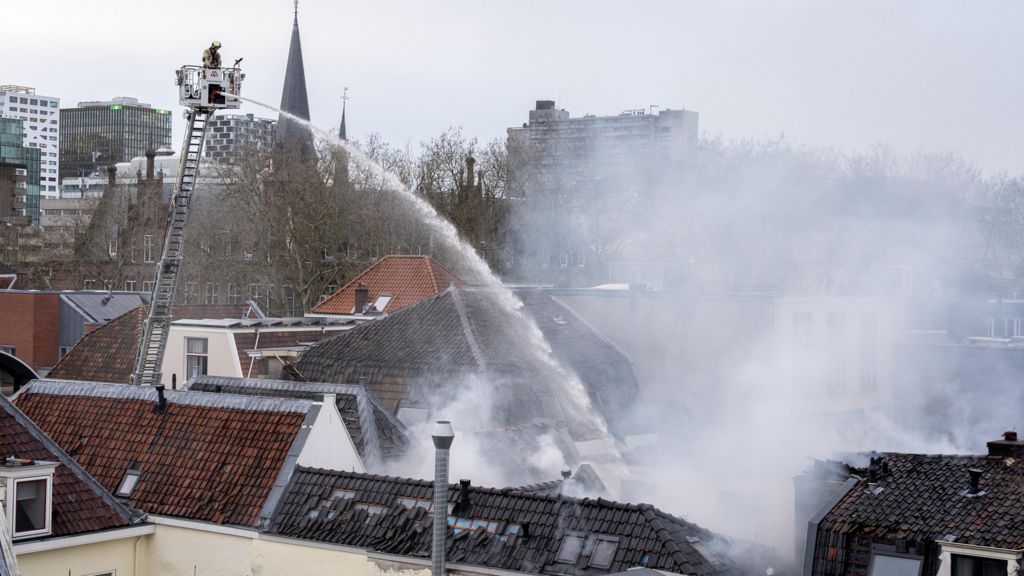
    A severe fire accompanied by multiple explosions has erupted in the historic center of Utrecht, Netherlands, causing significant structural damage and prompting mass evacuations. The incident occurred near Visscherssteeg alley, with local authorities confirming at least four injuries and potential victims trapped beneath debris.

    Emergency services responded to reports of a deafening explosion that preceded the rapid spread of flames through multiple adjacent buildings. Utrecht’s mayor confirmed to national broadcaster NOS that the situation remains critical, with rescue operations hampered by the unstable condition of affected structures. Fire department officials reported inability to enter the primary building due to imminent collapse risks.

    Eyewitness accounts describe catastrophic damage with walls and windows blown out across several properties. Local business establishments sustained substantial damage, while the precise cause of the explosions and subsequent fire remains under investigation. Civil protection authorities have established safety perimeters and ordered immediate evacuation of residents within the affected zone.

    The municipal government has issued public advisories urging citizens to avoid the city center area to facilitate emergency operations. Structural engineers are assessing the stability of surrounding buildings as firefighting crews continue containment efforts. Medical services have established temporary triage facilities to treat casualties as the full extent of the damage continues to be assessed.

  • China unveils undersea drilling robot to boost deep-sea exploration

    China unveils undersea drilling robot to boost deep-sea exploration

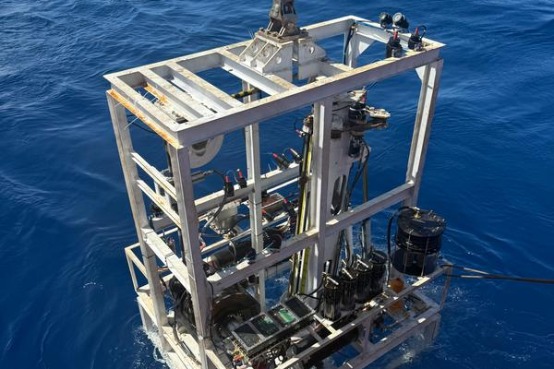
    China has achieved a significant technological milestone with the successful deployment of its first domestically developed undersea drilling robot, capable of performing three-dimensional drilling operations and real-time monitoring within seabed formations. The groundbreaking system recently completed its inaugural trial in the South China Sea at an impressive depth of 1,264 meters, demonstrating exceptional performance across all operational parameters.

    Developed by the Guangzhou Marine Geological Survey (GMGS) under the China Geological Survey, this advanced robotic system represents a quantum leap in deep-sea exploration technology. According to GMGS officials, the robot possesses unprecedented capabilities for autonomous navigation through complex underwater terrain, intelligently avoiding obstacles including rock formations and biological debris while dynamically calculating optimal operational pathways.

    Engineer Zhu Yangtao, deputy leader of the robotic project, emphasized the system’s sophisticated sensor array that enables comprehensive long-term monitoring across multiple parameters deep within seabed strata. During its trial mission, the robotic platform captured over 2,000 distinct data sets measuring critical variables including methane concentration, dissolved oxygen levels, and detailed stratigraphic structures.

    This technological advancement addresses longstanding challenges in deep-sea exploration, where extreme conditions—including crushing pressure, low temperatures, high salinity, and geological instability—have traditionally hampered effective resource assessment. Conventional drilling and monitoring technologies have struggled with mobility limitations, inadequate spatial coverage, and insufficient real-time data transmission capabilities.

    The newly deployed robot incorporates cutting-edge technologies including modular multi-section design, inertial navigation systems, magnetic beacon-assisted positioning, and artificial intelligence algorithms that significantly enhance both its operational intelligence and environmental adaptability. This technological framework enables low-disturbance, real-time in-situ monitoring that was previously unattainable in deep-sea environments.

    The development holds particular significance for accessing valuable deep-sea resources including gas hydrates, rare-earth elements, and polymetallic nodules—resources critical to national energy security and sustainable development. Beyond resource exploration, the robotic system is expected to support China’s comprehensive deep-sea scientific drilling initiatives, contributing to the nation’s broader marine science strategy and maritime development objectives.

    Research teams indicate plans for further enhancements to the robot’s operational capabilities to accommodate increasingly complex underwater environments, positioning China at the forefront of deep-sea exploration technology.

  • Venezuela’s new leader faces competing pressures from the US and a government loyal to Maduro

    Venezuela’s new leader faces competing pressures from the US and a government loyal to Maduro

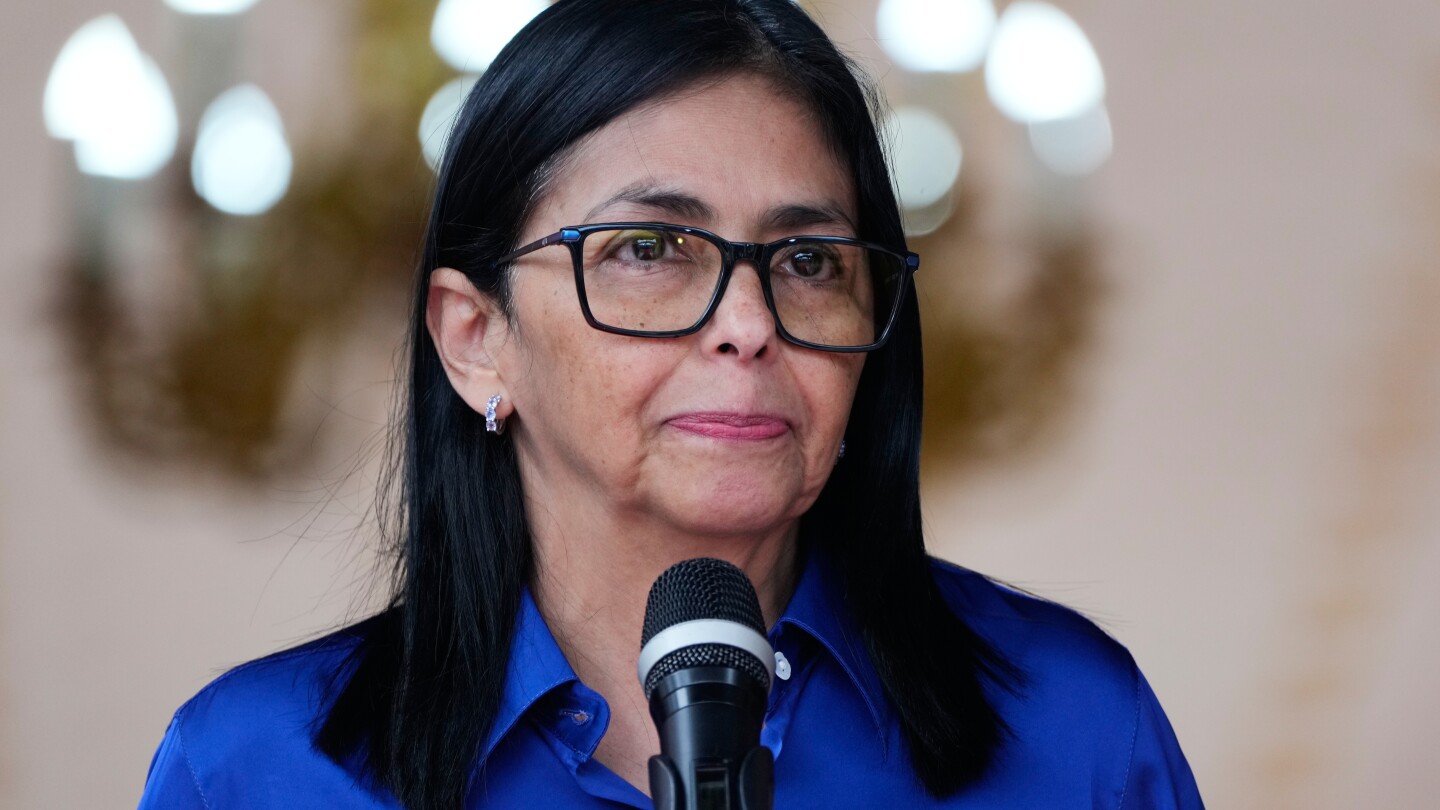
    CARACAS, Venezuela — Venezuela’s interim President Delcy Rodríguez delivered her inaugural state of the union address Thursday amid mounting political tensions, balancing competing demands from the United States government and loyalists of ousted leader Nicolás Maduro. The address to the National Assembly, dominated by the ruling party, outlined Rodríguez’s governance vision during this transitional period.

    The speech followed Rodríguez’s announcement of continued prisoner releases from the Maduro era, characterizing the development as part of a ‘new political moment’ following the U.S.-orchestrated removal of her predecessor earlier this month. The acting president faces the complex task of reconciling Washington’s expectations with the influence of hardline factions controlling Venezuela’s security apparatus.

    In a significant diplomatic development, U.S. President Donald Trump hosted Venezuelan opposition leader María Corina Machado at the White House on Thursday, despite having previously sidelined her by endorsing Rodríguez. Machado’s political coalition is widely recognized as the legitimate winner of the 2024 elections that Maduro had rejected.

    Rodríguez confirmed following a Tuesday telephone discussion with Trump that her administration would dedicate ‘every dollar’ from petroleum revenues to revitalize Venezuela’s critically deteriorated public healthcare infrastructure. The nation’s medical facilities have suffered systemic collapse, requiring patients to provide even basic medical supplies ranging from syringes to surgical implements.

    The interim leader operates under considerable pressure from Washington, having been sanctioned previously for human rights violations during Trump’s initial presidential term. Trump has explicitly threatened Rodríguez with consequences ‘probably worse than Maduro’ should she fail to cooperate with U.S. objectives regarding Venezuela’s oil industry restructuring.

    Maduro remains incarcerated in a Brooklyn detention facility after pleading not guilty to narcotics trafficking allegations, while Rodríguez maneuvers through Venezuela’s complex political landscape.