博客

  • A realist reading of the Israel-Turkey rupture

    A realist reading of the Israel-Turkey rupture

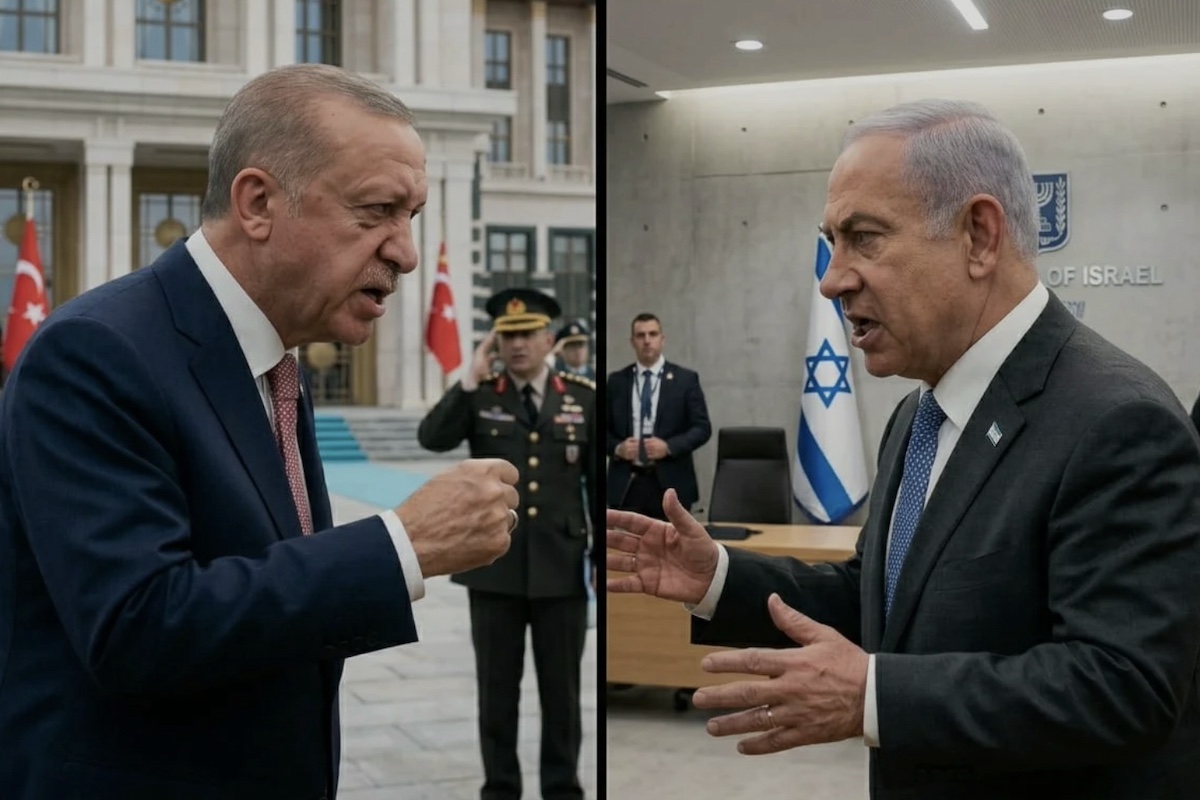
    When two major regional powers trade harsh public accusations of genocide and authoritarianism, it is easy to frame the moment as an epic collision of irreconcilable cultural values or clashing civilizational identities. The increasingly public breakdown in relations between Turkey and Israel over recent weeks has encouraged exactly this simplistic framing: Turkish President Recep Tayyip Erdogan has drawn inflammatory comparisons between Israeli Prime Minister Benjamin Netanyahu and Nazi leader Adolf Hitler, while senior Israeli ministers have publicly labeled Turkey an enemy state in every sense of the phrase. Most notably, Israel has reversed a century of deliberate diplomatic policy to suddenly claim a moral obligation to recognize the 1915 Armenian genocide carried out by the Ottoman Empire.

    A pragmatic realist analysis, however, paints a far less dramatic and far more familiar portrait of the conflict. What looks like a clash of values on the surface is actually a competition for regional influence between two overextended middle powers, both operating in a region where the old order that once kept their rivalries contained has collapsed. Both sides are leveraging every tool at their disposal – including long-dormant historical memory – to advance immediate, concrete strategic goals.

    ### Genocide Recognition as Strategic Statecraft, Not Moral Awakening

    Israel’s sudden shift on Armenian genocide recognition offers the clearest example of how historical narrative is being deployed for contemporary political gain. For more than a century, every Israeli government across the ideological spectrum refused to formally label the Ottoman-era mass killings of Armenians as genocide. This choice was never rooted in historical disagreement: the global scholarly consensus on the reality of the genocide has long been settled. Instead, the decision was driven by pragmatic geopolitics: Turkey was a critical military and diplomatic partner for decades, and in more recent years, Azerbaijan – a key energy supplier to Israel and an intelligence ally against Iranian ambitions – has vigorously opposed any international recognition of the genocide.

    This century-old political calculus shifted completely in a matter of weeks in June 2026. This change was not triggered by the discovery of new historical archives or a sudden national reckoning with moral principle. It came as Turkey and Israel have emerged as open rivals across multiple hotspots, from Syrian territory to the Eastern Mediterranean and even the halls of power in Washington D.C. The timing of the announcement reveals its true purpose: it is not a belated act of conscience for Armenian people, but a calculated message aimed directly at the Turkish government, and more specifically at the U.S. Congress, where an organized and influential Armenian-American lobby can create significant barriers to Turkey’s defense industry goals and its push to rebuild warm relations with the United States.

    Realist scholars have long argued that seemingly moral foreign policy gestures require close scrutiny to uncover the underlying strategic interests they serve, and this case is one of the clearest examples in modern diplomacy. This does not erase the reality of the historical event: the Armenian genocide is an established historical fact, and that truth has never been in credible dispute. But observers should be deeply skeptical of the narrative that Israel uncovered a moral truth in 2026 that it was unable to recognize in 1996 or 2016. The historical fact has not changed – only the strategic utility of publicly acknowledging it has shifted.

    Turkey’s response to the announcement has been equally instrumental. Turkish officials have framed Israel’s recognition as a cynical distraction from international scrutiny of Israel’s own military actions in Gaza, rather than treating it as a moment of legitimate historical reckoning. Put simply, both governments are wielding a century-old atrocity as a rhetorical weapon in a contemporary regional power struggle, and the current stated positions of both sides should not be confused with the long-held factual stances they have maintained for decades.

    ### Deeper Drivers: Geopolitical Balance, Not Ideological Conflict

    When one strips away the heated public rhetoric, the structural sources of friction between the two countries are mundane and entirely predictable from a traditional balance-of-power perspective, playing out across three key flashpoints:

    First, the power vacuum in post-Assad Syria. With former President Bashar al-Assad removed from power and Iranian-aligned militias significantly weakened, both Ankara and Jerusalem are rushing to fill the resulting empty space, and their preferred local allies have no overlap. Turkey backs the new interim government in Damascus and is actively arming and training its new military. Israel, by contrast, has carried out repeated airstrikes on Syrian military assets and supports Druze communities, and more cautiously, Kurdish groups that Turkey views as an existential security threat due to the long-running insurgency by the Kurdistan Workers’ Party (PKK). This is a textbook example of the classic security dilemma: every defensive move one side makes to shore up its own position is read as an offensive threat by the other.

    Second, competing claims in the Eastern Mediterranean. A deepening defense and energy partnership between Israel, Greece, and Cyprus – which includes joint military exercises, an Israeli sale of advanced air defense systems to Cyprus, and plans for a new U.S.-backed regional energy hub – directly contradicts Turkey’s expansive “Blue Homeland” maritime claims and its decades-old dispute over the status of Cyprus. From Ankara’s perspective, this partnership looks like deliberate encirclement by hostile powers; from Jerusalem’s perspective, it is a logical diversification of alliances away from a Turkey it can no longer trust. Both readings are rational from each government’s vantage point, which is exactly what makes this dynamic so difficult to de-escalate through simple goodwill gestures alone.

    Third, the awkward position of the NATO alliance. Turkey’s NATO membership adds an unusual layer of complexity to the rivalry. It gives Ankara access to the alliance’s security umbrella, which it increasingly resents depending on, while creating a persistent diplomatic headache for Washington: an alliance originally built to deter Russian aggression now has to manage an open rivalry between one of its own members and America’s closest non-NATO partner in the Middle East.

    Any U.S. administration that wants to prevent a full-blown military crisis in the Eastern Mediterranean has a clear interest in keeping this rivalry confined to rhetorical exchanges rather than open kinetic conflict. But Washington currently has very little bandwidth available to carry out the quiet, behind-the-scenes mediation that would be required to de-escalate tensions.

    ### The Case for Pragmatic Restraint

    This analysis does not argue that the rising confrontation between Ankara and Jerusalem is an insignificant development: a slide toward open conflict between a NATO member and a nuclear-armed U.S. partner is a major development with global consequences. But it does make the case that observers should not take either government’s public framing at face value.

    Erdogan’s fiery rhetoric about “liberating Jerusalem” is aimed as much at his domestic political base and pan-Islamist audiences across the region as it is at Israel. For Israeli officials, labeling Turkey “the new Iran” helps justify deeper Israeli military entrenchment in Syria and closer strategic alignment with Greece and Cyprus – moves that carry their own significant risks of escalation.

    Israel’s decision to recognize the Armenian genocide now, rather than at any point in the 40 years it could have taken that step, is clearly intended to win support for its regional agenda in Washington at Turkey’s expense.

    The realist approach does not dismiss the moral weight of any of the claims being made: the Armenian genocide is a historical fact, Turkey’s slide toward authoritarian rule in recent years is well documented, and Israel’s military campaign in Gaza has drawn widespread and serious international criticism. Instead, it calls for separating the underlying truth of these claims from the timing of their public deployment, and resisting the urge to frame this regional rivalry as a broader debate about competing civilizational values.

    What is unfolding between Ankara and Jerusalem is a classic example of how unconstrained middle powers act when the influence of a regional hegemon – in this case, a stretched thin United States whose long-standing security guarantee no longer shapes regional order as it once did – recedes. They shore up their positions through tactical hedging, posture for domestic and international audiences, and reach for the nearest historical or moral tool that can advance their immediate goals.

    For outside observers, and particularly for policymakers in Washington, the responsible approach is to see this dynamic clearly rather than rushing to pick a side in what is, beneath all the heated rhetoric, a traditional contest for regional power and influence.

  • Deaths surged 29% in France during week of record heat, health agency says

    Deaths surged 29% in France during week of record heat, health agency says

    PARIS – A record-shattering heat wave that swept across Western Europe last June left a far deadlier mark on France than initial projections indicated, according to updated data from the nation’s public health watchdog. Released Friday, the latest figures from Public Health France show excess deaths jumped by nearly a third during the week of the most extreme heat, with more than 2,000 additional fatalities recorded compared to the preceding week when temperatures first began their dangerous climb. The new tally is double the agency’s initial preliminary estimate of 1,000 extra deaths published just one week earlier, which only covered the three hottest days of the weather event.

    The extreme heat event, which gripped much of Western Europe in mid-to-late June, pushed temperatures past all-time records for both daytime highs and overnight lows across dozens of French cities and towns between June 22 and June 28. The unrelenting heat overwhelmed emergency healthcare services across the country, as thousands of patients sought treatment for heat-related complications.

    At Paris-Saclay Hospital, emergency department director Dr. Nicolas Gonzales told the Associated Press that a flood of heat-exposed patients began pouring into the facility starting June 20. Medical teams treated patients across all age groups, from young children to isolated elderly residents, for life-threatening heat-linked conditions including heart attacks, acute dehydration, and sudden kidney dysfunction.

    The strain extended far beyond hospital wards, as funeral and mortuary services in the capital struggled to keep up with the sudden rise in fatalities. Paris funeral directors report widespread logjams, with some local mortuaries hitting full capacity and forced to turn away new bodies ahead of burials or cremations.

    Public Health France’s current count stands at 8,973 total deaths recorded for the week of June 22 to 28, a 29% increase from the 6,948 deaths registered the prior week, when the heat wave first began building. The 2,025 gap between the two weekly totals counts excess deaths across all age groups and all causes, most of which are attributed directly or indirectly to the extreme heat.

    Disaggregated data shows the most dramatic spike in fatalities occurred in private residences, where deaths rose a staggering 91% week-over-week. Fatalities in elderly care facilities jumped 37%, while hospital deaths increased by nearly 20%. The Paris region bore the brunt of the mortality surge, recording a 63% week-on-week increase in deaths.

    Public health officials have cautioned that the current figures remain incomplete, meaning the final death toll will likely be even higher than the current reported numbers. “The mortality will as a consequence be higher than these first figures,” the agency stated. The record heat event that impacted France also broke temperature benchmarks across multiple other European nations, amplifying concerns about the growing public health risks of extreme weather linked to climate change.

  • Stand-up comic in court accused of insulting Islam and Erdogan in Turkey crackdown

    Stand-up comic in court accused of insulting Islam and Erdogan in Turkey crackdown

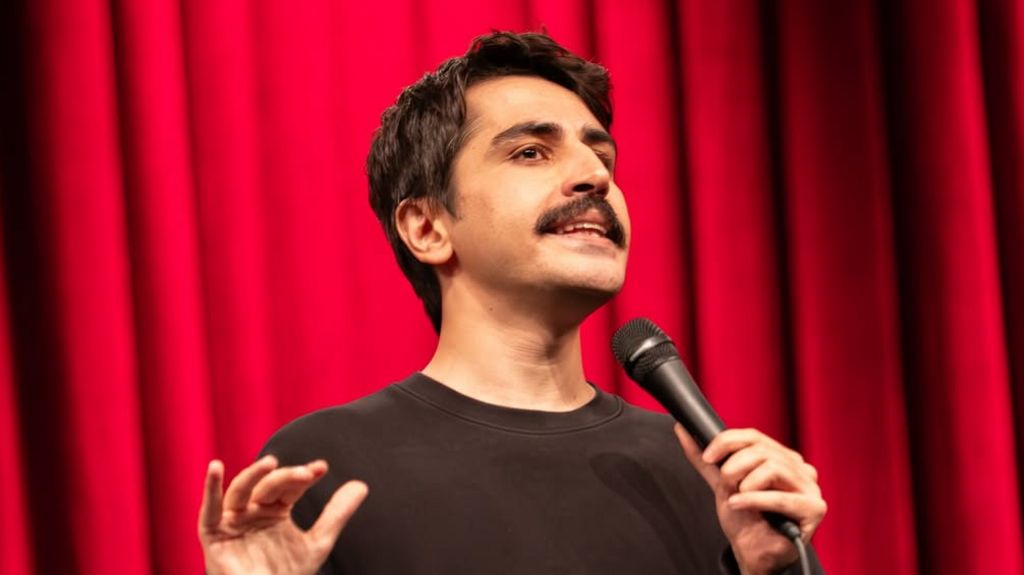
    A high-profile Turkish stand-up comedian has been taken into custody following his arrest at Istanbul’s main international airport, launching a new flashpoint over freedom of expression in Turkey just days before the country hosts a landmark NATO leadership summit. Deniz Göktaş, one of Turkey’s most beloved and widely watched comedy performers, was detained upon returning from an overseas holiday, with footage of the handcuffed performer circulating rapidly online to spark immediate outcry from his large base of supporters.

    Göktaş faces two serious criminal charges: insulting President Recep Tayyip Erdogan and violating Turkish law by publicly insulting religious values. The accusations stem from a 1 June stand-up set recorded at Istanbul’s iconic open-air performance venue, which was uploaded to YouTube on 24 June and has since racked up more than 9.4 million views. Turkish prosecutors have confirmed they received 185 formal complaints about the viral comedy clip, and on Friday, following hours of questioning at Istanbul’s Çağlayan courthouse, prosecutors formally requested that Göktaş be held in pre-trial detention as the case proceeds.

    In his official testimony to prosecutors, Göktaş pushed back firmly against all charges. He stated that he held no intention to offend any individual’s religious beliefs, and outright denied insulting the president. The comedian noted that the controversial routine had been performed across nearly a dozen Turkish cities over the past three years without incident, adding that the phrasing that sparked the charges had long been a widely discussed topic in Turkish public discourse. He also emphasized that more than 100,000 people had attended his live performances of the routine, and not a single audience member had filed an official complaint about the contentious section before the viral video spread.

    The controversy extends far beyond the comedy stage: Turkey’s top religious authority, the Presidency of Religious Affairs, highlighted the performance without naming Göktaş in its weekly Friday sermon delivered to all mosques across the country. In the sermon, the mufti’s office complained that digital platforms have allowed the mocking of sacred Islamic values under the guise of comedy, arguing that this trend is pulling Turkish youth away from traditional religious values.

    Göktaş’s arrest is not an isolated incident, according to analysts and rights advocates, but rather part of a broad, accelerating crackdown on dissenting voices across Turkey that has intensified in the lead-up to the 7–8 July NATO Leaders’ Summit in Ankara. Turkish authorities have already blocked access to social media accounts belonging to dozens of LGBT+ organizations and activists, and have detained more than 200 people across the country in recent weeks. Security officials have deployed tens of thousands of security personnel across Ankara to secure the summit, which will bring U.S. President Donald Trump, European heads of state, and Ukrainian President Volodymyr Zelensky together for high-stakes talks.

    Authorities have also implemented a full ban on all public demonstrations in Ankara through 10 July, and independent Turkish media outlets have reported that they have been denied official press accreditation to cover the summit. NATO has confirmed that it relies on host nation authorities to guarantee press access for the event, and that alliance representatives are in ongoing communication with Turkish officials over the issue.

    The wave of detentions has touched nearly every sector of Turkish civil society: in late June, volunteers from the Tema Foundation, one of Turkey’s most respected environmental nonprofits, were detained while returning from a group nature trip. The foundation confirmed that most of the detained volunteers were retired citizens, and nearly all were released shortly after being taken into custody. The broader crackdown has also targeted journalists, lawyers, academics, trade unionists, and political opposition figures.

    Hundreds of supporters gathered outside the Çağlayan courthouse on Friday to protest Göktaş’s detention, calling for his immediate release. The protest drew senior opposition figures, including former CHP presidential candidate Kemal Kılıçdaroğlu, who was recently reinstated as CHP chairman by an Ankara court in a move that has split the opposition. Kılıçdaroğlu has publicly condemned Göktaş’s handcuffed arrest and called for the comedian’s release, but many young opposition activists blame Kılıçdaroğlu for enabling the government’s crackdown on younger dissenting voices, after the court removed the entire elected CHP leadership in May to reinstall the 77-year-old former leader.

    Human rights watchdogs and free expression groups have condemned Göktaş’s arrest as a violation of Turkey’s constitutional protections. The Media and Law Studies Association, a leading Turkish freedom of speech monitoring organization, noted that satire and political comedy are explicitly protected under both the Turkish constitution and the European Convention on Human Rights, warning that the comedian could face years of prison time simply for telling jokes. Human Rights Watch has repeatedly warned that the Erdogan administration has implemented far-reaching restrictions on political opposition, independent media, and the basic right to freedom of expression across Turkey.

    The ongoing crackdown comes as the CHP, Turkey’s main opposition party, has faced escalating government pressure. The party’s most prominent figure, Istanbul Mayor Ekrem İmamoğlu, Erdogan’s leading political rival, has been held in prison for more than a year on charges including corruption, and went on trial last March. Opposition leaders have condemned the legal action against İmamoğlu and the party’s leadership as a judicial coup against Turkish democracy.

  • Can Girmay recreate past Tour de France glories with new team?

    Can Girmay recreate past Tour de France glories with new team?

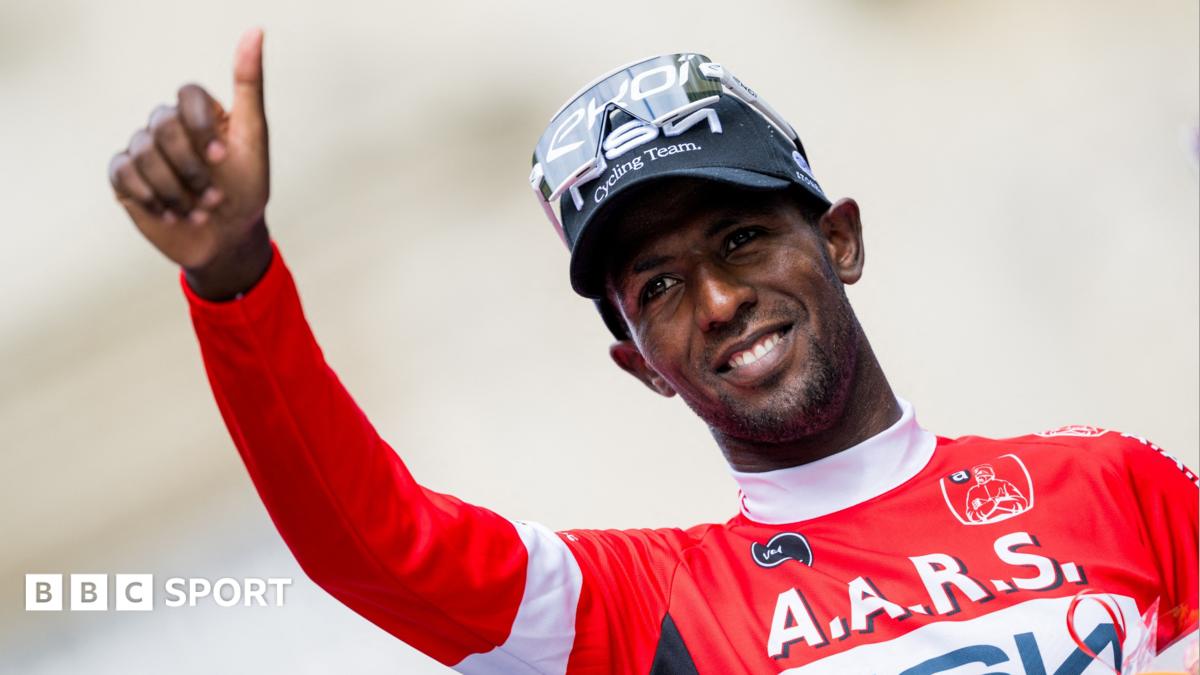
    Tour de France history-maker Biniam Girmay is gearing up for another run at cycling’s most prestigious sprint title, bringing fresh ambition, a new squad, and the backing of football World Cup champion Andres Iniesta to this year’s race.

    It has been two years since the 26-year-old Eritrean cyclist etched his name into the record books at the 2024 Tour de France, when he became the first black African rider to claim a stage victory, then went on to secure the event’s green jersey — cycling’s top honor for sprinters — as the first African rider ever to win the classification. After five seasons with Belgium’s Intermarche-Wanty team, Girmay made a high-profile move last December, signing a three-year deal with NSN Cycling, a squad co-founded by former Spanish international and Barcelona icon Iniesta, who lifted the 2010 FIFA World Cup trophy with his national side.

    “I am super happy and super motivated to start, to go for stage wins, and chase the green jersey,” Girmay told BBC Sport Africa. “This has been our main goal since the beginning of this season. I have stronger team-mates and a stronger lead-out compared to last year. That is why my results are better. We have worked so hard for this event and we want to achieve what we have planned.”

    This year’s Tour kicks off with a blistering 20km team time trial in the searing heat of Barcelona, followed by a third stage that cuts across the Pyrenees — a tough opening that will test specialist sprinters from the very first day. But Girmay, who grew up in East Africa, says the hot, harsh conditions may work to his advantage. “If you look at my best sprint performances, they were in the 2024 Tour de France, and we had two super hard and hot stages to start in Italy. That’s harder for the others – this is potentially also a benefit for me this year, as I can survive the heat better. We have hot and hard stages to begin right after the team time trial.”

    Backed by a joint venture between Swiss investment firm Stoneweg and Iniesta’s Never Say Never sports promotion company, NSN Cycling boasts a far larger budget and stronger resource pool than Girmay’s former team, and the early returns on the move have already been positive. Ahead of this year’s Tour, Girmay has notched three wins at UCI-sanctioned races, and claimed the overall green points classification at the Volta Comunitat Valenciana. After taking third in the green jersey standings at last year’s Tour, he is confident his new setup puts him in position to compete for the top prize once again.

    “I’ve had enough preparation for this year’s race, especially compared to previous years,” he said. “We also have everybody more or less in the same shape. That also makes a big difference because, as a team, we need to have everybody at the same level.”

    All eyes will be on Girmay when the race reaches its first dedicated sprint stages. Most cycling analysts peg the fifth stage, which runs from Lannemezan to Pau in southwestern France, as his first real opportunity to showcase his speed. NSN’s tactical team will be keeping close tabs on his main rivals: Jasper Philipsen of Alpecin-Premier Tech and Tim Merlier of Soudal-QuickStep, the two other top sprinters in this year’s field. Even earlier, Girmay could make an impact on the grueling 195.9km third stage, which ends with a 1.7km climb at a 7% gradient — a challenge that should play to his strengths as the strongest climber among the race’s top sprinters.

    As the only African rider competing in this year’s Tour, Girmay carries the hopes of his home continent on his shoulders, but he says the next generation of Eritrean cycling talent is already on track to join him at cycling’s biggest event. He singled out 20-year-old Milkias Maekele, a fellow sprinter who claimed a dominant solo victory at the Eritrean National Road Championships last month. A product of the same Asmara-based As.Be.Co development program that launched Girmay’s career, Maekele spent 2025 with Germany’s UCI Continental Team Bike Aid — a squad with a long track record of supporting emerging African talent — and earned a promotion to the development team of top-tier World Tour squad Netcompany Ineos after just one standout season.

    Girmay says the 6-foot-tall young sprinter has all the makings of a future star. “He has a strong mind for racing, a truly winning mentality. I am super happy for him for winning the national championships. He really deserved it as he raced very well.”

    Eritrea already stands as Africa’s most successful cycling nation, with four other Eritrean riders competing at the World Tour level, including fan-favorites Henok Mulubrhan of XDS Astana and Natnael Tesfatsion of Movistar. But Girmay remains the undisputed face of African cycling, and a second green jersey win would only cement his legacy. For the coming weeks of the Tour, expect to see hundreds of Eritrean flags waving at every sprint finish as the history-making rider chases another milestone.

  • Israeli jets entered Iranian airspace to attack negotiators’ plane after talks in Islamabad, NYT reports

    Israeli jets entered Iranian airspace to attack negotiators’ plane after talks in Islamabad, NYT reports

    A high-stakes diplomatic crisis unfolded in the Middle East earlier this year, after a bombshell new report from The New York Times revealed that Israeli fighter jets penetrated Iranian airspace at the very moment Tehran’s top negotiating team was wrapping up diplomatic talks with U.S. officials in Pakistan. The incident, which unfolded against the backdrop of fragile U.S.-Iran peace efforts aimed at securing a long-term ceasefire and broader regional agreement, triggered alarm across Washington, Tehran and key regional intermediaries, as American officials warned that an Israeli assassination plot targeting two of Iran’s most senior negotiators could have derailed the entire peace process.

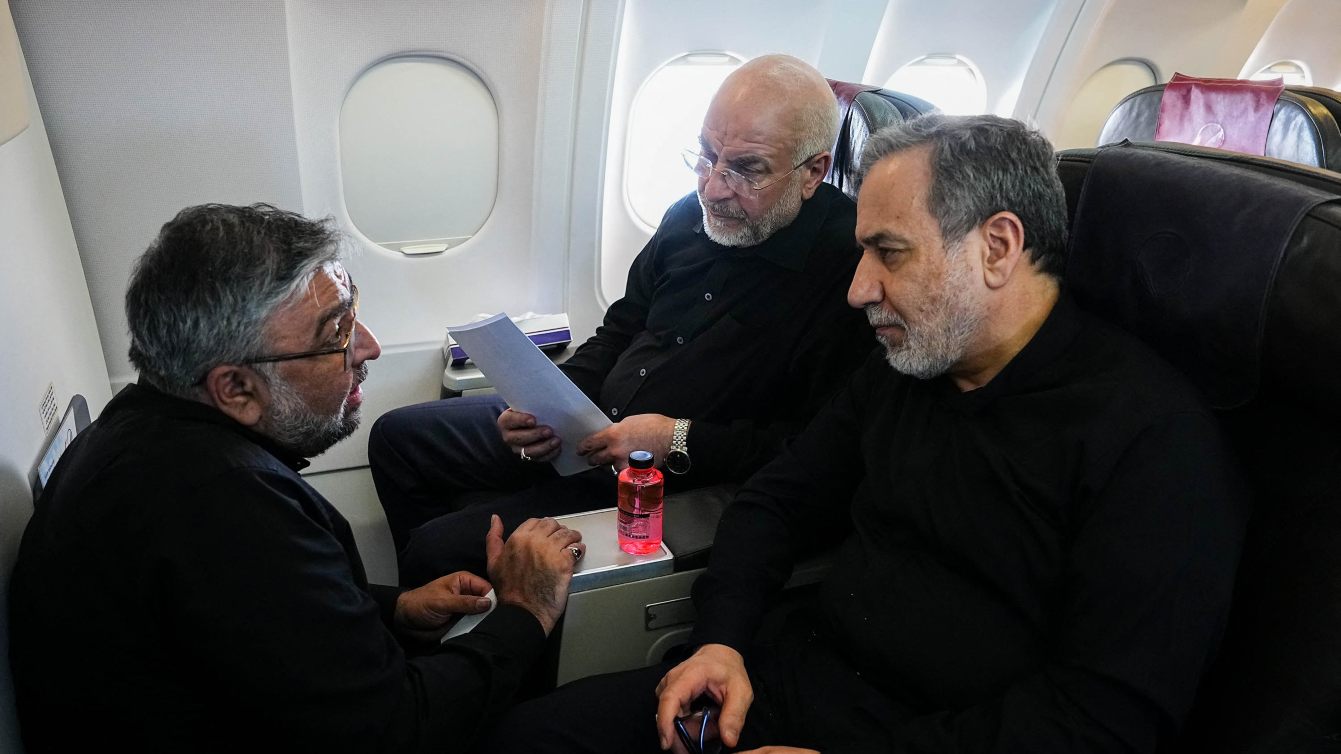
    According to the Wednesday-published report, U.S. intelligence agencies grew increasingly concerned that Israel planned to target Iranian Foreign Minister Abbas Araghchi and Parliament Speaker Mohammad Bagher Ghalibaf as the two officials traveled back to Tehran from talks in Islamabad. These two figures had emerged as the primary Iranian interlocutors for negotiations that gained serious momentum starting in April, when the U.S. and Iran began working toward a ceasefire framework that would eventually be finalized in June. The report notes that Israel has long been skeptical of any diplomatic deal with Iran that fails to meet its maximalist security and political goals, which include forcing regime change in Tehran, dismantling Iran’s network of regional allied militias, and nearly completely eliminating Iran’s ballistic missile program. The emerging agreement under discussion did not meet these benchmarks, leaving Israeli leadership hostile to the talks.

    After U.S. officials confirmed that Ghalibaf had been placed on an Israeli targeting list, Washington moved quickly to pressure Israel to stand down from any planned strike. The U.S. also reached out to regional partner nations to pass along warnings to Tehran about the looming threat to its negotiating team. For its part, Iran requested formal security assurances from Washington through intermediaries in Pakistan and Qatar, that Israel would not attack members of its diplomatic delegation.

    Tensions reached a fever pitch during an April visit to Islamabad, where Ghalibaf was scheduled to hold a high-level meeting with U.S. Vice President JD Vance. Out of fear of an Israeli strike, Pakistani air force jets escorted the Iranian delegation’s plane both on arrival and departure from Pakistani airspace. On the return flight to Iran, Iranian security officials notified the pilot of Ghalibaf’s aircraft that intelligence had picked up signs of an imminent Israeli attack, and confirmed that two Israeli fighter jets had crossed into western Iranian airspace from the border near Iraq. Mahdi Mohammadi, a senior advisor to Ghalibaf who was part of the delegation, later publicly confirmed this account on his social media channels.

    In response to the active threat, the Iranian plane made an emergency diversion landing in the northeastern city of Mashhad. Delegation members then completed the remaining trip to Tehran over land, an eight-hour overland journey across northern Iran. Writing to local Iranian media in April, Iranian lawmaker Mohsen Zanganeh praised the negotiating team for continuing their work despite the clear danger. “Today Mr. Ghalibaf and Mr. Araghchi, and other members of the negotiating team, have put their lives on the line knowing the grave security risks and this is called a real sacrifice, not political manoeuvring,” Zanganeh said.

    Despite the reported threat on their lives, Araghchi and Ghalibaf did not withdraw from the negotiating process. The pair continued to travel for talks, holding additional meetings in Qatar before attending a June negotiating round in Switzerland with Vice President Vance and other senior U.S. delegates, which produced the preliminary framework agreement Washington had been working toward.

    A spokesperson for the Israeli Embassy in Washington declined to provide any comment on the allegations when contacted by The New York Times. When asked about the U.S. warnings shared with Iran, a senior U.S. official only confirmed that President Donald Trump’s administration wanted the peace process to proceed without disruption, and noted that talks between the two delegations were ongoing at the time of the report.

    This exclusive reporting was originally delivered by Middle East Eye, a publication that provides independent, in-depth coverage of the Middle East and North Africa region.

  • Argentina v Cape Verde: Breaking down biggest World Cup knockout mismatch

    Argentina v Cape Verde: Breaking down biggest World Cup knockout mismatch

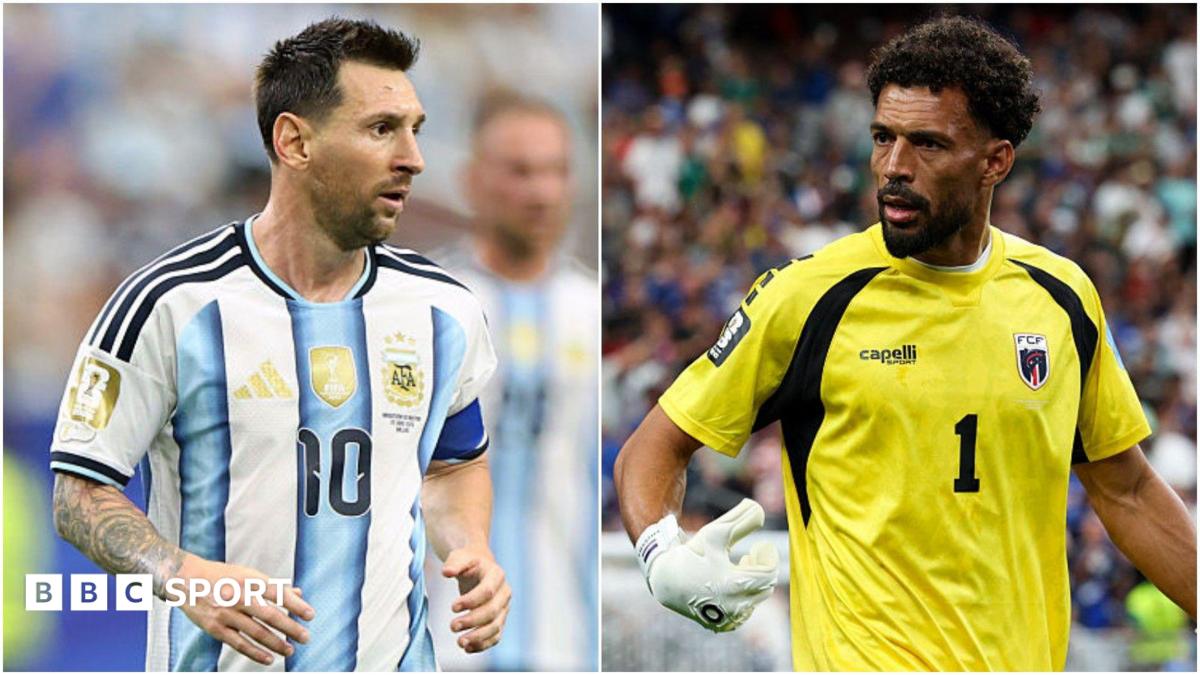
    When football fans around the world began making their predictions for the 2026 FIFA World Cup knockout stage, few could have imagined the mouthwatering underdog story that would dominate pre-match hype: Lionel Messi, widely regarded as the greatest player to ever step onto a football pitch, preparing to face 40-year-old Cape Verde goalkeeper Vozinha in one of the most lopsided but anticipated matchups in modern tournament history.

    The game will kick off Friday at Miami Stadium, kicking off what is already being framed as a classic meeting between tournament powerhouse Argentina and the smallest nation ever to reach a World Cup knockout round: first-time qualifier Cape Verde. What makes the matchup so captivating is not just the gulf in experience and resources between the two sides, but the incredible underdog journey that brought the African side to this point, a run that has already secured their place in World Cup folklore.

    Few gave Cape Verde any chance of progressing out of their group, even before they faced off against defending European champions Spain. But the Blue Sharks held the giants to a shock 0-0 draw, a result that already ranked among the biggest upsets in modern World Cup history – even without a win. Back-to-back draws against two-time winners Uruguay and Saudi Arabia followed, enough to secure a second-place group finish and a historic ticket to the round of 32. Their reward? A clash with the current world champions.

    On paper, it looks like one of the biggest mismatches World Cup football has ever seen. Argentina is one of the most storied national teams in the sport, with a legacy stretching back to the very first World Cup in 1930, where they finished as runners-up. The side has won the World Cup three times: first in 1978 with a 3-1 final victory over the Netherlands, again in 1986 against West Germany, and most recently in 2022 in Qatar, where they defeated France on penalties after a thrilling 3-3 draw. Beyond global success, Argentina hold the record for most Copa America titles with 16 wins, including the last two consecutive tournaments, and have ranked among the top three in the FIFA world rankings since March 2022, holding the number one spot for two years before France claimed the top position last year.

    Cape Verde’s football origin story could not be more different. The nation only gained independence from Portugal in 1975, its national football federation was founded in 1982, and it only accepted FIFA membership in 1986 – the same year Argentina lifted their second World Cup trophy. The Blue Sharks first entered World Cup qualifying in 2002, and did not come close to qualification until the 2022 cycle, when they missed out on Qatar by just one point, falling short after a 1-1 draw with Nigeria in their final group match. For 2026, despite being drawn into a qualifying group with eight-time qualifier Cameroon, Cape Verde finished top of the group with just one loss from 10 matches to secure their first ever World Cup berth.

    At the continental level, Cape Verde only made their first Africa Cup of Nations appearance in 2013, where they reached the quarter-finals, and have since qualified for three more tournaments, including another quarter-final run in 2023. They currently sit 64th in the FIFA world rankings, having hovered between 60th and 80th for the last nine years.

    Much of Cape Verde’s recent progress can be traced back to a 2010 strategic shift, when then-manager Joao de Deus began tapping into the nation’s large global diaspora to strengthen the national squad, a common tactic for small nations in modern international football. Today, 12 members of the 2026 World Cup squad were born in Cape Verde – including Kevin Pina, who scored the nation’s first ever World Cup goal in their 2-2 draw with Uruguay – but the side relies heavily on diaspora talent, with five players born in the Netherlands, three in France and three in Portugal. No players currently play in Cape Verde’s semi-pro domestic league, with 23 plying their trade across Europe. Only one, Villarreal defender Logan Costa, plays in one of Europe’s top five leagues.

    The squad’s surprise star, 40-year-old goalkeeper Vozinha, is currently an official free agent after his contract with Portuguese second division side Chaves expired earlier this week. Vozinha is one of seven squad members playing in Portugal, with only full-back Sidny Lopes Cabral, who is set to join Turkey’s Trabzonspor after leaving Benfica, playing at a top-tier club.

    The gap in squad value between the two sides is staggering. According to transfer market data site Transfermarkt, Cape Verde’s entire squad has a combined market value of just €54.5 million (£46.8 million), putting them in the bottom nine of the 48 teams at the 2026 tournament. Argentina, by comparison, boast a squad valued at €807.5 million (£693.7 million), the seventh most valuable squad in the tournament, with only 16-time winners France ranking higher. When comparing projected starting lineups, Argentina’s first XI carries a combined value of £360.3 million – more than 18 times the £19.77 million total value of Cape Verde’s entire matchday squad. Five individual Argentine players are each worth more than the entirety of the Cape Verde squad, with Chelsea midfielder Enzo Fernandez the nation’s most valuable player at £77.4 million.

    Beyond market value, the gulf in silverware is just as stark. Sixteen members of Argentina’s current squad are already World Cup winners, with countless domestic and continental titles across Europe’s top leagues between them. For Cape Verde, most of their players’ title success has come in lower-tier European leagues or smaller national competitions, with the highest profile honors being Jovane Cabral’s 2020-21 Portuguese league title with Sporting CP and Kevin Pina’s 2024-25 Russian Premier League title with Krasnodar.

    Even off the pitch, the gap between the two nations is almost impossible to overstate. Cape Verde is a 10-island archipelago in the central Atlantic, 450 kilometers off the west coast of Africa, with a total land area of just 4,033 square kilometers and a population of roughly 530,000 – smaller than the population of every U.S. state. It is the third-smallest nation ever to qualify for a World Cup, and now holds the record for the smallest nation to ever reach the knockout rounds, breaking a 68-year record held by Northern Ireland. Argentina, by contrast, is the eighth largest country in the world by area, with a population of 46 million and a GDP of $683 billion, compared to Cape Verde’s $3 billion GDP.

    For all the lopsided statistics on paper, though, Cape Verde has already defied every expectation placed on them at this tournament. Friday’s clash will not just be a game between the world champion and the debutant underdog: it will be a chance for the Blue Shores to write another shocking new chapter in World Cup history, with Vozinha set to take center stage against the greatest player of his generation. Football fans around the world will be tuning in to see if the ultimate underdogs can pull off one more upset.

  • In pictures: Taylor Swift wedding fever heats up in New York

    In pictures: Taylor Swift wedding fever heats up in New York

    Anticipation and excitement have reached a fever pitch in Manhattan this Fourth of July weekend, as swirling rumors of an imminent star-studded wedding between global pop icon Taylor Swift and NFL star Travis Kelce transform the iconic Madison Square Garden into the center of global entertainment attention. The couple, who announced their engagement last year, are widely reported by U.S. media to kick off their multi-day wedding celebrations with an intimate pre-wedding gathering Thursday, widely speculated to be a rehearsal dinner, hosting roughly 100 close guests at the Manhattan arena.

    A far larger main celebration is scheduled for Friday at the same venue, which is expected to draw up to 1,000 invited guests, with A-listers including singer Sabrina Carpenter and broadcaster Graham Norton already tipped to be in attendance by insiders. Visual evidence from the venue has fueled the widespread speculation: photos taken in the lead-up to the event show uniformed crews transporting staging, lighting, and event supplies into the arena, home of the New York Knicks NBA franchise, while soft blush-colored curtains have been hung across venue windows to block public view of preparations inside.

    Local authorities have already confirmed to the BBC that a permit for temporary street closures near Madison Square Garden was approved for the Fourth of July holiday weekend, and work crews installed concrete barricades around the perimeter of the venue Wednesday, one day ahead of the reported first celebration. Even New York City Mayor Zohran Mamdani leaned into the buzz during a public heat safety advisory amid an ongoing heatwave sweeping the Big Apple, quipping that residents should stay cool “especially if you’re (hypothetically) having your wedding at MSG this weekend.”

    Thousands of Swift’s diehard fans, known widely as Swifties, have already gathered outside the arena in hopes of catching a glimpse of the couple or their famous guests, alongside dozens of reporters and celebrity photographers covering the high-profile event. However, onlookers are unlikely to get a peek at the couple: if the wedding plans hold, Swift and Kelce are scheduled to enter the venue through a private underground entrance to avoid crowds and press. Multiple industry sources have described strict security surrounding the event, with one celebrity photographer telling the BBC that preparations have been wrapped in “Pentagon-level secrecy” that has kept most details tightly under wraps.

    While neither Swift nor Kelce have appeared in public near the venue to confirm the event, the massive logistics operation unfolding at Madison Square Garden matches the scale of production Swift has become known for during her record-breaking Eras Tour, which required dozens of trucks to move equipment between tour stops. Fans around the world have been sharing updates and speculation across social media all week, turning the rumored nuptials into one of the most talked-about entertainment events of 2026.

  • Nasa launches mission to save falling space telescope

    Nasa launches mission to save falling space telescope

    On Friday, NASA made space exploration history by launching a first-of-its-kind, funded mission to rescue the iconic Swift Observatory, a pioneering space telescope that has unlocked groundbreaking insights into the universe’s most extreme cosmic events, before it burns up during atmospheric reentry in the coming months.

    Launched originally in 2004, the car-sized Swift Observatory was purpose-built to detect and study gamma-ray bursts—cataclysmic explosions triggered by the death of massive stars or collisions of neutron stars that release as much energy in seconds as the sun will output over its 10-billion-year lifespan. Built for speed and agility to capture these fleeting, high-energy events (for which it earned its name), Swift has operated for more than two decades, delivering transformative data that allows astronomers to study phenomena that no other active instrument can observe. In 2022 alone, it captured a detailed image of a gamma-ray burst originating from a dying star 2 billion light-years from Earth.

    In recent years, however, increasing solar activity has expanded Earth’s upper atmosphere, creating drag at Swift’s current orbital altitude that has gradually slowed the telescope and pulled it lower. From its original 600-kilometer (373-mile) orbit, Swift’s altitude has dropped to roughly 360 kilometers (220 miles), with most of that decline occurring in just the last two years. Left unaddressed, it will fall below 300 kilometers (186 miles) in the coming months, making any rescue attempt impossible, before eventually reentering the atmosphere and burning up completely.

    For the global astronomy community, losing Swift would be an irreversible blow. “It’s an important telescope that enables us to study super high-energy phenomena that we have no other means to study,” explained Dr. Simeon Barber, a senior research fellow at the Open University and a space scientist familiar with the mission. While he acknowledges the operation is “high risk,” Barber added that the scientific community remains optimistic that the unprecedented attempt is worth pursuing.

    Tasked with the extraordinary rescue is Arizona-based startup Katalyst Space Technologies, which was given less than a year to design, build, and launch its custom-built LINK intercept craft. In a remarkable engineering feat, the Katalyst team completed the entire project in just eight months. “What the Katalyst team has accomplished in just eight months is extraordinary,” said Katalyst CEO Ghonhee Lee. “The team designed, built, tested, and integrated a robotic spacecraft capable of performing one of the most ambitious commercial servicing missions ever attempted.”

    The fridge-sized LINK craft is fitted with three robotic gripper arms, an array of high-resolution cameras, precision navigation sensors, and small maneuvering thrusters. Launched aboard a Pegasus XL rocket that placed it in the general vicinity of Swift’s orbit, LINK will spend the next several weeks systematically powering on and testing all its systems to confirm they survived launch.

    Over the following three to four weeks, LINK will conduct a precision approach to the moving, descending telescope, gradually maneuvering into formation. Before attempting a capture, LINK will circle Swift and capture full imagery of the observatory—critical because 22 years in orbit have likely altered the telescope’s structure, and it was never originally designed to be grappled in space.

    The LINK craft will approach at an extremely slow pace before its three arms extend to secure a firm grip on Swift. If capture is successful, LINK will slowly fire its thrusters over two to three months to gently lift the combined craft back to Swift’s original stable 600-kilometer orbit, allowing the decades-old telescope to resume its critical scientific work.

    This ambitious mission has never been attempted before, and success is far from guaranteed: countless variables must align perfectly for the operation to reach its goal. If the rescue of Swift succeeds, however, space experts say the next candidate for an orbital rescue mission could be one of astronomy’s most beloved instruments: the iconic Hubble Space Telescope. The astronomy community worldwide will be watching closely as the unprecedented operation unfolds over the coming months.

  • UN human rights chief sounds ‘red alert’ over violence around Sudan’s el-Obeid city

    UN human rights chief sounds ‘red alert’ over violence around Sudan’s el-Obeid city

    GENEVA — The United Nations’ top human rights official has issued an urgent “red alert” warning the global community of a looming humanitarian catastrophe in and around the strategic central Sudanese city of el-Obeid, where fighting between Sudan’s national army and the rival Rapid Support Forces (RSF) has pushed half a million trapped civilians to the brink of mass atrocity crimes.

    Addressing the UN Human Rights Council in Geneva Friday, UN High Commissioner for Human Rights Volker Türk emphasized that warning signs of an unfolding human rights disaster in el-Obeid are unambiguous. His urgent call to action came as the 47-member UN human rights body convened an emergency debate to address rising diplomatic and advocacy group concerns over a potential new wave of civilian harm in Sudan’s 2-year-long civil conflict.

    “This is not a drill. It is a red alert that needs to land on the desks of heads of state and government around the world,” Türk stressed. He added that global leaders must prioritize urgent diplomatic action in the coming weeks, stepping up engagement to prevent mass atrocities across el-Obeid and other at-risk regions of Kordofan.

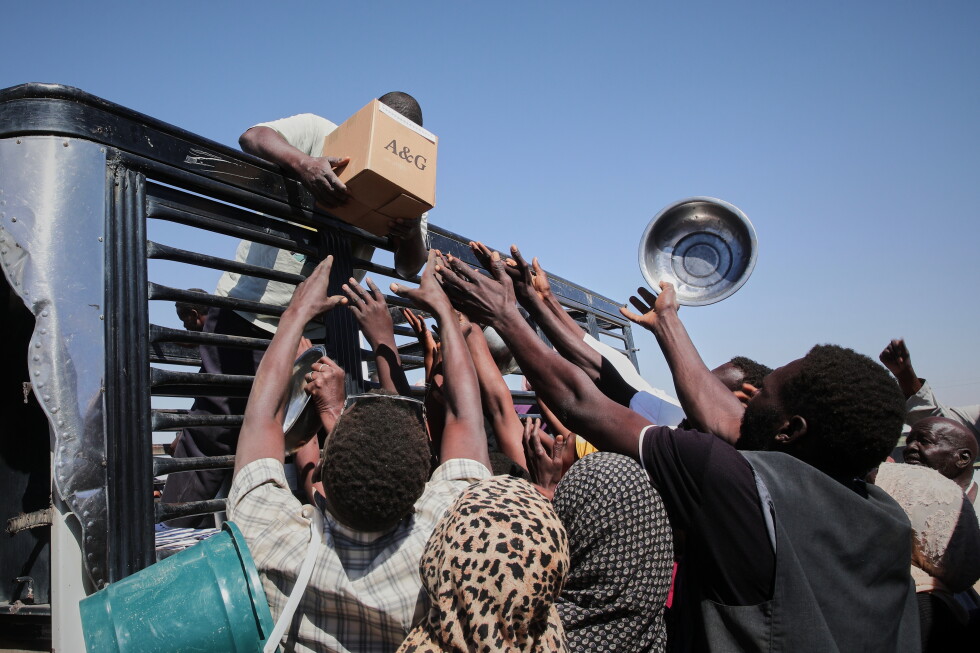
    Türk detailed the catastrophic conditions facing el-Obeid’s civilian population, who have endured 18 months of siege-like conditions amid relentless drone strikes as the two warring factions battle for control of key territory surrounding the city. In February 2025, Sudan’s national military broke an RSF siege of el-Obeid that had stood for more than a year, but the paramilitary group has since launched repeated multi-pronged offensives to reimpose the blockade. Recent RSF attacks on critical infrastructure have left residents facing catastrophic shortages of food, clean water, fuel, medical care and public transportation, according to updates from Türk’s office.

    The UN Human Rights Council was weighing a draft resolution put forward by Britain, Germany, Ireland, the Netherlands and Norway during the urgent debate. The draft singles out the RSF and its affiliated forces for condemnation over escalating violence in and around el-Obeid, calls for expanded financial and logistical support for neighboring nations hosting Sudanese refugees, and denounces all forms of external interference in the Sudanese conflict, among other provisions.

    Sudan’s civil war first erupted in April 2023, rooted in decades of festering tensions between the country’s formal military leadership and the RSF paramilitary group. The conflict has already left at least 59,000 people dead, displaced more than 13 million Sudanese from their homes, and pushed vast swathes of the country into catastrophic famine conditions. UN data estimates that more than 30 million Sudanese currently require life-saving humanitarian assistance to survive.

  • France records 2,025 excess deaths at peak of heatwave as Europe braces for more extreme weather

    France records 2,025 excess deaths at peak of heatwave as Europe braces for more extreme weather

    A devastating record-breaking heatwave that swept across Western Europe in late June has left a sharp spike in mortality, with new official figures revealing thousands of excess deaths in France and the Netherlands alone. As communities begin to tally the human cost of the extreme heat event, meteorological agencies across the continent are already warning of another round of searing temperatures set to hit large swathes of Europe starting this weekend, compounding risks of wildfires and public health crises.

    The mortality data from France’s public health agency, released Friday, confirms that between June 22 and 28 — the peak of the June heatwave — total deaths rose by 2,025, a 29% increase compared to the previous week. In the Paris region, death rates jumped by a staggering 62% compared to baseline figures. French Health Minister Stéphanie Rist noted that the sharpest rise in fatalities was recorded among people over 45 years old, and agency officials warned that the initial death count is likely an underestimate, meaning the final toll will be even higher.

    Beyond heat-related health complications, the heatwave also led to a surge in recreational drowning deaths as crowds sought relief from high temperatures in bodies of water. French Interior Minister Laurent Nuñez confirmed that 72 people have drowned across the country since June 18, when the extreme heat event began.

    To the north, Dutch authorities released their own mortality data Thursday, reporting approximately 480 excess deaths during last week’s unprecedented heat, which pushed temperatures to nearly 40°C in parts of the Netherlands. The vast majority of these fatalities were adults aged 80 and older, with most deaths concentrated in the country’s hotter southern and eastern regions.

    The June heatwave made history for France: on June 24, the country recorded its hottest ever average national temperature, with Paris hitting nearly 41°C and half of the country placed under the highest-level red heat alert. The extreme heat has also created tinder-dry conditions across southern France, spawning thousands of wildfires that have burned more than 8,700 hectares of land since the start of summer. On Thursday alone, a fast-spreading wildfire that ignited in Sainte-Marie-la-Mer forced nearly 3,000 residents to evacuate as it spread to the nearby town of Canet-en-Roussillon. In response, Météo-France has issued red wildfire alerts for Friday and Saturday across southern France, warning that current conditions leave a “very high” risk of new fire outbreaks compared to typical summer seasons.

    As the continent recovers from the June heat event, a new mass of high pressure is building across the Atlantic, moving from the Azores toward the Iberian Peninsula, BBC Weather reports. By this weekend, the system is expected to push temperatures soaring back across France and into southern Britain. Forecasts predict temperatures will reach 40°C in southern France, with high temperatures between 36°C and 37°C expected in the cities of Bordeaux, Toulouse and Agen.

    The Iberian Peninsula is also bracing for new extreme heat. Portugal’s government has declared a state of alert running through midnight Tuesday, with forecasts showing temperatures exceeding 40°C in some regions, and even overnight lows staying above 25°C. In neighboring Spain, parts of the southwest are under orange heat alert, with 40°C highs expected across multiple areas.

    The repeated extreme heat events come against a backdrop of human-caused climate change, which has accelerated warming across Europe far faster than the global average. The EU’s Copernicus Climate Change Service confirms Europe is the fastest-warming continent on Earth, heating at twice the rate of the global average. This long-term warming has driven a steady increase in the frequency, intensity and duration of summer heatwaves, straining water supplies, worsening wildfire risk, and creating persistent public health dangers across the continent.

    The wave of extreme heat is not limited to Europe: millions of Americans gathering for July Fourth holiday weekend across central and eastern parts of the U.S. are already grappling with prolonged extreme heat combined with stifling high humidity, triggering public health warnings across multiple U.S. states.