博客

  • Argentina and Cape Verde head to extra time at World Cup after ending regulation tied at 1-1

    Argentina and Cape Verde head to extra time at World Cup after ending regulation tied at 1-1

    MIAMI GARDENS, Florida – A dramatic Round of 32 World Cup clash between defending champion Argentina and debutant Cape Verde finished regulation time deadlocked at 1-1 on Friday, forcing the two sides into 30 minutes of additional play to determine who will advance to the tournament’s next stage.

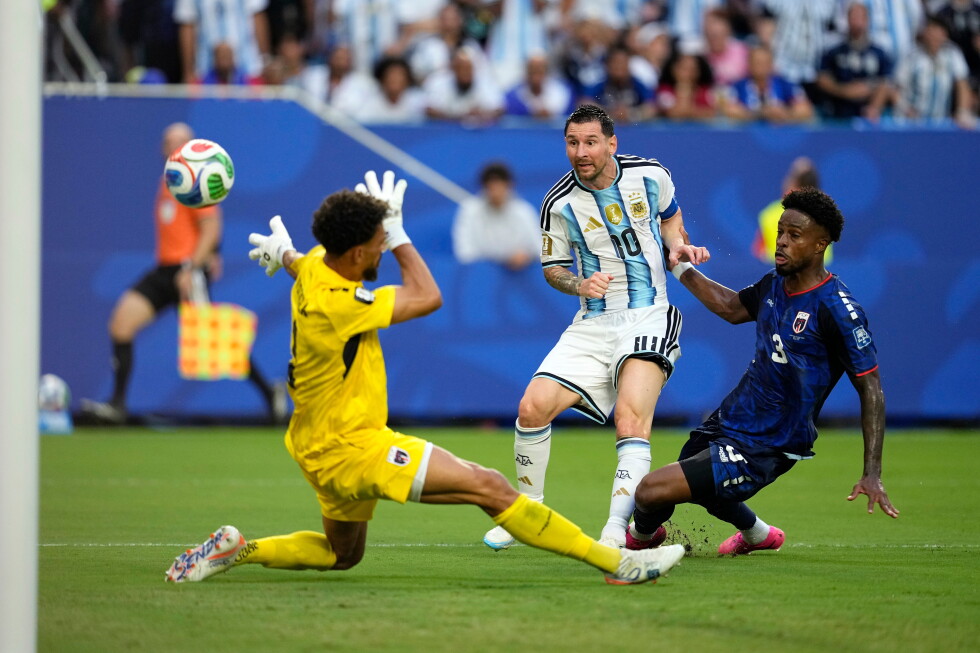
    The match lived up to its underdog billing from the opening whistle, with Argentine talisman Lionel Messi breaking the deadlock in the 29th minute to extend his unprecedented World Cup scoring record. The goal marked Messi’s 20th career World Cup strike, further cementing his status as the competition’s all-time leading top scorer and putting the two-time world champions firmly in control of the fixture.

    But Cape Verde, making their historic first knockout-stage appearance at a men’s World Cup, responded defiantly just before the hour mark. Midfielder Deroy Duarte netted a breathtaking equalizer that silenced the heavily pro-Argentine crowd packing South Florida’s Hard Rock Stadium. The goal, Duarte’s first ever at the senior international level, set the stage for what would go down as one of the biggest upsets in World Cup history if the African underdogs can hold on to secure victory in extra time.

    Regulation time ended with no further goals from either side, triggering the 30-minute extra time period split into two 15-minute halves. Should the scoreline remain level after extra time, the two nations will face a penalty shootout to claim a spot in the World Cup Round of 16.

    Cape Verde’s run at this year’s tournament has already defied all pre-tournament expectations. The tiny island nation, located roughly 350 miles off the western coast of Africa, has turned heads from the group stage onward, becoming the smallest country ever to qualify for the World Cup knockout round. Under the leadership of veteran 40-year-old goalkeeper Vozinha, Cape Verde secured three shock draws in group play against European powerhouse Spain, South American side Uruguay, and Asian contender Saudi Arabia to advance, a result that almost no analyst outside of the country predicted.

    Vozinha continued his elite form against Argentina on Friday, racking up seven total saves, four of which came against Messi, and has now conceded just three goals across the entire tournament to date.

  • Russia looks to students to make up for mounting losses in Ukraine

    Russia looks to students to make up for mounting losses in Ukraine

    As Russia enters its fifth year of full-scale war in Ukraine, Moscow’s military has launched an aggressive nationwide recruitment campaign targeting students at universities, technical colleges, and vocational training institutions, framing service in the new unmanned systems drone forces as a safe, high-tech, short-term opportunity. But the stories of three young students who lost their lives on the front lines reveal a grim reality that contradicts the recruitment pitch: promises of safety behind the lines, fixed one-year contracts, and benefits for returning to school have crumbled into front-line casualty lists.

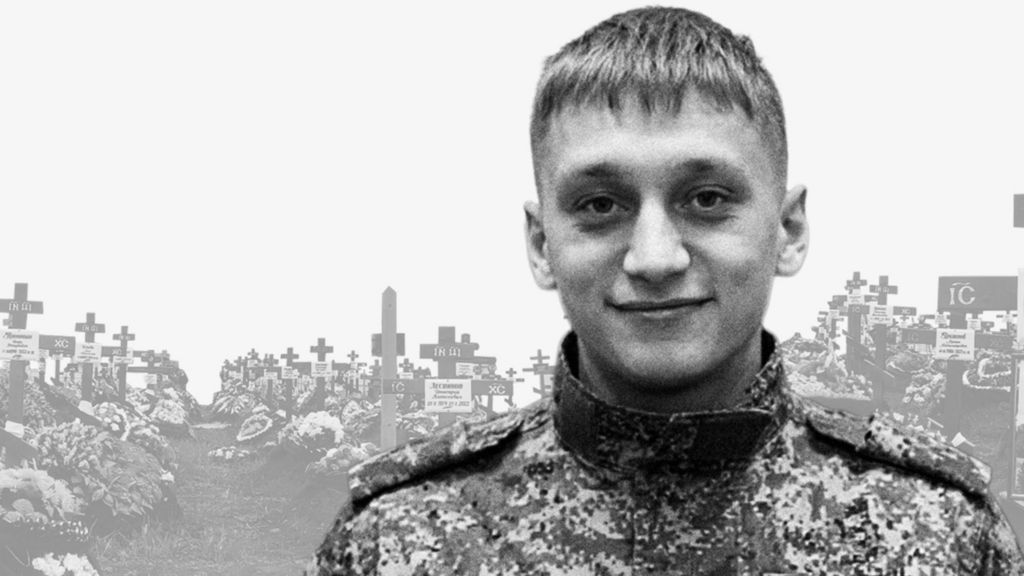
    Twenty-three-year-old Valery Averin was a final-year student at the Buryat Republican Technical School of Construction when he was recruited earlier this year. Raised in a Siberian orphanage before entering foster care at age 11, Averin had never served in the military before completing just three months of drone operator training. He told his foster mother, Oksana Afanayeva, he had left campus to earn extra money at Russian online retailer Wildberries, only admitting he had signed a military contract shortly before deploying. “He told me: ‘Nothing will happen to me, everything will be fine,’” Afanayeva recalled. In early April, Averin called to say he was being deployed to an area with no cell service, and just a week later, on April 8, he was killed in a mortar strike in Russian-occupied Luhansk, eastern Ukraine. “He studied drones for three months – and yet they still threw him into a frontal assault, into the meat grinder,” his foster mother said.

    Averin is not alone. Eighteen-year-old Vladislav Gorbunov, a railway construction student from Unecha, a small town just 43 miles north of the Ukrainian border, was killed on April 6, just four months after he signed his contract. He was originally assigned to an infantry frontline assault unit before being transferred to a drone unit, a common deviation from recruitment promises. Eighteen-year-old Rakhim Abdullin, a welding student at Kumertau Mining College who had struggled with his coursework, signed up just two weeks after his 18th birthday in January, drawn to drone service because he believed it would be a safe option. “But once he got there, it turned out not to be safe at all, because they are right there with the assault troops, right on the front line,” explained his mother Elena. Abdullin was killed by mid-March. “He left quickly, and he came back quickly,” she said.

    These three young men are among the more than 230,400 Russian military deaths verified through open-source analysis of cemeteries, government registers, obituaries, and war memorials conducted by the BBC. Military analysts estimate this count reflects only 45% to 55% of total Russian fatalities, putting the real death toll at between 417,000 and 509,500 – a figure that aligns with an estimate from the UK’s GCHQ intelligence agency, which put the death toll at almost 500,000 in May. Ukrainian losses are also heavy: President Volodymyr Zelensky last acknowledged 55,000 Ukrainian military deaths in February 2026, while independent open-source estimates place total Ukrainian military fatalities as high as 213,000, with Dutch military intelligence putting the total number of dead, wounded, and missing at roughly 500,000 for Ukraine.

    To replace mounting casualties and sustain its war effort, the Russian Ministry of Defense launched its student-focused drone force recruitment campaign earlier this year, targeting younger recruits under 35 because of their perceived aptitude for new technology. The campaign was specifically designed to appeal to students: recruits are promised a one-year contract that includes training, service exclusively in drone units, large signing bonuses and technical skills that translate to civilian careers, and a smooth return to academic studies. Some institutions offer additional perks, including guaranteed budget-funded spots, easier admission to graduate programs, and improved campus housing. In Moscow, recruitment leaflets advertise total earnings of at least 5 million rubles ($57,000) in the first year of service.

    But rights activists and military lawyers warn that many of these promises are unenforceable. Since Russia’s 2022 partial mobilization decree, all military contracts have been automatically extended until mobilization is formally ended, making it almost impossible for recruits to leave after the promised 12 months. The core claim that drone operator service is safer than front-line infantry also does not hold up to casualty data: at least 920 Russian drone operators have been confirmed killed since the full-scale invasion began in 2022, according to analysis by BBC Russian, independent Russian outlet Mediazona, and a team of volunteer open-source researchers. The confirmed death toll for drone operators is already comparable to that of artillery units, one of the most dangerous and exposed combat roles in the Russian army. Because drone operators are critical to battlefield operations, they are high-priority targets for enemy forces on both sides of the front. Many recruits also never get assigned to drone units at all: the Ministry of Defense retains final say over posting, and recruits deemed unsuitable are often transferred directly to infantry assault units.

    Beyond misleading marketing, the BBC has documented cases of direct coercion targeting vulnerable students. Recruiters specifically focus on students at risk of expulsion or those considering taking academic leave, leveraging their precarious position to pressure them into signing. At one college in Novosibirsk, a school administrator was recorded publicly calling students who refused to sign contracts cowards. Multiple institutions have also reportedly been assigned formal recruitment quotas: a former advisor to the rector of Far Eastern Federal University claimed the school was ordered to supply 32 recruits in February, a claim the university has denied, saying it only supports students who choose to enlist voluntarily.

    The penetration of military recruitment into Russia’s educational institutions marks how the war has increasingly seeped into civilian life, targeting young people who have not yet completed their education or begun their adult lives. What recruiters frame as a low-risk, rewarding opportunity has time and again turned into a death sentence for students who believed their promises. For Averin, Abdullin, and Gorbunov, the short, safe technical service they were promised never materialized – only a quick deployment and an early death on the Ukrainian front line.

  • World Cup what to know: France takes center stage in Philly heat as Round of 16 begins

    World Cup what to know: France takes center stage in Philly heat as Round of 16 begins

    The 2026 FIFA World Cup has reached its knockout Round of 16, bringing a double whammy of ramped-up competitive pressure and extreme summer heat that will test players and fans alike across North America this weekend.

    The 8-match, 4-day slate of knockout games gets underway on Saturday, July 4, with two hotly anticipated contests kicking off the round. Canada will open the day’s play at 1 p.m. EDT against Morocco at Houston’s NRG Stadium, while defending champions France, led by global superstar Kylian Mbappé, will wrap up the day against Paraguay in Philadelphia’s Lincoln Financial Field at 5 p.m. EDT. Two matches will be held daily through July 7, with the winners advancing to the tournament’s quarterfinal round.

    For Mbappé, the stakes could not be higher. The French forward has entered the Round of 16 as one of the tournament’s most in-form players, currently locked in a chase to break Lionel Messi’s all-time career World Cup goals record. Already netting two goals to push France past Sweden 3-0 in their final group stage match in East Rutherford, New Jersey, Mbappé will now have to contend with an unprecedented environmental challenge: a severe heat wave rolling through the Mid-Atlantic that is projected to push game-day temperatures above 100 degrees Fahrenheit (38 degrees Celsius). More than 68,000 fans are expected to pack the stadium for the match, and the sweltering conditions are widely expected to sap stamina from every player on the pitch, including Mbappé, who already joked about craving air conditioning after playing through 90-degree heat for the Sweden match last weekend.

    Tournament organizers have put in place a suite of heat mitigation measures to protect attendees ahead of the Philadelphia match. Misting stations will be deployed for fans arriving at the stadium, dedicated cooling tents will operate across the stadium’s fan experience zone, and all spectators are permitted to bring one disposable plastic water bottle into the venue – a rule that applies to all World Cup matches held across the U.S. and Canada. Additional water fountains have been made accessible across nine concourse sections to keep fans hydrated.

    Across the country in Houston, the opening match of the round will escape the worst of the weekend’s extreme heat, thanks to NRG Stadium’s retractable roof. With outdoor temperatures forecast to hit 95 degrees Fahrenheit amid high humidity, organizers will keep the roof closed, keeping the playing surface and stands cooled to a comfortable temperature for players and fans.

    Beyond the heat, the Canada-Morocco matchup carries its own layer of historical stakes. The two sides last met in the 2022 World Cup group stage, where Morocco secured a 2-1 win on their way to becoming the first African men’s team to reach a World Cup semifinal. This year, both teams enter the contest with history on the line: Canada is fresh off its first-ever World Cup knockout win, a 1-0 victory over South Africa, and is hungry to avenge its 2022 loss and continue its historic run.

    “We’re excited for the moment,” Canada head coach Jesse Marsch said of the matchup. “We wanted to get to a point in the tournament where we were playing against some big opponents and Morocco is exactly that.”

    Canadian defender Alistair Johnston added that his side is embracing the underdog challenge against the tournament powerhouse. “We’ve created so much new history, so many firsts. Now this is the chance that we wanted. To make sure that we got to the point in the tournament where we’re going to get to play a Goliath, and that’s what the Moroccan team is.”

    Morocco, for its part, advanced to the Round of 16 after a tense penalty shootout win over the Netherlands. A win over Canada would make Morocco the first African team to reach the World Cup quarterfinals twice, another milestone for the program. Moroccan head coach Mohamed Ouahbi stressed that his side is taking nothing for granted against the improving Canadian side.

    “It will be very important for us to play at our level. The level that we have shown the last few games will not be enough,” Ouahbi said. “It’s going to be the most important game in this World Cup and the most challenging one. It’s not about being tentative about our approach. We’re playing a Round of 16 match and if we’re not good enough, we’re going home.”

    The full Round of 16 schedule is as follows:
    – **Saturday, July 4**: Canada vs Morocco (1 p.m. EDT, Houston); Paraguay vs France (5 p.m. EDT, Philadelphia)
    – **Sunday, July 5**: Brazil vs Norway (4 p.m. EDT, East Rutherford, New Jersey); Mexico vs England (8 p.m. EDT, Mexico City)
    – **Monday, July 6**: Portugal vs Spain (3 p.m. EDT, Arlington, Texas); United States vs Belgium (8 p.m. EDT, Seattle)
    – **Tuesday, July 7**: Winner of Argentina/Cape Verde vs Egypt (noon EDT, Atlanta); Switzerland vs Winner of Colombia/Ghana (4 p.m. EDT, Vancouver, British Columbia)

    All Round of 16 matches will be broadcast across Fox, Telemundo and Peacock. Ahead of the tournament’s second knockout round, one historic milestone has already been set: 41-year-old 147-day-old Cristiano Ronaldo of Portugal became the oldest player to earn Player of the Match honors in a World Cup knockout game, beating the previous record held by France’s Olivier Giroud, who set the mark at age 36.

  • China’s internet got so mad about a celebrity’s ‘bad’ singing, her concert was cancelled

    China’s internet got so mad about a celebrity’s ‘bad’ singing, her concert was cancelled

    For celebrities working in China’s fast-paced entertainment industry, fame can be a double-edged sword that elevates careers one moment and brings them crashing down the next. Veteran Chinese television host Xie Na learned this harsh lesson recently, when her highly anticipated first nationwide singing tour was derailed by widespread public backlash and official criticism, resulting in the abrupt cancellation of its opening Beijing show.

    Xie Na has been a household name in Chinese entertainment for more than 20 years, best known for her two-decade run as a core cast member of *Happy Camp*, one of China’s most beloved long-running variety shows. After starting her career with small acting roles, her outgoing, energetic personality and sharp comedic timing turned her into one of the country’s most recognizable media personalities. But for years, she held an unfulfilled personal goal: to build a career as a professional singer.

    In April, she made that dream public in a post on Chinese social platform Weibo, announcing her first run of solo concerts would kick off in Chengdu, the booming cultural hub of southwest China. “This year, I finally get the chance to chase this dream seriously,” she wrote. When tickets went on sale shortly after the announcement, thousands of seats sold out within minutes, a result that even caught Xie by surprise. Eight minutes after sales opened, she shared on Weibo: “My hands are still trembling, the tickets are all gone.”

    The two Chengdu shows, held in May, drew enthusiastic support from her loyal fanbase, with special nostalgic guest appearances from Xie’s celebrity friends that boosted her confidence. After the performances ended, a giddy Xie shared her surprise at her own vocal performance during a livestream with fans. “By the final song, I wasn’t even out of breath,” she joked, adding that she could have been a “pop queen” before asking her audience: “Do you think I can pull off a whole national tour?”

    Buoyed by the warm reception in Chengdu, Xie and her team quickly moved forward with plans for a multi-city national tour, opening with a stop in Beijing. Tickets were priced between 380 and 1,180 yuan (equivalent to $52 to $174 USD). But almost immediately after the tour announcement, public opinion began to shift dramatically against the project.

    Online critics questioned whether Xie had the vocal talent to justify a full concert tour, with many arguing she was leaning on the star power of her celebrity friends to draw crowds rather than standing on her own musical merit. Others went further, accusing her of launching the tour solely to cash in on her existing fame for quick profits. As discontent grew, some social media users claimed they had filed official complaints alleging the tour had not secured proper regulatory permits, and a viral screenshot showed an unsolicited message sent to Xie’s husband Zhang Jie, a well-known professional singer, urging him to “control your wife.”

    What might have stayed just online chatter gained new weight when Chinese state media and official outlets joined the criticism, issuing sharp public rebukes. An opinion piece published last month by a department of the Zhejiang Provincial Party Committee argued that Xie’s tour raised suspicions that she was chasing profits rather than fulfilling a personal artistic dream. The piece framed the controversy as a warning: “Shallow, superficial popularity cannot generate sustainable profit, and it will also lead to an overall loss of cultural refinement.”

    Shortly after that commentary ran, China’s official state newspaper *People’s Daily* published another editorial criticizing an unnamed “popular host with no well-known original musical works,” warning that while genuine excellence earns long-term public recognition, “those who gain fame without real skill will eventually run into trouble.”

    The mounting public and official pressure ultimately forced the tour’s cancellation. Over the weekend, Xie’s event organizer announced the opening Beijing show would be scrapped, and all purchased tickets would be fully refunded. It remains unclear whether the cancellation came as a direct government order; Xie herself has not issued any public comment on the controversy to date.

    Industry analysts note the backlash is not an isolated incident, but a reflection of growing shifts in public attitudes toward celebrity culture in China. Dr. Jian Xu, an associate professor specializing in Chinese internet and pop culture at Australia’s Deakin University, suggests the cancellation may have been a calculated risk management move by Xie’s team and event organizers, rather than a forced cancellation. He adds that the public anger toward Xie reflects widespread growing resentment toward celebrities seen as cashing in on their social media fame without delivering equivalent skill or value.

    Xie is far from the only celebrity to face this kind of backlash recently. Just weeks before her controversy, acclaimed Chinese singer Han Hong faced public anger after she promoted a new spy thriller film and urged fans to “give me some face” to support the movie, leading to accusations of emotional manipulation that forced her to issue a public apology.

    Xu also argues that the outrage over Xie’s tour has become an outlet for broader social and economic frustrations among young Chinese people. In the years following the COVID-19 pandemic, millions of young people in China have faced soaring youth unemployment, stagnant wage growth, and broader economic uncertainty. Against that backdrop, celebrities who appear to earn large sums of money easily through their fame have become a natural target for public anger.

    In recent years, Chinese social media has increasingly targeted public figures perceived to hold unfair privilege. Last year, a rising young actress had her name removed from the credits of an upcoming drama after online users accused her of using her mother’s industry connections to secure a spot at a top drama school. Just a month before that, another actress faced widespread online backlash after being photographed wearing luxury earrings reportedly worth more than the average Chinese worker’s annual salary.

    Zichen Wang, founder of the *Pekingnology* newsletter, notes that criticism of celebrities has become one of the safest outlets for public frustration in China. “It allows people to voice their anger over questions of competence, privilege, wealth and social fairness without directly addressing more sensitive political topics,” he explained in an interview with the BBC. “It lets people direct their anger at a target that is not in the seat of power.”

    But Wang also raises important questions about where the line between public criticism and public cancellation should lie. “A society is allowed to have strong opinions about personal taste, but taste should not be turned into administrative power, or an excuse to use it,” he said. “Personal dislike should not translate into the power to cancel someone entirely.”

    That debate has already emerged among Chinese social media users discussing Xie’s controversy. “If you don’t like it, just don’t buy a ticket and don’t follow it, why do you get to control what other people spend their money on?” one user wrote on Weibo. Another commented: “If her singing is bad and she holds a concert, she should face the consequences of the market, not public humiliation and a total cancellation.”

  • France weighs up resetting Turkey ties as Europe’s security landscape shifts

    France weighs up resetting Turkey ties as Europe’s security landscape shifts

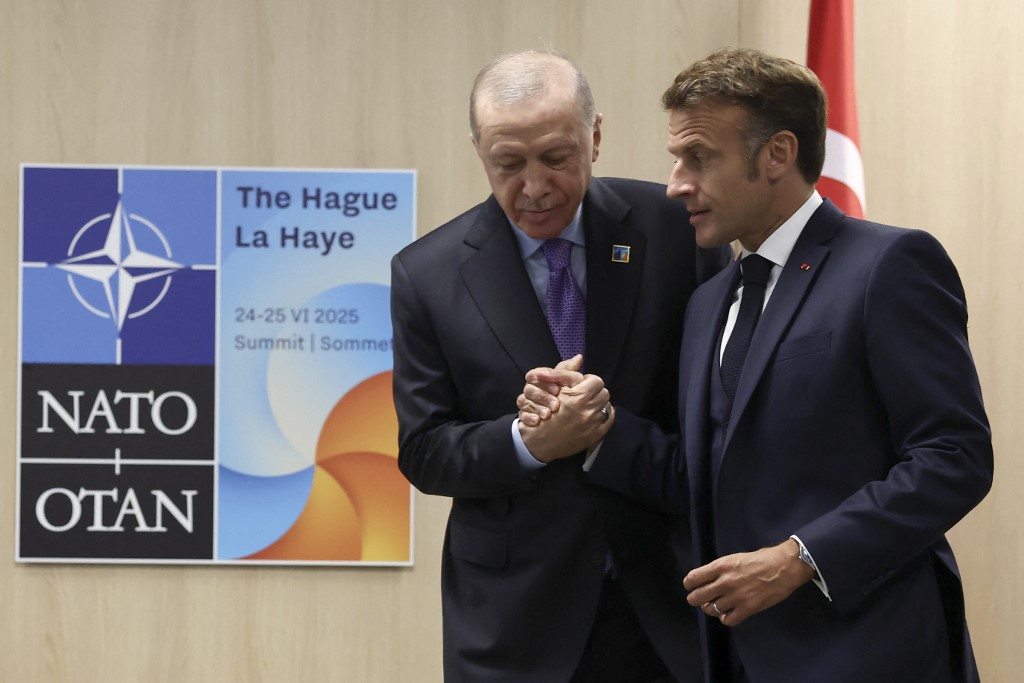
    During a high-profile October press conference in Cairo focused on a Gaza ceasefire deal, a small but symbolic moment laid bare a quiet shift in geopolitics. As U.S. President Donald Trump gathered regional and European leaders to stand behind him for photos, French President Emmanuel Macron rejected the role of a backdrop prop. Instead, he invited Turkish President Recep Tayyip Erdoğan to join him at a table in the audience – an arrangement the 72-year-old Turkish leader readily accepted.

    This quiet act of defiance against the U.S.-led event staging capped years of frosty relations between Paris and Ankara, and it may signal the start of a new chapter for the two NATO allies, multiple sources with knowledge of internal negotiations told Middle East Eye. For years, the pair have been locked in bitter disagreements over the Syrian civil war, the Nagorno-Karabakh conflict between Armenia and Azerbaijan, and competing territorial claims in the Eastern Mediterranean. Today, shifting global alignments and overlapping security interests have created unprecedented momentum for a full reset.

    “France is envisaging the future of European security with Turkey as one of its pillars,” one senior Western source close to diplomatic talks explained.

    This potential new partnership is not happening in isolation. It comes amid a noticeable cooling of relations between Turkey and Russia, a shift that has not gone unnoticed in Paris. There have been no bilateral presidential visits between Ankara and Moscow since 2023, and the frequency of high-level engagements between Erdoğan and Russian President Vladimir Putin has dropped sharply. Turkey has also increasingly aligned with Western sanctions regimes targeting Moscow, and it has declined to renew its long-term major natural gas purchase agreements with Russia.

    Gerard Araud, a former French ambassador, said many French policymakers have been impressed by Turkey’s deft navigation of the war in Ukraine. “Turkey has succeeded in antagonising almost no one while, at the same time, effectively siding with Kyiv,” he noted. Araud argued that as France prepares for long-term Russian pressure on the continent, Ankara has emerged as a critical geopolitical player. “We think that in Paris there is a strong feeling that, on one side, the Americans are gradually reducing their security commitments to Europe; that whoever is elected in the 2028 U.S. presidential election, we will not return to the close transatlantic security cooperation of the past,” he explained. “We will be facing Russian pressure. And in this equation, I think Turkey is obviously an important factor.”

    Overlapping regional priorities further underpin the push for closer ties. In Syria, both France and Turkey have thrown their support behind interim President Ahmed al-Sharaa’s new administration. In Lebanon, both countries back the creation of a strong central government and oppose aggressive Israeli military actions in the country. On the Iranian nuclear file and regional tensions surrounding Tehran, both Paris and Ankara favor a negotiated peaceful resolution. As Israel adopts an increasingly hardline stance toward Turkey, it has also sparked repeated diplomatic crises with France over Lebanon, reinforcing shared interests between the two countries.

    Beyond geopolitics, a major partnership in the defence and arms industry is emerging as a cornerstone of the reset. Last week, Turkish Defence Minister Yasar Guler confirmed Ankara is deeply interested in purchasing SAMP/T air defence systems, manufactured by a French-Italian defence consortium. For years, Paris blocked the sale over political tensions and disagreements over Ankara’s demand for joint production rights. But intelligence outlet Intelligence Online reported in May that Macron has ordered a full review of the SAMP/T deal to find ways to accommodate Turkish co-production demands, ahead of his planned visit to Ankara for next week’s NATO summit. Senior French diplomat Alice Rufo, a recent member of Macron’s inner circle, has already traveled to Ankara to hold talks with top Turkish defence officials, boosting expectations that an agreement could be announced during the summit.

    Private defence firms have already begun building ties. Leading French aerospace and defence group Safran recently signed a strategic partnership agreement with Turkey’s top drone manufacturer Baykar, focused on co-developing integrated systems combining optronic sensors, navigation technology, and guided weapon capabilities for unmanned aerial and air-to-ground missions. Under the deal, Baykar’s popular TB2 combat drones will be outfitted with Safran’s Euroflir electro-optical surveillance system. French government sources also confirm Paris is considering expanding defence dialogue to cover partnerships in drone and helicopter development.

    Turkey’s defence industry has grown into a global powerhouse in recent years, with national defence exports hitting $10 billion in 2024. Ankara now exports warships, combat drones, and ammunition to countries across the world, including many NATO allies. Araud noted that Europe’s own defence industrial sector has faced major setbacks, pointing to the recent collapse of the €114 billion Future Combat Air System programme earlier this month over intractable disagreements between French and German defence contractors. “Turks have been quite good in this field,” he said. “What the Turks are doing, first, is cheaper; second, it is more robust. While some Turkish weapons may not match the highest sophistication of Western systems, the war in Ukraine has proven that this affordability and durability is a major advantage. Tomorrow’s war will require the ability to produce large volumes of reliable, low-cost weaponry.”

    Still, not all analysts are optimistic about the pace of a Franco-Turkish reset. Dorothee Schmid, head of the Turkey and Middle East Department at French leading think tank IFRI, warned that deep structural divisions remain. “France considers that Turkey has embarked on an autocratic course and is pursuing a power-based policy centred on its own interests, which are not compatible with those of Europeans,” she said.

    Longstanding frictions continue to complicate negotiations. Macron has declined all invitations to visit Ankara from Erdoğan since 2022. Sources say a full state visit by Macron could only move forward if Turkey reopens its border with Armenia, a step that would be politically popular with France’s large Armenian diaspora community. Another persistent irritant is Ankara’s decision to bar Turkish citizens from attending French embassy-operated schools in Turkey. Turkish officials argue they need reciprocal legal arrangements approved by parliament to resolve the issue, while French officials say the policy has poisoned bilateral relations. The dispute has lingered in bureaucratic gridlock, and the schools have gradually lost students and fallen into decline.

    “In short, the two sides are continuing to negotiate, but against a backdrop of low levels of trust,” Schmid said. “The NATO summit in Ankara is expected to provide an opportunity for Turkey to showcase its power, which never fails to surprise the French: the two countries have entered into a sort of systemic symbolic rivalry.”

    The Eastern Mediterranean remains another core point of contention. France has a bilateral defence treaty with Greece, and during a visit to Athens earlier this year, Macron publicly reaffirmed the pact during an event at the Roman Agora, emphasizing Paris’ commitment to defending Greek sovereignty against any potential Turkish aggression. Araud argued that this strong show of support for Greece ran counter to Macron’s own signature foreign policy doctrine of *en meme temps* – “at the same time” – which holds that seemingly contradictory initiatives are used to maintain ties with competing regional actors.

    “Senior French officials agree with me that Paris should improve its ties with Turkey, and Macron went a bit overboard in his overtures to Greece. Macron is aware of it, and he wants to improve the relationship with Turkey,” Araud said. “Macron has a very good analysis of foreign policy, I think, but when implementing it, from time to time, he ends up reaching the opposite goal.” Turkish officials dismiss Macron’s rhetoric around defending Greek sovereignty as a sales tactic to boost French arms exports to Athens, noting that Turkey has no plans to attack Greek territory. “It is a nothing burger, really,” one senior Turkish official said.

    A final wildcard is French domestic politics: Macron is set to leave office in April 2025, and his potential successors could adopt a far different policy toward Turkey, particularly if right-wing National Rally leader Marine Le Pen or her protégé Jordan Bardella win the presidency. However, multiple sources confirmed that Turkish diplomats have already engaged in quiet outreach to Le Pen’s team for months, laying groundwork for continued cooperation regardless of the election outcome.
  • Andy Burnham to drop spy-tech firm Palantir from NHS, reports say

    Andy Burnham to drop spy-tech firm Palantir from NHS, reports say

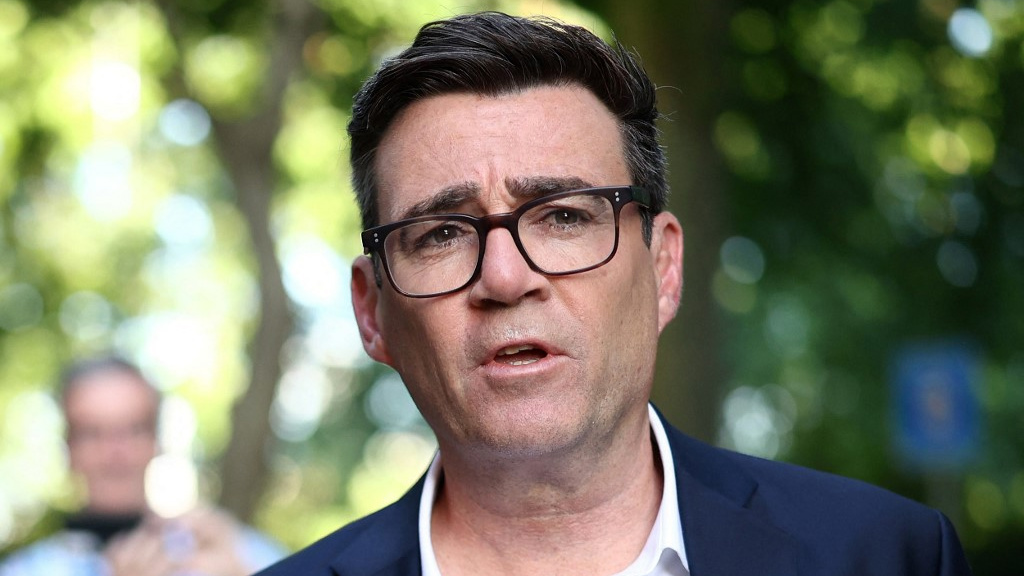
    As Andy Burnham prepares to take office as Britain’s next prime minister and leader of the Labour Party, one of his first major policy shifts is set to target a controversial contract between the National Health Service and American technology and data surveillance firm Palantir, multiple sources confirm.

    Per reporting from The Telegraph, Burnham’s incoming administration is currently conducting a full review of the UK government’s existing artificial intelligence strategy, a process that is expected to result in Palantir being dropped from its NHS contract. The current £330 million seven-year deal between Palantir and the NHS has only been active for two years, leaving five years remaining on the original agreement if it is not terminated early.

    Palantir’s footprint across UK public institutions extends far beyond the health service. The firm already holds a £240 million contract with the UK Ministry of Defence, a £15 million agreement tied to Britain’s nuclear deterrent program, and at least 34 additional uncovered contracts across sectors including law enforcement, child social care, refugee support services and environmental regulation. Many of these agreements have been marked by a lack of public transparency around the scope of Palantir’s data access and work.

    The push to oust Palantir from the NHS comes amid growing global outrage over the firm’s documented ties to military operations in Gaza. In January 2024, Palantir publicly announced a partnership with the Israeli Ministry of Defense to deploy its technology to support so-called “war-related missions”, which include drone missile strikes targeting civilian areas in Gaza that have killed dozens of journalists and humanitarian aid workers. When confronted with accusations that Palantir’s technology enabled the deaths of Palestinian civilians in Gaza in April 2025, Palantir CEO Alex Karp responded by claiming the targets were “mostly terrorists, that’s true”.

    Francesca Albanese, the United Nations Special Rapporteur on the occupied Palestinian territories, said Karp’s comment confirms the firm has “executive-level knowledge and purpose vis-a-vis the unlawful use of force by Israel” in occupied Palestinian territories. Additional scrutiny has emerged after reports that the U.S. Pentagon is investigating whether Palantir’s AI-powered target identification system Maven was involved in a February 2025 U.S. “double-tap” missile strike on an Iranian girls’ school that killed more than 170 people, the vast majority of whom were children.

    Founded by tech billionaire Peter Thiel, a controversial figure who once famously stated “I no longer believe that freedom and democracy are compatible”, Palantir received partial funding from the Central Intelligence Agency at its launch. Thiel has also drawn fierce criticism in the UK for his previous comments attacking the National Health Service, claiming the beloved public institution “makes people sick” and framing British public support for the NHS as a case of “Stockholm syndrome”.

    Burnham’s long-standing stance on Palantir predates his expected ascension to Downing Street: during his tenure as Mayor of Greater Manchester from 2017 to 2025, the Greater Manchester Combined Authority never awarded any public contracts to the firm.

    The proposal to terminate Palantir’s NHS contract has drawn immediate pushback from the Conservative opposition. Stuart Andrew, the Conservative shadow health secretary, argued that “if Andy Burnham tears up a programme that is improving patient care, he will have to explain why he chose politics over patients.” Andrew added that the NHS should leverage the best available technology to cut waiting lists, save lives and support frontline staff, and that barring leading global firms for political reasons would undermine confidence in NHS technology partnerships. “Patients should never pay the price for Labour’s political posturing. Lives are too important to be sacrificed for Andy Burnham’s political beliefs,” Andrew said.

    Despite Conservative opposition, discontent with Palantir runs deep even within the Labour Party, and public opposition to the firm’s UK public sector contracts has grown steadily over the past year. Last month, a cross-party group of MPs issued a formal call for the incumbent government to activate the 2027 break clause in Palantir’s NHS contract and pursue either an in-house UK-built alternative or a domestic provider. The cross-party Science, Innovation and Technology Committee’s report warned that growing reliance on Palantir across the UK public sector represents an “unacceptable point of weakness” that could leave critical public services “at the mercy” of foreign actors.

    Palantir’s UK CEO Louis Mosley has pushed back against critics, accusing opponents of the contract of prioritizing “ideology over patient safety”. However, multiple NHS hospital trusts have already rejected Palantir’s technology, reporting that adopting it would cause them to “lose functionality rather than gain it”.

    With the upcoming termination of Palantir’s NHS contract expected, scrutiny is now growing over the fate of the firm’s dozens of other public sector contracts across the UK. The debate over Palantir’s UK presence already made headlines in recent months, after London Mayor Sadiq Khan blocked a proposed £50 million contract between the Metropolitan Police and Palantir in May, citing a “clear and serious breach” of public procurement rules. Khan’s office noted that the deal would have left London police locked into a long-term relationship with Palantir without demonstrating value for taxpayer money, and Khan had previously stated he had “concerns about using public money to support firms who act contrary to London’s values”. Khan later reversed his veto after Palantir launched legal action against the decision, granting the firm a 12-month pilot project that could be extended.

    This reporting was originally published by Middle East Eye, an independent outlet providing dedicated coverage of the Middle East, North Africa and surrounding regions.

  • Exclusive: ICC prosecutors shelved RSF arrest warrant as Sudan atrocities mounted

    Exclusive: ICC prosecutors shelved RSF arrest warrant as Sudan atrocities mounted

    More than three years after launching an investigation into atrocities committed during Sudan’s ongoing civil conflict, the International Criminal Court’s Office of the Prosecutor has yet to submit a single new arrest warrant for crimes in Darfur dating to the war’s start in April 2023, an exclusive investigation by Middle East Eye has revealed. Multiple senior sources and internal court documents confirm the OTP has scrapped plans to file an arrest warrant application against a top Rapid Support Forces commander – a step that ICC Prosecutor Karim Khan publicly pledged to submit “imminently” to pretrial judges in January 2024. The shelved application focused on allegations of crimes against humanity and war crimes perpetrated in West Darfur in the months following the war’s outbreak.

    The issue of delayed accountability has erupted into open friction between the OTP and the court’s pretrial oversight panel. After more than 12 months of silence following Karim Khan’s May 2025 leave of absence, during which the prosecution failed to offer any explanation for the missed filing timeline to the three-judge pretrial chamber, the panel issued a formal rebuke last month. The judges ordered the OTP to disclose the root causes of the delay and submit a clear, public timeline for when warrant applications will be filed. In its order, the panel referenced recent briefings to the UN Security Council from current acting lead of the Darfur investigation, Deputy Prosecutor Nazhat Khan, where she acknowledged the rapidly deteriorating security and human rights situation in Darfur, and noted that arrest warrants would be a critical tool to deter additional atrocities. To date, MEE has confirmed Nazhat Khan has not shared any timeline for the filing of new warrants, beyond the one previously announced.

    When contacted for comment by Middle East Eye, the OTP declined to share any specific details on progress toward warrant applications, citing mandatory confidentiality requirements to the court, as well as protections for victims and witnesses who cooperate with investigations. Under the ICC’s amended operational regulations, all arrest warrant applications are classified as sealed or secret until court authorization for public release. In a written statement, an OTP spokesperson asserted that “the investigation has accelerated in recent months, with more focused investigative lines, increased evidence collection and witness interviews, and further analytical work. Priority has been given to the investigation of gender-based crimes, and crimes against and affecting children.”

    The ICC first opened its formal investigation into crimes committed during the current Sudan war in July 2023, when Karim Khan announced the office would examine allegations of war crimes and crimes against humanity against all three major warring parties: the Sudanese Armed Forces, the RSF, and their respective allied militias. In every subsequent semi-annual briefing to the UN Security Council, OTP leadership has repeated assurances that progress toward arrest warrant applications was ongoing. Despite these repeated promises, no suspects have been charged in connection with the atrocities of the 2023–present war, including the RSF’s year-long siege and October 2025 capture of North Darfur’s capital el-Fasher.

    Independent UN investigations have corroborated widespread atrocities by the RSF in recent months: a UN fact-finding mission concluded in February 2026 that the paramilitary group carried out genocide against non-Arab communities in el-Fasher, and a separate UN report released last week found the RSF is responsible for more than 70% of all sexual violence perpetrated by warring parties across Sudan over the past three years. International bodies have already taken action against the group: the UN Security Council imposed targeted sanctions on four senior RSF commanders for Darfur atrocities, and the United States formally designated the RSF’s actions as genocide and sanctioned RSF leader Mohamed Hamdan Dagalo, widely known as Hemedti, in January 2025.

    Notably, all existing ICC arrest warrants connected to Darfur date back to the 2003–2007 wave of violence in the region. Four long-standing warrants remain unexecuted, targeting former Sudanese president Omar al-Bashir, former interior minister Ahmad Harun, former defense minister Abdel Raheem Muhammad Hussein, and rebel commander Abdallah Banda. The ICC’s only conviction related to Darfur, that of former Janjaweed leader Ali Muhammad Ali Abd-al-Rahman (known as Ali Kushayb), also relates to the 2003–2007 violence; he was sentenced to 20 years in prison in December 2025, though the conviction is currently under appeal.

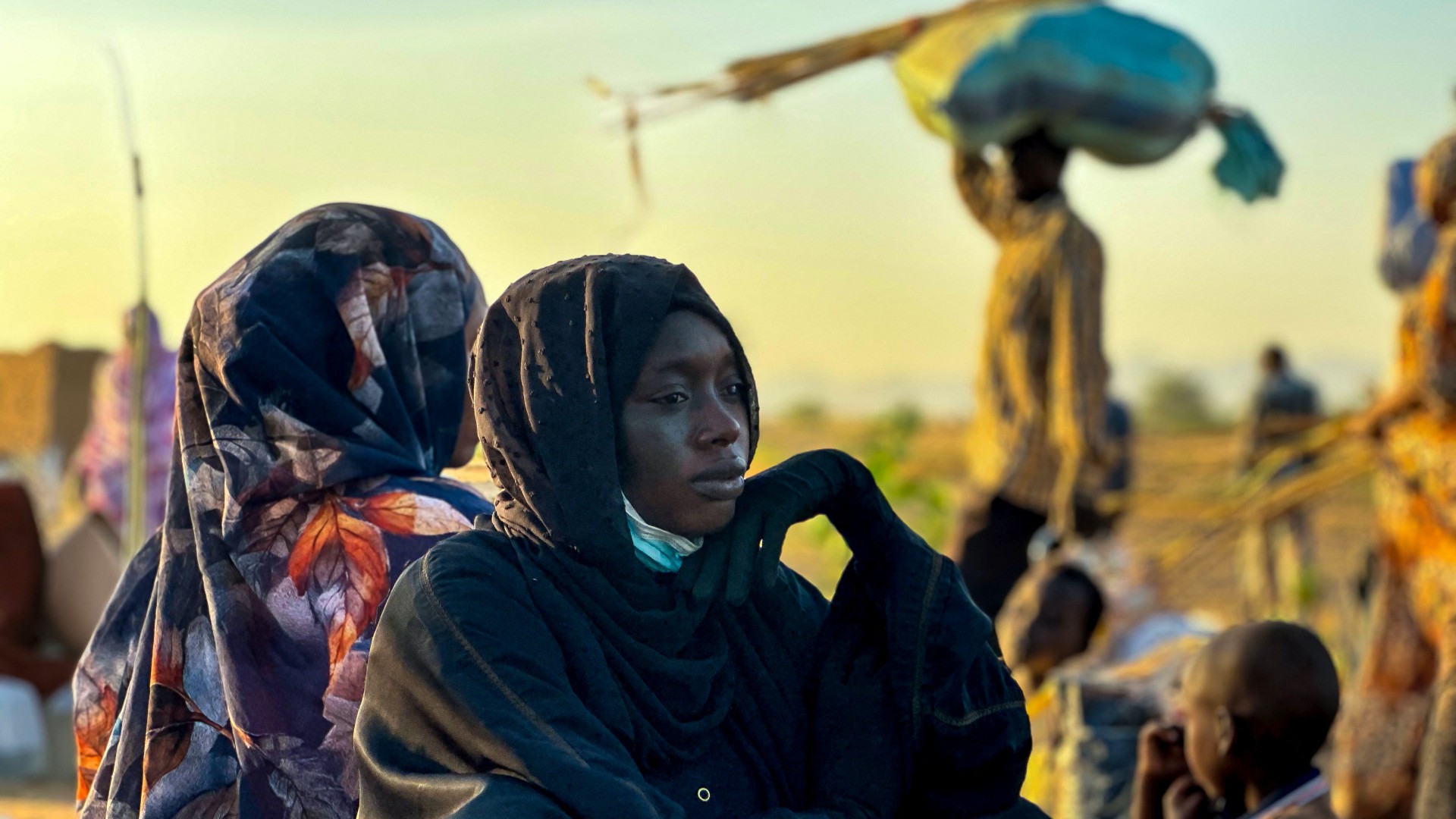
    Nazhat Khan is scheduled to deliver the OTP’s mandatory semi-annual briefing on Darfur investigations to the UN Security Council later this month, where pressure will mount for her to address the delay and outline a clear path forward. The three-year war between the SAF and RSF, which has drawn backing from competing foreign powers for both sides, has left a catastrophic humanitarian toll: more than 12,000 people have been confirmed killed, with independent observers estimating the actual death toll is many times higher, more than 13 million people have been internally displaced or forced to flee across Sudan’s borders, and more than 19.5 million people are now on the brink of famine. The United Nations and European Union have labeled this crisis the world’s largest humanitarian and displacement emergency currently unfolding.

    Human rights organizations have also pressured the OTP to expand its investigation beyond Sudanese warring parties, submitting two formal communications requesting the office examine the role of foreign actors that have armed and supported the RSF. These communications specifically name senior government officials from the United Arab Emirates, who rights groups accuse of aiding and abetting RSF atrocities. The UAE has repeatedly denied all allegations of military or political support for the RSF.

  • Mbappé is hot for France. The World Cup game against Paraguay is going to be a scorcher in Philly

    Mbappé is hot for France. The World Cup game against Paraguay is going to be a scorcher in Philly

    As Philadelphia grapples with a record-shattering late-July heatwave, the city prepares to host a high-stakes World Cup round of 32 clash between defending powerhouse France and underdog Paraguay on Saturday, with temperatures forecast to push past 100 degrees Fahrenheit (38 Celsius) by kickoff. The brutal conditions have reignited debates over FIFA’s current hydration break policy, with many arguing the governing body should add more cooling stops to each half to protect players amid the extreme heat.

    For context, 100-degree temperatures are almost unheard of in the city during a typical summer: locally, the only 100+ “reading” most residents see on a daily basis comes from the radar gun measuring Philadelphia Phillies closer Jhoan Duran’s pitching speed. This year’s unrelenting heat has already upended the city’s planned Semiquincentennial celebrations for the U.S. national birthday over July 4 weekend: outdoor events from a Queen Latifah headlined concert to the official 250th anniversary parade were canceled entirely, while the Liberty Medal ceremony honoring Pope Leo XIV was moved indoors to escape the swelter.

    For French superstar Kylian Mbappé, the match will bring a double meaning of “hottest player in the tournament”: already the most in-form striker at this year’s World Cup, he will now contend with soaring core temperatures on the pitch. Ahead of the game, both sides have struck a unified, no-excuses tone about the conditions.

    France midfielder Désiré Doué pointed out Friday that both squads will face the same harsh temperatures, a point echoed by Paraguay head coach Gustavo Alfaro, who noted the heat will impact both teams equally. That levels the playing field, leaving only one main challenge for Paraguay: slowing down a red-hot Mbappé who is chasing history as he leads France toward a third consecutive World Cup final appearance.

    Mbappé’s form has been unstoppable so far this tournament. In a 3-0 blowout win over Sweden in the final group stage match, played in already warm 90-degree (33 Celsius) heat, he netted his 17th and 18th career World Cup goals, putting him just one goal behind Lionel Messi’s all-time record of 19. He has also notched six goals in this year’s tournament, tying Messi in the race for the Golden Boot, top scorer of the competition. When asked after the Sweden match if he was already looking forward to facing Paraguay, the striker joked he was only looking forward to the air-conditioned changing room.

    For Paraguay, reaching the knockout round is already a historic triumph. The South American side, a 7 million-person landlocked nation sandwiched between regional soccer giants Argentina and Brazil, pulled off the biggest upset of the 2026 tournament so far when they beat powerhouse Germany 4-3 on penalties to advance. The shock win was so significant that Paraguay declared a national public holiday to celebrate. Entering the round of 32 clash with France, the underdogs carry no burden of expectations, with a win over the top-ranked side standing as one of the biggest upsets in World Cup history. “It’s one of those things that can happen in the life of the team,” Alfaro said. “We want Paraguay to have many more afternoons like that one.”

    France, by contrast, enters the match as the clear favorite. Les Bleus are a perfect 4-0 so far in the tournament, outscoring their opponents by a combined 13-2, and recently overtook Argentina to claim the number one spot in FIFA’s global rankings. They already played one match in Philadelphia earlier in the group stage, beating Iraq 3-0 despite a mid-game rain delay, with Mbappé netting two goals in that fixture. Their four wins have come against ranked sides ranging from 18th to 63rd in the global rankings, while Paraguay sits at 34th.

    To help fans and players cope with the extreme heat, FIFA has implemented revised access rules for all 2026 World Cup matches held in the U.S. and Canada: spectators can bring one factory-sealed 20-ounce soft plastic water bottle into Lincoln Financial Field, and water fountains are installed across nine concourse sections to keep attendees hydrated.

    Philadelphia is still set to put on a full pre-match show for its final World Cup hosting fixture, after welcoming five group stage matches to the city. Philadelphia native and Grammy-winner DJ Jazzy Jeff and legendary local hip-hop group The Roots will perform ahead of kickoff, while Tony Award-winner Idina Menzel, famous for voicing Elsa in Frozen, will perform the U.S. national anthem. When it comes to a cold snap to cool down the pitch? As Menzel’s most famous song goes, the cold never bothered Mbappé anyway.

  • Anguished families left to identify Venezuela quake victims at makeshift morgue

    Anguished families left to identify Venezuela quake victims at makeshift morgue

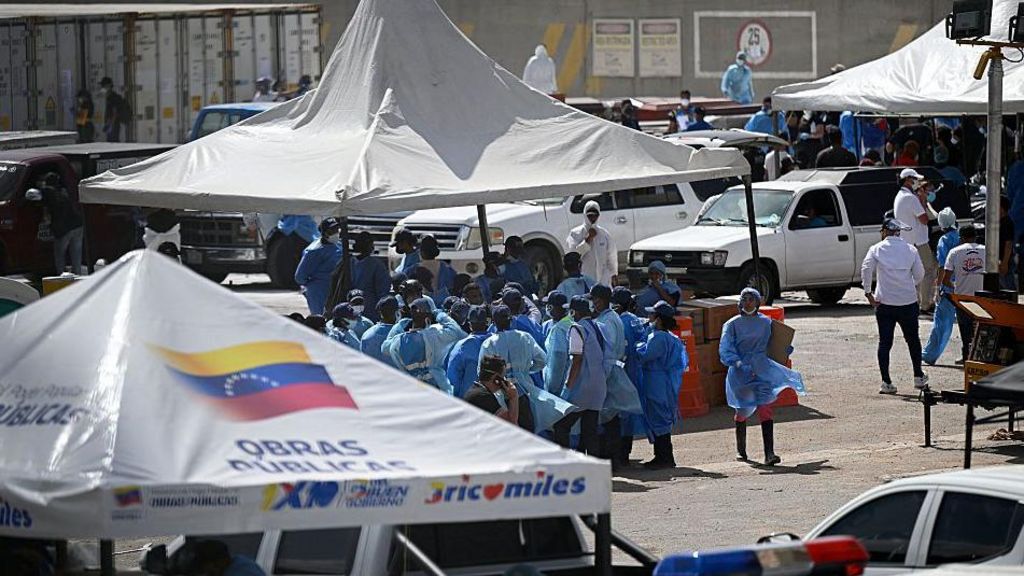
    Nine days after devastating twin earthquakes tore through Venezuela’s coastal state of La Guaira, the death toll has climbed above 2,600, overwhelming local emergency and mortuary services and forcing authorities to repurpose a disused port storage facility at Los Silos into a makeshift morgue. What was once a working hub of commerce now stands as a grim center of grief, where exhausted, anguished families wait for hours, even days, to confirm the fates of loved ones missing since the tremors collapsed buildings and buried neighbourhoods across the region.

    Many of the people gathered at the site have already spent days searching through damaged hospitals, emergency shelters, and piles of rubble, chasing every faint lead to find their relatives. Rows of empty chairs line the facility’s interior and exterior walkways, and a thick, heavy silence hangs over the crowd. Sadness spreads through the gathered families like a contagion: few speak, some stare vacantly into open space, while others refresh news feeds or mechanically reply to messages of condolence on their phones. Armed Bolivarian National Armed Forces personnel control access to the facility, a necessary security measure that does little to soften the raw anxiety of those waiting to enter.

    Before stepping through the gate, one woman waiting to identify her missing nephew, who has been unaccounted for for nearly a week, summed up the conflicting feelings that grip every family: “I’m afraid of what I’m going to see in there, but it’s the only way to end this agony.” She told reporters she had searched every possible location for him—through the rubble of his collapsed apartment building, at every local hospital, speaking to every survivor and rescue worker she could find—with no answers.

    Inside the makeshift morgue, the acrid smell of decomposition hits visitors first, a product of sweltering tropical heat that speeds the breakdown of remains left uncovered or stored in basic temporary tents, after the disaster destroyed most standing infrastructure in the region. Hundreds of recovered bodies are laid out in rows, wrapped only in thin plastic bags, sorted by the date they were pulled from the rubble. Many families cover their mouths with bare hands or low-quality cloth masks, which offer barely any relief from the stench; within minutes, most grow numb to the scent, their emotions too drained to react further.

    Forensic and medical teams work around the clock against overwhelming odds to identify victims. At one end of the facility, a temporary tent offers free cremation services for unclaimed or identified remains. At the other, specialists rely on the few tools they have—mostly dental records—to match bodies to names when decomposition has left remains unrecognizable to family members.

    Relatives face two paths to identification. Those confident they can recognize a loved one by their clothing are escorted to the area where bodies are laid out. The vast majority, however, are directed to two large television screens, where they begin a new, grueling ordeal: scrolling through more than 1,000 photos of recovered bodies, displayed in an endless loop. Many of the photos show remains swollen from decomposition, with darkened skin or severe traumatic injury, making positive identification extremely difficult. Families scan each image for any small, unique marker: a tattoo, a favorite bracelet, a distinctive piece of clothing, a trinket carried from home.

    Occasionally, the scrolling pauses, sparking a flicker of hope. Forensic workers use iPads to zoom in on a tattoo, a unique dental structure, or a scar that matches a family’s description. In one harrowing moment in front of the screens, a woman broke down into loud sobs when she recognized her son from a frayed, dusty blanket wrapped around his remains; a stranger standing beside her immediately wrapped her in a quiet embrace, sharing in her grief. When a phone cut through the heavy silence, a young man whispered into the line that he was searching for his mother, but the condition of the remains made it impossible to confirm if he had found her. “This is like a horror movie,” he quietly shared.

    For 60-year-old Liliana González, a Catia La Mar resident who traveled to Los Silos to search for her missing aunt, the unthinkable became reality when she spotted her 37-year-old nephew’s distinctive tattoo in the photo stream. “He wasn’t on the list,” she explained as she left the facility. “I had to look at the images.” González, who had seen her own mother after her death, said the experience was unlike anything she had ever endured. She still has not found her aunt, who remains buried under rubble, and fears she will have to return to the morgue in coming days to go through the agonizing process again. After she was told she would have to identify her nephew alone, two forensic workers stayed with her through the entire process to help her through the trauma. “Thank God, because in a moment like that, it’s good to feel someone’s hand,” she said.

    For others, the agony of waiting and the dread of seeing a loved one’s remains leads them to wait outside, letting younger relatives handle the identification process. Fifty-six-year-old Modesta Alemán traveled from Carayaca, in western La Guaira, to search for her older sister Matilde, who lived in Playa Grande—one of the hardest hit neighborhoods hit by the quakes. “They told us there were no survivors,” Alemán said. She added that volunteers had reported hearing voices calling out from the rubble of her sister’s building days after the quake, but that no rescue teams were able to reach them. Alemán chose not to enter the morgue, waiting outside as other relatives went in to check for Matilde. “Perhaps it is better this way,” she said quietly.

    Forty-two-year-old Jéssica Soto has already waited two full days at the entrance to Los Silos for the remains of her 15-year-old daughter and three-year-old granddaughter, who were trapped in their apartment when the earthquakes struck. Their bodies were recovered nearly a week later, on a Tuesday. “They keep you waiting and waiting for the paperwork, the trucks, and who knows what else,” Soto told reporters. “They have had them there in a coffin, sitting out in the sun since yesterday. I have no choice but to wait and trust in God.”

    Once a positive identification is made, the bureaucratic process of releasing remains begins: technicians collect fingerprints when possible, bodies are transferred to coffins, and families must fill out the paperwork for an official death certificate—required before funeral homes can take possession of the remains for burial. For thousands of Venezuelan families already reeling from the destruction of the disaster, this slow, agonizing process at the Los Silos makeshift morgue is just the latest hurdle in navigating the aftermath of one of the deadliest natural disasters in the country’s recent history.

  • NYT: Israel plotted to kill Iran peace negotiators to derail talks

    NYT: Israel plotted to kill Iran peace negotiators to derail talks

    Fragile diplomatic efforts to end a months-long joint US-Israeli military campaign against Iran have been thrown into turmoil by new reports revealing that senior Trump administration officials detected Israeli plans to assassinate Iran’s top negotiating leaders to sabotage any potential peace deal. Two leading US outlets, The New York Times and The Washington Post, have corroborated the claims, citing unnamed current and former American officials and on-the-record confirmation from a senior Iranian aide.

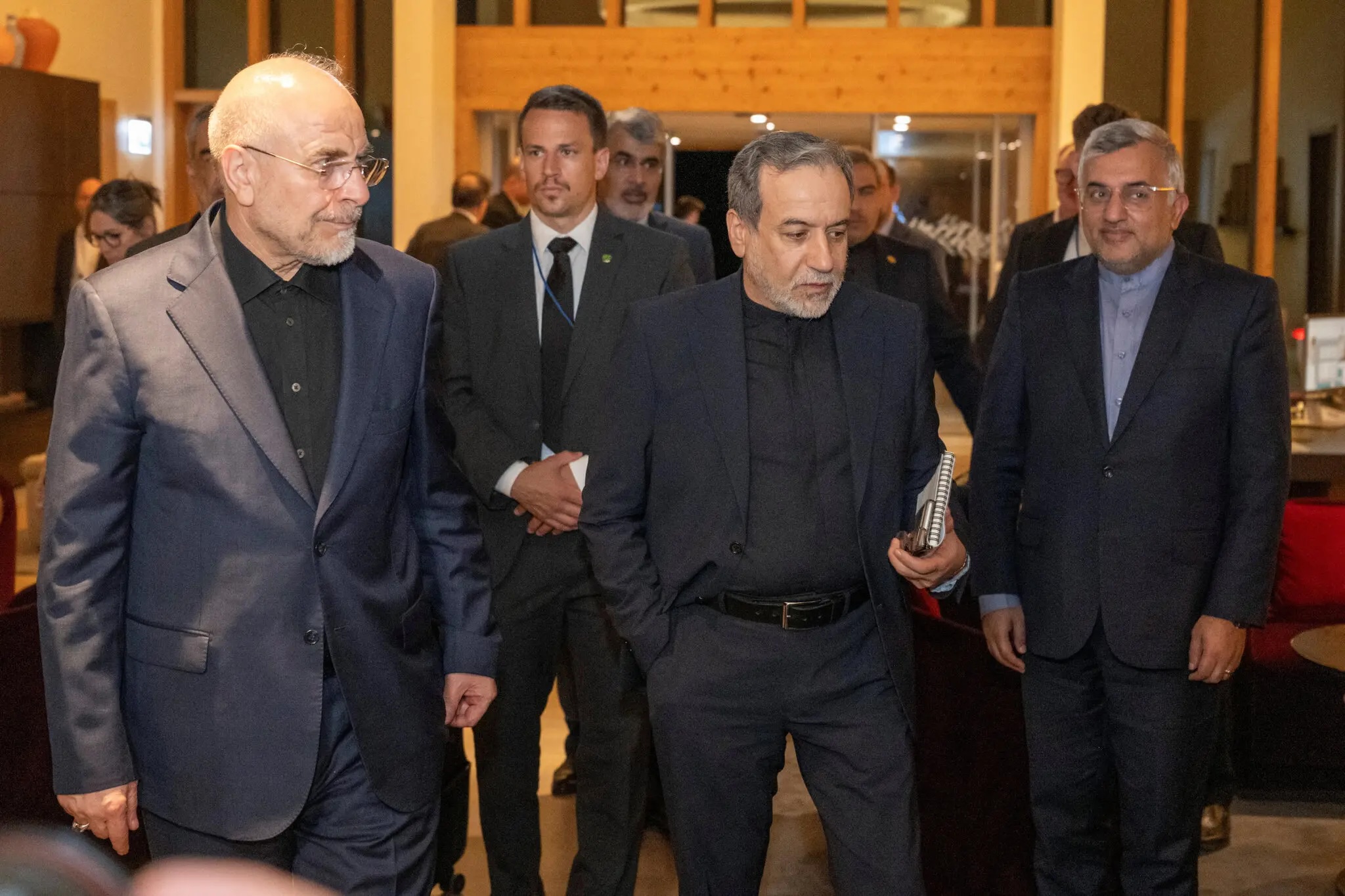
    According to the Times’ reporting published Thursday, US intelligence concerns over planned Israeli targeting of two senior Iranian figures—Foreign Minister Abbas Araghchi and Parliament Speaker Mohammad Bagher Ghalibaf—grew sharply amid sensitive ceasefire negotiations that launched in April. The alarm was so severe that US officials went so far as to coordinate with regional third countries to relay explicit warnings to Iran about the looming threat to the two negotiators.

    The timeline of the crisis dates back to late February, when the US and Israel launched a joint offensive campaign that has already killed dozens of high-ranking Iranian officials. By late March, both countries had temporarily removed Araghchi and Ghalibaf from their official target lists, a step that opened the door for high-level talks to end the ongoing conflict. But the Times reports that Israeli leadership remained determined to eliminate the negotiators, a finding later confirmed by independent reporting from The Washington Post.

    One dramatic April incident laid bare the severity of the threat. Ghalibaf had planned a trip to Islamabad, Pakistan, to meet with US Vice President JD Vance, and Pakistani fighter jets escorted the Iranian aircraft carrying the 70-member delegation from the Iran-Pakistan border to the capital and back after the meeting concluded. However, as the plane began its return trip to Tehran, Israeli security threats emerged. Two unnamed American officials confirmed that Iranian security intercepted intelligence indicating Israel planned to target the plane, and that two Israeli fighter jets had entered Iranian airspace through the western border near Iraq.

    Mahdi Mohammadi, a senior adviser to Ghalibaf who accompanied the delegation on the Islamabad trip, later confirmed the entire account on his public social media page. To avoid the imminent threat, the plane made an emergency landing in Mashhad, the closest major Iranian airport to the Pakistani border, and the entire delegation completed the remaining journey to Tehran over an eight-hour land trip.

    The revelations have further exposed growing rifts between US and Israeli strategic approaches to the conflict, rifts that first emerged after Israel assassinated top Iranian national security official Ali Larijani in March. Speaking to reporters in late March, former President Donald Trump himself acknowledged that Israel’s widespread assassination campaign had complicated efforts to find viable Iranian negotiating partners, noting “They’ve wiped out everybody.”

    Analysts say Israel’s efforts to derail peace talks align with long-standing strategic goals and the immediate political interests of Israeli Prime Minister Benjamin Netanyahu. Trita Parsi, executive vice president of the Quincy Institute for Responsible Statecraft, argued that while Israel is formally classified as a US partner, its leadership is so committed to undermining US-led diplomacy that it is willing to assassinate the very Iranian officials Washington is negotiating with.

    “I can’t recall a government as terrified of peace as the one running Israel,” Parsi wrote in response to the new reporting.

    Netanyahu has already escalated tensions in the region through his ongoing military occupation and assault on southern Lebanon, a core issue that Iran has identified as a non-negotiable point in the ongoing ceasefire talks. During a visit to occupied southern Lebanon earlier this week, Netanyahu told Israeli troops that “our insistence is that we will not leave … until the threat is removed,” a statement that further weakened trust ahead of negotiations.

    Parsi added that beyond Netanyahu’s long-stated goal of leveraging US power to bring Iran under Israeli dominance and reshape the regional balance of power in Israel’s favor, the Israeli prime minister faces urgent personal and political incentives to disrupt any peace deal. The emerging US-Iran memorandum of understanding on a ceasefire has already come at a major political cost for Netanyahu, whose chances of winning re-election in October’s national vote are now weaker than they have been in months. Once positioned as the only Israeli leader capable of maintaining a strong alliance with the Trump administration, Netanyahu now faces the prospect that a successful peace deal will leave Israel in a strategically weaker position, undermining the core justification for his leadership.

    Most critically, if Netanyahu loses the October election, he will lose his legal immunity as prime minister and faces ongoing corruption trials that could result in years of prison time.