博客

  • Indonesia’s Prabowo and India’s Modi meet to discuss expanding economic and defense ties

    Indonesia’s Prabowo and India’s Modi meet to discuss expanding economic and defense ties

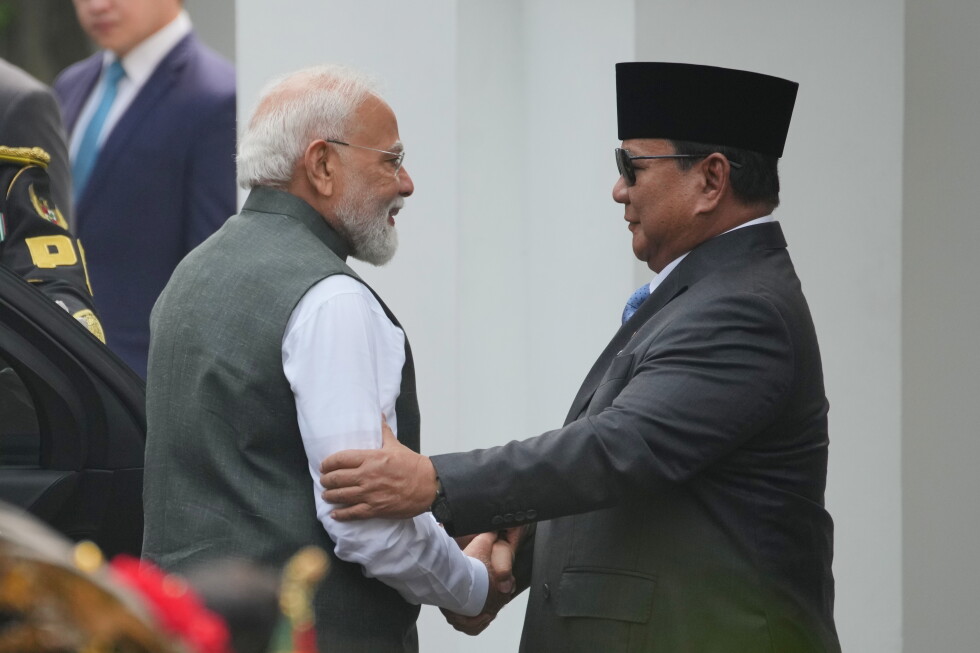
    As economic globalization faces mounting global headwinds, two of Asia’s largest democracies are moving to cement their strategic partnership, with Indian Prime Minister Narendra Modi holding high-stakes talks with Indonesian President Prabowo Subianto in Jakarta on Tuesday. This meeting marks the latest milestone in steadily warming bilateral ties, coming on the heels of Prabowo’s appearance as chief guest at India’s 2023 Republic Day celebrations, and is Modi’s second visit to Indonesia as prime minister following his 2018 trip.

    Modi touched down in Jakarta, Indonesia’s capital, Monday afternoon to kick off a three-day tour of Southeast Asia’s largest economy — the first stop on a broader Indo-Pacific itinerary that will also take him to Australia and New Zealand. In a clear signal of the priority Jakarta places on its relationship with New Delhi, Modi’s aircraft was escorted into Indonesian airspace by three fighter jets, and President Prabowo personally greeted the Indian leader on the tarmac of Halim Perdanakusuma Air Force Base.

    Following a formal welcome ceremony at Merdeka Palace, Indonesia’s central presidential office, the two leaders began closed-door discussions focused on six core pillars of cooperation: defense and security, trade and investment, food security, energy security, access to critical minerals, and cross-sector capacity building in health and education. Indonesian Foreign Minister Sugiono, who like many Indonesians goes by a single name, confirmed ahead of the summit that at least eight bilateral agreements and multiple memorandums of understanding would be unveiled during Modi’s visit.

    New Delhi’s top diplomat to Jakarta, Indian Ambassador Sandeep Chakravorty, highlighted that defense cooperation will take center stage in the talks, noting that discussions over Indonesia’s potential acquisition of India’s BrahMos supersonic cruise missile system have progressed to an advanced stage. Beyond arms procurement, the two nations are set to expand collaboration on maritime security, a priority for both states that share overlapping strategic interests along the vital shipping lanes connecting the Indian and Pacific Oceans.

    The summit will also advance digital and economic cooperation: a key event during the visit will be the planned launch of the Indonesia Open Network, a digital commerce platform modeled after India’s widely praised digital public infrastructure framework. Later in the visit, on Wednesday, Modi will travel to the historic Javanese city of Yogyakarta, where he is expected to formally launch an Indian-funded restoration project at Prambanan Temple, Indonesia’s iconic UNESCO-listed Hindu cultural heritage site. The project was agreed in principle during Prabowo’s 2023 visit to India.

    In addition to his official summits, Modi is scheduled to address a plenary session of Indonesia’s parliament on Tuesday, before meeting with members of the large Indian diaspora community based in Indonesia at an evening reception.

    Both India and Indonesia hold shared membership in the Group of 20 major global economies and the BRICS bloc of emerging market nations, creating additional alignment on multilateral issues. Speaking ahead of the visit, Chakravorty emphasized the broader geopolitical significance of closer ties between the two leading Global South democracies. “In the recent geopolitical context, closer ties between two leaders of the Global South are very essential so that we give the message to the world that we are together and we work for each other’s strength,” he told reporters.

    After concluding his engagements in Indonesia, Modi will depart for Australia on Wednesday to meet with Australian Prime Minister Anthony Albanese for the next leg of his Indo-Pacific tour.

  • Narre Warren South stepfather death: Brothers face murder charges

    Narre Warren South stepfather death: Brothers face murder charges

    A violent assault case in Melbourne’s southeast has taken a tragic turn, with charges against two brothers accused of attacking their estranged stepfather upgraded to murder following the victim’s death from his injuries.

    The victim, 63-year-old Andre Szep from Clyde North, was allegedly ambushed and brutally attacked by his stepsons 21-year-old Connor Harnett and 22-year-old Liam Harnett shortly after 3 p.m. on June 12. The shocking incident unfolded in the open area outside Strathaird Primary School, located in Narre Warren South, a busy suburban neighborhood near a local education campus.

    Immediately after the attack, emergency responders rushed Szep to a nearby hospital with life-threatening severe injuries. Despite medical intervention, the 63-year-old succumbed to his wounds six days after the assault.

    Prior to his death, the two brothers had already been taken into police custody. Connor Harnett, who lists no fixed address, was charged on June 15, while Liam Harnett, a resident of Narre Warren South, was charged two days earlier on June 13. Both were initially charged with the offense of recklessly causing serious injury.

    In an official statement released to the public on Tuesday, a spokesperson for Victoria Police confirmed that the initial charges have now been formally upgraded to murder following Szep’s passing. “Those charges have today been upgraded to murder,” the spokesperson confirmed in the statement.

    The two accused are scheduled to make their next court appearance at Melbourne Magistrates’ Court on Wednesday, where the murder charges will be formally laid before the court. The community surrounding Narre Warren South has been left shaken by the violent incident, which occurred near a local primary school frequented by families and young children.

  • It’s decision day in Prince Harry’s final privacy suit against British tabloids

    It’s decision day in Prince Harry’s final privacy suit against British tabloids

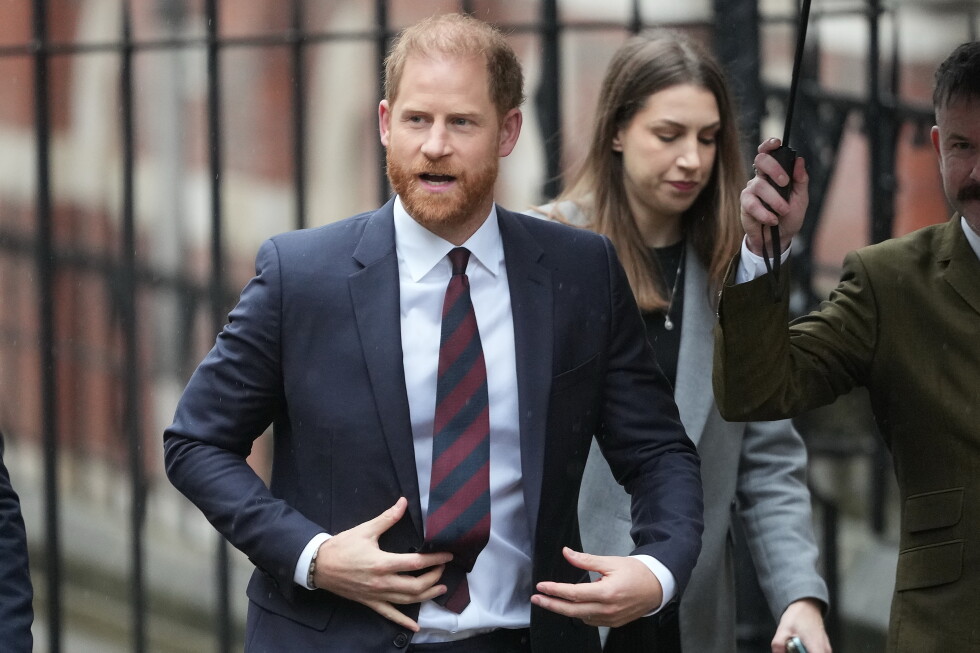
    LONDON — After months of high-stakes testimony, explosive contradictions, and years of public conflict between the British royal family and the country’s tabloid press, Prince Harry’s long-running legal battle over privacy invasion is set to reach a pivotal turning point on Tuesday, as a London High Court justice hands down a ruling in his lawsuit against Associated Newspapers Ltd., publisher of the *Daily Mail* and *Mail on Sunday*. This verdict closes the third in a series of high-profile lawsuits Harry has brought against British news outlets over allegations of unlawful information gathering.

    The case unites Prince Harry with six other high-profile claimants, including music icon Elton John, actors Elizabeth Hurley and Sadie Frost, anti-racism activist Doreen Lawrence, former lawmaker Simon Hughes, and David Furnish, in a pursuit of substantial compensatory damages. The 11-week legal proceeding has racked up an estimated £40 million ($53.5 million) in total legal costs, making it one of the most expensive celebrity privacy cases in recent British history.

    The core allegation from claimants is that Associated Newspapers oversaw a systemic, years-long campaign of unlawful snooping, leveraging in-house journalists, freelance contributors, and private investigators to tap phones, intercept private voicemails, and obtain sensitive personal information through deceptive means. Hurley laid bare the human impact of the alleged intrusions in her testimony, accusing the outlet of planting listening devices outside her home and stealing confidential medical records. “It is like there is someone peeping into your life and into your home,” she told the court. “My private life had been violated by violent intruders — that there had been sinister thieves in my home all along and that I had been living with them completely unaware.”

    For Prince Harry personally, the lawsuit is far more than a legal dispute. It is the culmination of a decades-long mission to reform what he has called a toxic British tabloid culture, a mission rooted in the 1997 death of his mother, Princess Diana, who was killed in a Paris car crash while being chased by paparazzi. He has repeatedly blamed relentless press harassment of his wife, Meghan, Duchess of Sussex, for pushing the couple to step back from senior royal duties and relocate to California in 2020. In emotional testimony earlier this year, a tearful Harry told the court, “They continue to come after me, they have made my wife’s life an absolute misery.” He added that persistent press intrusion left him “paranoid beyond belief,” damaged his personal relationships, and inflicted lasting harm on his mental health.

    Associated Newspapers has forcefully denied all allegations, dismissing the claims as preposterous. Defense lawyers argue that the roughly 50 articles at the center of the case relied entirely on legitimate, lawfully obtained sources ranging from palace spokespeople and royal aides to friends and publicists who voluntarily shared information with reporters. Lead defense attorney Antony White told the court that the claimants’ case rests on unproven speculation and biased inferences, and that Harry was quick to assume unlawful activity where none existed. Unlike a previous 2023 phone hacking case against the *Daily Mirror* that resulted in a ruling against the publisher, dozens of journalists have testified in the *Daily Mail* case to defend their reporting, with many confirming they obtained information through official channels or on-the-record sources. Former *Mail on Sunday* editor Katie Nicholl told the court that Harry’s claims of a closed inner circle were unfounded, saying, “I had very good sources in the inner circle.”

    A key sticking point in the trial has centered on the timeline of allegations, many of which date back to the 1990s — long after the six-year legal deadline for bringing such claims expired. Claimants argue they were unaware of the unlawful surveillance until private investigator Gavin Burrows came forward in 2021 to admit his role in the snooping campaign. Burrows, who once publicly apologized to Harry on a BBC documentary for targeting the prince as a teenager, made a stunning reversal during this trial, testifying that he never worked for Associated Newspapers. He claimed the original statement supporting the claimants was fabricated by the plaintiffs’ legal team and that his signature was forged. The defense has argued that Burrows’ reversal completely undermines the claimants’ case, while the prosecution insists a wealth of other evidence ties the publisher to unlawful activity.

    Tuesday’s verdict coincides with a rare visit by Harry back to the UK, where he is in London to attend charity events. What has dominated headlines, however, is widespread speculation over whether Harry will be reunited with his father, King Charles III, who is currently undergoing treatment for an undisclosed cancer. The meeting would mark the first time Harry has seen his father in person since the king’s cancer diagnosis was announced, and would be the first visit from Harry’s children, Prince Archie and Princess Lilibet, to the UK in several years. The potential reunion remains unconfirmed, as Harry continues to negotiate security arrangements and accommodations; the British government has repeatedly refused Harry’s requests for taxpayer-funded security during his visits, a dispute that has already spawned multiple failed legal challenges from the prince.

    This ruling adds another chapter to Harry’s unprecedented break with royal tradition: three years ago, he became the first senior British royal to testify in a civilian court in more than a century. He already notched two major victories in prior press privacy cases: in 2023, he won a default judgment against *Daily Mirror* publisher Reach plc, where a judge condemned the paper for “widespread and habitual” phone hacking. Just last year, Rupert Murdoch’s *The Sun* issued an unprecedented public apology for years of intrusion into Harry’s life and settled the lawsuit with a substantial damages payment.

  • US needs to move bases from Gulf to Israel, former Centcom commander says

    US needs to move bases from Gulf to Israel, former Centcom commander says

    In a recent webinar hosted by the Jewish Institute for National Security of America, retired General Frank McKenzie, the former leader of United States Central Command (Centcom), has thrown his weight behind a radical restructuring of American military basing across the Middle East, arguing that existing positions in the Gulf are dangerously exposed to Iranian missile and drone attacks and should be shifted westward to Israel and nearby regional partners.

    McKenzie, who oversaw all US military operations across the Middle East from 2019 to 2022, questioned the strategic logic of maintaining Centcom’s forward headquarters at Qatar’s al-Udeid Air Base, located just 100 miles from Iranian territory. “No one in their right mind would ever put the Centcom forward headquarters 100 miles away from Iran, yet that’s where it is,” he stated during the discussion.

    During his tenure as Centcom commander, McKenzie revealed that he and a cohort of senior defense officials formally presented a proposal to the Biden administration in 2022 calling for the dispersal of US forces currently concentrated in Gulf states including the United Arab Emirates, Kuwait, Qatar and Bahrain. The plan advocated moving key command and presence assets west to locations including Israel and Egypt, positions that would be far less vulnerable to pre-emptive Iranian strikes in the event of open conflict. According to McKenzie, the Biden administration “aggressively” rejected the proposal out of hand.

    The former Centcom chief characterized the current American basing architecture in the Gulf as an outdated “artefact” of bygone strategic eras. The network grew out of Cold War-era efforts to deter Soviet expansion into the oil-rich region, and was later expanded to support US counter-insurgency campaigns in Iraq and Afghanistan. Today, he argued, this legacy structure no longer aligns with the core strategic threat facing US forces in the region: advanced Iranian strike capabilities. “[The US] strategy does not match the reality on the ground,” he emphasized.

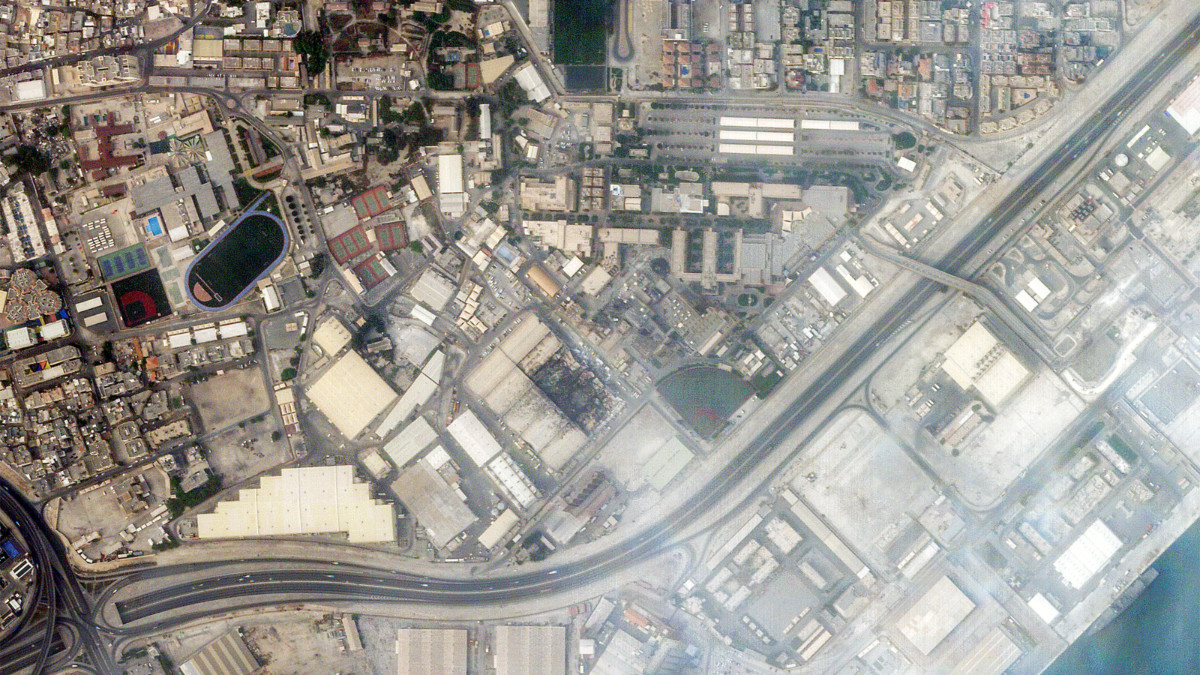
    McKenzie’s warnings align with a June report published by Middle East Eye (MEE), which cited multiple unnamed former senior US officials and regional analysts who concluded that widespread basing restructuring is inevitable due to the vulnerabilities Iran demonstrated during recent regional conflicts. MEE was the first outlet to report that the US secured access to Saudi Arabia’s Taif Air Base in March, after Iranian strikes heavily damaged the major US facility at Prince Sultan Air Base southeast of Riyadh. Across the Gulf coast, key US installations in Bahrain (home to the US Fifth Fleet), Qatar, Kuwait and the UAE all sustained significant damage from Iranian strikes, effectively pushing American assets away from the Gulf coastline.

    Open source analysts and US officials have long debated the full operational impact of Iranian strikes on Gulf bases, but McKenzie cautioned that publicly available satellite imagery can paint a misleading picture of a damaged base’s functionality. Even if critical underground infrastructure such as fuel systems and runways remain intact after an attack, the destruction of above-ground assets including hangars, radar stations and troop barracks can severely degrade a base’s operational capacity, he explained.

    McKenzie acknowledged the core strategic tradeoff at the heart of the basing debate: proximity to potential adversaries cuts response time for military operations, but it also leaves forces open to devastating rapid strikes that can disable assets before they can be deployed. To balance this tradeoff, he proposed a revised model that retains access to Gulf partner facilities for temporary uses such as refueling, as a show of solidarity with longstanding Arab allies, but shifts permanent long-term presence to more secure western locations including Israel, Egypt and Saudi Arabia’s Red Sea coast.

    For McKenzie, Israel stands out as the most attractive option for new basing for two key reasons. First, it would impose far fewer restrictions on US access, basing rights and overflight permission – collectively referred to as ABO – compared to Gulf Arab states. Second, Israel offers far more robust integrated air defense capabilities to protect bases from Iranian strikes than any Gulf partner.

    The issue of ABO restrictions is particularly consequential, McKenzie explained. When the US first built its Gulf basing network, host nations initially refused to allow American forces to use their territory or airspace to launch strikes on Iran. While Saudi Arabia and the UAE later relaxed these rules to allow US strikes under the Trump administration, The Wall Street Journal has reported that Riyadh later reversed course and vetoed new proposed attacks on Iran as regional conflict escalated. “Of all the countries, one thing that’s significant is the [host] country…they’re going to want to have a say in where those jets go when they take off,” McKenzie said. “Probably Israel is the place where you’re going to have the fewest ABO restrictions on your aeroplanes. That’s why Israel is a particularly attractive location.”

    This report draws on original independent coverage from Middle East Eye, a publication specializing in in-depth, independent reporting and analysis of the Middle East, North Africa and surrounding regions.

  • China sentences official to death for taking $325m in bribes

    China sentences official to death for taking $325m in bribes

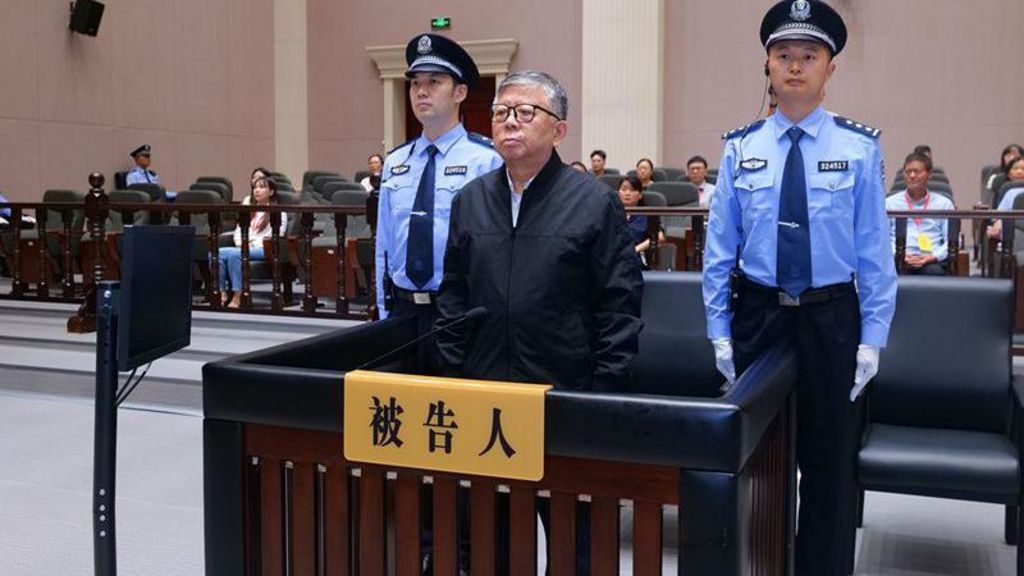
    A court in eastern China has handed down a rare death sentence to a former senior local official convicted of amassing over 2.2 billion yuan ($325 million) in bribes across a 30-year period of corruption, in one of the highest-stakes graft cases prosecuted in recent years.

    Yang Youlin, 69, held multiple senior leadership positions in Nanjing, the capital of Jiangsu province, between 1993 and 2023, with most of his career focused on overseeing the city’s economic and technological development initiatives. Beyond the massive bribery conviction, the Changzhou City Intermediate People’s Court also found him guilty of four additional criminal charges: embezzlement of public funds, abuse of official power, and money laundering to conceal his illicit proceeds.

    Court documents and state media reporting confirm that Yang systematically abused the authority of his various government roles to provide unlawful favors to private and corporate actors in exchange for large cash payments and high-value assets. These favors included helping third parties secure lucrative public engineering contracts, push through preferential land transfer deals, and access approved government-backed financing, according to official accounts.

    In its official ruling issued Monday, the court emphasized that Yang’s criminal acts were of an “extremely serious nature”, noting that his decades of corruption had “caused exceptionally heavy losses to the interests of the state and the Chinese people”. While Yang cooperated with investigators and provided information on other alleged offenders that has in many other cases led to reduced sentences, the court ruled that the scale and severity of his crimes meant this cooperation was “insufficient to warrant a more lenient punishment”. State media reports add that Yang entered a guilty plea during his trial and “expressed remorse in his final statement”.

    Yang’s conviction and sentencing comes as part of the sweeping national anti-corruption crackdown spearheaded by Chinese President Xi Jinping, which has been ongoing since he took office in 2012. The campaign has targeted corrupt officials across nearly every sector of Chinese public life, from top military leadership to senior banking executives and local government administrations. Critics of the crackdown have previously argued that the anti-graft initiative is also used as a political tool to remove and discipline perceived political rivals within the ruling party.

    Death sentences for financial and white-collar corruption crimes remain extremely rare in China, though they are occasionally handed down in cases involving illicit gains exceeding 1 billion yuan. Recent high-profile precedents include former top state finance executive Lai Xiaomin, who was executed in 2021 after being convicted of taking 1.8 billion yuan in bribes, and former Inner Mongolian senior official Li Jianping, who received a death sentence in 2024 for graft and embezzlement totaling more than 3 billion yuan. In most other large-scale corruption cases, defendants receive fixed jail terms or suspended death sentences, which are typically commuted to life imprisonment after a set period of good behavior.

  • Deloitte forecasts weak economic growth not seen since 1990s recession

    Deloitte forecasts weak economic growth not seen since 1990s recession

    One of Australia’s big four accounting firms has delivered a grim new economic outlook, projecting the nation will enter an extended stretch of stagnant growth not seen since the deep recession of the early 1990s, with another interest rate increase coming this year and no rate cuts on the table until late 2027.

    In its monthly Business Outlook report released Tuesday, Deloitte Access Economics laid out a downbeat assessment that warns Australia’s economy will “limp” through the next two years of weak expansion, capping a slow-burn build-up of systemic vulnerabilities that have become impossible to ignore.

    “To date, 2026 has revealed the vulnerabilities that have developed within the Australian economy over recent history,” said Stephen Smith, partner at Deloitte Access Economics. “Australia is now structurally exposed in ways that have become hard to ignore. Deloitte Access Economics has rarely adopted such a downbeat assessment of the short-term outlook.”

    The firm’s projections call for the Reserve Bank of Australia to implement one final 25 basis point interest rate hike in August, as policymakers continue working to tamed persistent inflation. Following that increase, the central bank is expected to hold the cash rate steady for 12 full months, with the first rate cut not arriving until the final quarter of 2027.

    Inflation has proven far stickier than many analysts predicted: headline inflation currently sits at 4%, and Deloitte projects that rate may hold steady into 2027. Trimmed mean inflation, a key core measure tracked by the RBA, climbed to 3.6% in April, and the firm forecasts this metric will peak in early 2027 and will not drop below the RBA’s 2-3% target band until 2028.

    These persistent price pressures and rising interest rates will act as a major drag on national output, according to the report. Deloitte projects Australia will record annual growth below 2% for the next two full years, marking the longest continuous stretch of sub-2% expansion since the 1990-1991 recession. That downturn saw official interest rates hit 17% and unemployment surge to 2.5 times Australia’s current jobless rate.

    Australian households are already shouldering enormous pressure from cumulative rate hikes, with the average mortgage holder paying an extra $350 per month compared to pre-tightening levels. While recent policy and wage adjustments including tax cuts, nominal wage growth, and increases to award and minimum wages that took effect July 1 have offered some relief, Smith said most gains are being erased by persistent economic headwinds.

    “Renewed inflation pressure, high interest rates and volatile fuel costs were eating most of those gains,” Smith explained.

    Beyond domestic pressures, the report highlights deep structural vulnerabilities tied to Australia’s reliance on commodity exports. The ongoing conflict in the Middle East, Smith noted, serves as a sharp reminder that Australia, as a small open economy with a concentrated export base, is extremely vulnerable to global geopolitical disruption, swings in international demand, commodity price volatility, and disruptions to global trade routes.

    “The interaction of geopolitical exposure, weak productivity, stretched household balance sheets and a constrained supply side was easy to overlook when interest rates were low, commodity prices were high and population growth kept aggregate growth ticking along,” Smith said. “They are harder to dismiss now that inflation is sticky, investment needs are rising and the global environment is more uncertain.”

  • Belgium thrash USA to end World Cup dream and set up Spain showdown

    Belgium thrash USA to end World Cup dream and set up Spain showdown

    Two dramatic knockout round matches on Monday closed out the 2026 FIFA World Cup round of 16, delivering a lopsided upset for co-hosts the United States and a bittersweet farewell to one of football’s greatest icons, Cristiano Ronaldo.

    First at Seattle’s Lumen Field, a motivated and clinical Belgian side turned in a dominant 4-1 victory over the USA, bringing the co-hosts’ World Cup run to an abrupt end and booking a quarter-final clash with European champions Spain. The match was overshadowed by 24 hours of pre-match controversy surrounding US striker Folarin Balogun, whose eligibility was the subject of a heated international debate after a last-minute intervention.

    Balogun was originally handed a one-game suspension by FIFA, but the governing body reversed the ruling just 24 hours before kickoff following public lobbying from United States President Donald Trump. Named in US manager Mauricio Pochettino’s starting eleven, Balogun failed to make a meaningful impact on the match, failing to register a single shot on target throughout 90 minutes.

    For Belgium, the eligibility controversy only served to galvanize the squad. Belgium captain Youri Tielemans told reporters post-match that the team held an emergency meeting when news of the ruling broke, and agreed to respond to the perceived injustice with their performance on the pitch. That promise translated to an explosive start: Atalanta forward Charles De Ketelaere broke the deadlock for Belgium after just nine minutes with a clinical low finish past US keeper Matt Freese.

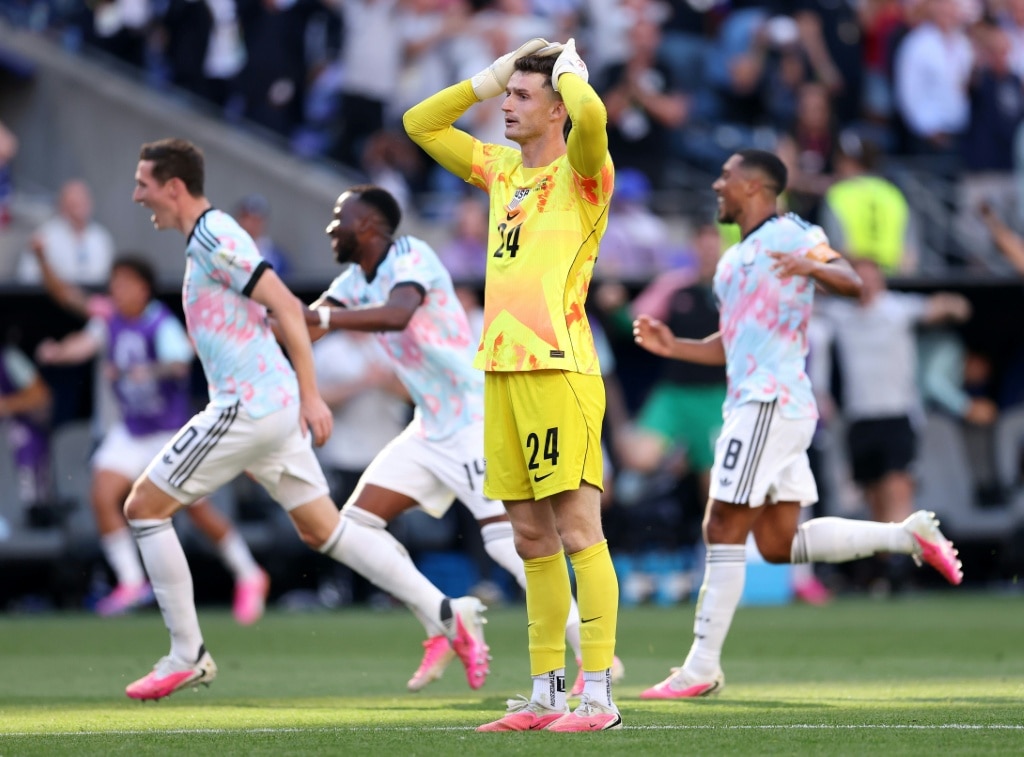
    The USA pulled an unlikely equalizer in the 31st minute, when Malik Tillman’s deflected free kick wrong-footed Belgian keeper Koen Casteels to level the score at 1-1. But the hosts’ fightback lasted barely two minutes: just two minutes after the equalizer, De Ketelaere nodded home a second goal from a corner to restore Belgium’s lead. The Belgians extended their advantage in the 57th minute, when Hans Vanaken capitalized on a catastrophic goalkeeping error from Freese. The US keeper charged out of his penalty area to clear a long through ball, but lost possession under pressure, gifting Vanaken an open goal to make the score 3-1. Substitute striker Romelu Lukaku put the final nail in the coffin for the USA, slotting home a fourth goal in second-half stoppage time to seal the rout.

    Post-match, Pochettino admitted his side had failed to show up on the biggest stage. “Today we were not the same team that we have been during the tournament,” the Argentine manager said. “It was a very bad day — it wasn’t our day in a collective and individual way.” For the USA, the defeat brings an end to a campaign that captivated the host nation, falling short of their goal of reaching the first World Cup quarter-final in 24 years. Belgian midfielder Nicolas Raskin said the sense of injustice over Balogun’s eligibility fueled the team’s dominant performance. “There was a sense of injustice within the squad,” Raskin said. “We were determined to respond on the field.”

    In the second late knockout match in Arlington, Texas, Spain edged out Portugal 1-0 to secure their spot in the quarter-finals, in what has been confirmed as the final World Cup appearance of Portuguese legend Cristiano Ronaldo. The 41-year-old five-time Ballon d’Or winner, playing in his sixth consecutive World Cup, was a peripheral figure throughout the tight contest, as Portugal mustered only two shots on target compared to Spain’s six.

    The match remained goalless through 90 minutes, until Spanish substitute Mikel Merino coolly slotted home the winner in the first minute of stoppage time, latching onto a quick free-kick through ball before beating Portuguese keeper Diogo Costa with a low finish. The result brings an end to Ronaldo’s decades-long dream of lifting the World Cup trophy, a honor that eluded him through a legendary career spanning three decades at the top of European club football.

    Speaking after the match, Ronaldo said he would take time to reflect on his future in football, having closed the book on his World Cup career. “It was my last World Cup, yes, but I’ll have time to think about the rest, to be with my family, not make rash decisions, and just get on with life,” Ronaldo said. “That’s football, that’s the life of a footballer. Sometimes you win, sometimes you lose, and you have to move on.”

    Spanish manager Luis de la Fuente praised his side’s gritty performance, calling the tight knockout clash an early final for his side. “It was a fantastic match — a final played early — and, inevitably, we had to sweat it out until the very end,” de la Fuente said. “We put in a complete performance.”

    Belgium will now face Spain in the World Cup quarter-finals this Friday in Los Angeles, with a spot in the semi-finals on the line.

  • AFL 2026: Collingwood coach Craig McRae on melees, Brayden Maynard umpire contact

    AFL 2026: Collingwood coach Craig McRae on melees, Brayden Maynard umpire contact

    An explosive bench-clearing brawl between Collingwood and the Gold Coast Suns at Saturday’s Australian Football League clash has sparked a thoughtful balancing act from Collingwood head coach Craig McRae, who says he wants to bottle the raw ferocity his players displayed – without the costly rule breaches and heavy fines that followed the incident.

    The chaotic scuffle broke out on the halftime siren after Gold Coast forward Ben Long delivered a hard gut punch to Collingwood’s veteran leader Brayden Maynard. Maynard responded immediately to the hit, triggering an all-in confrontation that drew every available player from both teams’ benches and left the AFL’s match review panel handing down multiple fines in the aftermath.

    Speaking after the game, McRae admitted that the intensity and unity his players showed in the moments after the brawl was exactly the kind of fire most coaches spend the entire season trying to manufacture week in and week out. When his squad walked into the locker room at halftime, the sharp, focused determination in their eyes was something that cannot be easily manufactured through team talks or strategy sessions, he said.

    “I think it’s great for the game this growing rivalry between our side and the Suns. Anyone who tuned into watch that match would have been gripped by the energy out there,” McRae told reporters. “Seeing our players walk in at halftime with that real look in their eye and that raw energy, as a coach you just think, ‘How do we get this every single week?’ Sometimes you have to manufacture that intensity, you want your players to be dialled in and hungry – that’s the culture we want to build inside our club. Now, that energy has to stay within the rules, because we don’t want to be coughing up $16,000 in fines every week. That doesn’t make any sense, and that’s not playing the game the right way. If we can walk that fine line, play on the edge without crossing it, we’ll hunt opposition sides every week, and that’s what we’ll aim to do this week within the rules.”

    Maynard, the Collingwood captain, ended up copping fines for three separate incidents stemming from the melee, including a brush with an umpire as he moved to join the second cluster of the scuffle. McRae acknowledged there was room for match officials to issue a formal suspension charge over the umpire contact, but said he agreed with the grading that ruled the contact incidental.

    “Oh look, I thought it was incidental as it was graded. I can see how you’d make a case for wanting to make a stand of protecting the umpires,” he said. “We want to make sure that’s the case too. I know they changed the positioning rules for contact with umpires in recent weeks, and there’s been a clear mandate from all clubs to make sure we look after them. We want to be a part of that, that’s significant in making sure this game operates well, but I do think it was incidental.”

    The incident has shone a light on the growing on-field rivalry between the two AFL clubs, while prompting broader discussion about how the league balances on-field intensity with enforcement of game rules to keep players and officials safe.

  • US leads international concern after China test-fires missile into Pacific

    US leads international concern after China test-fires missile into Pacific

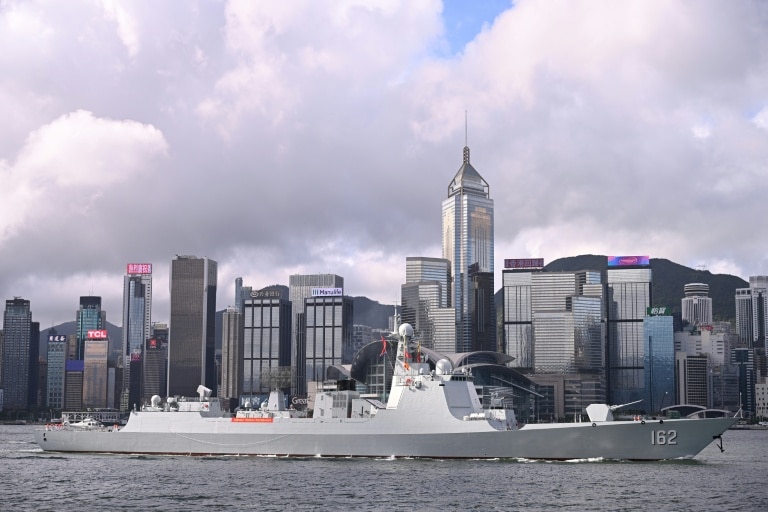
    On a recent Monday, China conducted a test-firing of a long-range missile into the Pacific Ocean, a development that sparked immediate alarm from the United States and amplified global scrutiny of Beijing’s accelerating military modernization and nuclear expansion efforts. This test marks the second major Chinese intercontinental-range missile launch into international Pacific waters in two years, following a 2024 test that sent an ICBM toward waters near French Polynesia — an event that broke a 40-year lull in such over-water ICBM tests by major nuclear powers.

    Military analysts widely view the latest test as clear evidence of China’s growing capability to strike the continental United States, a dynamic that reinforces long-standing U.S. perceptions of China as its primary global strategic adversary, even amid ongoing reconciliation outreach from the Trump administration. The U.S. State Department has framed China’s nuclear buildup as directly counter to global non-proliferation efforts. “At a time when the United States is working harder than ever to prevent nuclear proliferation, China is doing the opposite,” said State Department spokesperson Tommy Pigott in an official statement, adding that “Beijing’s rapid and opaque nuclear weapons buildup is of great concern to the region and the world.”

    The current friction around arms control comes months after the last major bilateral nuclear pact between the U.S. and Russia, New START, expired in February. The U.S. has refused to extend the existing agreement, insisting instead on a new treaty that formally includes China in binding arms control commitments — an overture Beijing has repeatedly rejected. While China’s nuclear arsenal remains far smaller than Russia’s, its stockpile has expanded at a far faster pace in recent years than Western intelligence initially projected. The U.S. has now called on China to enter substantive arms control negotiations and establish a formal, consistent system for notifying the international community of all intercontinental ballistic missile and space launch activities.

    Taiwan’s national security authorities identified the tested missile as a JL-2, a submarine-launched ballistic missile that U.S. defense experts assess has a minimum range of 8,000 kilometers (5,000 miles). Joseph Wu, secretary general of Taiwan’s National Security Council, said the missile traveled over the Philippines and accused Beijing of undermining regional stability. “China just proved itself again to be a bully on the block,” Wu wrote in a post on social media platform X.

    The Philippine government, which has engaged in repeated territorial standoffs with China over disputed claims in the South China Sea, issued a harsh rebuke of the test, calling it a “reckless display of military power.” In an official statement, the Philippine Department of National Defense said, “This launch serves no peaceful purpose and is a calculated act of taunting and provocation against those who reject China’s illegal expansionism and coercive conduct.”

    In response to the international criticism, a spokesperson for the Chinese Navy, Wang Xuemeng, said the test was “a routine arrangement of China’s annual military training,” and emphasized that “relevant countries were informed in advance.” New Zealand officials confirmed that China notified Pacific island nations of the planned launch two hours before it took place, though it remains unclear whether advance notice was provided to the United States. Independent defense monitors tracking the test reported that the missile, launched from a Chinese nuclear submarine, landed in waters near the Solomon Islands — a South Pacific nation that drew international attention in 2022 when it signed a controversial security pact with Beijing. A new Solomon Islands government elected last year has announced it is reviewing the agreement.

    Other regional powers have joined the U.S. in voicing concern. Australian Foreign Minister Penny Wong called the test “destabilizing to the region.” Japan, which did receive advance notification of the launch, said it had issued a formal diplomatic urging for China to reconsider such activities and registered “serious concerns” over the steady increase of Chinese military activity in the Indo-Pacific.

    Only Russia, China’s key strategic ally, has defended the test, framing it as a legitimate exercise of national sovereignty. A Kremlin spokesperson stated that China’s missile test was its “sovereign right” and emphasized that China “is not threatening anyone in the world.”

    Regional security analysts say the test marks a key milestone in China’s development of its nuclear deterrent. Lyle Morris, a senior fellow at the Asia Society Policy Institute, explained that the launch demonstrates China is expanding its nuclear strike options beyond ground-based missiles. “A test of this length is a major development and would indicate that China is moving toward a significantly more survivable and longer-range sea-based nuclear deterrent capability,” Morris said. The capability also means China’s navy “is capable of targeting the continental United States from bastions close to Chinese waters.”

    Notably, the Chinese missile test coincided with the signing of a major new defense treaty between Australia and Fiji, a move that comes as Canberra — a close U.S. ally — works to rebuild its influence in the South Pacific following the 2022 China-Solomon Islands security deal. Most analysts have ruled out a direct causal link between the two events, however, noting that major military missile tests are typically scheduled months or years in advance, making a last-minute alignment unlikely.

  • NATO allies seek to win over Trump after Iran ire

    NATO allies seek to win over Trump after Iran ire

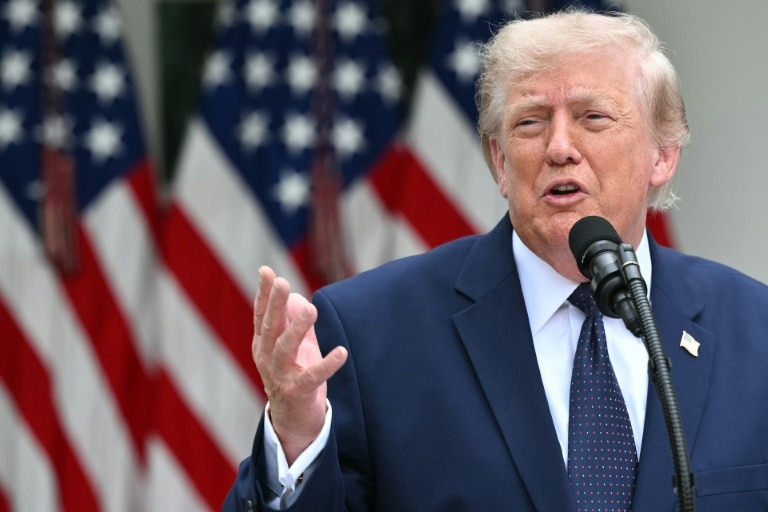
    As U.S. President Donald Trump touched down in Ankara for a critical two-day NATO summit, alliance leaders are pulling out all the stops to ease tensions with the American leader, whose recent public fury over European responses to the U.S.-Iran conflict has cast a shadow over the gathering. The summit, hosted at Turkey’s sprawling presidential palace, comes exactly one year after NATO members committed under U.S. pressure to ramp up collective defense spending to five percent of GDP, a target that forms the centerpiece of allies’ efforts to placate Trump.

    NATO Secretary General Mark Rutte has pushed back against Trump’s criticism, insisting that European allies are already delivering on their spending pledges, moving to take greater ownership of continental defense in the face of Russian threats. “Just one year later, we already see transformational progress,” Rutte told reporters on the eve of the summit, framing the shift as the dawn of “NATO 3.0: A stronger Europe in a stronger NATO.”

    Trump departed Washington late Monday alongside Secretary of State Marco Rubio and Defense Secretary Pete Hegseth, arriving in Turkey still stinging from European restrictions on U.S. forces using regional bases for strikes against Iran. In the weeks leading up to the summit, he has lashed out at allies for moving too slowly to meet his demands, writing in a Truth Social post last week: “Ridiculous for the U.S.A. to continue along this one-sided path when the relationship is not reciprocal. They were not there for us!!!”

    To demonstrate progress to the U.S. president, NATO has prepared a suite of high-profile announcements, capped by the unveiling of tens of billions of dollars in new arms deals at an industry forum opening the summit on Tuesday. Canada reinforced the alliance’s push Monday when it announced a multi-billion-dollar contract to build its new submarine fleet with Germany’s Thyssenkrupp Marine Systems, a move Ottawa framed as a deliberate step to deepen defense ties with European NATO allies. A senior anonymous European diplomat summed up the moment bluntly: “This is showtime.”

    Diplomatic efforts to keep Trump in a constructive mood are leaning on his established warm relationship with Turkish President Recep Tayyip Erdogan, paired with a sustained charm offensive from Rutte. European leaders’ top priority is avoiding a public clash that would further erode NATO’s credibility, after Trump spent months casting doubt on the U.S.’s long-standing commitment to the alliance’s collective defense clause. Still, tensions remain high: Trump has had high-profile fallouts with a string of European leaders in recent months, most recently Italian Prime Minister Giorgia Meloni, leaving plenty of room for unexpected friction.

    On the Iran front, European allies led by France and Britain have attempted to meet Trump halfway by drafting a plan for a joint naval mission in the Strait of Hormuz, and have repositioned vessels closer to the region to stand by for deployment. But leaders have declined to commit fully to the mission, saying they need clearer clarity on the fragile interim U.S. deal with Tehran before moving forward. For many European capitals, the summit has also underscored a growing acceptance of a long-term shift: the U.S. is steadily drawing down its military commitment to the alliance, and Europe must take greater responsibility for its own security. Washington has already made clear it expects allies to lead conventional defense on the continent, and recently announced cuts to the military assets it makes available to NATO commanders.

    Beyond internal alliance shifts, the summit will also center on continued support for Ukraine, which European allies have taken over almost entirely after Trump rolled back U.S. military aid to Kyiv. Ukrainian President Volodymyr Zelensky, who will attend Tuesday’s leaders’ dinner and hold one-on-one talks with Trump, is set to secure a NATO commitment from European backers to maintain at least 70 billion euros ($80 billion) in annual military aid to Ukraine for both 2026 and 2027. Ahead of the summit, Zelensky urged NATO to take “strong decisions” to boost Ukraine’s air defenses, following a devastating Russian airstrike that killed nearly 30 civilians across the country. The Ukrainian leader will also push Trump, who held a pre-summit phone call with Russian President Vladimir Putin, to pressure Moscow to return to the table for substantive peace negotiations, while making the case that Kyiv is gaining ground in the war.