博客

  • What to know about ‘explosive diarrhoea’ parasite outbreak in US

    What to know about ‘explosive diarrhoea’ parasite outbreak in US

    A widespread outbreak of the diarrhoea-causing parasitic infection cyclosporiasis has swept across more than a dozen U.S. states in recent months, driving a sharp spike in reported cases and prompting public health alerts from local and federal agencies.

    Cyclosporiasis, an intestinal infection triggered by the microscopic Cyclospora parasite, is primarily contracted through the consumption of food or water contaminated with the pathogen. The most defining symptom of the infection is frequent, watery, and often explosive diarrhoea. While the illness is rarely fatal, it can linger for weeks if left untreated, and symptoms may reoccur after initially fading, with an average incubation period of around one week after exposure. Unlike many common infectious diseases, the infection cannot spread directly between people; transmission only occurs via the faecal-oral route through contaminated food or water, according to Dr. Caitlin Rivers, an epidemiologist from the Johns Hopkins Center for Health Security.

    The U.S. Centers for Disease Control and Prevention (CDC) has confirmed that outbreaks have been documented across 17 states since early May, including large population states such as Illinois, New York, and Texas. Between May 1 and June 16, the latest window for which the CDC has released aggregated national data, 145 confirmed cases were reported nationwide, with 20 patients requiring hospital admission. No fatalities linked to the current outbreak have been recorded to date.

    State-level data compiled in early July tells a far starker picture of the outbreak’s spread, with case counts far outpacing the CDC’s aggregated national figures. As of July 8, Michigan alone had recorded nearly 1,000 confirmed cyclospora cases within a single two-week period, making it the epicenter of the ongoing outbreak. Neighboring Ohio has reported 177 cases, while Illinois logged 141 cases by July 7 — a number state health officials described as “higher-than-average” compared to typical seasonal infection rates.

    Public health experts note that the actual number of infections across the country is almost certainly higher than official counts. Many people with mild cases recover at home without seeking medical care, meaning their infections are never officially diagnosed or reported.

    Investigators have not yet identified the specific source of the current outbreak, a common challenge in cyclospora investigations, according to health experts. Contamination of fresh produce typically occurs at the farm level, often during irrigation or pre-harvest handling, which makes tracing the source of the pathogen difficult. Past outbreaks of cyclosporiasis in the U.S. and Canada have been linked to contaminated raw produce including pre-packaged bagged salad mixes, fresh cilantro, basil, raspberries, snow peas, and green onions. To date, no specific produce variety, grower, or supplier has been tied to the current outbreak.

    In response to the rising case counts, Michigan’s state health department has issued guidance for food service operations, urging restaurants and commercial kitchens to reduce infection risk by thoroughly washing leafy greens, cooking raspberries and leafy greens when possible, and discarding the outer layers of lettuce and green onions before serving. This guidance comes amid a minor divergence in federal recommendations: while the U.S. Food and Drug Administration notes that rinsing produce alone is rarely effective at removing Cyclospora, the CDC still maintains that thorough washing is a recommended precaution.

    For members of the public, health officials are urging anyone experiencing persistent watery diarrhoea to contact a healthcare provider to get tested for the infection, even as they emphasize that the illness remains far less common than other foodborne pathogens such as salmonella and E. coli.

  • All the best looks from Paris Haute Couture Week 2026

    All the best looks from Paris Haute Couture Week 2026

    As record-breaking heatwave temperatures scorched Paris this July, the fashion world’s most exclusive annual event, Fall/Winter 2026-2027 Haute Couture Week, brought together A-list celebrities and legendary fashion houses to showcase hundreds of hours of handcrafted, one-of-a-kind design work. Held twice yearly and strictly regulated by France’s governing fashion body—only invited designers can present collections—the four-day event lived up to its reputation as a display of unrivaled creativity, drawing global headlines and star power from across entertainment and music.

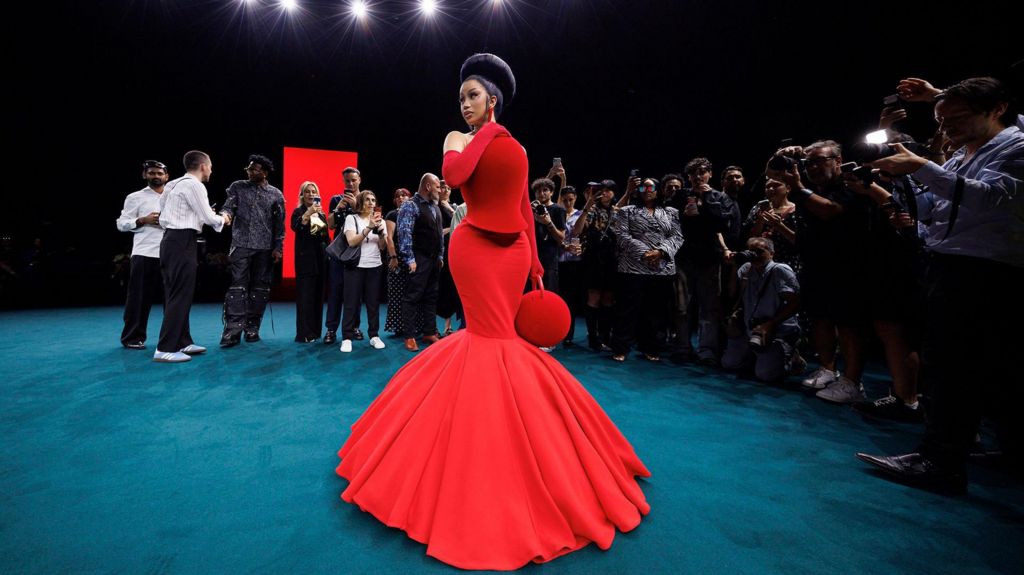
    One of the most talked-about showcases of the week came from Schiaparelli, where creative director Daniel Roseberry presented his collection titled *The Call of the Void*. Roseberry described the line as a deliberate departure from familiar creative processes, a full embrace of untested design experimentation. Standout celebrity guests included Bad Bunny, who paused the European leg of his ongoing world tour to make his first-ever haute couture week appearance in a head-turning creamy butter-yellow tailored suit. British actress Emma Corrin also turned heads in a soft pastel feathered jacket fitted with dramatic, sharp talon accents that embodied the collection’s bold, surrealist spirit. Rapper Cardi B was also among the high-profile attendees at opening shows, marking one of the most star-studded couture events in recent years.

    Over at Balenciaga, Pierpaolo Piccioli—who recently left his long-time role at Valentino to lead the brand—delivered a highly anticipated debut couture collection that honored the house founder Cristóbal Balenciaga’s iconic silhouettes while adding modern sensibility. Supermodel Gigi Hadid closed out the outdoor runway show in a sweeping black feather cocoon garment that earned immediate viral attention. Unlike the structured, tight-fitting designs that dominated many recent collections, every look in Piccioli’s line featured loose, flowing cuts and a range of rich mixed textures—an especially welcome choice for attendees navigating the city’s sweltering heat. Stars including actor Hudson Williams also turned out to support the debut collection.

    At Jean Paul Gaultier, Duran Lantink—appointed as the house’s permanent creative lead in April 2025—presented his first full haute couture collection to a crowd of eager industry insiders. Centered on the themes of transformation, playful theatricality, and reimagined history, the line drew inspiration from French queen Marie Antoinette, reinterpreting her iconic royal aesthetic for 21st-century audiences.

    Chanel’s artistic director Matthieu Blazy leaned into soft whimsy and fairytale fantasy for his 2026 couture offering. The runway was transformed into an enchanted garden, lined with climbing vines and giant beanstalks, and one model walked the catwalk holding an original copy of the fairy tale collection once owned by Coco Chanel herself. Intricate hand-embroidered floral motifs and delicate, dreamy accessories made the entire line feel like an escape from everyday reality, evoking the quiet magic of classic storybook narratives.

    The biggest surprise of the week came not from the Dior runway itself, but from an off-site reveal: creative director Jonathan Anderson confirmed he was the designer behind the bridal gowns for Taylor Swift’s recent high-profile wedding to NFL star Travis Kelce. While Anderson did include several bridal-inspired looks in his Dior couture collection, the designer has yet to share any details about whether those designs echo Swift’s actual wedding dress, which remains private. The collection itself paid homage to American sculptor Lynda Benglis, featuring innovative accordion-pleated dresses, skirts, and statement accessories that blended fine art with high fashion. Industry icon Anna Wintour, director Baz Luhrmann, and singer Sabrina Carpenter were among the front row guests at the Dior show.

    Dutch designer Iris van Herpen, known for blending science and high fashion, presented a collection centered on invisible natural forces that shape daily life. Her most innovative design choice integrated charged plasma gas particles into sealed glass tubes, which were attached to gown silhouettes to create a subtle sparkling, glowing effect that moved with the model as they walked the runway. The collection grew increasingly elaborate throughout the show, culminating in gowns covered in intricate hand-beading and ethereal, flowing draping that blurred the line between fashion, art, and science.

    Closing out the week, designer Alexis Mabille centered his collection on the theme of duality, leaning into a core design concept of transformative garments. What appeared to be a single finished look on the runway would shift dramatically in seconds, reorganizing into a completely separate garment with an entirely different texture and color palette. Mabille anchored the collection to a tight, cohesive palette of black, silver, and gold, emphasizing the stark contrast between each transformed look.

    Despite the record-breaking heat, the 2026 Fall/Winter Haute Couture Week solidified Paris’s position as the global center of high fashion, blending innovative design work, star power, and decades of house heritage into one unforgettable four-day event.

  • Pressure builds on Europe’s biggest port to be greener

    Pressure builds on Europe’s biggest port to be greener

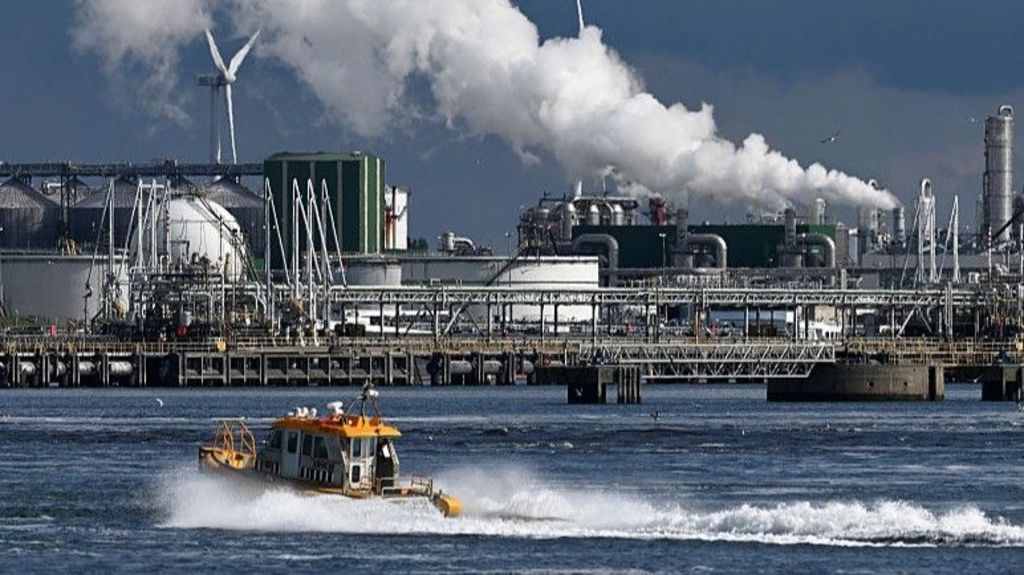
    Nestled on reclaimed North Sea land at the delta of the Rhine and Meuse rivers, the Port of Rotterdam stands as Europe’s undisputed freight powerhouse. By volume, this massive logistics hub handles nearly as much annual cargo as all United Kingdom ports combined. Its skyline is defined by towering container cranes, stacked shipping boxes, and massive bulk carriers – the front-facing infrastructure of one of the world’s largest integrated energy and chemical complexes.

    Five major oil refineries, anchored by Shell’s largest European processing facility, collectively process hundreds of thousands of barrels of crude oil every day, while a dense network of chemical plants supplies manufacturing operations across the European continent. Research from independent environmental research firm CE Delft links the full lifecycle carbon emissions of fossil fuels passing through Rotterdam to roughly 600 megatonnes of carbon dioxide annually – a figure multiple times higher than the annual emissions of the Netherlands’ busiest airport, Schiphol.

    This outsized carbon footprint has positioned Rotterdam as a global test case for one of the energy transition’s most pressing questions: Can a port built entirely around the fossil fuel economy ever make a full, authentic shift to sustainable operations? Growing pressure from climate activists is pushing port leadership to confront this challenge head-on, culminating in a high-profile lawsuit filed by Dutch environmental group Advocates for the Future. The suit argues the Port of Rotterdam Authority has failed to take sufficient action to phase out fossil-based energy flows, and demands a legally binding, concrete roadmap to wind down coal, oil and gas throughput – emissions from which already outpace the total national emissions of most of the world’s countries.

    Port officials acknowledge the scale of the problem. Mark van Dijk, head of external relations for the Port of Rotterdam Authority, confirms the port’s industrial cluster currently emits roughly 29 million tonnes of CO2 annually, accounting for half of the Netherlands’ entire domestic emissions. “It’s not good,” van Dijk admits, putting the figure in perspective: the annual emissions equal that of tens of thousands of round-trip passenger flights between Amsterdam and Los Angeles.

    Port leadership has already laid out a formal decarbonization plan targeting its own operations and aiming to encourage lower-emission practices among on-site businesses. The authority has set a target to cut its direct and purchased energy emissions by 90% between 2019 and 2030. Key initiatives include developing a dedicated hydrogen hub to allow companies to test and scale low-carbon fuel technologies, investing in onshore shore power infrastructure that lets docked ships turn off their polluting auxiliary engines and connect to the local electrical grid, and supporting the adoption of alternative bunker fuels including liquefied natural gas, biofuels and methanol.

    To address existing industrial emissions in the near term, the port is prioritizing Carbon Capture and Storage (CCS), which involves capturing carbon emissions from industrial facilities and storing them permanently in depleted offshore gas fields via the port’s Porthos project.

    But activists reject the port’s incremental approach. Maikel van Wissen, director of Advocates for the Future, argues a port of Rotterdam’s scale and influence carries a unique responsibility to accelerate the clean energy transition, rather than simply continuing to manage ongoing fossil fuel flows. “A state-owned enterprise should take on the same legal obligations that governments have to reduce emissions,” van Wissen says. “We are asking in the lawsuit to phase out that dependency, to create alternatives. It takes time, but if you don’t have a plan, you always choose cheap short-term solutions. This is an important hub, if you do it in a controlled way, you offer an alternative, that will stop industry from moving elsewhere.”

    Port officials counter that they are already actively reshaping the port’s business model to prioritize decarbonization. “We try to work together with the polluters, and slowly phase them out,” says Oscar van Veen, the port’s director of innovation, before correcting himself: “As fast as possible, of course.”

    Still, the transition faces steep structural and geopolitical barriers. Many of the port’s largest emitting facilities are owned by multinational corporations headquartered in the United States, China and other countries, whose primary loyalties lie with their global boardrooms. If regulations become too stringent in Rotterdam, companies can simply relocate operations – a precedent already set when Shell moved its global headquarters to the United Kingdom and consumer goods giant Unilever left Rotterdam entirely.

    Bettina Kampman, a senior analyst at CE Delft, notes that the Port of Rotterdam Authority’s influence over independent on-site operators is inherently limited. Even expanding the port’s own low-emission infrastructure faces significant bottlenecks. “New developments need physical space. They can speed up the energy infrastructure developments – the electricity needed to electrify the processes. That’s all limited at the moment due to the lack of power cables,” Kampman explains.

    Harry Geerlings, emeritus professor of sustainable transport and ports at Erasmus University Rotterdam who has studied the sector for more than 30 years, argues no single port authority can deliver a full energy transition on its own. What is required, he says, is a global level playing field, similar to the regulatory frameworks the European Union has already established through the EU Emissions Trading System and international marine fuel sulphur standards.

    Geerlings points to the EU’s sulphur regulations as a proof of concept: when new rules required all ships calling at European ports to switch to lower-sulphur fuels or install pollution-control scrubbers, major shipping nations including China eventually complied after initially resisting, once their vessels were barred from major global ports without meeting the standards. “If you have the right incentives, you change the behaviour of these companies,” he says.

    Even with effective regional regulation, loopholes remain: many shipping lines now use dual-fuel engine setups, switching to cleaner low-sulphur fuel only when entering EU territorial waters, then reverting to cheaper high-sulphur heavy fuel oil once they reach the unregulated high seas.

    Geerlings says he believes Rotterdam’s port leadership is genuinely committed to decarbonization and is already investing in the infrastructure needed to support a smoother transition. Still, he notes a core, unresolved dilemma: “But their biggest income is still tied to fossil fuel industries. It’s not simply a switch you turn on or off. A port needs activity as a logistics node – otherwise it’s no longer a port. It’s a real dilemma.”

    Geopolitical tensions have further complicated the transition. Former U.S. President Donald Trump’s skepticism of aggressive climate policy and financial incentives favoring fossil fuels over renewables have amplified Rotterdam’s fears that energy-intensive industries will relocate to regions with weaker environmental regulations and lower energy costs.

    Activists argue that as a publicly owned entity, the Port of Rotterdam Authority should be held to a higher environmental standard than private operators. They are not asking for an immediate full shutdown of all fossil fuel operations, but rather a detailed, time-bound phase-out plan – not just a long-term promise to reach climate neutrality by 2050. “We are not asking for anything extraordinary,” van Wissen says. “We’re asking for a plan that really contributes to a sustainable future for the port.”

    For their part, port officials say they share the same end goal. Speaking during an electric taxi ride back to Rotterdam from the port’s outer edge, van Dijk stresses that both the port authority and its critics are aiming for the same destination: net-zero emissions by mid-century. The core disagreement, he acknowledges, is over how quickly the transition needs to happen, and how radical the changes to the port’s existing business model need to be.

  • UN investigators provide additional evidence of genocide by RSF in Sudan’s el-Fasher

    UN investigators provide additional evidence of genocide by RSF in Sudan’s el-Fasher

    On Wednesday, the United Nations Fact-Finding Mission for Sudan (FFMS) published a fresh batch of harrowing survivor testimonies collected from the aftermath of the Rapid Support Forces (RSF) capture of el-Fasher, the capital of North Darfur. The new accounts reinforce the mission’s earlier finding that the RSF, Sudan’s powerful paramilitary group, has carried out acts of genocide targeting non-Arab communities in the region.

    Established by the UN Human Rights Council as an independent oversight body, the FFMS is tasked with documenting violations of international human rights and humanitarian law amid the ongoing civil conflict that erupted between the RSF and Sudan’s regular armed forces (SAF) in April 2023. Since its last public update in February, the mission has expanded its evidence base to 333 interviews with people who survived the el-Fasher offensive, adding 13 new firsthand accounts that solidify its original assessment.

    The mission reaffirmed Wednesday that three core elements required to classify atrocities as genocide under international law are overwhelmingly present in attacks carried out by the RSF in and around el-Fasher: the systematic killing of members of the targeted non-Arab groups, the infliction of severe physical and psychological harm, and the deliberate imposition of living conditions designed to eradicate the group. Investigators added that clear genocidal intent can be inferred from multiple patterns observed during the offensive: the large-scale scope of targeted killings, the consistent use of ethnically charged rhetoric by RSF commanders and foot soldiers, and the deliberate practice of sparing Arab civilians while attacking, detaining, or sexually assaulting non-Arab residents.

    Currently, the mission is conducting a formal review to determine whether the widespread patterns of sexual violence documented in el-Fasher — including mass rape, forced pregnancy, and the deliberate denial of reproductive health care to non-Arab communities — qualify as a fourth act of genocide: measures intended to prevent births within the targeted group, as defined under Article II(d) of the UN Genocide Convention.

    Beyond documenting atrocities committed by the RSF itself, the FFMS also addressed the potential legal complicity of foreign states that continue to provide military, financial, logistical, or intelligence support to the paramilitary group. Under Article I of the Genocide Convention, all states hold a binding legal obligation to prevent acts of genocide. The mission noted that any state that continues to supply support to the RSF despite awareness of a credible risk of genocide could be found in violation of this obligation, and may face allegations of complicity under Article III(e) of the convention in some cases.

    Extensive independent reporting, including multiple investigations by Middle East Eye, has repeatedly linked the United Arab Emirates to the provision of arms and other critical supplies to the RSF, claims the UAE has repeatedly denied. Sudan previously attempted to file a formal genocide case against the UAE at the International Court of Justice, but the proceedings were unable to move forward after the UAE invoked a reservation it made to Article IX of the Genocide Convention, which excludes the ICJ’s jurisdiction over such disputes against the country. However, the FFMS emphasized that other states that supply the RSF have not made similar reservations, leaving them vulnerable to identical legal claims in the future. In recent weeks, international human rights organizations have submitted two formal communications to the International Criminal Court calling for an investigation into the role of foreign actors, specifically senior UAE officials, for aiding and abetting RSF atrocities.

    “The obligation to prevent arises at the instant a State learns of, or should normally have learned of, the existence of a serious risk that genocide may be committed,” the FFMS wrote in its conference room paper. “It is an obligation of conduct rather than result, requiring States to employ all means reasonably available to them, within their capacity to influence the relevant actors, to prevent the commission of genocide.” The mission issued an immediate call for all states to halt all flows of weapons, ammunition, and logistical support to the RSF and its allied militias, a move that would comply with the existing UN arms embargo on Darfur.

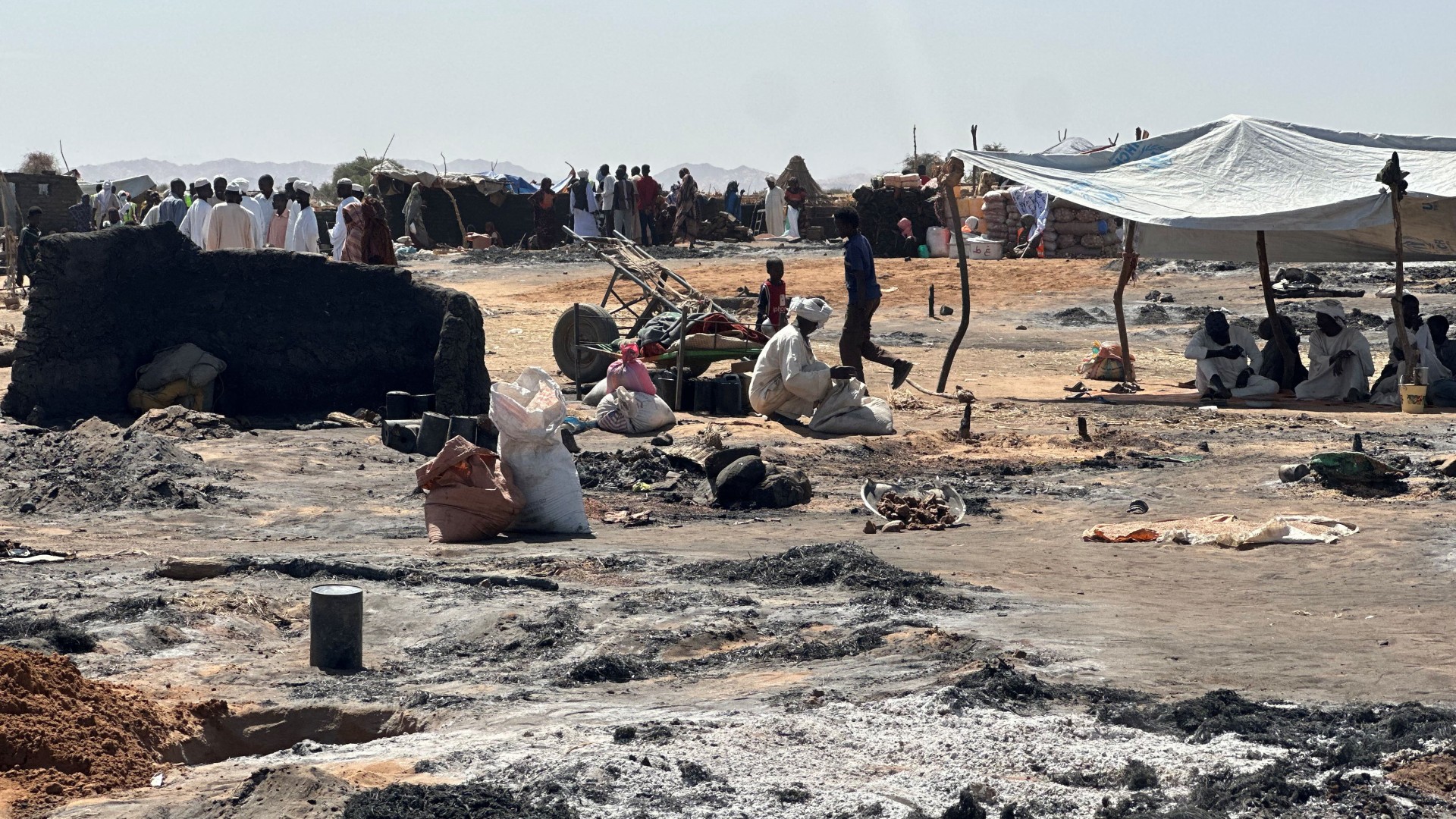
    The new testimonies released Wednesday add graphic, previously undisclosed details of atrocities carried out by RSF fighters during and after the October 2024 takeover of el-Fasher. Investigators confirmed that foreign fighters have been identified among RSF ranks, and that many of these fighters have participated in acts of sexual violence against non-Arab civilians. RSF fighters are readily identifiable by their distinctive sandy-colored uniforms.

    One newly published account describes RSF fighters storming a takiya, a communal shelter for displaced civilians, on October 26. Fighters killed men, women, and children inside the shelter indiscriminately. As a survivor attempted to flee with her husband, fighters grabbed the woman and raped her. When her husband tried to intervene, one fighter slit his throat with a knife, killing him instantly. In another incident, RSF fighters stormed El Saudi Hospital, a major medical facility in el-Fasher, killed wounded civilians sheltering inside its wards, and raped multiple women within the hospital grounds.

    In the town of Shagra, one witness told investigators that RSF fighters stopped a convoy of civilians attempting to escape the city, then gang-raped between 15 and 20 women and girls, some as young as 13 years old. One of the victims, a woman in her 70s, later died from the injuries she sustained during the attack. Along the road leading to Tawila, a survivor recounted being intercepted by RSF fighters alongside a group of women. Fighters separated several of the women to rape them while forcing the other women to watch, telling the waiting group, “Sit here until we ‘marry’ your sister.”

    Multiple testimonies confirm that fighters explicitly targeted and spared civilians based on their ethnicity. In one incident, a RSF fighter who had already begun assaulting a woman stopped when she told she belonged to the Arab Fallati tribe, saying “you are my cousin” and allowing her to leave unharmed. Another woman was released after claiming membership in the Masri neighborhood, which is majority Arab. The testimonies also include new accounts of brutal sexual violence: multiple survivors described rapes committed with sharp objects, which resulted in at least one victim’s death, and witnesses reported that perpetrators laughed while carrying out their assaults.

    The FFMS also documented that women who resisted rape or attempted to protect their family members were extrajudicially killed by RSF fighters. On the road to Tawila, a mother was shot dead after trying to stop fighters from abducting her daughters. Two young women being held captive by the RSF were killed immediately after fighting off an attempted rape. The mission also received multiple new accounts of abductions of women and girls, which investigators are treating as part of a broader pattern of enforced disappearances. One witness described seeing RSF fighters tie the hands of three girls she knew, force them into a military vehicle, and drive away.

    Newly recorded statements from RSF fighters further reinforce the ethnic motivation behind the atrocities. Direct quotes from fighters include statements such as “The Rapid Support Forces are above everything” and “Any Zaghawa we will capture will not survive the night.” Investigators said these statements confirm that ethnicity is the primary criterion used to target victims for killing and sexual violence.

    The testimonies also lay bare the horrific conditions faced by thousands of civilians detained by the RSF after fleeing el-Fasher. The FFMS confirmed that detainees were first held in makeshift facilities across el-Fasher, including local schools, El Saudi Hospital, and abandoned government buildings, before being transferred to the main prison in Nyala — known as Daqris Prison — by the end of 2024. Daqris Prison was already severely overcrowded with detainees captured in other regions of Sudan, but thousands of additional el-Fasher detainees were sent there anyway. Thousands of detainees remain in the facility to this day, held without any formal legal process, denied access to legal counsel and blocked from receiving visits from family members. Even humanitarian workers who attempted to gain access to the detention sites have themselves been detained by the RSF.

    Former government employees — particularly teachers and doctors — were separated from the general detainee population and face a far higher risk of extrajudicial killing, the mission found. In many cases, these separated detainees have not been seen again by family members or witnesses. At a former children’s hospital in el-Fasher that the RSF repurposed as a detention and execution site, detainees were forced to drink contaminated water, resulting in a cholera outbreak that killed multiple people in custody.

    Conditions inside the besieged El Saudi Hospital during and after the RSF offensive were also documented: medical staff ran out of critical supplies, forcing them to clean open wounds with only salt water. Specialists reported that they lacked the equipment and medication needed to provide adequate medical and psychological care to survivors of rape. Women who became pregnant as a result of rape were forced to seek unsafe illegal abortions due to the lack of timely reproductive care, and several of these women died from hemorrhage. Pregnant women across el-Fasher also suffered higher rates of stress-induced premature labor due to constant shelling and violence.

    On the question of command responsibility for the atrocities, the FFMS presented verified video evidence placing RSF deputy commander Abdelrahim Hamdan Dagalo at the captured 6th Infantry Division base in el-Fasher delivering a speech between 10 a.m. and 11 a.m. on October 26, just hours after the RSF secured control of the city. Dagalo was also spotted in el-Fasher two days after the takeover and again on November 4. The commander has already been sanctioned by the European Union, the United Kingdom, and the UN Security Council for his role in overseeing the RSF’s military campaign in Darfur.

    The FFMS shared the final draft of its new report with Sudan’s transitional government on July 3 but has not received any formal response to date. The RSF answered a small number of questions from investigators in a June 7 letter but has not followed through on public promises to meet with investigators, the mission confirmed.

    The release of these new findings comes just days after the FFMS issued an urgent warning that the RSF appears to be preparing to replicate its el-Fasher offensive in another major Sudanese city: el-Obeid, home to more than 500,000 permanent residents plus more than 100,000 people who have already been displaced from el-Fasher and other war-ravaged regions. During an urgent debate at the UN Human Rights Council on July 3, FFMS member Mona Rishmawi reported that the RSF has built up military forces on all approach routes to el-Obeid except the eastern corridor. Local residents have reported a sharp increase in drone strikes targeting critical infrastructure including power stations, fuel depots, water treatment facilities, and transport routes, alongside repeated strikes on hospitals, markets, schools, and residential neighborhoods.

    “We have seen this modus operandi by the RSF before. In El-Fasher and elsewhere, growing encirclement was followed by restrictions on movement, disruption of aid and food supplies, damage to critical infrastructure, aerial and artillery bombardment and ultimately indiscriminate attacks against civilians,” Rishmawi told the council. “The warning signs are unmistakable.”

  • Motherhood not all warm and fuzzy: Bollywood actor’s play spotlights messier side

    Motherhood not all warm and fuzzy: Bollywood actor’s play spotlights messier side

    For generations, motherhood in India has been framed as a sacred, universally joyful milestone—an ultimate goal that every woman is expected to embrace without complaint. But what if the messy, painful, and unspoken parts of this life-altering experience matter just as much as the warm, fuzzy moments we celebrate? That is the question at the heart of *Belly of the Beast*, a provocative new stage production from Aadyam Theatre that is already turning heads and sparking long-overdue conversations across the country.

    Adapted from Bollywood actor Kalki Koechlin’s 2021 memoir *The Elephant in the Womb*—written just months after Koechlin gave birth, during the isolation of the COVID-19 pandemic—the production pulls no punches in its exploration of the full spectrum of motherhood. Co-created by Koechlin and award-winning theatre director Sheena Khalid, the play weaves together the overlapping stories of five women navigating different phases of maternal experience: from early pregnancy and traumatic labor to the overwhelming grind of caring for newborns and young children. It does not shy away from the hardest parts of the journey, either, addressing topics that have long been pushed to the margins of public discourse: pregnancy loss, abortion, and the crippling weight of postpartum depression.

    Koechlin, who drew directly from her own battle with postpartum depression while writing her book, explains that the project grew out of a gap she saw in India’s cultural conversation around motherhood. “Women are rarely allowed to express the dark feelings—the difficulties they face, the hormonal changes they go through, the loss of identity or postpartum depression,” she shared in an interview. “The conversation everywhere is all about the gift of motherhood, how beautiful it is, how blessed we are to be mothers. But that life-giving process is so transformational that there is a certain part of you that is also grieving, losing the identity you had before.” As a society, she argues, mothers’ unrelenting labor is largely taken for granted; acknowledging how draining and isolating the work can be is seen as taboo, for fear that if women spoke openly about their struggles, the entire unbalanced social structure of unpaid carework would collapse.

    Official government data underscores the systemic weight of the expectations the play critiques. Recent figures reported by the *Times of India* show that 69% of women in urban India are locked out of the formal labor force due to unpaid childcare and housework, compared to just 1% of men. For women who do pursue careers, the pressure to be a “supermom”—excelled both at work and as the primary caregiver, running every aspect of the household without complaint—leaves little room for error or vulnerability. Koechlin notes that much of this pressure is internalized, bred from generations of social expectation that women must be perfect mothers above all else. *Belly of the Beast* aims to challenge that narrative, encouraging women to share the load and accept that it is okay to not be perfect, or okay at all.

    One of the play’s most resonant storylines centers on the stigma surrounding miscarriage in India, a topic that remains deeply shrouded in shame even today. Women who lose a pregnancy not only grieve their loss—they also face unfair judgment, awkward silences, and pressure to pretend they are fine. The role of the woman navigating miscarriage is played by Shruti Vyas, who drew from her own personal experience to develop the character. “There is some pain that might not be visible from the outside, but that doesn’t mean that you’re not experiencing it,” Vyas explains. She recalls that after her own miscarriage, the most common reaction she received was, “But you’re looking fine.” The play’s core message around this issue—that it is okay to not be fine—landed powerfully with audiences at the play’s recent Delhi premiere, where audience members openly affirmed the line in a spontaneous show of solidarity.

    To keep the heavy subject matter from feeling overwhelming for audiences, Khalid intentionally wove moments of humor and levity throughout the 130-minute production. “We are talking about some very heavy things such as miscarriages and there are moments where we’re talking about personal experiences,” Khalid says. “We felt there needed to be a sense of relief and levity for the audience, so we can ease in and out of it. Otherwise, it’s a lot.” That balance paid off: when the final curtain fell on the Delhi premiere, the entire cast and crew received a standing ovation from the moved crowd.

    What makes *Belly of the Beast* more than just a play is its commitment to reflecting the universal reality of most Indian women, for whom unpaid childcare remains a default, unrecognized full-time responsibility. One quiet, widely relatable scene illustrates this perfectly: when a husband returns home from work, tired but ready to talk about his day, he asks his wife how hers went. She pauses, then only mumbles, “I just looked after the baby.” It is a small moment that cuts to the core of the play’s mission: to give voice to the millions of mothers whose experiences have long been erased or silenced by social expectation.

  • ‘New chapter’: Bronson Xerri agrees to join Storm on three-year deal

    ‘New chapter’: Bronson Xerri agrees to join Storm on three-year deal

    In a major shift for the National Rugby League (NRL), 25-year-old centre Bronson Xerri is set to leave the Canterbury Bulldogs and join powerhouse side Melbourne Storm on a three-year contract, kicking off in the 2027 season.

    The Storm, which has been actively bolstering its outside back squad following confirmation that key players Will Warbrick and Nick Meaney will depart at the end of this current season, beat out competing suitors for Xerri’s signature. Jack Howarth’s future with the Victorian club also remains up in the air, making the addition of a proven, physical centre even more critical for the franchise. The signing of Xerri follows the club’s earlier capture of another elite outside back, Jamayne Isaako, who will also join the side in 2027.

    Although Xerri still had a year remaining on his existing contract with the Bulldogs, the Belmore-based club granted him an early release to facilitate the move, and he will remain with Canterbury for the rest of the 2025 NRL season.

    Melbourne Storm’s director of football Frank Ponissi expressed clear enthusiasm for the recruit in a statement announcing the deal, highlighting Xerri’s on-field strengths that align with the club’s playing style. “He’s a tough, competitive player with great speed and athleticism who we believe will be an important addition to our outside backs heading into the next three years,” Ponissi said. “We look forward to welcoming Bronson and his family to Melbourne ahead of the 2027 season.”

    Xerri’s path to this new contract has been anything but conventional. After serving a four-year ban for violations of anti-doping policies related to performance-enhancing substance use, the Bulldogs offered him a career lifeline to return to top-flight NRL competition. To date, he has notched 54 appearances for the club, and his standout form this season includes a dominant round 12 performance against the Storm itself, where he ran for 207 metres and broke 13 tackles.

    Earlier this 2025 season, Xerri’s future at Canterbury was thrown into question after he was dropped from the top side just one game into the campaign, following the club’s season-opening win in Las Vegas. Club officials were initially disappointed with how he responded to his demotion to the second-tier NSW Cup competition, but Xerri worked his way back into first-team contention, and impressed hierarchy with his improved professionalism in the months that followed. He was later moved to the bench to accommodate a positional reshuffle that shifted Matt Burton to centre and Stephen Crichton to five-eighth.

    In a statement following the signing announcement, Xerri thanked his current club for the opportunity that got his career back on track. “I’ve really enjoyed my time as a Bulldog and have been lucky enough to form friendships that will last a lifetime,” he said. “This club gave me an opportunity to return to the NRL and for that I am truly grateful. Although I will move onto a new chapter next year, I want to make it clear that I am fully committed to finishing this season on a positive note.”

  • How an app in South Korea will let victims track their stalkers

    How an app in South Korea will let victims track their stalkers

    South Korea is set to introduce a groundbreaking mobile application designed to empower survivors of stalking by giving them the ability to directly monitor the movements of their perpetrators. The initiative comes as part of the country’s broader push to address growing public concern over gender-based violence and stalking, which has remained a persistent social issue in the nation for years. Government officials have emphasized that the tool is tailored to give victims greater autonomy and peace of mind, noting that it will be integrated with existing law enforcement data systems to deliver real-time location alerts when a perpetrator is in close proximity to the user.

    The app is designed to operate with strict privacy safeguards to prevent misuse of location data, according to state authorities, who argue that it will fill a critical gap between police response and personal safety planning for at-risk individuals. Stalking victims in South Korea have long reported that delayed police interventions and limited access to real-time safety information leave them vulnerable to repeated harassment and harm; policymakers frame the new app as a concrete solution to these systemic shortcomings.

    However, the innovation has drawn measured scrutiny from legal and safety experts, who have raised questions about the actual public safety impact the tool will deliver. Some critics warn that overreliance on the app could create a false sense of security for victims, diverting attention from the need for broader systemic reforms such as tougher legal penalties for stalkers and expanded training for law enforcement personnel. Other experts have pointed out unaddressed privacy risks, noting that a data breach or unauthorized access to the app’s location information could inadvertently put victims in greater danger by exposing their whereabouts to perpetrators. The debate around the app underscores the ongoing tension between tech-driven safety solutions and longstanding calls for institutional change to combat stalking in South Korea, as officials prepare to roll out the tool to the public in the coming months.

  • E-bike rider critically injured after being struck by a car in Wynnum

    E-bike rider critically injured after being struck by a car in Wynnum

    A severe collision between an e-bike and a passenger vehicle has left a 19-year-old rider critically injured in a coastal Brisbane suburb, prompting an ongoing police investigation into the incident. The crash unfolded shortly after 6 p.m. Thursday near the busy intersection of Claymeade Street and Sandy Camp Road in Wynnum, when the teen rider’s e-bike collided with a BYD Shark utility vehicle driven by a 43-year-old man.

    Queensland Ambulance confirmed the teenager sustained extensive, life-threatening damage across his head, face, legs and pelvis in the impact. Emergency medical teams immediately transported the injured rider to Brisbane’s Princess Alexandra Hospital in Woolloongabba, where he was admitted to intensive care. As of Friday, a hospital spokesperson confirmed the patient remained in a critical but stable condition. Remarkably, the driver and his two teenage passengers walked away from the collision without any physical harm, according to official reports.

    Local law enforcement has launched a full investigation into the circumstances that led to the crash, and is asking for public assistance to piece together a clear timeline of events. Investigators are calling on any motorists who captured dashcam footage of the intersection around the time of the collision, or any bystanders who witnessed the crash firsthand, to come forward and share their information with police. This incident comes amid growing public and regulatory scrutiny of e-bike safety across Australia, with recent announcements of new regulatory crackdowns and policy plans to address what some policymakers have described as an unregulated ‘wild west’ for electric two-wheelers.

  • Kylian Mbappé scores his 8th World Cup goal before leaving game with a ‘slight’ ankle injury

    Kylian Mbappé scores his 8th World Cup goal before leaving game with a ‘slight’ ankle injury

    FOXBOROUGH, Mass. – In a display of champion-level resilience that has become his trademark, Kylian Mbappé shook off an early penalty miss and a second-half ankle injury to power defending World Cup champion France to a 2-0 quarterfinal victory over Morocco, securing the French national team’s spot in a third straight World Cup semifinal. The result leaves Les Bleus one win away from a trip to the final, with their superstar’s fitness now the only lingering question heading into the next round.

    Mbappé’s afternoon at Gillette Stadium got off to a shaky start. In the 28th minute, he drew a foul from Morocco defender Noussair Mazraoui inside the penalty box, earning a chance to put France ahead from the spot. But a lengthy VAR review disrupted his focus, and Morocco goalkeeper Yassine Bounou read his attempt correctly, diving left to turn the shot away. “It’s complicated, because there’s some kind of imbroglio,” Mbappé told reporters after the match. “I let myself be de-concentrated. That’s a scenario I hadn’t experienced yet.”

    The world’s most celebrated forward did not let the setback slow him down. In the 60th minute, he cut into Morocco’s penalty area, shook off a defender, and fired a blistering strike that curled just inside the far post to put France ahead. The goal marked his eighth of the 2026 World Cup, pulling him level with Argentina captain Lionel Messi for the tournament’s Golden Boot lead. Just six minutes later, he set up Ousmane Dembélé for France’s second sealing goal, adding an assist to his matchday stats.

    The momentum of the match shifted slightly in the 63rd minute, when Morocco defender Issa Diop stepped on Mbappé’s right ankle. The star played through the pain for another 13 minutes, before dropping to the turf and signaling to the French bench for medical attention. After a quick evaluation by training staff, he was substituted out for forward Jean-Philippe Mateta, leaving the pitch to applause from the stadium crowd and finishing the match on the bench with an ice pack wrapped around his injured ankle.

    Both Mbappé and French head coach Didier Deschamps moved quickly to ease concerns about the forward’s fitness for the upcoming semifinal. “I took a knock to the ankle, but I’m fine,” Mbappé said. “At that point, JP was in better shape than I was to play the final minutes.” Deschamps echoed the assessment, telling reporters: “It’s a slight pain in the ankle. Nothing serious.” After the final whistle, Mbappé appeared to suffer no ill effects as he joined his teammates in celebrating the win, matching his usual upbeat demeanor.

    The goal on Wednesday also moved Mbappé to 20 career World Cup goals in just 20 tournament appearances, leaving him one goal behind Messi’s all-time record of 21 World Cup goals set across six tournaments. With the Golden Boot tiebreaker going to the player with more assists, Mbappé currently holds the lead in the race for the tournament’s top scorer honor over Messi, who has also scored eight goals in 2026. Norway star Erling Haaland sits just behind the pair with seven goals heading into his side’s quarterfinal match on Saturday.

    France will next face the winner of the upcoming quarterfinal between Spain and Belgium for a spot in the World Cup final. Remarkably, this is the third consecutive World Cup where France has advanced to the semifinal with Mbappé on the roster, and the team has reached the final in both of the previous two tournaments. When asked if this iteration of Les Bleus is the strongest squad he has played with for France, Mbappé struck a measured, focused tone.

    “It has the most potential — for the time being,” he said. “But I always say that the strongest teams are the ones that win. I don’t see a World Cup trophy next to me, so for now, we’re not the strongest team.”

    Staying focused on the ultimate prize has been the team’s approach through the tournament so far, Mbappé explained, with no room for celebration until the job is done. “There’s only one way to relax, and that’s by winning,” he said. “Until we’ve done that, we don’t let up. We’re in the semifinals and we’re very happy, but there’s still a long way to go. We realize that what lies ahead is even tougher than what we’ve been through, but we’re ready to face anything.”

  • Unbeaten Spain meets star-powered Belgium in the World Cup quarterfinals

    Unbeaten Spain meets star-powered Belgium in the World Cup quarterfinals

    The 202X FIFA World Cup enters its knockout final phase this week, with one of the most anticipated quarterfinal matches set to kick off Friday at Inglewood’s SoFi Stadium between two European powerhouses on lengthy unbeaten runs: tournament favorite Spain and a Belgian side chasing a legendary final run for its golden generation.

    Spain has turned in a near-perfect defensive performance throughout the entire tournament, holding every opponent scoreless en route to the quarterfinals. La Roja’s run of form extends far beyond this summer’s tournament, holding an incredible 36-match unbeaten streak across all competitive fixtures dating back to March 2023, establishing the side as one of the most consistent winners in European men’s football over the past three and a half years.

    Goalkeeper Unai Simón has been the anchor of Spain’s historic defensive effort, notching a new World Cup record of 609 consecutive minutes without conceding a goal across the current tournament and the 2022 Qatar edition. That streak includes six straight clean sheets, another tournament benchmark. While Simón has only been required to make six saves across five matches thanks to Spain’s organized defensive shape, orchestrated expertly from midfield by Rodri, the upcoming match against Belgium will mark his toughest test of the tournament to date.

    Offensively, Spain has not always found its cutting edge in knockout play. Nine of the side’s total tournament goals came in two dominant lopsided wins against underdogs Saudi Arabia and Austria, with only one late injury-time goal from Mikel Merino securing a 1-0 round of 16 win over Portugal. Still, forward Mikel Oyarzabal notched a brace in Spain’s 3-0 rout of Austria at SoFi Stadium last week, and emphasized that the squad’s tight team unity has been a core strength through uneven offensive performances.

    “I think we’ve managed to build a really solid core group,” Oyarzabal said Thursday. “Regardless of whether things go well or badly, or who’s playing, the team responds, and I think that’s crucial. We’ve achieved something very difficult: creating that kind of unity within the national team.”

    Standing in Spain’s path to the semifinals is a Belgian side that has finally hit its stride at the right moment, riding an 18-match unbeaten streak across all competitions entering Friday’s match. After a dominant 4-1 blowout of co-host United States in the round of 16 – the Red Devils’ strongest performance of the tournament – the squad is well aware it holds a historic opportunity: this is widely expected to be the final World Cup run for the nation’s beloved golden generation of star players, who have never quite lived up to their lofty potential in major tournament play.

    Real Madrid goalkeeper Thibaut Courtois, one of Belgium’s veteran leaders, acknowledged the squad enters the match as clear underdogs against the pre-tournament favorite and reigning European champions. Still, he said the side remains confident it can pull off an upset.

    “I think they’re one of the favorites to win it, so obviously we start as the underdog against them,” Courtois said. “But in football, everything is possible, and I believe that we can win, with all respect. But obviously they are the favorite.”

    Belgium’s offensive arsenal poses a real threat to Spain’s record clean sheet streak, with playmakers Kevin De Bruyne, Leandro Trossard, Youri Tielemans, and young forward Charles De Ketelaere – who scored two goals against the U.S. – supporting veteran striker Romelu Lukaku. The side does face a setback, however, after losing midfielder Amadou Onana to a knee injury this week that will force a tactical reshuffle. The adjustment is expected to bring De Bruyne back into the starting lineup, after he was rested for the round of 16 match to preserve his fitness for the quarterfinal. Winger Jérémy Doku has been declared fit after dealing with minor fitness issues, though he has yet to find top form this tournament.

    For Spain, winger Nico Williams is expected to be fully fit after being limited by minor issues earlier in the tournament, with the rest of the squad reporting good health ahead of kickoff.

    The winner of Friday’s clash will advance to the World Cup semifinal, one win away from a spot in the tournament final.