博客

  • Ireland makes 9 changes to its starting side for Nations Championship match against Japan

    Ireland makes 9 changes to its starting side for Nations Championship match against Japan

    Leading into a highly anticipated Nations Championship test match this Saturday in Newcastle, Australia, two national rugby sides have finalized their match-day rosters, with Ireland rolling out a heavily reshuffled starting lineup and Japan retaining a standout young playmaker who turned heads in his international debut last week.

    Only six players who featured in Ireland’s narrow 33-31 win over the Wallabies in Sydney last Saturday will retain their starting spots for this week’s neutral-venue clash, played roughly an hour’s drive north of Sydney. The holdovers are backs Stuart McCloskey, Jamie Osborne and Jimmy O’Brien, plus forwards Tom O’Toole, James Ryan and Jack Conan. Irish head coach Andy Farrell announced a total of nine changes to the starting 15, headlined by lock Tadhg Beirne’s first appointment as captain of the senior national side.

    The match will also mark a string of firsts for emerging Irish talent: back-rower Sean Jansen is set to earn his first senior start at the number 8 position, while three other young players — Billy Bohan, Sam Illo and Bryn Ward — will all join the match-day squad for the first time, with Bohan and Illo in line to make their international debuts as replacement forwards. Farrell expressed clear enthusiasm for the opportunity to blood new talent against Japan, noting that even one debut is a special milestone, and four first-time call-ups makes this encounter all the more meaningful.

    For the Japanese side, head coach Eddie Jones has opted to keep faith in 21-year-old university flyhalf Ryunosuke Ito, who made his maiden international appearance last week and delivered an impressive performance in Japan’s 27-10 victory over Italy in Tokyo. Jones, who returns to the sideline this week after serving a four-match suspension, will keep Ito in the starting lineup alongside starting halfback partner Naoto Saito. Speaking about the young playmaker, Jones emphasized that Ito will inevitably face growing pains at the international level, but the entire squad is prepared to support his development, and the coaching staff is encouraging him to play his natural game. Japan made just one adjustment to its starting roster from last week’s win, with Taira Main stepping in to replace Kippei Ishida on the left wing.

    The full confirmed rosters for both sides are as follows:
    Ireland starting XV: Jamie Osborne; Jimmy O’Brien, Robbie Henshaw, Stuart McCloskey, Jacob Stockdale; Ciarán Frawley, Craig Casey; Tom O’Toole, Rónan Kelleher, Thomas Clarkson, Tadhg Beirne (captain), James Ryan; Jack Conan, Nick Timoney, Sean Jansen. Irish reserves: Tom Stewart, Billy Bohan, Sam Illo, Cormac Izuchukwu, Bryn Ward, Nathan Doak, Harry Byrne, Bundee Aki.
    Japan starting XV: Takuro Matsunaga; Kazuma Ueda, Dylan Riley, Yuya Hirose, Taira Main; Ryunosuke Ito, Naoto Saito; Takato Okabe, Mamoru Harada, Shuhei Takeuchi, Harry Hockings, Warner Dearns (captain), Ben Gunter, Kanji Shimokawa, Jack Cornelsen. Japanese reserves: Hayate Era, Sojiro Otuska, Keijiro Tamefusa, Michael Stolberg, Michael Leitch, Tiennan Costley, Itsuki Kamimura, Sam Greene.

  • Acclaimed pianist loses Gaza speech case against Melbourne orchestra

    Acclaimed pianist loses Gaza speech case against Melbourne orchestra

    In a closely watched legal ruling that intersects artistic performance, free expression, and the Israel-Gaza conflict, acclaimed British-Australian pianist Jayson Gillham has lost his workplace discrimination lawsuit against Australia’s Melbourne Symphony Orchestra (MSO). The case stemmed from the MSO’s decision to cancel one of Gillham’s scheduled performances in 2024, just days after the pianist made public comments about Palestinian journalist casualties in Gaza during another concert.

    The controversy traces back to an August 11, 2024, Melbourne performance where Gillham premiered a five-minute work *Witness*, composed by Connor D’Netto and dedicated to Gaza-based journalists. During his introductory remarks to the 150-person audience, Gillham stated that more than 100 Palestinian journalists had been killed by Israeli forces since the outbreak of the Gaza war in October 2023, alleging that Israel carried out targeted assassinations of high-profile journalists. He added that the deliberate killing of journalists constitutes a war crime under international law, carried out to suppress documentation and global reporting of war crimes. Independent press freedom advocacy group the Committee to Protect Journalists has recorded that 207 journalists have been killed in Gaza since the conflict began.

    After receiving three formal complaints about Gillham’s comments, the MSO moved to cancel a recital Gillham was set to perform on August 15. The cancellation itself sparked nearly 500 counter-complaints, and the orchestra later described the original cancellation as an “error” and attempted to reschedule the performance. Gillham subsequently filed suit, arguing that the cancellation constituted unlawful workplace discrimination based on his political beliefs. His legal team maintained that he held a protected right to express his political views in his professional workplace, and that he should not face retaliation for those views.

    In his final ruling, Federal Court Justice Graeme Hill rejected Gillham’s claim, finding that the performance cancellation was not motivated by opposition to Gillham’s personal political beliefs. Instead, Hill ruled that the MSO acted to mitigate expected harm to the orchestra’s business operations and public reputation resulting from the comments. The justice further noted that the MSO has an established policy of staying neutral, declining to formally endorse either side in the Israel-Gaza conflict, and that long-standing industry custom bars classical musicians from sharing unapproved stances on sensitive political or social issues from concert stages.

    The trial ran for three weeks, concluding last month, with roughly two dozen witnesses giving testimony, including Gillham and senior MSO leadership. Ahead of the ruling, Hill urged both parties to negotiate a private settlement to avoid a public formal judgment. In the wake of the court’s decision, Gillham released a brief statement acknowledging the outcome. “I am disappointed and I need time to process the judgment before saying more,” he said.

    The case has drawn widespread attention for raising difficult questions about the boundaries of political expression in professional artistic spaces, particularly amid the intense global debate over the ongoing Israel-Gaza war.

  • Tofu vendor delivers much more than healthy food to an east Tokyo neighborhood

    Tofu vendor delivers much more than healthy food to an east Tokyo neighborhood

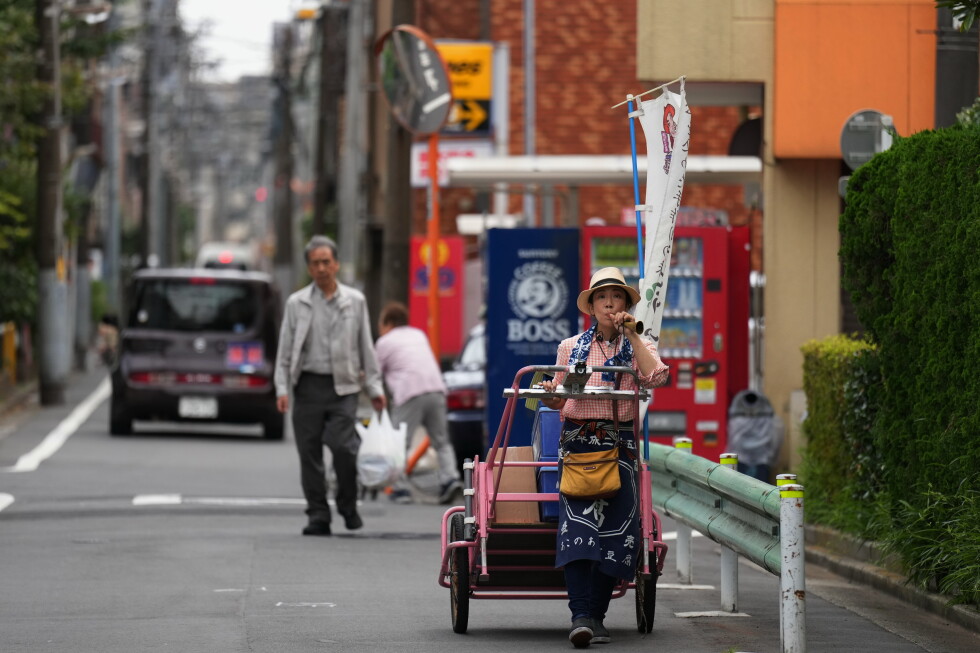
    On narrow, winding residential streets in eastern Tokyo, 53-year-old Akiko Sugaya pushes her signature pink cart, straw hat perched on her head and a small brass bugle at the ready. The familiar toot of her horn signals her arrival for locals, who know her not just as a seller of fresh, protein-rich tofu and prepared groceries, but as a trusted guardian and friend in a community grappling with Japan’s growing crisis of aging and social isolation.

    For 23 years, Sugaya has filled a role that goes far beyond traditional street vending. Her weekly three-hour routes, which she runs rain or shine three afternoons a week, weave through the Ojima neighborhood, an area dotted with cramped single-family homes and sprawling mid-rise apartment blocks. Where modern convenience has replaced face-to-face interaction with app-based deliveries and contactless checkout, Sugaya has kept the vanishing tradition of neighborhood roaming vendors alive, while quietly stepping in to address a gap that formal social services have not fully filled: checking on isolated elderly residents who live alone.

    Sugaya knows her customers’ routines as intimately as if they were her own family. Over decades of rounds, she has spotted the subtle warning signs that something is wrong: piling uncollected newspapers left on porches, laundry that hangs untouched for days, a usually regular shopper who fails to appear when she sounds her bugle. Sadly, she has on multiple occasions been the first person to discover the bodies of elderly customers who died alone — a tragedy that has become increasingly common in Japan, which holds the title of the world’s oldest population, with more than 29 percent of residents aged 65 or older.

    “In a neighborhood like this, many long-time residents leave their doors unlocked, and landlords will grant me access if I haven’t seen someone in a few days,” Sugaya explained in an interview at her small brick-and-mortar shop, which operates as a takeout lunch spot by day and a small dine-in restaurant in the evening. “These small, tight-knit streets let me see the signs of trouble easily, but even in large apartment blocks that hide those clues, I know to check in on anyone I haven’t seen in a while.”

    What many see as a quiet act of community service has also been a life-changing healing journey for Sugaya herself. Before starting her vending work, she faced years of rejection and trauma: she was bullied relentlessly in school, and was fired from multiple jobs as an adult, leaving her with crippling low self-esteem. It was only when she began pushing her tofu cart through the neighborhood that she found a sense of purpose and belonging that had long eluded her.

    “Selling tofu from my cart taught me that it’s okay to just be myself,” she said. “I was put down over and over again for years, but this work let me build my self-esteem back up. I used to be so nervous around people my own age, but when I’m with the elderly, their warm smiles make me feel safe. This job didn’t just give me work — it saved me.”

    Long-time regular Shinji Saito, who lives with epilepsy and visits Sugaya’s shop every day, describes her open, accepting nature as “magical.” Another customer, 78-year-old Toshi Niiyama, says she intentionally waits for Sugaya to come through her street even when she could buy tofu at a local supermarket or convenience store. “Cart selling is such a disappearing craft,” Niiyama said. “We used to have a vegetable vendor who came around here too, but he retired years ago and nobody took his place. I wouldn’t buy my tofu from anyone else — waiting for Ako-chan is as much about seeing her and chatting as it is about the food.”

    Sugaya has watched firsthand as Japan’s modernization has eroded casual daily social interaction. What were once routine moments of human connection — a newspaper carrier stopping to say hello, a street vendor chatting about the weather — have been replaced by algorithm-driven delivery apps and contactless self-checkout at convenience stores, where customers can complete a purchase without exchanging a single word with another person.

    “You can spend an entire day now without having a single verbal conversation with another person,” Sugaya noted. “You go to a convenience store, tap a screen, grab your item, and leave. It’s fast, but it leaves you feeling empty inside. That’s what I see a lot with the elderly who live alone — that emptiness just gets bigger every day.”

    Unlike many of the roaming vendors that once defined Japanese neighborhood life, Sugaya has no plans to stop her rounds. She sticks to a fixed weekly schedule: one route on Mondays, a second on Thursdays, and a third on Saturdays, and she never skips a day even when the rain is pouring. For her, it’s not just a business — it’s a promise to the community that gave her back her life. “My customers expect me,” she says simply. “They don’t just want tofu. They want someone to talk to. And I’ll be there.”

  • Morocco again knocked out of World Cup by France 2-0, this time in the quarterfinals

    Morocco again knocked out of World Cup by France 2-0, this time in the quarterfinals

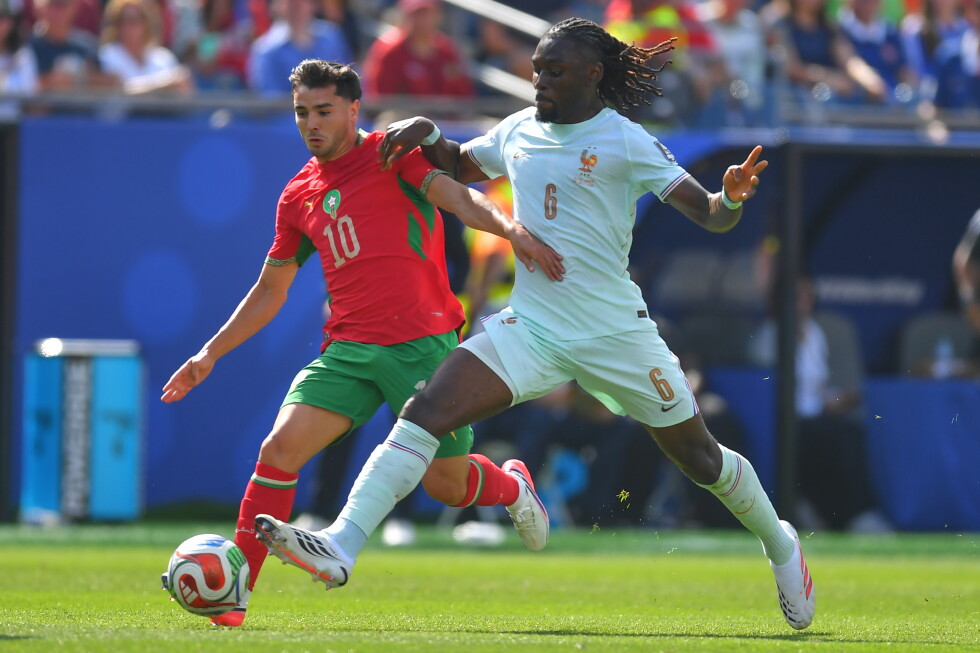
    FOXBOROUGH, Mass. – For the second consecutive FIFA World Cup tournament, France has ended Morocco’s run of competition with a identical 2-0 victory. Thursday’s quarterfinal matchup at Gillette Stadium mirrored the 2018 semifinal result, where the North African side fell to Les Bleus by the same two-goal margin.

    Morocco struggled to generate meaningful offensive opportunities throughout the 90 minutes, managing just a single shot on target. That attempt did not come until the 82nd minute, by which point France had already built an unassailable two-goal lead. The result echoes Morocco’s historic run in Qatar 2022, when the Atlas Lions became the first men’s African national team to reach a World Cup semifinal, only to fall to France 2-0 once again.

    Despite the disappointing exit, Morocco head coach Mohamed Ouahbi expressed confidence in his side’s long-term trajectory, speaking through a translator after the final whistle. “The future will be bright if we continue like this, but that doesn’t mean we didn’t want to win today. Of course, we wanted to win today,” Ouahbi said. “We did everything we could to win, but we faced a very difficult opponent. It’s a disappointment, of course, but we’ll keep working for the future.”

    The closest Morocco came to breaking the deadlock came from midfielder Azzedine Ounahi, who fired a effort from the edge of the 18-yard box. French goalkeeper Mike Maignan produced a spectacular diving save to push the ball away, effectively snuffing out any remaining chance of a Moroccan comeback.

    France head coach Didier Deschamps highlighted his side’s tactical control of the game after the win. “They had no real forwards using their speed in the wide areas,” Deschamps explained. “We were possessing the ball, they had no way to be dangerous to us.”

    This tournament has already marked another strong run for Morocco, which advanced to the quarterfinals despite being drawn into a competitive group stage. A key part of the team’s recent rebuild is 18-year-old talent Ayyoub Bouaddi, who made the decision to switch international allegiance from France, where he was born and raised in Senlis, an hour north of Paris, and represented the French program at every youth age group.

    Ouahbi emphasized that the Moroccan national team carries significance beyond its own borders, drawing support from across the Global South. “We know we represent more than just one country,” Ouahbi said. “We represent the Moroccan people, and many countries across Asia and Africa. Many people see themselves in this team, and we’ll keep working to win titles in the future.”

    In the first half, Morocco’s clearest opening came just before the halftime break, when defender Achraf Hakimi curled a free kick from just outside the penalty area narrowly past the right post.

    Ouahbi acknowledged France’s first-half dominance, noting that his side struggled to transition from defense to attack when they won possession. “The first half was very complicated. France was very good with the ball,” Ouahbi said. “They caused a lot of problems on the sides with their players, and also in the center. When we had ball possession, our transitions were not so great, so we had to run a bit more and they ended up being in a comfort zone.”

    The win advances France to the World Cup semifinals, where they will face the winner of the quarterfinal matchup between unbeaten Spain and star-studded Belgium. The match followed the tournament’s trend of tight, tactical quarterfinal matchups, with France proving too strong for a resolute but underpowered Moroccan side.

  • Against Trump’s will, Iran dragging the US into a long war

    Against Trump’s will, Iran dragging the US into a long war

    After months of a fragile truce that held from an initial April ceasefire through a mid-June bilateral memorandum of understanding, armed conflict between the United States and Iran has reignited, with Washington launching a wave of targeted strikes against Iranian assets in response to Tehran’s harassment of commercial shipping in the Strait of Hormuz. This escalation marks the most severe breach of the June 17 agreement, and has led former U.S. President Donald Trump to formally confirm what many regional analysts had feared: the months-long truce is definitively over.

    The root of the latest breakdown in tensions is a high-stakes dispute over strategic control of the Strait of Hormuz, one of the world’s most critical global energy chokepoints. Under the terms of the now-defunct memorandum, Iran committed to using its best efforts to guarantee unimpeded, toll-free passage for commercial vessels through the strait for a 60-day period. Almost immediately, however, tensions flared over competing shipping routes through the waterway. The U.S.-backed corridor hugs the Omani coast, relies on international maritime coordination, and remains outside direct Iranian oversight. Tehran, by contrast, has pushed aggressively to force all commercial traffic to use an alternative route that runs along Iran’s territorial coast, where it can enforce strict monitoring and full control. At its current width, the strait cannot support two separate controlled corridors without Iran resorting to force or credible threats of force to deter use of the U.S.-endorsed route, and Tehran has already deployed live fire to push ships away from the Omani corridor.

    Analysts note that the lopsided balance of strengths between the two nations has made a lasting ceasefire nearly impossible to achieve. The U.S. retains overwhelming conventional military superiority over Iran, but lacks the domestic political will to commit to a prolonged conflict or a large-scale ground invasion that would force regime change in Tehran. Washington has made clear it has no interest in expending military resources or shifting its global defense priorities to focus on a long-term war with Iran, even as it retains the capability to inflict widespread damage on Iranian military and infrastructure targets.

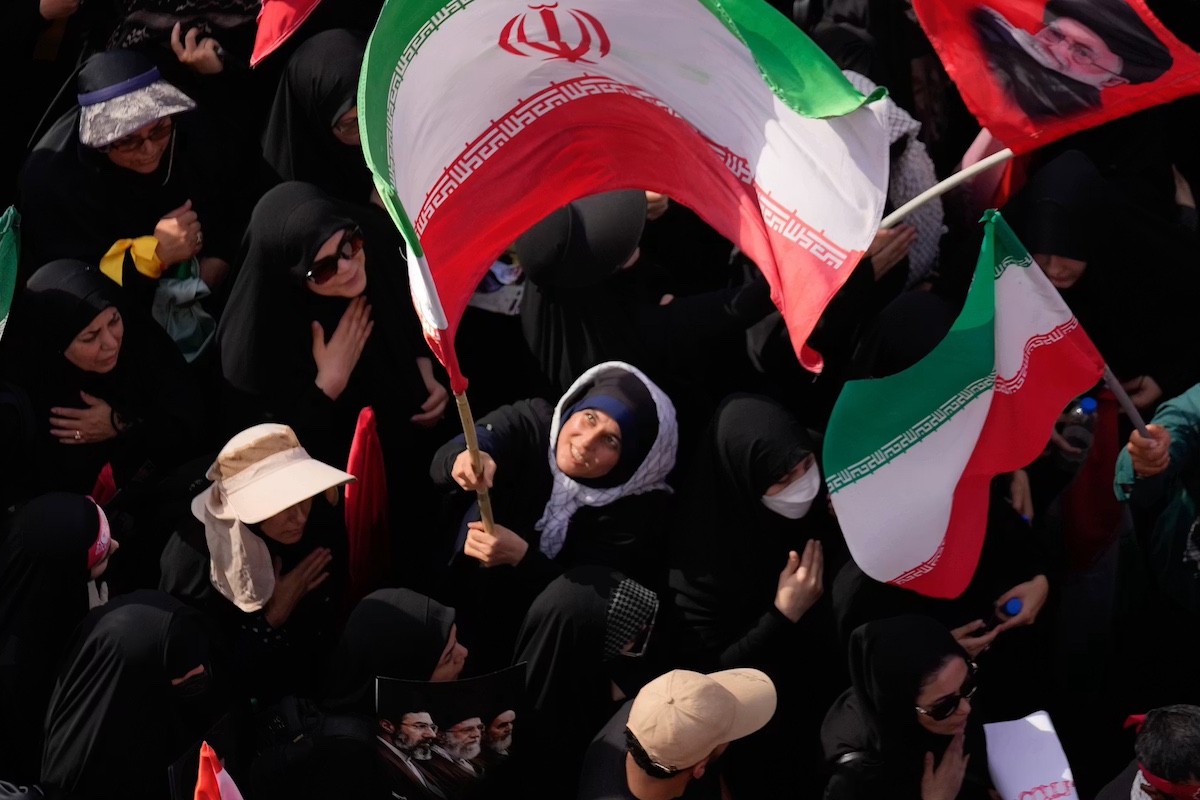
    For Iran, the opposite dynamic holds: the regime boasts unwavering political resolve to assert its regional dominance and ensure its own survival. Since the outbreak of the current war that saw key Iranian political and military leaders killed early on, the regime has grown increasingly hardline and militaristic, with the Islamic Revolutionary Guard Corps (IRGC) cementing its grip on national power. Ideologically driven, strategically shrewd, and willing to use ruthless tactics to achieve its aims, Tehran has prioritized demonstrating its control over the strait over the economic benefits it would gain from concessions, including a promised $300 billion post-conflict reconstruction fund and relief from crippling international sanctions. To enforce its claims, Iran has deployed low-cost, effective tactics including weaponized drones and fast attack craft to threaten civilian shipping, a strategy that lets it assert control without matching U.S. military power. Even so, Iran’s greatest vulnerability remains its fragile economy, which has already suffered massive damage from months of conflict and could not withstand a prolonged U.S. blockade or sustained air campaign against critical infrastructure.

    Domestic political pressures on both sides have further pushed the truce toward collapse. In Iran, any leader that entertains talks with the U.S. or makes concessions on the Strait of Hormuz risks being branded a traitor by hardline IRGC factions, a danger highlighted by historical precedents: the 1981 assassination of Egyptian President Anwar Sadat and the 1995 assassination of Israeli Prime Minister Yitzhak Rabin, both killed for making peace deals with rivals deemed unacceptable by domestic hardliners. For Trump, domestic opposition rules out a return to full-scale all-out war, but pressure from foreign policy hardliners in the U.S. who oppose walking away from the conflict without progress on Iran’s nuclear program and leaving Tehran in full control of the strait has forced his hand to launch retaliatory strikes after Iran’s attacks on shipping. Analysts point out that Trump significantly underestimated Tehran’s commitment to asserting regional dominance and control over the strait, relying instead on the promise of economic benefits to force compliance with the memorandum.

    Looking ahead, the most likely outcome is not a return to the all-out full-scale war that preceded the April ceasefire, nor is a lasting permanent peace agreement on the horizon. Instead, the region is set to return to the precarious status quo that held between the April 8 initial ceasefire and the June 17 memorandum: a frozen conflict that falls below the threshold of all-out war, but offers no path to substantive peace. Over the coming months, experts expect tit-for-tat strikes to continue, with the Strait of Hormuz remaining partially closed and maritime security in the waterway highly uncertain.

  • ‘One of the most special’: Trent Robinson’s high praise for milestone man Daniel Tupou,

    ‘One of the most special’: Trent Robinson’s high praise for milestone man Daniel Tupou,

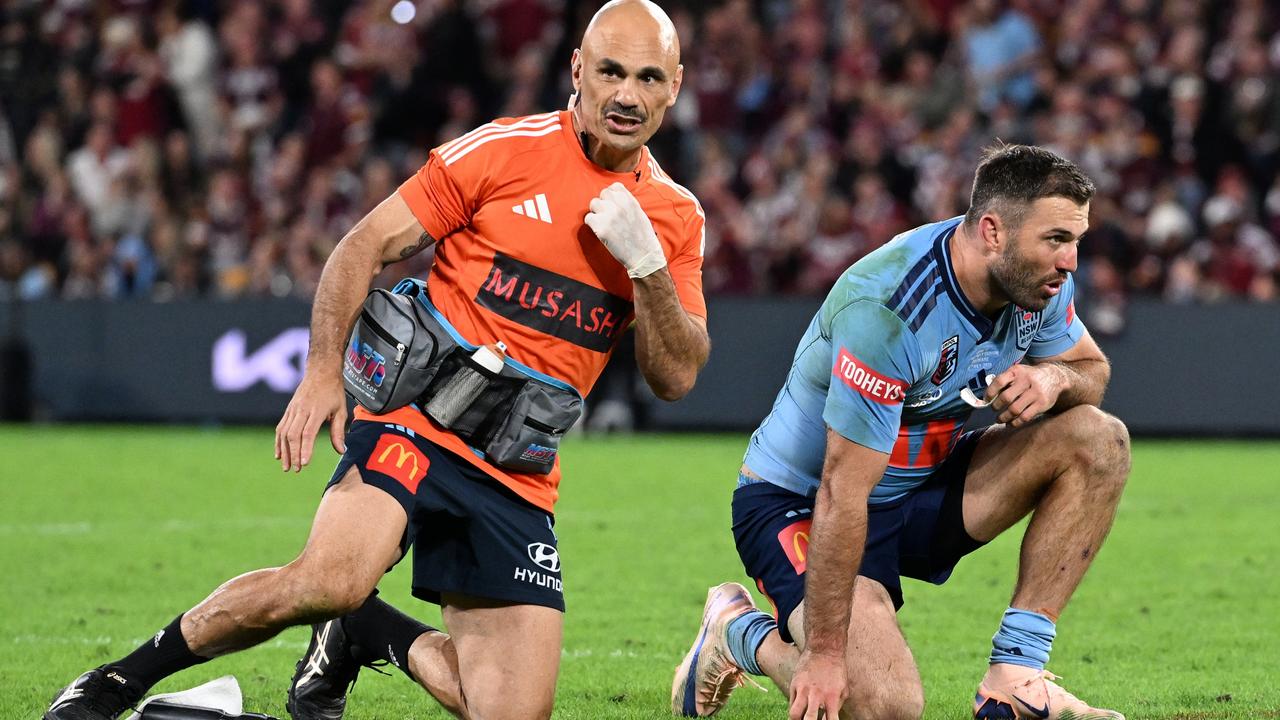
    The Sydney Roosters will head into one of the most anticipated home matches of their National Rugby League (NRL) season this Saturday significantly understrength, with three of their biggest State of Origin representative stars sidelined for the clash against the Parramatta Eels – a fixture dedicated entirely to celebrating legendary winger Daniel Tupou’s entry into the exclusive 300-game club.\n\nCaptain James Tedesco was ruled out of the contest days before kickoff after failing a mandatory head injury assessment during Queensland’s State of Origin decider on Wednesday night. Joining Tedesco on the sidelines are fellow Origin representatives Reece Robson and Sam Walker; while the pair were initially listed as emergency reserves when the Roosters released their first team sheet, head coach Trent Robinson confirmed pre-match that the decision to rest the young Walker was locked in before the final Origin fixture, to give the rookie playmaker adequate recovery time after his first senior representative series.\n\nRobinson has kept fans and opponents guessing over who will step into Tedesco’s starting fullback role, revealing only that either Cody Ramsey or Rex Bassingthwaighte will get the nod. Connor Watson will shift into the starting hooker position to cover Robson’s absence, while Hugo Savala will fill Walker’s spot in the halves. Wingers Mark Nawaqanitawase and Robert Toia are confirmed to start unless any last-minute fitness issues arise.\n\nDespite the disruption of losing three key stars, the entire club is focused on honoring Tupou, who will become just the fifth player in Roosters history to hit the 300-game milestone for the franchise. The 35-year-old winger, who made his NRL debut back in 2012 – one season before Robinson took over as head coach – has built one of the most storied careers in modern rugby league. A three-time NRL premiership winner, Tupou has already crossed for 191 first-grade tries, a total that only league legends Alex Johnston and Ken Irvine have surpassed in the history of the competition. Remarkably, he has scored a try in 145 of his 299 appearances to date, and is widely regarded as one of the most dangerous aerial finishers the game has ever seen.\n\nSpeaking ahead of the milestone match, Robinson paid tribute to Tupou’s career, highlighting the winger’s quiet humility, consistent toughness and selfless approach to his role that have defined his 12-year career in first grade. \n\n“For him to play 300 games is just so special. The humility at which he’s played those 300 games (is a standout), but there’s a hardness about him. There’s a consistent hardness about the way that he plays the game,” Robinson said. “Playing left wing is a tough position to play, and there’s a selfless nature to it as well. I have a whole mix of emotions with ‘Toops’, but I’m really proud of the player he is and the man that he is, and we’ll honour him [on Saturday].”\n\nTupou’s career is dotted with iconic match-defining plays that have secured premiership glory for the Roosters: his soaring, acrobatic try in the 2013 grand final decider remains one of the most replayed moments in recent NRL history, and his line break in the 2019 decider created the match-winning try for Tedesco. But Robinson says it is Tupou’s consistent willingness to do the unglamorous, high-effort work that few other players want that makes his achievement so remarkable.\n\n“There are moments like those that define who Toops is to everybody. But it’s the play-the-ball a metre off your own line and Toops comes around without hesitation and takes that carry,” Robinson said, noting that Tupou is consistently one of the first players at training every day despite living 45 minutes away from the club’s facility. “It’s the number of times that he’s done that, the number of try saves that he’s had in the corner, the number of supports that he’s had for all the really great centres that he’s played with that create a platform to have those moments.\n\n“That’s the story of a player – how do you do the hard stuff that I spoke about before on a consistent basis? The selfless stuff, the stuff that people overlook, to then play long enough to create those moments and finish those moments. Toops has been amazing at all the work that happens from your zero-metre line to your 20-metre line, both in attack and defence. He’s lived in that area, and then he’ll go down the other end and finish off those moments as well. That’s the mark of a man. I don’t like to rank players around what they do for 80 minutes. But Toops, in my time, is one of the most special people that I’ve ever got to coach.”

  • Saudi Arabia and UAE cross-border trade faces delays amid tensions: Report

    Saudi Arabia and UAE cross-border trade faces delays amid tensions: Report

    Longstanding neighbors and once-close partners in the Gulf Cooperation Council (GCC), the United Arab Emirates (UAE) and Saudi Arabia are seeing mounting geopolitical and economic tensions spill over into the business sector, bringing significant disruptions to cross-border commerce and financial transactions. Multiple independent reports published in recent weeks have confirmed that delays at the primary land crossing connecting the two nations have stretched into days, and in some extreme cases, more than a week, leaving commercial truck drivers stranded without clearance to enter Saudi territory.

    Media outlet Semafor first reported Thursday that wait times for border crossing have steadily worsened over the past several months, with some drivers forced to camp out under their vehicle trailers for up to seven days while awaiting administrative approval to proceed. These trade disruptions follow weeks of unconfirmed reports of blocked and delayed bank transfers originating from Saudi institutions and bound for UAE-based accounts, a situation that was corroborated this week by reporting from the *Financial Times*. According to the *Financial Times*, payments from Saudi banks to corporate and personal accounts held by Dubai-based individuals and companies have been either returned to senders or put on indefinite hold since May, with most affected parties receiving no official explanation for the disruption.

    The emerging pattern of trade and financial friction echoes the opening stages of the 2014 Gulf rift that saw Saudi Arabia and the UAE lead a years-long economic and diplomatic blockade of Qatar, a crisis that reshaped regional alliances for a decade. Today, the shifting landscape of Middle Eastern geopolitics has flipped traditional alignment patterns, with Saudi Arabia now moving closer to Qatar, Turkey, Pakistan, and Egypt, while the UAE has diverged from Riyadh’s policy agenda and deepened its strategic partnership with Israel.

    Geopolitical disagreements have played out openly across multiple regional conflicts in recent months. The two Gulf powers back opposing factions in Sudan’s ongoing civil war, while in Yemen and Somalia, the UAE has provided open support to secessionist movements that Saudi Arabia openly opposes. Tensions over Yemen boiled over into open crisis last December, when the UAE-backed Southern Transitional Council (STC) launched a major offensive against forces aligned with Saudi Arabia. Riyadh responded with direct airstrikes targeting STC positions, forcing the UAE to withdraw its military personnel from the country.

    Beyond geopolitics, the two nations are increasingly direct economic competitors as both pursue ambitious growth and diversification agendas. The most high-profile public split came in May, when the UAE withdrew from the Saudi-led OPEC production bloc over long-running disagreements about mandatory oil output limits. As the largest economy in the Arab world, Saudi Arabia has accelerated its push to diversify beyond oil dependence, investing heavily in expanding its presence in global critical minerals markets, international tourism, and regional logistics networks — sectors that have long been core strengths of the UAE’s open economy.

    This is not the first time trade frictions have emerged between the two GCC members. While the GCC has maintained a regional free trade agreement for decades, Saudi Arabia implemented new rules in 2021 that stripped products manufactured in UAE free trade zones of preferential tariff treatment. The UAE hosts more than 45 dedicated free trade zones across the country, including the massive Jebel Ali Port, one of the busiest cargo hubs in the Middle East. Under the 2021 rules, Saudi authorities began targeting goods bearing a “Made in the UAE” label that Riyadh determined did not meet requirements for local production value addition.

    The regulatory crackdown also coincided with a sustained Saudi campaign to pressure multinational corporations to relocate their regional headquarters from traditional bases in Dubai to Riyadh, as part of the kingdom’s Vision 2030 economic transformation plan. Analysts note that the ongoing trade and banking disruptions represent the most tangible sign of how deep the rift between the two once-close allies has become, raising questions about the future cohesion of the GCC and the stability of cross-border commerce across the Gulf region.

  • With Graham Platner’s exit from Senate race looming, Democrats line up to replace him

    With Graham Platner’s exit from Senate race looming, Democrats line up to replace him

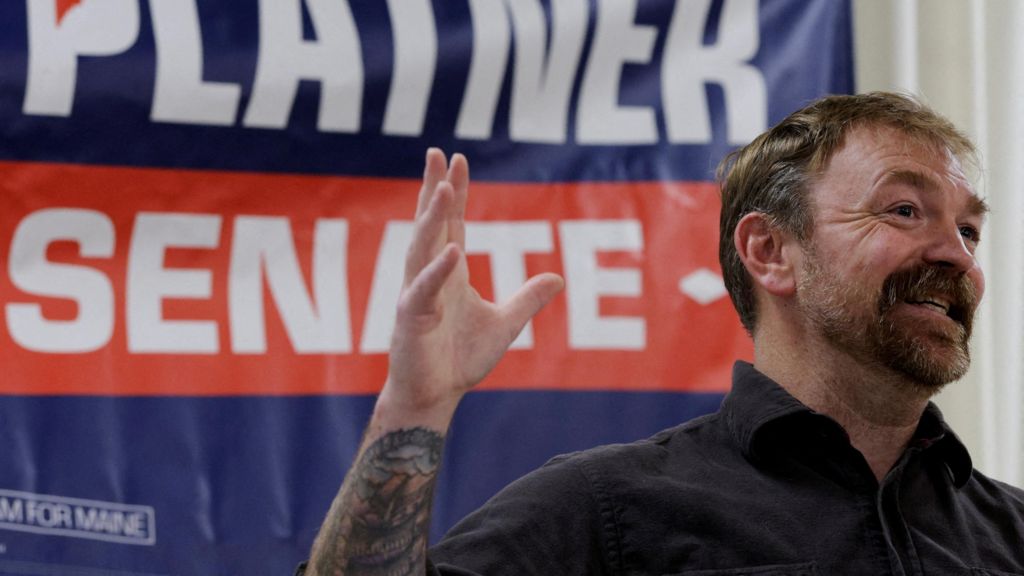
    The fight for Maine’s critical U.S. Senate seat has been upended by the expected exit of Democratic candidate Graham Platner, who suspended his campaign following public misconduct allegations, leaving state Democrats scrambling to name a replacement ahead of November’s general election against Republican incumbent Susan Collins.

    Platner, who won Maine’s Democratic primary earlier this year running as an outsider with populist policy positions, had been plagued by ongoing misconduct claims throughout his general election campaign. In an 11-minute video announcing his campaign suspension, Platner said he would formalize his withdrawal only once he verifies that the Maine Democratic Party will run an open, transparent candidate selection process. That formal withdrawal is required by a July 13 deadline, just days away from Platner’s announcement, and the party must select a new nominee by July 27.

    The race is widely viewed as make-or-break for national Democrats, who are targeting a longshot takeover of Senate control in November. To flip the majority from Republicans, Democrats must unseat Collins — the longest-serving Republican woman in Senate history — hold every one of their current Senate seats, and pick up three additional seats nationwide. A win in Maine is non-negotiable for Democrats to achieve this majority, which they say would let them push back against the policy agenda of President Donald Trump.

    Even before Platner officially confirmed his exit, a crowded field of Democratic hopefuls has already stepped forward to declare their candidacy for the open nomination.

    Among the early contenders is Nirav Shah, a public health expert who narrowly missed the Democratic gubernatorial nomination in Maine earlier this year. Shah has centered his campaign on the urgent goal of defeating Collins, and called for a transparent selection process that includes at least one televised debate and multiple public town halls to let voters weigh in on the contenders.

    Former state senator Troy Jackson, a former logger who also ran in this year’s gubernatorial primary, has also entered the race. Jackson has close ties to Platner: he appeared alongside the former candidate at dozens of campaign events, and he has the implicit backing of Platner’s most prominent national ally, left-wing Vermont Senator Bernie Sanders. Jackson ultimately placed third in this year’s gubernatorial primary.

    Jordan Wood, a former U.S. House staffer who unsuccessfully sought the Democratic nomination for a Maine U.S. House seat earlier this year, has switched races to run for the open Senate nomination. Wood has pledged to run a grassroots-funded campaign, rejecting all corporate and lobbyist donations entirely.

    Maine Secretary of State Shenna Bellows officially launched her campaign Thursday. Bellows, who also ran in this year’s gubernatorial primary, previously challenged Collins in 2014 and lost. In her announcement, she pledged to unify Maine Democrats and run a campaign centered on working-class interests, focused on overturning the current political system that she says fails most Americans.

    Dan Kleban, founder of the popular Maine Beer Company, who suspended his own initial Senate campaign last year, re-entered the race Wednesday ahead of Platner’s announcement. Kleban, who frames himself as a non-career politician, noted he built his small business from a kitchen table operation into a major employer that now supports more than 100 Maine workers.

    While speculation has swirled around a potential bid from former Democratic gubernatorial candidate Janet Mills, who suspended her primary campaign once Platner gained momentum, it remains unclear whether Mills — who was backed by Senate Democratic leadership as an establishment-friendly candidate — will rejoin the race. Meanwhile, celebrity speculation around actor Patrick Dempsey, best known for his role on *Grey’s Anatomy*, was put to rest when the Maine native wrote an opinion piece ruling out a run, saying he can best contribute to public service through his existing work. Local media also report that Platner has encouraged state legislator Valli Geiger, a close supporter, to enter the race, but he has not issued a formal endorsement of any candidate to replace him.

    All contenders are walking a careful political line: they must embrace the populist policy positions that drove Platner’s primary win, while also proving they have the experience and campaign infrastructure to take on Collins’ well-funded, well-established political operation.

    Maine Democrats are moving forward with plans to select a new nominee via a party convention attended by roughly 600 delegates, but the party faces a tight timeline: once a nominee is selected, they will have just four months to unify the party and build voter support ahead of the November election. Despite the last-minute disruption, state party leaders struck an optimistic tone in a post-suspension statement.

    “There is an unprecedented amount of energy and enthusiasm among Maine Democrats, driven in part by many of the dedicated volunteers and supporters who were inspired by Graham Platner’s campaign,” the party said. “We look forward to coming together and harnessing that energy around our new nominee as we work to defeat Susan Collins in November.”

  • Encrypted VIP phone network allegedly used by crims smashed

    Encrypted VIP phone network allegedly used by crims smashed

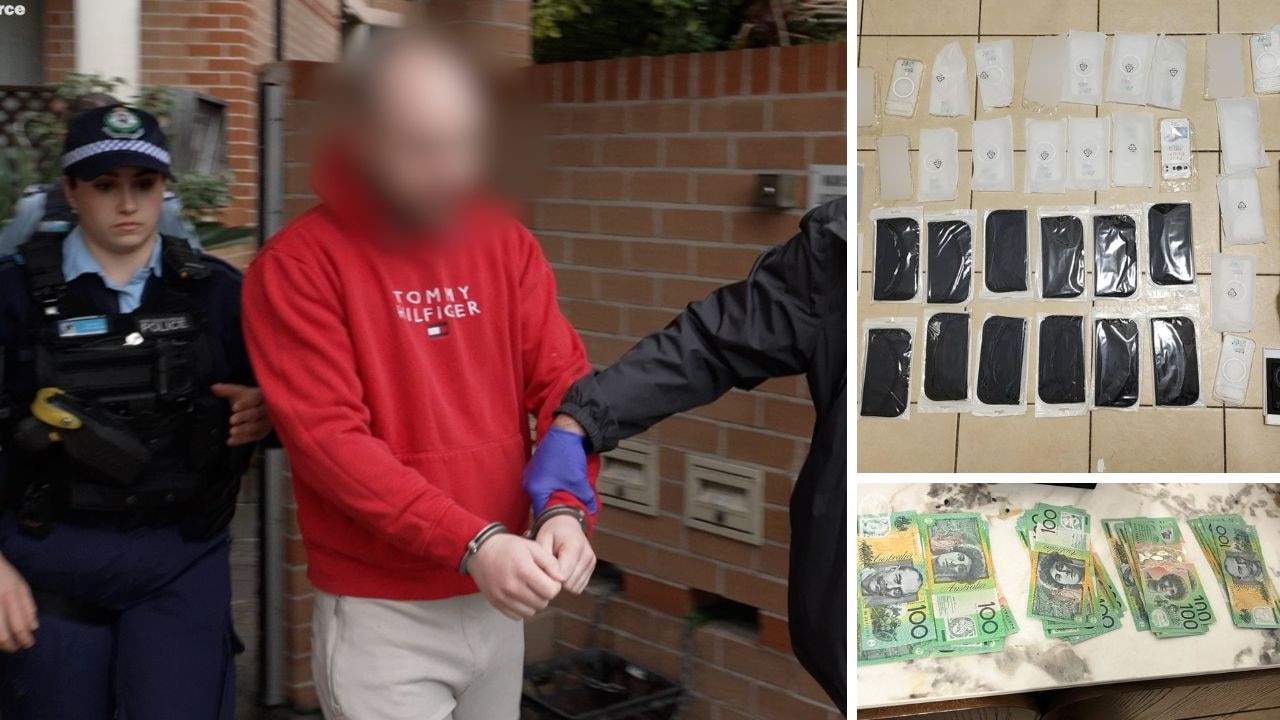
    In a major crackdown on transnational organized criminal activity in New South Wales, Australian law enforcement officials have successfully shut down an encrypted mobile phone network that prosecutors allege was purpose-built to help criminal syndicates plan murders, coordinate drug trafficking operations, and conceal other illegal enterprises.

    The investigation, codenamed Strike Force Harskamp, was launched in April 2025 after authorities received intelligence that the network’s operators were importing unencrypted communication devices from international suppliers, modifying them with custom encryption software, and reselling the secured handsets to criminal groups across the state of NSW.

    According to allegations laid out by detectives, the criminal ring operated the scheme as a full-fledged commercial enterprise, generating more than $2 million in annual revenue from the sale of roughly 1,000 encrypted devices each year to criminal clients.

    Over the course of the multi-week operation, law enforcement carried out a series of coordinated raids across Sydney. In searches conducted throughout the past month in the Sydney suburbs of Botany and Banksmeadow alone, investigators seized more than 60 encrypted devices and related accessories. Three additional properties searched on Thursday morning in Kogarah, Bexley, and Rockdale yielded an extra 35 devices, nearly $35,000 in untraceable cash, and a collection of high-value luxury watches.

    Three men, aged 25, 26, and 29, were taken into custody at the properties on Thursday. They have each been charged with a slate of criminal offenses, including participating in a criminal group and contributing to criminal activity, recklessly handling proceeds of crime valued at more than $5,000, and aiding and abetting possession of a designated encrypted communication device for the purpose of committing serious criminal offenses.

    Speaking on the outcome of the operation, Organised Crime Squad Commander Peter Faux confirmed that investigators have so far traced more than 3,000 devices distributed by the so-called “VIP Organised Crime Network” for use in illegal activity. All recovered devices will be integrated into the ongoing investigation to identify end users and uncover additional details about the crimes they were used to facilitate.

    “This operation has struck at the heart of a criminal network that was allegedly deliberately arming organised crime groups with the tools to conceal their offending,” Faux said. “By dismantling this network, detectives have removed a key enabler of organised crime in NSW and reaffirmed our commitment to disrupting those who believe they can hide behind technology.”

    The investigation remains ongoing, with additional arrests and charges expected as detectives work through evidence collected during the raids.

  • What to know about ‘explosive diarrhoea’ parasite outbreak in US

    What to know about ‘explosive diarrhoea’ parasite outbreak in US

    A widespread outbreak of the diarrhoea-causing parasitic infection cyclosporiasis has swept across more than a dozen U.S. states in recent months, driving a sharp spike in reported cases and prompting public health alerts from local and federal agencies.

    Cyclosporiasis, an intestinal infection triggered by the microscopic Cyclospora parasite, is primarily contracted through the consumption of food or water contaminated with the pathogen. The most defining symptom of the infection is frequent, watery, and often explosive diarrhoea. While the illness is rarely fatal, it can linger for weeks if left untreated, and symptoms may reoccur after initially fading, with an average incubation period of around one week after exposure. Unlike many common infectious diseases, the infection cannot spread directly between people; transmission only occurs via the faecal-oral route through contaminated food or water, according to Dr. Caitlin Rivers, an epidemiologist from the Johns Hopkins Center for Health Security.

    The U.S. Centers for Disease Control and Prevention (CDC) has confirmed that outbreaks have been documented across 17 states since early May, including large population states such as Illinois, New York, and Texas. Between May 1 and June 16, the latest window for which the CDC has released aggregated national data, 145 confirmed cases were reported nationwide, with 20 patients requiring hospital admission. No fatalities linked to the current outbreak have been recorded to date.

    State-level data compiled in early July tells a far starker picture of the outbreak’s spread, with case counts far outpacing the CDC’s aggregated national figures. As of July 8, Michigan alone had recorded nearly 1,000 confirmed cyclospora cases within a single two-week period, making it the epicenter of the ongoing outbreak. Neighboring Ohio has reported 177 cases, while Illinois logged 141 cases by July 7 — a number state health officials described as “higher-than-average” compared to typical seasonal infection rates.

    Public health experts note that the actual number of infections across the country is almost certainly higher than official counts. Many people with mild cases recover at home without seeking medical care, meaning their infections are never officially diagnosed or reported.

    Investigators have not yet identified the specific source of the current outbreak, a common challenge in cyclospora investigations, according to health experts. Contamination of fresh produce typically occurs at the farm level, often during irrigation or pre-harvest handling, which makes tracing the source of the pathogen difficult. Past outbreaks of cyclosporiasis in the U.S. and Canada have been linked to contaminated raw produce including pre-packaged bagged salad mixes, fresh cilantro, basil, raspberries, snow peas, and green onions. To date, no specific produce variety, grower, or supplier has been tied to the current outbreak.

    In response to the rising case counts, Michigan’s state health department has issued guidance for food service operations, urging restaurants and commercial kitchens to reduce infection risk by thoroughly washing leafy greens, cooking raspberries and leafy greens when possible, and discarding the outer layers of lettuce and green onions before serving. This guidance comes amid a minor divergence in federal recommendations: while the U.S. Food and Drug Administration notes that rinsing produce alone is rarely effective at removing Cyclospora, the CDC still maintains that thorough washing is a recommended precaution.

    For members of the public, health officials are urging anyone experiencing persistent watery diarrhoea to contact a healthcare provider to get tested for the infection, even as they emphasize that the illness remains far less common than other foodborne pathogens such as salmonella and E. coli.