博客

  • Australian workers staying put as ‘quits rate’ falls amid cost-of-living crisis

    Australian workers staying put as ‘quits rate’ falls amid cost-of-living crisis

    Australia’s once red-hot post-pandemic jobs boom has entered a clear cooling phase, new wage and labor market data from Commonwealth Bank of Australia shows, leaving many workers with nominal pay increases that still fail to keep pace with the rising cost of living. With growing economic uncertainty pushing more employees to stay in their existing roles rather than seek new opportunities, labor economists warn the market will continue loosening through the middle of the decade, with implications for both inflation and Reserve Bank of Australia (RBA) interest rate policy.

    One of the key indicators tracked in the bank’s latest analysis is the voluntary quits rate, a closely watched metric that measures the share of workers leaving their jobs on their own accord. That rate has continued a steady decline from its 2022 peak, signaling growing worker caution as job opportunities become less abundant. “Overall, the data supports our broader view that the labour market continues to loosen gradually but remains a little too tight for comfort for the RBA,” explained Commonwealth Bank economist Harry Ottley. Looking ahead, Ottley projected that the gradual softening will continue through 2026, with the national unemployment rate expected to drift higher over the coming years. This slow rebalancing of the labor market is forecast to help bring overall inflation back down to the RBA’s target range over time.

    The findings come on the heels of comments from RBA chief economist Sarah Hunter, who earlier this week emphasized that future interest rate moves will depend heavily on household inflation expectations. Hunter noted that if consumers settle into persistent backward-looking inflation expectations, the central bank may need to tolerate a period of slower growth and higher unemployment to pull expectations back to sustainable levels. She tied the current inflation challenge directly to the post-pandemic labor market: after COVID-19 lockdowns lifted, Australia’s unemployment rate dropped to a near-record low of 3.5%, a tightness that contributed to the sharp acceleration in inflation seen over the past few years.

    Official labor data shows the unemployment rate has ticked gradually higher over the past three years, reaching 4.4% in May 2024, down slightly from 4.5% in April. April’s reading was the highest unemployment rate recorded in Australia since 2021. Even with this upward trend, Australia’s labor market still outperforms most advanced economies: the Organisation for Economic Co-operation and Development (OECD) reports an average unemployment rate of 4.9% across its member nations, half a percentage point higher than Australia’s current figure.

    For Australian households, the biggest ongoing strain is the gap between wage growth and inflation. The Commonwealth Bank data confirms that recent pay increases have fallen below the rate of inflation, effectively eroding household purchasing power even as nominal wages rise. In the three months ending June 2024, quarterly wage growth hit 0.8%, with annual wage growth holding steady at 3.1% – a rate that has not kept up with ongoing inflation, and shows no sign of accelerating to match rising prices.

    Despite the current pressures on cash-strapped working households, Ottley pointed to one potential near-term bright spot. The recent 4.75% increase in Australia’s minimum and Award wages is expected to push third-quarter wage growth higher, and the bank is forecasting a 1.0% increase in the Wage Price Index for Q3 2024. An early estimate of this trend will be released in next month’s CBA Wage and Labour Insights report, which will give policymakers and workers a clearer picture of how the labor market is evolving.
  • Nvidia chips, soybean orders signal thaw before Xi-Trump summit

    Nvidia chips, soybean orders signal thaw before Xi-Trump summit

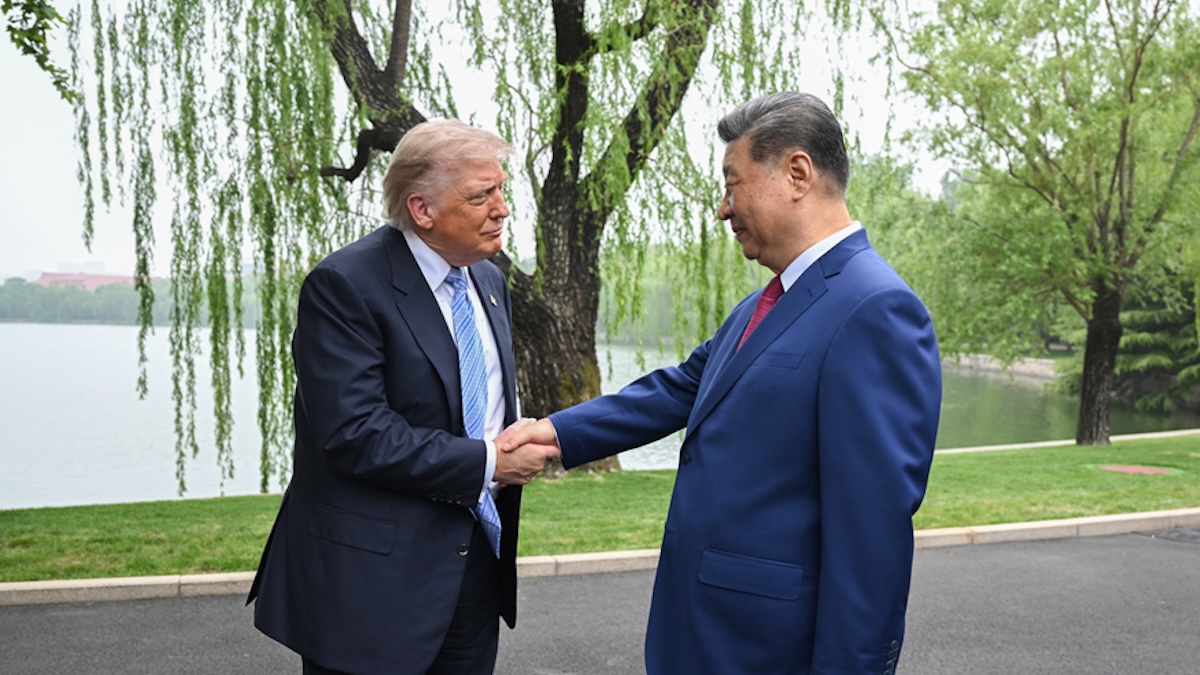
    As anticipation builds for a planned meeting between Chinese President Xi Jinping and U.S. President Donald Trump on the sidelines of the upcoming United Nations General Assembly in New York, Beijing has rolled out a series of confidence-building overtures to Washington, spanning technology, agriculture and diplomatic goodwill.

    The most high-profile of these steps is Beijing’s preliminary approval for Chinese technology giants including Alibaba and ByteDance to import Nvidia’s H200 artificial intelligence processors, according to reporting from technology outlet The Information. While initial discussions have floated a potential ceiling of 200,000 units, industry insiders note the final approved quota is likely to land below that figure — less than half of the total volume domestic Chinese firms requested earlier this year. Chinese regulators have also mandated that all imported H200 chips must be reserved exclusively for training cutting-edge AI models, with routine inference operations required to rely on domestically manufactured alternatives.

    Though the H200 is two generations behind Nvidia’s current top-tier flagship chips, industry analysts point out it still outperforms existing Chinese-designed AI processors. A limited allocation of H200 imports will not fully close China’s gap in high-end computing capacity, but it will ease near-term supply pressures and accelerate the development of domestic large language models, a columnist for Chinese technology news site PCPop.com explained.

    The path to H200 imports has been months in the making. Trump first approved H200 exports to China last December, and Reuters reported as early as January that ByteDance, Alibaba and Tencent had already secured preliminary clearance to purchase a combined 400,000 units. However, no chips were shipped in the first half of 2026, after Beijing encouraged domestic firms to prioritize homegrown semiconductor development, creating widespread uncertainty in the market. That uncertainty prompted Nvidia CEO Jensen Huang to join Trump on Air Force One for a diplomatic visit to China in mid-May to push for progress on the issue.

    Many global affairs observers frame Beijing’s latest greenlight for partial H200 imports as a conciliatory gesture amid escalating U.S. chip export restrictions. In late May, the U.S. Commerce Department moved to close a longstanding loophole that allowed Chinese firms to acquire advanced Nvidia chips through overseas subsidiaries based in Singapore and Malaysia. The new rules require a government license for any export of advanced AI processors to entities ultimately controlled by Chinese headquarters, a restriction that also applies to rival chipmaker AMD.

    Beyond the semiconductor space, Beijing has made two additional notable goodwill moves to warm bilateral ties ahead of the planned leadership meeting. At Trump’s request, China released detained Chinese pastor Kim Myeongil, who led the country’s largest evangelical underground church before his arrest in October 2024, and allowed him to travel to the United States, a U.S. official confirmed.

    In agriculture, Chinese state-owned grain trader CofCO has booked at least six cargoes of U.S. soybeans for shipment between September and October 2026, Bloomberg reported. U.S. Department of Agriculture data later showed Beijing purchased 472,000 metric tons of U.S. soybeans in a single daily transaction — the largest single-day volume of soybean sales to China since November 2025. These purchases align with pledges Xi made during a May summit with Trump in Beijing, where the two leaders agreed to expanded U.S. agricultural imports to China, alongside tighter fentanyl enforcement, increased Chinese rare earth exports to the U.S., and a Chinese commitment to purchase 200 Boeing commercial aircraft.

    Discussions to expand low-risk trade cooperation are also advancing. The two countries announced in late June that they would establish a new bilateral trade council focused on agricultural cooperation, with plans to roll out reciprocal tariff cuts for roughly $30 billion worth of non-sensitive goods on both sides. Under the proposed framework, China will increase imports of U.S. beef, fruit and grain, while the U.S. will ease import restrictions on Chinese dairy products, ornamental potted plants, aquaculture goods and poultry. A columnist for China’s Commerce Ministry-run International Business Daily noted that while $30 billion is a small share of overall bilateral trade, starting with agricultural goods creates a pragmatic pathway to expand tariff liberalization in future negotiations. The U.S. has already extended a one-year truce in the bilateral tariff war that keeps U.S. levies on Chinese goods at roughly 30% through November 10, 2026.

    Trump announced Monday that the meeting with Xi is on track to take place around September 24, coinciding with the UN General Assembly session in New York. Trump tied the planned visit to his push for a new White House ballroom, citing the expected high-level visit as a key justification for the construction project. Trump is scheduled to address the General Assembly on September 22, and typically remains in New York for several days to hold bilateral meetings with other global leaders; Xi has only attended the UN General Assembly once since taking office in 2012.

    Not all outstanding bilateral issues have been resolved ahead of the meeting: Trump has raised the case of Jimmy Lai, the jailed Hong Kong media mogul, but Beijing has not agreed to release him. Tensions also remain over the proposed $14 billion U.S. arms sale to Taiwan, which includes High Mobility Artillery Rocket Systems, howitzers, Javelin anti-tank missiles, loitering munitions and Army Tactical Missile Systems.

    During a late June call between Chinese Foreign Minister Wang Yi and U.S. Secretary of State Marco Rubio, Wang explicitly warned that the Taiwan issue is a core red line for Sino-U.S. relations, urging Washington to approach the topic with extreme caution. “Both sides should always uphold the spirit of equality, respect and mutual benefit, and translate the consensus reached by the two heads of state into concrete policies,” Wang stated during the call. “To do so, both sides need to expand the cooperation list and create a more positive agenda, while narrowing the list of problems and managing various risks. A slight move on the Taiwan issue could affect the whole situation.”

    U.S. officials have offered conflicting updates on the arms sale: acting U.S. Navy Secretary Hung Cao said in late May that the sale was being paused to reallocate weapons to the ongoing conflict with Iran, but Rubio clarified during a House Foreign Affairs Committee hearing in early June that the sale has not been halted, remains under review, and that U.S. policy toward Taiwan remains unchanged.

  • Hong Kong eateries welcome dogs as city relaxes ban

    Hong Kong eateries welcome dogs as city relaxes ban

    After nearly 30 years of strict restrictions, Hong Kong has rolled out a landmark policy change that opens the doors of hundreds of local eateries to domestic dogs, marking the city’s most visible step yet toward building a more inclusive, animal-friendly community.

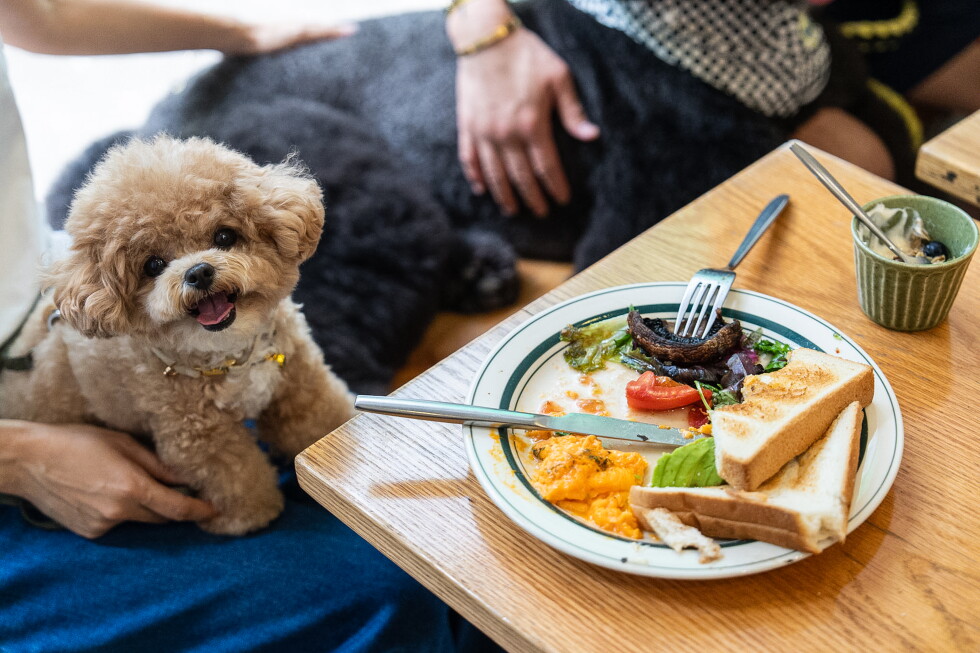
    Since 1994, Hong Kong’s food safety regulations only permitted service animals such as guide dogs and working dogs on official duty inside restaurant dining areas. That rule officially changed on Thursday, when the first phase of the relaxed policy went into effect, granting access to dogs at more than 900 government-approved food establishments across the city. This update is part of a broader series of reforms to accommodate pet owners across the region: in recent years, Hong Kong has already allowed pets on select ferry routes and rural metro lines, and public hospitals now permit supervised pet visits for palliative care patients to support patient well-being.

    Official government data underscores the growing need for pet-inclusive policies: more than 240,000 households across Hong Kong, roughly 9% of all private households in the city, own more than 400,000 cats and dogs combined, making pet-friendly public spaces an increasingly urgent public demand.

    For local business owners and pet parents, the change has been widely welcomed. Kelvin Chan, owner of Wan Land Cafe, was quick to display a new dog-friendly welcome poster at his establishment. Before the rule change, Chan could only allow dogs in his cafe’s outdoor seating area, a restriction that proved particularly uncomfortable for four-legged visitors during Hong Kong’s hot, humid summer months. Though Chan does not expect the policy to drive a dramatic surge in customer numbers, as a dog owner himself, he frames the change as a critical step toward shifting cultural attitudes. He acknowledges that the adjustment may feel challenging for diners unaccustomed to sharing dining spaces with dogs, but he hopes that responsible behavior from pet owners will gradually help non-pet owners embrace the shift. “Inclusivity for pets is a progressive move, and it could become a normal part of our daily lives,” Chan explained.

    Franco Li, a regular customer at Wan Land Cafe who owns a Shiba Inu named Piku, says the new rule has already transformed his routine. Now, Piku can join Li at the dining table and socialize with other dog companions during outings. “This is such a great step forward for civilization,” Li said while holding Piku in his arms.

    To help dogs adapt to their new dining environment, many owners have turned to specialized training ahead of the policy change. Heyton Lee, a professional dog trainer with 19 years of experience, saw a sharp increase in demand for his dog dining etiquette workshops in the weeks leading up to the policy launch. His two-hour training programs simulate full restaurant settings, walking owners through how to help their dogs stay calm in busy social spaces, avoid overexcitement when encountering other dogs, and get comfortable with passersby. Lee also teaches hand signals to reinforce good behavior, noting that dogs that spend most of their time at home often become nervous or defensive in public when unfamiliar people approach. The core goal of the training, he says, is to help dogs integrate smoothly into human public spaces.

    The new policy comes with clear rules to uphold food safety and public comfort: all dogs must be kept on a leash no longer than 1.5 meters (5 feet), held by an adult or secured to a fixed fixture. Dogs are not permitted on dining tables, and they cannot eat directly from reusable human tableware. Dogs classified as fighting breeds under local government guidelines are banned from participating restaurants entirely, and eateries are prohibited from cooking food for dogs, though they are allowed to offer pre-packaged pet treats and meals.

    Many local restaurants have invested in upgrades to welcome their new furry guests, and some business owners are optimistic the change will lift their bottom line. Old Fung Teahouse, a popular dim sum restaurant, spent more than 10,000 Hong Kong dollars (approximately $1,276 USD) on preparations: the venue installed new air purifiers, added simple partitions to create a separate dog-friendly dining zone, and offers complimentary access to pet strollers and pet-safe cleaning supplies for owners. The restaurant’s operators estimate that opening to dogs could boost their monthly revenue by as much as 15%. The proactive approach has already won praise from visitors, including Ma Ke, a tourist from mainland China. “By separating an area for dogs and their owners, this restaurant is managing the situation well, because it makes it easier for customers who are not that used to being with dogs to accept the situation,” Ma noted.

  • Tigers’ emotional Eduardo Valencia thanks family, honors Venezuela after he homers in 1st MLB at-bat

    Tigers’ emotional Eduardo Valencia thanks family, honors Venezuela after he homers in 1st MLB at-bat

    DETROIT – For 26-year-old catcher Eduardo Valencia, Thursday night at Comerica Park was more than just a long-awaited Major League Baseball debut. It was a history-making, emotion-filled moment that extended beyond the diamond, dedicated to his family and a nation reeling from devastating disaster. Called up from the Triple-A Toledo Mud Hens just hours before first pitch, Valencia became the 10th player in Detroit Tigers franchise history to hit a home run in his first career plate appearance, powering the team to a 4-1 win over the Oakland Athletics and cementing a three-game series sweep.

    The opportunity for Valencia’s promotion opened unexpectedly when Tigers All-Star catcher Dillon Dingler was sidelined by a bruised right hand, clearing a spot for the eight-year minor league veteran on the big league roster. Entering as a pinch hitter for outfielder Kerry Carpenter in the seventh inning against Oakland reliever Hogan Harris, Valencia connected on a 425-foot blast to center field, rounding out the scoring for Detroit and sending the home crowd into a roar.

    In a post-game on-field interview with the Tigers’ broadcast team, Valencia struggled to contain his emotion, his voice cracking with tears as he reflected on the years of grind that led to the milestone. “I was waiting a lot for this, for my family, for Venezuela and I’m so excited,” he said, describing his approach at the plate: “I was just thinking, like, I was trying to hit for contact. Get a good pitch, just be the most calm that I can do it. I was so excited.”

    A native of Valencia, Venezuela, Valencia made the meaning of the moment clear as he celebrated around the bases. After connecting, he pointed to the sky, pounded his chest, and gestured a heart toward his wife, who was in the stands waiting to share a victory embrace on the field after the final out. His parents were unable to travel from Venezuela for the debut, and Valencia made sure to dedicate his historic hit to the entire Venezuelan people, who are still recovering from a rare double earthquake that struck the country on June 24. The disaster has killed at least 920 people, injured more than 3,300, and left hundreds more missing and presumed dead.

    “This is for all Venezuela people,” Valencia said. “They gave me everything.”

    Valencia’s historic debut marks the first time a Tigers player has homered in their first big league at-bat since outfielder Akil Baddoo achieved the same feat on April 4, 2021. Signed by the Tigers as an 18-year-old prospect back in 2018, Valencia spent more than eight seasons climbing the ranks of the club’s minor league system, appearing in 439 minor league games before earning his first call-up. He only reached the Triple-A level last year, notching 50 games with Toledo in 2023 before posting 76 appearances with the club this season ahead of his promotion.
    After his historic home run, Valencia stayed in the game as Detroit’s designated hitter, and was hit by a pitch in his second plate appearance. Following the final out, his jubilant teammates celebrated the milestone by dousing him with a cooler of water as the remaining home crowd cheered. Still overwhelmed by the moment, Valencia summed up the experience simply: “I mean, this is so exciting. I’m just trying to help the team to win. … I was waiting a lot of time for this moment. It’s so exciting. … I can’t talk right now.”

  • Australia’s domestic Twenty20 cricket league to open its season in Chennai, India

    Australia’s domestic Twenty20 cricket league to open its season in Chennai, India

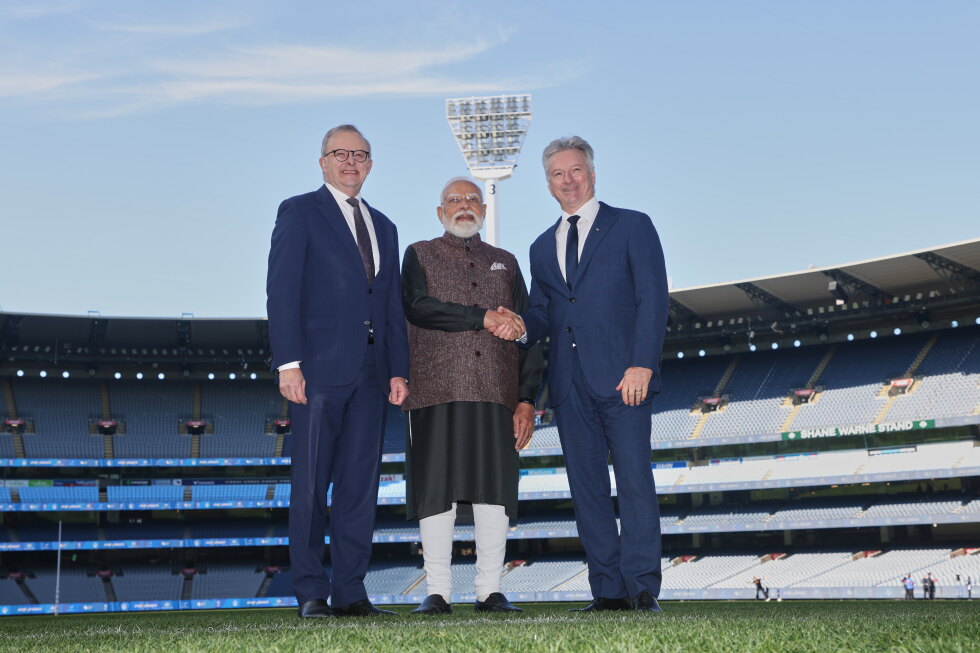
    In a landmark move that redefines the scope of Australian domestic cricket, the Big Bash League (BBL), Australia’s premier Twenty20 competition, will kick off its upcoming season with an unprecedented opening match hosted on Indian soil. The December 12 clash between the Melbourne Renegades and Perth Scorchers, set to take place at Chennai’s iconic MA Chidambaram Stadium — a venue with a 38,000-spectator capacity — was officially confirmed Friday during a special ceremony held at the Melbourne Cricket Ground.

    The announcement, co-flagged by Australian Prime Minister Anthony Albanese and Indian Prime Minister Narendra Modi, ends weeks of swirling industry speculation about the cross-border fixture. It marks the first time in BBL history that a regular season match will be contested outside of Australia, a strategic shift aimed at expanding the league’s global footprint and tapping into one of the world’s largest cricket fanbases.

    Organizers have arranged the scheduling to align with ongoing international cricket action: the evening start time of the match in Australia translates to an afternoon kickoff in India, and the fixture will get underway immediately after the conclusion of play on the fourth day of the Test match between Australia and New Zealand in Perth, Western Australia. BBL officials have expressed confidence that the historic fixture will draw a full house at the Chennai venue, capitalizing on India’s enduring passion for elite short-format cricket.

  • Twelve die in Spain wildfire as heatwave continues in southern Europe

    Twelve die in Spain wildfire as heatwave continues in southern Europe

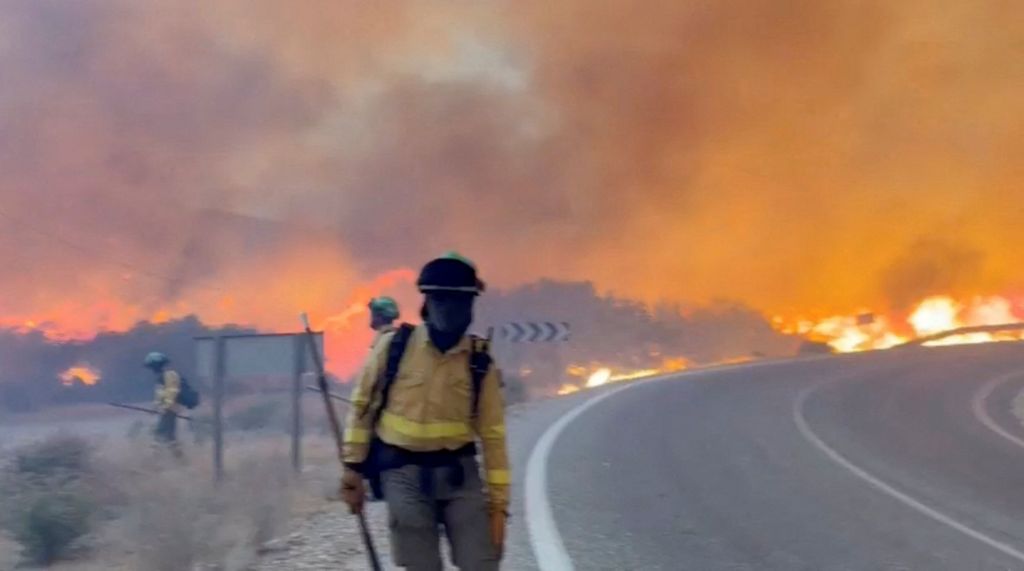
    A devastating wildfire in the southern Spanish municipality of Los Gallardos, Almeria, has claimed 12 lives and left six people injured, regional Andalusian authorities confirmed this week, marking one of the deadliest European wildfire events of the 2026 summer season.

    Initial witness accounts point to a downed power line as the likely ignition source, which sparked the blaze before it spread rapidly into nearby wooded terrain. However, regional officials have not yet formally verified the cause. Some victims were found trapped in their vehicles, overcome by flames as they attempted to flee the fast-moving fire overnight. Of the six injured, one was hospitalized for severe smoke inhalation, while another received care for burn injuries; four additional people were treated at the scene for minor burns and respiratory distress linked to toxic smoke.

    Roughly 150 local firefighters have been deployed to contain the inferno, with Spain’s elite Military Emergency Unit (UME) also activated to support suppression efforts. The fire has forced the evacuation of 1,000 local residents and triggered widespread road closures across the affected area.

    The Los Gallardos tragedy comes amid a months-long record heatwave baking Southern Europe, with persistent temperatures hovering around 40°C (104°F) creating tinder-dry conditions that have spawned hundreds of large wildfires across France, Portugal, and Spain. Thousands of people across the region have already been displaced from their homes by overlapping fire events this summer.

    Juanma Moreno, president of the Andalusian regional government, described the rising death toll as an unfathomable tragedy. “Our hearts are heavy and we are devastated by grief,” Moreno wrote on social media platform X after the final fatality count was released.

    Long-term climate data links the growing frequency and severity of Mediterranean wildfires directly to human-caused climate change. The Copernicus Climate Change Service confirms Europe is warming twice as fast as the global average, making it the world’s fastest-warming continent. Rising temperatures have amplified the intensity of summer heatwaves, strained regional water supplies, and extended high-risk wildfire seasons across the continent.

    Last year, Spain recorded its worst wildfire season in modern history, with 393,000 hectares (971,000 acres) of land burned — more than six times the 2006-2024 national average. Across the European Union, 2025 marked the worst wildfire season on record dating back to 2006, with more than one million hectares burned, an area roughly half the size of Wales. A 2025 analysis from the World Weather Attribution group at Imperial College London found that climate change has directly increased the risk of severe, large-scale wildfires across the Mediterranean basin.

    In preparedness moves ahead of this high-risk season, Spanish Prime Minister Pedro Sanchez announced in May that the country would roll out its largest-ever summer wildfire response deployment. Still, climatology and wildfire experts warn that more frequent and deadly fire events will continue to impact Europe as global temperatures rise. This June, Spain logged its highest average monthly temperatures since national record-keeping began in 1950, with forecasts calling for peak temperatures as high as 42°C (107.6°F) across parts of the country in the coming weeks.

  • ‘Wouldn’t risk it’: Raiders duo cleared to play this weekend as Sharks rule out one of their Origin stars

    ‘Wouldn’t risk it’: Raiders duo cleared to play this weekend as Sharks rule out one of their Origin stars

    Just days after New South Wales pulled off a famous State of Origin series-clinching win in Brisbane, NRL club coaches have finalized their lineups for this weekend’s round of matches, with two Canberra Raiders standouts cleared to back up just 72 hours after their decider heroics.

    Triumphant Blues pair Hudson Young and Ethan Strange will both take the field against the Canterbury-Bankstown Bulldogs in Sydney on Saturday, Canberra coach Ricky Stuart confirmed Friday, after the pair successfully pulled through fitness checks following their return from Origin camp.

    Strange entered the third and deciding Origin match under a fitness cloud, having picked up an ankle injury during Blues preparations, but still managed to come off the bench for the final 15 minutes of the series win. When questioned on the five-eighth’s availability for club duty this weekend, Stuart made clear there was no hesitation to name him in the side.

    “I wouldn’t risk it (if he wasn’t fine),” Stuart told reporters. “We haven’t really even spoken too much about it, so he’s fine to go. He got a few minutes on the field at the back end of the game, so he’ll be right to play.”

    For Young, who delivered three dominant 80-minute performances on the left edge of the Blues’ defensive line across the series, the biggest hurdle to playing this weekend was soreness from a heavy knock to the back he picked up in the decider. The young forward capped his standout series by scoring the final try of the game to seal NSW’s win, and Stuart said Young’s 2024 Origin campaign has cemented his place as a permanent elite-level representative player.

    “He was pretty sore yesterday. His three 80-minute performances were marvellous. He’s been such a high contributor to the Blues. I think he’s proven now to everyone that he’s a main-stayer at that level. He has such a high contribution and workload, his effort areas are very high off the football. It’s everything you want in an Origin player. Laurie (Blues coach Laurie Daley) showed so much confidence in him, and when you show confidence in a player and a guy like Hudson, he’ll repay you,” Stuart said.

    The Raiders also received a boost on the injury front, with Stuart confirming veteran forward Josh Papalii is a strong chance to make his return to the starting lineup this weekend, just weeks after picking up a calf injury that kept him sidelined.

    Across the other Saturday clash, Cronulla Sharks coach Craig Fitzgibbon has ruled out Queensland Maroons forward Briton Nikora for the club’s match against the Dolphins, opting to rest the standout forward after he delivered a massive workload in the Origin decider. Nikora notched an incredible 49 tackles in just 65 minutes of game time, before completing a Category Two Head Injury Assessment following a series of heavy hits.

    Fitzgibbon said the club would not take any unnecessary risks with Nikora’s health, adding that replacement Billy Burns has earned his opportunity through consistent top-tier form for the Sharks throughout the 2024 NRL season.

    “We won’t be taking a risk with Brit. It’s really simple for us the way that Billy Burns is playing at the moment. We trust Billy, and he’s been one of our better performers,” Fitzgibbon said.

    Fellow Sharks Origin representatives Blayke Brailey and Addin Fonua-Blake, who played limited minutes off the bench for NSW in the decider, have both been cleared to play against the Dolphins this weekend.

  • Erdogan gifts revolvers to Nato leaders, prompting customs and security questions

    Erdogan gifts revolvers to Nato leaders, prompting customs and security questions

    Following a recent NATO summit held in the Turkish capital Ankara, President Recep Tayyip Erdogan surprised alliance leaders with an unconventional, attention-grabbing souvenir: personalized, domestically produced Gumuşay .357 Magnum revolvers complete with live ammunition, Reuters has confirmed. The unexpected gesture was crafted as a deliberate showcase of Turkey’s rapidly expanding domestic defense manufacturing sector, which has become a central pillar of the country’s modern foreign policy and national export strategy.

    Photos released by the office of Lithuanian President Gitanas Nauseda offer a clear view of the gift: each revolver is housed in a polished wooden box emblazoned with both the Turkish national flag and the official NATO logo. A placard inside the packaging explicitly labels the Gumuşay as “the first revolver-type handgun produced in our country,” highlighting Turkey’s milestone in domestic small arms production. A spokesperson for Spanish Prime Minister Pedro Sanchez confirmed all attending leaders received the same model, engraved with their individual names to add a personal touch.

    In the days following the summit, leaders and their administrations across the alliance have navigated a patchwork of national customs regulations, gun laws, and security protocols to manage the unusual gifts, with outcomes varying widely by country. Belgian Prime Minister Bart De Wever only discovered the revolver and its ammunition in his personal luggage after returning to Brussels, and immediately surrendered the item to police at Brussels Airport for secure storage. An aide to Polish President Karol Nawrocki told local outlet Radio RMF FM that the Polish gift remains held at Warsaw Airport pending customs clearance, and will ultimately be placed in secure storage, with the aide noting “certainly no one will be shooting it.”

    The revolvers gifted to the prime ministers of the Netherlands and Sweden remain at their respective countries’ embassies in Ankara, as officials work through import requirements. The Dutch revolver is scheduled to be permanently deactivated, while the Swedish unit awaits completion of import paperwork. A Downing Street source confirmed that British Prime Minister Keir Starmer received his revolver alongside a cleaning kit and 500 rounds of ammunition; additional reports indicate Starmer was unable to bring the firearm into the United Kingdom due to strict national gun regulations, and has left the weapon in Ankara to be decommissioned.

    In contrast, Italy’s Prime Minister Giorgia Meloni has already had her personalized revolver transferred to secure storage at Palazzo Chigi, the official headquarters of the Italian government, where it will join other historical state gifts received by past and sitting leaders. European Commission President Ursula von der Leyen plans to donate her revolver to a military museum, while Greek Prime Minister Kyriakos Mitsotakis intends to gift his to Athens’ national war museum for public display.

    The unusual gift has sparked widespread discussion online, with some social media users reading political symbolism into Erdogan’s choice of gift, particularly in light of the strict gun control regulations enforced by many European Union member states. One prominent social media post framed the gesture as a deliberate playful provocation of EU governments over their anti-gun policies. For the most part, however, official spokespeople across allied countries have framed the situation as a straightforward matter of navigating customs procedures and diplomatic protocol, rather than a deliberate provocation.

    Beyond the social media chatter, the gift draws renewed attention to Turkey’s deliberate push to position its defense industry as a leading global exporter. Data from the Geneva-based Small Arms Survey cited by Reuters places Turkey as the world’s third-largest exporter of small arms between 2019 and 2024, trailing only the United States and Italy, with total small arms exports reaching roughly $3 billion over that five-year period. In recent years, Turkey’s defense sector has recorded dramatic growth, with Turkish drones, armored vehicles, and small arms gaining significant international visibility and market share across global defense markets.

  • Iran fast-tracks 11 million barrels of oil as Trump threatens blockade

    Iran fast-tracks 11 million barrels of oil as Trump threatens blockade

    Escalating military tensions between the United States and Iran have triggered a rushed evacuation of Iranian crude oil exports, with Tehran deploying six tankers carrying a combined 11 million barrels of crude over a 24-hour window to avoid a potential new blockade of its key ports, Bloomberg reported Thursday.

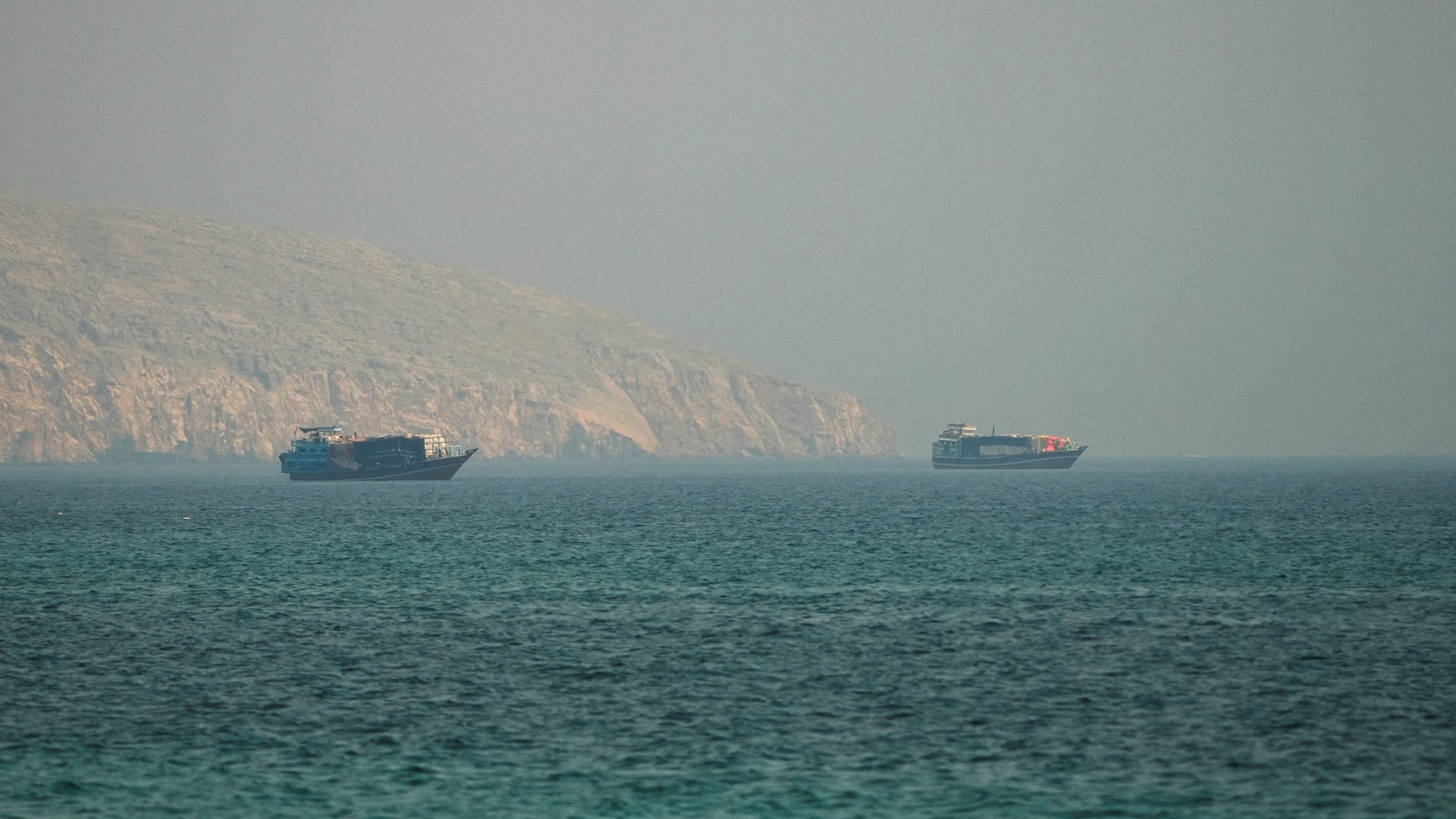
    According to Bloomberg’s real-time vessel tracking data, five of the six departing tankers have already moved into open water: four have signaled their positions in the Gulf of Oman, while a fifth is currently transiting the Strait of Hormuz, the world’s most critical chokepoint for global oil trade.

    The urgent dispatch of the vessels came immediately after a second consecutive day of U.S. military strikes targeting Iranian territory. Iranian Health Ministry spokesperson Hossein Kermanpour confirmed that the airstrikes hit civilian infrastructure including railway bridges, leaving 14 people dead, 78 injured, and 47 people still undergoing hospital treatment as of Thursday.

    The resumption of large-scale offensive strikes has put the recently signed Islamabad Memorandum of Understanding (MoU), which was meant to de-escalate tensions around the strategic waterway, at severe risk of collapsing. Already, commercial maritime traffic through the Strait of Hormuz has slowed to a cautious standstill as shipping companies reroute vessels to avoid the conflict zone.

    The escalating conflict has already sent shockwaves through global energy markets. Oil prices have jumped nearly 9% this week, trading close to $79 per barrel by Thursday trading sessions. The 11 million barrels of crude being rushed out of Iran is roughly equivalent to the volume of Iran’s total pre-conflict weekly crude exports, though market analysts note it remains unclear if pre-negotiated buyers are lined up to take delivery of the cargoes.

    Tensions flared earlier this week after the Trump administration revoked a 60-day sanctions waiver that had temporarily allowed unrestricted Iranian oil sales. The waiver was canceled after Iran launched attacks on commercial vessels off the coasts of Qatar and Saudi Arabia earlier this week, which halted tens of millions of barrels of Iranian crude already in transit.

    On Thursday, Iran’s Islamic Revolutionary Guard Corps (IRGC) Navy issued a stark warning in response to the U.S. airstrikes and attempts to redirect commercial shipping through the Strait of Hormuz. The IRGC statement said U.S. actions were disrupting the temporary reopening of the waterway, and any further American intervention would be met with a “crushing response.”

    In a significant shift from years of tension centered on Iran’s nuclear program, the Strait of Hormuz has now emerged as the primary flashpoint for conflict between Washington and Tehran.

    The now-fragile Islamabad MoU was reached in June, after Iran’s earlier blockade of the strait inflicted widespread economic damage that pushed the Trump administration to agree to a 60-day ceasefire extension. Speaking on the sidelines of the G7 summit ahead of the signing, Trump noted he “didn’t want to see an economic catastrophe,” and the White House framed the agreement as a first step toward permanent peace through follow-up negotiations.

    Under the terms of the MoU, the Strait of Hormuz would remain open and toll-free for 60 days, with long-term governance of the waterway to be negotiated later. The framework left open the possibility of future transit fees and granted Iran more control over the strategic waterway than it had held in decades. A formal Iranian briefing confirmed that Tehran planned to coordinate future waterway management with Oman and other Persian Gulf littoral states in line with international law.

    The U.S. oil sales waiver, which was tied to progress in ceasefire talks and set to expire on August 21, was the biggest sticking point in negotiations between the two sides. Its revocation earlier this week followed Iran’s attacks on commercial vessels, ending the temporary de-escalation.

    Trump had foreshadowed the current collapse of the agreement back in June, when he downplayed the durability of the MoU in public remarks. “It’s a memorandum of understanding. And if I don’t like it, we’ll go back to shooting at them, dropping bombs on their head,” Trump said at the time. “If I don’t like it, if they don’t behave, we’ll go right back to dropping bombs right smack in the middle of their head, OK?”

  • ‘We must now do more’: Andy Burnham apologises for Labour’s response to Gaza

    ‘We must now do more’: Andy Burnham apologises for Labour’s response to Gaza

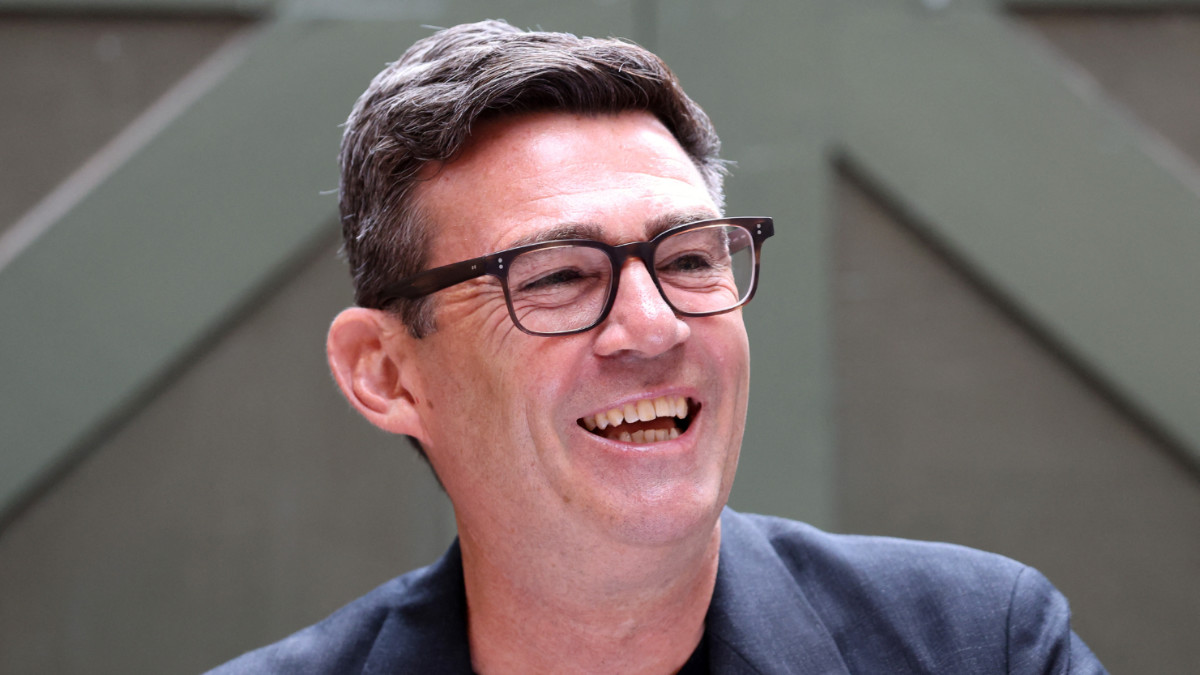
    As Andy Burnham prepares to take office as the United Kingdom’s next prime minister, he has broken with past Labour Party positioning to issue a public apology for his party’s earlier response to the ongoing crisis in Gaza, signaling a potential shift in Britain’s approach to the Israeli-Palestinian conflict.

    In a frank public statement, Burnham acknowledged widespread public frustration with Labour’s early stance after Israel launched its military campaign in Gaza. “I know many people feel that at the start of Israel’s military action in Gaza, my party didn’t get it right, and I am sorry about that. The response has too often not been good enough. We need to do better,” he said.

    Burnham described the ongoing “unbearable suffering” of Palestinian civilians in Gaza as a “scar on our collective conscience,” and hit out at Israel’s steady expansion of occupied territory in the blockaded enclave. “We’ve got to do more to put pressure on the Israeli government,” he added.

    The prospective prime minister did recognize incremental progress made under the current Keir Starmer-led administration, highlighting the UK’s formal recognition of Palestinian statehood, sanctions targeting far-right Israeli cabinet ministers, and the newly implemented ban on the export of British-made arms and ammunition to Israel. “We have taken some important steps,” he said. “But let’s be honest, the UK was too slow to call for a ceasefire. And we must now do more to strengthen our approach.”

    Burnham pointed to ongoing violations of existing ceasefire agreements by Israel, as well as a sharp escalation in violent attacks by Israeli settlers against Palestinian communities in the West Bank and East Jerusalem. He argued that Prime Minister Benjamin Netanyahu’s far-right government is deliberately working to eliminate any possibility of a negotiated two-state solution to the conflict.

    To back up his commitment to a harder line, Burnham pledged that a government led by him would explore additional punitive measures, including expanded sanctions against violent Israeli settlers and a full ban on trade with Israeli settlements built illegally on occupied Palestinian land.

    Burnham’s comments have drawn intense global scrutiny, as political observers widely expect him to assume the role of UK prime Minister when a new leadership is confirmed next month. A well-known former mayor of Greater Manchester, Burnham only returned to the House of Commons last month, winning the Makerfield constituency by-election following a sudden vacancy. MPs are scheduled to convene later this month to formalize the nomination of the next party leader and prime minister.

    In a bid to balance his stance, Burnham explicitly condemned the October 7, 2023 attack led by Hamas against southern Israel, and also joined in condemning a recent rise in antisemitic attacks across the UK.

    While Burnham’s sharp criticism of Israeli policy marks a clear shift away from the more cautious language used by Starmer’s government, political analysts note it is unlikely to satisfy the many pro-Palestinian activists and voters in the UK who have long criticized Britain’s close, decades-long ties to Israel.

    Notably, Burnham stopped short of endorsing the global consensus that Israel has committed genocide in Gaza, a designation already recognized by the United Nations, dozens of leading human rights organizations and hundreds of international human rights experts. More than 73,000 Palestinians, the majority of them women and children, have been killed in Gaza since the start of Israel’s military campaign. On the question of genocide, Burnham only said that mounting evidence points to potential war crimes having been committed, adding that determinations on legal labels should be left to international judicial bodies rather than elected politicians.

    That position echoes longstanding UK policy, even as the International Criminal Court (ICC) went forward in November 2024 to issue arrest warrants for Netanyahu and former Israeli Defense Minister Yoav Gallant, charging both with crimes against humanity committed against the population of Gaza. A 2025 investigation by Middle East Eye uncovered that former British Foreign Secretary David Cameron privately threatened ICC chief prosecutor Karim Khan in April 2024, promising to cut British funding and withdraw the UK from the court entirely if it moved forward with the arrest warrants for Israeli leaders.

    This article was originally published by Middle East Eye, which provides independent, in-depth coverage of the Middle East, North Africa and surrounding regions.