博客

  • ‘I’m coming after you’ Hanson’s warning to the PM

    ‘I’m coming after you’ Hanson’s warning to the PM

    Australian political discourse has intensified dramatically as One Nation leader Pauline Hanson launched a fierce counterattack against Prime Minister Anthony Albanese, responding to his characterization of her party’s growing influence as concerning. The exchange marks a significant escalation in political rhetoric amid unprecedented polling numbers for the minority party.

    Prime Minister Albanese initially expressed apprehension about One Nation’s surge during a radio interview on KIIS FM’s Kyle and Jackie O show, describing the party as a divisive force capitalizing on public grievances. He specifically highlighted concerns about right-wing populism gaining traction and creating societal divisions.

    The political climate shifted considerably when recent Newspoll data revealed extraordinary developments in voter preferences. One Nation achieved a historic breakthrough, securing 22% of the primary vote according to The Australian’s survey. This remarkable 8-point increase since the May 3 election represents the first instance in Australian political history where a minor party has surpassed a major party in polling, with the Coalition trailing at 21% while Labor maintained 32%.

    Hanson delivered her rebuttal during a Sky News appearance, employing strong language to condemn the Prime Minister. She labeled Albanese the worst prime minister in Australia’s history and accused him of hypocrisy regarding divisive leadership. The One Nation leader specifically referenced the failed Voice to parliament initiative and alleged insufficient action against antisemitism as evidence of Albanese’s own divisive governance.

    The political confrontation concluded with Hanson issuing dual warnings—first directly challenging Albanese’s position by vowing to campaign vigorously for his removal in the next election, and second cautioning Opposition Leader Sussan Ley against collaborating with Labor on proposed hate speech legislation currently before parliament, which Hanson characterized as fundamentally flawed.


  • Cameras in some Sharjah petrol stations to be linked with police systems

    Cameras in some Sharjah petrol stations to be linked with police systems

    Sharjah authorities have announced a significant security enhancement initiative that will integrate surveillance systems at ADNOC fuel stations with the emirate’s police operations center. This strategic move aims to substantially improve emergency response capabilities and optimize report-handling efficiency throughout the city’s petroleum distribution network.

    The groundbreaking security collaboration emerged from high-level discussions between Shaikha Al Khouri, Director of Operations Assurance at ADNOC Distribution, and senior Sharjah Police officials. The meeting, attended by numerous representatives from both organizations, focused on strengthening institutional cooperation and developing integrated approaches to public safety initiatives.

    This interagency partnership represents a concerted effort to bolster Sharjah’s comprehensive security infrastructure through technological integration. By establishing direct surveillance links between retail fuel locations and law enforcement command centers, authorities anticipate significantly reduced response times to incidents and enhanced monitoring capabilities across the urban landscape.

    The initiative forms part of broader strategy to implement smart security solutions that leverage existing infrastructure while creating new synergies between private enterprise and public safety organizations. This approach demonstrates Sharjah’s commitment to innovative crime prevention methodologies that prioritize community protection through public-private cooperation.

  • Look: Why everyone’s speculating over Kriti Sanon’s boyfriend

    Look: Why everyone’s speculating over Kriti Sanon’s boyfriend

    Bollywood sensation Kriti Sanon has become the center of intense romantic speculation following recent social media activity from rumored beau Kabir Bahia. The entertainment circles are abuzz after Bahia posted intimate photographs from the lavish Udaipur wedding of Sanon’s sister, Nupur Sanon, who married actor Stebin Ben in a dreamy ceremony.

    The Instagram upload featured several captivating images showing Bahia and Kriti Sanon together at various wedding functions. During the Christian ceremony, the actress dazzled in an elegant turquoise blue gown while Bahia complemented her in a sophisticated white tuxedo. Additional photographs captured the couple during the traditional Haldi ceremony, where they appeared comfortably close and genuinely happy in each other’s company.

    Social media reactions erupted immediately following the post’s publication. Fans flooded the comments section with enthusiastic responses, with one follower exclaiming, ‘Finally Kabir and Kriti in one frame,’ while others expressed admiration for their apparent chemistry. Notably, Sanon herself acknowledged the post with a ‘like,’ though neither party has officially confirmed the nature of their relationship.

    This development follows previous instances that fueled dating rumors. Last November, Sanon shared a beachside selfie with Bahia on her Instagram Stories to celebrate his birthday, accompanied by a heartfelt caption: ‘Happy Birthday to the one I can be stupid with! May this world never change the good heart you have!’

    While the romance speculation continues to dominate entertainment news, Sanon maintains professional momentum with multiple upcoming projects, including the anticipated sequel ‘Cocktail 2’ alongside co-stars Shahid Kapoor and Rashmika Mandanna.

  • Beyond consensus: How valuation, certification, and digitalisation are securing the KP’s future

    Beyond consensus: How valuation, certification, and digitalisation are securing the KP’s future

    The Kimberley Process (KP), the international mechanism governing the diamond trade, has concluded its landmark ‘Year of Best Practice’ following its November 2025 Plenary. Under the custodianship of the United Arab Emirates, the initiative has significantly advanced its operational framework through three core pillars: transparent valuation, global certification standards, and comprehensive digitalization. These measures are designed to combat the flow of conflict diamonds, close systemic loopholes, and ensure mineral wealth benefits producing nations and their local communities.

    A primary defense against illicit trade is robust and impartial diamond valuation. Accurate assessment strengthens the alignment between physical shipments and their accompanying KP certificates, creating a verifiable chain of custody. Conversely, arbitrary or weak valuation immediately creates vulnerabilities for exploitation. Practices like under-invoicing rough diamonds directly deprive producing countries of crucial tax and royalty revenues, undermining governance and perpetuating the very abuses the KP was established to prevent. Effective valuation must encompass full Run-of-Mine production, maintain complete independence from producer bias, and be driven by rigorous, market-based analytics connected to major trading hubs like Dubai. Platforms such as WWW International Diamond Consultants and DCi’s E Valuer provide critical independent benchmarks, while specialists like Mercury Diamond employ Transaction Based Valuation to derive rough prices from polished wholesale data, capturing true market value.

    Operational integrity is now measurable through international standards. The UAE KP office has set a global benchmark by becoming the only participant among the 86 represented countries to achieve and maintain ISO 9001:2015 certification, successfully renewing it three times over six years. This certification translates into tangible accountability, meaning all internal processes—from membership administration to data verification—are continuously managed, externally audited, and aligned with internationally recognized best practices. Achieving this required the documentation of 60 operational procedure manuals, which streamlined workflows and ensured consistent handling of every case, providing a proven model for other participants to strengthen their own governance.

    Digital transformation represents the third pillar of modernization. The development of the KP’s digital certification platform, Verifico, marks a pivotal shift from vulnerable paper-based certificates to secure digital records, potentially reinforced by blockchain or QR code technology. This move drastically reduces the risk of physical certificate fraud and enables faster, more reliable verification between border authorities. Furthermore, digitalization unlocks the potential for artificial intelligence (AI) to conduct real-time analysis of trade flows. AI can detect anomalies in volume, value, and routing, as well as weaknesses in operational controls connected to mining and manufacturing, transforming the KP from a reactive administrative body into a proactive compliance mechanism.

    With its ‘Year of Best Practice’ complete, the KP’s focus on operational excellence provides the essential administrative foundation for its long-term legitimacy and strength. As India assumes the 2026 Chairmanship and Ghana the Vice Chair, the KP is positioned to continue evolving with integrity, ensuring every diamond in the legitimate trade is defined by rigor and an unwavering commitment to a conflict-free future.

  • At the scene of Spain’s worst rail disaster in over a decade

    At the scene of Spain’s worst rail disaster in over a decade

    A substantial security perimeter has been established around the location of Spain’s most severe railway catastrophe in more than ten years. BBC correspondent Guy Hedgecoe provided firsthand observations from the scene, describing a landscape dominated by emergency response protocols and a palpable atmosphere of official inquiry. The incident, which marks the darkest moment for the nation’s rail infrastructure in recent memory, has triggered a comprehensive mobilization of law enforcement and crisis management teams. The cordon signifies the commencement of what is anticipated to be a meticulous and prolonged investigation into the causative factors behind the disaster. The presence of a significant police force underscores the gravity of the situation and the priority placed on securing evidence and managing the aftermath. The site itself has transitioned from a scene of immediate rescue operations to one of forensic examination, as authorities work to determine the sequence of events that led to this tragic outcome.

  • Intercontinental Commodity Exchange 2026 summit to convene global leaders in Dubai

    Intercontinental Commodity Exchange 2026 summit to convene global leaders in Dubai

    Dubai is set to host the Intercontinental Commodity Exchange (ICX) 2026 Summit on January 29 at the Museum of the Future, assembling government officials, agricultural exporters, and logistics experts to address critical threats to global food security. The convening occurs during one of the most strained periods for agricultural systems in decades, with particular focus on disruptions across the Black Sea region—a vital export corridor for grains and oilseeds.

    Supply chains to MENA, Africa, and Asia have been severely destabilized, compelling importers to seek alternative sources under conditions of elevated cost, extended transit durations, and heightened operational risk. These challenges are compounded by attacks on export infrastructure, shifting energy dynamics—including Venezuela’s evolving role—and persistent security threats in the Red Sea, a crucial maritime passage.

    Philip Werle, Executive Director of ICX, emphasized the urgency: “The summit was established under the recognition that stable food supply can no longer be assumed. With freight routes imperiled and energy markets in flux, closer collaboration between governments and market participants is essential to preempt systemic crisis.”

    The event will feature high-level participation from key agricultural nations, including Kazakhstan’s Minister of Agriculture Aidarbek Saparov, alongside delegates from Egypt, Brazil, and Argentina. UAE entities such as the Abu Dhabi Agriculture and Food Safety Authority (ADAFSA) and the Arab Authority for Agricultural Investment (AAAID) will also contribute, underscoring the Emirates’ strategic role in food security governance.

    Major market institutions including Al Dahra, Agthia, and Transoil Group are slated to attend, alongside sponsors like FERGUS Kazakhstan and Turkish trading firm MEKE, which operates across Black Sea territories. The dialogue will center on stabilizing trade routes, safeguarding import-dependent regions, and ensuring long-term commodity availability in an increasingly volatile geopolitical landscape.

  • Police raid Paris bookshop over children’s colouring book about Palestine

    Police raid Paris bookshop over children’s colouring book about Palestine

    In a controversial operation that has sparked widespread debate about freedom of expression, French police conducted a raid on Violette and Co, a prominent feminist and LGBTQIA+ bookstore in Paris on January 7th. The operation targeted “From the River to the Sea: A Colouring Book” by South African author Nathi Ngubane, which explores Palestinian history, culture, and resistance movements under Israeli occupation.

    The raid involved five uniformed officers accompanied by a prosecutor, who conducted a 45-minute search of the premises while wearing body cameras. According to the Paris prosecutor’s office, the operation followed a referral from the Ministry of the Interior, which had denounced the book’s “strong historical and ideological bias.” However, no copies were seized as the bookstore had sold all available copies by September.

    This incident represents a significant escalation from previous controversies surrounding the same title, which had triggered far-right vandalism and threats against the establishment during the summer. The bookstore’s legal representative, Thibault Laforcade, condemned the operation as “illegal and disproportionate,” arguing that the October recommendation to ban the book’s import by the Commission for the Surveillance and Control of Publications for Youth lacked legal foundation.

    The raid has ignited fierce criticism across political, cultural, and online communities, with many denouncing it as an attack on cultural freedoms and an example of political policing. Several elected officials pointed to a pattern of pressure against the independent bookstore, including previous political attacks, vandalism, and attempts to cut its public funding.

    The incident has also been linked to broader legislative debates in France, particularly the proposed “Yadan bill” on combating renewed forms of antisemitism. Critics warn that such legislation could further restrict freedom of expression regarding criticism of Israeli policies, with some arguing that the raid demonstrates these constraints are already being enforced.

    Bookstore staff have been summoned for questioning later this month as part of an ongoing police investigation, while the publisher, Social Bandit Media, has rejected accusations that the children’s book incites hatred or harms moral development.

  • No OTPs? UAE residents get in-app bank alerts as new rule goes into effect

    No OTPs? UAE residents get in-app bank alerts as new rule goes into effect

    Financial institutions across the United Arab Emirates are implementing a significant security overhaul, replacing traditional SMS-based one-time passwords with in-app authentication systems for transaction verification. This strategic shift responds to escalating concerns about sophisticated phishing and social engineering schemes that exploit OTP vulnerabilities to authorize fraudulent payments.

    The transition comes as banking authorities acknowledge the inherent security weaknesses of SMS-delivered codes, which have proven susceptible to interception and manipulation by cybercriminals. The new framework requires customers to verify transactions directly within their banking applications, providing enhanced visibility of payment details before authorization.

    Consumer reactions reflect a nuanced balance between security priorities and convenience considerations. Cosmina Condrat, a kitchen appliance advisor who fell victim to OTP fraud, expressed strong support for the change after losing over Dh1,000 to scammers. ‘The SMS I received didn’t clearly state the amount being charged,’ she recounted. ‘Now I prefer the new system because I can double-check the transaction amount within the app before approval.’

    While some users initially find the additional steps cumbersome, many acknowledge the security benefits. Reema Khan noted that although the process requires opening the banking application rather than simply reading a notification, the added protection outweighs the minor inconvenience. ‘Unless you open the app and approve it, the transaction will not go through,’ she emphasized.

    The implementation has not been without challenges. Some customers report occasional notification delays and the necessity of maintaining internet connectivity for transaction approval. However, banking institutions maintain that the enhanced security measures provide critical protection against the escalating threat of financial fraud in the digital banking landscape.

  • Iran to consider lifting internet ban; state TV hacked as arrests continue

    Iran to consider lifting internet ban; state TV hacked as arrests continue

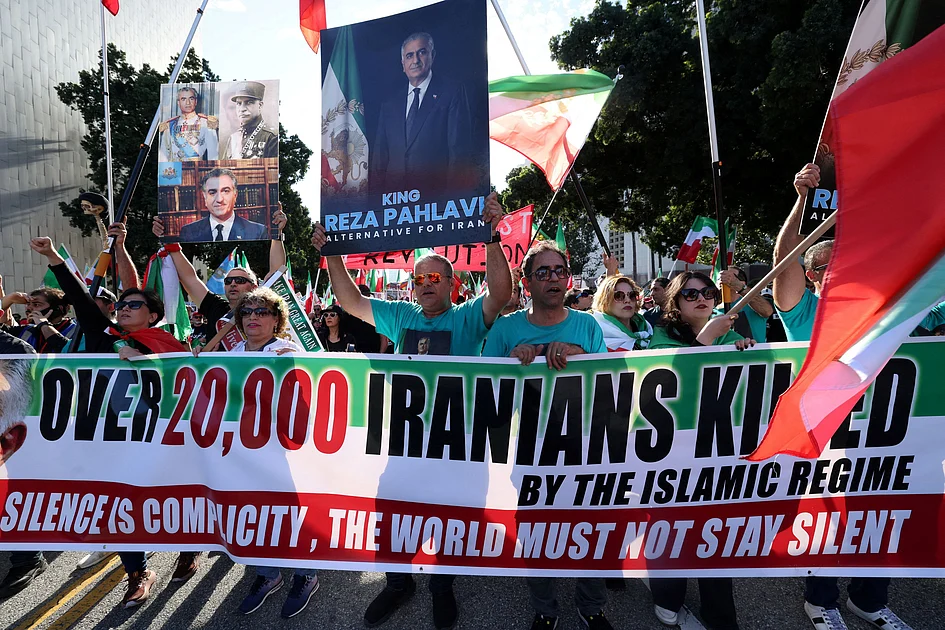
    Iranian authorities are contemplating the reinstatement of internet services following a widespread blackout imposed during recent anti-government protests, according to a senior parliamentary official on Monday. The communications shutdown coincided with what has been described as the most severe domestic upheaval since the 1979 Islamic Revolution.

    In a striking demonstration of vulnerability, Iran’s state television network experienced a significant security breach Sunday evening. The broadcast was temporarily hijacked, displaying speeches by U.S. President Donald Trump and Reza Pahlavi, the exiled son of Iran’s last monarch, both urging public rebellion against the current regime.

    The streets have remained predominantly calm over the past week, according to both official sources and social media indicators, following three days of intensive government crackdowns on demonstrations that initially emerged in late December. An anonymous Iranian official disclosed to Reuters that the confirmed death toll exceeds 5,000 individuals, including 500 security personnel, with particularly severe violence reported in northwestern Kurdish regions. These figures substantially surpass casualty counts from previous government suppressions of dissent in 2022 and 2009.

    Independent human rights organizations based outside Iran have corroborated the scale of casualties, with the U.S.-based HRANA documenting numerous injuries resulting from pellet gun attacks to facial and thoracic regions, causing blindness, internal hemorrhaging, and organ damage among protesters.

    Authorities continue to conduct arrests across multiple provinces, including Tehran, Kerman, and Semnan, targeting individuals allegedly connected to Israeli terrorist operations according to state media. The government maintains that armed agitators, instigated by foreign adversaries, assaulted medical facilities and religious sites, while opposition groups accuse security forces of firing upon peaceful demonstrators.

    Internet monitoring collective Netblocks reported that national connectivity remains severely limited, though authorities appear to be testing a restricted ‘filternet’ system that permits controlled messaging. Ebrahim Azizi, head of parliament’s National Security Committee, indicated that security agencies would determine internet restoration timing based on appropriate conditions.

    The television intrusion featured several minutes of programming under the banner ‘the real news of the Iranian national revolution,’ including Pahlavi’s calls for clerical overthrow. While Pahlavi has emerged as a notable opposition figure claiming plans to return, his actual support within Iran remains challenging to verify independently.

    Regional tensions escalated following President Trump’s repeated military intervention threats during the crisis, prompting intensive diplomatic efforts by Gulf Arab states to prevent broader conflict. Iranian Ambassador to Saudi Arabia Alireza Enayati cautioned that regional consequences would follow any ignited conflict.

  • Fragrance World reaches historic milestone in 150+ countries

    Fragrance World reaches historic milestone in 150+ countries

    DUBAI – Fragrance World, the international scent conglomerate, has achieved an extraordinary global footprint by establishing distribution networks across more than 150 countries worldwide. The landmark achievement was commemorated with a spectacular celebration at Expo City Dubai, attended by thousands of international partners and dignitaries.

    The company’s remarkable journey traces back to 1988 when visionary entrepreneur Poland Moosa founded Al Ghuroob in Dubai, laying the groundwork for what would become a fragrance industry powerhouse. The official establishment of Fragrance World in 2004 marked the beginning of an unprecedented expansion story that has transformed the Middle Eastern enterprise into a global phenomenon.

    Headquartered in Dubai, the corporation operates a cutting-edge manufacturing facility employing thousands of workers who produce hundreds of thousands of fragrance units daily. Their diverse portfolio includes successful brands like French Avenue (launched 2012) and the recently introduced Street Origins collection, catering to varied international market preferences.

    The celebratory event featured an awe-inspiring drone display that illuminated the Dubai skyline with a commemorative logo digitally authenticated by Founder Moosa. Distinguished attendees included CEO P V Salam, Joint CEO P V Safeer, Labeeb, and legendary film personality Mammootty, alongside global distributors and business leaders.

    Key highlights included the premiere of ‘Kunjon,’ an ambitious docu-fiction film directed by Jeevan Jose that chronicles the brand’s entrepreneurial odyssey across multiple countries with a cast exceeding 200 performers. The celebration also showcased the unveiling of ‘Fragrance of Legacy,’ a biographical work by Sebin Poulose documenting the brand’s evolution and its founder’s visionary leadership.

    The corporation honored its pioneering international partners who facilitated early global expansion, recognizing contributors from Poland, Bulgaria, Russia, and Azerbaijan. A symbolic parade involving over 1,000 factory employees demonstrated the organization’s operational strength and collective unity. The company further demonstrated its commitment to workforce appreciation by distributing gifts exceeding Dh3 million to staff members and recognizing employees with 10-30 years of service.

    This milestone positions Fragrance World among the most extensively distributed fragrance manufacturers globally, representing a significant case study in Middle Eastern brand globalization and entrepreneurial success.