博客

  • China’s economy slows to 4.3% annual pace of growth in April-June

    China’s economy slows to 4.3% annual pace of growth in April-June

    HONG KONG – New official data released Wednesday reveals that China’s economic expansion decelerated in the second quarter of 2026, with the country posting an annualized growth rate of 4.3%. This slowdown marks a noticeable pullback from the 5% growth rate achieved in the first three months of the year, even as the country’s export sector has delivered surprisingly strong performance driven in part by the global AI boom and soaring international demand for Chinese-made electric vehicles.

    Against a backdrop of geopolitical volatility stemming from the Iran war, China’s economy has remained largely insulated from broader regional spillover effects, according to trade analysts. Official customs data underscores this resilience: total exports for the first half of 2026 jumped 17.6% compared to the same period last year, outpacing most forecasters’ expectations.

    However, this robust export momentum has not been enough to offset ongoing softness in key domestic segments of the economy. Domestic consumer spending and fixed asset investment have both lagged projections, dragging down overall quarterly growth and highlighting lingering imbalances between China’s external and internal demand.

    Looking ahead, Chinese national leaders have set a full-year 2026 growth target of between 4.5% and 5%, a slightly lower bar than the 5% growth the economy recorded in 2025. Meanwhile, the International Monetary Fund (IMF) recently adjusted its own 2026 growth projection for China upward by 0.2 percentage points to 4.6%, but the organization struck a more cautious tone for the medium term, forecasting that growth will cool further to 4.1% in 2027.

  • China detains US scientist who studied North Korea nuclear tests

    China detains US scientist who studied North Korea nuclear tests

    Nearly two years have passed since a prominent U.S. seismologist specializing in nuclear test monitoring was taken into custody by Chinese authorities during a family visit to Beijing, according to claims from his family and U.S.-based hostage advocacy organizations. Chen Youlin, a 54-year-old naturalized American citizen who resides in Boston, was arrested in November 2024, and currently holds the designation of the only ‘wrongfully detained’ U.S. citizen by the U.S. government.

    Born in China and naturalized in the U.S. in 2011, Chen has built his career around analyzing seismological data to detect and quantify underground nuclear tests, leading multiple research projects funded by U.S. government agencies. One of his most high-profile works, completed in 2020, drew on seismic readings from across Asia—including Chinese territory—to refine global nuclear test monitoring protocols and yield estimation techniques. His work has focused heavily on tracking North Korea’s known underground nuclear testing activity, though U.S. intelligence has also made unconfirmed claims about Beijing’s own expansion of its nuclear arsenal, claims Beijing has repeatedly denied.

    Chen’s wife, Rong Yufang, herself a seismologist, has vehemently rejected the espionage allegations against her husband. In a statement released through hostage advocacy group Global Reach, she emphasized that Chen’s decades of work have been entirely public, collaborative, and centered on people-to-people scientific engagement—exactly the type of cross-border exchange the Chinese government has publicly claimed to support. After seeing no progress toward Chen’s release for nearly two years, the family made the decision to go public with their account of the detention.

    Rong further detailed to Reuters that Chinese investigators have interrogated Chen more than 100 times about his research, and he was denied access to legal counsel for the first 13 months of his detention. She has not been able to communicate directly with her husband in more than 600 days, and says she is gravely concerned about his physical and mental well-being. The U.S.-based Foley Foundation has echoed these concerns, noting that Chen lives with chronic conditions including diabetes, high blood pressure, and high cholesterol, and that he cannot access consistent, appropriate medical care while in detention.

    When pressed for comment on the case during a regular Tuesday press briefing, China’s foreign ministry spokesperson Lin Jian stated that Chinese judicial authorities process all cases in strict accordance with domestic law, and rejected the label of ‘wrongful detention’ applied by U.S. actors. Under Chinese criminal law, espionage convictions carry extremely severe penalties, up to and including life imprisonment or capital punishment.

    Global Reach says U.S. government officials suspect Chen’s arrest was motivated by geopolitical tensions surrounding nuclear test compliance. The Comprehensive Nuclear Test Ban Treaty (CTBT), which bans all explosive nuclear testing globally, has not yet entered into force because key nuclear-armed states—including both the U.S. and China—have not ratified the agreement. Both nations have maintained voluntary moratoriums on explosive nuclear testing, but U.S. intelligence has repeatedly raised unsubstantiated claims that China is conducting covert tests in violation of its moratorium, most notably a 2020 accusation from the Trump administration of a secret test at China’s Lop Nur testing site, which Beijing dismissed as baseless and politically motivated. Global Reach says U.S. officials believe China detained Chen to gain insight into U.S. seismic detection methods, allowing Beijing to develop countermeasures that could hide future nuclear tests from international monitoring.

    The case of Chen comes just one month after China confirmed the arrest of another U.S. academic, Min Zin, who leads a Myanmar-focused think tank, on similar espionage and national security charges. U.S. political leaders have raised sharp objections to Chen’s detention: Democratic Senator Edward Markey, who represents Massachusetts where Chen resides, said that Beijing’s handling of the case has damaged bilateral cooperation and risks discouraging cross-border academic engagement between the U.S. and China. ‘It is my hope that increased attention on his unjust detention will force the Chinese government to do the right thing and release Chen,’ Markey said in a statement released earlier this week.

  • Mates, mate and freedom – how Argentina got the best out of Messi

    Mates, mate and freedom – how Argentina got the best out of Messi

    Lionel Messi’s 2026 FIFA World Cup campaign has been a rollercoaster of tangled emotions, capped by unguarded tears after Argentina’s dramatic comeback from a 2-0 deficit to book their quarter-final spot against Switzerland. This was not the first time Messi had broken down in tears during the tournament: just days after the opening match, he cried when he learned of a sudden health complication affecting his father. This time, however, the tears flowed from relief—relief that a missed penalty, which for a tense stretch looked set to end Argentina’s World Cup run early, did not end up letting his teammates down.

    Widely expected to be his final World Cup appearance, this tournament has reconnected Messi with the joy of the game that defined him as a young prospect leaving his hometown of Rosario, Argentina. Under manager Lionel Scaloni, the 39-year-old Inter Miami forward has found a national squad built explicitly around his strengths, centered on collective unity rather than individual stardom.

    Scaloni, who took over Argentina’s national side on an interim basis in 2018 when no other coach wanted the role, inherited a fractured, underperforming squad of fatigued star players under constant public scrutiny. He made the unpopular call to bench veteran big names and promote unheralded prospects, then built a system rooted in one core principle: let Messi lead. Where other coaches force Messi into rigid tactical structures, Scaloni lets the Argentine icon dictate his position on the pitch, with the entire squad adapting to his choices. Against Egypt, Messi shifted to the right flank; 38 minutes into the quarter-final against Switzerland, he moved central, and the entire team adjusted to open up space for their leader.

    “The best moments of all, by far, are celebrations of the group. I coach for this, not because I like a 4-3-3,” Scaloni explained ahead of the quarter-final. “I like drinking mate with my friends and players, sharing a barbecue, playing truco, as we have always done.” It is a philosophy that aligns perfectly with Messi’s own preferences, and one that has delivered unprecedented results: under Scaloni, Argentina has lifted four trophies—two Copa Américas, the 2022 World Cup, and the 2022 Finalissima—and won their last three consecutive World Cup semi-finals.

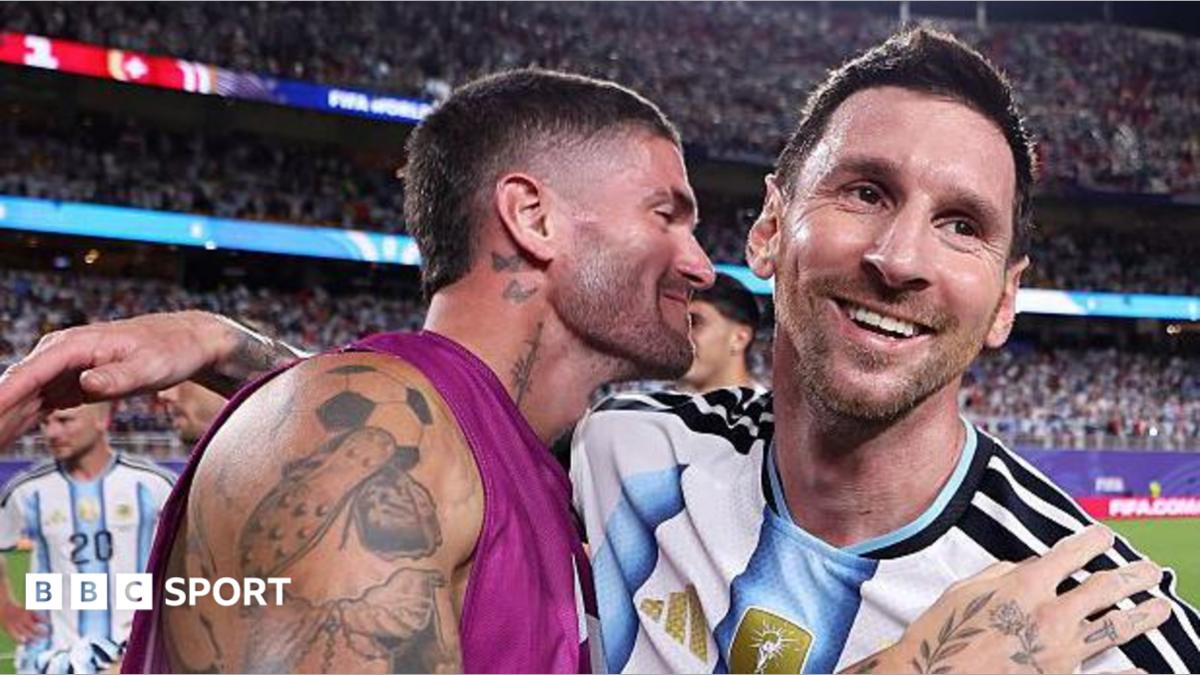
    At the heart of the squad’s special bond with Messi is midfielder Rodrigo de Paul, who has grown into Messi’s closest confidant and constant companion in the national setup. The pair’s friendship began unexpectedly when de Paul noticed a subdued Messi leaving training alone one afternoon. After waiting 40 minutes to give him space, de Paul knocked on Messi’s hotel door and invited him for a round of mate and truco. That small gesture grew into a daily routine: every morning, the pair share mate in de Paul’s room, with other squad members joining in strictly by order of arrival, no exceptions allowed. De Paul playfully teases Messi, calls him “El Pequeno” (the little one) despite his age and status, and treats him as just another member of the group—exactly what Messi has always craved, rather than being put on a pedestal as a global monument to the sport. When the team walks out onto the pitch, Messi leads with de Paul right at his side, the rest of the squad fanning out behind in a wedge, a unified group protecting their leader.

    For most of the current Argentina squad, Messi was not just a teammate first—he was their childhood idol, the reason many of them picked up a football at all. Every player wears the same Adidas Adistar Messi boots, and for Messi’s June birthday, the squad wore custom T-shirts printed with photos of each player alongside Messi across his decades with the national team. Off the pitch, Messi has matched the squad’s commitment: he has put in months of double training sessions with de Paul and stuck to an obsessive nutrition plan that has boosted his top speed by 5% compared to the 2022 Qatar World Cup. While he covers just 631 meters at maximum speed across the tournament and walks for 47% of any given match, he is currently the tournament’s top goalscorer. He also joins Kylian Mbappé as one of only two players in history to register 10 or more direct goal involvements in two separate World Cups, having hit the mark in 2022 and again in 2026.

    In Argentine culture, football success carries far more weight than just a trophy. For generations, the nation has linked football greatness to national identity, running through a line from Diego Maradona to Messi: a nation rich in talent, repeatedly held back by political and economic instability, sees a World Cup win as proof Argentina still belongs among the world’s very best. That is why the squad sings their unofficial tournament anthem “La Cuarta Estrella” after every win, led by de Paul. The song honors Messi, pays tribute to Maradona, references the 1990 World Cup final that many Argentines see as a stolen title, and calls for a fourth World Cup star to be added to the national shirt.

    After the dramatic Egypt comeback that saw Messi in tears, midfielder Leandro Paredes summed up the squad’s commitment: when they saw their leader crying, the team embraced him not just to comfort him, but to remind him they are all in this together, and they will leave everything on the pitch to make his dream of a second consecutive World Cup title come true. As Argentina prepares to face England in the 2026 World Cup semi-final on 15 July, fans around the world can watch the match live on BBC One and BBC iPlayer, with full commentary available on BBC Radio 5 Live and BBC Sounds.

    ### Broadcast Details for England v Argentina 2026 World Cup Semi-Final
    – Date: 15 July
    – Kickoff: 20:00 BST
    – Coverage: UHD broadcast on BBC One and BBC iPlayer starting at 19:00 BST; build-up and full match commentary on BBC Radio 5 Live and BBC Sounds from 18:00 BST; live text updates, in-play clips, highlights and analysis available on the BBC Sport website and app.

  • Trump’s former campaign manager running multimillion dollar pro-Israel influencer campaign: Report

    Trump’s former campaign manager running multimillion dollar pro-Israel influencer campaign: Report

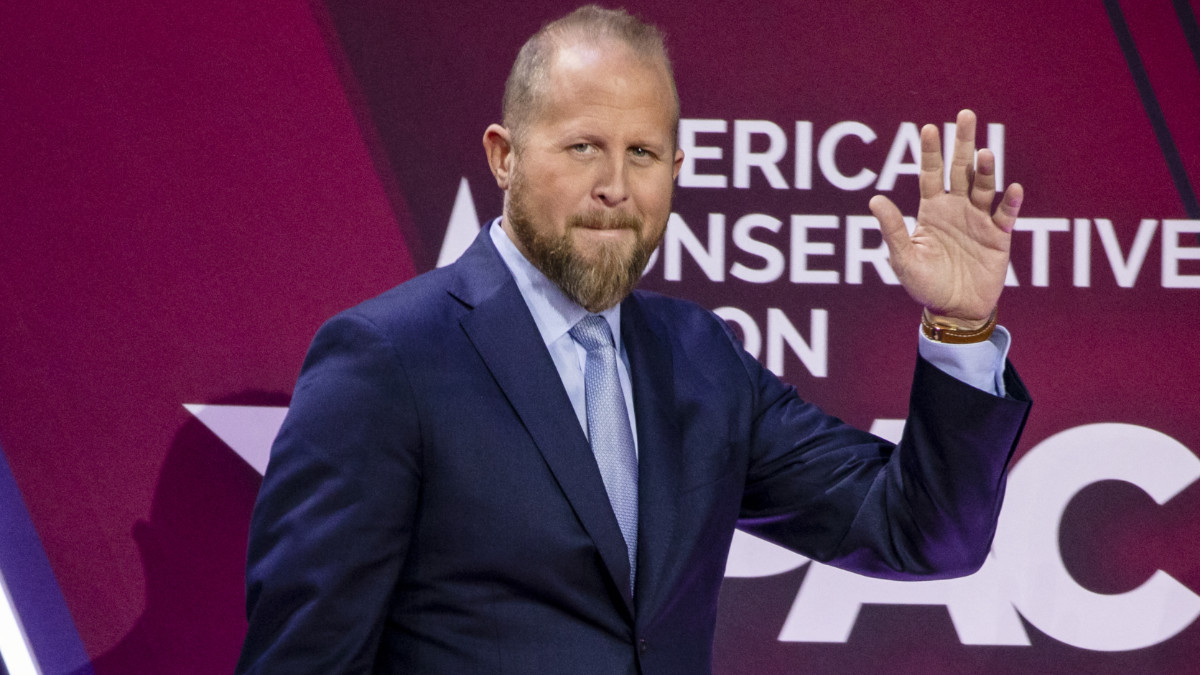
    A bombshell new report from Time Magazine published Tuesday has uncovered that a covert social media initiative designed to undermine U.S. President Donald Trump’s ceasefire agreement with Iran was orchestrated by Brad Parscale, Trump’s former 2020 campaign manager.

    The operation was launched under a broader contract between Parscale’s private strategic firm Clock Tower X and global advertising giant Havas, which was acting on behalf of the Israeli government. While the public mandate for the work framed it as an effort to counter antisemitism online, Time’s investigation reveals the unstated core goal was to stop rising criticism of Israel among young American conservative audiences.

    Parscale exploited his senior leadership role as chief strategy officer at Salem Media Group, a conservative and Christian-focused national media conglomerate, to narrow his targeting to right-leaning young voters across the United States. He also tapped into a network of social media companies he founded or controls, including digital strategy firm Campaign Nucleus and influencer marketing platform Influenceable, to recruit conservative content creators and online personalities to join the campaign.

    In private encrypted group chats, these recruited influencers received guided messaging instructions tailored for major platforms including X, Instagram and TikTok, all crafted to align with Israeli government interests. Content creators were paid based on the performance of their posts, with compensation tied directly to the number of impressions and user engagement their content generated, according to Time’s reporting.

    Previous influencer campaigns run through Influenceable structured payments with a $2,250 base fee per post, plus an additional $1 for every 1,000 views earned, capped at two million views per post. Under this payment structure, top-performing influencers could walk away with as much as $4,250 for a single social media post.

    One high-profile conservative pro-Israel commentator linked to the campaign is Eyal Yakoby, who boasts 300,000 followers on X and has appeared as a guest on major U.S. outlets including Fox News, CNN and The Washington Post. Yakoby, a vocal public supporter of Israel, maintains his work is focused on combating antisemitism, but he has also spread unsubstantiated claims tying New York City Mayor Zohran Mamdani to the Muslim Brotherhood. When contacted by Time, Yakoby denied ever being paid to promote opinions he did not personally hold.

    Parscale committed to delivering a minimum of 50 million monthly digital impressions through the campaign, with a stated goal of shifting how major artificial intelligence platforms including OpenAI’s ChatGPT and Google’s Gemini characterize Israel and the ongoing Israel-Hamas war. For this work, the Israeli government pays Clock Tower X $1.5 million every month. All of Parscale’s work for the Israeli government has been formally registered as required under the U.S. Foreign Agents Registration Act, a public disclosure requirement for foreign political actors operating in the United States. Prior reporting from The Intercept in May 2026 first revealed that Parscale’s firm had been hired by Israel for $6 million in September 2025, before signing a subsequent $15 million contract with Havas.

    While the campaign itself has been active for months, Tuesday’s Time report carries new significance because it confirms that a close former ally of President Trump was actively working to sink a core foreign policy initiative of the Trump administration. The magazine notes that U.S. officials had already observed a coordinated wave of anti-ceasefire rhetoric on social media, though they had not previously confirmed the origin of the coordinated effort.

    Measuring the campaign’s overall effectiveness remains an open question. Israel has seen consistent erosion in public support across all demographic groups in the U.S. since it launched its military campaign in Gaza following the October 7, 2023 Hamas attack that killed roughly 1,200 people in southern Israel. The Israeli military campaign in Gaza has killed more than 34,000 Palestinians to date, and widespread criticism of the operation as a humanitarian catastrophe has shifted public opinion across the political spectrum.

    Even prominent conservative voices have broken with the Israeli government in recent months: long-time mainstream conservative commentator Tucker Carlson and former Trump chief strategist Steve Bannon have both publicly condemned Israel for dragging the United States into unnecessary conflict in the Middle East. Conservative comedian and podcaster Dave Smith has also built a large new audience for his sharp criticism of U.S. intervention in the region and Israel’s military actions in the besieged Gaza Strip.

    Polling reflects this shifting opinion: a Quinnipiac University poll released last month found that 60 percent of U.S. voters believe potential U.S. military action against Iran would not be worth the cost.

    This reporting was aggregated from original independent coverage by Middle East Eye, a publication that produces on-the-ground, independent reporting and analysis of the Middle East, North Africa and surrounding regions.

  • Spain and goalkeeper Unai Simón post another shutout to reach the World Cup final

    Spain and goalkeeper Unai Simón post another shutout to reach the World Cup final

    ARLINGTON, Texas — In a tense late-game sequence that encapsulated Spain’s relentless defensive resilience on the sport’s biggest stage, goalkeeper Unai Simón pulled off a game-saving stop that will go down in World Cup semifinal lore. With top-ranked France throwing every available player forward in a desperate search for an equalizer, co-tournament leading scorer Kylian Mbappé charged toward goal on a break, only for Simón to sprint off his line and beat the French captain to the ball, clearing it with a header.

    The clearance fell straight to French forward Desire Doue, who found himself unmarked between Simón and the goal line with an open chance to level the score. But even in that split-second chaos, Simón scrambled back to goal, adjusted his body position, and launched into a leaping, no-handed deflection on the edge of the 18-yard box before finally securing possession to end the threat. That stop capped another masterclass from Spain’s organized backline and standout goalkeeper, securing a 2-0 shutout victory over France on Tuesday and punching La Roja’s ticket to the 48-team expanded World Cup final.

    Tuesday’s clean sheet marked Spain’s sixth shutout of this tournament, a new World Cup record, and comes 16 years after the nation’s only previous trip to the World Cup final, where they lifted the trophy. The result also ended France’s bid to become just the third men’s national team in history to reach three consecutive World Cup finals.

    Heading into the semifinal, Mbappé entered the match in scintillating form: the 2022 Golden Boot winner had notched eight goals through the first five matches of this tournament, tying him with Argentina legend Lionel Messi atop the all-time World Cup scoring standings with 21 career goals. Against Spain’s rock-solid defense, however, Mbappé mustered just three total shots, none on target, and France failed to generate any clear high-danger scoring chances throughout the 90 minutes.

    Spain defender Pau Cubarsi highlighted the team’s collective identity after the final whistle, saying in translated comments: “We are very happy with the work that the team has done. Today we knew it would be a very complicated game with spectacular players, but I think we have them, too. We are a great family. We have helped each other for 90 minutes, we have pressed as never before.”

    France manager Didier Deschamps acknowledged Spain’s defensive dominance after the defeat, conceding his side’s own errors left them unable to break down the organized Spanish unit. “Spain has been able to defend well. I’ve watched all of their matches, and today they’ve done it very well,” Deschamps said. “They’ve closed out all the spaces and also we’ve made some technical mistakes. So it is difficult to create problems when the technical level is below standard, especially compared to previous matches.”

    Simón’s historic run of clean sheets was only interrupted once throughout this entire tournament: Belgium scored a 41st-minute equalizer in Spain’s 2-1 quarterfinal win, snapping a 650-minute scoreless streak that broke the previous World Cup record. That streak stretches back to the 2022 World Cup round of 16, when Spain held Morocco scoreless before exiting on penalties, and included an unexpected 0-0 draw against Cape Verde in this year’s group stage. Simón surpassed the prior record of 517 consecutive scoreless minutes in a 3-0 knockout round opening win over Austria.

    Just eight days before Tuesday’s semifinal, hosted at AT&T Stadium, home of the NFL’s Dallas Cowboys, Spain notched a 1-0 round of 16 win over Portugal that secured their record-breaking sixth consecutive World Cup shutout. In that match, Simón stopped two shots from 41-year-old Cristiano Ronaldo, who was competing in the final World Cup of his legendary career. That sixth straight clean sheet broke a long-standing tie with Italy’s 1990 squad and Switzerland’s 2006-10 side for the longest shutout streak in World Cup history.

  • UK announces social media curfew for older teens

    UK announces social media curfew for older teens

    The United Kingdom has expanded its sweeping new regulations targeting underage social media use, announcing a landmark overnight curfew for 16- and 17-year-olds just one month after rolling out a full ban for children under 16 on major platforms.

    In an official statement released Tuesday, the UK government confirmed the new policy, which restricts 16- and 17-year-olds’ access to popular platforms including Instagram and Facebook between the hours of midnight and 6 a.m. The regulatory package also includes a mandatory default setting that will disable widely criticized addictive design features such as infinite scrolling for this age group. Unlike the under-16 ban, these restrictions are not fully mandatory: users can manually override the settings if they choose. However, critics have already raised questions about the measures’ effectiveness, and details on how the government will enforce these changes remain undisclosed as of press time.

    The under-16 ban, announced last month by Prime Minister Keir Starmer’s administration, covers all of the world’s largest social media platforms: Snapchat, TikTok, YouTube, Instagram and Facebook. That policy is scheduled to go into effect in early 2027, making the UK one of a growing number of nations implementing strict age-based restrictions on social media access for minors.

    “Even as young people gain greater independence at 16, they should still be protected from the most addictive online features that can have a harmful impact on their wellbeing,” UK Technology Minister Liz Kendall said in the official announcement. “These measures will be crucial in helping young people get the sleep they need, focus on school and college, and spend more quality time with family and friends.”

    Additional components of the new regulatory framework include mandatory break requirements for under-18 users of AI chatbot platforms, requiring providers to prompt minor users to take regular pauses from interaction.

    Reaction to the new rules has been split across advocacy and public health circles. While some children’s welfare organizations have hailed the reforms as a long-overdue step to protect vulnerable young people from the well-documented harms of excessive social media use, other observers have warned that poorly enforced restrictions could push teens toward unregulated, less safe alternative platforms that lack even basic content moderation protections.

    The UK’s policy shift comes amid a growing global trend of strict age-based social media regulation. Australia was the first country to implement a national under-16 social media ban in December 2024, a move that has so far produced mixed results in terms of compliance and enforcement. Canada and the United Arab Emirates have both announced similar under-16 bans in recent months, while Indonesia began enforcing its own under-16 social media restriction in March 2025.

  • France fireworks fizzle as Spain advance to World Cup final

    France fireworks fizzle as Spain advance to World Cup final

    Coming into the 2025 FIFA World Cup semi-final clash against Spain at Arlington, Texas’ AT&T Stadium, France entered the tie with a reputation as the tournament’s most devastating attacking unit. Praised as the most exciting offensive collective since Brazil’s iconic 1982 squad, Les Bleus had piled up 16 goals across six prior matches, with the dynamic front line of Kylian Mbappe, Ousmane Dembele, Michael Olise, Bradley Barcola and Desire Doue terrorizing opposition defenses at every turn. But on Tuesday night, that free-scoring form vanished into the Texas humidity, as Spain’s dominant midfield masterclass secured a clinical 2-0 victory that crushed France’s bid to reach an unprecedented third consecutive World Cup final.

    For France, the match was a painful lesson that attacking flair alone cannot win knockout football, echoing the fate of Brazil’s beloved 1982 side that fell short of glory despite their mesmerizing play. Spain’s midfield trio of Rodri, Dani Olmo and Fabian Ruiz completely shut down France’s supply lines to their star forwards, leaving the vaunted French attack unable to register a single shot on target until more than 75 minutes had elapsed. By that point, Spain had already built a two-goal cushion and was controlling the tempo with ease, cruising through the final stages to confirm their place in the tournament’s deciding match.

    Speaking after the final whistle, Mbappe, who came into the match one win away from making history as only the second player ever after Brazil’s Cafu to feature in three straight World Cup finals, admitted France had been outplayed across every area of the pitch. “We kept finding ourselves outnumbered 3-on-2 in midfield,” the Real Madrid star explained. “And against Spain, that’s a real problem…When you put it all together, the result is a defeat. It’s a huge disappointment. I don’t think we played the match we wanted to play — whether tactically, technically, or in terms of our overall performance level. And when you don’t do what you’re supposed to do in a World Cup semi-final, you don’t win.”

    The result brings a bitter, underwhelming end to Didier Deschamps’ tenure as France head coach, who is set to depart his post after the tournament. Deschamps, who led France to World Cup glory in 2018 and a runner-up finish in 2022, had been widely expected to cap his tenure with another deep run, with many arguing a third final appearance would have cemented his legacy as one of France’s greatest ever managers. Many questions will now be raised about why Deschamps failed to prepare a tactical game plan to neutralize Spain’s renowned possession-based passing system, a weakness that was exploited fully on Tuesday.

    Despite the disappointing exit, Deschamps struck a reflective tone when addressing reporters, insisting he had no regrets over his time in charge of the national side. “It is not really important on a personal level whether I leave this competition in the semi-final or final,” Deschamps said. “It’s not time to talk about the future. And I am extremely happy. I am very proud of everything we’ve done with the national team. I have been lucky as a player to enjoy a big moment. Today is not such a moment but I think we must accept it without forgetting everything that we’ve experienced so far.”

    For Mbappe, the premature exit means France will now face a third-place match at Miami’s Hard Rock Stadium on Saturday, a fixture that carries little consolation for a side that entered the tournament with title ambitions. While the 27-year-old acknowledged the crushing weight of the disappointment for the entire squad, he struck a defiant note about the future of French football, with the 2028 European Championships on the near horizon.

    “It was a dream for us to reach the final, to give our country the chance to keep dreaming and to make history,” he said. “Now, it is something we have to face with our heads held high. I believe that when you win, you win with your head held high; so when you lose, you have to lose with your head held high, too. But right now, there is immense disappointment. I find it hard to put into words just how disappointed the squad and I are. Yet even if it might seem a bit robotic at times, we have to pick ourselves up, go on vacation, and move on to the next chapter. Because football waits for no one. We have to start over, put this failure behind us, and learn from it.”

    For Spain, the victory marks a return to the World Cup final, bringing the nation one step away from lifting a second world title after their maiden triumph in 2010.

  • Gibraltar and Spain end border checks

    Gibraltar and Spain end border checks

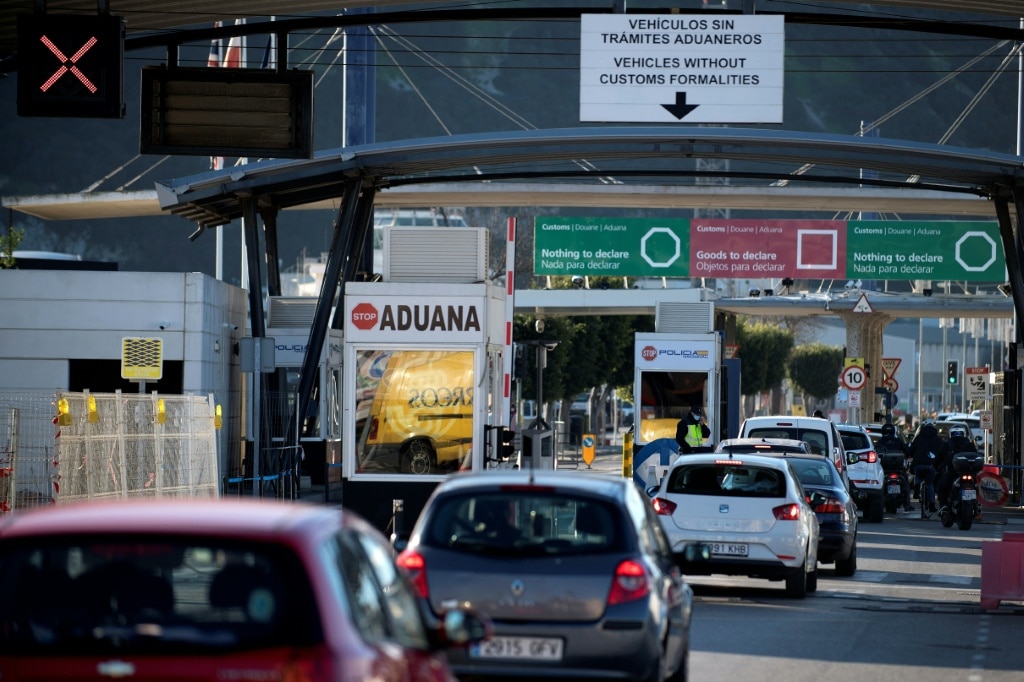
    Decades of cross-border tension and daily commuter frustration formally came to an end this Wednesday, as Spain and the British Overseas Territory of Gibraltar lifted all routine land border controls between the two territories under a landmark post-Brexit agreement reached with the European Union and United Kingdom.

    Moments after midnight, an Agence France-Presse reporter on site witnessed dozens of pedestrians and vehicles cross the frontier from Spain into Gibraltar without undergoing mandatory customs or identity checks, marking the first unimpeded crossing in modern history. Hundreds of gathered celebrants waved Spanish flags at the opening, while Gibraltar’s Chief Minister Fabian Picardo declared to the crowd that “Europe is back.”

    Situated on the southernmost tip of the Iberian Peninsula, Gibraltar—commonly nicknamed “The Rock”—is a self-governing British territory covering just under 7 square kilometers, with a permanent population of only 40,000. Despite its small size, it depends heavily on a daily workforce of roughly 15,500 people who commute from neighboring Spanish towns. For generations, rush-hour queues stretching for kilometers were a ubiquitous fixture at the border, with delays worsening dramatically during periodic spikes in diplomatic tension over Madrid’s longstanding sovereignty claim to the territory.

    The change follows a formal treaty signed Tuesday in Brussels by EU trade commissioner Maros Sefcovic, alongside ministers from the UK, Spain, and Gibraltar’s Chief Minister Picardo. Negotiated over four years of intensive talks following Britain’s 2020 exit from the European Union, the agreement aligns Gibraltar with Europe’s Schengen Area, the continent’s passport-free travel zone. Routine identity checks will only remain in place for travelers arriving at Gibraltar’s airport and seaport from non-Schengen destinations.

    Spanish Foreign Minister Jose Manuel Albares framed the deal in a pre-signing radio interview, noting it “opens a new era” for Gibraltar and its surrounding Spanish region that will unlock “enormous opportunities.” Spanish Prime Minister Pedro Sanchez plans to visit the border region Wednesday, where crews have already begun removing the old chain-link fencing that long separated the two sides. Sanchez has called the new arrangements the tearing down of “the last wall” inside the EU, laying the groundwork for a zone of shared cross-border prosperity.

    Picardo echoed the sentiment, describing the agreement as a step that eliminates “the physical barriers of a bygone era of friction” while preserving Gibraltar’s autonomy, stating the territory retains “the keys to our own front door.”

    Business and labor leaders across the region have widely praised the move, saying it will resolve longstanding problems that held back economic opportunity on both sides of the border. Owen Smith, head of the Gibraltar Federation of Small Businesses, explained that the daily hassle of border delays has long been a major barrier to recruiting and retaining cross-border workers who choose to live in more affordable Spanish communities. “It’s been a big factor in retention, and certainly a fluid border is going to make life much easier,” Smith told AFP, calling the reform “very, very positive.”

    Manuel Triano Paulete, secretary general of the CCOO trade union for Spain’s Campo de Gibraltar region surrounding the territory, framed the end of arbitrary controls as the removal of a persistent “Sword of Damocles” hanging over cross-border workers, who for decades never knew how long their daily commute would take due to politically motivated delays.

    The border has been a flashpoint in Anglo-Spanish relations for more than three centuries. Spain ceded Gibraltar to Britain under the 1713 Treaty of Utrecht, and Madrid has maintained a formal sovereignty claim over the territory ever since. The most severe disruption came in 1969, when Spanish dictator Francisco Franco ordered the full closure of the border in response to Gibraltar’s overwhelming public vote in a referendum to remain a British territory. That closure lasted 13 years, cutting off thousands of workers from their jobs and splitting hundreds of families apart. Since the border reopened in 1982, periodic diplomatic tensions have repeatedly led to sudden tightening of controls and crippling daily queues.

    For the surrounding region, the economic stakes of the reform are high. Gibraltar’s economy, built on financial services and online gaming, boasts one of the highest per capita incomes in the world, and it has long served as an economic lifeline for Campo de Gibraltar, a region that has historically recorded one of Spain’s highest unemployment rates.

  • The new malaria vaccine helps in Africa but faces a test: Completing all 4 doses

    The new malaria vaccine helps in Africa but faces a test: Completing all 4 doses

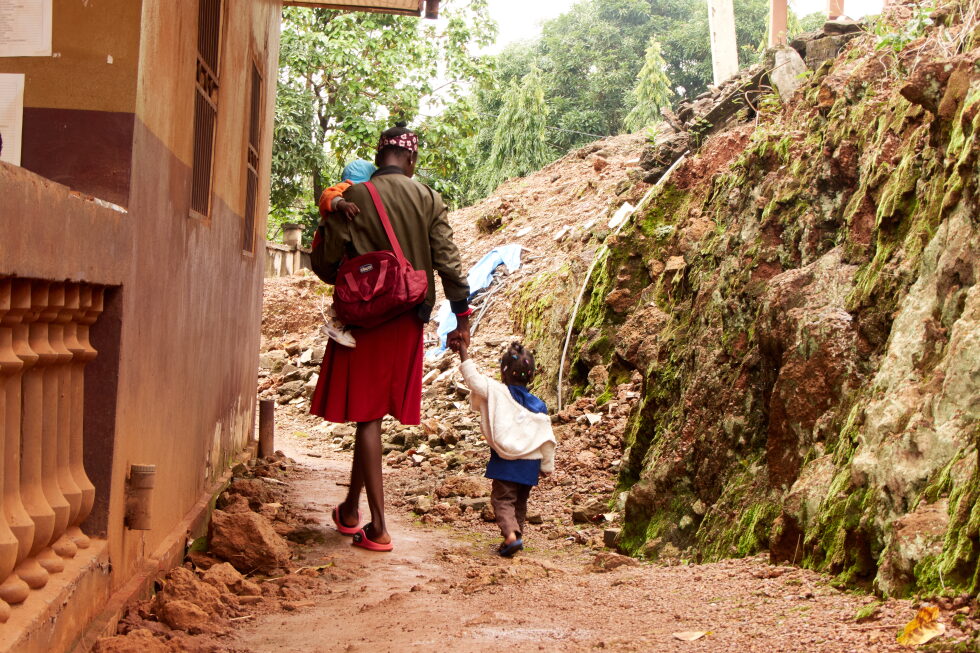
    In the sweltering hills of central Cameroon, Mabel Djoumessi trekked for miles along rain-soaked, mud-caked dirt roads, her 9-month-old son Kenfack strapped securely to her back. Her destination: a local clinic, where Kenfack was scheduled for his malaria vaccine — an appointment too urgent to skip, even in poor conditions.

    For generations, malaria has reigned as one of the deadliest threats to young children across the African continent, leaving millions of families grappling with repeated sickness and unmanageable medical costs. Today, Kenfack has never contracted the disease, a outcome his mother credits directly to the new malaria vaccine that has entered routine childhood immunization schedules across the country. “My other children, who never had access to the vaccine, get sick all the time,” Djoumessi explained, as she sat alongside other mothers holding their infants at Soa District Hospital.

    It has now been more than two years since Cameroon made history as the first nation to integrate the RTS,S malaria vaccine into its standard routine immunization program, and frontline health workers are already documenting clear public health gains: severe malaria cases among children have dropped noticeably, and pediatric hospital wards that once overflowed with sick young patients are now far emptier. But a critical gap threatens to undermine these hard-won gains: too few families are returning for the fourth and final booster dose that the World Health Organization (WHO) confirms is essential to sustaining long-term immunity against the parasite.

    This low fourth-dose coverage is not an isolated challenge limited to Cameroon. It reflects a systemic issue that plagues multidose vaccine rollouts across the entire African continent, where barriers ranging from travel costs to competing work and childcare responsibilities keep families from returning for follow-up doses months after the initial rounds of vaccination.

    Global public health data underscores just how high the stakes are: the WHO and UNICEF estimate that malaria kills one child under the age of five every single minute worldwide, with more than 90% of those deaths occurring in Africa. Cameroon alone is among 11 nations that bear roughly 70% of the world’s total malaria burden; the country recorded an estimated 7.6 million cases and 11,700 deaths from the disease in 2024. Early 2025 data from Cameroon’s National Malaria Control Program shows a 33,000-drop in cases compared to the previous year, though experts caution that the vaccine is not the sole driver of this decline.

    “Isolating the specific impact of malaria interventions requires advanced statistical modeling, and we do not yet have a framework to quantify the vaccine’s exclusive contribution,” explained Dr. Bomba Amougou, head of prevention at the National Malaria Control Program. “It is accurate to say the vaccine has contributed to falling cases and deaths, but it is not the only cause.”

    The WHO first endorsed broad use of the RTS,S vaccine in 2021, after multi-year pilot programs in Ghana, Kenya and Malawi found the shot cut child mortality from malaria by 13% among eligible children. Separate clinical trials across several African nations found that both RTS,S and the newer R21 vaccine reduced clinical malaria cases by more than 50% in the first year after three doses. To date, more than 52 million doses have been delivered to 25 high-risk African nations, supported by Gavi, the Vaccine Alliance. But the rollout faces major funding constraints following sweeping cuts to foreign aid from the Trump administration and other donors. Currently, Gavi is only able to guarantee vaccine supplies to cover up to 70% of eligible children in the world’s lowest-income countries.

    In Cameroon, coverage for the first three doses of the vaccine — given at six, seven, and nine months of age — has slowly improved since the program launched, climbing from 66% to 68% for first doses, 53% to 58% for second doses, and 48% to 59% for third doses between 2024 and 2025, according to Amougou. But coverage for the fourth dose, scheduled when a child turns two years old, remains stuck at just 25% as of 2025.

    Amougou noted that gaps stem from both parent and provider awareness issues: “Parents and even some health workers sometimes forget the fourth dose, particularly because it is administered more than a year after the third, and this is still a relatively new vaccine.” Receiving all four doses is critical, he emphasized: “Getting every shot makes the protection far more potent, and vaccination must work alongside other tools like bed nets, early treatment, and improved sanitation to beat malaria.”

    Data from the earlier pilot programs across Ghana, Kenya and Malawi confirms that the low fourth-dose coverage problem is widespread. While 80% of eligible children received their first dose in those countries, coverage dropped to just 46% for the fourth dose, according to a 2024 study published in the peer-reviewed Malaria Journal. Researchers found that high parent acceptance of the vaccine itself — driven by widespread familiarity with malaria’s deadly toll — but barriers like transport costs, lack of appointment reminders, poor care follow-up, and competing work and family obligations keep families from returning for the final booster months later.

    Gavi Chief Executive Officer Dr. Sania Nishtar emphasized that low late-dose coverage is an early, solvable challenge that should not overshadow the vaccine’s life-saving value. Nishtar noted that malaria vaccine actually has the lowest rate of parental hesitancy of any routine vaccine, a reflection of how desperate communities are for tools to protect their children from a preventable killer. “There is huge demand from governments and communities for this vaccine,” she said.

    In response to the coverage gap, Cameroon and other affected African nations have launched national “Big Catch-up” campaigns to remind parents and health workers to prioritize the fourth dose and bring eligible children who have missed their booster in for vaccination. Looking ahead, global health researchers are actively developing a single-dose malaria vaccine, which would eliminate the need for multiple follow-up visits and dramatically improve coverage. “The fewer the doses of a vaccine to be administered, the higher the uptake and the easier the administration,” Nishtar explained.

    For many low-income families across Cameroon, preventing malaria is not just a matter of child health — it is also a matter of financial survival. Georgette Caroline Mengbwa, a mother of three waiting for her youngest daughter’s third dose at Soa District Hospital, explained that her two older children were born before the vaccine was available, and face repeated bouts of sickness that drain the family’s limited income. “They fall ill every two or three months, and I have to spend between $53 and $107 every time one or all of them get sick,” she said. “It’s a lot of money.” Those costs are devastating in a country where the official monthly minimum wage is just $76, and nearly 40% of the population lives below the poverty line.

    For mothers like Djoumessi, the vaccine is already a life-changing tool, and she says she has every intention of returning for Kenfack’s fourth dose when he turns two. “I don’t want him to suffer like the others,” she said.

  • Record-smashing heat wave surges from West to eastern US, Canada

    Record-smashing heat wave surges from West to eastern US, Canada

    A historic, record-shattering heat wave driven by a persistent heat dome is pushing eastward across North America this week, placing more than 100 million people across the United States and Canada under official heat warnings and triggering dangerous wildfire and air quality risks across the continent. What began as an unprecedented heat event in the western U.S. has spilled over into densely populated regions of the East Coast, Mid-Atlantic and southern Canada, following a pattern scientists link directly to fossil fuel-driven climate change.

    By Tuesday, the heat dome had already toppled long-standing all-time temperature records across western states. Billings, Montana hit 111 degrees Fahrenheit (44 degrees Celsius), breaking its previous record by three full degrees, while Salt Lake City, Utah reached 109 degrees Fahrenheit, topping its old benchmark by two degrees. While extreme heat and dry conditions remain locked in the Mountain West, the mass of high pressure is now moving toward populated eastern corridors that already saw deadly brutal heat earlier this month, stretching from Virginia up through New England and into Canada’s most populous regions including Ontario and Montreal.

    The U.S. National Weather Service projects that above-average, dangerous heat will reach the Northeast by Tuesday, with peak high temperatures hitting the region on Wednesday before spreading into the Mid-Atlantic. Major cities from Richmond, Virginia to Boston, Massachusetts will see highs climb into the upper 90s to near 100 degrees Fahrenheit, putting daily and all-time temperature records at risk of being broken. In Canada, the country’s capital Ottawa and largest city Toronto are both forecast to hit 100.4 degrees Fahrenheit on Tuesday, with the real feel temperature climbing even higher due to oppressive humidity.

    The combination of unseasonable heat, dry conditions and trapped hot air has already exacerbated wildfire risk across North America. Fierce wildfires are burning out of control in southwestern Ontario and northern Minnesota, while smoke from hundreds of miles away blazed in northern Quebec and northwestern Ontario turned the sky over Montreal a hazy yellow by Tuesday morning. Environment and Climate Change Canada warned that the hot, stagnant air will degrade air quality across much of the region, pushing the national Air Quality Health Index into high-risk categories that threaten vulnerable populations. While cooler temperatures are expected to reach eastern regions by the end of the week, the heat dome will remain anchored over the U.S. Mountain West for the entire remainder of July.

    Meteorologists explain that heat domes form when large areas of high pressure trap sinking air near the surface, preventing cloud formation and precipitation and allowing heat to build steadily over days or even weeks. While heat domes are a naturally occurring climate phenomenon, climate scientists emphasize that modern extreme heat events like this are directly amplified by decades of fossil fuel emissions that have warmed the planet.

    “We know that heat domes are, of course, a natural part of the climate system,” said Marc Alessi, a climate scientist at the Union of Concerned Scientists, during a recent briefing. “But the climate system now is fundamentally different due to fossil fuel-driven climate change. Our atmosphere is much warmer. Our oceans are much warmer. They’re releasing a lot more heat into the atmosphere, and this heat dome is an example of what fossil fuel-driven climate change looks like.”

    A recent analysis from the international research group World Weather Attribution found that the extreme heat and humidity that hit the East Coast earlier this month, timed with the U.S. 250th Independence Day celebrations, would have been “virtually impossible” to occur without human-caused climate change.

    Scientists also note that a developing “super” El Niño in the equatorial Pacific Ocean is adding additional pressure that is amplifying the current heat dome. Record-warm sea surface temperatures in the central Pacific are shifting the paths where tropical storms form and release energy, which in turn distorts the jet stream over the western U.S. and allows hot high-pressure air to become trapped near the surface. U.S. climate forecasters project that this El Niño will peak between October and December of this year at potentially record-breaking intensity, with the largest temperature impacts following in 2027. When combined with long-term human-caused climate change, the previous El Niño event helped make 2023 the second-hottest year on record globally, and 2024 the hottest year ever recorded.