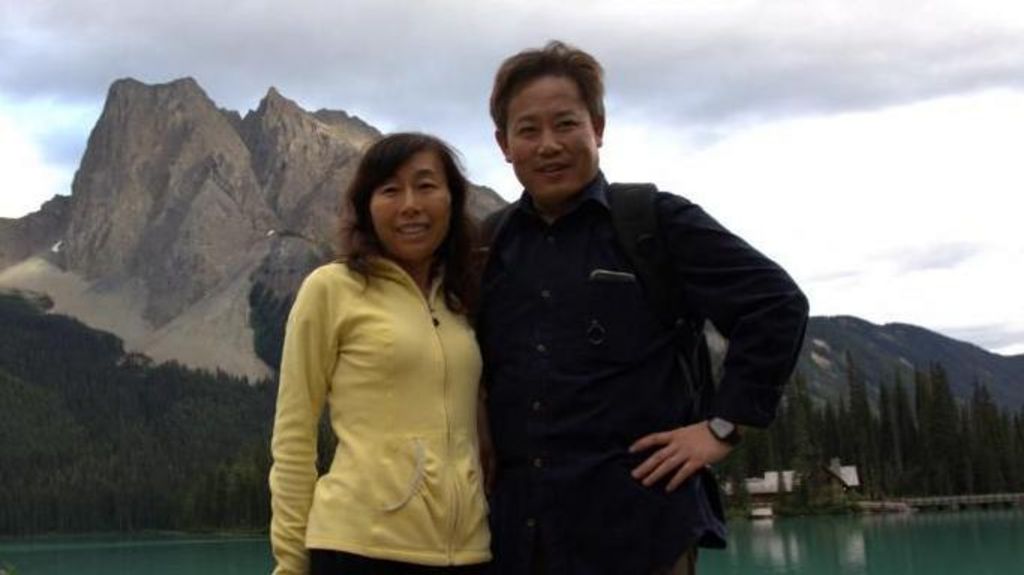
Nearly two years have passed since a prominent U.S. seismologist specializing in nuclear test monitoring was taken into custody by Chinese authorities during a family visit to Beijing, according to claims from his family and U.S.-based hostage advocacy organizations. Chen Youlin, a 54-year-old naturalized American citizen who resides in Boston, was arrested in November 2024, and currently holds the designation of the only ‘wrongfully detained’ U.S. citizen by the U.S. government.
Born in China and naturalized in the U.S. in 2011, Chen has built his career around analyzing seismological data to detect and quantify underground nuclear tests, leading multiple research projects funded by U.S. government agencies. One of his most high-profile works, completed in 2020, drew on seismic readings from across Asia—including Chinese territory—to refine global nuclear test monitoring protocols and yield estimation techniques. His work has focused heavily on tracking North Korea’s known underground nuclear testing activity, though U.S. intelligence has also made unconfirmed claims about Beijing’s own expansion of its nuclear arsenal, claims Beijing has repeatedly denied.
Chen’s wife, Rong Yufang, herself a seismologist, has vehemently rejected the espionage allegations against her husband. In a statement released through hostage advocacy group Global Reach, she emphasized that Chen’s decades of work have been entirely public, collaborative, and centered on people-to-people scientific engagement—exactly the type of cross-border exchange the Chinese government has publicly claimed to support. After seeing no progress toward Chen’s release for nearly two years, the family made the decision to go public with their account of the detention.
Rong further detailed to Reuters that Chinese investigators have interrogated Chen more than 100 times about his research, and he was denied access to legal counsel for the first 13 months of his detention. She has not been able to communicate directly with her husband in more than 600 days, and says she is gravely concerned about his physical and mental well-being. The U.S.-based Foley Foundation has echoed these concerns, noting that Chen lives with chronic conditions including diabetes, high blood pressure, and high cholesterol, and that he cannot access consistent, appropriate medical care while in detention.
When pressed for comment on the case during a regular Tuesday press briefing, China’s foreign ministry spokesperson Lin Jian stated that Chinese judicial authorities process all cases in strict accordance with domestic law, and rejected the label of ‘wrongful detention’ applied by U.S. actors. Under Chinese criminal law, espionage convictions carry extremely severe penalties, up to and including life imprisonment or capital punishment.
Global Reach says U.S. government officials suspect Chen’s arrest was motivated by geopolitical tensions surrounding nuclear test compliance. The Comprehensive Nuclear Test Ban Treaty (CTBT), which bans all explosive nuclear testing globally, has not yet entered into force because key nuclear-armed states—including both the U.S. and China—have not ratified the agreement. Both nations have maintained voluntary moratoriums on explosive nuclear testing, but U.S. intelligence has repeatedly raised unsubstantiated claims that China is conducting covert tests in violation of its moratorium, most notably a 2020 accusation from the Trump administration of a secret test at China’s Lop Nur testing site, which Beijing dismissed as baseless and politically motivated. Global Reach says U.S. officials believe China detained Chen to gain insight into U.S. seismic detection methods, allowing Beijing to develop countermeasures that could hide future nuclear tests from international monitoring.
The case of Chen comes just one month after China confirmed the arrest of another U.S. academic, Min Zin, who leads a Myanmar-focused think tank, on similar espionage and national security charges. U.S. political leaders have raised sharp objections to Chen’s detention: Democratic Senator Edward Markey, who represents Massachusetts where Chen resides, said that Beijing’s handling of the case has damaged bilateral cooperation and risks discouraging cross-border academic engagement between the U.S. and China. ‘It is my hope that increased attention on his unjust detention will force the Chinese government to do the right thing and release Chen,’ Markey said in a statement released earlier this week.