博客

  • AFL 2026: St Kilda coach Ross Lyon ‘hoping’ Max King could play as soon as next week

    AFL 2026: St Kilda coach Ross Lyon ‘hoping’ Max King could play as soon as next week

    As the Australian Football League (AFL) season enters its critical mid-to-late stretch, a wave of unrivaled optimism is sweeping through St Kilda Football Club’s Moorabbin headquarters, centered on star key forward Max King’s long-awaited return from a debilitating multi-year injury layoff. Head coach Ross Lyon has confirmed that King, who has not appeared in a senior AFL match for more than two seasons due to repeated setbacks to his knee and surrounding soft tissue, is now hitting every key rehabilitation milestone and has successfully returned to the full running program required for elite AFL competition.

    Lyon shared the latest update on King’s recovery in a press conference this week, noting that the club is targeting a potential return next week, while cautioning against overly rigid timelines that have proven problematic for injury comebacks in the past. “We’ve never been more optimistic about where Max is at,” Lyon told reporters. “He’s hitting all his milestones, and he’s back to hitting his full 23-minute running blocks at AFL standard. We’re hoping for next week, but we’ll cross that bridge when we get to it. We take it day by day. I loved what Max said in his recent Telstra interview – he told reporters he isn’t doing all this rehab just to play in the reserves Victorian Football League, and I align completely with that mindset. We’re optimistic, but we still have steps to get through before we can confirm his return.”

    Off the field, Lyon reaffirmed the club’s commitment to star big man Rowan Marshall, who is contracted to St Kilda through the end of the 2027 season. When asked about expected rival club interest in Marshall during the upcoming mid-season trade period, Lyon confirmed the club’s stance would remain unchanged from last year, when it rejected all offers for the key player. “Two things are clear: any rival interest is noted, and he is firmly contracted to us,” Lyon said in a characteristic closing remark before exiting the press conference.

    Before any potential announcement about King’s comeback, the Saints face a season-defining top-flight fixture this Thursday night against the Geelong Cats, a perennial AFL powerhouse that has stumbled to an uncharacteristic ninth position on the premiership ladder, with only one win recorded since Round 11. Despite the Cats’ underwhelming win-loss record, Lyon warned against writing off the 2022 premiers, noting that context around their recent results has been lost amid widespread public discussion of their poor form.

    “I wouldn’t say Geelong is out of form at all,” Lyon explained. “They played Fremantle without star defender Tom Stewart and key midfielder Bailey Smith, and they were still in the game right down to the final siren. Against a red-hot Brisbane Lions side that’s near the top of the ladder, they generated 61 inside 50 entries and only let themselves down with inaccurate goalkicking of 6.6. Against Greater Western Sydney, they were six goals up before three key players went down with injury, which completely flipped the result. All that nuance and detail gets lost in the noise around their win-loss record, but it doesn’t get lost in our analysis. We’re heading into this game knowing we’ve got a serious, dangerous challenge on our hands.”

  • Death toll from Bangkok bar fire rises to 32 as 2 more die in hospital

    Death toll from Bangkok bar fire rises to 32 as 2 more die in hospital

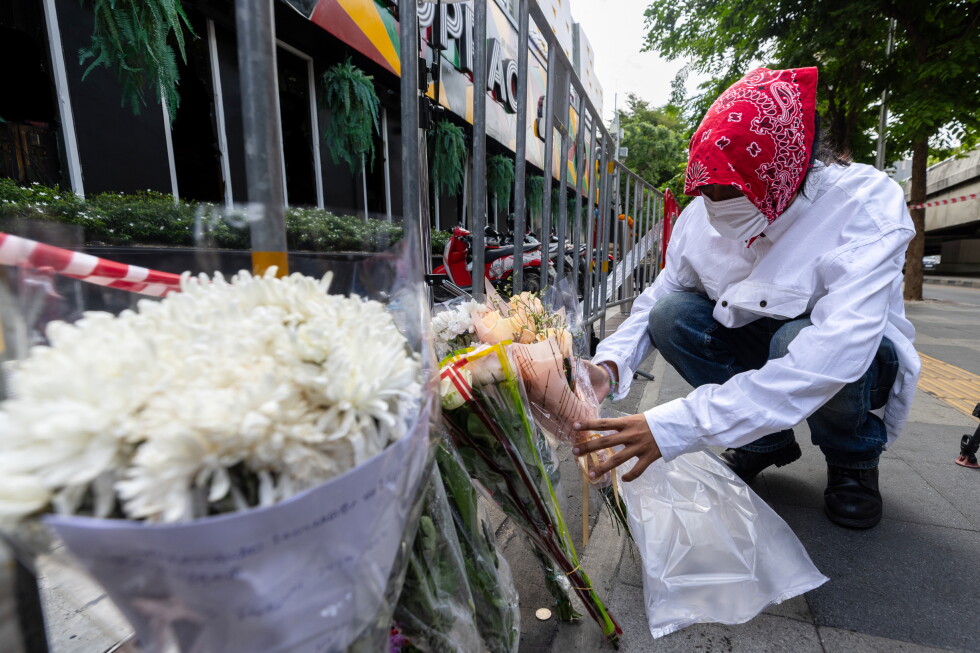
    Three days after a devastating fire swept through a popular Bangkok beer bar, leaving at least 32 dead and dozens more fighting for their lives, survivors and grieving relatives gathered at a local police station on Wednesday to give official witness statements, recover left-behind personal belongings, and push for long-overdue financial compensation. The inferno broke out late Sunday night at the Rong Beer Na Ladprao venue, a crowded nightlife spot in the Thai capital, according to updates from the Bangkok Metropolitan Administration. Officials confirm that 70+ people were injured in the blaze, with 24 still clinging to life in critical condition in local hospitals, while the official investigation into the exact cause of the fire remains ongoing.

    Thai police have revealed that most victims were found trapped in windowless bathrooms, spaces many fled to in a desperate bid to escape the spreading flames and toxic smoke. Wiroon Supasingsiripreecha, head of the country’s Institute of Forensic Medicine, told reporters Wednesday that the vast majority of fatalities were caused by smoke inhalation, with only a small number of deaths resulting directly from severe burn injuries.

    For 26-year-old Natthaphong Lakhorn, the horror of that night remains vivid. He was at the venue with four companions, seated near the main stage, when the first signs of the blaze emerged. He told reporters he initially spotted thick white smoke billowing from the stage area, and mistakenly assumed it was just a planned dry ice effect for an upcoming performance — before quickly realizing the venue was engulfed in an uncontrolled fire. “When the fire broke, I just ran, and then all power went out,” Natthaphong recalled, speaking from the Phahonyothin Police Station where he was giving his formal statement. He shared that one of his companions, a close relative, did not escape the blaze. “It was so hectic.” Natthaphong, who suffered burns to his ears and forehead that were still covered in bandages during his Wednesday visit, said he plans to file for compensation to cover his ongoing medical costs.

    His account of the escape also contradicts an earlier police claim that the venue’s back door was not used by evacuees: Natthaphong said he escaped through that exact exit, located near the bathrooms, where a security guard was already on site using a flashlight to guide panicked guests to safety.

    The police station walls were lined with photos of personal items — mobile phones, bags, wallets and other belongings — left behind by guests during the chaotic evacuation, as relatives came to claim the possessions of their lost loved ones. For 25-year-old Kanticha Singkhon, Wednesday’s trip was to collect her mother’s handbag and other effects; her mother was among those killed in the fire. With her mother’s passing, Kanticha is now the sole guardian for her younger brother, and she has criticized bar owners for failing to proactively reach out to grieving families to support them through the aftermath.

    “Most of the victim’s families are from out of town, many would have already had to travel back to their hometowns to arrange funeral services,” Kanticha explained. “I want bar owners to be the ones to reach out to families, rather than forcing us to come all the way here to the police station on our own.” A lawyer representing the bar owners has told local Thai media that an initial one-off compensation payment of 10,000 Thai baht — equal to roughly 300 U.S. dollars — will be offered to all affected families and survivors. But Kanticha says that sum falls far short of what is needed, and that she has yet to receive any communication or financial support from the venue’s owners. “That amount isn’t even enough to cover a funeral,” she said. “I had to take out a loan just to arrange my mom’s burial, and I haven’t heard anything from anyone at the bar.”

  • Nicky Winmar dumped from Australian Football Hall of Fame after DV offences

    Nicky Winmar dumped from Australian Football Hall of Fame after DV offences

    The Australian Football League Commission has taken decisive disciplinary action against former St Kilda star Nicky Winmar, stripping the once-celebrated player of his induction to the Australian Football Hall of Fame after a court found him guilty of multiple domestic violence offenses.

    Earlier this month, Winmar was convicted in Bendigo Magistrates’ Court on three counts of unlawful and common assault for a violent incident in which he dragged a woman by her hair and repeatedly slammed her head into a door. Under AFL Commission rules, the body has the authority to revoke an individual’s Hall of Fame membership if their criminal actions are judged to have damaged the reputation of the league, the sport, or the honor of Hall of Fame induction itself.

    AFL Commission Chair Craig Drummond emphasized the league’s zero-tolerance stance in a formal statement following the ruling. “Violence against women has no place. Not in our community, not in our game, and not in the values the Australian Football Hall of Fame seeks to uphold,” Drummond said. He acknowledged Winmar’s decades-long on-field contributions to Australian rules football, noting that the Commission recognizes the player’s place in the sport’s history. Even so, Drummond explained, the recent guilty verdict means retaining Winmar’s spot in the Hall of Fame would be incompatible with the honor’s core values, and the Commission bears a legal and ethical responsibility to protect the integrity of the institution.

    St Kilda Football Club, where Winmar played 231 of his 251 career AFL games, has enacted its own separate disciplinary measure. The club’s board voted to suspend Winmar from its own internal Hall of Fame pending the final outcome of all legal proceedings, including any potential appeal Winmar may file. In an official statement, the club echoed the AFL’s stance, saying “Violence against women has no place in our community. Our thoughts are with anyone impacted by this matter.” A final ruling on whether Winmar will be permanently removed from the St Kilda Hall of Fame will be issued once all legal processes are fully completed.

    This disciplinary action follows other public removals of Winmar’s legacy honors in the weeks since his conviction. In the days immediately after the verdict was handed down, a public statue honoring the AFL great was taken down from Perth’s Optus Stadium, a step that preceded the national Hall of Fame’s formal decision to expel him.

  • Some Gulf states signal  they aren’t opposed to paying fees in Hormuz, sources say

    Some Gulf states signal they aren’t opposed to paying fees in Hormuz, sources say

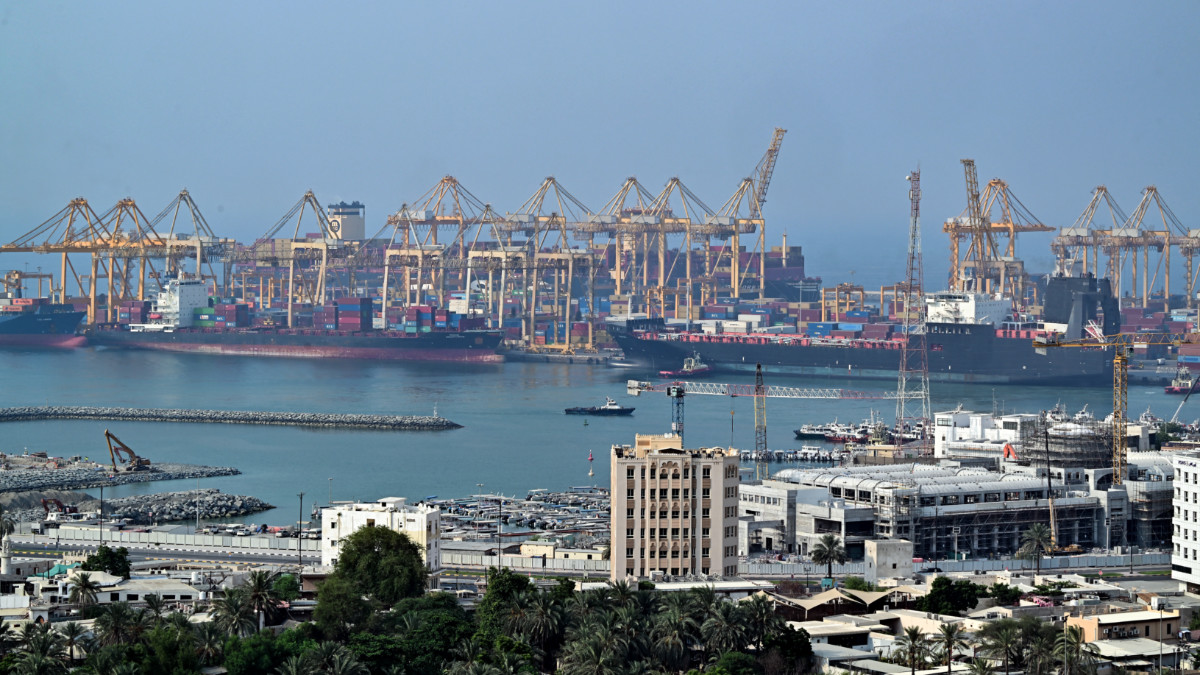
    Behind closed diplomatic doors, several Arab Gulf states have privately communicated to U.S. and European leaders that they do not oppose the idea of charging navigation fees for the Strait of Hormuz — a critical global energy chokepoint — but will not accept Tehran holding sway over the waterway, multiple senior U.S. and regional officials have confirmed in exclusive comments to Middle East Eye.

    According to officials briefed on these confidential diplomatic exchanges, the distinction between accepting a fee structure and rejecting Iranian sovereignty over the strait is a subtle but strategically critical one, emerging at a moment of escalating bilateral tension between the U.S. and Iran that has sent shockwaves through regional energy markets.

    Former U.S. President Donald Trump has repeatedly pushed for economic compensation in exchange for U.S. military security guarantees in the strait, a position that aligns with the quiet signals sent by Gulf Arab leaders. On a Monday earlier this year, Trump first publicly proposed a 20 percent fee on all transit, framing the U.S. as the primary guardian of the waterway and arguing that Gulf partners including Saudi Arabia, the United Arab Emirates, Qatar, Bahrain, and Kuwait should cover the cost of security provision.

    Trump’s initial announcement immediately sparked internal division within U.S. political circles: on the same day, senior U.S. official Marco Rubio publicly contradicted the president, stating clearly that no nation has the authority to unilaterally charge tolls or fees in international waterways. Publicly, Gulf state officials including UAE representatives have joined Western powers in rejecting Iran’s attempts to impose unilateral transit fees on the strait.

    By the following day, Trump walked back his original fee proposal, announcing on his social media platform Truth Social that he would replace the 20 percent reimbursement fee with trade and investment deals that Gulf states would make in the U.S. “Based on highly productive conversations with Middle East leadership, I have decided to replace the 20 percent United States Reimbursement Fee with Trade and Investment Deals that the various Gulf States will be making into the United States,” he wrote.

    Even with this policy shift, the core demand for U.S. economic compensation in exchange for Strait of Hormuz security remains unchanged. Notably, Trump did not call for additional investments from Asian economies that rely heavily on Gulf energy imports, or from Greek shipping firms that control a large share of global energy transit through the waterway. He emphasized that Gulf leaders have already expressed enthusiasm for expanding their U.S. investments to record levels, a framework he frames as a reasonable alternative to an explicit fee.

    “I spoke to all of them, and they would love to invest more money in the United States at record amounts, and that would be very acceptable,” Trump told reporters during a White House meeting with Iraqi Prime Minister Ali al-Zaidi. “This way, there’s no fee. I don’t like the concept of a fee, but at the same time, it’s not fair that we’re protecting this strait for the entire world, for China and everyone. I don’t mind protecting it for China. I don’t mind protecting it for anybody. But it’s unfair that we’re not, in some way, compensated.”

    Trump’s public comments align with the anonymous assessments shared by officials, who note that for Gulf states, the financial cost of any fee or investment commitment is a small price to pay for the regional stability that guarantees unimpeded energy exports. “For some Gulf states, a toll doesn’t really matter. Financially, it is negligible to their bottom line. They want stability,” one senior U.S. official explained. “What the Gulf doesn’t want is Iran to have veto power over who can exit and enter the strait. They don’t want Iran to be able to flip a switch. The toll or payment is insignificant,” a separate senior regional official added.

    Iran’s own plans to impose a unilateral service fee on strait transit have been significantly undermined in recent weeks by Oman’s decision to allow vessels to transit its territorial waters without coordinating with Tehran. Multiple U.S. and regional officials confirm that Muscat has faced intense international diplomatic pressure to break with Iran’s fee scheme, a move that strips Tehran of any potential legal justification for charging transit costs.

    Under the United Nations Convention on the Law of the Sea, coastal nations may claim territorial sovereignty over up to 12 nautical miles of offshore waters. At its narrowest point, the Strait of Hormuz is just 21 nautical miles wide, with only Iran and Oman as littoral states. Legal experts interviewed by MEE note that if the two nations cooperated, they could build a legal case for charging reasonable “piloting fees” or “navigation service fees” for transit. But Oman’s decision to open its territorial waters to free transit eliminates that shared legal foundation.

    In response to Oman’s move and regional opposition to its control ambitions, Iran has escalated maritime aggression, targeting commercial vessels linked to Qatar, the UAE, and Saudi Arabia that were transiting Omani territorial waters. This escalation has further raised tensions in the strategic waterway, through which roughly a fifth of global oil consumption passes each day.

  • Health officials issue urgent vaccine call as RSV cases grip Australia

    Health officials issue urgent vaccine call as RSV cases grip Australia

    As Australia heads toward the final stretch of winter, public health authorities are sounding a clear alarm: a highly contagious, cold-like respiratory virus is spreading at record-breaking rates, surpassing both COVID-19 and influenza to become the country’s dominant seasonal respiratory illness this year. As of this week, official data from the Immunisation Foundation of Australia (IFA) and the Australian Medical Association (AMA) shows more than 83,000 confirmed cases of respiratory syncytial virus, better known as RSV, have already been logged across the nation. By comparison, confirmed COVID-19 cases sit at just over 51,000, while influenza has infected nearly 50,000 Australians this winter.

    With an average of 890 new confirmed RSV cases reported daily since winter began, national projections show Australia is on track to exceed 127,000 total cases by the time winter draws to a close. While RSV often causes mild, cold-like symptoms similar to influenza or COVID-19, it poses severe life-altering risks to the most vulnerable groups: infants and older adults with weakened immune systems. For these populations, the infection can quickly progress to serious lower respiratory tract complications, making RSV the leading cause of preventable hospitalisation for both young children and senior Australians.

    Australia launched a national free RSV vaccination program in recent years, expanding eligibility to cover high-risk groups in incremental steps. Since February 2025, the vaccine has been available at no cost to pregnant people, and starting in May 2026, all Australians aged 75 and older became eligible for free doses. The program for infants has already delivered dramatic, positive results: since it launched nationwide in 2024, it has cut infant RSV hospital admissions by 70% during autumn and early winter, protecting more than 360,000 babies and preventing thousands of critical care admissions.

    “The fact that more than 700,000 vulnerable older Australians received the RSV vaccine in the first two months of the vaccination program is an outstanding effort by the community and immunisation providers,” said IFA founder and executive director Catherine Hughes. Despite this early progress, a major gap in protection remains: more than one million eligible older Australians have yet to get their free jab. Hughes noted that rollout timing created an unintended barrier, as the vaccine was not widely available in April and early May, when most seniors typically get their annual flu shot, leaving many people unaware they are still unprotected.

    “However, there is still a massive gap in RSV vaccination coverage and an urgent need for older adults to roll up their sleeves,” Hughes added.
    AMA president Dr. Danielle McMullen echoed this call to action, emphasizing that the vaccine is a simple, effective tool to cut the risk of serious illness and hospitalisation this winter. “With so many Australians yet to be protected against RSV, it’s essential that people speak to a healthcare professional about RSV protection. Now is the time to act – winter is far from over,” Dr. McMullen said. “Getting protected against RSV is an incredibly simple yet effective way to help prevent serious illness and stay out of hospital.”

    Eligible Australians can access their free RSV vaccine through participating general practitioners, local pharmacies, and community health centres, with public health officials stressing that getting vaccinated now can still prevent severe illness as cases continue to climb through the end of winter.

  • 5yo boy dies after being hit by car at Cloverdale, Perth

    5yo boy dies after being hit by car at Cloverdale, Perth

    A devastating traffic incident in Perth’s southern suburb of Cloverdale has left a 5-year-old boy dead and a 48-year-old woman in critical condition, after both were struck by a Toyota LandCruiser four-wheel-drive while crossing Belgravia Street shortly before 4:30 p.m. local time on Tuesday.

    Emergency response teams were dispatched immediately to the crash site following reports of the collision. Eyewitness accounts shared with local broadcaster 7News confirm that paramedics administered cardiopulmonary resuscitation to the young boy at the scene in an effort to save his life. Despite the quick intervention of first responders, the child was pronounced dead after being transported to Perth Children’s Hospital for urgent care.

    The 48-year-old woman, who is known to the deceased boy, sustained life-threatening injuries in the collision. She was airlifted to Royal Perth Hospital, where she remains in critical condition as of the latest updates from authorities.

    According to Western Australia Police statements, the 4WD driver remained at the scene after the crash and did not suffer any injuries. In the wake of the fatal incident, a WA Police Force spokesperson issued a renewed public appeal for road safety, reminding all motorists to prioritize caution behind the wheel.

    “ The WA Police Force continues to urge all motorists to take care on the road. Drive safely and keep in mind the wellbeing of yourself and others,” the spokesperson said.

    Major Crash investigation teams have opened an official inquiry into the exact circumstances of the collision. Authorities are asking any members of the public who witnessed the crash or have dashcam, security or mobile phone footage of the incident to submit the material via official channels or contact Crime Stoppers to assist with the ongoing investigation.

  • Argentina and England collide with World Cup final spot at stake

    Argentina and England collide with World Cup final spot at stake

    The 2026 FIFA World Cup enters its final competitive stretch this week, with one of the most anticipated semi-final matches in tournament history set to kick off Wednesday in Atlanta: two global football giants, Argentina and England, will go head-to-head for a spot in the championship final, where Spain is already waiting after a stunning upset against defending hopeful France.

    This fixture carries far more than just semi-final stakes, layered with decades of on-pitch drama and off-political tension that stretches back decades. For Argentina, the match is an opportunity to etch their names in football history: if Lionel Scaloni’s side claims victory and goes on to win the final, they will become the first men’s national team since Brazil’s 1962 side to lift consecutive World Cup trophies. What would be a legendary repeat would also serve as the perfect crowning achievement for Argentine icon Lionel Messi, who came out of what was expected to be a final World Cup run in 2022 to return to the 2026 tournament.

    Now 39 years old, Messi has already notched eight goals in this tournament, putting him level at the top of the Golden Boot rankings. The 2022 champion has been the driving force behind Argentina’s run to the semi-finals, scoring crucial goals in hard-fought 3-2 wins over Cape Verde and Egypt to keep his side’s repeat bid alive.

    Standing in Argentina’s way is an England side led by manager Thomas Tuchel, who have turned in inconsistent but dangerous performances throughout the tournament, powered by the red-hot form of strikers Harry Kane and Jude Bellingham. The pair have accounted for 12 of England’s 13 total goals in the 2026 tournament, carrying the Three Lions to their first World Cup semi-final since they reached the final as hosts in 1990. This match will mark the first competitive meeting between the two sides since the 2002 World Cup, a history rife with iconic, controversial moments.

    The most famous of their past encounters came in the 1986 World Cup quarter-finals in Mexico, where Diego Maradona scored two of the most famous goals in football history to secure a 2-1 Argentine win: the controversial “Hand of God” goal, followed by a 60-yard solo run that is still widely regarded as one of the greatest goals ever scored. Twelve years later at the 1998 World Cup in France, David Beckham was sent off for a kick against Diego Simeone, and Argentina advanced to the next round after a penalty shootout. Beyond the pitch, the fixture has long been overshadowed by the ongoing sovereignty dispute over the Falkland Islands, known as the Malvinas in Argentina, which led to a 1982 war between the two nations that claimed hundreds of lives. In the lead-up to Wednesday’s match, however, Scaloni has sought to separate political history from the football contest.

    “ The reality is this is a football match,” Scaloni told reporters. “I am not going to mix everything up, especially regarding things that happened so long ago. It was a very sad time in our history and we can’t do much about it. This is a football game, that’s all.”

    For Tuchel, the historic weight of the fixture has not created any extra pressure for his side, which is targeting the first World Cup final appearance since the Three Lions won the tournament as hosts in 1966. “I don’t feel a burden,” Tuchel said. “We feel the tension and will be nervous but that is normal. What I like is that I feel the players are really competitive, hungry and excited to play this match.” The German manager also confirmed that midfielder Declan Rice, who had been sidelined with illness in recent days, would be fit to start Wednesday’s match.

    The winner of the semi-final will advance to Sunday’s championship match in New Jersey, where they will face off against Spain, who delivered a clinical masterclass on Tuesday to knock out tournament favorites France, who were widely tipped to claim a third World Cup title. European champions Spain, the 2010 World Cup winners, put in a polished performance in Arlington, Texas, to end France manager Didier Deschamps’ World Cup tenure with a defeat. Mikel Oyarzabal put Spain ahead with a powerful first-half penalty, before Pedro Porro doubled the lead in the second half to secure the 2-0 win.

    Speaking after the upset victory, Spain manager Luis de la Fuente praised his side’s consistent commitment to their tactical identity over the four-year cycle leading up to the tournament. “We started almost four years ago with an idea and we’ve been faithful to that idea and it’s brought us here,” De la Fuente said. “These players deserve everything. Day after day they’ve shown their commitment, their solidarity, their generosity, their talent. They make the difficult look easy.”

  • Australian home and car insurance premiums surge by hundreds of dollars

    Australian home and car insurance premiums surge by hundreds of dollars

    Across Australia’s five largest capital cities, household insurance costs are climbing to unprecedented highs, with homeowners in Sydney and Brisbane now facing average annual premiums exceeding $3,000 for combined home and contents coverage. The sharp uptick in pricing for both home and car insurance has been linked to three core forces reshaping the market, according to new analysis from leading Australian price comparison platform Compare the Market.

    Compare the Market’s research tracked average insurance quote changes across Sydney, Melbourne, Brisbane, Adelaide and Perth, revealing uniform double-digit percentage increases for home coverage nationwide. Sydney homeowners recorded the steepest absolute jump, with average quotes rising $334.01 year-over-year. Adelaide followed closely with a $324.68 increase, while Melbourne saw an average rise of $321.11. Brisbane and Perth were not spared, with average increases hitting $310.62 and $308.71 respectively, pushing annual premiums over the $3,000 threshold for consumers in both cities.

    The trend extends beyond property insurance, with car insurance premiums also jumping sharply across all five major capitals over the past 12 months. Melbourne recorded the largest increase for auto coverage, with average quotes rising $285.03 year-over-year, as total motor vehicle theft payouts in Victoria surged to $243 million. Sydney followed with an average $225.74 car premium increase, Adelaide saw a $182.70 rise, while Brisbane and Perth recorded more modest increases of $152.88 and $131.73 respectively.

    David Koch, Economic Director at Compare the Market, explained that while many Australian households are now facing hundreds or even thousands of dollars in extra annual insurance costs, the price hikes are not simply driven by insurer profit-seeking. Instead, three interconnected structural factors are pushing industry-wide costs higher.

    “The first is persistent inflation, which has driven up the price of every input required to repair or rebuild damaged property – from construction materials to skilled labor and freight,” Koch explained. “By 2025, those cumulative cost increases have made restoring a home far more expensive than it was just a few years ago, and insurers have to adjust their pricing to match that new reality.”

    The second major driver is the rising frequency and severity of extreme weather events across Australia. Koch pointed to the catastrophic hailstorms that hit New South Wales and Southeast Queensland in 2024, which alone triggered $1.78 billion in insurance claims. More frequent and intense natural disaster events have forced insurers to increase collective payout reserves, a cost that is ultimately passed to consumers.

    Third, Koch noted that structural changes to how insurers calculate and set risk-based premiums also contribute to the current price increases, as firms update their models to reflect the new higher-risk economic and climate environment.

    For consumers facing sticker shock on renewal notices, Koch offered actionable advice: many Australian households are overpaying for coverage, and can cut significant costs by comparing policies from different providers. He also urged motorists to review their car insurance policies annually, updating their details to reflect lifestyle changes that could lower premiums – including moving to a lower-risk address, reducing annual driving mileage, or securing a car in a locked garage overnight.

    The report adds to growing concerns about rising cost-of-living pressures across Australia, with essential household services continuing to outpace baseline inflation for many families.

  • Seoul leads Asian stocks higher as US inflation eases rate fears

    Seoul leads Asian stocks higher as US inflation eases rate fears

    Asian stock markets surged across the board on Wednesday, with South Korea’s benchmark index leading the charge, as a cooler-than-forecast U.S. inflation reading quelled immediate fears of an interest rate hike from the Federal Reserve this month. The upbeat momentum was reinforced by strong early second-quarter earnings from major Wall Street banks and a last-minute U-turn from former U.S. President Donald Trump on planned tariffs on cargo passing through the Strait of Hormuz, though renewed geopolitical friction between the U.S. and Iran continued to push global oil prices higher.

    Tuesday’s U.S. Consumer Price Index data delivered a major jolt of confidence to global investors, showing annual inflation cooled to 3.5% in June, down from a three-year high of 4.2% in May. The drop marked the sharpest monthly deceleration in inflation in six years, and came in well below the 3.8% rise economists had projected. The decline was largely driven by falling energy costs, fueled by a brief truce between Washington and Tehran that temporarily reopened the key Strait of Hormuz shipping lane.

    Investors reacted quickly to the reading, scaling back bets on a Federal Reserve rate hike at its upcoming July policy meeting. However, analysts have warned that the sudden resurgence of U.S.-Iran tensions, which has driven crude prices up more than 10% since hostilities flared last week, could put upward pressure on energy costs and derail the recent inflation cooling trend. “The softer inflation data is likely to be welcomed by Federal Reserve officials, reducing the immediate pressure for further rate hikes,” noted Fiona Cincotta, senior market analyst at City Index. “However, the recent rebound in oil prices and renewed U.S.-Iran tensions could yet complicate the inflation outlook if higher energy costs persist.”

    Stephen Innes, managing partner at SPI Asset Management, echoed that cautious outlook, pointing out that rate hike expectations for later this year remain firmly on the table. “The Fed can keep the gun on the table without firing it,” Innes said. “Markets still price at least one hike this year, with some chance of a second, so the tightening story has not disappeared. The consumer price index data simply removed the tripwire sitting directly in front of July.”

    The rally across Asian markets came as a welcome reprieve for investors after weeks of steep sell-offs, which had hit the technology sector particularly hard amid concerns over stretched valuations and massive capital outlays for artificial intelligence development. South Korea’s Kospi index, which had suffered some of the heaviest losses in recent weeks, led gains with a 6.7% close at 7,318.27, climbing as much as 7% at its intraday peak. The jump was fueled by a 10% rebound in chipmaking giant SK Hynix, which had fallen around 30% from its record high set last month.

    Gains were broad across the region: Japan’s Nikkei 225 closed up 0.9% at 68,363.59, Hong Kong’s Hang Seng Index gained 1.3% to 24,667.27, and Shanghai’s Composite index edged up 0.2% to 3,976.41. Minor gains were also recorded in Sydney, Singapore, Taipei and Manila. The U.S. dollar extended losses against most major global currencies following the inflation data, as lower rate hike expectations reduced the greenback’s yield appeal.

    The positive regional momentum followed a solid trading session on Wall Street, where technology stocks bounced back from recent losses immediately after the inflation release. Sentiment on Wall Street was further lifted by better-than-expected second-quarter profits from major U.S. banking giants including JPMorgan Chase, Citigroup, Bank of America, Goldman Sachs and Wells Fargo, kicking off the unofficial start of earnings season on a strong note. The upward trend was not universal, however: IBM plummeted more than 25% after releasing disappointing preliminary quarterly results, blaming slowing customer spending driven by higher expected costs for memory chips and other AI-related infrastructure.

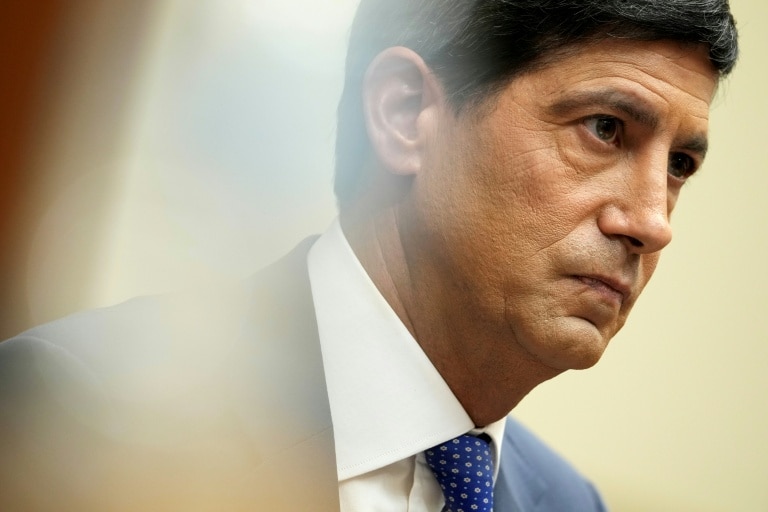
    Even as investors celebrated the cooling inflation print, Federal Reserve policymaker Kevin Warsh struck a cautious tone during testimony before the House Financial Services Committee on Tuesday, warning that the fight against inflation is far from over. “There might be some that look at this morning’s data and say, ‘Oh, mission accomplished! Everything is swell,’” Warsh said. “That is not my view.” He added that Fed officials have “no tolerance” for persistently high inflation, and remain committed to taming the multi-year inflation surge that has hit U.S. household budgets. “What I’d say is there’s plenty of work to do,” Warsh said.

    Oil prices extended their ongoing rally on Wednesday, despite the soft inflation data, after U.S. forces carried out new strikes on Iranian targets and Trump reimposed a naval blockade on ships traveling to and from Iranian ports. By 0200 GMT, West Texas Intermediate crude was up 0.9% to $80.04 per barrel, while Brent North Sea crude rose 1.1% to $85.68 per barrel, extending a double-digit percentage gain that has built up over the past week of escalating tensions.

  • China economic growth falls sharply, missing target

    China economic growth falls sharply, missing target

    Against a backdrop of shifting global geopolitics and uneven domestic momentum, China’s economic expansion slowed significantly in the second quarter of 2026, according to official government data released this week. The world’s second-largest economy recorded a 4.3% year-on-year GDP growth between April and June, a step down from the 5% expansion posted in the first quarter and falling short of Beijing’s full-year growth target.

    This latest GDP reading marks the first full quarterly economic report since the outbreak of the Iran war in late February, a conflict that has sent global crude oil prices swinging higher and created new inflationary and supply chain pressures for energy-importing economies like China. The softer growth outcome comes just one day after Beijing released surprisingly strong trade data that showed Chinese exports surged 27% year-on-year in June, defying many analysts’ expectations of a global trade slowdown.

    Earlier this year, in March, Chinese policymakers adjusted the country’s annual economic growth target to a range of 4.5% to 5%, the lowest official growth goal set since 1991. Many economic analysts have framed this downward adjustment as a deliberate policy choice, designed to give Beijing more room to maneuver while navigating overlapping domestic and global economic headwinds, rather than a sign of unplanned weakness.

    Beyond external pressures from oil market volatility, separate economic data released Wednesday laid bare the persistent domestic challenges weighing on China’s growth trajectory. The country’s multi-year property market downturn continued in June, with average new home prices contracting for another month. While the 0.1% monthly decline represented a slight easing in the pace of contraction compared to May, the property sector remains a major drag on household wealth and broader economic activity.

    Consumer spending, another key pillar of domestic demand, also remained muted in June. Retail sales posted a modest 1% year-on-year rise, a small improvement from the 0.6% contraction recorded in May but still far below the pre-pandemic levels of consumption growth that supported steady economic expansion.

    Despite the softness in domestic demand, the June trade data revealed bright spots in China’s export sector that are driving unexpected gains. Global demand for advanced semiconductors, which power the rapidly expanding network of artificial intelligence data centers around the world, has pushed up the value of China’s high-tech exports significantly. Additionally, booming international appetite for Chinese-made electric vehicles helped drive a new export milestone: monthly car shipments topped one million units for the first time in China’s history, cementing the country’s position as the world’s largest exporter of automobiles.