博客

  • ‘Back to where it belongs’: Path is clear for the Dragons after club confirms Dean Young will coach the team next year

    ‘Back to where it belongs’: Path is clear for the Dragons after club confirms Dean Young will coach the team next year

    After a weeks-long structured selection process that followed a turbulent season for the club, the search for St George Illawarra Dragons’ next permanent full-time head coach has come to a close. The position has been awarded to Dean Young, a 2010 premiership-winning club legend, who will lead the team for the next two seasons.

    Young stepped into the interim head coach role earlier this year after the club dismissed former coach Shane Flanagan, following a disastrous start to the season that saw the Dragons lose their opening 11 consecutive matches. His first game at the helm was the annual Anzac Day clash against the Sydney Roosters, a contest that ended in a lopsided 62-16 defeat for the Red V — a result that stood as the lowest point of the club’s 2024 campaign.

    Despite the rough opening, on-field performance has shown marked improvement under Young’s interim leadership. Holding a 2-8 win-loss record in matches since his appointment, the side has come close to securing additional upset wins that would have flipped their seasonal record. While a late-season miracle that would lift the Dragons off the bottom of the ladder (and avoid the wooden spoon) remains extremely unlikely, observers and club leadership have highlighted clear encouraging signs: the team’s young forward pack has turned in standout, improving performances week over week, and the club is set to welcome a wave of high-profile recruited stars ahead of the 2025 season.

    Speaking after his appointment was confirmed, Young emphasized the honor and weight of leading the historic club. “Leading this great club is a privilege, but I understand that it also comes with responsibility and pressure,” he said. “I have experienced success and failure in this game, as both a player and a coach. Those experiences have given me the confidence to lead this club back to where it belongs. I want our fans to be proud of our football team — proud of how hard we compete and how consistent we are. It’s my job to create an environment that delivers these values. We have only just started to see the potential of this team. There’s a lot more work to be done.”

    Fellow 2010 premiership winner Ben Hornby was also shortlisted for the permanent role, but the club’s board and shareholders issued a unanimous endorsement of the leadership team’s recommendation to appoint Young. Dragons Chief Executive Tim Watsford explained that the appointment was based on merit, not Young’s legacy with the club. “We said from the outset that we would take the time needed to make the right decision for the club’s future,” Watsford said. “This has been a structured process, and Dean has emerged as the candidate we believe is best placed to lead the next phase of our football program. Dean’s history with the Dragons is well known and respected, but that is not why he has been appointed. This decision is based on the strength of his football plan, his connection with players, his leadership of staff, his alignment with our pathways and recruitment strategy, and his understanding of what this club needs to become. We understand our members and supporters want results. So do we. Dean recognises the responsibility that comes with this role, and he will be supported by a football structure designed to drive standards, development and performance throughout the program.”

    The club’s incoming high-profile recruits have already signaled their support for Young’s appointment: five new players — Scott Drinkwater, Connor Watson, Luke Metcalf, Phil Sami and Keaon Koloamatangi — will join the Dragons ahead of the 2025 season, a group of signings widely expected to add enough firepower to push the side into its first finals appearance since 2018. Just last week, Drinkwater publicly stated he hoped Young would secure the permanent head coach role.

    Dragons Chair Andrew Lancaster confirmed the board has given full backing to the new coach, while also outlining clear performance accountability. “The board understands the significance of this appointment and all that comes with it,” Lancaster said. “Tim and our leadership team have undertaken a thorough selection process, and the Board is confident in, and supportive of, that process and the outcome. Dean has the board’s full support, and there will be clear accountability for the performance standards expected of him in the role.”
  • Brisbane couple welcome ‘one in 15 million’ identical quadruplets

    Brisbane couple welcome ‘one in 15 million’ identical quadruplets

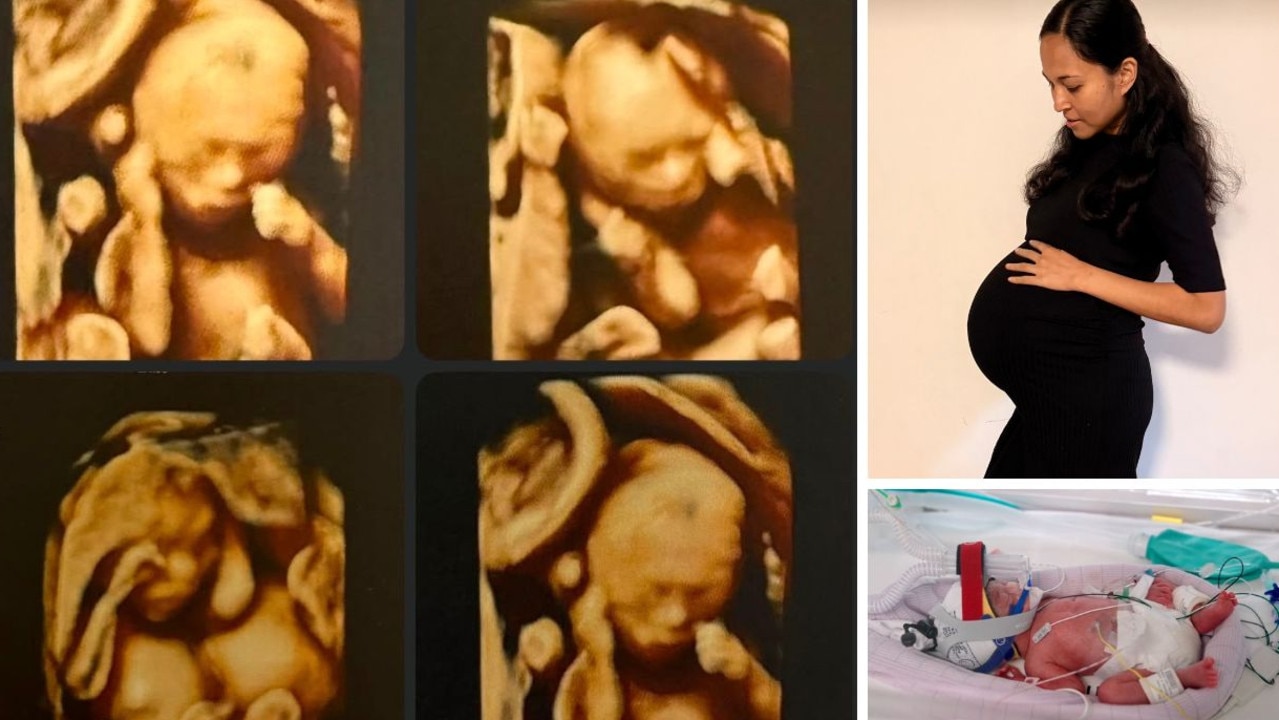
    Against staggering 1-in-15-million odds, a Brisbane mother has welcomed four naturally conceived identical quadruplet girls, expanding her family from six members to 10 in a single moment that has stunned medical teams.

    Thirty-four-year-old Jenitar Na-amoana and her husband Jortham are now the parents of newborns Emily, Harriet, Alexa, and Catherine, who were delivered via C-section on July 14 at the Royal Brisbane and Women’s Hospital. Prior to the quadruplets’ arrival, the couple already had four children ranging in age from 1 to 10 years old.

    Medical professionals overseeing the high-risk pregnancy say this birth is an extremely rare event. Unlike many multiple births that rely on fertility assistance, the Na-amoana quadruplets are monozygotic: they developed from a single fertilized egg that split into four identical embryos during early embryonic development. Even more unusually, all four fetuses shared the same placenta — a combination that leading obstetric staff describe as unheard of in clinical practice.

    Dr. Alexa Bendall, the lead specialist caring for Jenitar throughout her pregnancy and the namesake for quadruplet Alexa, called the outcome a remarkable miracle. “Jenitar has taken everything in her stride from day one – we have never seen a spontaneously conceived pregnancy of this type with quads, and she has somehow dodged every complication and risk for both herself and her babies to be here today, with four gorgeous newborn girls,” Bendall shared. The pregnancy reached 28 weeks and four days, a milestone the medical team had viewed as a major success. “We always said that if we could get her to 28 weeks, we would be doing well, so we are happy she could make it to this gestation,” Bendall added.

    All four newborns are currently receiving specialist care in the hospital’s neonatal intensive care unit (NICU), where they will remain to grow and develop to full-term size. Medical updates confirm the quadruplets are currently in stable condition as they continue to gain strength.

    As the family adjusts to their sudden expansion from six to 10 members, they have launched a public GoFundMe campaign to cover the unexpected costs of caring for four newborns at once. In a statement shared on the fundraising page, Jenitar noted that while the couple is overflowing with gratitude for their four miracles, the practical challenges of their new life are overwhelming. “Our precious miracles have arrived safely, and while our hearts are overflowing with gratitude, the reality of caring for four newborn babies at once has brought challenges we never could have imagined,” she wrote. The family is seeking support to purchase a larger 10- to 12-seat van, acquire essential baby gear, and cover ongoing medical costs, travel expenses, and daily living needs that come with raising four additional children.

  • Truck driver reported over concrete slab carnage crash

    Truck driver reported over concrete slab carnage crash

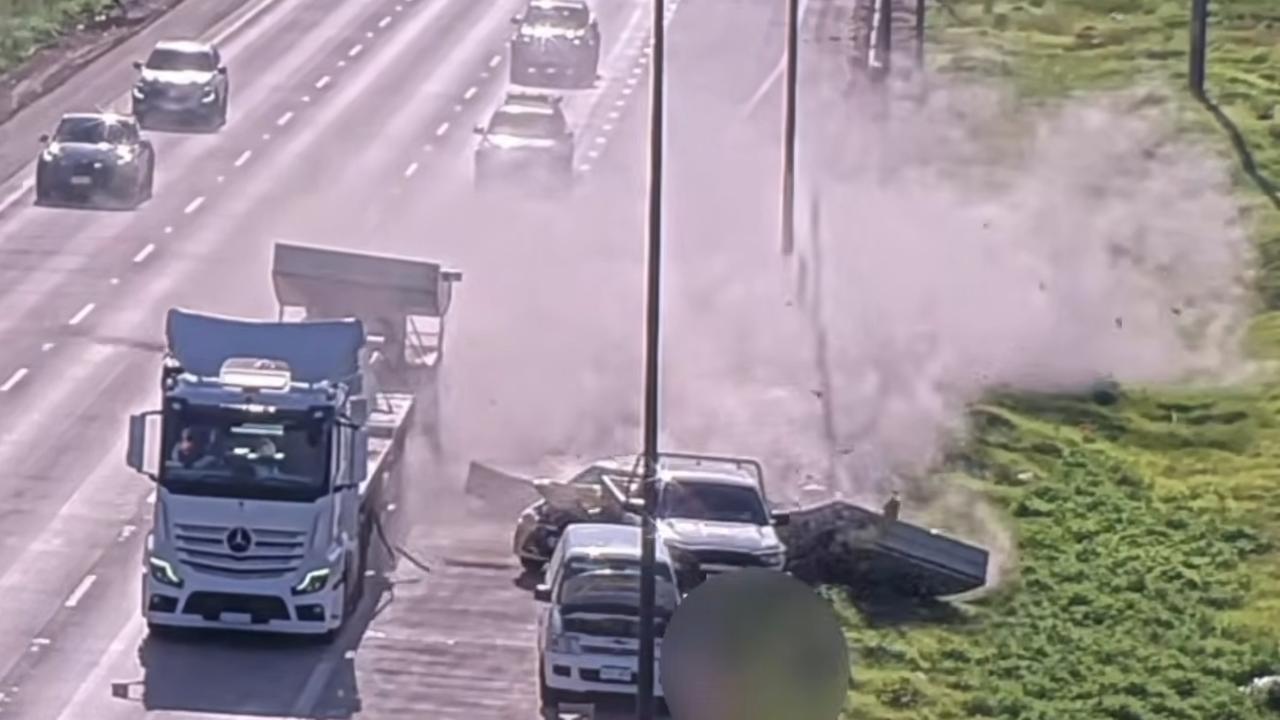
    A serious crash that triggered major traffic chaos on one of South Australia’s busiest arterial routes has left a 38-year-old truck driver facing criminal charges and an immediate year-long driving suspension, South Australian Police have confirmed. The dangerous incident unfolded on the North-South Motorway at Bolivar on the morning of Friday, July 10, as the truck driver was merging between lanes.

    Two 15-tonne concrete panels secured to the back of the truck slipped their restraints and crashed onto the road surface, before careening into the hard shoulder where three parked cars had stopped for an earlier vehicle breakdown. Two pedestrians who had exited the broken-down vehicles were caught in the path of the sliding heavy cargo.

    Authorities have described the outcome as nothing short of miraculous: no one was killed in the incident. One pedestrian suffered a suspected broken arm, while the other two people involved escaped with only minor injuries. “It is a miracle that we are not talking about multiple fatalities here,” a police spokesperson noted in the immediate aftermath of the crash.

    Following their investigation, police confirmed the driver, a resident of Para Hills West, faces four distinct allegations: causing harm by dangerous driving, operating a mobile phone while behind the wheel, failing to wear a seatbelt, and committing a serious breach of load restraint regulations that created extreme public risk. Officers have issued an immediate 12-month driving disqualification notice, and the driver is scheduled to appear at a local court at a later date to answer the charges.

    The crash brought southbound traffic on the major motorway to a complete standstill for hours while emergency crews responded, damaged vehicles were towed from the scene, and tonnes of concrete debris were cleared away. Commuters faced lengthy delays as authorities worked to reopen the roadway, leaving widespread disruption across Adelaide’s northern transport network.

  • Spain’s world champions head home to million-strong Madrid welcome

    Spain’s world champions head home to million-strong Madrid welcome

    Fresh off a historic 1-0 final victory over Argentina at the 2026 World Cup hosted in the United States, Spain’s men’s national football team is set to return to Madrid on Monday for a jubilant heroes’ welcome that is projected to draw up to one million adoring fans across the parade route.

    This triumph marks only the second men’s World Cup title in Spanish football history, following the team’s breakthrough win in South Africa 16 years prior in 2010. For millions of young Spanish supporters, this is the first men’s world title they have ever witnessed, turning the victory into a historic outpouring of national pride across the football-obsessed nation.

    After Sunday’s tense final in East Rutherford, where La Roja held off a persistent Argentine defense to secure their narrow win, the squad and coaching staff led by manager Luis de la Fuente are scheduled to land at Madrid’s airport at 12:50 pm local time (1050 GMT), bringing the golden World Cup trophy back to Spanish soil for the first time in 16 years.

    Following their arrival, the team is set to be received by Spain’s head of state King Felipe VI and Prime Minister Pedro Sanchez at official residences before boarding an open-top parade bus to begin the victory procession through central Madrid starting at approximately 4:30 pm. According to Francisco Martin, the central government’s representative in Madrid, the parade will kick off near Moncloa Palace, Sanchez’s official residence, and travel through the city center to Cibeles Square, the iconic traditional gathering spot for Spanish national team celebrations that has hosted similar events following major tournament wins for decades. A formal victory ceremony with the full squad will then be held at the square.

    To manage the unprecedented crowds expected to line the parade route, local authorities have rolled out extensive security and public transport adjustments. In total, 2,050 local police officers and 400 Civil Guard personnel have been deployed to maintain order and ensure the event runs smoothly. As of Monday morning, however, final details of the timetable were still being adjusted: Prime Minister Sanchez is scheduled to complete a brief official visit to Algeria before returning to Madrid in time for the celebrations, and the royal household had not issued a final confirmation of King Felipe VI’s attendance at the events.

    Even before the team touched down on Spanish soil, spontaneous celebrations broke out across the entire country on Sunday night immediately after the final whistle, stretching from the crowded streets of Madrid to the smallest rural villages across Spain. Thousands of supporters who had gathered in city-center bars and three official fan zones flooded into the capital’s streets the moment the match ended, with car horns blaring across the city and fireworks lighting up the warm summer sky.

    An Agence France-Presse reporter on the ground at Madrid’s Colon Square, one of the city’s main fan zones, documented jubilant supporters draped in Spain’s iconic red-and-yellow national flag singing, dancing, and setting off flares and fireworks long into the night. Crowds chanted repeatedly “Campeones! Campeones!” (Champions! Champions!) and shouted “Que viva España!” (Long live Spain) as they celebrated a rare golden era for Spanish football: this 2026 men’s World Cup title comes just two years after Spain won the men’s Euro 2024 championship, and the Spanish women’s national team already holds the women’s World Cup title won in 2023.

    In an official statement posted to social media platform X, the Spanish Royal Household praised the team’s historic achievement, writing “You have faced each challenge with the conviction of a great team and have carried the name of Spain to the very top.” The statement noted the title was a reward for the team’s “exemplary commitment in every match,” adding “Today, we celebrate a title. Tomorrow we will remember a legend.”

    Organizers and officials expect the celebrations to echo the massive outpouring that followed Spain’s 2010 World Cup win, when hundreds of thousands of fans packed Madrid’s streets to welcome the team home, marking another defining moment for Spanish football.

  • Children describe how Nigerian militants moving south are seizing more young captives

    Children describe how Nigerian militants moving south are seizing more young captives

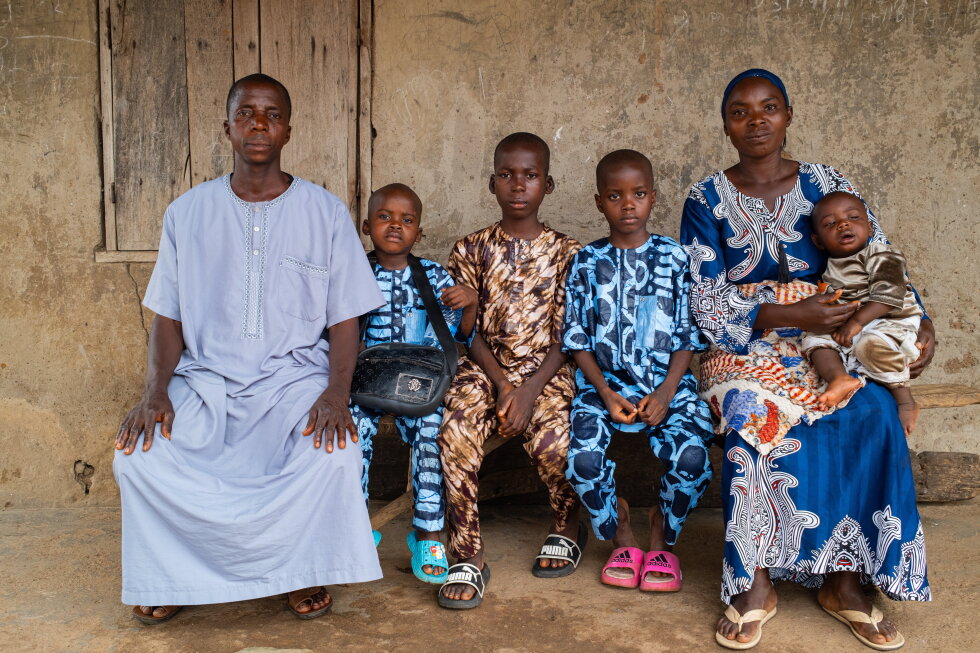
    In the quiet agrarian community of Oriire, southwestern Nigeria’s Oyo state, a day of joyous feasting and interfaith prayer unfolded Friday as dozens of schoolchildren snatched from their classrooms by al-Qaida-linked militants returned to the embrace of their families. For Aliyu Saheed, a local farmer whose three young sons – the youngest just 5 years old – were among the captives, the news of their July 10 rescue marked the most euphoric moment of his life, ending two months of sleepless nights haunted by fear he would never see his boys again.

    The mass abduction carried out on May 15 marked a worrying new chapter for Nigeria, Africa’s most populous nation. For years, large-scale school kidnappings by armed jihadist groups were concentrated in the conflict-battered northeast and northwest. But this attack, which targeted children as young as 3 in a region previously untouched by such violence, confirms what security analysts have warned about for months: armed factions are expanding southward, pushing beyond their traditional strongholds to seize new territory and control key natural resources.

    When the gunmen stormed three local schools, they abducted 39 children and three teachers, marching their captives into a sprawling nearby forest reserve that connects northward to Kwara State, a region already grappling with persistent militant abduction activity that often targets students for large ransom payments. The attack left one teacher dead during the abduction, with two more losing their lives while in captivity, local media reports confirm. Nigerian President Bola Tinubu has identified the perpetrators as Ansaru militants, a breakaway faction of the notorious Boko Haram group that has reemerged and grown more active across the country in recent years.

    Survivors of the two-month captivity have shared harrowing accounts of abuse and deprivation at the hands of their captors. Nine-year-old Shuaib, Saheed’s eldest son, recalled that the group was held in open ground without any shelter, left exposed to sweltering sun and heavy rain, fed only a meager diet of boiled rice and palm oil. “I could not say anything for fear of getting beaten,” Shuaib told the Associated Press. “They flogged us with a cane all over the body, and they hit me in the back with the butt of their gun.” Alamu Folawe, head of one of the targeted schools, added that the youngest children suffered the worst violence, with their mouths stuffed with cloth to muffle their cries and avoid drawing attention to the militants’ hideout.

    While the rescue operation – a joint effort by Nigeria’s military, intelligence services and police forces – resulted in eight kidnappers arrested and multiple other militants killed, many of the freed children carry lasting physical scars and deep psychological trauma. Eight-year-old Kehinde Kaosarat, one of the last children released from hospital, has not left her mother’s side since returning home, and multiple families report that their children now refuse to consider going back to school. For Saheed, this fear is shared: “Sending them back to the school does not sound meaningful to me right now,” he said. The trauma comes at a time when Nigeria already has one of the highest out-of-school child populations in the world, a crisis that deepens with every attack on educational institutions.

    The abduction has drawn urgent new attention to Nigeria’s under-patrolled forest reserves, which have increasingly become strategic corridors and hiding spots for expanding armed groups. “The thing to learn is that the forested areas of the country must be much better surveilled because that is where those armed groups operate and keep their victims,” explained Joachim MacEbong, senior analyst at global risk consultancy Control Risks.

    The militant expansion into the southwest has piled mounting pressure on President Tinubu, who was elected in 2023 on a campaign promise to end Nigeria’s persistent security crisis. While the U.S. military provides limited logistical and intelligence support to Nigerian forces focused on the northern insurgency, the country’s overstretched security apparatus remains largely absent from remote southern communities bordering forest zones. Though Tinubu announced that the Ansaru informant network was dismantled during the rescue, analysts note that the root drivers of insecurity – including systemic corruption and weak governance – remain unaddressed.

    James Barnett, an Africa security research fellow at the U.S.-based Hudson Institute, pointed out that Ansaru has spent years quietly building networks in southwestern Nigeria, and a high-profile attack like this could encourage further militant activity in the region. Even as the community came together Friday to celebrate the children’s safe return – with Christian and Muslim leaders joining in prayers of gratitude – many residents remain on edge. Hundreds fled the area after the abduction, and while some have begun to trickle back, farmers whose lands sit close to the forest reserve still hesitate to resume their daily work.

    “The rescue of the Oriire abductees is wonderful news and should inspire some confidence in Nigeria’s ability to better manage these threats,” Barnett said. “But it is not the end of insecurity in the southwest or Nigeria as a whole.”

  • Japanese beetle advances through northern Italy’s vineyards and orchards, frustrating farmers

    Japanese beetle advances through northern Italy’s vineyards and orchards, frustrating farmers

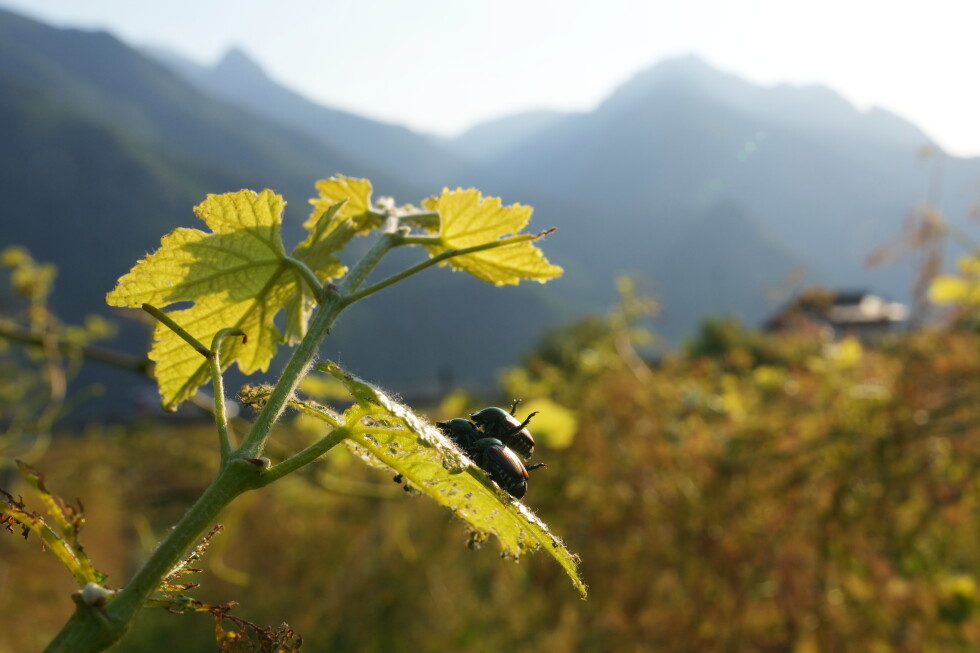
    In the terraced mountain vineyards of Donnas, a small Italian town nestled along the Alpine edge, a quiet but devastating invasion is unfolding. Iridescent green Japanese beetles, an invasive species with no natural enemies in Europe, are steadily climbing the slopes, leaving a trail of damaged crops and anxious producers in their wake. This destructive pest, which has plagued American agricultural landscapes for more than a century, is a relatively new threat to the continent, first spotted in 2014 near Milan’s bustling Malpensa Airport.

    Since that first detection, the species, formally named *Popillia japonica*, has spread rapidly across northern Italy. It has already established robust populations in the northeastern regions of Lombardy, Piedmont, and Valle d’Aosta, reaching Donnas’ historic terraced vineyards just last year. For local winemaker Luciano Zoppo Ronzero, who grows prized Nebbiolo grapes on these centuries-old mountain plots, the invasion is progressing at an alarming rate. “We’re seeing the popillia steadily advance from terrace to terrace across our historic vineyards,” he explained. “We’re now about the 10th terrace and can already see the popillia attacks. This means they’re consuming and gradually moving up the mountain.”

    What makes the Japanese beetle such an extraordinary threat to European agriculture is its insatiable appetite and ability to spread rapidly. The pest feeds on more than 300 different species of plants, trees, and grasses, and travels in massive swarms when foraging. Adult beetles easily hitchhike across long distances on passenger trains, private cars, and commercial airplanes, helping the species colonize new regions far from their original point of introduction. After feeding through the summer months, adult beetles mate and lay eggs that hatch into larvae, which live underground feeding on grass roots before maturing into adults and restarting the destructive annual cycle.

    Thanks to its rapid spread and wide-ranging damage potential, the Japanese beetle has been added to the European Union’s list of priority invasive pests, requiring member states to implement active measures to contain and eradicate confirmed outbreaks. As of 2024, the beetle has become permanently entrenched in Italy, Switzerland, and Germany, where management efforts now focus on slowing expansion rather than full eradication. By contrast, population levels in France and Spain remain low enough that experts still hold out hope for eliminating the pest entirely, according to Daniela Lupi, an entomologist at the University of Milan.

    Italy’s agricultural sector is particularly vulnerable, as the beetle advances through the Po River Valley — the country’s most productive agricultural heartland often called Italy’s breadbasket. The full economic damage of the invasion is still difficult to calculate: unlike pests that kill plants outright, Japanese beetles eat away the soft leaf pulp, leaving behind a telltale lacy skeleton that weakens plants and reduces yield without immediately killing healthy specimens. Even so, Coldiretti, Italy’s largest agricultural lobby, warns the pest poses an existential threat to the country’s iconic farm production.

    “In some areas, the beetle has destroyed the harvest,” said Lorenzo Bazzana, head of economic affairs at Coldiretti. Beyond commercial crops, the larvae, commonly called grubs, cause widespread damage to grassroots, ruining recreational turf including lawns, golf courses, and public playing fields. For viticulturists like Ronzero, the damage goes beyond just lost yield. By stripping vines of their leaves, the beetles not only cut the plants’ ability to photosynthesize but also expose developing grape clusters to dangerous excess sun exposure. “What scares me is the fact that in the end the grapes don’t ripen,” Ronzero said. “If the don’t ripen, it means we’re not bringing home a splendid harvest, as we had hoped, but something unusable.”

    Researchers and farmers are testing a range of control strategies to slow the beetle’s advance. Agricultural experts point to targeting larvae as the most promising path for long-term suppression. After the beetle was recently detected near Verona’s Valerio Catullo Airport, scientists began experimental releases of a microscopic parasite that targets beetle grubs in the surrounding area. Pheromone traps, which lure adult beetles to their capture, are also widely deployed across at-risk regions. In Donnas, wine producers have turned to pesticide treatments to protect their vines, though the benefits are short-lived, and applying chemicals on the region’s steep mountain terraces is extremely labor-intensive.

    Lupi emphasized that without coordinated, aggressive action, the beetle population will continue to grow, causing widespread harm to fruit crops, grasses, and ornamental plants across the continent. She noted that the pest poses no direct risk to human health, but the impact on agricultural production could be severe. “There are no problems for the human population, because they are not so dangerous, but the production is really, really lowered,” she said.

  • Rayann EL Houli: Woman accused of joining ISIS to be freed

    Rayann EL Houli: Woman accused of joining ISIS to be freed

    A 34-year-old Australian woman who stands accused of traveling to Syria to join the Islamic State (ISIS) terrorist group more than a decade ago is set to walk free on bail within hours, after a Melbourne magistrate ruled that exceptional circumstances justified her release ahead of trial.

    Rayann El Houli, a Melbourne native, was formally charged in May this year with two key offenses: being a member of a designated terrorist organization and illegally entering a declared conflict zone. The charges were laid eight months after she returned to Australia from Syria alongside her four children, ending a six-year detainment in a Kurdish-run internally displaced persons camp following the collapse of the ISIS caliphate.

    Court documents and prosecution allegations lay out a timeline of El Houli’s time in the Middle East: prosecutors claim she first traveled to Syria in 2014, when she was just 21 or 22 years old, alongside her first husband Allak Hamad, with the explicit intention of joining ISIS ranks. Hamad was killed fighting for the group by early 2015, and El Houli went on to marry two more ISIS-linked fighters, both of whom also died in conflict before she wed a third member in 2018, a marriage that ended in divorce within months.

    In 2019, after the territorial defeat of ISIS, El Houli was captured by Kurdish forces and held in Syria’s Al-Hawl camp, a sprawling facility notorious for housing thousands of former ISIS supporters and their families. She was smuggled out of the camp in June 2023 and eventually made her way back to Australia, where she was taken into custody to face terror-related charges.

    El Houli’s bail application was heard over a two-day hearing last week, with Melbourne Magistrate Brett Sonnet releasing his ruling on Monday afternoon. In his decision, Sonnet confirmed that he found clear exceptional circumstances to meet the requirements for bail, noting that the assessed risk El Houli poses to the Australian public is “relatively low”.

    “In my view the application for bail must be granted,” Sonnet told the court.

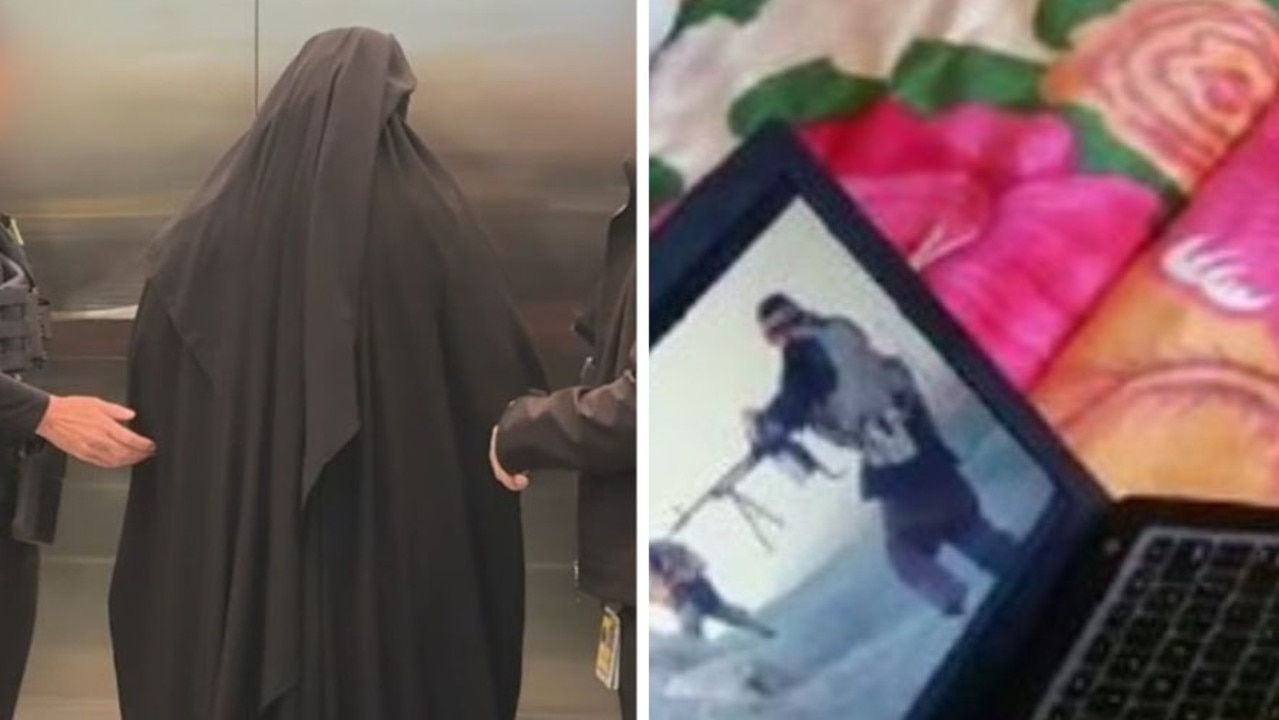
    Prosecutors had pushed back hard against bail, presenting disturbing evidence collected by Australian Federal Police that they argued demonstrated El Houli’s deep commitment to ISIS ideology during her time in Syria. Senior AFP Constable Paul Sherlock told the court that communications El Houli sent to family in Australia before 2019 clearly showed her active support for the terrorist group.

    This evidence included messages encouraging other Australians to travel to Syria to join ISIS, as well as multiple videos filmed by El Houli that show her exposing her young children to extremist propaganda. One of the most disturbing videos, dated March 2016, captures El Houli questioning her then two-year-old eldest child about the killing of non-believers by ISIS fighters. Prosecutors say the video shows her asking the toddler to describe how mujahideen slaughtered “kuffar” (infidels) and “apostates” with knives, prompting the child to mimic the actions. Additional evidence presented to the court includes a photo allegedly showing El Houli teaching her child how to hold a toy rifle.

    Despite the severity of the allegations and the disturbing nature of the evidence, the court heard arguments from El Houli’s defense that painted a picture of a young woman manipulated into joining the group, who has since renounced all ties to violent extremism. Her barrister, Peter Morrissey SC, told the court that El Houli was a naive young woman when she traveled to Syria, who “drank the Kool-Aid” and followed her husband into the conflict zone, without fully understanding the ideology she was aligning herself with.

    Morrissey added that in the months since her return to Australia, El Houli has worked diligently to rebuild her life, addressing ongoing physical and mental health trauma, enrolling her four children in local schools and community sports programs, and completely cutting all ties to extremist groups. “She renounces ISIS and violent jihad, wanting nothing to do with it,” Morrissey told the court.

    Magistrate Sonnet echoed many of these points in his ruling, noting that while the videos presented by prosecutors were unquestionably disturbing, he accepted the assessment of clinical psychologist Katie Seidler, who used standardized clinical assessment tools to evaluate El Houli and found her to be at low risk of reoffending or supporting extremism. Sonnet also highlighted a number of strong protective factors that support bail: El Houli has custody of her four minor children, has the consistent support of her extended family in Australia, has fully cooperated with federal law enforcement since her return, and has already accessed ongoing physical and mental health care to address the trauma she experienced during her time in Syria.

    El Houli is expected to be released from custody on Monday afternoon, with strict bail conditions yet to be publicly announced ahead of her upcoming trial.

  • Spanish and Argentinian fans react outside World Cup final

    Spanish and Argentinian fans react outside World Cup final

    Hours after the final whistle of Sunday’s highly anticipated World Cup final, crowds of football supporters gathered across public spaces in both Spain and Argentina, as well as in fan zones around the globe, to process the historic match’s outcome. When interviewed by BBC correspondents on location, supporters from both nations opened up about the intense emotional rollercoaster they had experienced over the course of the 90 minutes and beyond.

    For Spanish fans, the air was filled with unbridled joy and celebratory energy. Ecstatic crowds waved red and yellow flags, chanted team anthems, and embraced one another as they reflected on their team’s road to victory, calling the win a moment they would cherish for generations. Many supporters spoke of the years of rebuilding and hard work that had led the national squad to the final triumph, framing the result as a reward for both the players and the loyal fanbase that had stood by the team through every match.

    Meanwhile, just blocks away in fan zones hosting Argentine supporters, a far different mood hung over the crowd. Disappointment hung thick as dejected fans hugged one another in consolation, many still processing the narrow defeat that kept their team from lifting the coveted trophy. Many Argentine fans spoke of the high hopes they had carried into the match, and while heartbroken by the outcome, many still expressed pride in their team’s performance throughout the tournament, promising to support the squad when they return home for future competitions.

  • Scott Pape has compared switching super strategies to a married man on Tinder

    Scott Pape has compared switching super strategies to a married man on Tinder

    Well-known Australian finance commentator Scott Pape, popularly known as the Barefoot Investor, has issued a sharp warning to Australian superannuation holders against making impulsive portfolio changes in response to viral market crash warnings, using a striking analogy to drive his point home. Pape’s comments came after a 42-year-old superannuation member, identified only as James, reached out for guidance following a high-profile podcast appearance from veteran investor Jeremy Grantham.

    Grantham, the British billionaire co-founder of global asset management firm GMO who built his reputation for correctly predicting both the 2000 dot-com collapse and the 2008 global financial crisis, recently appeared on *The Diary of a CEO* podcast. In that episode, titled “Billionaire’s WARNING: I’m SELLING. The Crash Is Already Here!”, Grantham doubled down on his long-held claim that the U.S. stock market is currently the largest investment bubble in American history. He predicted a catastrophic 70% downturn, dismissed cryptocurrency as worthless, and drew parallels between the ongoing artificial intelligence boom and the unsustainable dot-com bubble of the late 1990s.

    Alarmed by Grantham’s warnings, James told Pape he planned to reallocate his superannuation and personal investment holdings away from U.S. and Australian equities over fears of an imminent market collapse. Pape responded by acknowledging that he does not fault James for feeling anxious, but made clear he found the podcast itself reckless. Pape compared the clickbait-driven warning to a married man mindlessly swiping through dating app Tinder: a provocative act designed to spark unnecessary dissatisfaction with a stable, long-term arrangement in favor of a riskier, more glamorous alternative.

    “That podcast felt like the financial version of a married bloke on Tinder,” Pape wrote in his latest advisory post. “The whole thing is designed to make you restless and think ‘Maybe I should ditch my boring old index funds for some sexy emerging markets.’” He went on to dismiss the strategy of timing the market based on crash predictions as a “rubbish way to invest your money.”

    Notably, Pape conceded that he actually agrees with much of Grantham’s core analysis: U.S. and Australian equities do show signs of significant overvaluation right now. Where he disagrees sharply is with the advice for ordinary retail investors to sell their holdings and exit the market in anticipation of a crash. Pape pointed out that profiting from a market crash requires being correct not once, but twice: an investor must sell before the downturn hits, then correctly time their re-entry to buy back in at the bottom. That kind of consistent market timing is notoriously difficult even for professional investors, he argued.

    As evidence, Pape noted that Grantham has been labeling the U.S. stock market a bubble since 2021. In the years since his first warning, the S&P 500 has still surged more than 100%, leaving investors who followed his early advice out of the market and missing out on massive gains.

    For ordinary long-term investors like James, who is 42 and has decades of contributing to and growing his superannuation before retirement, Pape advocated for a “married to your portfolio” approach. He explained that he committed to his own diversified holdings years ago, vowing to stick with them through both market booms and corrections. Historical data, he noted, consistently shows that equities deliver stronger long-term returns than any other major asset class, even with periodic steep crashes.

    “Every crash has eventually been followed by new highs,” Pape said. “So I keep a few months’ cash in the bank and accept that happily ever after only exists in fairy tales.” His advice to James and other anxious Australian superannuation holders is straightforward: stay committed to a diversified long-term equity portfolio, keep a cash buffer to avoid being forced to sell during a downturn, and avoid the hype-driven “spicy dating apps” of viral market crash predictions.

  • South Korea’s Kospi drops nearly 5% as some AI stocks swoon, while oil keeps climbing

    South Korea’s Kospi drops nearly 5% as some AI stocks swoon, while oil keeps climbing

    On a trading day marked by dual market shocks from geopolitical risk and profit-taking in the booming technology sector, most major Asian equity benchmarks booked modest gains on Monday, but South Korea’s benchmark Kospi index plummeted nearly 5% amid a widespread selloff of artificial intelligence-linked stocks.

    Japanese financial markets remained closed for a national holiday, leaving regional trading without one of its largest liquidity providers, while U.S. equity futures pointed to a mixed opening following last week’s broad downturn. The most dramatic market movement came outside of equities, however, as oil prices surged more than 2% following nine consecutive nights of U.S. military strikes in the Middle East, with escalating exchanges of attacks between Washington and Tehran pushing the two nations closer to full-scale open conflict.

    By early Monday trading, international benchmark Brent crude climbed 2.6% to settle at $90.40 per barrel, crossing the key $90 threshold that has not been hit in recent months. U.S. benchmark West Texas Intermediate crude rose 2.2% to reach $83.58 per barrel. Commodities strategists Warren Patterson and Ewa Manthey of ING warned in a client note on Monday that ongoing tit-for-tat strikes between the U.S. and Iran have already produced heavy casualties on both sides, and unconstrained escalation could trigger a wave of large-scale attacks across the Persian Gulf that would upend global energy supplies.

    The analysts added that commercial tanker traffic through the Strait of Hormuz, the world’s most critical chokepoint for global oil shipments that carries roughly a fifth of the world’s daily oil consumption, has already slowed to a near standstill, creating immediate upward pressure on energy prices across the board.

    The selloff in AI-linked equities hit South Korea particularly hard, as the Kospi has been one of the biggest beneficiaries of the multi-year global AI investment boom. The index sank 4.9% to close at 6,490.97, with two of its largest market capitalization stocks leading the downturn: Samsung Electronics dropped 4.4%, while major memory chip manufacturer SK Hynix declined 3.3%.

    In Taiwan, another market heavily weighted toward AI and semiconductor stocks, the Taiex index posted a marginal loss of less than 0.1% in a far milder downturn. A notable bright spot in the region was leading chipmaker Taiwan Semiconductor Manufacturing Co. (TSMC), which climbed 2% following a 7.3% drop on Friday. The Friday dip came after TSMC announced plans to invest an extra $100 billion to expand chip manufacturing capacity across the United States.

    Elsewhere in Asia, the picture was far more positive. Hong Kong’s Hang Seng Index gained 2.1% to close at 25,105.78, while mainland China’s Shanghai Composite Index rose 1.2% to 3,808.39. Australia’s S&P/ASX 200 notched a small 0.2% gain to 8,815.30, while India’s Sensex bucked the regional upward trend to slip 0.9%.

    The current wave of AI stock selling originated on global markets last Friday, when chip and AI-related equities dropped sharply that pulled major global benchmarks lower. Investor jitters have grown in recent weeks as massive new capital expenditure pledges for AI expansion have fueled fears that the sector may be entering an asset price bubble, prompting many institutional and retail investors to sell positions to lock in profits after months of strong double-digit gains.

    Market sentiment was further shaken last week by the launch of a new high-powered Chinese AI model from Beijing-based technology firm Moonshot AI. The release of the Kimi K3 open-source AI model mirrored the market impact of the so-called “DeepSeek moment” that rattled global equity markets in early 2025. The new model is seen as further evidence that lower-cost, high-capability Chinese AI developers are increasingly gaining market share at the expense of Western rivals including Anthropic’s Claude and OpenAI’s GPT series.

    The downturn in AI equities spilled over into Wall Street at the end of last week, with the benchmark S&P 500 closing the week down 1% at 7,457.69. The Dow Jones Industrial Average lost 0.8% to end at 52,146.42, while the technology-heavy Nasdaq composite dropped 1.4% to 25,520.24. Leading U.S. chip stocks all posted losses: AI chip giant Nvidia fell 2.2%, while Broadcom and Advanced Micro Devices (AMD) each dropped 1%.

    Separately, SpaceX, Elon Musk’s commercial rocket company, dropped 5.4% to fall below its $135 per share initial public offering price, hitting its lowest level since the stock began public trading on the Nasdaq last month.

    In currency markets, movements were relatively muted: the U.S. dollar edged slightly lower to 162.37 Japanese yen from 162.43 yen in prior trading, while the euro appreciated marginally to $1.1446, up from $1.1438.