博客

  • Ozempic-maker accuses rival of false advertising

    Ozempic-maker accuses rival of false advertising

    The global race to dominate the fast-expanding weight-loss pharmaceutical sector has erupted into open legal conflict, with Danish drugmaker Novo Nordisk — the manufacturer of blockbuster medications Wegovy and Ozempic — filing a federal lawsuit against its top competitor Eli Lilly in the United States on Tuesday. Novo Nordisk alleges Eli Lilly, which produces rival weight-loss and diabetes treatments Mounjaro and Zepbound, ran misleading national advertising campaigns that falsely positioned Lilly’s products as superior to Novo’s offerings.

    According to the lawsuit, Eli Lilly’s advertising intentionally skewed comparisons by pitting its highest approved doses for obesity and type 2 diabetes against older, lower-dose formulations of Novo Nordisk’s drugs, while deliberately omitting Novo’s newer, higher-strength treatment options that have launched in recent years. The incorrect cross-comparisons specifically pit Mounjaro against Ozempic and Zepbound against Wegovy, the suit claims, with the misleading framing designed to deceive patients and providers by burying critical clinical context to manufacture a false impression of Lilly’s superiority.

    John F. Kuckelman, senior vice president and group general counsel for Novo Nordisk, emphasized that patients and healthcare providers rely on accurate, up-to-date scientific data to make critical care decisions. “As new and more effective treatment options become available, people deserve accurate information that reflects the latest scientific evidence and helps them make informed care decisions,” Kuckelman said. “Healthcare companies have a responsibility to keep their public claims accurate and current — ineffective, fine-print disclaimers do not fix the misleading impression created by major national campaigns.”

    Novo Nordisk is seeking a court order to force Eli Lilly to pull the contested advertisements and run a court-mandated corrective advertising campaign to correct the misinformation. If Eli Lilly refuses to voluntarily remove the misleading spots, Novo noted it will file a motion for a preliminary injunction in the coming days to block the ads from airing.

    Eli Lilly has pushed back aggressively against the allegations, saying it stands firmly behind the accuracy and integrity of its advertising. A company spokesperson called the campaigns “truthful, transparent, and grounded in the most direct scientific evidence available — exactly what patients deserve.” The spokesperson added that Eli Lilly “will continue to focus on the science and defend against this lawsuit vigorously.” The Indianapolis-based drugmaker further argued that Novo is attempting to block the company from publishing results from what Eli Lilly calls a robust, gold-standard head-to-head comparison trial.

    The legal clash comes as the two pharmaceutical giants fight for market share in a U.S. weight-loss drug industry that industry analysts project will grow to exceed $100 billion in annual value by 2030. The explosive growth of the GLP-1 weight-loss drug segment has turned competition between the two leading manufacturers into one of the most high-stakes business rivalries in the global healthcare sector, with billions of dollars in annual revenue on the line.

  • Messi returns to Argentina for rest after World Cup final loss to Spain

    Messi returns to Argentina for rest after World Cup final loss to Spain

    After a hard-fought run to the 2024 men’s World Cup final that ended in a 1-0 extra-time defeat to Spain, global soccer icon Lionel Messi has returned to his home country of Argentina for a much-needed period of rest and personal time. The Argentina national team captain’s private aircraft touched down just outside his native Rosario at 6:27 a.m. on Tuesday, after a direct flight from Fort Lauderdale, Florida, where the tournament concluded over the weekend.

    Hundreds of devoted fans turned out in the early hours, gathering as early as 3:30 a.m. to welcome their hero home. Many brought national flags and hand-painted welcome signs, eager to catch even a quick glimpse of the star. Two young fans wearing Argentina’s iconic Albiceleste jerseys drew widespread attention for their heartfelt messages, one of which read: “Messi: You’re a legend. Thank you for bringing joy to our hearts. A whole country loves you!”

    Despite the warm crowd turnout, Messi opted to avoid a public appearance to maintain privacy for his family. Fans only got a fleeting look at the black SUV that met the group on the airport tarmac, which transported the soccer star and his family to their private gated community in Funes, a quiet town located roughly 185 miles north of the Argentine capital Buenos Aires.

    Messi traveled back to Argentina accompanied by his wife Antonela Roccuzzo and their three children, who joined him for the full duration of the North American-based World Cup tournament, supporting him from the stands at every match. Waiting for Messi upon his arrival in Rosario was his 68-year-old father Jorge Messi, who has been undergoing ongoing medical treatment for an undisclosed health condition; the Messi family first confirmed his father’s treatment schedule during the World Cup competition.

    This World Cup run marked a historic milestone for the 36-year-old forward, marking his third appearance in a World Cup final following runs in 2014 and 2022. He finished the 2024 tournament as runner-up for the Golden Boot award, netting eight goals throughout the competition, just two goals behind tournament top scorer Kylian Mbappé of France. With this result, Mbappé now holds the record for most all-time goals in men’s World Cup history with 22, moving one goal ahead of Messi’s career total.

    The rest of Argentina’s 26-man World Cup squad, led by head coach Lionel Scaloni, arrived back in Argentina a day earlier, touching down at Buenos Aires’ Ezeiza Airport on a chartered flight on Monday, one day after the 1-0 defeat in East Rutherford, New Jersey that saw Spain claim the title via a late extra-time goal from Ferran Torres.

    Following his short break in Argentina, Messi is scheduled to return to his club side Inter Miami in late July or early August to resume play in the ongoing Major League Soccer season.

  • Two very different men are at the heart of Ukraine’s political crisis

    Two very different men are at the heart of Ukraine’s political crisis

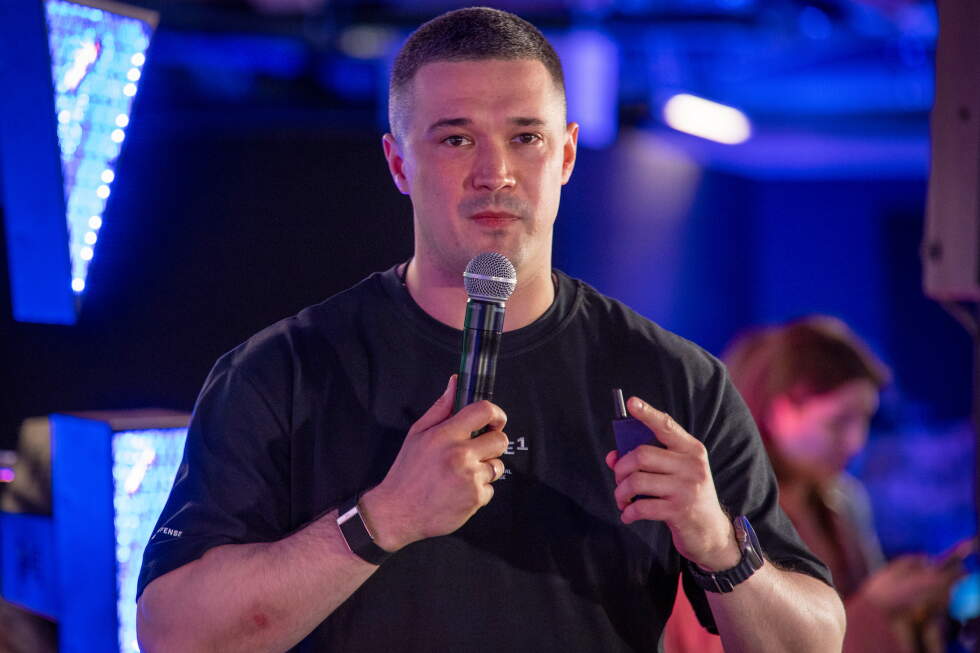
    Six months into Mykhailo Fedorov’s tenure as Ukraine’s youngest defense minister, a high-stakes feud between the 35-year-old tech entrepreneur turned military reformer and the country’s top military commander has upended Kyiv’s wartime leadership, triggering public protests and internal political turmoil amid Ukraine’s ongoing defense against Russia’s full-scale invasion. President Volodymyr Zelenskyy has removed Fedorov from his post as part of a broader government cabinet reshuffle, a decision that has exposed deep divides over how Ukraine should adapt its military strategy to a rapidly changing battlefield shaped by emerging technology.

    Fedorov, a self-described innovator with no prior military experience, built his reputation as the public face of Ukraine’s revolution in drone warfare. Before his appointment as defense minister in January, he led Ukraine’s digital transformation portfolio, where he rolled out widely praised e-governance platforms that streamlined public services. As defense minister, he pushed sweeping changes to military procurement rules to root out systemic corruption, and accelerated the development of Ukraine’s domestic drone industry that has redefined combat operations against Russian forces.

    Under Fedorov’s leadership, Ukraine emerged as a global pioneer in battlefield drone technology, a development that has drawn close attention from military powers across the United States, Europe, and the Middle East. He also took credit for restricting Russian military access to Elon Musk’s Starlink satellite internet network, a key communications infrastructure for Ukrainian forces on the front lines. In a social media statement released after his dismissal, Fedorov asserted that his tenure had turned Ukraine into both a global technological leader and a formidable defense powerhouse.

    The core of the conflict between Fedorov and his top military counterpart, 60-year-old Commander-in-Chief Gen. Oleksandr Syrskyi, centered on competing visions for military organization and reform. A veteran of Soviet military training who graduated from Moscow’s Higher Military Command School and served in the Soviet Artillery Corps, Syrskyi has long been associated with the rigid, top-down command culture of the Soviet-era military establishment. Fedorov has publicly accused Syrskyi of actively blocking the modernizing reforms he says are essential for Ukraine to succeed, arguing that the nature of the war has shifted dramatically with the rise of new technologies, and the old guard of military leadership has refused to adapt.

    Fedorov’s criticism aligns with widespread complaints from frontline soldiers and veterans, who have blamed Syrskyi’s traditional command approach for causing unnecessarily high casualties in costly offensive operations. Protesters across Ukraine have framed Fedorov’s ouster as evidence that Zelenskyy has chosen to side with the entrenched old military guard over a popular reformer, with demonstrations drawing veterans, active-duty soldiers on leave, and civilian supporters of change.

    Syrskyi, for his part, has rejected claims of internal conflict, writing in a column for Ukrainian military outlet Militarnyi that he is focused on fighting Russia, not internal battles with the defense ministry. He emphasized that the General Staff has always cooperated with the defense ministry, and will continue to do so regardless of who is appointed minister, noting that military personnel follow orders and fulfill their duties rather than choosing their command structure.

    The general does carry a complex legacy from the course of the war, however. He oversaw two of Ukraine’s most significant early victories: the successful defense of Kyiv in the opening weeks of Russia’s 2022 full-scale invasion, and the 2022 Kharkiv counteroffensive that reclaimed thousands of square kilometers of Ukrainian territory. But his nickname, “the Butcher”, gained widespread traction during his command of the months-long defense of Bakhmut, one of the war’s bloodiest battles that claimed tens of thousands of lives on both sides. His reputation suffered further damage following an investigation published by Ukrainian outlet Babel last month, which documented allegations of abuse and disproportionately high recruit casualties in the Skelia assault regiment, a unit closely tied to Syrskyi.

    The fallout from Fedorov’s dismissal has already reached into upper ranks of the Ukrainian military: the deputy commander of Ukraine’s air force resigned in protest, warning that the leadership change would weaken the country’s air defense capabilities. Many demonstrators have called for a generational shift in military leadership, saying new commanders are needed to prioritize preserving the lives of Ukrainian soldiers.

    For Zelenskyy, the controversy carries significant political risks. Critics have argued that the ouster was motivated by a desire to eliminate a potential future political rival, and the public backlash has weakened public confidence in his leadership amid ongoing wartime strain. On the Russian side, pro-war commentators have greeted news of Fedorov’s dismissal with open celebration, pointing to his role in organizing long-range drone strikes on Russian oil facilities that have triggered widespread domestic fuel shortages, as well as mid-range attacks that disrupted Russian military supply lines. While Russian commentators have acknowledged Syrskyi’s success in building layered defense lines that have stalled Russian advances, they have expressed hope that the public dispute over the reshuffle will fuel damaging internal political infighting in Kyiv and erode the cohesion of Ukraine’s military, playing into Moscow’s wartime objectives.

  • 2 firefighters die in a building fire near France’s Bordeaux airport, flights delayed

    2 firefighters die in a building fire near France’s Bordeaux airport, flights delayed

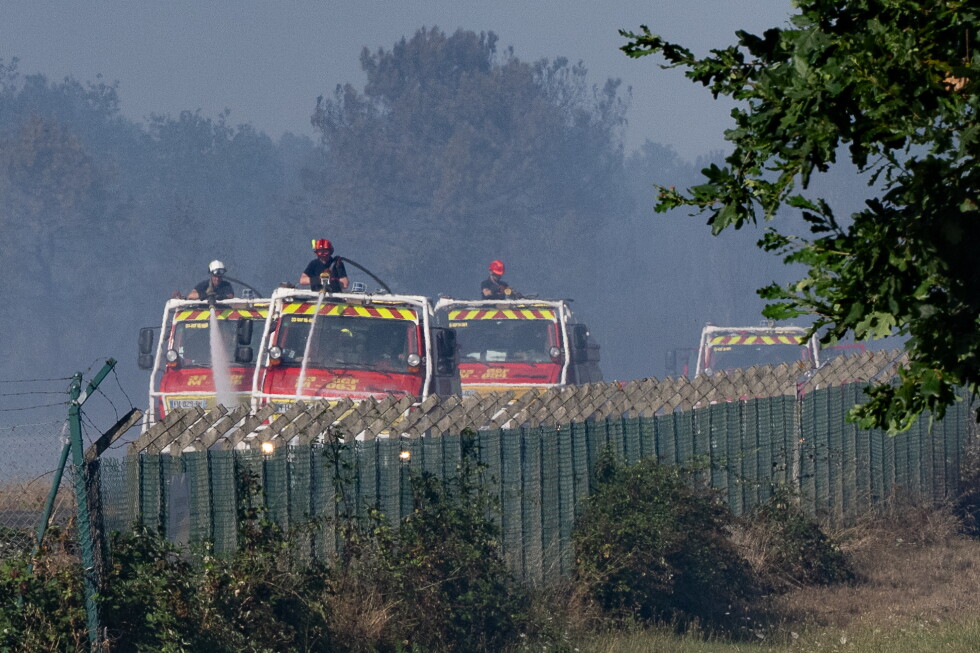
    A tragic incident unfolded in southwest France on Tuesday, claiming the lives of two professional firefighters who were responding to an urban building fire. The fatal development was confirmed by France’s Interior Minister Laurent Nunez during an official address to lawmakers assembled at the National Assembly, where he first shared the grim news of the on-duty deaths.

    The blaze broke out in Mérignac, a suburban community that borders the major southwestern city of Bordeaux and is home to Bordeaux’s main international airport. At the time of the announcement, Nunez told legislators that full details of the fire’s origin, spread, and the circumstances surrounding the firefighters’ deaths were still being compiled by emergency response authorities, and he could not yet share additional concrete information about the incident.

    Officials managing Bordeaux-Mérignac Airport issued a public advisory via the facility’s official website shortly after the fire started, noting that the emergency response effort and the proximity of the blaze to airport operations had led to delays for a number of departing and arriving flights. No further details about the extent of the delays or the number of affected passengers were immediately released by airport management.

  • Hungarian prosecutors raid Orbán party’s data center in embezzlement probe

    Hungarian prosecutors raid Orbán party’s data center in embezzlement probe

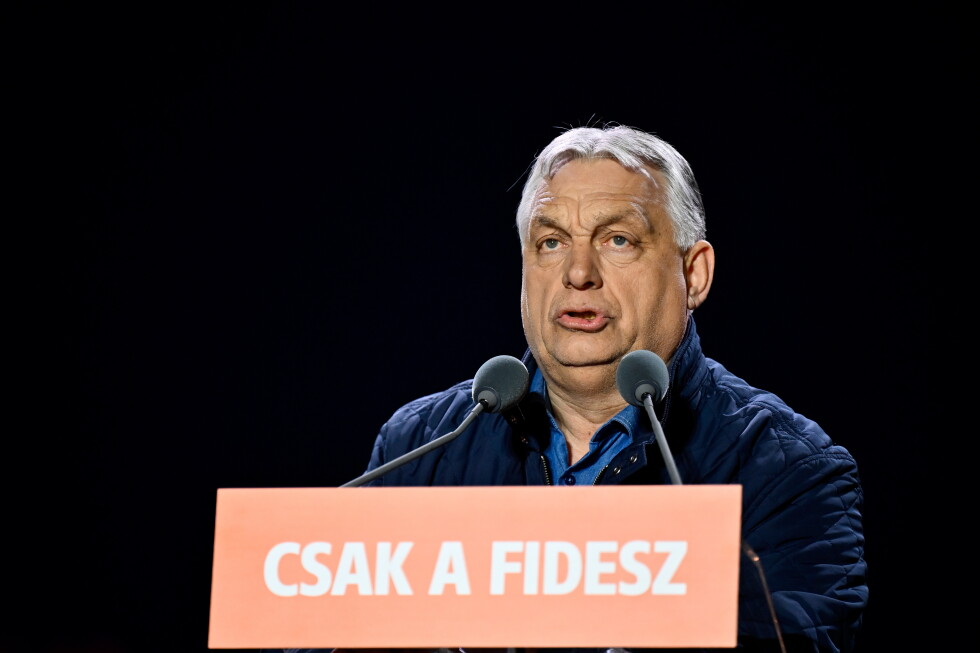
    BUDAPEST, Hungary — A joint law enforcement operation by Hungarian prosecutors and tax authority investigators has targeted office space hosting data servers linked to former Prime Minister Viktor Orbán’s long-ruling Fidesz party, launching a new flashpoint in the country’s rapidly shifting political landscape just months after Orbán’s historic electoral defeat.

    The spokesperson for Bács-Kiskun County’s chief prosecutor’s office, Marianna Bodó, confirmed in a written statement to the Associated Press on Tuesday that the raid forms part of an ongoing investigation into suspected embezzlement and misuse of public grant funds allocated through Hungary’s National Cultural Fund during the Orbán administration. Located south of Budapest, Bács-Kiskun County is overseeing the case that has already led to charges against six sitting and former officials connected to the alleged misappropriation of roughly 17 billion Hungarian forints, equivalent to approximately $53.5 million. All six defendants have formally denied any criminal wrongdoing.

    Prosecutors allege the group distributed the public grant funds through an untransparent, closed process, directing the majority of funding to artists and cultural performers with documented ties to Fidesz. Many of these beneficiaries actively campaigned on behalf of the party in the lead-up to Hungary’s April 2025 national election, where Fidesz suffered an unexpected landslide loss after 16 consecutive years in power.

    The regional criminal directorate of Hungary’s National Tax and Customs Administration provided operational support for Tuesday’s raid, Bodó added, declining to share additional details to protect the integrity of the ongoing investigation.

    In an immediate public response posted to its official Facebook page, Fidesz denounced the operation as an unprovoked political attack. The party claimed investigators entered the premises without advance warning, with the explicit goal of seizing its entire internal communications infrastructure and full database of party records. Fidesz further claimed the raid is unprecedented in Hungarian politics since the collapse of communist rule in 1990, and directly blamed the current governing Tisza party, led by pro-European Prime Minister Péter Magyar, for orchestrating a legal witch hunt to eliminate the main opposition party.

    Orbán’s 16-year tenure was repeatedly marked by international and domestic criticism over allegations of widespread systemic corruption, partisan capture of independent state institutions, and systematic erosion of democratic checks and balances and the rule of law. Since taking office in May following his election victory, Magyar has moved aggressively to dismantle what he frames as Orbán’s “mafia-style” political system, removing dozens of partisan political appointees across government — including the national president and the leadership of multiple state institutions that enabled Orbán’s autocratic rule.

    In the aftermath of its election defeat, Fidesz has repeatedly pushed back against Magyar’s reforms, labeling the new government’s actions as tyrannical overreach aimed at erasing Orbán’s political legacy and eliminating opposition influence. The Tisza party has countered that it is simply acting on the clear, overwhelming electoral mandate it received from Hungarian voters to deliver on core campaign pledges to root out corruption and restore democratic governance.

    On Tuesday, Prime Minister Magyar posted a brief update to his own Facebook page, noting he was waiting for prosecutors to release additional details on the raid and the ongoing investigation.

  • UN says nearly 150 migrants are dead or missing off West Africa in separate incidents

    UN says nearly 150 migrants are dead or missing off West Africa in separate incidents

    The United Nations High Commissioner for Refugees (UNHCR) has expressed profound grief following a pair of deadly shipwrecks that left up to 144 migrants dead or missing in waters off Mauritania last week, as thousands of sub-Saharan Africans continue to risk their lives seeking passage to Europe in search of improved living conditions.

    In statements released Tuesday, the UN refugee agency confirmed the two separate incidents unfolded between July 14 and 18, with rescue teams pulling 387 surviving migrants to safety over the course of the events. Discrepancies in casualty numbers from different authorities have not yet been reconciled as of Tuesday.

    Mauritania’s national coast guard provided detailed accounts of the deadliest incident, in which a vessel carrying 160 Gambian migrants bound for the Spanish Canary Islands became stranded after running out of fuel. The boat drifted without power for 25 days off the coast near Nouakchott, the Mauritanian capital, leaving 122 people unaccounted for once rescuers reached the scene.

    In the second unrelated incident, coast guard officials announced they had rescued 179 migrants who had departed Senegal on an unseaworthy vessel, bringing the total number of survivors across both events to 387.

    In recent years, Mauritania’s territorial waters have emerged as a primary transit corridor for sub-Saharan African migrants fleeing widespread economic stagnation and limited job opportunities at home. The UNHCR emphasized that the migration route leading to the Canary Islands ranks among the most dangerous maritime migration routes on the planet, marked by enormous open-ocean crossings and frequently overcrowded, unfit vessels that put all passengers at extreme risk of disaster.

  • Ex-UK politician Widdecombe was hit 21 times with a hammer, prosecutors say

    Ex-UK politician Widdecombe was hit 21 times with a hammer, prosecutors say

    The fatal stabbing of a high-profile former British lawmaker has sent shockwaves through the United Kingdom’s political community, with new details of the brutal attack emerging during a preliminary court hearing this week. On Tuesday, prosecutors laid out the chilling sequence of events that led to the death of 78-year-old Ann Widdecombe, a decades-long conservative political voice who remained active in public life up until her killing.

    According to lead prosecutor Kashif Malik, the attack unfolded just after midday on July 8, as Widdecombe ate lunch alone at her rural home in Haytor, an isolated village on the edge of Dartmoor National Park in southwest England. The 28-year-old defendant, Joshua Kerry, who resided more than 250 miles (400 kilometers) away in South Yorkshire, drove to Widdecombe’s property, walked through an unlocked front door, and struck the former politician 21 times in the head with a hammer before stealing her wallet. The entire attack lasted just two minutes, Malik told the court.

    Widdecombe was discovered only the following morning, after she failed to arrive for a scheduled television interview. Production staff contacted her assistant, who reached out to her gardener; he found her body lying face down on her kitchen floor. A post-mortem examination has provisionally ruled blunt force trauma to the head as the cause of death.

    Kerry was taken into custody on July 11 at his home in northern England. He has since been charged with murder, and investigators are currently probing all potential motives, including possible links to political extremism or terrorist activity. The defendant was also initially arrested on suspicion of terror offenses alongside the murder charge.

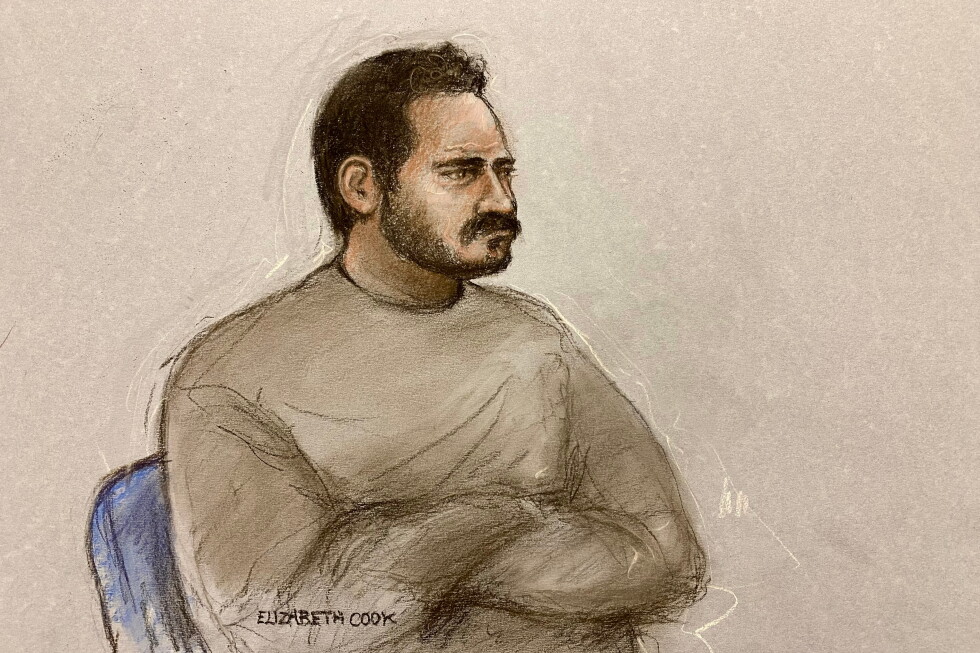
    Kerry made his first court appearance at London’s Westminster Magistrates’ Court on Tuesday. Clad in a gray sweatsuit, he only spoke to confirm his full name and date of birth, and did not enter a plea during the preliminary hearing. He has been ordered to remain in police custody until his next hearing at the Central Criminal Court, scheduled for October 9.

    Widdecombe built a decades-long career in British politics, first taking a seat in the House of Commons as a Conservative Member of Parliament in 1987, a post she held until 2010. During the 1990s Conservative government led by Prime Minister John Major, she served as a junior prisons minister, earning a reputation for unapologetic, straight-talking rhetoric and staunchly socially conservative views—including open opposition to abortion and expanded legal protections for LGBTQ+ people.

    After leaving Westminster, Widdecombe expanded her public profile, appearing as a contestant on two major British reality television shows: *Strictly Come Dancing* and *Celebrity Big Brother*. She re-entered electoral politics ahead of Brexit, joining the pro-Brexit Brexit Party and briefly serving as a Member of the European Parliament until the UK completed its withdrawal from the bloc in 2020. Most recently, she joined the right-wing, anti-immigration party Reform UK, where she served as a prominent spokesperson on immigration and justice policy.

    Widdecombe’s killing has reignited long-simmering debates over the personal safety of elected and former politicians in the UK. Over the past 15 years, two sitting Members of Parliament have been killed in politically motivated attacks: Labour MP Jo Cox was shot and stabbed to death by a far-right extremist in 2016, and Conservative MP David Amess was stabbed to death by an ISIS-inspired attacker in 2021. Those attacks led to widespread increases in security provisions for sitting lawmakers, but the murder of Widdecombe has raised new questions about whether protections need to be extended to high-profile former politicians as well.

  • French lawmakers set to ban social media for under-15s in European first

    French lawmakers set to ban social media for under-15s in European first

    France is on track to make European legislative history this week, as lawmakers prepare to vote through a landmark bill that will ban all children under the age of 15 from accessing commercial social media platforms, marking one of the world’s strictest regulatory efforts to protect young people online.

    After weeks of negotiations between the country’s upper Senate and lower National Assembly to reconcile differing regulatory approaches, a final agreement on the bill text was reached last week. French Digital Minister Anne Le Henanff confirmed the milestone in a post on X, noting that France would become the first European nation to implement a formal age-based digital restriction to shield minors from online harms. President Emmanuel Macron has positioned the legislation as a flagship domestic reform for his final term in office, and has committed to rolling out enforcement by the start of September 2025.

    The ban will be rolled out in two staggered phases to give platforms time to adjust. From September 1 this year, social media services will be required to block all new account registrations from users confirmed to be under 15. Existing accounts held by under-15 users will be blocked starting in January 2027, giving platforms and families time to transition. Le Henanff has emphasized that the timeline is feasible because functional age-verification tools already exist, placing full regulatory responsibility for compliance on the platforms rather than children or parents. She also gave public assurances that strict safeguards will be put in place to protect users’ personal privacy data throughout the age-check process.

    The legislation also includes a complementary provision that will ban personal mobile phone use in all French high schools, which will go into effect in September to align with the start of the new academic year.

    Negotiations between the two legislative chambers focused on competing regulatory models. Senators initially proposed a two-tier system that would blacklist platforms confirmed to be harmful to child development, while allowing under-15s to access other platforms with parental consent. Ultimately, the National Assembly’s push for a blanket ban on under-15 access prevailed. The legislation still faces criticism from some left-wing politicians, who have raised concerns about flaws in the age-verification process, the speed of implementation, the risk that minors will find ways to circumvent the ban, and ongoing privacy risks.

    Carve-outs are included for non-commercial public interest platforms, including online encyclopedias and educational sites. Crucially, the bill does not impose any fines or legal penalties on under-15 users or their parents for accessing social media, placing all accountability for compliance on platform operators. Lawmaker Laure Miller told AFP that major global social platforms are already largely prepared to implement the new rules.

    Centrist Senator Catherine Morin-Desailly, who shepherded the bill through the upper chamber, explained that the original blacklisting proposal was abandoned because it would have required additional lengthy consultations with the European Commission to set criteria, and carried a small risk of violating existing EU digital regulations.

    France’s move comes as policymakers across the European Union increasingly back tighter age restrictions for social media. France, Greece and Spain have already pushed for EU-wide rules limiting minor access to these platforms, and European Commission President Ursula von der Leyen stated last week that children should only receive phased, gradual access to social media services. The European Commission has also developed a centralized age-verification app, which France and other member states have already begun testing in recent months.

    For Macron, the legislation comes as his last major planned domestic reform before he leaves office next year, after his government paused a controversial flagship pensions reform last year. If adopted, France will become the 21st country worldwide to propose or implement age-based restrictions on social media access for minors, and its policy will be closely watched by other European nations considering similar rules. Australia currently holds the title of the first country in the world to implement such a ban, requiring all major platforms to remove under-16 accounts or face heavy financial penalties starting in December 2024.

    The push for the French ban follows a 2023 warning from France’s national public health watchdog, which concluded that major platforms including TikTok, Snapchat and Instagram cause measurable harm to adolescent development, with disproportionate negative impacts on girls’ mental health, even as the watchdog noted social media use is not the sole driver of declining youth mental wellbeing.

  • Watch rescuers save missing dog from San Francisco Bay

    Watch rescuers save missing dog from San Francisco Bay

    A tense and heart-stopping incident unfolded on the waters of San Francisco Bay recently, when a team of rescuers launched a rapid mission to recover a missing canine that had ended up stranded in the chilly open water.

    Eyewitness footage captured the urgent pace of the operation, as the rescue team powered their small boats across the bay’s surface, closing the distance between them and the struggling animal. When they reached the dog, one rescuer executed a daring one-handed reach over the side of their vessel, successfully snatching the shaken pup from the water before it could face further peril.

    The incident has drawn wide attention online, with members of the public praising the rescuers’ fast action and steady nerve that gave the missing dog a second chance at life. Local authorities have not yet released further details on how the dog came to be in the bay, or whether it has been reunited with its owners as of the latest updates.

  • US actions harm global efforts to prevent and treat HIV in dozens of countries, new report says

    US actions harm global efforts to prevent and treat HIV in dozens of countries, new report says

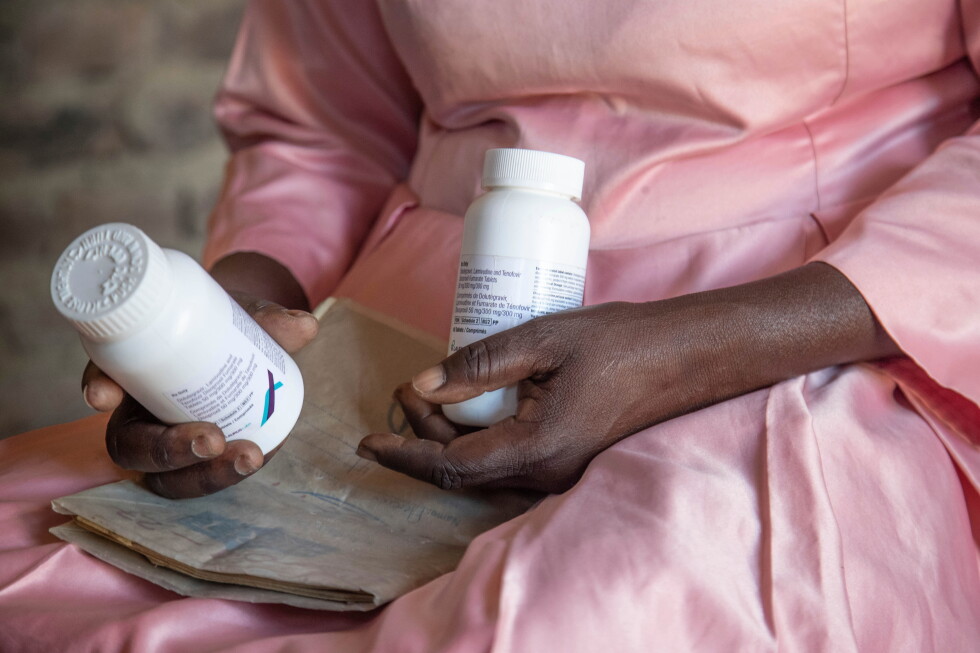
    A new independent report released Tuesday has exposed severe, far-reaching damage to the world’s largest global HIV relief initiative, tracing the harm directly to administrative disruptions carried out under the Trump administration that have forced clinic closures, mass staff layoffs, and widespread cuts to life-saving care across dozens of low- and middle-income countries.

    Launched in 2003, the U.S. President’s Emergency Plan for AIDS Relief, better known as PEPFAR, is widely recognized as one of the most successful global public health initiatives in modern history, credited with saving at least 26 million lives from HIV/AIDS since its creation. But the report from amfAR, The Foundation for AIDS Research, details how the program was systematically undermined last year through the Trump administration’s restructuring of the U.S. Agency for International Development (USAID) and cuts to thousands of global health grant awards.

    Elise Lankiewicz, policy associate at amfAR and lead contributor to the report, noted that service disruptions touched nearly every corner of the global PEPFAR network, with the most vulnerable groups – including young women, AIDS orphans, and children living with or exposed to HIV – bearing the brunt of the cuts.

    To compile their findings, research teams reached out to hundreds of local and international organizations that deliver frontline HIV services with PEPFAR funding. Between November 2024 and April 2025, 166 organizations across 46 countries completed the researchers’ electronic survey, sharing detailed data on funding flows, staffing levels, and service availability. The research team acknowledges methodological limitations: the survey did not reach all PEPFAR-funded groups, and organizations that experienced the most severe disruption or those that retained full U.S. funding may have been less likely to respond, creating potential for bias in estimates of overall harm. Even so, study authors emphasize the findings offer an unprecedented, clear look into the widespread operational struggles that many PEPFAR partner groups faced over the past year.

    Key takeaways from the survey paint a stark picture of systemic breakdown. More than 75% of responding organizations reported at least one grant award was terminated or experienced significant payment delays in 2024. These funding cuts directly led to the permanent closure of more than 1,700 clinics, community drop-in centers, and other HIV service delivery sites, and the elimination of more than 16,000 full-time frontline staff positions. Even though federal guidance officially required core services including HIV treatment, diagnostic testing, and prevention of mother-to-child transmission (PMTCT) to remain operational, a majority of partner organizations still reported disruptive interruptions to these critical services.

    Cuts were disproportionately concentrated on services for the populations that are most disproportionately impacted by HIV globally. A majority of organizations that previously provided targeted care for sex workers, men who have sex with men, transgender people, and people who inject drugs reported permanently ending at least one service for these groups. Notably, even some organizations that did not lose funding reported cutting services for these key populations to align with revised U.S. policy priorities under the Trump administration.

    HIV prevention programming saw the steepest reductions: many organizations halted free condom distribution programs and stopped providing pre-exposure prophylaxis (PrEP), the daily preventive medication that eliminates the risk of sexually transmitted HIV. Official PEPFAR expenditure data confirms the scale of this cut: total global prevention spending dropped 51% between fiscal years 2024 and 2025. The report also found that local, community-based organizations were far more likely to face grant terminations and forced site closures than large international non-governmental organizations, creating cascading instability across interconnected national HIV care systems.

    The report’s authors conclude that the cumulative effect of these disruptions has led to widespread degradation of the global HIV care infrastructure built up over more than two decades of PEPFAR investment, with the deepest harm falling on the communities and local partners that are most critical to ending the global epidemic. While the study does not break out data by individual country, amfAR officials confirmed that a majority of survey responses came from organizations based in sub-Saharan Africa, the region that bears more than two-thirds of the global HIV burden.

    The Trump administration has pushed back against these findings, releasing its own quarterly PEPFAR data covering July to September 2025 that presents a far more positive outlook. Administration officials noted that PEPFAR-supported programs provided continuous antiretroviral treatment to 20.6 million people across more than 50 countries, a figure they described as stable compared to the same quarter in 2024. They also highlighted an increase in PrEP access for pregnant and breastfeeding women, rising from 43,000 in 2024 to 103,000 in 2025.

    But independent analysis of full-year PEPFAR data by amfAR researchers and experts from the International AIDS Society contradicts the administration’s rosy assessment, confirming substantial service disruptions across all program areas. Separate independent research, published in the journal Nature Health in June 2025, echoes the amfAR report’s conclusions. That study, which analyzed full global PEPFAR treatment data, found that nearly two million fewer people living with HIV were accessing PEPFAR-supported antiretroviral treatment in fiscal year 2025 compared to 2024 – a roughly 10% year-over-year decline.

    Ramona Godbole, an author of the Nature Health study who was not involved in the new amfAR report, noted that the sharp drop in treatment access raises urgent questions about the long-term stability of the PEPFAR program. “That does raise really important questions about program stability,” Godbole said.

    To reverse the damage documented in the report, amfAR has put forward a series of policy recommendations. The organization calls on the U.S. government and PEPFAR leadership to immediately reinstate full funding and support for all HIV services, not just core treatment programming. It also urges other national governments to increase domestic investment in HIV care and expand partnerships with grassroots non-governmental organizations, including groups led by members of vulnerable key populations.

    Even with immediate new funding, however, amfAR’s research and policy director Jennifer Sherwood warned that rebuilding the broken care system will take significant time, and every day of delay brings avoidable harm. “Even if money is put back into the system, it will take time to get the services up and running and regain the trust of communities,” Sherwood explained. “And unfortunately, with HIV and infectious disease, each day is deadly. Each day that we don’t have those systems in place, you see new infections.”

    This reporting from The Associated Press Health and Science Department receives financial support from the Howard Hughes Medical Institute’s Department of Science Education and the Robert Wood Johnson Foundation; the AP retains full editorial control over all content.