博客

  • Weeklong rainstorms in Chile blamed on El Nino kill at least 10 and trigger flash floods

    Weeklong rainstorms in Chile blamed on El Nino kill at least 10 and trigger flash floods

    SANTIAGO, Chile — A devastating seven-day rainfall event amplified by El Niño has wreaked unprecedented havoc across Chile, leaving at least 10 people dead and forcing emergency response teams into a frantic race on Tuesday to reach more than 100,000 residents cut off by destructive flash floods. The catastrophe ranks among the most severe weather-driven disasters the South American nation has faced in 30 years, with impacts rippling across multiple regions far beyond the hardest-hit northern zones.

    Torrential downpours paired with gusty strong winds have continued to pummel the normally arid northern regions of Atacama and Coquimbo, an area unaccustomed to such extreme volumes of precipitation. On Monday, President José Antonio Kast’s government officially declared a state of emergency across the affected zone to mobilize additional resources and streamline response efforts.

    As of Tuesday’s latest official update, disaster authorities confirmed that alongside the 10 fatalities, the storms have left 16 people with injuries and forced more than 4,000 residents to flee their damaged or destroyed homes. Of those displaced, 1,031 are currently sheltering in temporary emergency evacuation centers set up by local officials. Tens of thousands more residents across impacted areas have been left without access to critical utilities, including electrical power and safe drinking water, worsening the humanitarian crisis on the ground.

    Preliminary infrastructure assessments show the extreme rainfall has completely destroyed 81 residential properties and damaged more than 20,000 others, leaving many uninhabitable. Chile’s national disaster response agency, Senapred, has issued hundreds of mandatory evacuation warnings across 10 of the country’s 16 administrative regions, as flood risks extend far beyond the initial storm zone.

    Swollen, overflowing riverbanks and flood-washed out roads have left 104,271 people stranded, unable to evacuate to safer ground or receive emergency supplies. Senapred head Alicia Cebrián issued an urgent warning that even once the rain stops, major flood risks will persist for hours after the storm system moves out.

    “River levels do not necessarily rise at the same time precipitation is falling,” Cebrián explained to reporters Tuesday. “Water accumulates in the foothill areas, which means river levels can continue rising even hours after the storm system has passed.”

    Climate scientists and meteorologists have traced the extreme deluge back to the recent return of El Niño, a naturally occurring recurring climate pattern centered in the tropical Pacific Ocean that shifts global weather patterns. The phenomenon pushes ocean surface temperatures higher and amplifies the frequency and intensity of extreme weather events across the globe. For southern South America, El Niño is historically linked to significantly higher than average rainfall, creating the conditions that led to this week’s catastrophic flooding.


  • Palestinians launch #TheyLiedtoYou campaign to debunk Gaza ‘ceasefire’ narrative

    Palestinians launch #TheyLiedtoYou campaign to debunk Gaza ‘ceasefire’ narrative

    On July 16, Palestinian activists launched a global digital advocacy campaign centered on the hashtag “They Lied to You” that has quickly spread across major social platforms, aiming to reorient global public attention toward the unrelenting Israeli military campaign in Gaza and push back against the widespread narrative that the October nominal ceasefire accord brought attacks on the besieged enclave to an end.

    Organically sparked from within Gaza, the campaign has gained viral traction on both X and Instagram, with parallel hashtags in English (#TheyLiedToYou) and Arabic (#كذبوا_عليكم) uniting activists and ordinary users globally. Palestinians on the ground have been sharing unfiltered, live footage documenting ongoing Israeli bombardments, widespread systematic food deprivation, and the spread of preventable diseases to demonstrate that the humanitarian catastrophe in Gaza has only worsened even as international media coverage has faded.

    In an Instagram video that has been shared tens of thousands of times, Gaza-based journalist Hani Aburezeq spelled out the core grievance driving the campaign: “They tricked you that the war is over… war didn’t end, it only ended on your screens. In reality, the people of Gaza are being killed, displaced, their homes are being destroyed.”

    Across social media, users have shared harrowing personal accounts and on-the-ground footage that challenges the official ceasefire narrative. Responding to a post about a Palestinian child in Gaza who lost his entire family to an Israeli strike, one X user wrote: “They lied to you.. Gaza is being slaughtered in silence before the eyes of the world, which also watches in silence. Gaza is not outside the tragedy but outside the coverage, deliberately marginalised by the media.”

    Even young residents of Gaza have joined the campaign, sharing their own firsthand experiences of unbroken violence. “They lied to you. There are massacres happening…there are strikes everyday,” one child said in a widely shared video clip posted online.

    Official figures from Gaza’s government media office, released Sunday, back up the claims of ongoing attacks. The office confirmed that Israel has carried out more than 3,700 violations of the nominal ceasefire agreement since the deal took effect in October, with at least 1,168 Palestinians killed in Gaza in that period alone.

    Many campaign participants have also pointed to the month-long FIFA World Cup as a deliberate distraction that allowed global attention to shift away from the crisis in Gaza. “They created for you a spectacle to divert your attention away from the tragedy,” one X user wrote in a post accompanying footage of fresh bombardment in the enclave.

    As the campaign gained momentum this week, new Israeli attacks continued to claim civilian lives. Palestinian news agency Wafa, citing local sources, reported that at least two Palestinians were killed and 16 others, most of them children, were wounded in an Israeli strike targeting al-Yaman al-Saeed hospital in the Jabalia refugee camp in northern Gaza on Monday. A separate strike targeting an electric bike in the central Gaza Strip’s al-Zawaida area killed one additional Palestinian, medical sources confirmed.

    Updated cumulative figures released by Gaza’s Ministry of Health on Tuesday put the total Palestinian death toll from Israeli attacks across the enclave since October 7, 2023 at 73,293, with another 173,960 people wounded. Thousands more Palestinians remain unaccounted for and are presumed dead beneath the rubble of destroyed buildings across Gaza.

  • Godzilla vs Kong actress Kaylee Hottle dies in crash at 18

    Godzilla vs Kong actress Kaylee Hottle dies in crash at 18

    Rising young Hollywood actress Kaylee Hottle, best known for her breakout role in the globally popular *Godzilla vs. Kong* monster film franchise, has died at the age of 18 following a single-vehicle car crash in the U.S. state of Maryland.

    Hottle, a deaf performer who broke barriers as one of the few deaf leading actors in a major Hollywood blockbuster, first made her on-screen debut in 2021’s *Godzilla vs. Kong*, where she brought the quiet, resilient character of Jia — a young orphan who shares a deep connection with Kong — to life. The role turned her into an overnight fan favorite, and she returned to reprise the part in the 2024 sequel, *Godzilla x Kong: The New Empire*, which earned her a Saturn Award nomination for Best Younger Performer in a Film. Throughout her short career, she shared the screen with A-list Hollywood stars including Alexander Skarsgard, Millie Bobby Brown, Rebecca Hall, and Dan Stevens.

    Her father, Joshua Hottle, confirmed the tragic news in a video posted to Facebook, delivering the statement through American Sign Language. Local law enforcement in Frederick, Maryland, confirmed that the crash occurred early Tuesday morning around 2:50 a.m. local time in the community of Ijamsville. Investigators currently point to excessive speed as a primary contributing factor in the incident. Two other people were in the vehicle at the time of the crash: a 19-year-old driver was transported to a nearby hospital for treatment of injuries that are not considered life-threatening, and a second passenger declined medical assistance on the scene.

    The Texas School for the Deaf, where Hottle was a student, announced her passing in an Instagram statement shared with profound sorrow. “Our hearts are with Kaylee’s family, friends, classmates, and everyone who knew and loved her during this incredibly difficult time,” the institution wrote. The school also asked the public and media to respect the family’s request for privacy amid their grief and to refrain from unsubstantiated speculation about the details of the crash.

    Warner Bros. Pictures, the studio behind the blockbuster *Godzilla* franchise, also released a public tribute to Hottle on the social platform X, paired with a behind-the-scenes photo of the young actress. Fans, peers, and disability advocacy communities have also begun sharing tributes online, remembering Hottle for her groundbreaking representation of deaf performers in mainstream Hollywood and the warmth she brought to her iconic role.

  • New Jersey error led to almost 400 non-citizens voting

    New Jersey error led to almost 400 non-citizens voting

    A critical administrative glitch has shaken up ongoing discussions over U.S. voting integrity, after New Jersey Governor Mikie Sherrill confirmed this week that a “serious software error” within the state’s Motor Vehicle Commission resulted in approximately 6,600 non-U.S. citizens being incorrectly added to the state’s voter rolls. Of that group, fewer than 400 ultimately cast illegal ballots in state and federal elections during the error’s active period.

    Sherrill’s official statement, released Tuesday, laid out the timeline of the flawed system: the bug went undetected for a full year, operating between June 2023 and June 2024. It specifically impacted non-citizen applicants who explicitly marked their non-U.S. citizenship status when submitting requests for New Jersey driver licenses. The state currently follows the common practice seen across 19 other U.S. states that grant driving privileges to authorized non-citizen residents, a policy that has remained separate from federal voting eligibility rules that restrict voting in national elections to U.S. citizens only.

    The revelation of the error lands at a charged political moment, coinciding with a renewed push from former President and current 2024 presidential candidate Donald Trump, who is advocating for strict federal legislation that would mandate universal proof of citizenship and government-issued photo ID for all voters nationwide. Trump and his allies have framed stricter voting requirements as a critical step to prevent election fraud, though voting rights advocates have repeatedly argued that such measures disproportionately disenfranchise low-income, elderly, and minority voters while doing little to address the extremely rare incidence of ineligible voting across the U.S.

  • Trump: 50% tariffs response to Canada’s treatment of US farmers

    Trump: 50% tariffs response to Canada’s treatment of US farmers

    Former U.S. President Donald Trump has announced that he intends to implement 50% tariffs on Canadian imports as a direct response to what he describes as unfair treatment of American agricultural producers by the Canadian government. The unilateral tariff announcement has sent ripples through global trade circles, reigniting fears of a widening trade conflict that could extend far beyond the bilateral relationship between the two North American neighbors. Trump’s move comes after months of simmering tensions over agricultural trade access, with American farmers long claiming that Canadian trade policies create an uneven playing field that cuts into their market share and profitability north of the border. The new proposed duties on Canadian products have already fueled widespread market speculation that the Trump administration could follow this step with a broader slate of new tariffs targeting trade partners across every major region of the world. Trade analysts note that this escalation comes at a time when global supply chains are still recovering from recent disruptions, and any broad new tariff regime could drive up consumer prices, slow cross-border commerce, and create new uncertainty for international businesses that operate on thin profit margins. Both Canadian trade officials and American agricultural industry stakeholders are currently monitoring the situation closely, with many pushing for negotiated resolutions to avoid a full-scale trade war that would hurt producers and consumers on both sides of the border.

  • Trial opens for US mum who says postpartum issues led her to killing own children

    Trial opens for US mum who says postpartum issues led her to killing own children

    Jury selection is officially underway in Plymouth, Massachusetts, for one of the most high-profile and heart-wrenching criminal cases in recent U.S. history, centered on 32-year-old Lindsay Clancy, a woman accused of murdering her three young children in 2023. The case has already sparked widespread public debate around postpartum mental health care, the medical system’s response to severe perinatal psychiatric conditions, and the ethics of the insanity defense in cases of profound mental illness.

    Prosecutors building the commonwealth’s case against Clancy argue the killings were carefully premeditated and carried out intentionally. According to court documents and investigative records, prosecutors allege Clancy deliberately arranged to send her husband, Patrick Clancy, on errands out of the family home, timing his absence to guarantee she would have unbroken alone time with the couple’s three children: 5-year-old Cora, 3-year-old Dawson, and 8-month-old Callan. Investigators have confirmed Clancy checked in advance how long Patrick’s errands would take, confirming she would have sufficient time to carry out the act before he returned.

    Clancy has entered a formal plea of not guilty to all three charges of murder. Her defense team has not contested that she was responsible for the children’s deaths; instead, their core argument is that Clancy was not legally culpable for her actions due to a severe, untreated episode of postpartum psychosis that robbed her of the ability to discern right from wrong. They are mounting an insanity defense, centered on the claim that Clancy experienced debilitating delusions and command hallucinations in the weeks leading up to the deaths, all tied to the postpartum psychiatric condition she had been seeking care for months.

    The same night the children were killed, Clancy attempted to end her own life. The suicide attempt left her permanently paralyzed, and she has since received ongoing mental health treatment at a state psychiatric facility between court appearances.

    The case extends far beyond the criminal trial: earlier this year, Clancy and her husband filed a civil lawsuit against her former medical providers, alleging the team failed to properly diagnose, treat, and monitor her severe postpartum psychiatric condition, despite repeated warnings that her symptoms were worsening. Court filings in the civil suit detail that Clancy took every possible step to access care in the weeks before the tragedy: she self-admitted to a psychiatric facility for several days just weeks before the killings, sought help from emergency rooms, called crisis hotlines, followed all prescribed medication instructions, and repeatedly told her providers that her symptoms were growing more dangerous, even that her medication was making her state worse. She reported persistent insomnia and that she heard constant voices in her head commanding her to harm both herself and her children. The lawsuit states, “Lindsay Clancy did everything a mother in her situation could do” to get help.

    In the aftermath of the killings, Patrick Clancy shared a public statement in a GoFundMe fundraiser organized to cover legal and medical costs, asking the public to see his wife as he does. He described her as a deeply loving, caring person who had dedicated her life to supporting others, writing, “The real Lindsay was generously loving and caring toward everyone — me, our kids, family, friends, and her patients. The very fibers of her soul are loving. All I wish for her now is that she can somehow find peace.”

    Medical experts define postpartum psychosis as a rare but life-threatening emergency mental health condition that develops shortly after childbirth, distinct from the common, mild “baby blues” that many new parents experience. The UK’s National Health Service emphasizes it requires immediate, urgent medical intervention to prevent harm to the parent and child.

    As of Monday, five of the 18 jurors required for the full trial panel have been seated. Dozens of witnesses are expected to testify over the course of the trial, including Patrick Clancy. For anyone experiencing suicidal thoughts or perinatal mental distress, support resources are available globally through Befrienders Worldwide, with additional resources listed for UK residents via BBC Action Line.

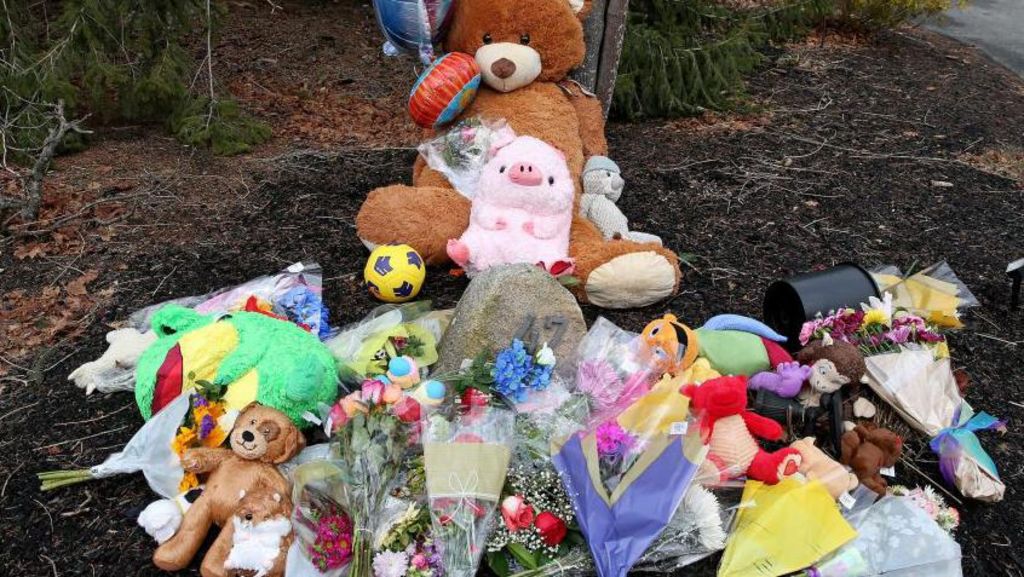
    A makeshift memorial of flowers and handwritten notes has already been placed outside the Clancy family home, a quiet testament to the profound grief that has surrounded the case from its beginning.

  • South Africa’s anti-migrant unrest led over 160,000 to flee

    South Africa’s anti-migrant unrest led over 160,000 to flee

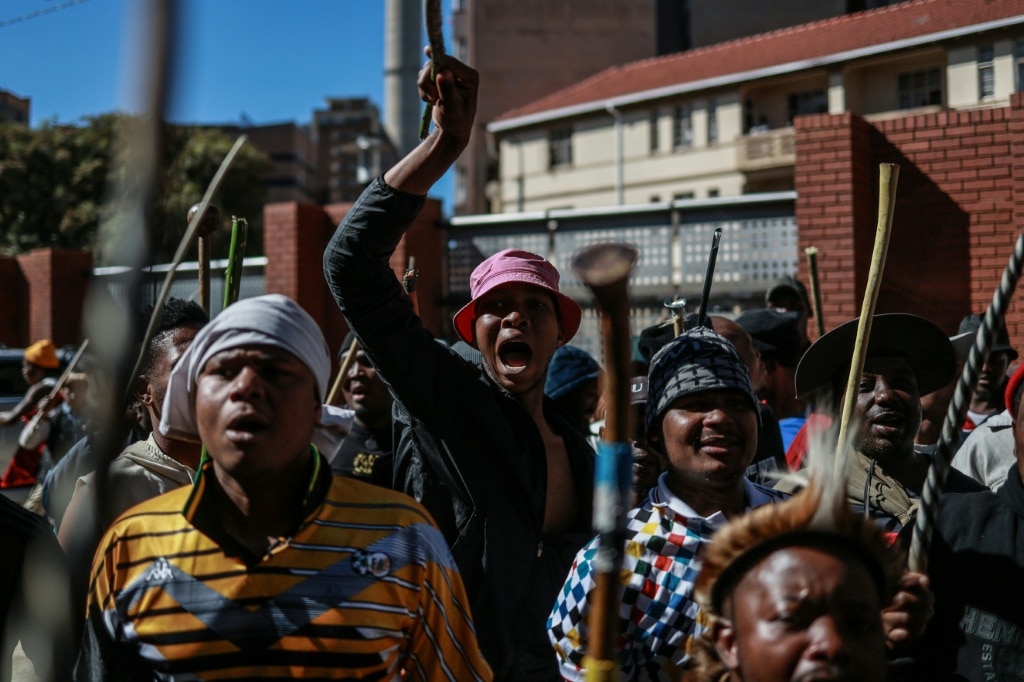
    A surge of xenophobic violence targeting undocumented migrants in South Africa has forced more than 160,000 foreign nationals to flee the country over the past two months, an Agence France-Presse tally compiled from repatriating government data confirms. Weeks of nationwide unrest, instigated by local groups demanding all undocumented migrants leave by the June 30 deadline, have devolved into deadly attacks that have claimed the lives of at least four migrants, with several foreign governments disputing that official death toll and reporting higher fatalities.

    Desperate to escape targeted violence, migrants from across the African continent have crowded into consulates and community gathering spaces to arrange transport home, many leaving with nothing more than the small belongings they could carry as they feared for their safety. Zimbabwe and Malawi account for the largest share of returnees, with hundreds more migrants fleeing from Ghana, Kenya, Lesotho, Mozambique, Nigeria, Uganda and other African nations.

    By July 18, Zimbabwe’s cabinet reported 108,366 of its citizens had returned to the country, most organizing their own repatriation. Malawi, meanwhile, confirmed more than 46,890 of its people had arrived home since early June, with the government deploying 699 buses to facilitate the cross-border journey; six migrants died during the transit process. South African government data shows nearly 2,000 Mozambicans have also returned, after two Mozambican nationals were killed in late May during violence that followed a protest in the coastal town of Mossel Bay — the first fatalities of South Africa’s latest wave of anti-migrant unrest. South African authorities have since confirmed the additional deaths of an Ethiopian national and a Malawian national linked to anti-foreigner sentiment.

    Nigeria has reported two of its citizens killed in ongoing xenophobic attacks, while Ghana confirmed one of its nationals died in anti-immigrant unrest in a Cape Town township. South African officials have rejected both claims, warning that widespread disinformation is being spread across social media platforms. To date, Nigeria has repatriated roughly 1,490 of its nationals, and Ghana has evacuated at least 926 citizens via air. Both nations have called for the crisis, which they label “Afrophobia”, to be added to the agenda for the upcoming African Union summit, and Ghana has postponed a scheduled state visit by South African President Cyril Ramaphosa amid the tensions.

    As Africa’s most economically developed nation, South Africa has long drawn both documented and undocumented migrant workers from across the continent, who leave their home countries in search of employment opportunities unavailable where they live. Local vigilante groups behind the current unrest frame migrants as drivers of rising crime and competitors for limited jobs, stoking tensions in impoverished townships already grappling with systemic poverty, high unemployment and underfunded, ineffective policing. However, independent analysts argue that migrants are being scapegoated for deep-rooted structural failures in South Africa, including a national unemployment rate that exceeds 30% and widespread dysfunction in the delivery of basic public services.

    The current wave of unrest has its roots in low-level demonstrations that began last year, when undocumented migrants were blocked from accessing public health care at clinics and hospitals. Protests grew dramatically in the lead-up to the June 30 departure deadline, and unrest has continued in the weeks following that date. One prominent anti-immigrant group, Operation Dudula, has vowed to hold weekly demonstrations until the country’s local government elections in November.

    Xenophobic violence is not a new crisis in South Africa: repeated waves of anti-migrant unrest have swept the nation over the past three decades. The 2008 anti-immigrant riots left 62 people dead and displaced thousands more, with further large-scale outbreaks occurring in 2015 and 2016. Deadly violence in 2019 saw armed mobs target foreign-owned businesses across Johannesburg, killing at least 12 people, 10 of whom were South African citizens. What makes the current crisis unprecedented, however, is that it marks the first time multiple foreign governments have coordinated to organize large-scale simultaneous voluntary repatriations for thousands of their trapped nationals.

  • Iran hits US bases in Bahrain, Kuwait and Jordan after 10 nights of US attacks

    Iran hits US bases in Bahrain, Kuwait and Jordan after 10 nights of US attacks

    A brutal cycle of cross-border violence in the Middle East has entered its second week of continuous escalation, after the United States carried out its 10th straight night of aerial bombardment against targets inside Iran, expanding a joint military campaign launched alongside Israel that collapsed a month-long ceasefire agreement earlier in July.

    According to US Central Command, the most recent round of offensive operations ran for approximately five hours, wrapping up at 9 p.m. Eastern Time on Monday. American military targets in the latest strikes included Iranian command and control hubs, missile and drone launch facilities, coastal naval infrastructure and national air defense networks. This renewed assault builds on the joint Israel-US campaign that first launched with coordinated attacks on Iran on February 28, before a ceasefire was reached in mid-June.

    On June 17, Washington and Tehran signed a memorandum of understanding that pledged an “immediate and permanent end” to all cross-border military operations. The terms of the deal also required the US to lift a crippling naval blockade of Iranian ports and established a 60-day negotiating window to resolve longstanding regional disputes. A core requirement of the agreement mandated Israel halt all cross-border attacks into Lebanon, a provision Washington ultimately failed to enforce even as US negotiators pushed to reinterpret clauses governing access and navigation through the Strait of Hormuz.

    The fragile truce officially collapsed on July 8, when former President Donald Trump declared the June agreement void, ordered the resumption of unilateral US strikes against Iran and reimposed the full naval blockade that had been lifted weeks earlier. In response to the resumption of US hostilities, Tehran reclosed the strategic Strait of Hormuz, a chokepoint through which roughly 20% of the world’s daily oil shipments pass, and renewed missile and drone strikes against US military bases deployed across the Middle East.

    Overnight, Iranian military officials announced a series of retaliatory strikes targeting US-aligned military installations across Bahrain, Kuwait and Jordan. The Islamic Revolutionary Guard Corps (IRGC), Iran’s elite paramilitary force, confirmed it destroyed a US air defense system and radar array located in Bahrain’s Muharraq district. A follow-up statement carried by Iran’s state-run IRIB broadcaster added that a coordinated missile and drone assault also disabled a Patriot air defense system stationed in Al-Riffa, Bahrain.

    Separately, Iran’s army told the semi-official Fars News Agency that drone strikes hit Bahrain’s Sheikh Isa military base, a critical logistics and operations hub for the US Navy’s Fifth Fleet. Iranian military officials confirmed retaliatory operations will continue until the US halts its cross-border attacks and withdraws hostile forces from the region. “Security in the region has been disrupted following the mischief of US terrorist forces, and the Armed Forces of the Islamic Republic are attempting to restore security and calm to the region in their battle against the US,” an official army statement read.

    In Kuwait, the IRGC confirmed strikes targeted US radar, telecommunications, satellite communications and missile defense infrastructure at both Ahmed Al-Jaber Air Base and Ali Al Salem Air Base. Iranian state news agency Tasnim reported additional damage to key infrastructure at Kuwait’s Camp Arifjan, a helicopter operations zone at Camp Al-Adiri, and troop housing facilities at Ahmed Al-Jaber.

    In Jordan, the IRGC reported it destroyed a missile defense radar and an F-15 fighter jet housed in a reinforced shelter at a US military base there. Iranian officials noted the strike was intended to eliminate US radar coverage ahead of expanded retaliatory missile and drone operations across the region. A senior Iranian military source told Fars that the Strait of Hormuz will remain closed to commercial shipping for as long as US attacks on Iranian territory continue.

    “The Strait of Hormuz is in full control of the Iranian armed forces,” the source said. “Any decision to reopen or continue restrictions on this passageway will be made solely based on security considerations and national interests, and this situation will not change as long as US threats and hostile actions continue.”

    The IRGC also confirmed that two commercial tankers that attempted to transit an unapproved southern route near Oman’s territorial waters suffered heavy damage from explosions that sparked large onboard fires. Local rescue teams have already launched operations to evacuate the vessels’ crews. “It is obvious that as long as America’s evils continue in the region, the Strait of Hormuz will be closed, and not even a drop of oil, gas, or a package of chemical fertiliser will be exported from the region,” the IRGC added in a statement.

    The escalating conflict has drawn growing domestic political pushback in the US, where Senate Minority Leader Chuck Schumer has called for an immediate end to hostilities and pledged Democratic lawmakers will force a new congressional vote to cut off authorization for military operations. “Every second Trump prolongs his war in Iran is another second our service members remain in danger,” Schumer wrote on social media platform X. “Senate Democrats will force Senate Republicans to take another vote to end this war and bring our troops home. Enough is enough. End this war.”

    Despite widespread disruption to global energy shipping, international oil prices dipped slightly on Monday following reports of new diplomatic mediation efforts led by neutral regional states. Global benchmark Brent crude fell 0.4% to settle at $88.87 per barrel, while US West Texas Intermediate crude for September delivery traded at $82.47 per barrel at market close.

  • Two French firefighters die tackling blaze near Bordeaux airport

    Two French firefighters die tackling blaze near Bordeaux airport

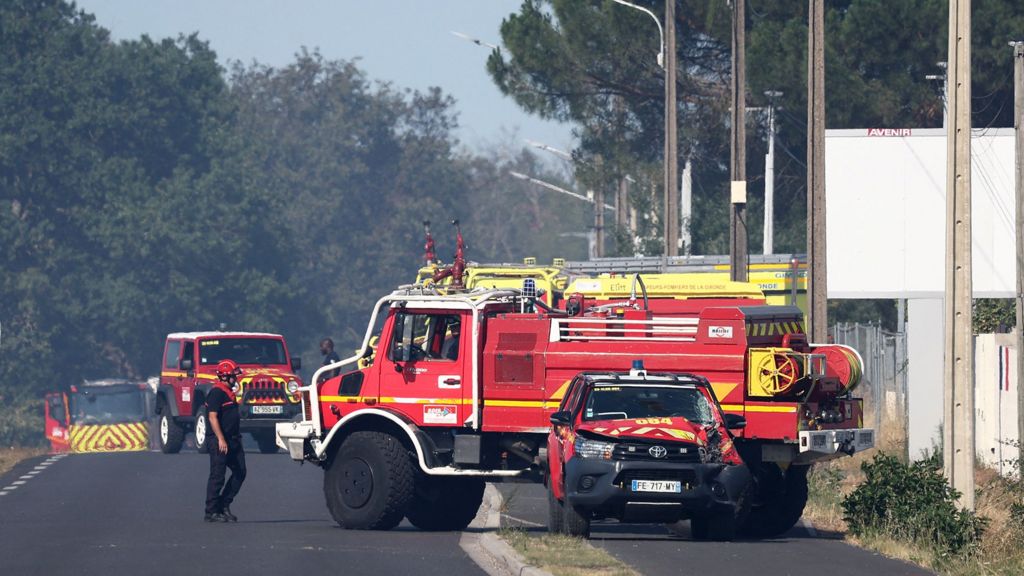
    France is grappling with an unprecedented wave of wildfires amplified by record-breaking heatwaves, with two firefighters losing their lives battling a major blaze near Bordeaux-Mérignac Airport in southwestern France, local officials have confirmed. Local French media reports indicate the fire, which ignited close to one of the airport’s public parking lots, began as an uncontrolled brush fire before rapidly spreading to an adjacent structure.

    Social media footage and imagery captured by on-site witnesses show commercial airline passengers disembarking onto airport tarmacs as a towering, dense plume of dark smoke billowed into the sky just kilometers from the runway. In response to the emergency, airport authorities implemented flight delays for all incoming scheduled services to prevent additional risk to passengers and crew. Roughly 100 ground-based firefighters, supported by specialized aerial firefighting aircraft, have been deployed to bring the blaze under control.

    French Interior Minister Laurent Nuñez confirmed the fatalities during a scheduled question-and-answer session at the French National Assembly on Tuesday, noting he had received official notification of the deaths from administrative leaders in Gironde, the department where the Bordeaux fire is burning. Nuñez added that he would travel to Gironde “as soon as possible” to personally oversee ongoing suppression efforts. Gironde is among a growing number of French departments already reeling from weeks of wildfire activity, which has been stoked by an extended, unseasonal heatwave that has pushed regional temperatures well above average.

    Hours after the Bordeaux fire was reported, a new large-scale wildfire erupted on Tuesday in the southeastern department of Var. The fire, burning across territory in the commune of Pontevès, “remains entirely out of control and is spreading at a rapid pace,” according to the Voluntary Association for Fire Monitoring in France (PSFDF). In response, officials have deployed 500 firefighters and rescue personnel to contain the blaze, and have already ordered the evacuation of 150 local residents to safe emergency shelters.

    This season’s wildfire activity has already surpassed all modern records in France. Official data compiled by the European Forest Fire Information System (Effis) shows that between the start of January and mid-July, more than 42,000 hectares (103,784 acres) of land have burned across the country — a total that already exceeds the full-year record set in 2022. French President Emmanuel Macron noted last week that France has not faced this level of wildfire activity since the end of World War Two, with nearly 11,000 separate blazes recorded nationwide since the start of 2026.

    The surge in destructive wildfires across France and broader Europe is directly tied to human-caused climate change, according to climate scientists. Data from the Copernicus Climate Change Service confirms Europe is warming twice as fast as the global average, making the continent disproportionately vulnerable to extreme weather events. Rising global temperatures are fueling longer, more intense summer heatwaves, straining regional water supplies, and creating drier conditions that increase the frequency and severity of destructive wildfires.

    The current heat and wildfire crisis is not limited to France. Neighboring Spain has already seen at least 13 fatalities linked to this summer’s wildfires, with a single massive blaze north of Madrid destroying more than 29,000 hectares of forest and populated land, marking one of the most destructive wildfires in the country’s modern history.

  • General Ghalibaf’s gamble: An IRGC veteran takes on Iran’s hardliners to pursue diplomacy

    General Ghalibaf’s gamble: An IRGC veteran takes on Iran’s hardliners to pursue diplomacy

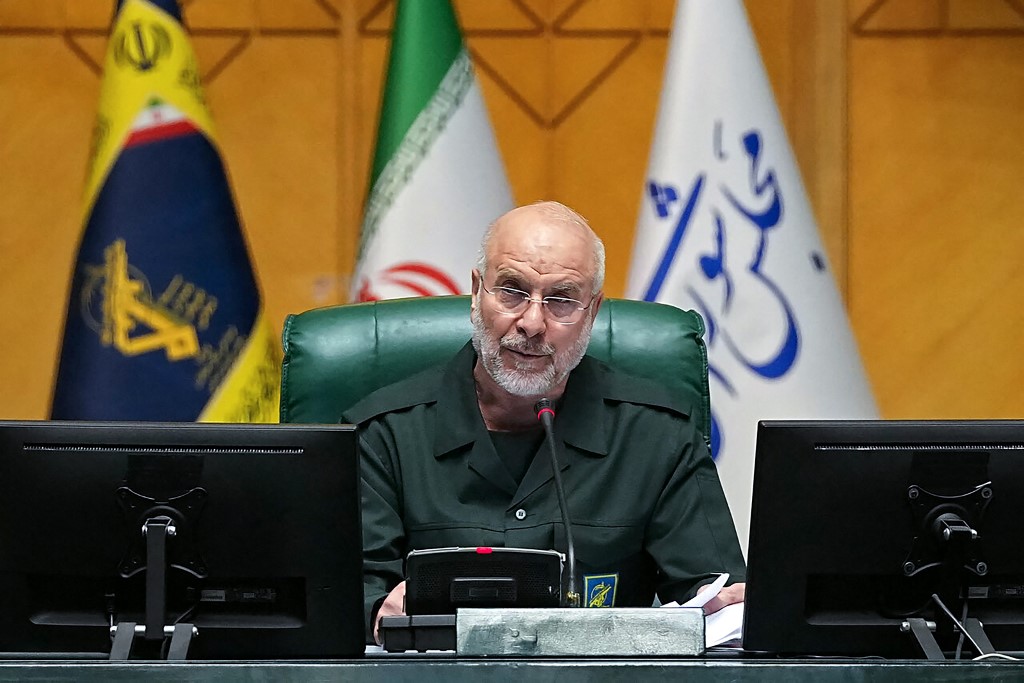
    As Iran’s parliament speaker and lead negotiator in ongoing diplomatic talks with the United States, Mohammad Bagher Ghalibaf stands at the most critical political crossroads of his decades-long career in military and public service. A lifelong conservative and former senior commander of the Islamic Revolutionary Guard Corps (IRGC), Ghalibaf is currently navigating a high-stakes balancing act: pushing to pull the Islamic Republic out of its deep confrontation with Washington through diplomatic negotiation, while fending off scathing attacks from hardline factions that accuse him of surrendering Iran’s core strategic leverage.