博客

  • Seinfeld actor apologises to reality star for ‘inappropriate’ sketch when she was 17

    Seinfeld actor apologises to reality star for ‘inappropriate’ sketch when she was 17

    More than a decade after a controversial comedy sketch that featured a minor as the butt of sexualized jokes, veteran Hollywood actor Jason Alexander has issued a public apology to Courtney Stodden, the reality TV star who was just 17 years old when the segment was filmed. The 2012 sketch, produced by digital comedy platform Funny or Die, parodied daytime talk shows in the vein of *Dr. Phil*, and has resurfaced in recent weeks to renewed public backlash over its inappropriate content.

    In the resurfaced clip, Alexander — best known for his decades-long fame as George Costanza on the iconic sitcom *Seinfeld* — performs a crude bit where he rubs a mobile phone across Stodden’s chest, joking that there was “no signal” on her head but “plenty of signal” in her breasts. The sketch closes with another problematic joke, where Alexander quips that he would take Stodden behind a couch and “have his way” with her once she turned 18. Stodden also confirmed that Alexander was credited as one of the sketch’s writers, adding a layer of accountability to his involvement.

    Earlier this month, Stodden, now 31, reposted the clip to her Instagram with a heartfelt reflection on the harm the experience caused her. “The older I get, the more impossible this is to understand,” she wrote. “Looking back now, I don’t see comedy. I see a 17-year-old girl whose body became part of an adult joke. I was a minor. I didn’t have the legal power to decide whether I wanted to participate… I was the only child in the room. I felt so alone.” Stodden went on to question how a room full of adult industry professionals could deem the sexualization of a minor acceptable content for a comedy sketch.

    After Stodden’s public post drew widespread media attention, Alexander released a formal statement to multiple major U.S. entertainment outlets acknowledging the sketch was wrong. “Looking back at the comedy sketch in which Ms Stodden and I participated in 2012, I completely agree that it was inappropriate and I truly regret it,” Alexander said. “But more importantly, I am deeply sorry for any harm or distress it has caused Ms Stodden. I offer her my sincerest apologies.”

    This conversation comes amid Stodden’s ongoing advocacy work to end child marriage in her home state of California. Stodden herself was married at 16 to 51-year-old actor Doug Hutchison in 2011, a union that was legally allowed at the time because her parents granted consent. The pair finalized their divorce in 2020, and Stodden has since become a prominent voice for reform. Currently, 33 U.S. states still allow 16- and 17-year-olds to marry with parental approval or a judicial waiver, a practice Stodden has spent years fighting to eliminate.

    California is currently considering AB 1267, a bill that would set the absolute minimum age for marriage at 18, eliminating all exceptions for underage marriage. Stodden said she appreciated Alexander’s public apology, but pushed for more concrete accountability. “People keep asking if he’s apologised privately, and he hasn’t. A private apology would be meaningful, but meaningful action would be even more powerful,” she told reporters. “If he truly regrets what happened, I’d invite him to support [campaign group] Unchained At Last and the fight to end child marriage through AB 1267. That’s how we turn accountability into lasting change.”

    Beyond his breakout role on *Seinfeld*, Alexander has built a decades-long career in Hollywood with credits on hit series including *ER* and films like *Pretty Woman* and *Shallow Hal*. Stodden, who rose to fame following her 2011 marriage, has built a public profile through appearances on reality shows including *Couples Therapy*, *Celebrity Big Brother*, *Reality Ex-Wives*, and *Celebs Go Dating*.

  • Hundreds hospitalised in Japan heatwave ‘disaster’

    Hundreds hospitalised in Japan heatwave ‘disaster’

    Japan is currently grappling with an unprecedented extreme heatwave that has officially been labeled a national disaster, leaving at least 14 people dead and forcing hundreds of residents and visitors into hospital care for heat-related illnesses. On Thursday, Tokyo Fire Department officials released staggering daily figures confirming that 453 people required emergency hospital treatment for heatstroke and related complications on Wednesday alone — the highest single-day count recorded since the city began tracking such statistics 16 years ago in 2008. Emergency service callouts for heat-related incidents also hit a record high not seen since consistent record-keeping began in 1963.

    The unprecedented surge in heat-related hospitalizations comes as much of the island nation bakes under consistent high temperatures, with the death toll rising to at least 14 across the country over the past seven days, per data from Japan’s Fire and Disaster Management Agency. In Tokyo prefecture, home to roughly 14 million residents, one person has already died from heat-related causes in this event, with four more in critical condition and 18 others classified as seriously ill.

    “We are urgently urging people across the capital to stay consistently hydrated and run air conditioning whenever possible to avoid heatstroke,” a fire department spokesperson told reporters. The spokesperson added that patient numbers have climbed steadily alongside rising temperatures, with sharp, worrying increases reported on both Tuesday and Wednesday.

    Tourists visiting popular Tokyo attractions have described the conditions as punishing, with many altering entire travel itineraries to prioritize access to cool spaces. Nick Estes, a 35-year-old American tourist visiting Tokyo’s historic Asakusa district with his family, noted the extreme conditions felt even more intense than his trip last summer. “We’ve planned every part of our day around staying cool: spending time on the air-conditioned metro, popping into small air-conditioned souvenir shops, doing anything we can to bring our body temperatures down,” Estes explained. “Especially with young kids, it’s been absolutely brutal. I was here last summer, and somehow it feels even hotter this year.”

    Central Japanese regions have seen some of the worst heat, with Aichi Prefecture — home to the major city of Nagoya and Toyota Motor’s global headquarters — reporting 116 hospitalizations on Wednesday alone. Nationwide, heatstroke alerts have been issued for nearly all of Japan’s 125 million residents, and the disaster management agency has formally categorized the event as a disaster.

    “Temperatures have climbed steadily since mid-July, and severe heat is forecast to continue across the entire country,” the agency stated in an official release. “It is no exaggeration to call this extreme heat a disaster, given how many people are being rushed to hospitals or even losing their lives to heatstroke.”

    By early afternoon Thursday, at least six locations across Japan recorded temperatures of 40°C or higher, with three more sites hitting 39.9°C. The highest reading was logged in Hamamatsu, located in central Shizuoka Prefecture, which hit 41.1°C. Toyota City followed at 40.8°C, and Kuwana in Mie Prefecture reached 40.7°C. Japan’s all-time record high temperature of 41.8°C was set just last month in Isesaki, north of Tokyo.

    This year, Japanese authorities introduced a new official term for days with temperatures exceeding 40°C: kokushobi, which translates to “cruelly hot day.” The label was created to draw greater public attention to the severe risks of extreme heat, though it does not trigger mandatory nationwide emergency measures.

    Climate scientists have repeatedly warned that human-caused climate change is steadily increasing both the frequency and intensity of extreme heat events across Japan and the globe. Last year, Japan experienced the hottest summer on its national record, a trend that visitors and residents alike say they are noticing firsthand.

    “You leave your hotel at 8:30 in the morning and it already feels like midday, and it just gets hotter and hotter as the day goes on,” said Yesenia Gueta, a 47-year-old tourist from Los Angeles. “Now I understand why Japanese clothing is loose, and why people carry umbrellas to block the sun all the time. This heat is extreme, and that new name ‘cruelly hot day’ fits perfectly.”

    Many Japanese residents are also expressing growing anxiety about what the coming weeks of summer will bring, with temperatures already hitting record levels in mid-July. “Since it’s already this hot in mid-July, I’m worried about what August will be like,” said 24-year-old Japanese university student Nukochama, who carries a fully charged portable electric fan at all times to stay cool.

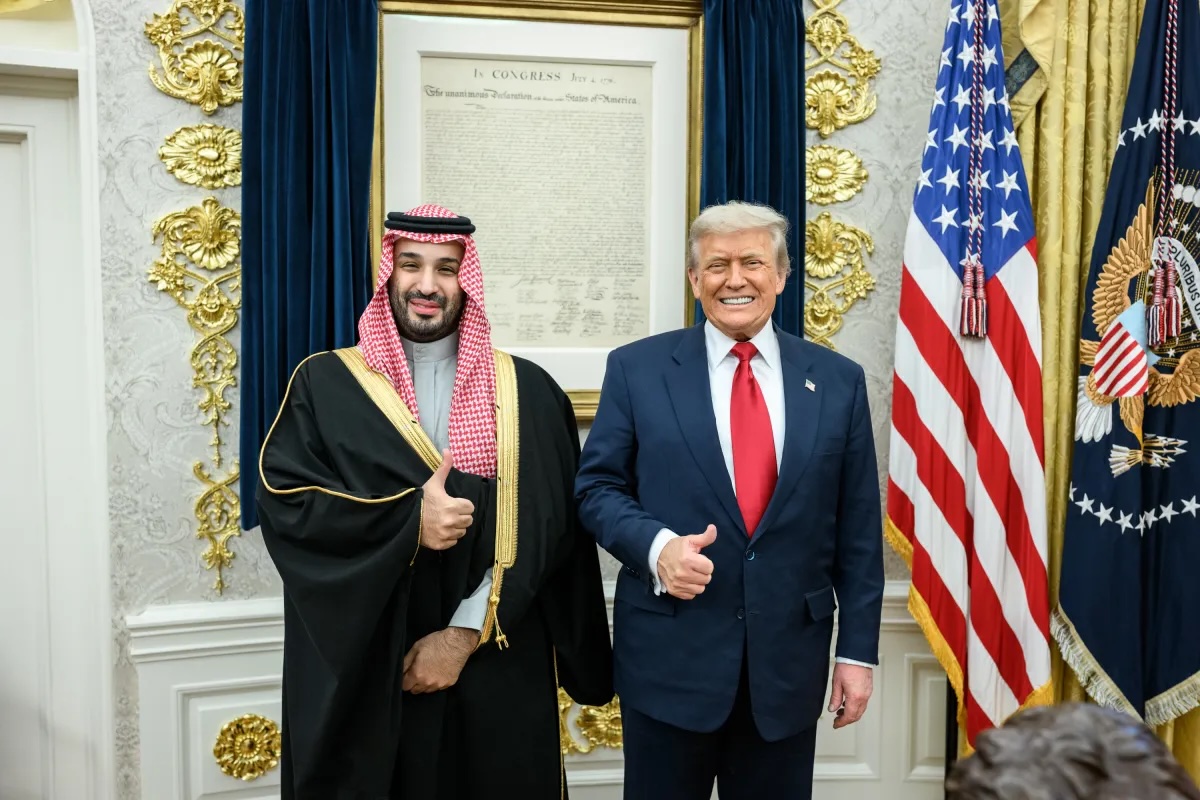
  • Nonproliferationists demand Congress reject Trump-Saudi nuke deal

    Nonproliferationists demand Congress reject Trump-Saudi nuke deal

    A bombshell report from Reuters has triggered widespread condemnation and urgent warnings from global nonproliferation specialists and U.S. political leaders over a leaked proposal from former President Donald Trump’s administration that would greenlight a U.S.-Saudi Arabia nuclear cooperation agreement, raising severe risks of nuclear weapons proliferation across the Middle East.

    According to reporting from anonymous sources familiar with the draft text, the framework crafted by the Trump administration would permit the transfer of sensitive U.S. nuclear power technology to Saudi Arabia, while omitting critical nonproliferation safeguards designed to prevent nuclear materials from being diverted to weapons development. Most notably, the proposal does not include the widely accepted “Gold Standard” provisions that would ban the kingdom from enriching uranium and reprocessing spent nuclear fuel — two core capabilities that can be directly repurposed to build nuclear weapons.

    Kelsey Davenport, director of nonproliferation policy at the nonpartisan Arms Control Association, was among the first to publicly criticize the plan, issuing a warning in a Tuesday social media post that the draft agreement “sets a terrible precedent.” Davenport explained that the proposal breaks with decades of bipartisan U.S. policy that has required strict prohibitions on enrichment and reprocessing in all bilateral nuclear cooperation pacts. “If the deal is inadequate, which it seems to be, Congress should vote to disapprove it,” Davenport added.

    Andrea Stricker, deputy director and research fellow at the Foundation for Defense of Democracies’ Nonproliferation Program, echoed that call, urging Congress to immediately block the agreement. Stricker warned that the weak safeguards would not only put Saudi Arabia on a clear path to potential nuclear weapons development but could also trigger a regional nuclear arms race, prompting neighboring states to pursue their own nuclear weapons programs. If Congress fails to halt the deal, Stricker argued that any future U.S. administration should reverse the policy “before too much damage is done in terms of watering down safeguards, setting negative precedents for other states, and failing to contain the spread of enrichment and reprocessing.”

    James Acton, co-director of the Carnegie Endowment for International Peace’s Nuclear Policy Program, went even further, arguing that the reported deal is “tantamount to the United States giving up on nonproliferation.” Acton noted that Saudi officials have publicly acknowledged their potential interest in developing nuclear weapons, adding that “the United States should do nothing to facilitate enrichment or reprocessing in the Kingdom.”

    Emma Ashford, a senior fellow at the Stimson Center, agreed that the agreement would effectively end decades of U.S. efforts to curb global nuclear proliferation, pointing to a striking policy contradiction at the heart of the Trump administration’s approach: the same administration pursued military pressure and airstrikes against Iran to block its nuclear enrichment program, while offering the same capability to Saudi Arabia.

    Rosemary Kelanic, director of the Middle East Program at Defense Priorities, also labeled the proposal a “terrible idea” that breaks with 70 years of U.S. nonproliferation policy, which has never permitted the transfer of enrichment technology to a country that does not already possess the capability. Kelanic warned that the deal could create long-term national security risks for the United States, empowering Saudi Arabia to hold Washington hostage to its demands.

    “Aside from the proliferation risks, uranium enrichment would give Saudi Arabia a potent source of leverage to extract future concessions from Washington, including new security guarantees, by threatening to weaponize its program unless the United States promises enhanced military protection,” Kelanic explained, noting that this dynamic played out previously with U.S. allies South Korea and West Germany, where the U.S. exchanged expanded security guarantees to convince the nations to abandon their indigenous nuclear programs.

    Top congressional Democrats have also joined the chorus of criticism. Rep. Gregory Meeks, D-N.Y., ranking member of the House Foreign Affairs Committee, voiced “deep concerns” about the reported deal, saying it “would significantly erode existing nonproliferation standards.” Meeks emphasized that any valid U.S.-Saudi nuclear agreement must include strict limits on enrichment and reprocessing, as well as full compliance with the International Atomic Energy Agency’s Additional Protocol, which grants the global nuclear watchdog enhanced inspection powers.

  • House approves GOP-supported US-Israel military integration

    House approves GOP-supported US-Israel military integration

    On a Wednesday vote almost strictly split along partisan lines, the Republican-controlled U.S. House of Representatives has advanced a landmark $1.15 trillion fiscal year 2027 National Defense Authorization Act (NDAA), HR 8800, advancing a package that has sparked fierce backlash over a divisive provision deepening U.S.-Israeli military cooperation and a last-minute partisan maneuver attaching a contentious voting policy measure to the must-pass national security legislation.

    The final vote tally settled at 219 in favor to 206 opposed. Republicans backed the measure by an overwhelming 213-1 margin, with only Kentucky Representative Thomas Massie breaking with his party to vote no. On the Democratic side, five members crossed party lines to support the bill: North Carolina’s Don Davis, Jared Golden of Maine, California’s Adam Gray, Vicente Gonzalez of Texas, and Marie Gluesenkamp Perez of Washington. Independent Representative Kevin Kiley of California also joined supporters of the legislation.

    A core point of controversy centers on Section 219, a provision that formalizes deeper integration of U.S. and Israeli military research and development initiatives. Massie and Democratic Representative Ro Khanna of California introduced an amendment to remove the provision from the final bill, but the House Rules Committee blocked any debate on the change, leaving Section 219 intact in the legislation sent to the Senate.

    A second contentious provision, Section 622, also remains in the bill: the measure would expand and strengthen intelligence sharing cooperation with Israel, while rolling back existing restrictions on that partnership.

    Critics across the progressive wing of the Democratic Party have launched sharp attacks on the Israel-focused provisions, framing the deeper integration as a threat to U.S. national sovereignty and democratic governance. New York Representative Alexandria Ocasio-Cortez labeled the full NDAA “an existential threat to American sovereignty and democracy” ahead of the vote. Massie, the lone Republican opponent, added that the nation’s founding fathers “would be appalled at what Congress is doing now.” Minnesota Representative Ilhan Omar went further, describing Section 219 as “an outrageous threat to our country’s security and autonomy,” and arguing that “Americans want no part in Netanyahu’s genocidal regime. Congress cannot continue to bankroll Israel’s campaign of violence.”

    Following the House Rules Committee’s decision to block debate on the amendment, Khanna said that opponents would shift their focus to removing the provision during the conference committee process, where House and Senate negotiators will reconcile differences between the two chambers’ versions of the NDAA. “We need to now fight to strip this amendment in the conference between the House and the Senate,” Khanna said.

    Beyond the controversy over Israel policy, the main driver of unified Democratic opposition was a procedural move by Republican leadership to attach the Safeguard American Voter Eligibility (SAVE) America Act to the defense spending bill. Championed by former President Donald Trump, the SAVE Act requires voters to provide formal proof of citizenship to register for federal elections. Democratic lawmakers universally condemned the decision to attach the hotly contested voting policy measure to a must-pass national security bill.

    Another high-profile amendment, which would have permanently codified Trump’s prior executive order barring transgender people from serving openly in the U.S. military, was narrowly defeated after four Republican lawmakers broke ranks to vote against the provision: Pennsylvania’s Brian Fitzpatrick, Mike Lawler of New York, Northern Mariana Islands Delegate Kimberlyn Kay King-Hinds, and Guam Delegate James Moylan.

    Now that the House has passed its version of the 2027 NDAA, the legislation moves to the U.S. Senate, where lawmakers will take up their own iteration of the defense spending package. Independent Senator Bernie Sanders of Vermont reiterated widespread progressive opposition to the bill following the House vote, saying “Americans are saying loudly and clearly: No more US military support for the extremist Netanyahu government. That is why Congress must vote NO on the defense spending bill, which brings the US and Israeli militaries even closer together.”

  • US public investments in ag research declined as China’s boomed

    US public investments in ag research declined as China’s boomed

    For generations, the United States held an unrivaled global leadership position in public investment for agricultural research. But after reaching an inflation-adjusted peak in 2002, combined federal and state funding has plunged by more than 30%, a downward trajectory that carries major long-term risks for American agriculture, according to a new analysis from the American Enterprise Institute (AEI).

    In a recent paper written by agricultural economists Philip Pardey and Vincent Smith, the pair argue that U.S. farmers and ranchers cannot afford to dismiss this decades-long funding slide, as its impacts are already being felt in on-farm output. Decades of empirical economic research confirm that sustained public agricultural R&D is the single largest driver of growth in farm productivity, and as public spending has declined, so too has the rate of productivity improvement across the U.S. agricultural sector.

    Worse still, the paper warns, without an immediate, large-scale increase in public support for agricultural research, U.S. agricultural productivity could actually contract, meaning annual growth rates will turn negative. Evolving threats from pesticide-resistant crop pests and drug-resistant animal diseases mean that a baseline level of research investment is already required just to maintain current productivity levels. The authors note that current annual public R&D spending barely meets that threshold, and likely falls short of what is needed to address these ongoing sustainability challenges — let alone generate new gains in production efficiency.

    Parallel to the U.S. funding decline, China’s public investment in agricultural research has expanded at a breakneck pace. By 2011, China overtook the United States to become the world’s largest public funder of agricultural R&D, and in some years its total public investment has reached double the U.S. level.

    What does this shift in global research leadership mean for American agriculture? The implications are mixed. Chinese researchers are pursuing ambitious, cutting-edge work that could deliver groundbreaking new crop varieties, some of which could eventually benefit U.S. producers. But there are tangible geopolitical risks to allowing the world’s leading advances in disease-resistant and climate-resilient seed technology to fall under the control of a major geopolitical rival. Additionally, increased Chinese research investment will boost China’s domestic food security, reducing its reliance on agricultural imports from the U.S. and other global exporters.

    It is important to contextualize this shift: China has 1 billion more people to feed than the United States, and only a few generations removed from widespread mass famine, so its rising investment in agricultural research is far from unexpected. The core problem for U.S. agriculture, the paper emphasizes, is not that China is investing more, but that the U.S. is investing less. Global leadership bragging rights carry little practical weight; if U.S. public R&D spending were growing steadily, falling to second place behind China would be far less concerning.

    Critics of the idea that declining public funding is a crisis point to the rapid growth of private sector investment in agricultural R&D. A 2023 analysis from Iowa State University’s Center for Agricultural and Rural Development (CARD) argues that fast-growing private spending has offset the retreat in public funding, and when private investment is included, the U.S. still retains its position as the world’s top total funder of agricultural R&D.

    But the AEI authors push back on the claim that private R&D can fully replace public investment. They note that nearly all private agri-food innovation is built on the foundation of basic, high-risk, long-term research carried out by the public sector. The paper also finds that the overall share of U.S. agricultural research (combining both public and private spending) dedicated to improving farm productivity has declined steadily and irreversibly over recent decades.

    While CARD differs on the substitution question, framing public and private investment as complementary rather than dependent, it still confirms alarming productivity trends. CARD cites U.S. Department of Agriculture data showing that U.S. farm productivity fell by 6% between 2009, when productivity growth hit its peak, and 2019. The center notes this decline could stem directly from falling public research funding, or from a broader shift in research priorities away from productivity enhancement.

    Regardless of the root cause, both research institutions agree that U.S. farmers have a direct stake in reversing the funding slide. The AEI authors note that farmer advocacy groups have consistently prioritized immediate government farm payments over increased research investment, a choice they frame as deeply short-sighted. For farmers who argue that productivity gains only drive oversupply and lower crop prices, the authors counter that a far bigger risk of suppressed prices comes from other major agricultural exporters, such as Brazil, that are rapidly expanding both their productivity and total farmland under cultivation.

    The need for sustained public investment was reinforced at a recent industry conference, where a speaker laid out the reality that transformative next-generation agricultural innovations require public backing. Private investors universally demand short timelines and guaranteed returns, requirements that are incompatible with the high-risk, long-horizon work that generates breakthrough agricultural advances. Speaking offstage after the presentation, both a startup ag tech CEO and a venture capitalist confirmed this assessment, adding further weight to the argument that expanded public agricultural R&D is an essential investment for the future of U.S. agriculture.

  • Ruiz & Gavi’s reward for win… 150kg of tomatoes

    Ruiz & Gavi’s reward for win… 150kg of tomatoes

    When international football stars lift the FIFA World Cup trophy, the celebrations that follow come in all shapes and sizes. But few honors are as unique as the welcome two Spanish champions received when they returned to their small Andalusian hometown this week.

    Midfielders Fabian Ruiz of Paris Saint-Germain and Barcelona’s Gavi, both key members of Spain’s 2026 World Cup-winning squad that defeated Argentina in an extra-time final in North America, arrived back in Los Palacios y Villafranca on Wednesday to a hero’s welcome. The town, located just south of Seville, counts fewer than 40,000 residents, but thousands turned out to line the streets and greet the pair at an official civic reception held at the local town hall.

    Draped in Spanish flags and wearing their shiny gold World Cup winners’ medals, Ruiz and Gavi were met by local government officials, cheering fans, and a very special surprise tribute that is one of the town’s longest-standing athletic traditions. As part of the celebration, both players stepped onto public weighing scales to measure their body weight — a calculation that would determine exactly how many tomatoes they would take home as a reward for their historic victory.

    In the end, Ruiz, who started the World Cup final against Argentina, will receive 85 kilograms of locally grown tomatoes, while 20-year-old Gavi will take home 68.5 kilograms. Local council leaders note that this unusual tomato presentation has become a signature tradition of the municipality, reserved exclusively for honoring the town’s most exceptional sporting talents.

    The celebration also included a reunion with Los Palacios y Villafranca’s first World Cup champion, former Spanish winger Jesus Navas, who claimed the sport’s biggest prize as part of Spain’s 2010 World Cup-winning squad. Navas, who previously played for Manchester City, already received a similar tomato honor alongside Ruiz when Spain won the UEFA Euro 2024 title, and the town’s existing sports pavilion already bears his name.

    In recognition of Gavi and Ruiz’s new world championship titles, local officials announced that two public football fields in the town will be renamed to honor each player permanently. Going a step further, the town council confirmed plans to fund and construct a new shared monument dedicated to all three World Cup-winning athletes from the small Andalusian town.

    A formal statement from the town council explained the motivation behind the permanent tributes, saying: “In this way, the city council wants to pay permanent tribute to three athletes who represent the pride of an entire town and who, with their sporting and human trajectory, have become role models for several generations of children and young people.”

    The historic victory for Spain, which claimed its third World Cup title after a dominant extra-time win over Argentina, capped a standout tournament for both Gavi and Ruiz, who cemented their status as two of the best young midfielders in global football. For their hometown, the win is a source of communal pride that will be commemorated for decades to come.

  • US may sanction China’s Moonshot for distilling Anthropic’s Fable

    US may sanction China’s Moonshot for distilling Anthropic’s Fable

    Tensions between the United States and China over artificial intelligence development have escalated sharply, with top US officials threatening to impose sanctions on leading Chinese AI companies over allegations of large-scale, covert intellectual property theft via a technique called knowledge distillation.

    Speaking in an interview with Fox Business, US Treasury Secretary Scott Bessent confirmed that Washington has launched an investigation into whether top Chinese open-weight AI models were developed by illegally extracting proprietary knowledge from American AI systems. “If we find that overseas models are stealing intellectual property from our leading companies, we have the authority to impose sanctions over this illicit activity,” Bessent stated. He added that US investigators have identified digital watermarks from American large language models (LLMs) embedded in multiple Chinese AI models, calling the practice “unacceptable” and saying a final determination on action will come in the coming days or weeks.

    The accusations center specifically on Moonshot AI, a prominent Chinese AI developer backed by major domestic technology giants Alibaba, Meituan, and Tencent, which launched its latest flagship model Kimi K3 on July 17. Michael Kratsios, director of the White House Office of Science and Technology Policy, outlined the allegations in a post on X Wednesday, claiming Moonshot AI used knowledge distillation to copy Anthropic’s closed-source Fable model to build Kimi K3. Kratsios alleged the Chinese firm built a custom, sophisticated internal platform to carry out large-scale distillation against US models, using rotating access methods to avoid detection. He also claimed Moonshot AI has acquired GB300 AI servers and accessed the high-performance chips via facilities in Thailand to train its models.

    Kratsios emphasized that legitimate, limited use of knowledge distillation — a common AI development technique that allows a smaller “student” model to learn from the outputs of a larger “teacher” model to create more efficient systems — is legal and widely accepted. However, he argued that large-scale covert industrial distillation aimed at stealing proprietary US technology and undermining years of American research investment crosses a clear line.

    The US framing of this activity as a national security threat dates back to April, when the White House issued National Security Technology Memorandum 4 (NSTM-4), formally designating “adversarial distillation” as a threat to US national security. The memorandum warned that foreign actors can replicate cutting-edge US AI capabilities at a fraction of the development cost by flooding American public AI interfaces with targeted queries and harvesting the responses, and it directed federal agencies to improve intelligence sharing with private AI companies and explore avenues to hold bad actors accountable.

    But Moonshot AI has forcefully denied the allegations. Huang Zhenxin, the firm’s head of business, rejected claims that Kimi K3 relies on distilled data from foreign AI models in comments Tuesday. He attributed Kimi K3’s performance gains to three in-house, original innovations: Moon Clip, a data processing framework that cuts computing costs in half while doubling training efficiency; Kimi Linear Tension, a technique that expands the model’s context window by 10 times; and Attention Residuals, a speed optimization that boosts reasoning performance by 25% that has even drawn public praise from entrepreneur Elon Musk.

    The broader dispute has laid bare sharp accusations of double standards from Chinese observers, who point to public examples of US AI developers using the same distillation technique with Chinese open-source models without similar condemnation. A commentary published by Chinese media outlet Guancha.cn argued that US interests frame distillation as innovative progress when American firms do it, but label the exact same practice as IP theft when Chinese developers engage in it.

    The commentary highlighted the case of Inkling, the debut AI model from Thinking Machines Lab, a startup founded by former OpenAI CTO Mira Murati. Thinking Machines Lab openly confirmed when launching Inkling in July 2026 that the model’s architecture is based heavily on DeepSeek-V3, a popular Chinese open-source large language model, and its post-training development relied on synthetic data generated by Moonshot AI’s earlier Kimi K2.5 model — a process that falls squarely into the definition of distillation that the US is now threatening to sanction for Chinese firms.

    “Chinese open-weight models share their technology freely, lower industry costs, and allow the entire global AI ecosystem to build on their work,” the commentary cited Chinese netizens as saying. “Meanwhile, American closed-source labs hide all their work, charge premium prices, lobby for trade restrictions, and then turn around and accuse everyone else of theft. The hypocrisy is staggering.”

    At its core, the current conflict stems from a fundamental divide between two competing AI development models: the open-weight approach embraced by most leading Chinese AI firms, which publishes model weights publicly for global developers to use, modify, and build on, versus the closed-source model dominated by US industry leaders like OpenAI and Anthropic, which keep model weights proprietary and only grant paid access to model outputs via application programming interfaces.

    The latest US sanctions threat is the culmination of months of growing tension over the practice. Back in February, OpenAI accused Chinese AI firm DeepSeek of using distillation to free-ride on its frontier AI capabilities, claiming it had detected new covert methods to bypass OpenAI’s access safeguards. Weeks later, Anthropic issued its own accusation, identifying large-scale industrial distillation campaigns run by DeepSeek, Moonshot AI, and MiniMax to illicitly extract capabilities from its Claude model series, using covert tactics to get around access restrictions.

    In a June 10 letter to US Senators Tim Scott and Elizabeth Warren, Anthropic detailed more specific allegations against Alibaba, claiming the Chinese tech giant ran a systematic distillation campaign against Anthropic’s Claude models between April 22 and June 5. The letter alleged Alibaba created nearly 25,000 fraudulent accounts to generate more than 28.8 million queries to Claude models, targeting key capabilities including agentic reasoning, software engineering, and long-context tasks. Anthropic urged Congress to improve intelligence sharing between US AI firms, close loopholes that allow Chinese firms to access advanced AI chips, and penalize companies behind what it frames as distillation attacks.

    Chinese officials have pushed back against the US accusations. Speaking at the World AI Conference in Shanghai on July 18, Chinese Assistant Foreign Minister Lin Bin did not name the US directly but pushed back against the framing of distillation as a hostile act. “Hype around this issue by some countries is misguided and ultimately counterproductive to global AI development,” he said.

    Even within China, some industry commentators have acknowledged that heavy reliance on low-cost distillation carries structural trade-offs for Chinese AI developers. One commentary published on Sina.com noted that during the 2026 FIFA World Cup, users found DeepSeek’s V4-Pro model was unable to answer basic questions about the ongoing tournament, as its training data was frozen in May 2025 and the model generated false explanations rather than acknowledging its knowledge gap. The commentator argued this is an inevitable downside of the low-cost distillation strategy, as the derived models often face higher barriers to updating knowledge and running real-time inference on new information at a reasonable cost.

    Notably, the current escalation comes ahead of scheduled high-level AI talks between US and Chinese officials scheduled for September, ahead of a planned meeting between Chinese President Xi Jinping and US President Donald Trump in the US on September 24. Independent benchmark testing of the two models at the center of the current dispute found that Anthropic’s Claude Fable 5 outperforms Moonshot’s Kimi K3 in 22 out of 35 shared evaluation metrics, with particularly strong leads in computer vision and general knowledge tasks. Kimi K3, however, outperforms the US model in long-horizon coding and terminal use benchmarks, and is priced at 70% less than Fable 5: $3 per million input tokens compared to Anthropic’s $10.


  • Russia’s biggest online retailer is the latest target of Ukraine’s attacks

    Russia’s biggest online retailer is the latest target of Ukraine’s attacks

    A wave of Ukrainian drone strikes targeting logistics facilities across Russia has left at least nine people dead, dozens injured, and knocked out roughly 12 to 15 percent of the total warehouse space of Russia’s largest e-commerce platform Wildberries, in what Kyiv frames as a strategic escalation of its cross-border aerial campaign against the Kremlin’s war effort.

    The first attacks unfolded over the weekend, striking two sprawling Wildberries distribution centers: one in Elektrostal, an industrial city just east of Moscow, and a second in Russia’s Tambov region. The weekend strikes killed eight people and wounded dozens more. Early Wednesday, two additional Wildberries facilities in the southern Russian regions of Krasnodar and Stavropol were hit and engulfed in flames, killing one person and injuring 14 others. Thick plumes of black smoke billowed from the burning sites, visible for miles across the surrounding areas.

    Kyiv’s cross-border drone strikes are part of a broader intentional strategy to disrupt Russia’s wartime economy and bring the reality of the Kremlin’s full-scale invasion of Ukraine home to ordinary Russian citizens. Ukrainian President Volodymyr Zelenskyy has confirmed that targets struck in these attacks are linked to supplying Russian military forces with equipment and technical components, though he did not name Wildberries explicitly. An independent check of Wildberries’ online marketplace by The Associated Press found a wide range of goods available that are suitable for both civilian and military use, including body armor, combat helmets, tactical radios, and other electronics. Many of these items were openly labeled with tags referencing Russia’s “special military operation” – the Kremlin’s official term for its full-scale war in Ukraine – such as “tested in the SVO” and “SVO fighters’ choice.”

    To understand why Wildberries became a high-priority target, it is necessary to examine the platform’s extraordinary rise to dominate Russia’s domestic e-commerce sector. Founded in 2004 by Tatyana Kim, a former teacher and young mother, the company began as a small online clothing retailer. Today, with its recognizable purple branding, it is a household name across Russia and the undisputed industry leader, hosting more than 500,000 to 800,000 independent sellers and accounting for 52 percent of all online retail orders placed in the country. It offers everything from apparel and cosmetics to home appliances, pharmaceuticals, and even travel booking services, and expanded into financial services with the 2021 launch of Wildberries Bank – an arm that has since been placed under sanctions by the United Kingdom and European Union.

    As of last year, Wildberries operated more than 200 warehouses and distribution centers across Russia and neighboring markets where it has expanded, totaling more than 5.2 million square meters of storage space. The company had planned further expansion into Belarus and Kazakhstan by 2026. Kim, who remains the company’s leader, had an estimated net worth of $8.1 billion as of April 2024, according to Forbes Russia.

    Kremlin spokesman Dmitry Peskov has rejected Ukraine’s claim that the targeted facilities support the Russian military, calling the assertion false and accusing Kyiv of deliberately attacking civilian infrastructure. Wildberries itself has not issued a formal response to the strikes beyond statements about operational resumption and support for affected sellers. The company confirmed it took three full days to extinguish the large fire at the key Elektrostal distribution hub, which serves the entire Moscow region, while the Tambov region facility in Kotovsk is scheduled to resume operations on Thursday. Neither Kim nor the company has released a full public accounting of the total inventory destroyed in the attacks.

    Beyond the human cost and military strategic implications, the strikes have delivered a catastrophic blow to thousands of small and medium-sized Russian businesses that stored their entire inventory at the targeted warehouses. In the days after the attacks, hundreds of Russian entrepreneurs took to social media to share accounts of losing all their stock, many sharing emotional recountings of total business collapse. Sergei Semko, a leading e-commerce analyst at Moscow-based research firm Data Insight, noted that platforms like Wildberries have been a critical lifeline for small producers and craftspeople across Russia’s 11 time zones, allowing them to reach customers across the country’s vast territory that would otherwise be inaccessible. The damage from the strikes compounds a series of already severe pressures on Russian small businesses this year, including rising taxes, fuel supply disruptions, and growing regulatory burdens.

    Semko estimates that total losses from the destroyed inventory could reach as high as $3 billion, describing the confluence of crises facing affected sellers as “almost a perfect storm.”

    In response to widespread anger and uncertainty from sellers, Wildberries rolled out a series of support measures, including discounted storage fees, free transfer of surviving inventory to other undamaged facilities, and low-interest loans through Wildberries Bank. Controversy emerged earlier this month after the company updated its seller terms of service to exempt itself from liability for inventory damaged or destroyed during “force majeure” events, a category that explicitly includes drone attacks, leaving many sellers unsure if they would receive any compensation for their losses. Late Wednesday, however, Kim announced that the company had begun processing compensation payments for sellers affected by the Elektrostal attack. She emphasized that the company was prioritizing support for the smallest and most vulnerable entrepreneurs, of which there are more than 88,000 affected by the strike, and confirmed that funds would be posted to sellers’ account balances within 24 hours.

  • Surprise jobs boom spooks ASX as fears of more rate hikes grow

    Surprise jobs boom spooks ASX as fears of more rate hikes grow

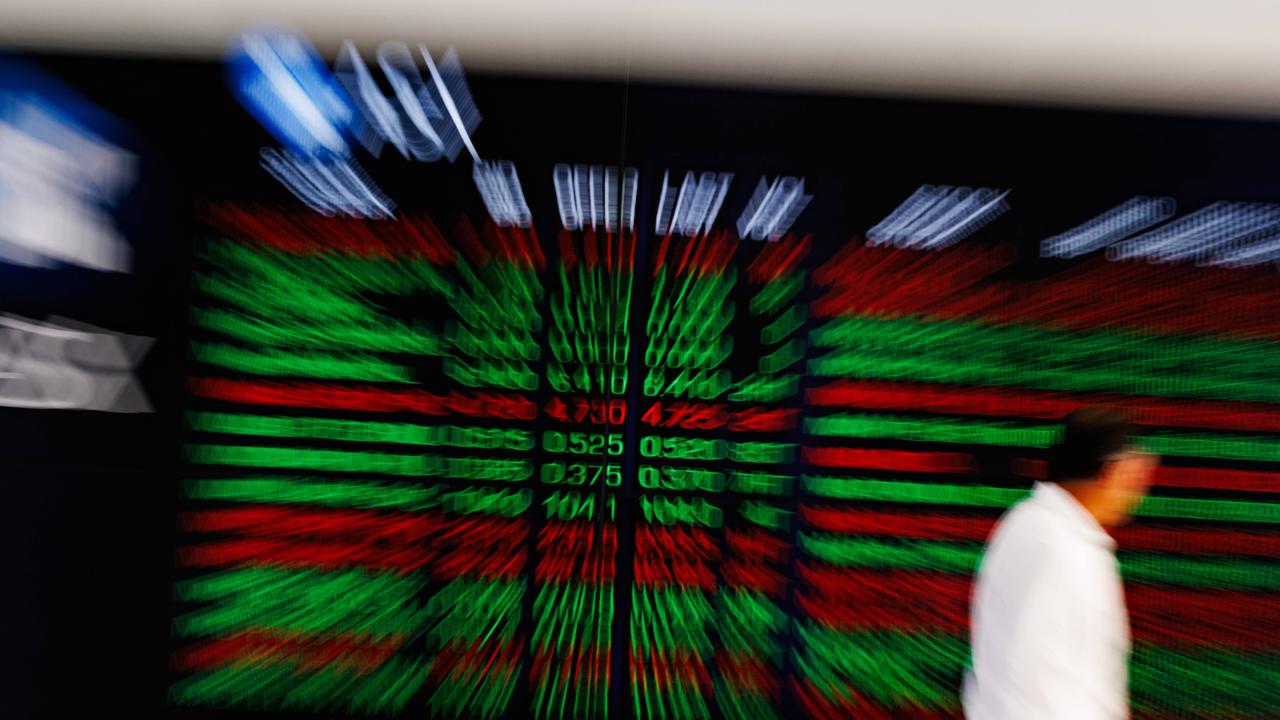
    On Thursday, Australia’s benchmark share market closed narrowly in positive territory after a session marked by sharp volatility, driven by surprisingly strong labor market data that stoked fresh fears of additional interest rate increases from the Reserve Bank of Australia (RBA).

    The ASX 200 finished the trading day up 16 points, or 0.18%, at 8,839.00, while the broader All Ordinaries index gained 13.20 points, or 0.15%, to close at 9,018.10. Though both benchmarks ended the day in the green, they surrendered all of their substantial early gains in afternoon trading, after the ASX 200 hit an intraday peak of 8,926.30. Following the release of the jobs report, the Australian dollar climbed against the U.S. dollar to trade at 70.12 U.S. cents by market close.

    The unexpected strength in employment upended market expectations for RBA monetary policy. Official data released Thursday showed Australia’s unemployment rate held steady at 4.4% in June, in line with economist forecasts, but the economy added a staggering 76,300 new roles during the month – far outpacing the consensus prediction of just 15,000 new jobs. The labor force participation rate also rose to 67%, signaling continued tightness in the jobs market that could put upward pressure on wages and inflation.

    Before the data release, money markets priced in a 20% chance of an RBA rate hike at its next policy meeting in August. That probability jumped to 36% immediately after the jobs report, as investors bet that the resilient labor market would give the central bank room to continue tightening to cool persistent inflation. The shift in rate expectations came just one week ahead of the release of June quarter inflation data, a key input for the RBA’s next policy decision. All told, the repricing of hawkish RBA odds wiped roughly 65 points off the ASX 200’s early rally.

    Cameron McCormack, senior portfolio manager at VanEck, noted that the tight labor market has eliminated the headroom the RBA needs to pause its rate hike cycle. “We believe there is at least one more rate hike coming this year, and a considerable chance that we will see two hikes,” McCormack said in comments following the data release.

    Six of the ASX 200’s 11 sectors ended the session in negative territory, with rate-sensitive technology and consumer discretionary stocks posting the largest losses. Accounting software giant Xero dropped 5.01% to close at $64.45, logistics tech firm WiseTech Global slumped 6.97% to $31.48, and family safety platform Life360 fell 5.45% to $24.12. In the consumer discretionary space, retail conglomerate Wesfarmers led declines with a 1.99% drop to $88.11, electronics retailer JB Hi-Fi fell 1.83% to $76.71, and furniture retailer Harvey Norman slipped 0.64% to $4.68.

    These broad losses were offset by strong gains across the mining and materials sector, which kept the benchmark index in positive territory at closing. BHP shares rose 1.46% to $60.63, Rio Tinto added 0.47% to $162.74, and Fortescue Metals gained 1.02% to $18.76. A rally in global gold prices, which climbed to a high of $US4116 per ounce, also lifted gold mining stocks: Northern Star Resources rose 1.92% to $20.74, Evolution Mining jumped 1.85% to $11.57, and Newmont added 0.88% to $136.85.

    In individual company news, Macquarie Group shares slipped 0.46% to $253.75 after the investment bank announced that long-serving chief executive Shemara Wikramanayake would retire from her role in November. Energy firm Origin Energy closed up 0.77% at $10.50 despite revealing that a cyberattack had stolen sensitive customer data, including full names, residential addresses, dates of birth, contact details, account information, and partial payment card and bank account details. Gold and copper producer Sandfire Resources climbed 3.58% to $19.36 after the firm announced record unaudited annual group sales revenue of $574 million.

  • India protest movement holds capital sit-in as police crack down on demonstrators

    India protest movement holds capital sit-in as police crack down on demonstrators

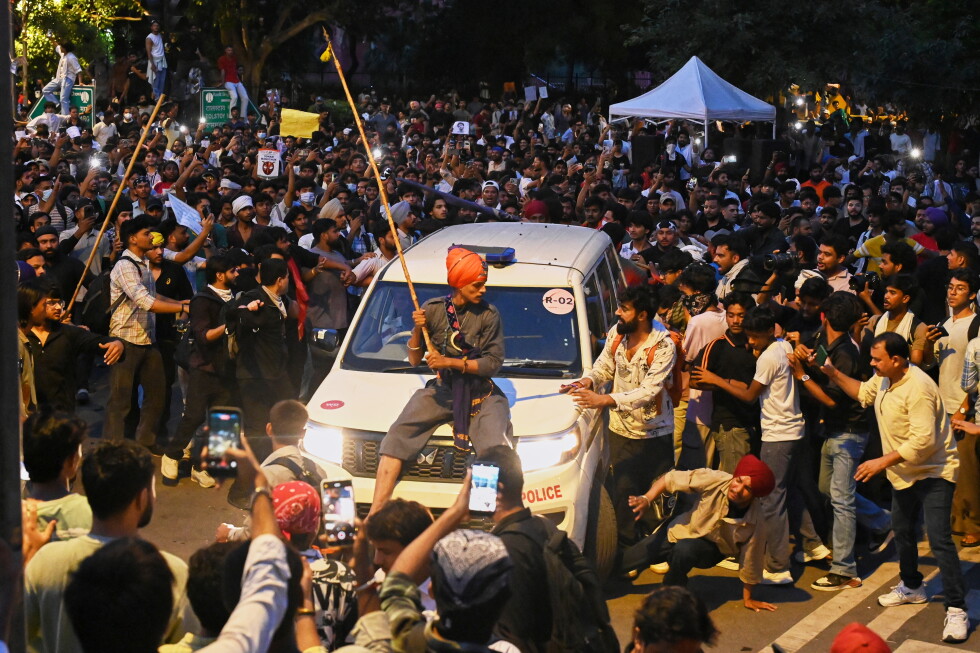
    NEW DELHI – Thousands of young Indian demonstrators maintained a street sit-in in the heart of New Delhi on Thursday, ignoring newly imposed movement restrictions in a major show of force that has emerged as one of the most significant threats to Prime Minister Narendra Modi’s sitting administration. What is now known as the ‘Cockroach’ protest movement launched more than a month ago, sparked by widespread allegations of question paper leaks in two of India’s most competitive high-stakes entrance examinations: one for admissions to elite medical colleges, and another for entry into coveted government job roles. In the weeks since its inception, the movement has outgrown its original focus on exam-related grievances, drawing in working professionals, ordinary families, and a broad cross-section of the public united by simmering discontent with the ruling government.

    Thursday’s gathering at Jantar Mantar, New Delhi’s long-recognized official protest zone, came on the heels of overnight street clashes that saw police deploy tear gas canisters and baton charges to break up crowds. This marked the second violent confrontation between authorities and demonstrators in a single week. Just four days prior, on Monday, thousands of protestors had broken through security restrictions to march toward India’s Parliament building before security forces dispersed the crowd with the same crowd-control tactics.

    Despite police roadblocks aimed at blocking access to the protest site, demonstrators managed to regroup by early Thursday morning and return to continue their demonstration. In a bid to cut off crowd flow to the area, local authorities suspended passenger services on the Delhi Metro at 16 stations across the city’s central district.

    The issue of repeated exam paper leaks has emerged as a flashpoint for millions of young Indians, who see it as a visible symbol of systemic failure. Protesters have put forward three core demands: the immediate resignation of India’s Education Minister Dharmendra Pradhan, sweeping structural reforms to India’s broken national examination system, and financial compensation for the families of students who died by suicide in the wake of recent paper leak scandals.

    Facing rapidly mounting political pressure, Prime Minister Modi broke his weeks-long public silence on the unrest on Thursday, announcing the creation of fast-track special courts to speed up the prosecution of those involved in organizing exam paper leaks. The new fast-track courts are designed to cut through the backlog that plagues India’s famously slow national judicial system. In a public post on the social media platform X, Modi emphasized, “Nothing is more important than the welfare and future of our youth!”

    Leaders of the Cockroach Janta Party, the informal organizational body behind the movement, have rejected any compromise, insisting demonstrations will continue until the education minister steps down. Staying true to the movement’s satirical, tongue-in-cheek identity, movement founder Abhijeet Dipke responded to Modi’s statement with a meme of Pradhan captioned “Hi, my name is Nothing,” a direct jab at the prime minister’s comment.

    The movement traces its origins to an online satirical campaign launched in May, before shifting to in-person, small-scale street protests across major Indian cities in June. It gained explosive traction after prominent Indian activist Sonam Wangchuk joined the demonstration and launched a hunger strike that has now extended past three weeks. Over the weekend, police forcibly removed Wangchuk from the protest site and transferred him to a government hospital, a move that further galvanized public anger.

    For many young Indians, these demonstrations represent one of the last remaining high-profile outlets for dissent in a country where the Modi administration has overseen a widespread crackdown on activist groups, opposition political figures, and public anti-government protests.

    The movement’s rapid expansion beyond student circles reflects deep-seated, widespread frustration among India’s large youth population, mirroring a broader regional trend across South Asia, where youth-led anti-government movements have shaken established political establishments in recent years. It has also drawn support from Indians across all age groups, who share concerns over lack of government accountability, cripplingly high unemployment, and the scarcity of quality economic opportunity for young people.

    India is home to one of the world’s youngest national populations, with millions of new working-age people entering the labor market each year, a market that has consistently failed to generate enough secure, well-paying positions to meet demand. Even after decades of strong headline economic growth under successive Modi governments, many young Indians report that their personal employment and income prospects have not improved meaningfully. As one of the largest voting blocs in the country, India’s youth are poised to become an increasingly influential political force in upcoming national and state elections.