博客

  • Iran says it will pursue ‘eye for an eye’ as US attack near Iraq border kills two

    Iran says it will pursue ‘eye for an eye’ as US attack near Iraq border kills two

    Tensions across the Middle East have surged to new heights this week, after the United States carried out its 12th consecutive day of strikes on Iranian territory, prompting Tehran to formalize a retaliatory “an eye for an eye” defense doctrine in response to explicit threats from former President Donald Trump to target Iranian civilian infrastructure.

    Iranian state media confirmed Thursday that a U.S. strike on the border town of Shalamcheh, which lies along Iran’s frontier with Iraq, left two civilians dead and at least 11 others injured. The strikes also extended to Bushehr, the site of Iran’s only operational civilian nuclear power plant, where two U.S. missiles impacted the area.

    U.S. Central Command has publicly confirmed the 12th straight night of offensive operations, framing the campaign as an effort to “further degrade Iran’s ability to threaten civilian mariners and commercial vessels transiting regional waters.”

    In a provocative social media post, Trump laid out an explicit new red line for future U.S. action: every time Iran targets a vessel moving through the Strait of Hormuz — the strategically critical global chokepoint through which roughly one-fifth of the world’s total oil and liquefied natural gas supplies transit — the U.S. will destroy key Iranian civilian infrastructure. “Any time the Islamic Republic of Iran shoots at a ship in the Strait of Hormuz, whether it be by Missile, Rocket, Drone, or any other device or weapon, the United States will bomb and destroy ONE BRIDGE OR POWER PLANT,” Trump wrote.

    Iran’s foreign minister Abbas Araghchi pushed back immediately on the social platform X, making clear Tehran’s new position: “Our defense doctrine is clear: eye for an eye. Any aggression against Iran, including our infrastructure, will compel a powerful and decisive response.” He added that any third party providing support to the U.S. campaign would also be treated as a legitimate target for retaliation.

    Iranian military spokesperson Mohammad Akraminia, speaking on state television, reinforced this stance, noting: “The armed forces’ retaliatory attacks will continue as long as the US attacks on the country’s infrastructure and coastal areas continue.”

    Retaliatory strikes have already spread beyond Iran’s borders. On Thursday morning, both Jordan and Kuwait confirmed they intercepted incoming attacks, which Iran’s Islamic Revolutionary Guard Corps (IRGC) confirmed targeted U.S. military assets hosted in both countries. The Iranian army announced it deployed “destructive drones” to strike multiple U.S. facilities across Kuwait, including ammunition and logistics depots at Camp Doha, fuel storage tanks at Ali al-Salem Air Base, and an ammunition depot at Camp Arifjan.

    In the Strait of Hormuz itself, the IRGC announced it had halted three transiting oil tankers on Thursday, asserting full control over the waterway. “The Strait of Hormuz is under our control… and any ship that is deceived by the US and intends to pass without coordination with the Islamic Republic of Iran will suffer the same fate,” the corps said.

    The conflict has now expanded to the Red Sea, where Yemen’s Houthi movement — which recently entered the fray and declared a blockade on Saudi ports — claimed responsibility for missile and drone strikes on two Saudi oil tankers overnight. The Houthi movement identified the targeted vessels as the *Encelia* and the *Layla*. UK Maritime Trade Operations (UKMTO), the British body that monitors naval security in the region, confirmed the master of one tanker reported being struck by an unidentified projectile roughly 70 nautical miles southwest of Saudi Arabia’s Al Shuqaiq, adding that the projectile sparked a fire that the crew was working to extinguish. Saudi Arabia has confirmed the *Encelia* was hit, but has not yet issued comment on the second tanker.

    U.S. Secretary of State Marco Rubio accused Iran of manipulating the Houthis into joining the conflict, saying, “The Houthis largely were smart and stayed out of all this throughout the conflict, but they now apparently have gotten themselves suckered into this, going after Saudi Arabia and their ships. I hope they will de-escalate, because I think the Houthis, frankly, got snookered into this thing by the Iranians.”

    As regional powers move to contain the escalation, Oman announced Thursday it is facilitating the resumption of de-escalation talks between the Houthi movement and the Saudi government to lower tensions in the Red Sea and Yemen.


  • Rights groups sue France over inaction on financial ties to illegal Israeli settlements

    Rights groups sue France over inaction on financial ties to illegal Israeli settlements

    In a landmark legal challenge that tests global compliance with international law, five leading human rights organizations have brought a case against the French government before the Conseil d’État, France’s highest administrative court, accusing Paris of failing to uphold its binding legal obligations to block French corporate financial activity in Israel’s illegally occupied Palestinian Territories (OPT).

    The suit, filed Wednesday, directly calls out the French government for refusing to implement the binding recommendations laid out in a landmark July 2024 advisory opinion from the International Court of Justice (ICJ). That historic ruling confirmed that Israel’s decades-long presence in the OPT violates international law, and mandated that all UN member states take proactive steps to prevent any economic activity that serves to entrench the illegal occupation. In the months following the ICJ’s ruling, a number of European Union member states including Belgium, the Netherlands, and Spain have already moved to enact targeted regulatory measures to crack down on commercial and financial activity tied to Israeli settlements in the OPT. But France has not taken any substantive action beyond formally recognizing the state of Palestine last September and issuing a verbal declaration that the Israeli occupation is illegal. On the policy front, Paris has only issued non-binding warnings to French businesses operating in the West Bank, noting that their activities could carry a risk of international law violations, without imposing any enforceable restrictions.

    Named as respondents in the suit are France’s prime minister and multiple cabinet ministers with oversight over trade, economic affairs, and foreign policy. Legal representatives for the claimants argue that the French government’s deliberate inaction itself violates French and international law, and are asking the high court to order immediate intervention to compel Paris to enact binding regulatory measures. These requested measures include the creation of a mandatory public registry of all French entities operating in illegal Israeli settlements, formal prohibitions on all trade and public financial support for activities linked to settlements, and a ban on companies with settlement ties from accessing French government procurement contracts.

    James Goldston, executive director of the Open Society Justice Initiative, which provides legal advisory support to the five nongovernmental organizations bringing the challenge, emphasized that the ICJ left no ambiguity about member states’ legal responsibilities. “International law only has force if states are prepared to implement it in practice,” Goldston said.

    The five claimant organizations are the International Federation for Human Rights (FIDH), Jurists for the Respect of International Law (JURDI), the International Centre of Justice for Palestinians (ICJP), La Ligue des Droits Humains (LDH), and Law for Palestine. In their court filing, the groups presented documented evidence showing that multiple French companies continue to operate across key sectors in the OPT, including transportation, construction, finance, and commercial services. One high-profile example cited is Egis Rail Group, which the Office of the United Nations High Commissioner for Human Rights (OHCHR) has already listed for its role in constructing Jerusalem’s light rail system, a project that connects West Jerusalem to Israeli settlements in occupied East Jerusalem.

    Legal proceedings are expected to take up to 12 months to reach a final ruling. Following the initial filing this week, the process will enter a written procedural phase: the named government ministers will first file a formal response to the claims, after which the claimants will submit a rebuttal brief. Once this written exchange is complete, a public hearing will be scheduled before the Conseil d’État, a step that typically takes several months for high-stakes administrative cases of this nature.

    If the claimants prevail, legal analysts note the ruling would set a critical global precedent that clarifies how national governments are required to regulate corporate conduct tied to serious breaches of international law. Tayab Ali, director of the ICJP, outlined the stakes of the challenge in a press statement from the claimant groups, noting that the case “seeks to move beyond expressions of concern toward accountability, asserting that international legal obligations must be enforceable before independent courts.”

    Rights groups and independent United Nations experts have long documented that Israel generates significant financial profit from its illegal occupation of the OPT, leveraging its military and administrative control over Palestinian land, natural resources, and industries to entrench its economic grip, while continuing to expand illegal settlements and advance de facto annexation across the West Bank.

  • Ready to ‘conquer Earth’ – Joshua embraces comeback spotlight

    Ready to ‘conquer Earth’ – Joshua embraces comeback spotlight

    As fight week kicks off in Jeddah, Saudi Arabia, 36-year-old British heavyweight icon Anthony Joshua has cut a noticeably different figure for his much-anticipated comeback bout on Saturday, greeting reporters with warm laughter, thanking traveling fans and even inviting a large group of Albanian supporters to bring their loudest energy to the ring. This weekend’s clash against Albanian contender Kristian Prenga marks Joshua’s first fight since a devastating car crash in Nigeria last December claimed the lives of two of his closest friends and team members, Sina Ghami and Latif ‘Latz’ Ayodele.

    A win this Saturday would put Joshua one step away from a blockbuster all-British heavyweight title fight against Tyson Fury, provided Fury secures a victory in his own warm-up bout against Poland’s Mariusz Wach in Thailand this Friday. Speaking at Thursday’s pre-fight press conference in the sweltering Jeddah heat, Joshua laid out his long-term ambition while keeping his focus firmly on the immediate task ahead. “We’ve been working since January, working hard, keeping my head down and aligning all my stars,” Joshua explained. “I’m fully focused. I understand there’s a big picture. The goal is to conquer the universe, right? But first we must conquer Earth. And this is my target here.”

    Joshua’s last fight before the tragic crash was a stoppage win over YouTuber-turned-boxer Jake Paul in Miami, but the British star has not claimed victory over a top-tier established heavyweight since outpointing Otto Wallin in December 2023. His upcoming opponent, 35-year-old Prenga, now trains out of New Jersey and holds an impressive 20-1 professional record with all 20 wins coming by knockout. Even so, Prenga has never faced an opponent of Joshua’s caliber, a fact that did not stop the underdog from predicting a knockout upset this weekend. When asked for his reaction to Prenga’s bold claim, Joshua remained calm and confident. “Can he knock me out? I really don’t believe it,” he said. “But only God knows that.” Prenga’s manager has framed the bout as a “real-life Rocky moment” for the little-known challenger.

    Long-time observers of Joshua have noted a clear shift in his demeanor this fight week. For most of his career, the Watford-born fighter has been reserved during media obligations, often keeping interactions brief and staying guarded behind his signature headphones. This time around, the headphones were nowhere to be seen. He joked with the press conference host about wearing a formal blazer in the oppressive desert heat, and greeted cheering fans before taking his place on stage. With a professional record of 29 wins (26 by stoppage) and four losses, Joshua says his decades of experience in the sport have left him ready for any challenge Saturday will bring. “I’ve been in the ring with some of the quickest heavyweights, some of the fittest heavyweights. I’ve fought some of the strongest heavyweights,” Joshua said. “I’ve fought contenders. I’ve fought champions. I’ve been knocked down. I’ve been knocked out. I stand strong today and I’m ready for the challenge one million per cent.”

    When an Albanian fan shouted from the crowd “You ain’t ready”, Joshua welcomed the confrontation instead of brushing it off, responding: “We’re going to find out on Saturday and I want to hear your voice shouting. I want that energy in the ring.”

    Talk predictably turned to Fury, who is scheduled to travel to Jeddah from Thailand immediately after his Friday warm-up bout to scout Joshua’s performance. Promoter Eddie Hearn says that if both men win this week, the long-negotiated all-British showdown between Joshua and Fury could take place later this year, adding that “many, many more chapters to write” remain in Joshua’s career. Joshua, however, declined to be drawn into discussion of the potential superfight, choosing to keep all attention on Prenga and his team. “We don’t want to talk about Tyson Fury,” he said. “Respectfully, I’ve done all the media I can about what the future holds. Our focus is [Prenga] and his team. Let’s focus on the job. Anyone can be there on Saturday. The more tickets sold, the better.”

  • ‘Stifle the magic’: Melbourne coach Steven King on his uncomplicated brand

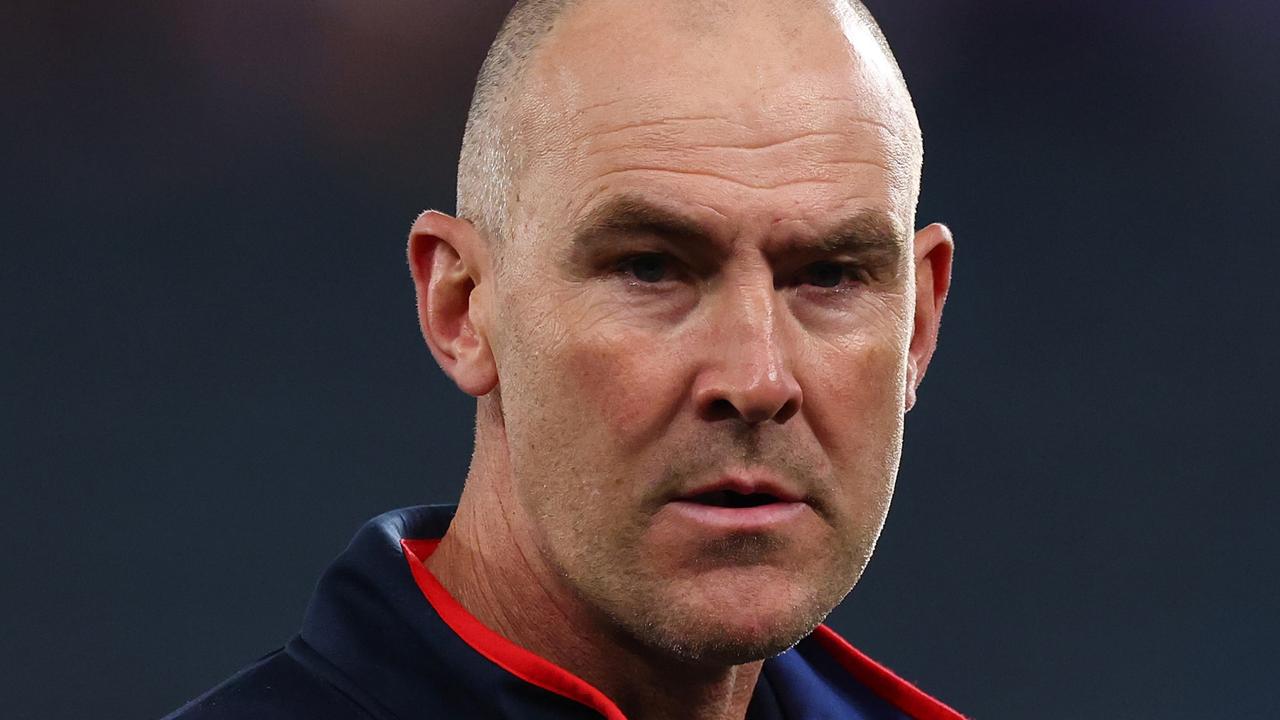
    ‘Stifle the magic’: Melbourne coach Steven King on his uncomplicated brand

    Ahead of a pivotal Friday night showdown against perennial contender Geelong at the Melbourne Cricket Ground, first-year AFL senior coach Steven King has opened up about the unorthodox philosophy that has turned the Melbourne Demons around from a disappointing 14th-place finish in 2023 to a top-six contender with five weeks remaining in the 2024 season.

    King’s winning formula upends the modern trend of hyper-structured, data-heavy coaching: he prioritizes innate player talent and instinct over rigid game plans and information overload, a choice that has unlocked an exciting brand of football that draws fans to stadiums.

    “The last thing I want to do is paralyse our group with too much structure, too much information, and I feel like that will stifle the magic we’ve created within,” King told reporters, repeating a core belief that has guided his first season at the helm.

    The 2024 AFL season has seen a clear shift toward faster, higher-scoring football, and King has adapted his approach to match this new era. He notes that top teams across the competition now capitalize on momentum to put up big scores quickly, a trend he has built the Demons’ game plan around.

    “All players get drafted because they’ve got talent and they can play – you still have to respect the contest and defence side of the game, that’s a must,” King explained. “But players love to show, express themselves with ball in hand, play the game – that’s why they’re all here because they can play.”

    King argues that a passive, pressure-absorbing style of play is no longer competitive in today’s game, where momentum swings can decide outcomes in minutes. “If you can’t put a hundred points on the board now and fight with the big boys, you’re sort of down a weight class or two,” he said. While hitting that score mark is not an official team key performance indicator, King says he wants the Demons to be dangerous in all phases of play, particularly when they have possession.

    A former Geelong captain himself, King admits he is still learning the craft of senior coaching, and counts the “delicate art” of stepping back as one of the most important lessons he has picked up in his debut season. Early on, he says he recognized his own tendency to overcomplicate game plans by adding extra layers to try and push the team into the top four.

    “But I feel like everything you add as a coach, there’s a risk that you take something off the group as well,” he noted. King relies on a mix of his experienced assistant coaching staff and veteran Demons leaders, including captain Max Gawn, who is fully aligned with King’s open game plan, to strike the right balance between structure and freedom. “We sort of lean on each other on how much info the group needs,” he said.

    This approach has already delivered results: after finishing 14th last season, the Demons currently sit sixth on the ladder, well positioned to qualify for the post-season. King has made it clear from the start that he wants his side to play an exciting, “bums-on-seats” brand of football that appeals even to neutral fans, and he says the team is eager to showcase that style in the high-profile Friday night MCG clash against his old club.

    “We’ve been craving it and playing a brand of footy that stacks up and people will want to watch,” King said. “To get this prime-time slot is a great recognition for our playing group, for what they’ve been doing throughout the year. We want to make sure we do the occasion proud by playing a brand of footy that even neutrals go, ‘That was entertaining and a good game of footy’.”

  • UK secretly considered suspending Israel trade deal during Gaza famine

    UK secretly considered suspending Israel trade deal during Gaza famine

    A secret internal trade policy review conducted by the British government, which examined whether to suspend Israel’s tariff-free trade access to UK markets, was hidden from Parliament and the general public before officials ultimately opted to keep the preferential agreement in place, according to reporting from Sky News.

    The review was commissioned in August 2025 by the Department for Business and Trade during Keir Starmer’s tenure as prime minister. At that time, widespread famine was already unfolding across the besieged Gaza Strip, a humanitarian catastrophe widely documented as a deliberate consequence of Israeli restrictions on food, water and aid access to the territory.

    Ministers launched the impact assessment against a backdrop of rapidly growing global outcry over Israel’s military campaign in Gaza, as well as its accelerating expansion of illegal settlements in the occupied West Bank, entrenched apartheid governance over Palestinian populations, and ongoing ethnic cleansing of Palestinian communities across occupied territories. Three months prior to the review, the ruling Labour party had already paused negotiations for an expanded bilateral free trade agreement with Israel, after then-Foreign Secretary David Lammy called remarks from Israel’s defense minister — who openly stated the goal of “cleansing” Gaza and “destroying what’s left” of the enclave — “repellent” and “monstrous”. Despite this public rebuke, the existing 2019 UK-Israel Trade Partnership Agreement, which grants tariff-free entry to nearly all Israeli goods entering the UK, remained fully intact.

    When the question of modifying the trade deal was raised in Parliament that October, then-Trade Minister Chris Bryant defended the government’s choice to retain preferential access. He argued that existing export ties to Israel supported thousands of UK domestic jobs, and warned that suspending the agreement would carry risks of unpredictable outcomes and major economic harm to British businesses. What Bryant did not disclose during the parliamentary debate is that he has longstanding deep ties to Labour Friends of Israel, a prominent pro-Israel lobbying group within the UK Labour party. Bryant previously served as vice chair of the organization, and has accepted all-expenses-paid trips to Israel funded jointly by the group and the Israeli Ministry of Foreign Affairs.

    The existence of the classified impact assessment only came to light after advocacy organization Global Justice Now submitted a formal freedom of information request to the Department for Business and Trade. Even following the confirmation that the review took place, government officials have refused to release any details about the assessment’s scope, its findings, its scheduled timeline, or any policy outcomes that came from the internal examination.

    The secret review unfolded at a moment of mounting global pressure for targeted economic measures against Israel over its actions in Palestinian territories. Around the same time the UK conducted its internal assessment, the European Union faced growing public and political demands to suspend portions of its own trade agreement with Israel, and ultimately tabled a proposal to roll back some of Israel’s preferential trade concessions. The UK review also came more than one year after the International Court of Justice issued a landmark ruling requiring all UN member states to end any trade or commercial activity that supports Israel’s illegal settlement enterprise in occupied Palestinian land.

  • Weekly quiz: What creepy-crawly cuisine could land a Michelin-starred restaurateur in jail?

    Weekly quiz: What creepy-crawly cuisine could land a Michelin-starred restaurateur in jail?

    As the seventh week of 2024 draws to a close, a wide array of notable developments have unfolded across the globe, from ongoing geopolitical conflicts to cultural milestones and sporting tributes. Compiled by editor Ben Fell, this weekly current events quiz challenges readers to test how closely they have followed the stories making headlines over the past seven days.

    The lead item on the roundup centers on the unrelenting military conflict between Ukraine and Russia, with Kyiv continuing its targeted operations against Russia’s biggest e-commerce platform this week, with no end to the hostilities in sight. Beyond the geopolitical sphere, the global sporting community entered a period of mourning this week, following the passing of two of its most iconic figures: legendary English footballer Kevin Keegan and celebrated West Indian cricket star Sir Garfield Sobers. Across the Atlantic in the British royal family, Prince George, second in line to the British throne, celebrated his 13th birthday this week, marking another milestone in the young prince’s life.

    In a nod to curious niche topics from around the world, this week’s roundup also teases a question related to insect-based food served at restaurants in South Korea, leaving quiz participants to prepare for unexpected topics beyond major headline stories. For those eager to test their knowledge further, additional quizzes are available from the outlet’s archives, including the previous week’s challenge that covers earlier global events.

  • The Okefenokee is about to be honored, but some locals aren’t celebrating

    The Okefenokee is about to be honored, but some locals aren’t celebrating

    Deep in the pine forests of southern Georgia, the 438,000-acre Okefenokee Swamp stands as one of America’s most ecologically significant wetland landscapes, home to iconic alligators, rare carnivorous plants, and untouched old-growth cypress forests that have remained largely undisturbed for millennia. On Saturday, a United Nations cultural committee convening in Busan, South Korea is set to vote on whether the Okefenokee will earn a spot alongside the Grand Canyon, Everglades, and Yellowstone as the United States’ 27th UNESCO World Heritage Site. But for many rural residents living in the three counties surrounding the swamp, the international honor is anything but welcome—rooted in deep distrust of the United Nations and aligned with the broader “America First” political framework that dominates the region.

    For years, hand-painted lawn signs reading “Keep the U.N. (UNESCO) out of the Okefenokee” have lined rural highways across Ware, Charlton, and Clinch counties, while the slogan adorns t-shirts sold at local farm supply stores and community events. All three counties are heavily rural, majority conservative, and gave former President Donald Trump more than 70% of the vote in the 2024 presidential election. Trump’s “America First” agenda has resonated deeply here, and his July 2025 announcement that the United States would fully withdraw from UNESCO at the end of 2025—citing the body’s misalignment with U.S. foreign policy priorities—has reinforced local skepticism of the global organization.

    Barry Cox, a Ware County commissioner elected in 2024 after four decades running the county’s vehicle maintenance shop, says opposition to the designation is nearly universal among his constituents. “All I heard from the people I represent is that they were scared the UN would come in here, start taking private land, and tell us what we can and can’t do with our property,” Cox explained in an interview with The Current. Cox, who attended an informational meeting on the nomination hosted by an anti-UNESCO group but was unable to attend a pro-designation briefing, says his position reflects the will of the community he serves.

    In June 2025, Cox and the Ware County Commission passed a formal resolution opposing the nomination, pledging the county would not enforce any rules or policies originating from the United Nations or its subsidiary bodies that would violate private property rights protected by the U.S. and Georgia state constitutions. Charlton County passed an identical measure shortly after.

    The campaign against the designation has been led in large part by national conservative groups, most prominently the Committee For A Constructive Tomorrow (CFACT), a Washington D.C.-based nonprofit that promotes free-market environmental policy and rejects the scientific consensus on anthropogenic climate change. In December 2025, CFACT released a YouTube video titled “Save Okefenokee from UNESCO Control” as part of its “Conservation Country Series,” which frames the World Heritage nomination as an international land grab that threatens U.S. sovereignty.

    CFACT policy analyst Gabriella Hoffman points to the 2024 nonbinding Republican primary party question in Ware County as evidence of broad grassroots opposition. The question, which asked voters whether they supported the UNESCO designation, claimed the UN held an agenda to control local school curricula, land use, infrastructure, and housing, and framed the designation as a violation of U.S. sovereignty. Of the 3,144 voters who cast ballots in the primary, 93% voted against the nomination.

    Charles Bullock, a longtime distinguished professor of public affairs at the University of Georgia, argues the loaded wording of the question all but guaranteed the lopsided result. “Who would vote yes when it’s framed as the UN coming to take over our country?” Bullock noted. “The question was designed to produce that outcome.”

    Charlton County Commissioner Drew Jones, who appears in the CFACT video, acknowledges the designation would not amount to a direct seizure of private land, but argues it still represents an unacceptable overreach of international influence. “I get that it’s not a literal land grab, but people see it as a metaphorical one—they think the UN would gain implicit influence over public and even private lands here, and they shouldn’t have any say at all,” Jones explained. Jones added that the prominent role of U.S. geopolitical rivals like China and Russia within the UN system makes the designation even less palatable for local residents. “I don’t think China or Russia are going to come steal the swamp or anything, but I don’t like the idea of them sitting at a table decades from now judging what’s a threat to this land,” he said. “Any oversight of the Okefenokee should come from Atlanta or Washington, not some international body in New York.”

    For Joe Hopkins, whose family-owned Toledo Manufacturing manages thousands of acres of forest land surrounding the swamp, opposition boils down to protecting long-held private property rights. He points to the 1990s debate over the proposed New World Gold Mine near Yellowstone National Park—itself a UNESCO World Heritage Site—as an example of how the designation can invite unwanted international pressure on local land use decisions. “If you have a development project near a World Heritage Site, you don’t just get opposition from U.S. environmental groups—you get thousands of letters from people and governments all over the world,” Hopkins said. But historical records contradict this framing: the Public Land and Resources Law Review found the mine was ultimately blocked by a federal Clean Water Act lawsuit, not international pressure from UNESCO. While the World Heritage Committee did place Yellowstone on its endangered list in response to the proposal, the ruling carried no legal weight and only heightened public scrutiny, rather than deciding the outcome.

    CFACT’s video also misleadingly cites two academic sources to bolster its opposition. Hoffman cites a study focused on World Heritage Sites where local communities reside within the site’s boundaries to claim the designation infringes on local human rights—but the entire Okefenokee National Wildlife Refuge is already federally managed, and no residential communities exist within its proposed World Heritage boundaries. She also references a 2018 Stanford University article quoting anthropologist Lynn Meskell arguing the UNESCO World Heritage program had “lost its way” as countries prioritized branding benefits over conservation. What the video omits is Meskell’s explicit rejection of the claim that UNESCO controls U.S. World Heritage Sites: “One problem is that there is widespread ignorance when it comes to UNESCO,” Meskell stated in the article. “Some people think that a UNESCO inscribed site is not U.S. sovereign territory and that the United Nations somehow controls those sites. That is incorrect.”

    Official clarifications from the U.S. Fish and Wildlife Service, which owns and manages the Okefenokee National Wildlife Refuge, echo that point. In a 2024 public explainer, the agency emphasized that the World Heritage designation “does not confer any ownership or management authority to the United Nations. UNESCO only monitors the current conditions and potential threats to the designated properties. The Refuge would continue to be wholly owned and managed by the US Fish and Wildlife Service.”

    Still, that clarification has done little to ease local concerns. Andra Gillespie, an associate professor of political science at Emory University, notes that the opposition is rooted in longstanding ideological commitments, not just misinformation. Political scientists like Bullock trace the sentiment to deep-rooted American localism, a tradition of resistance to outside influence that has shaped U.S. political debates for more than a century. “Folks here don’t want anybody telling them what to do with their property—whether that’s the federal government or an international body,” Bullock explained. “This is the same tradition that led to fears of Catholic influence in U.S. politics in the 1960s, and to resistance to federal civil rights policy for generations. It’s a long-running strain of American thought.”

    The UNESCO World Heritage Committee is scheduled to hold its final vote on the Okefenokee nomination at 3 p.m. local time Saturday in Busan, with the proceedings available via public livestream. Attempts by The Current to reach leaders of the two main anti-UNESCO groups active in southern Georgia have so far been unsuccessful: Americans for the Okefenokee declined an interview via Facebook Messenger, while the Georgia Republican Assembly did not respond to multiple requests for comment.

  • Man fatally wounded in knife attack in German bank

    Man fatally wounded in knife attack in German bank

    A fatal knife attack at a regional bank in the southeastern German city of Regensburg has left one person dead, and prompted a multi-hour standoff that ended with the arrest of a 20-year-old German national suspect on Wednesday. The violent incident unfolded shortly before 3 p.m. local time (1 p.m. GMT), triggering an immediate large-scale emergency response that deployed heavily armed special police task forces to the scene. Initial reports raised urgent fears that the attacker was holding hostages inside the bank, forcing authorities to lock down the western district of the city and leave local residents in a state of prolonged anxiety. Over the course of more than three hours, tactical police negotiated and secured the building, eventually extracting two unharmed civilians from the site before taking the suspect into custody at approximately 6 p.m. local time. The victim, who was found with critical stab wounds, could not receive emergency medical care until the area was secured by law enforcement, and was pronounced dead shortly after arriving at a local hospital. Bavarian Interior Minister Joachim Herrmann confirmed that the killing was a “brutal unprovoked attack,” leaving authorities still working to unpack a clear motive for the violence. Regensburg Mayor Thomas Burger released a statement acknowledging that many local residents endured “hours of great uncertainty” during the standoff, adding that the entire community was deeply shaken by the senseless act of violence. German law enforcement officials confirmed on Wednesday evening that they are currently operating under the working theory that the suspect acted alone, with no indications of broader connections to extremist groups or organized criminal networks. The incident is currently being investigated as both a homicide and an attempted robbery, and the suspect is scheduled to appear before a judge for a preliminary hearing on Friday. No further details about the identity of either the suspect or the victim have been released to the public as of Thursday morning, as investigators continue to process evidence collected from the bank crime scene.

  • Ford to partner with Chinese automaker Geely in Spain in new joint venture

    Ford to partner with Chinese automaker Geely in Spain in new joint venture

    On Thursday, two major global automotive players — U.S.-based legacy manufacturer Ford and China’s leading new energy vehicle maker Geely Auto — unveiled a landmark joint venture plan to produce low- and zero-emission vehicles at Ford’s existing manufacturing facility in Valencia, Spain. The partnership marks a strategic pivot for both companies, as Ford races to regain its fading foothold in the competitive European auto market and Geely expands its regional production footprint to bypass trade barriers amid a global electric vehicle transition.

    Pending final regulatory approval, the new joint venture will be 66.7% owned by Ford, with Geely holding the remaining 33.3% stake. This is not the first collaboration between the two firms: Ford sold its Volvo Cars brand to Geely back in 2010, a transaction that laid early groundwork for today’s deeper cooperation. Geely, which already owns a portfolio of global auto brands including Volvo, Polestar, and Lynk & Co, will bring its expertise in cost-efficient new energy vehicle manufacturing to the partnership.

    Five distinct vehicle models are scheduled to roll off the Valencia plant’s assembly lines starting in 2028. Ford will continue production of its popular Kuga plug-in hybrid at the facility, and add a new Bronco SUV to the production lineup. Geely will manufacture two all-electric SUV models at the site, while the two companies will jointly develop a new multi-energy crossover vehicle that accommodates both hybrid and fully electric powertrains. All five new model lines are scheduled to launch production by 2028.

    For Ford, the partnership comes at a make-or-break moment for its European operations. A decade ago, Ford sold more than 1 million vehicles annually across Europe; by last year, that number had dropped below 500,000. The Valencia plant, which boasts a total annual production capacity of 500,000 vehicles, only produced fewer than 100,000 units in 2025, leaving massive underutilized capacity. The joint venture will allow Ford to split development and production costs with Geely, bringing the plant’s operations closer to industry cost benchmarks while retaining existing manufacturing jobs at the site.

    The collaboration also reflects the shifting dynamics of the global auto industry, driven by rising Chinese new energy vehicle dominance and growing geopolitical friction around EV trade. U.S. tariff policy has effectively blocked Chinese auto manufacturers from full access to the American domestic market, even as Chinese EV makers gain market share across other global regions, from Southeast Asia to Latin America and Europe. Geely’s local production in Spain allows the company to avoid European Union tariffs on imported vehicles, giving it a stronger competitive position in the region.

    In a joint statement, the two companies noted the joint venture was structured to address the core new realities of the European market: cutthroat global competition, persistent upward cost pressure, and increasingly strict emissions regulations. The venture resets the Valencia facility to operate at the emerging cost benchmark for the global auto industry, the statement added.

    The partnership aligns with Ford’s broader global strategy, even as the company’s leadership has echoed concerns about Chinese EV competition in the U.S. market. During Ford’s first-quarter 2025 earnings call in April, CEO Jim Farley explained the company’s nuanced approach to global partnerships. “We leverage global partnerships and even IP sharing, including with Chinese companies, to grow our business around the world,” Farley said. “Ford continues to be a global company. We want to have the rights to win around the globe, and we need IP and partnerships outside the U.S. to do that. When it comes to the U.S. industry itself, we are extremely protective, as we should be.”

    Chinese automakers have rapidly gained global market share in recent years, building high-quality, technologically advanced hybrid and pure electric vehicles at far lower price points than many legacy Western manufacturers, a boost partially supported by decades of targeted government subsidies. While slowing domestic demand in China, driven by reduced consumer purchase incentives and cutthroat domestic competition, has pushed Chinese firms to accelerate global expansion, geopolitical and market shifts have also opened new doors. Ongoing conflict in the Strait of Hormuz has disrupted global crude oil and natural gas supplies, spurring greater consumer demand for affordable electric vehicles worldwide, a trend that has benefited Chinese EV makers.

    Industry analysts broadly frame the Ford-Geely partnership as a blueprint for the future of the global auto transition. “This deal offers a road map for how traditional automakers can survive and thrive in Europe,” said Jessica Caldwell, head of insights at automotive research firm Edmunds. “Ford gets the scale and cost efficiencies it needs for its Valencia plant, while Geely gets a direct shortcut around EU tariffs. More broadly, it underscores a major industry shift we’re likely to continue seeing: automakers can no longer go it alone and must collaborate with rivals — Chinese or otherwise — to survive the capital-intensive transition to electrification.”

    The deal also comes amid a deeply uncertain policy environment for EV adoption in the U.S. Over the past several years, the current U.S. administration has rolled back many of the clean vehicle policies put in place by the previous administration, weakening corporate average fuel economy rules and tailpipe emissions standards, eliminating the previous target of 50% electric new vehicle sales by 2030, and allowing federal tax credits for new and used EV purchases to expire. This policy uncertainty has led many U.S. automakers to view the European EV market as a more stable growth opportunity, even as it requires new cooperative models to remain competitive.

    Sam Fiorani, vice president at AutoForecast Solutions, noted that Ford had already been steadily reducing its exposure to the European market for years, much like its domestic rival General Motors. “Now, with the help of Geely, Ford can have new products designed for the European market without bearing the full development costs of a new platform,” Fiorani explained. “While Chinese automakers like Geely continue their growth around the world, Ford should take this opportunity to learn how to cut costs and develop lower-priced vehicles. If Ford cannot compete on price in Europe, the automaker may need to look at selling plants outright rather than sharing them. Losing Europe could hurt Ford’s standing as a global automaker, but continuing to have the region drain its finances could be more devastating.”

  • Albania police teargas protesters against Trump-linked resort

    Albania police teargas protesters against Trump-linked resort

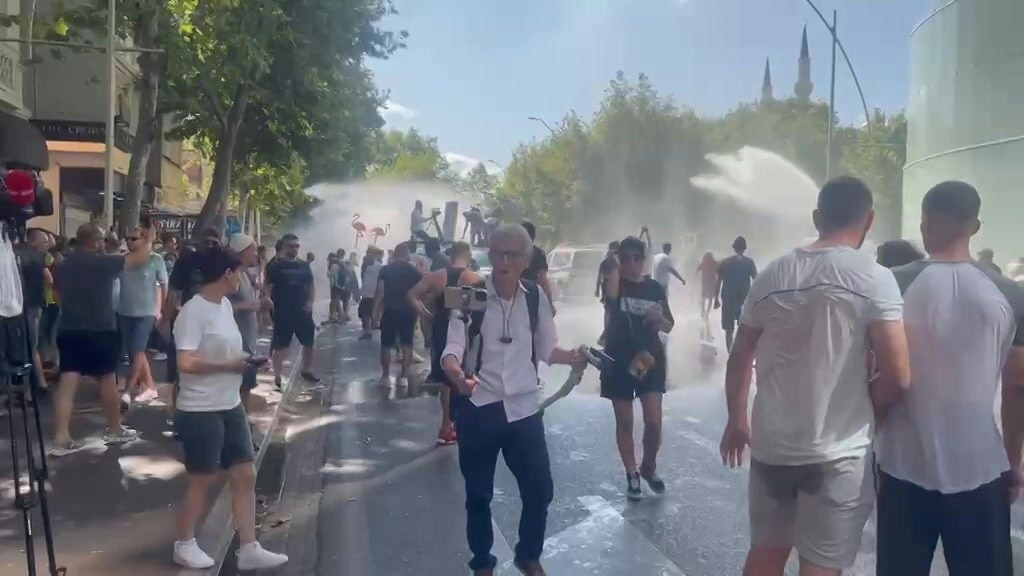
    On a tense Thursday in Albania’s capital Tirana, security forces deployed tear gas and water cannons to disperse hundreds of demonstrators gathered outside the country’s parliament building, capping more than a month of sustained public anger over a luxury coastal tourism development linked to the Trump family. What began as a targeted environmental campaign against construction in a protected coastal wildlife reserve has grown into a broader protest over government transparency, public corruption, and misallocated public funds, uniting environmental activists, opposition politicians, and ordinary citizens against the ruling administration.

    The wave of daily demonstrations first launched in late May, sparked by plans to build a sprawling luxury resort complex connected to Ivanka Trump and Jared Kushner, the daughter and son-in-law of former U.S. President Donald Trump. The proposed development is located on a protected, unspoiled stretch of Albania’s Adriatic coast, in a protected nature reserve that hosts endangered loggerhead turtle nesting grounds and stable flamingo colonies on an adjacent uninhabited island. Scientists and local environmental activists say preliminary site work has already caused irreversible ecological harm, destroying critical habitats already at risk.

    Marine biologist Olsi Nika, who leads the prominent Albanian environmental NGO EcoAlbania, described the damage from early construction activities as “an absolute biodiversity massacre.” The site’s once-pristine coastal ecosystems, scientists confirm, have been permanently altered, eliminating nesting areas for loggerhead turtles, a species classified as threatened with extinction globally. The project’s location inside a protected natural and cultural heritage zone has amplified public outrage, with critics arguing the government bypassed environmental regulations and public oversight to advance a deal that benefits connected interests.

    Thursday’s clashes broke out as protesters attempted to push through heavy police security cordons to reach the parliament entrance. By the end of the day, Albania’s health ministry confirmed six police officers and 11 demonstrators suffered minor injuries and were treated at local Tirana hospitals. The demonstration was timed to coincide with a parliamentary vote on a 4 million euro ($4.6 million) public subsidy for a Kanye West concert held in Tirana earlier in July, a decision that further enraged a public already frustrated by the government’s handling of the resort project.

    In the chaotic parliamentary session, the subsidy was ultimately approved by 80 votes, all from the ruling Socialist Party, which holds a majority in the 140-seat unicameral legislature. Prime Minister Edi Rama had previously committed to the public funding, arguing it was required to prevent the high-profile concert from being canceled. For protesters, the approval of large public spending for a celebrity concert while pushing forward an environmentally destructive private resort project underscored what they call the government’s lopsided, non-transparent priorities.

    The project has become a major flashpoint for discontent in Albania, drawing thousands of nightly protesters through at least mid-July, according to on-the-ground reporting from Agence France-Presse. Clashes between demonstrators and police have occurred repeatedly in recent weeks outside parliament, with protesters previously throwing eggs at lawmakers as they entered the building. The development’s ties to the Trump family have also drawn international attention to the conflict, turning a local environmental dispute into a globally watched case of conservation versus high-profile development.

    No official crowd counts have been released by the Albanian government, but AFP journalists on site estimate thousands of people have joined the sustained daily protests through more than a month of action. Critics say the project highlights broader concerns about corruption and lack of accountability in Albania’s government, with environmental harm serving as the most visible trigger for widespread public anger that continues to roil the country’s political landscape.