博客

  • How Mexican drug cartels have outsourced meth labs to Nigeria

    How Mexican drug cartels have outsourced meth labs to Nigeria

    In an extraordinary, unprecedented step for Nigeria’s judicial system, a federal high court hearing did not unfold in the air-conditioned, secure confines of a Lagos courtroom this week. Instead, Justice Musa Kakaki, robed in formal judicial attire, alongside lawyers adhering strictly to legal decorum and protocol, traveled two hours outside the city to conduct proceedings in the heart of a dense, remote western Nigerian forest — inside an alleged illicit methamphetamine manufacturing laboratory.

    Handcuffed and escorted by heavily armed anti-narcotics officers, 10 suspects — three Mexican citizens and seven Nigerian nationals — were paraded before the court as the judge inspected the cache of chemicals and production equipment authorities say the syndicate used to cook crystal meth, the potent synthetic drug known locally as “ice”. The acrid, bitter stench of active drug production hung thick in the unfinished building: one large drum held liquid meth mid-crystallization, while open vats of dark, viscous unprocessed “crude” meth emitted a second sharp, toxic odor. Scattered across the site were additional production materials, including propane gas cylinders and sacks of caustic soda, all evidence of a full-scale, operating manufacturing operation.

    When Nigerian anti-narcotics authorities from the National Drug Law Enforcement Agency (NDLEA) first raided the site in May, they called the seizure the largest methamphetamine bust in Nigeria’s history, uncovering more than two tonnes of finished product with an estimated street value of $360 million. At the time, the agency announced it had delivered a “crippling blow” to a sophisticated, multi-million-dollar joint Nigerian-Mexican meth production syndicate, dismantling a network that had operated undetected in the secluded forest location for months. The unusual decision to move the court to the lab site itself, NDLEA officials explained, was intended to let the judiciary directly observe the full scale of the criminal operation, rather than relying on secondhand descriptions or photographs.

    This bust was not an isolated incident. Just one month after the May raid, NDLEA agents discovered a second hidden meth lab in a forest in neighboring Oyo State, arresting five additional suspects including a Mexican national described as a specialist meth “cook.” These connected seizures are part of a rapidly growing, well-documented trend: transnational criminal cartels, led by major Mexican drug syndicates, are no longer just using West Africa as a transit hub for drug shipments bound for Europe and Asia. They are now shifting core operations to the continent, building local production bases staffed by Mexican meth manufacturing experts working alongside local criminal partners.

    Law enforcement officials across the globe confirm this accelerating shift. James Griego, who leads counter-narcotics operations for U.S. Africa Command (Africom), which provides intelligence support to national anti-drug agencies across the continent, told reporters that Mexican meth specialists have become increasingly common in illicit labs across Africa and Europe. Over decades, Mexican cartels have refined meth production to a high art, creating product with unmatched purity and potency that is in high demand across global illegal markets.

    “Anybody who is looking to consume methamphetamine understands that the Mexican meth is the best in the world for that purpose,” Griego explained.

    The first Mexican-linked meth super lab uncovered by the NDLEA dates back to 2016. Since that first discovery, connected laboratories with Mexican operatives have been found across the continent: in Kenya, Mozambique, and South Africa, among other nations. Since 2023 alone, Griego said, authorities have raided 14 Mexican-operated meth labs across Africa. Of the five discovered so far this year, four are located in Nigeria.

    Intelligence gathered by Africom and the U.S. Drug Enforcement Administration links many of these African labs to Mexico’s two most powerful cartels: the Sinaloa Cartel and the Jalisco New Generation Cartel. Testifying before the U.S. Congress in May, Africom commander General Dagvin Anderson warned of an alarming emerging alliance: terror groups based in Africa are increasingly funded by Mexican drug cartels, expanding the militant groups’ operational reach and lethal capacity.

    Unlike plant-based illicit drugs such as cocaine or heroin, which require specific climate and geographic conditions to grow and process, synthetic methamphetamine can be manufactured anywhere that the right precursor chemicals and technical expertise are available. This flexibility allows organized crime groups to rapidly scale up production in new locations, avoiding increased law enforcement pressure in their traditional hubs.

    Methamphetamine produces a fast-acting, long-lasting euphoric high, but it carries devastating long-term health consequences: users face elevated risk of life-threatening cardiovascular disease, severe malnutrition from suppressed appetite, and blood-borne diseases for people who inject the drug. Withdrawal from meth addiction is also notoriously difficult, marked by crippling anxiety, deep depression, extreme fatigue, and intense drug cravings that often lead to relapse. As cartels expand distribution networks beyond traditional supply routes, more populations across Africa and the globe are being exposed to these harms.

    West Africa offers a unique set of advantages for Mexican cartels looking to relocate production. Vast expanses of remote, densely forested land provide perfect secluded locations for hidden labs, far from civilian population centers and routine law enforcement patrols. The region’s large, young population also offers two key benefits: a ready supply of low-cost labor for the labs, and a fast-growing local consumer market for the finished product.

    Fears of rising local meth consumption in Nigeria are well-founded: a 2018 national survey found that 14.4% of Nigerian adults had used an illicit drug, more than double the global average estimated by the United Nations Office on Drugs and Crime (UNODC). The Global Initiative Against Transnational Organized Crime confirms meth use has spread rapidly across the entire continent: it is widely available across East Africa in Kenya and Tanzania, and in southern Africa, particularly South Africa, where it is known locally as “tik.”

    Beyond the growing local market, cartels are equally focused on accessing lucrative international consumer markets in Europe and Asia, and West Africa’s geographic location cuts shipping times and reduces risk for traffickers. Proximity to Atlantic shipping routes, combined with porous regional borders and weak regulation of legal chemical imports, allows cartels to operate at lower cost while reducing their risk of interception compared to shipping from traditional production hubs in Latin America.

    Global demand for meth has surged over the past decade: the UNODC reports a 47% increase in meth use across Europe between 2014 and 2024, and seizures of the drug in East and Southeast Asia hit an all-time record high in 2024. By moving production to West Africa, cartels dramatically shorten their supply lines to both European and Asian consumer markets, Griego explained.

    Increased pressure on cartel operations in Latin America is a key driver of this shift. Since returning to office in 2025, U.S. President Donald Trump has ramped up counter-narcotics operations targeting Latin American cartels, increasing enforcement pressure on their traditional production and trafficking routes. NDLEA spokesperson Femi Babafemi notes that increased pressure has pushed cartels to look for new, under-monitored production hubs, making West Africa an attractive target.

    “These cartels are feeling the pressure from other parts of the world, and so they are looking at West Africa as a corporate production hub,” Babafemi said.

    While increased pressure on traditional routes is a contributing factor, experts emphasize it is only part of the story. Mexico’s largest cartels have operated across Africa since the 1990s, building long-standing networks that they are now expanding to meet growing global demand. The rising number of lab raids across the continent, Griego argues, indicates that cartels are becoming far more deeply entrenched in African production and distribution operations.

    What is undeniable is that the illicit drug trade in Africa has fundamentally changed: cartels are no longer just moving drugs through the continent — they are building permanent manufacturing infrastructure and growing local consumer markets. Despite the growing challenge, Nigerian authorities say they are prepared to confront the threat, pointing to measures such as the on-site court hearing, expanded surveillance, and increased intelligence sharing to disrupt networks before they can expand.

    “It’s definitely a concern but it helps us stay vigilant and be proactive. This is why we are able to get them before they’re able to move out into our communities and into the international market,” Babafemi said. “We’ve been able to prove that Nigeria won’t be a safe haven for them.”

  • ‘Don’t wait until you want revenge’ – why prenups are on the rise

    ‘Don’t wait until you want revenge’ – why prenups are on the rise

    For decades, prenuptial agreements were widely associated only with billionaires, A-list celebrities, and old-money families — seen as a legal tool for the ultra-wealthy to protect massive fortunes ahead of marriage. But that stereotype is rapidly fading, as a growing share of ordinary couples of all income levels are choosing to sign these contracts before walking down the aisle, driven by shifting cultural attitudes, greater accessibility, and pragmatic life experience.\n\nOne of the earliest examples of this modern trend is the young couple Celine Tsoi and Charles Mock, who first crossed paths two years ago in Goleta, California, when Tsoi was 23 and Mock was 27. Just eight months after their first meeting, the pair got engaged — and almost immediately, their friends began asking one question: had they planned to sign a prenup?\n\nRather than brushing the idea off as unromantic, the couple embraced it. Though their financial gaps are small — Mock, a nurse, earns a higher annual income than Tsoi, a PhD student, while Tsoi has slightly more personal savings — they saw the process as an opportunity to address potential conflict points head-on. Tsoi says she was particularly moved by Mock’s willingness to stipulate that she would keep the shared home if the couple ever split. For her, the act of negotiating the agreement revealed more about her fiancé’s character than any casual date could. “A lot of things could happen in a marriage,” she explains. “You want to discuss them when you still love each other rather than when things go bad and you want to take revenge.”\n\nHigh-profile celebrity engagements, including the 2026 wedding of Taylor Swift and Travis Kelce and 2025 nuptials of Jeff Bezos and Lauren Sanchez, have kept public attention focused on prenups in recent months, but data shows the trend extends far beyond Hollywood and Silicon Valley. While official national tracking does not exist for the U.S., where divorce courts have a long history of upholding prenuptial agreements, surveys indicate that nearly half of all married millennials and more than one in three married Gen Z adults currently have a prenup. Across all age groups, roughly one in five married American couples hold these contracts.\n\nAcross the Atlantic, the trend is also gaining traction following legal reforms that give greater recognition to prenups in England. Research shows that around one in 10 all British couples now have a prenup, with younger couples leading the charge: roughly one in three married adults under 35 in the UK have signed an agreement.\n\nLondon-based family lawyer Mark Gilmartin, of JMW Solicitors, says he has seen a sharp spike in demand for prenuptial services over the past 18 months. The old stereotype of a billionaire seeking to protect his fortune from a much younger partner has been replaced, he says, by requests from everyday professionals: startup founders, entrepreneurs, social media influencers, and working couples from all income brackets. Gilmartin explains that many modern clients are not protecting existing massive fortunes, but rather the future gains they expect to build over their careers — “the fruits of what’s going to be, rather than what is.” A large share of ordinary clients also seek prenups to ring-fence inherited wealth they expect to receive from their families.\n\nFor Becca Gibson, who is set to marry Dave Howells in West Sussex, the decision to sign a prenup grew out of personal experience and a desire for pragmatic fairness. Gibson, 33, went through a messy first divorce that ended poorly, and the couple have unequal incomes and blended families: Gibson has three children from her first marriage, while Howells has one, and Howells, who works in finance, earns more than three times Gibson’s income from her eyelash extension business. Though a court could potentially award her a larger settlement than the prenup outlines, Gibson says the agreement is a fair arrangement that protects assets both sides bring to the marriage. She expects to inherit substantial property from her parents, and the agreement stipulates that each partner will keep what they entered the relationship with if the marriage ends. “It’s nice knowing that if anything were to happen, I would just go back to how life was before,” she says.\n\nHowells, 45, acknowledges that talking about prenups feels unromantic, but says the national divorce rate makes pragmatism a necessity. “I built a home for myself. I’ve built a future for myself, including pensions,” he explains. “Park the emotional side of me loving both her and the kids… Why on earth would I have to pay something towards her life in the event of us splitting up?”\n\nLawyers point to a handful of key drivers that have pushed prenups from the fringes to the mainstream. For many couples, a primary motivation is a desire to avoid repeating the pain of past separation or the messy divorces they watched their own parents go through. Second, the rise of low-cost, semi-automated online platforms has made prenups far more accessible and affordable than the traditional route of hiring expensive family lawyers. Howells initially planned to use a local law firm, which quoted him roughly £5,000 for the service, before switching to a digital semi-automated platform called Wenup that charged a fixed fee of just £1,600.\n\nJulia Rodgers, co-founder of U.S.-based online prenup platform HelloPrenup, notes that shifting marriage timelines also play a role. Today, couples are marrying later in life, meaning most have already accumulated assets — from homes and businesses to student loan debt — by the time they walk down the aisle. “So you have a lot to protect and to lose by the age of 34,” she says. The ongoing “Great Wealth Transfer”, which is passing trillions in assets from older generations to millennials and Gen Z, has also pushed demand: many parents of engaged couples insist on prenups to protect family inheritances.\n\nRodgers adds that the reputation of prenups as an instrument that disadvantages women has also become outdated. Today’s agreements often empower women by clarifying their legal rights and financial expectations from the start of the marriage, creating space for open conversation about core topics before conflict arises. “We want to make sure we have the honest, open, transparent conversations about life goals, about finances, about roles and responsibilities in the home, so that we can have a long, happy marriage and not end up in that position that we saw our parents in,” she says.\n\nFor Tsoi, the decision to sign a prenup has already paid off, even before marriage. The online agreement cost her just a few hundred dollars, and she calls it a worthwhile investment that is far more important than the wedding itself. The hardest conversations about finances are already done, she says: “We haven’t had a single argument about finances.”

  • Watch: Trump delivers eulogy honouring Lindsey Graham

    Watch: Trump delivers eulogy honouring Lindsey Graham

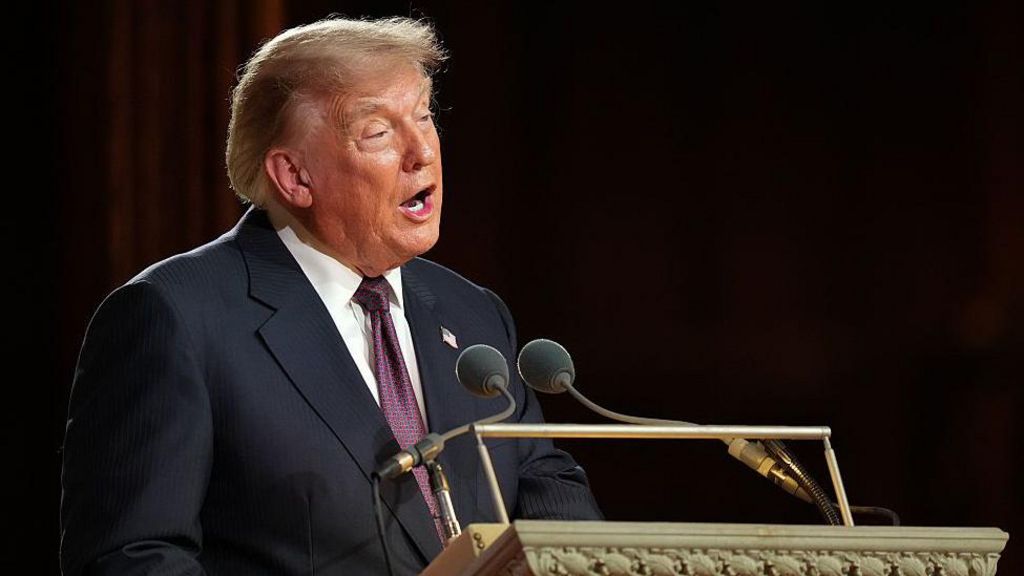
    A high-profile state funeral for late United States Senator Lindsey Graham drew global attention this week, as former U.S. President Donald Trump stepped to the podium to deliver a commemorative eulogy celebrating Graham’s decades of public service. In his remarks, Trump lauded the departed lawmaker as a “true American original”, highlighting Graham’s unique political style, decades of legislative work, and lasting influence on American political life. The service, held at a prominent venue in Washington D.C., brought together a host of domestic political figures as well as two of the most watched global leaders: Israeli Prime Minister Benjamin Netanyahu and Ukrainian President Volodymyr Zelenskyy. Both leaders traveled to the U.S. capital to pay their respects to Graham, who had long advocated for strong U.S. alliances with both Israel and Ukraine throughout his tenure in Congress. Graham, who served in the Senate for over 27 years, built a reputation as a dealmaker who crossed party lines on key issues, while also becoming one of the most recognizable Republican voices on foreign policy and national security. His death earlier this month prompted tributes from across the political spectrum, with lawmakers from both major parties noting his outsized impact on Capitol Hill. Monday’s funeral service brought together competing political factions for a moment of shared mourning, with attendees from all walks of American political life gathering to honor Graham’s legacy before the ceremony concluded.

  • Why Wimbledon is serving Indian ice cream and Bollywood beats

    Why Wimbledon is serving Indian ice cream and Bollywood beats

    For more than a century, Wimbledon has guarded its iconic, time-honored traditions fiercely: from the mandatory all-white player dress code to understated court advertising and the cult classic pairing of strawberries and cream. But this year, the world’s oldest Grand Slam made a deliberate break from its signature reserved brand identity to crack one of the world’s most cricket-dominated sports markets: India.

    With tennis still holding niche status among Indian sports fans, Wimbledon’s organizers rolled out a hyper-localized engagement strategy designed to bridge cultural gaps rather than lean into its distant, exclusive global brand. The tournament partnered with KUReMAL’S, a century-old Delhi kulfi (traditional Indian ice cream) maker, to reimagine its signature strawberries and cream treat with an Indian twist. Its official Instagram channel began sharing short-form reels of tennis legends like Roger Federer set to chart-topping 1990s Bollywood hits, and hosted top Indian cricketers and local social media influencers in the prestigious Royal Box to leverage their widespread domestic appeal. Content was also tailored and distributed across multiple regional Indian languages to reach audiences beyond the country’s English-speaking urban elite.

    Early data suggests the strategic gamble has paid off. Early reports indicate that Jannik Sinner’s men’s singles final victory over Alexander Zverev drew roughly 2.7 million concurrent livestream viewers in India, despite the match kicking off after midnight local time. Average viewership across the entire tournament climbed 18% year-over-year to 853,000, according to local Indian media. JioStar, the domestic streaming platform that holds exclusive Indian broadcast rights for Wimbledon, declined to release official viewership figures to the BBC.

    Industry analysts emphasize that Wimbledon’s push into India is no random marketing experiment, but a calculated long-term strategic move. India is already Wimbledon’s largest international market by total reach, and 2026 brought a landmark milestone for Indian tennis: Arnav Paparkar became the first Indian player in 36 years to reach the under-18 boys’ singles quarterfinals at the tournament.

    “India now has its strongest pipeline of young tennis talent competing on ATP and ITF circuits in nearly a decade, and premium urban sports consumption is rapidly expanding beyond cricket, thanks to streaming platforms’ ability to target niche audiences at scale,” explained Darshana Bhalla, a New Delhi-based sports branding expert, in an interview with the BBC.

    Sally Bolton, chief executive of the All England Lawn Tennis Club, confirmed earlier to the *Financial Times* that India now ranks alongside the United States as a core focus for growing the Grand Slam’s global audience. This shift comes as India projects to become the world’s fastest-growing sports market over the next decade: KPMG estimates the Indian sports sector will grow at a compound annual rate of 12-14% through 2030, nearly double the projected global average. To tap into this growth, global sports properties must adopt culturally specific engagement strategies, rather than relying on one-size-fits-all global content.

    Bhalla notes that Wimbledon’s approach upends decades of premium global branding logic: “For generations, premium brands believed exclusivity came from distance and inaccessibility. Today, they’ve learned that true exclusivity for new audiences comes from belonging. What Wimbledon changed was the entry point: instead of asking young Indians to adapt to Wimbledon’s world, they meet fans where they are, using familiar cultural cues to draw them in – the kulfi collaboration, Bollywood soundtracks, regional language content, partnerships with local creators.”

    Upasna Dash, founder of Jajabor Brand Consultancy, adds that this approach addresses a key barrier for new fans: for many younger Indians, Wimbledon feels aspirational but culturally distant, so reducing that gap is critical to growing lasting fandom. The tournament’s social media-first strategy also aligns with how younger audiences discover new content today: “Young fans often encounter global events on social media long before they engage with the event itself. Instead of asking consumers to enter Wimbledon’s world, this campaign steps into theirs.”

    The pivot also makes strong strategic sense for JioStar, which holds exclusive broadcast rights. The platform has faced public financial pressure recently, with widespread reports that it sought to renegotiate its $3 billion 2024-2027 broadcast deal with the International Cricket Council amid sustained losses. While the original deal remains in place, diversifying its sports content portfolio reduces overreliance on cricket and opens up new audience segments.

    “For JioStar, tennis expands the annual sports engagement calendar, attracts affluent urban audiences, and diversifies its advertiser base beyond cricket-focused brands,” Bhalla explained. “In India, cricket delivers mass scale, but tennis delivers premium audiences. Wimbledon brings a demographic that cricket cannot consistently attract: a premium, affluent, English-speaking urban audience that luxury, automotive, banking, fintech, travel, and premium consumer goods brands actively target.”

    Despite the strong early viewership results, industry experts warn that converting casual curiosity from this campaign into long-term sustained fandom will require ongoing investment. “If these engagement efforts are treated as one-off campaign tactics tied to the annual tournament, their impact will be short-lived,” noted Aryan Anurag, co-founder of Delhi-based social media agency Binge Labs. Dash added that sustained growth will require deeper grassroots engagement with Indian tennis and consistent market investment beyond the two-week tournament every summer.

    Even so, the global sports industry is closely watching Wimbledon’s experiment. If culturally contextualized storytelling can deliver meaningful, lasting engagement growth in India, Bhalla says other major global sports properties will quickly follow suit: “Expect F1, the NBA, the NFL, the UFC, La Liga, and the Premier League all to deepen their India-first content strategies if Wimbledon’s model proves successful.”

  • Peru’s new president says military will lead crime operations in emergencies

    Peru’s new president says military will lead crime operations in emergencies

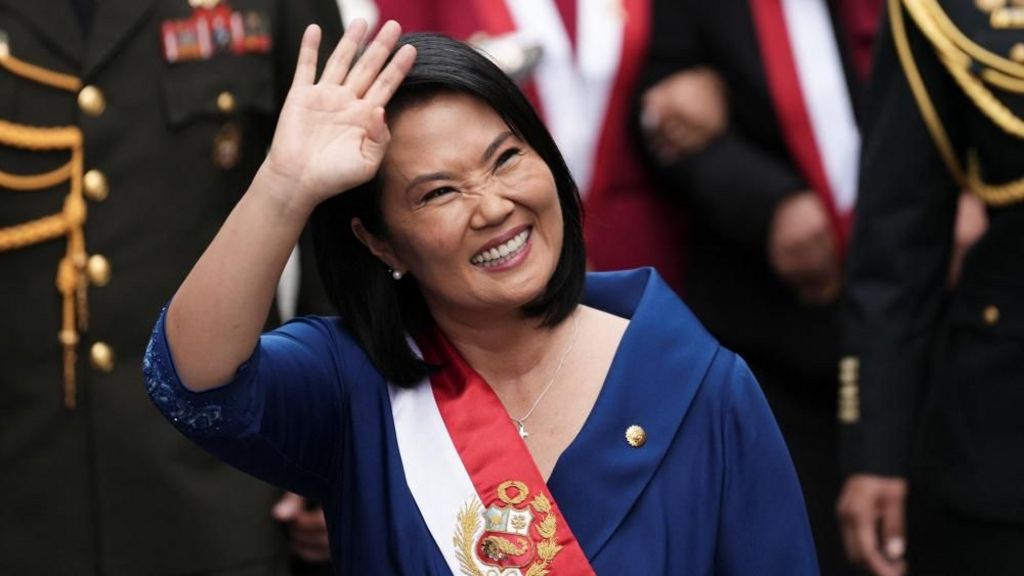
    On a historic yet tense Tuesday in Lima, Keiko Fujimori took the oath of office as Peru’s first female elected president, capping four attempts at the nation’s highest office and extending a wave of conservative political leadership across Latin America. Her inauguration comes at one of the most unstable periods in Peru’s modern history: she is the country’s 10th president in 10 years, a tumultuous stretch where no chief executive has managed to complete a full five-year constitutional term.

    Fifty-one-year-old Fujimori, who defeated left-wing challenger Roberto Sánchez in a razor-thin June runoff election, used her first address to the nation to lay out her administration’s core policy priorities, starting with a hardline approach to Peru’s spiraling security crisis. The country is currently grappling with its worst public safety emergency in decades, driven by the rapid expansion of local and transnational criminal gangs that run large-scale extortion rings and contract killing operations across wide swathes of the territory. In response, Fujimori announced that the Peruvian armed forces will temporarily lead all security operations in violence-plagued regions during declared states of emergency, until public order can be fully restored. This policy echoes the heavy military deployment central to the anti-insurgency campaign of her father, Alberto Fujimori, who served as Peru’s president through the 1990s before being jailed on convictions for corruption and systemic human rights abuses. The elder Fujimori died in 2024.

    Beyond security, the new president acknowledged the deep challenges facing the South American nation, noting she inherited a country in “catastrophic condition.” She also pledged to take aggressive action to protect Peruvian communities from the damaging impacts of the El Niño weather phenomenon, raise the national minimum wage, and address staggering economic inequality – a problem she admitted leaves Peru with the worst wealth gap in all of Latin America, despite the nation’s long-term potential for growth.

    The inauguration was not without unrest. Agence France-Presse reported that more than 100 demonstrators gathered in central Lima to protest Fujimori’s assumption of office. Many of the protesters were relatives of people killed or disappeared during past periods of state violence, including dozens of victims from her father’s crackdown on left-wing guerrilla insurgencies in the 1990s. Riot police clashed with demonstrators in the capital on inauguration day, as seen in on-the-ground reporting from Reuters.

    A cohort of foreign dignitaries attended the swearing-in ceremony to mark Fujimori’s victory, including the conservative sitting presidents of Argentina, Ecuador, and Chile, reflecting the regional shift toward right-wing leadership that Fujimori’s win reinforces.

  • eBay agrees $56m settlement with bloggers over harassment case

    eBay agrees $56m settlement with bloggers over harassment case

    Five years after a brazen, coordinated campaign of retaliatory harassment against a married couple who ran an independent online publication critical of eBay’s business practices, the e-commerce giant and its former top executives have agreed to pay $56 million in civil damages to close the high-profile case.

    The victims, David and Ina Steiner, founded and operated EcommerceBytes, a website and industry newsletter that regularly published coverage scrutinizing eBay’s policies and corporate decisions. In 2019, that critical coverage drew a aggressive, unacceptable response from a cohort of then-current eBay executives, who orchestrated a months-long pattern of intimidation designed to silence the couple’s reporting.

    Court records and federal investigation documents detail a series of disturbing, threatening acts carried out against the Steiners, who reside in Massachusetts. The group sent the couple unwanted, menacing packages: a costume mask coated in pig’s blood, a funeral wreath left at their home, and a copy of a book about coping with the death of a spouse, messages clearly intended to frighten the pair by implying harm could be coming. Beyond sending disturbing parcels, executives sent repeated harassing messages to the couple via the social media platform X, then known as Twitter. In one of the most alarming breaches, multiple members of the group traveled to the Steiners’ home and attempted to place a tracking device on their personal vehicle to monitor their movements.

    Between 2022 and 2024, all seven former eBay executives implicated in the scheme pleaded guilty to federal criminal charges connected to the harassment, following an investigation by the U.S. Department of Justice and the FBI. In 2024, one lead FBI investigator on the case described the operation as an “unprecedented, relentless, and over-the-top harassment campaign,” a characterization that underscored the severity and audacity of the corporate-led intimidation. eBay itself was also criminally charged in the scheme, and reached a deferred prosecution agreement with the DOJ that required the company to pay a $3 million criminal fine.

    The newly announced $56 million civil settlement resolves the separate civil suit the Steiners brought against eBay and the involved executives. Under the terms of the agreement, the bulk of the payment comes from eBay, which has also committed $6 million of the total sum to go to various nonprofit organizations. Former eBay CEO Devin Wenig, who stepped down from the company the same year the harassment took place, will personally contribute $1 million to the settlement. Court records show that in 2019, Wenig sent a text message to the company’s top communications executive that read “Take her down,” in reference to Ina Steiner.

    A representative for Wenig clarified this week that earlier legal proceedings had established the text was meant to reference a public relations strategy to counter what the company claimed were factual errors in Ina Steiner’s reporting, not a directive for harassment. “No one should ever have been subjected to what the Steiners endured in 2019, and I’m saddened by it, especially because it occurred during my time as CEO of eBay. The harassment was deliberately done in secret,” Wenig said in a statement this week. According to the Steiners’ legal team, Wenig’s $1 million personal contribution will be donated to an unnamed nonprofit that works to protect First Amendment rights to free speech, and will be gifted in Ina Steiner’s name. The U.S. Constitution’s First Amendment, which protects free expression, is a central issue in the case, as the harassment was carried out to punish the couple for critical speech.

    Christopher Murphy, lead counsel for the Steiners at Scalli Murphy Law PC, celebrated the settlement as a landmark moment for accountability. “We believe this resolution sends a clear message that corporations and their executives cannot engage in this type of misconduct without facing significant consequences,” Murphy said in a statement Tuesday.

    eBay also issued an official acknowledgement of wrongdoing as part of the settlement announcement. “What the Steiners were subjected to by former eBay employees in 2019 was wrong, reprehensible and should never have happened,” the company said. eBay formally condemned the former employees who pleaded guilty to criminal charges that prompted the civil suit, and admitted that internal communications between Wenig and other former executives carried an “unprofessional tone.” The company added: “This agreement is consistent with our commitment to fairly compensate the Steiners and fulfills our efforts to make things right.”

  • 10-year-old girl dies days after collision in which mother was killed

    10-year-old girl dies days after collision in which mother was killed

    A devastating road traffic collision in County Cavan, Republic of Ireland, has claimed a second life this week, after a 10-year-old girl passed away in hospital Tuesday, just days after her mother was killed at the crash site.

    The fatal incident unfolded shortly after 4:30 p.m. local time this past Friday on the R162 regional road at Corclare, near Shercock, when a passenger car collided head-on with a flatbed utility van. The driver of the car, a woman in her 50s, was pronounced dead at the scene by emergency responders.

    The 10-year-old girl, who was riding as a passenger in the car during the collision, was rushed to Dublin’s Temple Street Hospital for urgent medical care. Despite efforts from medical teams, Gardaí – the national police service of Ireland – confirmed the child passed away at the hospital on Tuesday afternoon.

    In the wake of this second death, investigators have issued a renewed public appeal for anyone who witnessed the collision, or who may have captured dashcam footage of the vehicles or the crash scene in the moments before or after the incident, to contact investigators immediately. Law enforcement officials note that any information, even what witnesses may consider to be minor details, could prove critical to building a full understanding of how the collision occurred and advancing the official investigation.

  • Pop star Madison Beer and NFL player Justin Herbert announce engagement

    Pop star Madison Beer and NFL player Justin Herbert announce engagement

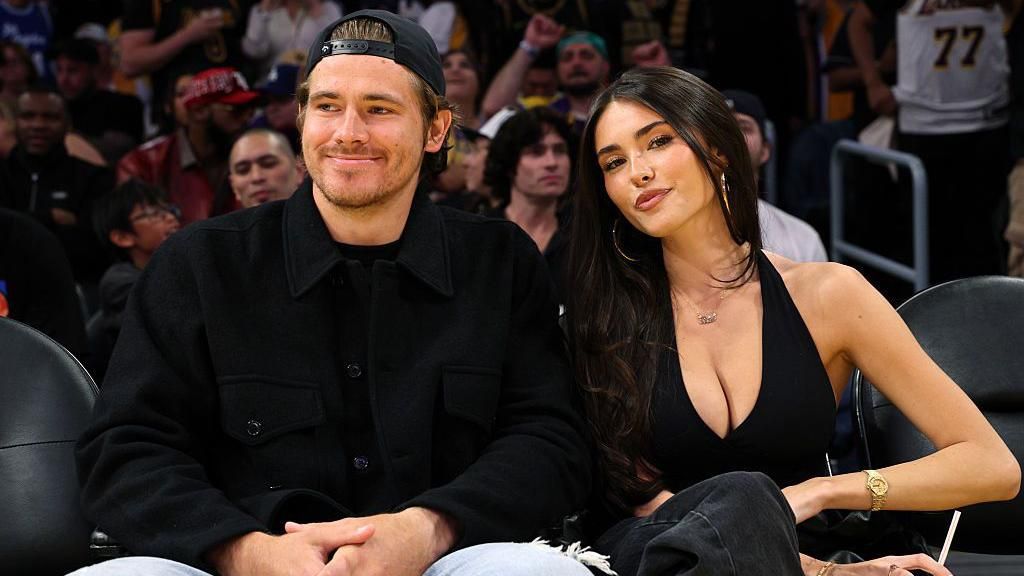
    One of pop music’s most followed rising stars and one of the NFL’s top young quarterbacks have made a joyful, headline-making announcement: 27-year-old Grammy-nominated singer-songwriter Madison Beer and 28-year-old Los Angeles Chargers starting quarterback Justin Herbert are officially engaged.

    The couple shared the exciting news with fans across social media platforms this Tuesday, posting candid photos from the romantic proposal that captured the intimate moment. In the shared shots, Herbert is shown dropping to one knee while holding out an open ring box, with a grinning Beer crouching in front of him, visibly overjoyed by the surprise. The couple’s joint public post was capped with a simple, affectionate caption: “meet my fiancé”.

    Romance rumors linking the two public figures first began circulating in August 2025, when they were photographed together publicly for the first time. In the months that followed, Beer became a regular presence on the sidelines at Chargers home games throughout the 2025 NFL season, and the pair were often spotted out together at Los Angeles sporting events, including frequent outings to watch the Dodgers play MLB and the Lakers compete in the NBA.

    The engagement announcement comes at a particularly notable time for Herbert, who is scheduled to report to Chargers training camp this Wednesday to kick off his seventh season with the franchise. The Pro Bowl quarterback has yet to claim a Super Bowl championship ring with the team, leading to playful social media commentary that he is now heading into camp with a very different, equally meaningful ring to mark a major life milestone.

    Both the Los Angeles Chargers organization and the official NFL account shared public congratulations to the couple shortly after their announcement. “JH+MB 4EV,” the Chargers wrote in their celebratory social media post, while the NFL’s official account posted a simple note on X reading: “Congrats to Justin Herbert and Madison Beer on their engagement.”

    For Beer, the engagement is the latest chapter in a career that first launched into the public eye more than a decade ago. Back in 2012, when Beer was just 13 years old, global pop superstar Justin Bieber shared a viral video of Beer singing a cover of Etta James’ iconic classic *At Last*, catapulting her to overnight fame. She released her debut official single the following year, with Bieber even making a cameo appearance in the track’s accompanying music video. Earlier this year, Herbert returned the favor in a sense, stepping in front of the camera to make a guest appearance in Beer’s music video for her single *lovergirl*. The clip showed the couple sharing soft, affectionate moments, embracing and strolling along a sunlit California beach.

  • Bystander video shows teen lifeguard’s dramatic ocean rescue

    Bystander video shows teen lifeguard’s dramatic ocean rescue

    On a sun-soaked Southern California beach, what started as a routine day of recreation quickly turned into a life-or-death emergency, when a 10-year-old child was pulled out to sea by a powerful rip current. In a remarkable display of quick thinking and courage, 16-year-old local lifeguard Jaxson Meeks sprang into action, launching an immediate ocean rescue that has since been immortalized in raw bystander footage shared across social media.

    Rip currents are a persistent, dangerous hazard at many California coastal destinations, capable of dragging even experienced swimmers far from shore in minutes. On the day of the incident, the young victim had been wading in shallow water with family when the unexpected current pulled him offshore. Witnesses on the beach reported panicked screams from the child’s relatives, drawing immediate attention to the struggling 10-year-old.

    Meeks, who had completed advanced lifeguard training just six months prior, did not hesitate. He grabbed his rescue buoy, sprinted into the surf, and swam out against the strong current to reach the child before he could be swept further into open ocean. The bystander video, filmed by a beachgoer waiting on the sand, captures the tense moments of the rescue: Meeks pulling the panicking child onto the buoy, then battling the pull of the current to bring both of them safely back to shallow water. Once on shore, the child was checked by waiting emergency medical personnel and found to be unharmed, aside from minor shock.

    Local lifeguard services have praised Meeks for his calm response and adherence to safety protocols, noting that his quick action likely prevented a tragic outcome. The video of the rescue has circulated widely online, with thousands of viewers celebrating the teen lifeguard’s heroism. Coastal safety officials have also used the incident as a reminder to beachgoers of the importance of swimming near lifeguard stations and heeding current safety warnings.

  • Zelensky and Netanyahu meet Trump as wars in Ukraine and Iran drag on

    Zelensky and Netanyahu meet Trump as wars in Ukraine and Iran drag on

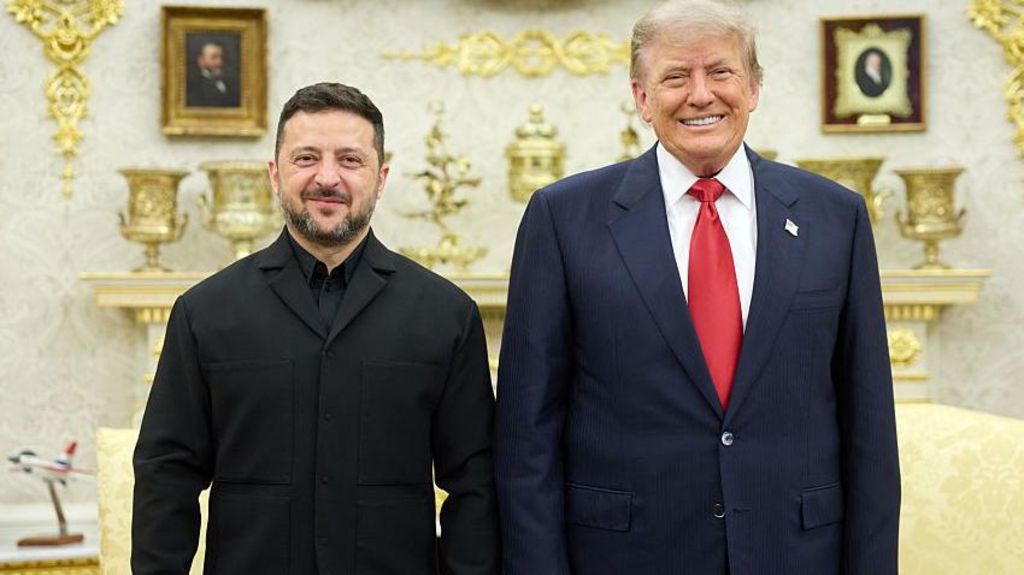
    Two key Middle Eastern and European leaders traveled to Washington D.C. in late July 2026 for back-to-back closed-door meetings with U.S. President Donald Trump, held on the sidelines of the funeral of longtime Republican Senator Lindsey Graham, a prominent cross-partisan advocate for both Israeli security and U.S. military assistance to Ukraine who passed away earlier that month.

    Ukrainian President Volodymyr Zelensky used his high-profile White House meeting to press the Trump administration for progress on a longstanding Ukrainian defense priority: securing U.S. approval to domestically produce American-made Patriot air defense interceptors, a capability Kyiv says is critical to countering intensifying Russian aerial assaults on Ukrainian civilian and infrastructure targets. Zelensky noted ahead of the meeting that Trump had previously raised the possibility of granting production licensing at the recent NATO summit, and Ukrainian officials have repeatedly emphasized that expanding domestic access to the advanced interceptor systems would drastically improve Ukraine’s ability to shield its population from Russian drone, cruise missile, and ballistic missile attacks that have ramped up in recent months.

    Following the closed-door discussion, no formal binding commitment on the Patriot license or new U.S. military assistance packages was announced by either side. Still, Zelensky struck a constructive tone in a public post on the social platform X, thanking Trump for ongoing U.S. support and confirming that the pair had addressed the Patriot licensing request alongside other bilateral defense and diplomatic priorities. He added that the two leaders agreed on the need to reinvigorate diplomatic efforts to end the full-scale Russian invasion of Ukraine.

    Beyond his talks with Trump, Zelensky also held a separate meeting with executives from Lockheed Martin, the U.S. defense prime contractor that manufactures the Patriot system, to outline a path forward for deepening bilateral defense industrial cooperation. In a follow-up post, Zelensky noted that discussions covered joint production capabilities for Patriots and other air defense systems, with working-level teams already advancing concrete proposals to speed up the launch of co-production and expand Ukraine’s air defense capacity.

    The Ukrainian leader also planned to meet with a bipartisan group of U.S. Senators advancing new legislation that would impose harsh secondary sanctions on buyers of Russian oil and natural gas, a measure designed to increase economic pressure on Moscow for its ongoing invasion.

    Shortly after Zelensky concluded his White House visit, Israeli Prime Minister Benjamin Netanyahu arrived for his own one-on-one meeting with Trump, at a moment when U.S.-Israel relations have been strained by growing disagreements over policy toward Iran and ongoing cross-border conflict between Israel and Lebanese militant group Hezbollah. In recent months, Trump has publicly criticized Netanyahu for refusing to pursue a ceasefire in Lebanon and for expanding Israeli strikes that risk triggering a broader regional conflict.

    After their closed-door discussion, Netanyahu told Israeli reporters that the meeting produced aligned outcomes on core shared priorities, most notably preventing Iran from acquiring a nuclear weapons capability. He described the conversation as one of the most productive he has ever held with President Trump, and an official photograph released from the meeting showed the two leaders smiling together in the Oval Office, signaling at least a public reset of their previously tense relationship. The White House characterized both back-to-back meetings with Zelensky and Netanyahu as “positive and productive” in an official readout released after the sessions concluded.