For more than a century, Wimbledon has guarded its iconic, time-honored traditions fiercely: from the mandatory all-white player dress code to understated court advertising and the cult classic pairing of strawberries and cream. But this year, the world’s oldest Grand Slam made a deliberate break from its signature reserved brand identity to crack one of the world’s most cricket-dominated sports markets: India.
With tennis still holding niche status among Indian sports fans, Wimbledon’s organizers rolled out a hyper-localized engagement strategy designed to bridge cultural gaps rather than lean into its distant, exclusive global brand. The tournament partnered with KUReMAL’S, a century-old Delhi kulfi (traditional Indian ice cream) maker, to reimagine its signature strawberries and cream treat with an Indian twist. Its official Instagram channel began sharing short-form reels of tennis legends like Roger Federer set to chart-topping 1990s Bollywood hits, and hosted top Indian cricketers and local social media influencers in the prestigious Royal Box to leverage their widespread domestic appeal. Content was also tailored and distributed across multiple regional Indian languages to reach audiences beyond the country’s English-speaking urban elite.
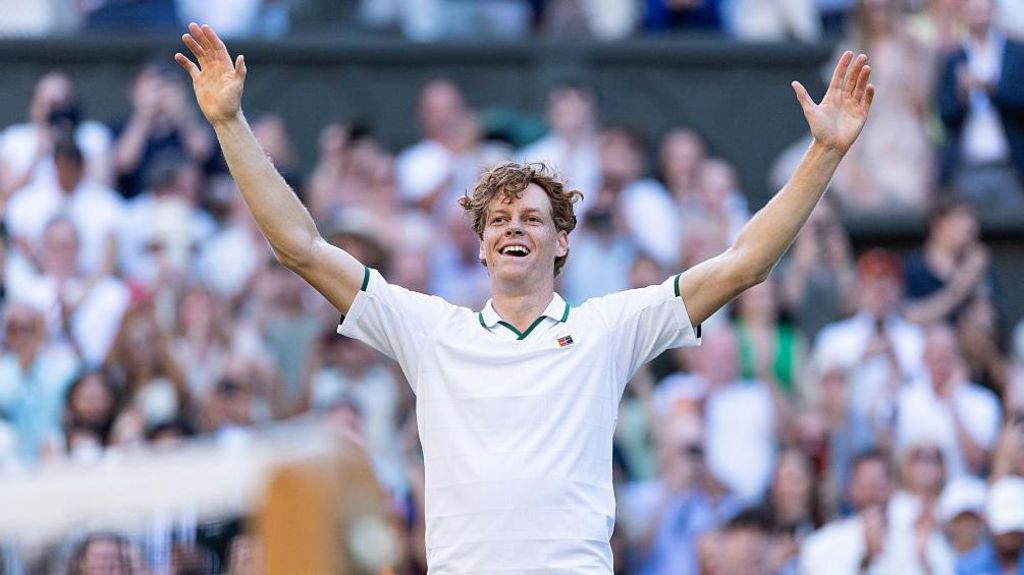
Early data suggests the strategic gamble has paid off. Early reports indicate that Jannik Sinner’s men’s singles final victory over Alexander Zverev drew roughly 2.7 million concurrent livestream viewers in India, despite the match kicking off after midnight local time. Average viewership across the entire tournament climbed 18% year-over-year to 853,000, according to local Indian media. JioStar, the domestic streaming platform that holds exclusive Indian broadcast rights for Wimbledon, declined to release official viewership figures to the BBC.
Industry analysts emphasize that Wimbledon’s push into India is no random marketing experiment, but a calculated long-term strategic move. India is already Wimbledon’s largest international market by total reach, and 2026 brought a landmark milestone for Indian tennis: Arnav Paparkar became the first Indian player in 36 years to reach the under-18 boys’ singles quarterfinals at the tournament.
“India now has its strongest pipeline of young tennis talent competing on ATP and ITF circuits in nearly a decade, and premium urban sports consumption is rapidly expanding beyond cricket, thanks to streaming platforms’ ability to target niche audiences at scale,” explained Darshana Bhalla, a New Delhi-based sports branding expert, in an interview with the BBC.
Sally Bolton, chief executive of the All England Lawn Tennis Club, confirmed earlier to the *Financial Times* that India now ranks alongside the United States as a core focus for growing the Grand Slam’s global audience. This shift comes as India projects to become the world’s fastest-growing sports market over the next decade: KPMG estimates the Indian sports sector will grow at a compound annual rate of 12-14% through 2030, nearly double the projected global average. To tap into this growth, global sports properties must adopt culturally specific engagement strategies, rather than relying on one-size-fits-all global content.
Bhalla notes that Wimbledon’s approach upends decades of premium global branding logic: “For generations, premium brands believed exclusivity came from distance and inaccessibility. Today, they’ve learned that true exclusivity for new audiences comes from belonging. What Wimbledon changed was the entry point: instead of asking young Indians to adapt to Wimbledon’s world, they meet fans where they are, using familiar cultural cues to draw them in – the kulfi collaboration, Bollywood soundtracks, regional language content, partnerships with local creators.”
Upasna Dash, founder of Jajabor Brand Consultancy, adds that this approach addresses a key barrier for new fans: for many younger Indians, Wimbledon feels aspirational but culturally distant, so reducing that gap is critical to growing lasting fandom. The tournament’s social media-first strategy also aligns with how younger audiences discover new content today: “Young fans often encounter global events on social media long before they engage with the event itself. Instead of asking consumers to enter Wimbledon’s world, this campaign steps into theirs.”
The pivot also makes strong strategic sense for JioStar, which holds exclusive broadcast rights. The platform has faced public financial pressure recently, with widespread reports that it sought to renegotiate its $3 billion 2024-2027 broadcast deal with the International Cricket Council amid sustained losses. While the original deal remains in place, diversifying its sports content portfolio reduces overreliance on cricket and opens up new audience segments.
“For JioStar, tennis expands the annual sports engagement calendar, attracts affluent urban audiences, and diversifies its advertiser base beyond cricket-focused brands,” Bhalla explained. “In India, cricket delivers mass scale, but tennis delivers premium audiences. Wimbledon brings a demographic that cricket cannot consistently attract: a premium, affluent, English-speaking urban audience that luxury, automotive, banking, fintech, travel, and premium consumer goods brands actively target.”
Despite the strong early viewership results, industry experts warn that converting casual curiosity from this campaign into long-term sustained fandom will require ongoing investment. “If these engagement efforts are treated as one-off campaign tactics tied to the annual tournament, their impact will be short-lived,” noted Aryan Anurag, co-founder of Delhi-based social media agency Binge Labs. Dash added that sustained growth will require deeper grassroots engagement with Indian tennis and consistent market investment beyond the two-week tournament every summer.
Even so, the global sports industry is closely watching Wimbledon’s experiment. If culturally contextualized storytelling can deliver meaningful, lasting engagement growth in India, Bhalla says other major global sports properties will quickly follow suit: “Expect F1, the NBA, the NFL, the UFC, La Liga, and the Premier League all to deepen their India-first content strategies if Wimbledon’s model proves successful.”