博客

  • UAE’s ruling al-Nayhan family receives tens of millions in EU farming subsidies

    UAE’s ruling al-Nayhan family receives tens of millions in EU farming subsidies

    A new joint investigation by independent climate and energy investigative outlet DeSmog, alongside European news partners El Diario and G4Media, has uncovered that the ruling royal family of the United Arab Emirates, the Al-Nahyan family, has collected more than €71 million ($84 million) in European Union agricultural subsidies over the past six years for farmland holdings across Romania, Italy and Spain. The investigation, which analyzed six years of Common Agricultural Policy (CAP) beneficiary data between 2019 and 2024, traced 110 separate subsidy payments to a complex network of companies and subsidiaries controlled directly by the Al-Nahyan family and Abu Dhabi’s flagship sovereign holding firm ADQ.

    The Al-Nahyan family ranks as the second wealthiest royal family in the world, with a combined estimated net worth exceeding $320 billion, built almost entirely on the UAE’s massive untapped oil and natural gas reserves. The CAP, the EU’s flagship agricultural support program, distributes roughly $64 billion in annual payments to support European farmers and rural development, accounting for nearly one-third of the EU’s entire total annual budget. Industry analysts have long raised concerns that large shares of these public funds end up in the hands of wealthy foreign investors rather than small, local European agricultural operations, a finding this new investigation reinforces.

    The single largest subsidy haul uncovered by the investigation went to Romanian agribusiness firm Agricost, which operates the largest contiguous individual farm in the European Union, spanning 57,000 hectares — an area five times larger than the city of Paris. DeSmog’s analysis confirms that the vast imbalance in CAP distribution heavily favors large landowners: in 2024 alone, Agricost received more than $10 million in direct CAP payments, a sum more than 1,600 times higher than the average annual subsidy collected by a typical small EU farm.

    Over the past 15 years, the UAE has accelerated a global campaign of agricultural land acquisition, purchasing hundreds of thousands of hectares of fertile farmland across Africa, South America and Europe. Today, the UAE controls roughly 960,000 hectares of agricultural land worldwide, a push driven by the country’s urgent domestic food security needs. The Gulf nation’s harsh climate, characterized by extreme high temperatures, widespread chronic water scarcity, and nutrient-poor sandy soils, makes large-scale domestic crop production nearly unfeasible, leaving the country dependent on imports for as much as 90 percent of its total food supply.

    This global land grab has also sparked geopolitical controversy, with many analysts linking the UAE’s push for agricultural resources to its controversial involvement in the ongoing Sudan conflict, where Abu Dhabi backs the Rapid Support Forces (RSF) paramilitary group that has been widely accused of perpetrating genocide against civilian populations. The UAE already holds extensive agricultural holdings in Sudan: UAE’s largest listed firm International Holding Company (IHC) and Jenaan Investment operate more than 50,000 hectares of farmland in the country, while the massive Abu Hamad agricultural project, a joint venture between IHC and Sudan’s largest private firm Dal Group, controls an additional 162,000 hectares of cultivated land. The project is paired with a newly built Red Sea shipping terminal, Abu Amama Port, constructed and operated by Abu Dhabi-based AD Ports Group to facilitate export of Sudanese agricultural produce.

    Within the EU, the Al-Nahyan family’s agricultural expansion is structured through three core holding companies based in Spain, Italy and Romania. Agricost, the giant Romanian farm operation, was acquired by leading UAE agribusiness group Al Dahra in 2018 for an estimated €230 million ($270 million). Al Dahra was originally founded by Hamdan bin Zayed Al Nahyan, brother of UAE President Mohammed bin Zayed Al Nahyan, before ADQ purchased a 50 percent stake in the firm in 2020. While full public details of Al Dahra’s current ownership structure are not available, DeSmog confirms the firm remains closely linked to members of the Al-Nahyan family: its board is chaired by Hamdan bin Zayed Al Nahyan, with his son Zayed bin Hamdan Al Nahyan — who is married to President Mohammed bin Zayed Al Nahyan’s daughter — also holding a key leadership role.

    DeSmog’s investigation also found that Al Dahra has acquired multiple agricultural operations across Spain since 2012, controlling more than 8,000 hectares of Spanish farmland that collected more than €5 million in CAP subsidies between 2015 and 2024. Both the Spanish and Romanian farm operations grow alfalfa and other animal feed crops, with the vast majority of produce destined for export, including shipment to the Gulf. Al Dahra holds a long-term government contract to supply animal feed to the UAE, which supports the country’s fast-growing domestic dairy sector. In 2022, ADQ also acquired major global fruit producer Unifrutti for an estimated $830 million. DeSmog’s analysis found that Unifrutti’s Italian farm holdings received at least €186,000 in CAP subsidies in the three years following the acquisition.

    Neither the Al-Nahyan family nor any of the companies named in the investigation responded to multiple requests for comment from DeSmog, with ADQ formally declining to issue a statement.

  • US fire on Iran tankers sparks reprisals as deal hangs in balance

    US fire on Iran tankers sparks reprisals as deal hangs in balance

    Tensions surged once again across the Middle East on Friday, after a U.S. fighter jet struck two Iranian-flagged tankers in the Gulf of Oman to enforce a port blockade, triggering immediate Iranian retaliation and throwing a already shaky truce into deep jeopardy. This new outbreak of violence comes as Tehran weighs a latest U.S. negotiation proposal aimed at ending the 10-week-old conflict that began with joint U.S.-Israeli strikes on Iran.

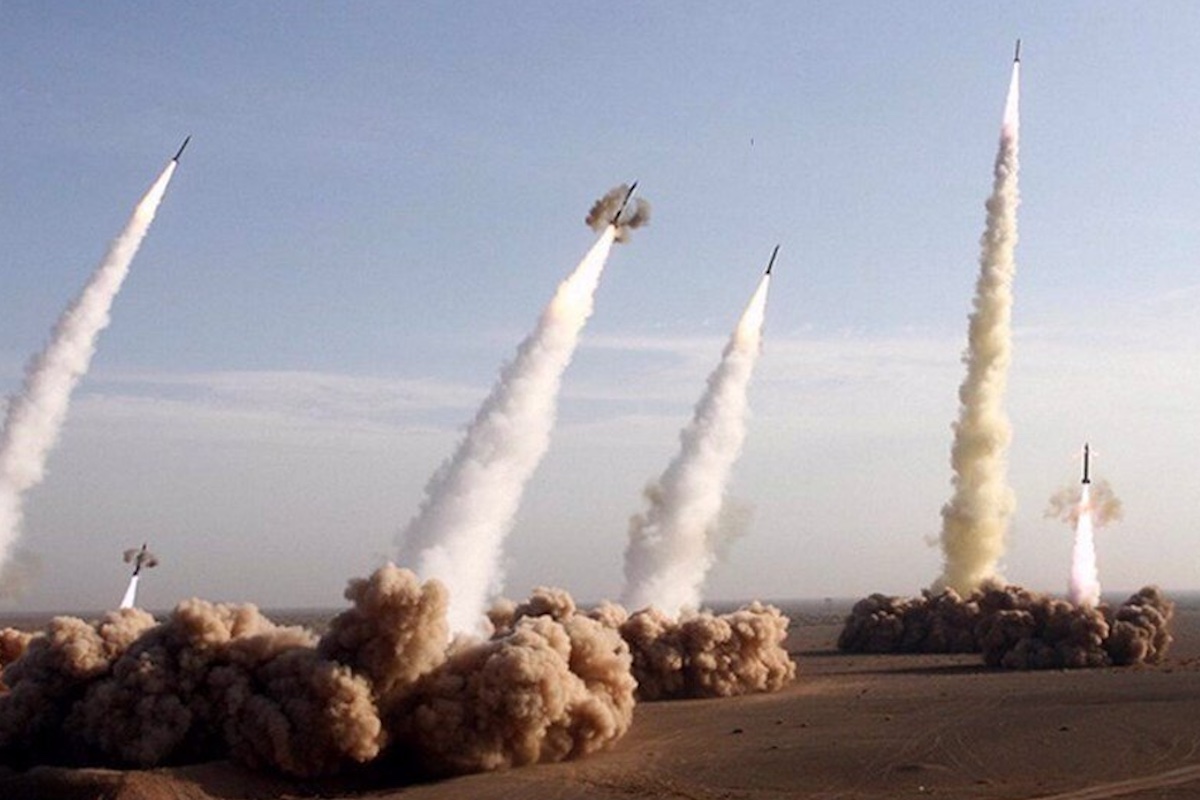
    According to U.S. Central Command, an F/A-18 Super Hornet deployed precision munitions against the two vessels near the Gulf of Oman, the critical maritime gateway to the Strait of Hormuz, to stop the ships from reaching Iranian territorial waters. A senior Iranian military official quickly confirmed retaliatory action had been taken, telling local media that the country’s navy had launched strikes in response to what it called “a ceasefire violation and American terrorism”. The official added that after a brief exchange of fire, active clashes had ceased as of Friday afternoon.

    This latest confrontation follows an overnight flare-up in the Strait of Hormuz, a waterway that carries roughly a fifth of the world’s daily oil consumption, whose strategic importance has been underscored by senior Iranian officials. Mohammad Mokhber, an adviser to Iran’s Supreme Leader, recently compared controlling influence over the strait to holding “an atomic bomb”, noting that the ability to shape global energy markets through policy in the strait represents an unparalleled strategic opportunity that Tehran will never relinquish. This week, Tehran established a new regulatory body to oversee vessel transits through the strait and collect transit tolls, according to shipping industry outlet Lloyd’s List.

    Washington delivered its latest settlement proposal to Tehran via Pakistani mediators this week, which would extend the current Gulf truce to create space for negotiations on a permanent end to the conflict that began when U.S. and Israeli forces launched strikes on Iran on February 28. Since the outbreak of war, Iran effectively closed the Strait of Hormuz, triggering chaos in global energy markets and pushing crude oil prices sharply upward, which prompted the U.S. to impose a counter-blockade on Iranian ports.

    On Friday, U.S. Secretary of State Marco Rubio, speaking during an official visit to Rome, reiterated that Iranian control over the strait is “unacceptable” and said Washington was awaiting Tehran’s official response to the proposal by the end of the day. “I hope it’s a serious offer, I really do,” Rubio told reporters. Iranian foreign ministry spokesman Esmaeil Baqaei told Iran’s ISNA news agency Friday that the proposal remains “under review, and once a final decision is reached, it will certainly be announced”.

    The violence follows a previous clash Thursday night, when U.S. Central Command said Iran launched missiles, drones and small attack craft against three U.S. warships transiting the strait. U.S. officials reported no American vessels were hit, and said U.S. forces retaliated against Iranian land bases. Iran’s Khatam al-Anbiya Central Military Command pushed back on the U.S. account, saying the clash began when U.S. vessels targeted an Iranian tanker heading toward the strait, and accused American forces of striking civilian areas. U.S. President Donald Trump told reporters Thursday the truce remained in effect despite the clash, saying “Yeah, it is. They trifled with us today. We blew them away.”

    Iran has accused regional U.S. allies of cooperating in the recent strikes, though it has not named specific countries. The United Arab Emirates announced Friday it had intercepted a barrage of Iranian drones and missiles that left three people wounded in UAE territory. Earlier this week, U.S. President Donald Trump first announced a large-scale U.S. naval operation to reopen the strait to commercial shipping, then reversed course just two days later to resume diplomatic efforts. Multiple Saudi sources told Agence France-Presse Friday that Riyadh has rejected U.S. requests to use Saudi military bases and airspace for the aborted Hormuz operation, with one source noting the kingdom “felt it would just escalate the situation and would not work”.

    Beyond the Gulf, the parallel ceasefire between Israel and Iran-backed Hezbollah in Lebanon also came under severe strain Friday. Hezbollah announced it had launched a missile strike against an Israeli military base, in retaliation for an Israeli strike in Beirut that killed a top Hezbollah commander this week, as well as ongoing attacks on southern Lebanese villages. The Israeli military confirmed air raid sirens activated across multiple northern Israeli cities Friday, and Hezbollah also reported additional Israeli strikes on its positions in southern Lebanon.

    Israeli forces have continued targeted strikes against Hezbollah despite the ceasefire, and Wednesday carried out its first attack on Beirut’s southern suburbs in a month, confirming it killed a senior Hezbollah commander. Fresh Israeli strikes in southern Lebanon’s Tyre district Friday killed four people, Lebanon’s health ministry confirmed, and Lebanon’s state-run National News Agency reported a wave of attacks across multiple areas of southern Lebanon. This new round of violence comes ahead of scheduled direct negotiations between Lebanon and Israel in Washington next week, talks that Hezbollah has vehemently opposed. Israel and Lebanon have remained officially in a state of war since 1948.

  • Botswana mourns death of Festus Mogae, the former president who prioritized HIV/AIDS fight

    Botswana mourns death of Festus Mogae, the former president who prioritized HIV/AIDS fight

    GABORONE, Botswana – Botswana’s government announced Friday the passing of former president Festus Mogae, the country’s respected leader who ruled from 1998 to 2008 and shaped the nation’s response to one of Africa’s worst public health crises. He was 86 years old, and no immediate cause of death has been disclosed.

    Current Botswana President Duma Boko honored Mogae’s legacy in a national address, noting that under his tenure, Botswana gained global acclaim for its consistent commitment to democratic governance and prudent, principled economic stewardship. To mark the former leader’s contributions, Boko declared three days of national mourning across the southern African nation.

    A sparsely populated, arid country in southern Africa, Botswana holds an outsize position in the global diamond industry: it is the world’s top diamond producer by value, and ranks second only to Russia in terms of production volume. Per International Monetary Fund data, the diamond sector generates roughly 80% of Botswana’s total exports and accounts for one-quarter of the country’s gross domestic product. Over the past 10 years, Botswana has recovered all of the world’s largest rough diamonds, including a 2,492-carat stone unearthed in 2023 that stands as the second-largest mined diamond in recorded history and the largest discovery in more than 100 years.

    Mogae’s most enduring legacy lies in his pioneering work to combat HIV and AIDS in Botswana, which at the peak of the epidemic faced one of the highest national infection rates globally. Mogae placed the fight against the disease at the top of his administration’s national agenda, rolling out free access to life-saving antiretroviral treatment at public health facilities across the country in 2002. That program was later expanded to cover non-citizens in 2019, and the policy drove a dramatic reduction in national HIV prevalence, saving tens of thousands of lives in the process.

    Before his presidency, Mogae, a trained professional economist, served as governor of the Bank of Botswana, laying the groundwork for his later focus on stable economic growth. For his commitment to democratic rule and the peaceful transfer of executive power after leaving office in 2008, Mogae was awarded the Ibrahim Prize for Achievement in African Leadership, one of the most distinguished honors recognizing excellence in African governance.

    Boko remembered Mogae as a statesman who represented Botswana with dignity on the global stage, and remained a unifying voice for reason and progress across the country throughout his lifetime. “Today Botswana mourns a distinguished statesman, a patriot whose life was devoted to the service of his country,” Boko told the nation.

  • Greece’s examines mystery naval drone found in Ionian Sea

    Greece’s examines mystery naval drone found in Ionian Sea

    A newly surfaced unexplained naval drone recovered from Greek waters has reignited questions over the expanding scope of the Russia-Ukraine conflict beyond Black Sea coastlines. Local fishermen first spotted the uncrewed vessel on Thursday, tucked into a rocky cave off the Ionian Sea island of Lefkada, before alerting Greek authorities, the coast guard towed the several-metre craft to the nearby port of Vasiliki, where military investigators have now taken custody of it under the supervision of Greece’s defense ministry.

    Social media footage of the recovery shows the dark, unmarked drone being towed into the harbor, with its top hatch open and no identifying symbols visible to confirm its origin. Initial Greek media reports indicate the craft carried explosive ordnance, and its engine was still operational when fishermen found it, fueling speculation that it drifted into Greek territorial waters only recently. Military experts are now examining two leading theories about how the drone ended up off Lefkada: that it suffered a technical malfunction or lost communication with its ground control station.

    Local outlet Ta Nea has drawn a visual comparison between the recovered craft and Ukraine’s widely documented MAGURA V5 naval drone, a system Kyiv’s forces have used repeatedly to target Russian military and commercial vessels. That assessment has not yet been independently verified, and the BBC has reached out to both Greek and Ukrainian defense authorities for official comment on the discovery.

    One prominent hypothesis under investigation suggests the drone was intended to target vessels part of Russia’s so-called shadow fleet, a loose network of hundreds of oil and gas tankers that Moscow uses to bypass Western sanctions imposed following its 2022 full-scale invasion of Ukraine. Uncrewed naval drones have reshaped naval warfare in the two and a half years since the invasion began, allowing Ukraine to strike Russian assets far from its own coastline. In November 2025, Kyiv confirmed it used sea drones to attack two Russian oil tankers under Western sanctions in the Black Sea, with publicly verified footage showing the drones striking their targets before detonating in large fireballs. Just months earlier, in March 2026, Russia accused Ukraine of launching an uncrewed drone attack on a Russian sanctioned LNG tanker in the Mediterranean Sea between Libya and Malta. The Arctic Metagaz suffered severe damage in that alleged attack and was left drifting uncontrolled without crew on board, though Ukraine never claimed responsibility for the strike thousands of kilometers from its coast.

    As Greek investigators continue their analysis of the recovered drone, the discovery highlights how the spillover effects of the Russia-Ukraine war are increasingly being felt across the Mediterranean, bringing unplanned security risks to neutral coastal states.

  • Bahrain expels three MPs after they voted against royal decree on citizenship oversight

    Bahrain expels three MPs after they voted against royal decree on citizenship oversight

    In a sweeping move that has drawn sharp condemnation from human rights advocates, Bahrain’s lower parliamentary body has stripped three elected lawmakers of their seats over a single dissenting vote against a royal order that erodes judicial checks on citizenship revocation decisions. The expulsion comes amid a sweeping domestic security crackdown tied to recent cross-border hostilities linked to the US-Israeli war in the region.

    The unanimous vote to revoke the parliamentary memberships of Abdulnabi Salman, Mamdooh al-Saleh and Mahdi al-Shuwaik passed during a Thursday morning sitting of the Council of Representatives. The three legislators were targeted specifically for their opposition votes during an April 28 debate over the two-year-old royal decree, which reclassifies all citizenship-related matters as “sovereign issues” and removes all existing judicial oversight over such decisions. Under the new framework, individuals who have their citizenship revoked lose all right to file legal challenges or appeals against the ruling.

    During the initial parliamentary vote on the decree, 33 legislators backed the measure, three were absent, and three abstained, leaving the three dissenters isolated as targets for retaliation. Over the week leading up to the expulsion vote, the three lawmakers faced mounting public criticism, even from King Hamad bin Isa Al Khalifa, who directly addressed their dissent in rare public remarks that included a veiled threat of deportation. The king accused the trio of siding with “traitors” and demanded they issue a public apology “or to join those they chose to align with, who have left the country or been expelled.”

    The king’s reference was to a mass citizenship revocation carried out last month, when Bahraini authorities stripped 69 people of their nationality over unproven allegations of sympathizing with Iran amid regional tensions. The list of those affected includes not only people accused of threatening national security, but also their dependent family members – including minor children – a policy that the expelled lawmakers openly condemned during the April 28 debate.

    Speaking in opposition to the royal decree, Abdulnabi Salman argued that independent judicial oversight was a non-negotiable requirement to “achieve justice and a sense of fairness and trust.” He rejected the policy of collective punishment that has accompanied the recent mass revocations, noting “It is true that whoever harms this country must be punished, but punishments must not be collective, God forbid, or be taken as reactions, because the matter relates to the fate, future, and trust of the people in the system and the judiciary.” Mamdooh al-Saleh echoed these concerns, questioning why innocent family members should suffer for the alleged actions of a single relative: “What is the fault of the children and the grandchildren? They may have no guilt; they did not participate in their father’s crime or mistake.”

    Human rights campaigners warn the expulsion of the three lawmakers sets a dangerous precedent for political dissent in the kingdom. Sayed Ahmed Alwadaei, a researcher with the London-based Bahrain Institute for Rights and Democracy (BIRD), called the development deeply worrying. “It sets a dangerous precedent that if you cast a vote in a way perceived by the Bahraini king or government as upsetting, then the consequences on you will be quite harrowing,” Alwadaei told Middle East Eye. “You could even face losing your nationality and being deported.”

    Andrew McIntosh, a policy advisor with Salam for Democracy and Human Rights, added that the purge will have devastating long-term impacts on incremental reform efforts in Bahrain. “We’ve seen political movements boycotting elections since 2014, claiming the Council of Representatives has no real power. That sentiment is now growing,” McIntosh explained. “Discontent and deprived of democratic channels to express their grievances and advocate for change, Bahrain is likely to become more polarised and militant. This is the opposite of what the government hopes to achieve.”

    The mass citizenship revocation and parliamentary expulsion come against a backdrop of heightened regional tensions, after Iran launched a massive drone and missile attack on Gulf states including Bahrain in retaliation for the US-Israeli war that began in late February. The attack left at least three Bahrainis dead and dozens more wounded, from both direct impacts and falling interception debris. In response to the attack, Bahraini authorities launched a sweeping domestic crackdown on suspected dissidents. BIRD has documented more than 200 arrests since the crackdown began, though researchers note the actual number of detentions is likely higher due to unreported enforced disappearances. Arrests have targeted both peaceful protesters and social media users who shared footage of the Iranian attack.

    The crackdown has already resulted in one death in custody: 32-year-old Mohamed al-Mosawi, who disappeared along with several friends in the wake of the attack. Photographs of al-Mosawi’s corpse obtained by Middle East Eye show extensive bruising across his face and body, sparking widespread public anger and allegations that he was tortured to death during interrogation. In response to public outcry, Bahraini investigators have charged one intelligence officer with assault in connection with al-Mosawi’s death.

    Campaigners also note that many of the 69 people stripped of citizenship last month were never arrested, interrogated, or formally notified of the specific allegations against them, leaving them with no path to contest the decision even before the royal decree stripped judicial oversight. Last week, six regional Arab governments including Kuwait, Morocco, Saudi Arabia, Syria, Jordan and the United Arab Emirates released joint statements expressing solidarity with Bahrain and backing the kingdom’s recent domestic security measures.

  • Iran accuses US of ‘reckless military adventure’

    Iran accuses US of ‘reckless military adventure’

    Tensions have spiked sharply across key Gulf waterways following reciprocal accusations of attacks between the United States and Iran, with Iran’s top diplomat firmly stating Tehran will never capitulate to mounting American pressure as a critical response to a US-backed peace proposal looms.

    In a public post on social platform X Wednesday, Iranian Foreign Minister Abbas Araghchi launched a sharp rebuke of US policy, accusing Washington of repeatedly choosing reckless military escalation over diplomatic resolution even when a negotiated path forward is within reach. He questioned whether the latest surge in hostilities was a crude pressure tactic designed to force Tehran into concessions, or whether outside bad actors had once again misled US President Donald Trump into stepping into another costly regional quagmire.

    The verbal confrontation comes on the heels of a full day of mutual accusations of armed attacks in the strategic Strait of Hormuz, followed by new US strikes on Iranian vessels that have further raised the stakes. The Strait of Hormuz, a narrow chokepoint through which roughly 20% of the world’s total oil and liquefied natural gas supplies pass, has emerged as the epicenter of the ongoing conflict. Recent disruptions to shipping through the waterway have already sent global energy prices soaring, with thousands of commercial vessels remaining stranded in the region since the broader US-Israeli war against Iran-backed factions began in February.

    In the most recent development Friday, US Central Command (Centcom) announced that American forces had disabled two empty Iranian-flagged oil tankers attempting to reach port in the Gulf of Oman, saying the vessels violated the ongoing US naval blockade of Iranian ports. Centcom said US forces used precision munitions to strike the ships’ smokestacks to block their entry into Iranian territorial waters, adding that more than 70 tankers are currently being prevented from entering or exiting Iranian ports as part of the blockade campaign. The naval blockade is a core part of Washington’s strategy to pressure Tehran into accepting US terms for a ceasefire and broader peace deal.

    The new US strikes came one day after deadly clashes in the Strait of Hormuz, with each side blaming the other for initiating the violence. Centcom claimed Iran launched an unprovoked attack targeting three US warships using missiles, drones, and small fast-attack boats. For its part, Iran’s top military command countered that the US had first struck an Iranian oil tanker and another civilian vessel approaching the strait, and carried out targeted aerial strikes on multiple Iranian coastal areas.

    Local Iranian officials confirmed that one cargo vessel attacked near the coastal city of Minab caught fire, with 10 injured sailors already evacuated to local hospitals. Search and rescue operations are still ongoing to account for the remaining crew members, according to Hormozgan province official Mohammad Radmehr, who spoke to Iran’s state-run Mehr News Agency.

    Overnight, President Trump took to his social platform Truth Social to confirm the clash, claiming US forces had destroyed multiple Iranian small boats, missiles, and drones, and inflicted severe damage on what he called Iranian attackers. He issued a blunt ultimatum to Tehran: “Just like we knocked them out again today, we’ll knock them out a lot harder, and a lot more violently, in the future, if they don’t get their Deal signed, FAST!”

    Despite the sharp escalation in hostilities this week, Trump has maintained that the existing ceasefire, designed to create space for negotiations to end the February-launched war, remains in effect. US Secretary of State Marco Rubio, currently on a diplomatic visit to Italy, confirmed Friday that Tehran is expected to formally respond to US negotiation proposals this same day. Rubio said he hoped the US offer would receive a serious response from the Iranian government.

    In response to US and Israeli strikes across the region, Iran has increased military operations targeting US allies in the Gulf and maintained de facto control over movement through the Strait of Hormuz. The US naval blockade of Iranian ports has only deepened Iranian anger at Washington, with Tehran repeatedly rejecting outside pressure as an ineffective tactic that will not force it to accept unfavorable terms.

  • Prosecutors seek to strip U.S. citizenship from diplomat-turned-Cuban spy

    Prosecutors seek to strip U.S. citizenship from diplomat-turned-Cuban spy

    MIAMI – In the final chapter of one of the most damaging espionage cases in U.S. diplomatic history, federal prosecutors have launched a civil action to strip U.S. citizenship from imprisoned former American ambassador Manuel Rocha, a Colombian-born double agent who secretly worked for Cuba’s communist government for more than 50 years.

    The U.S. Attorney’s Office for the Southern District of Florida filed the civil denaturalization complaint on Thursday, a legal step that would formally complete Rocha’s dramatic fall from influence. Rocha relocated to New York City at age 10 alongside his widowed mother and two siblings, and he obtained U.S. citizenship in 1978 – a status prosecutors now argue was gained through deliberate fraud.

    Now 75, Rocha was arrested in late 2023 and later sentenced to 15 years in federal prison after pleading guilty to 15 federal counts of espionage-related crimes. His guilty plea avoided a public trial that would have forced the disclosure of full details of his decades-long covert work for Havana, even as he rose to the most senior ranks of the U.S. foreign service. During his career, Rocha served as U.S. Ambassador to Bolivia and held senior diplomatic postings in Argentina, Mexico, at the White House, and other high-level roles within the U.S. State Department.

    Secret recordings captured by an undercover FBI agent capture Rocha praising former Cuban leader Fidel Castro as “El Comandante” and bragging that his espionage work against the United States was “more than a grand slam” against the American “enemy.”

    Court records outline that Rocha first made contact with Cuban intelligence operatives in 1973, half a decade before he submitted his application for U.S. citizenship. The connection came during a student program Rocha attended in Chile, at the tail end of socialist president Salvador Allende’s presidency. Following instructions from Cuban intelligence officials, Rocha enrolled in graduate programs at Harvard University and Georgetown University, successfully built a career, and ultimately secured a position with the U.S. State Department.

    Under U.S. federal law, prosecutors carry a high legal burden to revoke citizenship: they must present clear, convincing evidence that an applicant obtained naturalization through illegal means, or by willfully misrepresenting or concealing a material fact during the application process. In this case, prosecutors argue Rocha committed perjury during his 1978 citizenship application, when he swore under oath that he supported the U.S. Constitution and had no affiliation with the Communist Party of Cuba.

    U.S. Attorney Jason A. Reding Quiñones, head of the Southern District of Florida, framed the legal action as the concluding phase of a major national security investigation. “The Southern District of Florida helped take down one of the most prolific Cuban spies ever uncovered in the United States,” he said. “This civil denaturalization case is about finishing the job.”

    The move comes amid a broader shift at the U.S. Department of Justice, which has sharply increased its focus on denaturalization cases in recent years. In 2023, the department issued an internal memo directing federal prosecutors to prioritize denaturalization actions against individuals who pose a national security threat, including through espionage or terrorist activity.

    An independent investigation by the Associated Press has uncovered multiple unaddressed warning signs about Rocha that were missed by U.S. intelligence agencies over decades. Nearly 20 years ago, a senior CIA operative received an explicit tip that Rocha was operating as a double agent. Declassified intelligence also shows the agency was aware as early as 1987 that Fidel Castro had placed a “super mole” deep within the U.S. government, with multiple senior officials naming Rocha as a prime suspect even before his arrest.

    To date, the full scope of the damage Rocha inflicted on U.S. national security remains unclear. Over the past two years, teams from the FBI, CIA, and U.S. State Department have worked to piece together what classified information Rocha passed to Cuban handlers. Rocha has undergone months of debriefing by federal officials since he entered prison, but authorities have not disclosed what new information, if any, was obtained from those sessions.

  • Inter forward Bonny cleared for World Cup with Ivory Coast after switch from France

    Inter forward Bonny cleared for World Cup with Ivory Coast after switch from France

    ZURICH – In a formal decision announced Friday, global soccer governing body FIFA has greenlit a national team eligibility change that allows 22-year-old Inter Milan forward Ange-Yoan Bonny to represent 2023 Africa Cup of Nations champions Ivory Coast at the upcoming FIFA World Cup.

    Bonny, who previously featured for France’s Under-21 national team and grew up in the northern suburbs of Paris, qualified for the nationality switch under existing FIFA regulations thanks to verifiable family ties to Ivory Coast. The rule change, which allows players to shift their senior international allegiance between nations when they have ancestral or familial connection to the new country, required formal sign-off from both the French Football Federation and FIFA’s governing body, a step that was completed this week.

    The approval clears the way for Bonny to join the Ivory Coast squad for the World Cup, where the African side has been drawn into a competitive group alongside Germany, Ecuador and Curacao. Ivory Coast’s group stage matches will be split across two North American host cities: two encounters will take place in Philadelphia, Pennsylvania, while the third will be held in Toronto, Ontario.

    On the club side, Bonny has turned in a solid debut campaign with Italian Serie A powerhouse Inter Milan after making the move from Parma ahead of the current season. He has found the back of the net seven times in domestic and continental play during his first year with the Nerazzurri, and has featured in every one of Inter’s 10 UEFA Champions League matches this term – though he has only started two of those outings, contributing three assists without scoring in Europe’s top club competition.

  • FIFA waives one-game bans for Otamendi and Caicedo at World Cup after being sent off in qualifier

    FIFA waives one-game bans for Otamendi and Caicedo at World Cup after being sent off in qualifier

    In a landmark, unprecedented decision that has shaken up global football discussions, FIFA confirmed Friday that two high-profile South American stars – Argentina center-back Nicolas Otamendi and Ecuador midfielder Moises Caicedo – will not be forced to serve their one-match suspensions during the upcoming men’s World Cup, despite receiving red cards in the final match of their qualifying campaigns.

    This unexpected leniency comes as part of a broad amnesty for the vast majority of disciplinary sanctions incurred during World Cup qualifiers, a policy put forward and approved by the FIFA Bureau. That governing panel, which is made up of FIFA President Gianni Infantino alongside the leaders of FIFA’s six continental confederations, framed the rule change as a way to deliver a better tournament for fans and teams alike.

    In an official public statement, FIFA clarified that “Single yellow cards and pending one- or two-match suspensions … are not carried over to the final competition.” The governing body added that the core goal of this policy is to guarantee that all participating nations “can compete with their strongest possible squads on the biggest stage of men’s international football.”

    This is not the first time FIFA has broken with long-standing disciplinary precedent to clear a star player ahead of the World Cup. The organization previously made a similar unprecedented ruling that allowed Portuguese megastar Cristiano Ronaldo to avoid missing any World Cup matches, despite receiving a red card for elbowing an opponent during Portugal’s penultimate qualifying match last November. Under that ruling, the remaining two matches of Ronaldo’s three-match ban were put on hold for a probationary period, meaning they will not take effect during the tournament.

    The red cards for Otamendi and Caicedo both came in the same high-stakes qualifying fixture: a September match where Ecuador secured a 1-0 victory over Argentina. Otamendi received a straight red card after committing a foul on an opposition attacker who had broken clear on goal, while Caicedo was dismissed after picking up a second yellow card for a hard, sliding tackle. Under standard FIFA rules, both players would have automatically missed their teams’ opening World Cup fixture.

    Now, any required suspension for the two players will be postponed to a future competitive fixture after the conclusion of the World Cup.

    For Argentina, the defending World Cup champions, their opening match of the tournament is a matchup against Algeria, scheduled for June 16 in Kansas City. Ecuador, by contrast, kicks off their World Cup campaign against Ivory Coast on June 14 in Philadelphia.

  • Is there anybody out there? Pentagon releases secret UFO files

    Is there anybody out there? Pentagon releases secret UFO files

    In a long-awaited move that has reignited global public curiosity about potential extraterrestrial life, the U.S. Pentagon released its first collection of once-classified documents detailing hundreds of reported unidentified flying object (UFO) sightings on Friday. The batch of files, which draws records from multiple U.S. agencies including the Federal Bureau of Investigation, the State Department, NASA and the Defense Department itself, includes decades-old reports of flying saucers, mysterious airborne discs, and even a recent glowing orb encounter compared to the iconic ‘Eye of Sauron’ from *The Lord of the Rings*.

    Public and official attention toward Unidentified Anomalous Phenomena (UAP, the Pentagon’s official term for UFOs) has surged in recent years. Beyond public fascination, U.S. defense officials have raised serious national security concerns, noting that many unexplained aerial sightings could stem from advanced secret military technologies being tested by U.S. geopolitical adversaries.

    In an official statement announcing the release, Defense Secretary Pete Hegseth emphasized the urgency of transparency, noting that decades of classification had fueled widespread public speculation that the public deserved to evaluate firsthand. ‘These files, hidden behind classifications, have long fueled justified speculation — and it’s time the American people see it for themselves,’ Hegseth said.

    In total, more than 160 declassified files were made accessible to the public via the Defense Department’s official website. The records stretch back nearly 80 years: one of the oldest entries, dated December 1947, compiles multiple independent reports of ‘flying discs’ documented by U.S. military officials. A 1948 top-secret U.S. Air Force intelligence report echoed persistent official concern over the recurring sightings, noting that the consistent reports from credible observers kept the issue a top priority for Air Material Command headquarters.

    Alongside the mid-20th century documents, the release also includes recently compiled reports from 2023. One file summarizes seven separate accounts from federal government employees of unexplained anomalous phenomena across U.S. airspace. The Pentagon’s All-domain Anomaly Resolution Office (AARO), the body tasked with investigating UAP encounters, labeled this collection of accounts ‘among the most compelling’ in its entire active database, citing the professional credibility of the witnesses and the unusual nature of the events they described.

    One of the most striking 2023 accounts comes from three independent teams of federal law enforcement special agents, all of whom separately reported seeing large orange orbs in the sky that launched or emitted smaller, red glowing orbs. In a separate incident, two federal special agents encountered a glowing orange object perched on the edge of a rock pinnacle. The witnesses drew a sketch of the object, and described it as nearly identical to the Eye of Sauron from J.R.R. Tolkien’s fantasy franchise, minus the iconic central pupil.

    The release of the files follows an executive order from President Donald Trump issued in February 2025, which directed all U.S. federal agencies to begin the process of identifying and declassifying all government-held records related to UFOs and potential extraterrestrial activity. Trump justified the order by pointing to overwhelming public interest in the topic.

    When announcing the order, Trump drew controversy by accusing his Democratic predecessor, Barack Obama, of improperly disclosing classified information during a viral podcast appearance. In that podcast, Obama had addressed widespread rumors surrounding Area 51, the highly secretive Nevada military facility at the center of decades of UFO conspiracy theories. Obama stated: ‘They’re real, but I haven’t seen them and they’re not being kept in… Area 51.’

    Trump responded to the remarks at the time by claiming Obama had leaked information he was not authorized to share, while adding that he remained uncertain about the existence of extraterrestrial life: ‘I don’t know if they are real or not.’

    To date, no conclusive empirical evidence of intelligent extraterrestrial life visiting Earth has been presented by the U.S. government. In a March 2024 report, the Pentagon confirmed that it has found no conclusive evidence linking reported UAP sightings to alien technology. The report noted that the vast majority of unexplained encounters ultimately are identified as ordinary objects and activity, including weather balloons, reconnaissance aircraft, orbiting satellites, and natural atmospheric phenomena.