博客

  • F1 chief says season finale could shift to Europe if Qatar, Abu Dhabi races are affected by war

    F1 chief says season finale could shift to Europe if Qatar, Abu Dhabi races are affected by war

    Amid escalating geopolitical uncertainty in the Middle East, Formula 1 has prepared a backup plan that could see the 2025 world championship conclude on European soil if scheduled season-ending races in Qatar and Abu Dhabi are forced to be canceled, series CEO Stefano Domenicali has confirmed.

    Domenicali, speaking to Formula 1’s official media platform following the recent Hungarian Grand Prix, emphasized that as of now, both the Qatar and Abu Dhabi Grands Prix remain locked into the current calendar. No final decision on the fate of the two races, which are scheduled for November and December to close out the campaign, will be made until mid-September at the earliest.

    “If the situation will not be cleared the way that we believe it should be, before the middle of September, we will take the decision,” Domenicali said. “And in that respect, I just want confirm to you that if this will not be possible, that the end of the season would be in Europe.” Domenicali declined to share specific details of potential alternative European venues should the Middle East races be scrapped.

    This is not the first time Formula 1 has adjusted its calendar in response to Middle East geopolitical tension. Earlier in the season, the series canceled planned races in Bahrain and Saudi Arabia over safety concerns linked to regional conflict, rescheduling the Bahrain Grand Prix to take place at Sepang International Circuit in Malaysia on October 4.

    Looking ahead to the 2027 season, Domenicali noted that the planned 24-race calendar, which is set to be officially announced in the autumn, is progressing according to a standard schedule. Even so, the series has already begun developing alternate options in the event that the regional conflict remains unresolved by then. Regardless of any adjustments, Domenicali reaffirmed that Formula 1 remains committed to hosting 24 Grands Prix in 2027, matching the planned number of races for the upcoming season.

    The Hungarian Grand Prix marked the final event before Formula 1’s annual mid-season break. Racing is set to resume on August 23 with the Dutch Grand Prix at Zandvoort. In the drivers’ championship, rising young star Kimi Antonelli holds a commanding 50-point lead over seven-time world champion Lewis Hamilton as the series enters the break.

  • Kavinsky, French DJ and composer of ‘Nightcall’, dies at 50

    Kavinsky, French DJ and composer of ‘Nightcall’, dies at 50

    PARIS – The global music community is mourning the loss of one of France’s most distinctive electronic music talents, Kavinsky, the electro-pop composer behind the iconic mood-setting track “Nightcall” featured in the hit 2011 film *Drive* starring Ryan Gosling. The influential artist was 50 years old at the time of his passing.

    Officials with the Paris prosecutor’s office confirmed Wednesday that the composer, born Vincent Belorgey, was found unresponsive at his private residence on Tuesday evening. An official investigation into the exact circumstances and cause of his death has been launched, but first responders have stated that there are no suspicious circumstances surrounding the passing.

    Kavinsky’s career reached a new high point just months ago, when he took the stage at the 2024 Paris Summer Olympics closing ceremony, delivering one of his final public performances. There, he teamed up with Belgian pop star Angèle to perform his signature hit “Nightcall” for a global audience of millions watching from the Stade de France and around the world.

    Since news of his death broke, tributes have flooded in from across France’s cultural and political spheres. Catherine Pégard, France’s Culture Minister, honored the artist in a post on the social platform X, calling him one of France’s “most singular voices.” Pégard noted that Kavinsky’s work, which blends infectious danceable rhythms with layered nostalgic undertones, will continue to resonate with listeners across multiple generations and international borders for years to come.

    French President Emmanuel Macron also shared his condolences in a public post on Facebook, writing simply: “Kavinsky, forever a source of French pride.”

  • More than 100 aftershocks hit Japan after powerful quake that killed 13

    More than 100 aftershocks hit Japan after powerful quake that killed 13

    On Tuesday afternoon local time, a powerful shallow earthquake rocked Japan’s southwestern Kyushu region, leaving a trail of destruction, fatalities and unaccounted residents that has triggered an urgent nationwide rescue operation. As of Wednesday morning, official counts put the confirmed death toll at 15, with dozens more in critical condition and 12 people still missing, prompting Japanese Prime Minister Sanae Takaichi to describe the effort to find trapped survivors as a critical “race against time.”

    The earthquake struck at 16:27 JST (07:27 GMT) on Tuesday, with its epicenter located roughly 20 kilometers south of Kumamoto city at a shallow depth of just 10 kilometers. The Japan Meteorological Agency (JMA) initially recorded the quake as magnitude 7.1, while the U.S. Geological Survey measured it at 6.8 — a discrepancy common in early seismic readings as experts process additional data. In the 24 hours following the main tremor, more than 100 aftershocks have rattled the region, and JMA officials have warned residents to prepare for the possibility of major aftershocks reaching up to maximum intensity 7 over the next week, with the highest risk concentrated in the first two to three days.

    When Wednesday dawned in Kumamoto prefecture, the hardest-hit area, residents opened their doors to scenes of widespread devastation: collapsed buildings, rubble strewn across streets, cracked infrastructure and damaged historic sites. Among the landmarks damaged is the 19th-century Yatsushiro Shrine, whose main worship hall partially collapsed. Footage from local public broadcaster NHK shows buckled roads, damaged bridges, multiple structural fires, suspended regional rail services and thousands of households left without power.

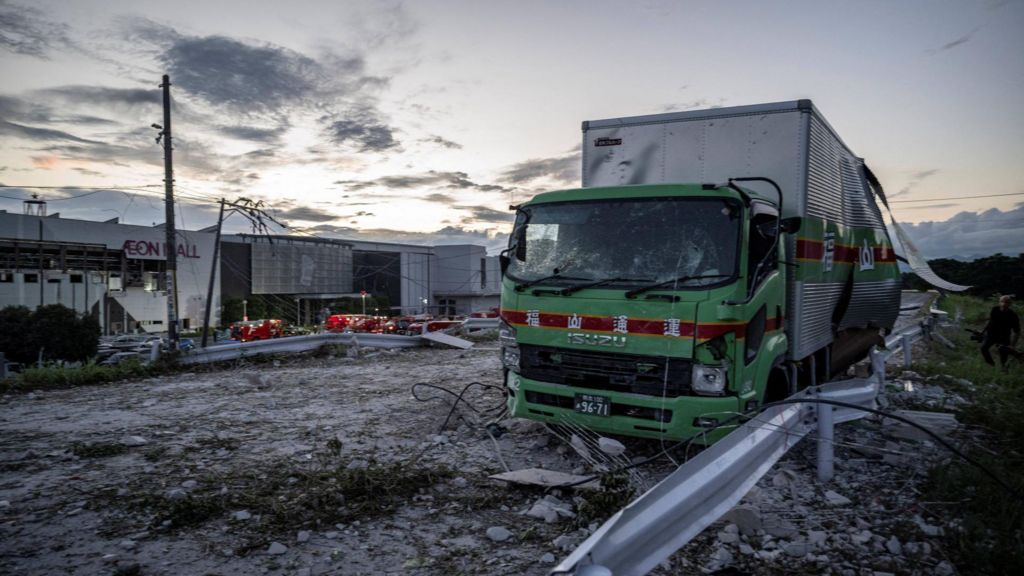
    Two sites have become the primary focus of rescue efforts: the Aeon Mall in Kashima and a paper factory in Yatsushiro City. An explosion at the Aeon Mall broke out roughly an hour after the main quake, following a partial collapse of the building’s second floor. Video footage captured thick white smoke billowing from the structure, as shoppers fled to the safety of the mall’s parking lot; large sections of the building’s exterior were blown away, exposing internal steel support beams. Aeon Mall President Akio Yoshida confirmed Wednesday that three employees were killed in the incident, with four others hospitalized, one rescued from a locked bathroom and another reported in cardiopulmonary arrest — a term Japanese authorities use for unconfirmed fatalities in preliminary reports. Three additional employees remain unaccounted for, Yoshida added, offering a formal public apology for the disaster at a Wednesday press conference. At the Yatsushiro City paper factory, rescue teams have already recovered two people showing no vital signs, with nine others still missing.

    More than 4,600 personnel have been deployed to the region to support search and rescue operations, but crews face significant additional challenges: searing summer temperatures that hit 35 degrees Celsius (95 degrees Fahrenheit) on Wednesday, raising the risk of heatstroke for both survivors trapped in rubble and first responders working in the open. Thousands of local residents have taken shelter in overcrowded evacuation centers, many of which lack sufficient cooling. To address this, Defense Minister Shinjirō Koizumi announced via social media platform X that roughly 300 air conditioning units would be airlifted to Kumamoto to be distributed across the worst-affected areas.

    Survivors described the terrifying moments when the quake hit, with many saying they had never experienced such a powerful tremor. Seventy-five-year-old Hiroko Ogata, a lifelong Yatsushiro resident who owns a local restaurant, recalled the sudden jolt that left her fearing for her life. “All of a sudden there was a big jolt, and I was surprised and scared… I have lived here for 75 years, but I have never experienced such a big quake. I thought I would die,” she told the BBC. Chantel Mohar, an American tourist visiting Kumamoto with her family, said the group received early earthquake alerts on their phones while traveling on a tour bus, before violent shaking erupted. “There was just a lot of rocking and confusion,” she told BBC Newsday.

    As rescue teams continue sifting through rubble for any sign of life, Japanese authorities are reminding residents to remain vigilant for aftershocks and to follow official guidance to stay safe as the difficult recovery effort gets underway.

  • Thousands in Spain return home but new heatwave raises wildfire fears

    Thousands in Spain return home but new heatwave raises wildfire fears

    A weeks-long wave of catastrophic wildfires has scorched vast swathes of Southern Europe, with tens of thousands of evacuees finally permitted to return to their homes in Spain this week as authorities across the Iberian Peninsula and France brace for the region’s fourth major heatwave of 2026.

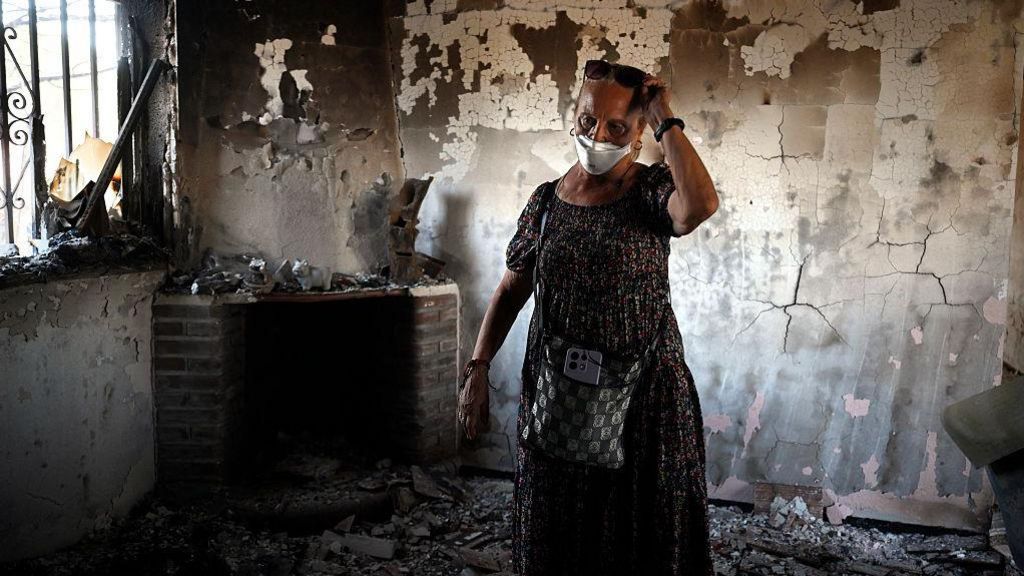
    In Spain, officials have lifted evacuation orders and access restrictions across four affected regions: Toledo, Madrid, Ávila, and Castellón. In the Madrid autonomous community alone, 24,000 displaced residents have been cleared to return to their properties, while movement restrictions have also been removed for an additional 20,000 people living in high-risk fire zones. For many residents like the woman from Navas del Rey, this marks the first time they have set foot on their property since wildfires swept through their community.

    Despite the lifting of evacuation orders for most areas, the threat of new fire outbreaks and flare-ups of existing blazes remains critically high amid the incoming heatwave. Spanish Prime Minister Pedro Sánchez has warned that the next 12 hours will be a decisive period for containing the blazes near the capital, noting that while containment efforts have progressed favorably, rising temperatures, plummeting humidity and unpredictable wind gusts create significant new risks.

    One wildfire near Vall d’Uixó, northwest of Valencia, remains completely out of control. The blaze at Burgohondo in Ávila province, already the largest recorded wildfire in Spanish history, has scorched more than 108,000 acres of land and forced 40,000 people to flee their homes. Firefighting coordinator Francisco Bolaños reported that the blaze held stable through the previous night, but officials remain on high alert for reignition amid the heat, with crews working to secure the fire’s 112-mile perimeter.

    Across the border in southwestern France, the largest wildfires in the Gironde region are currently classified as “stabilized,” but officials have warned that new flare-ups have already been recorded, and forecasted dry winds and temperatures reaching 106°F (41°C) threaten to reignite large blazes. Blandine Sarrazin, mayor of the Gironde town Le Barp, noted that two new blazes broke out just one day prior, warning that the situation is growing increasingly difficult and requiring constant hyper-vigilance from residents and crews.

    Sixteen French departments are currently under orange heatwave alerts, including the southern Landes region. French fire services have deployed specialized emergency protocols to protect critical defense and aerospace industrial sites in Gironde, including high-risk “Seveso” sites that produce hazardous materials for missiles and rocket systems. In a small moment of goodwill amid the crisis, animal rescue volunteers in the Gironde town of Le Porge successfully rescued a young roe deer trapped in fire-affected woodlands.

    More than 2,000 people displaced by Spanish fires in the Tiétar Valley were housed by volunteer groups in the southern town of Talavera de la Reina, with around 300 evacuees still sheltering there as of Wednesday morning. Local mayor José Julián Gregorio confirmed that evacuees would continue to receive the same full level of care they received at the start of the emergency.

    Tragically, authorities in the southern Spanish city of Seville confirmed this week that a woman who suffered severe burns in the earlier Los Gallardos fire in Almería has died of her injuries in hospital. The Almería fire outbreak has now claimed 14 lives, with victims including citizens from Spain, the United Kingdom, Belgium, the United States, and France. No other fatalities have been reported from the current round of fires around Madrid and Castellón.

    The wildfire crisis extends beyond Spain and France this summer. Northern Portugal’s Vila Real district is currently battling an active blaze with a one-kilometer active fire front, and civil protection crews are maintaining constant surveillance to protect a local water treatment plant and a nearby gas depot near the town of Valpaços. In Greece, new wildfires have broken out on the Aegean island of Paros and in the southern mainland town of Trifylia, adding to the strain on European firefighting resources across the Mediterranean.

  • Oscar-winning Irish singer-songwriter Glen Hansard dies in Dublin motorcycle crash

    Oscar-winning Irish singer-songwriter Glen Hansard dies in Dublin motorcycle crash

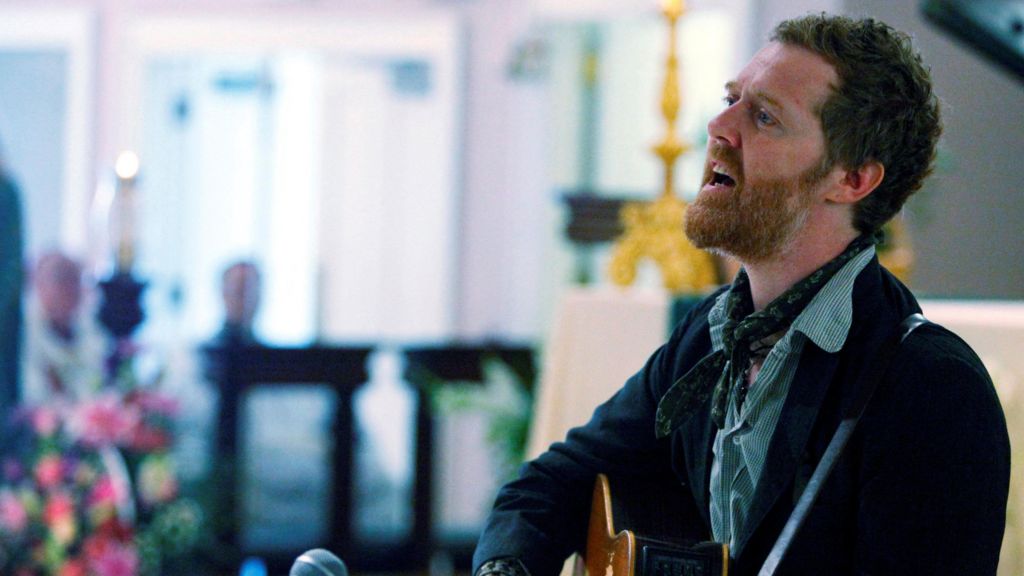
    Tributes are pouring in across Ireland and the global music community after celebrated Oscar-winning Irish singer-songwriter and actor Glen Hansard died at 56 in a single-vehicle motorcycle crash on the outskirts of Dublin, his management confirmed Wednesday. The tragedy unfolded shortly before 4:30 a.m. in Lucan, a suburban area west of the Irish capital. Ireland’s national police service confirmed that a man in his 50s, who was not publicly identified by law enforcement, received emergency medical care at the crash site but was pronounced dead a short time after the incident.

    ATC Management, Hansard’s representation team, told Irish public broadcaster RTE that the artist’s close family is left “deeply shocked and heartbroken” by the sudden, unexpected loss.

    A defining figure in Irish contemporary culture, Hansard built a decades-long career that seamlessly blended acting and original music. He first earned widespread recognition in 1991 with a role in the hit Irish film *The Commitments*, where he portrayed a member of a working-class Dublin soul band. His most iconic career milestone came in 2008, when he and collaborator Markéta Irglová took home the Academy Award for Best Original Song for *Falling Slowly* — the breakout track from the independent romantic drama *Once*, which starred the pair in the lead roles. The correction clarifies an earlier erroneous reporting that placed the Oscar win in 2007.

    Beyond his film and solo work, Hansard was a foundational force in Irish rock: he served for decades as the frontman of beloved Irish rock group The Frames, formed the acclaimed folk-rock duo The Swell Season alongside Irglová, and launched a successful solo career. His 2015 solo release *Didn’t He Ramble* earned a Grammy Award nomination for Best Folk Album the following year, in 2016.

    Hansard was also deeply committed to charitable work in his home city. For many years, he organized and led the iconic Christmas Eve charity busk outside Dublin’s Gaiety Theatre, an annual event that draws crowds of locals and visitors alike. The open-air performance brings together well-known Irish musicians to raise funds for the Dublin Simon Community, an organization that supports people experiencing homelessness in the capital. Most recently, Hansard made headlines in 2023 for a moving, crowd-pleasing performance at the funeral of The Pogues’ legendary frontman Shane MacGowan, where he performed the band’s classic hit *Fairytale of New York* alongside Irish folk singer Lisa O’Neill — a moment that spontaneously prompted mourners to dance in the church aisles.

    Irish Taoiseach Micheál Martin joined the many public figures honoring Hansard’s legacy Wednesday, saying he was “deeply saddened to learn of the passing of Glen Hansard.” In a post to the social platform X, Martin called the artist “a talented musician and actor who made a significant contribution to Ireland’s cultural landscape over many years.”

  • New UK leader Burnham vows to fix a ‘broken’ social care system

    New UK leader Burnham vows to fix a ‘broken’ social care system

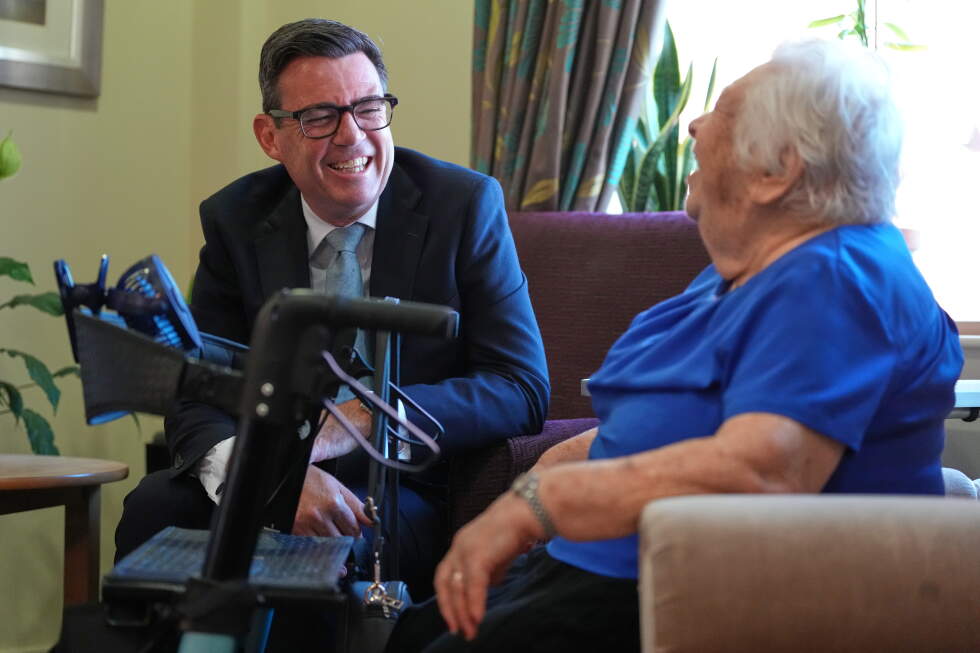
    LONDON – Just one week into his tenure as United Kingdom Prime Minister, Labour Party leader Andy Burnham has made fixing England’s long-troubled social care system his top domestic priority, promising to break a decades-long cycle of political failure that has left the sector crumbling.

    At 56, Burnham acknowledges that his generation of political leaders shares collective blame for leaving the system in a state of disrepair. Built on a combination of an overburdened public sector and profit-driven private care providers, the current setup leaves vulnerable people facing catastrophic costs, a inequity Burnham compares to the failures of the United States’ healthcare system. “It was a major dereliction of duty that we failed to deliver decent care that is affordable for both individuals and the state,” he said during a speech at a London care home this Wednesday.

    Addressing widespread public skepticism that has grown after generations of unfulfilled reform promises, Burnham pushed back against expectations of more political inaction. “You’ve probably got a feeling of déjà vu,” he told the gathered audience. “Don’t have that. This time we’re going to do it.” He went further, criticizing decades of cross-party political infighting that put partisan point-scoring above urgent public need – including admitting his own role in past failed efforts. When he served as health secretary under former Labour Prime Minister Gordon Brown in 2009, Burnham first proposed social care restructuring, but the effort never delivered lasting change. After ten years serving as mayor of Greater Manchester outside of national government, his return to Downing Street gives him a second chance to address the issue, which he says is deeply personal: his father currently lives with Alzheimer’s disease.

    “ I’m making this a test of myself,” Burnham said. “I would never forgive myself if I left without having tried.”

    To build cross-party and public consensus around reform, Burnham laid out a clear roadmap for change. His core proposal is to create a new “national care service”, a publicly aligned system that would operate alongside the iconic taxpayer-funded National Health Service (NHS), the universal free healthcare system founded after World War II. Veteran social welfare expert Louise Casey, who has led multiple high-profile public inquiries, will helm a nationwide public engagement initiative dubbed the “Big Conversation”, designed to gather input from communities, care users and workers across the country. Casey framed the process as a rare opportunity to renegotiate the social contract around care, calling it a potential “game changer” for the sector.

    Burnham has also extended invitations to leaders of all opposition parties to join cross-party talks, arguing that meaningful reform can only succeed if rival parties set aside their differences to find common ground. So far, the main opposition Conservative Party has confirmed its health spokesperson will attend, and centrist Liberal Democrat leader Ed Davey has also committed to participating. Right-wing Reform UK, which leads national opinion polls but holds only seven of 650 seats in the House of Commons, has confirmed it did not receive an invitation.

    The prime minister has openly acknowledged that the transformation will require difficult choices, and he is prepared to face short-term political unpopularity to deliver change, including potential tax increases to fund the overhaul. Beyond system restructuring, Burnham also pledged to address long-standing issues in the care workforce: he plans to raise wages, expand training, and improve working conditions for care workers, who he said currently do life-saving vital work for “poverty pay”. The government will also review two contentious core elements of the current system: the personal contribution thresholds that require many people to spend almost all their savings before qualifying for state-funded care, and the dominant role of private for-profit companies that own the majority of UK care homes.

    Social care reform has been a toxic, unresolved political issue for decades, haunting both Labour and Conservative governments alike. With an aging national population growing the demand for care every year, and the broader public health system still recovering from strains of the COVID-19 pandemic, the need for overhaul has become increasingly urgent for British policymakers.

  • Oscar-winning songwriter Glen Hansard killed in crash

    Oscar-winning songwriter Glen Hansard killed in crash

    The global music and film community is in mourning after news broke that Glen Hansard, the Oscar-winning Irish songwriter and beloved frontman of iconic rock band The Frames, has died in a tragic single-vehicle motorbike crash in his hometown of Dublin. He was 56 years old.

    Hansard, one of Ireland’s most celebrated creative talents, built an extraordinary career that stretched from street performance to the Hollywood red carpet. Born in Dublin in 1970, he cut his teeth as a young artist busking on Dublin’s city centre streets in his teens, honing the raw, heartfelt sound that would define his work for decades. His first major break in film came in 1991, when he was cast as Outspan Foster in the beloved Irish musical comedy *The Commitments*, introducing him to a global audience for the first time.

    It would be another 16 years before Hansard earned his most prestigious career honour, when he took home the Academy Award for Best Original Song for his work on the 2007 low-budget romantic musical Once. The film, which starred Hansard alongside co-writer Markéta Irglová, became a cultural phenomenon, turning its breakout track “Falling Slowly” into a modern classic and cementing Hansard’s legacy as a world-class songwriter.

    The fatal collision occurred on Lower Road in Lucan, a town located west of Dublin city. Emergency services received the first report of the crash shortly before 4:30 a.m. local time on Saturday. Ireland’s national police force has launched an appeal for any members of the public who witnessed the incident to come forward with information to assist their investigation.

    This is a developing breaking news story, and additional details are expected to be released in the coming hours as official information becomes available. Audiences can receive real-time updates on this story via the BBC News mobile app, or by following the official @BBCBreaking account on X for the latest alerts.

  • FIFA’s Infantino sets deadline for $20M offer to members in Kushner-backed World Cup investor plan

    FIFA’s Infantino sets deadline for $20M offer to members in Kushner-backed World Cup investor plan

    GENEVA — In a move that has plunged international soccer into turmoil, FIFA President Gianni Infantino has given the governing body’s 211 national member federations until September 19 to approve a groundbreaking and divisive proposal: selling a 20% stake in a newly created $20 billion FIFA subsidiary that would control the World Cup, Club World Cup and all of FIFA’s top competitions. The one-time $20 million payout promised to every approving federation is underwritten by Thrive Capital, the investment firm founded by Joshua Kushner — brother of Jared Kushner, former U.S. President Donald Trump’s son-in-law, who is listed as the anchor backer for the deal.

    In the confidential letter obtained by The Associated Press, Infantino framed the proposal as a once-in-a-generation, game-changing opportunity for FIFA’s global membership. “It is my duty and responsibility as FIFA president to present such game-changing opportunities to you, our members,” he wrote, adding that the initiative would unlock unprecedented capital to grow soccer across all member nations. If approved, the subsidiary, called FIFA Forward Enterprise, would bring on a pool of additional international investors, with global banking giant J.P. Morgan tapped to lead the fundraising process. The $20 million payout to each member would be disbursed over the four-year commercial cycle leading up to the 2030 men’s World Cup; if the plan fails, members will only receive the originally promised $10 million in funding over the same period.

    The proposal, which became public earlier this week, has triggered immediate and widespread pushback from every major regional governing body in global soccer. Europe’s UEFA, which operates the continent’s flagship competitions including the European Championship and UEFA Champions League, was the first to condemn the plan, arguing that the World Cup is not FIFA’s to sell. UEFA has already called an emergency online meeting for its 55 member federations this Thursday to coordinate a collective response.

    Concern has also spread to other continental confederations. The Confederation of North, Central America and Caribbean Association Football (CONCACAF) released a public statement Wednesday highlighting deep unease over the lack of transparent due process in the plan’s development. The Asian Football Confederation, based in Kuala Lumpur, added its voice to criticism, saying it was disappointed that such a high-stakes proposal became public before member confederations had the chance to review and debate the details internally.

    Regional governing bodies warn that the restructuring would create direct competition for their own elite competitions, as FIFA would likely increase the frequency of men’s and women’s World Cups and expanded Club World Cups to boost revenue for private investors, undercutting the value and audience share of existing continental events.

    Opposition has also extended to the highest levels of British politics, where the country is currently lined up to host the 2035 Women’s World Cup in a joint bid by England, Scotland, Wales and Ireland — a bid FIFA is expected to formally approve at a November virtual meeting. Andy Burnham, a lifelong soccer fan and prominent British political leader, publicly rejected the plan in an Instagram video message, saying “Football does not belong to investors. Once you have sold a piece of (the World Cup), you have sold out. Football belongs to the fans. It always has, and it always will.”

    This is not the first time Infantino has pushed an ambitious, controversial restructuring initiative during his 11-year tenure as FIFA president. Critics have long noted that Infantino has increasingly advanced major changes to global soccer without meaningful consultation with key stakeholders. Past proposals have included a FIFA Peace Prize and a plan to shift the men’s World Cup from a four-year cycle to a biennial event, both of which faced widespread pushback. This new plan also echoes the 2021 European Super League controversy, when widespread British political opposition — including threats of legislation from then-Prime Minister Boris Johnson — helped collapse the breakaway competition that threatened UEFA’s Champions League, a project that Infantino had quietly supported behind the scenes.

  • Americans watch prices rise amid tariffs and conflict with Iran ahead of midterm elections this fall

    Americans watch prices rise amid tariffs and conflict with Iran ahead of midterm elections this fall

    As the United States gears up for its 2026 fall midterm congressional elections, skyrocketing everyday costs have emerged as the top concern driving voter sentiment, with new sweeping tariffs and ongoing geopolitical instability tied to the Iran conflict fueling price hikes across food, energy, housing and consumer goods.

    Ahead of the high-stakes vote, which comes two years into the current presidential term and serves as a critical public referendum on the sitting administration’s policy agenda, widespread voter anxiety over the cost of living has upended campaign messaging from both major US political parties. Multiple recent independent polls confirm that economic hardship is shaping up as the defining issue for voters heading to the polls in November.

    A July 16 Washington Post-IPSOS survey of registered voters found that a clear majority – 54% of respondents – identified the economy and persistent high inflation as the most important factors that will guide their congressional vote this cycle. When it comes to trust in economic governance, however, voters are deeply divided: a separate Pew Research Center poll conducted July 23 shows just a one-point gap between parties, with 37% of respondents viewing Democrats as holding better economic policies, compared to 36% favoring Republicans.

    This November’s election will put all 435 seats in the US House of Representatives and 35 of the 100 Senate seats up for grabs, alongside dozens of statewide contests for governor and hundreds of local government races. While the presidency is not on the ballot, political analysts universally frame the results as a key barometer of public approval for the current White House agenda.

    Last week, the Trump administration rolled out new Section 301 tariffs ranging from 10% to 12.5% on imports from more than 60 global trade partners, set to take effect July 24. The levies are imposed on the grounds that these nations have not done enough to stop forced labor in supply chains, with China set to face the full 12.5% additional import rate, and at least 17 other trading partners facing a 10% duty. This new round of tariffs replaces temporary 10% levies first enacted in February, which expired after the U.S. Supreme Court struck down earlier tariffs implemented under the 1977 International Emergency Economic Powers Act.

    Data from the Office of the United States Trade Representative shows that U.S. goods imports from China fell 29.7% year-over-year to $308.4 billion in 2025, following years of escalating trade tensions between the two world powers.

    Speaking on the economy during a campaign stop with autoworkers in Michigan this week, President Donald Trump defended his administration’s record, touting what he called an extraordinary economic turnaround over the past 18 months. “We had the single greatest year we’ve ever had as a country. We’re not going to let these people destroy it,” Trump said at the General Motors Proving Ground Monday. “In 18 months, we’ve turned this country completely around,” he added, noting he had a plan to bring down rising fuel prices in the coming months despite ongoing geopolitical disruption.

    Democrats have hammered the administration over its trade policies, arguing that the new round of tariffs is directly passing higher costs onto American consumers and making daily life unaffordable for working- and middle-class households. That narrative resonates with many ordinary Americans already stretching their budgets to cover basic needs.

    Riche Jackson, a 60-year-old New Yorker living with diabetes, told China Daily that he now carefully curates every purchase to stay within budget, only shopping at discount retailers to offset rising prices. “Everything is more expensive. I have diabetes, so I have to choose what I eat carefully,” Jackson said. “I do have insurance though, so that covers my medical. I find food, stuff for the house, anything I buy costs more now than a few years back. I think that the tariffs are making things cost more. So many stores are expensive, I go to the ones that charge less to make sure I stay in my budget.”

    Yusuf Scott, a 43-year-old Brooklyn resident who holds a full-time 9-to-5 job plus a side security gig to cover expenses, said his rent alone jumped by $500 when he renewed his lease earlier this year. Even with two incomes, Scott says many of his neighbors cannot keep up with rising costs, a trend he argues has fueled an increase in petty crime and shoplifting. “I think the impact of the tariffs are very bad because it’s increasing the crime. People steal, they’re shoplifting because they can’t afford some things. I think that is messed up and I think they [the government] need to do something about it. Talk to other countries. Lower them or get rid of them,” Scott said. He added that a one-bedroom apartment in New York City now rents for an average of $2,500, putting stable housing out of reach for many low-income residents.

    Official inflation data from the U.S. Bureau of Labor Statistics, released July 17, confirms persistent upward pressure on consumer prices. The seasonally adjusted Consumer Price Index for All Urban Consumers fell 0.4% in June, but rose 3.5% over the 12-month period ending in June. Housing costs, the single largest expense for most American households, have climbed 3.3% over the past year.

    Beyond tariffs, rising gasoline prices have compounded financial strain for drivers across the country, driven by ongoing conflict between the U.S. and Iran and persistent shipping disruptions in the Strait of Hormuz, the strategic waterway that carries roughly 20% of the world’s global oil supply. As of July 29, the average national price for a gallon of regular gasoline stood at $4.10, according to American Automobile Association data.

    Geopolitical tensions with Iran have see-sawed for months: in June, the two sides signed a memorandum of understanding to pause military hostilities and launch a 60-day negotiating window, bringing a temporary lull in conflict. Still, oil markets remain volatile, pushing up fuel prices for consumers. Trump blamed Iran for the price hikes this week, saying prices rose because “they didn’t behave,” but reiterated he had a plan to bring costs down quickly.

    For many retirees and working Americans, the cumulative effect of rising prices across every category of spending has forced difficult trade-offs. Charles Patterson, 68, a New York resident, told China Daily that he has had to pick up extra work to cover rising costs for food and clothing. “Prices are ridiculous. It’s just going up more and more. I’m spending more money on clothes and food. I’m sick of the tariffs raising prices. I get extra money anyhow I can. You gotta work more. We’re all doing the best we can,” Patterson said.

  • French DJ ​and electropop ‌musician Kavinsky dies aged 50

    French DJ ​and electropop ‌musician Kavinsky dies aged 50

    The global music community is in mourning following the news that celebrated French electro-house and synthwave pioneer Kavinsky, whose legal name was Vincent Belorgey, has been found dead at his Paris residence at the age of 50.

    A self-taught pianist born just outside Paris in Seine-Saint-Denis, Belorgey launched his music career in the early 2000s, cutting his teeth as an opening act for legendary French electronic duo Daft Punk. He would later rise to cult fame under his artistic persona: Kavinsky, a red-eyed zombie DJ that became one of the most recognizable alter egos in modern electronic music. As part of the second wave of France’s world-famous “French Touch” electronic movement, he stood alongside influential peers including Justice and Sebastian, carving out a unique niche that blended retro 1980s-inspired synth soundscapes with modern dance production.

    His signature 2010 track *Nightcall* remains his most iconic work. First earning a slow-building cult following after it was selected to score the opening credits of the acclaimed Ryan Gosling-starring neo-noir crime film *Drive*, the track saw a massive resurgence in global popularity earlier this year. After Kavinsky performed a special updated version of the hit during the 2024 Paris Olympic Games closing ceremony—with guest vocals from Belgian singer Angèle and a joint performance with French band Phoenix—the track broke records, becoming the most single-day Shazamed song in the history of the popular music identification app. *Nightcall* was originally co-produced with Daft Punk’s Guy-Manuel de Homem-Christo, mixed by Sebastian, and featured lead vocals from Brazilian artist Lovefoxxx on its original recording.

    Following the news of his passing, top French officials have led an outpouring of tributes to the beloved musician. French President Emmanuel Macron honored Kavinsky in a Facebook post, calling him “a source of French pride forever.” France’s Culture Minister Catherine Pégard also shared her condolences on the social platform X, writing that “with the sudden passing of Kavinsky, France has lost one of its most unique voices.” She added, “From the film *Drive* to the Paris Olympics, the whole world was moved by *Nightcall*. Both danceable and nostalgic, his music will continue to transcend generations and borders.”

    As of Tuesday, official investigations into the exact cause of Belorgey’s death are ongoing. Multiple French media outlets, including leading newspaper Le Figaro, and global newswire Reuters have confirmed that the Paris prosecutor’s office has confirmed he was found dead at his Paris home. First responders reported no suspicious circumstances at the scene, but prosecutors have opened a formal investigation to confirm the cause of death. Le Figaro also reported that Belorgey had complained of persistent headaches for several days before his death, leading authorities to preliminary suspect a stroke as a potential cause. The BBC has confirmed it has reached out to Kavinsky’s representatives for additional comment and confirmation.