博客

  • Remember the two-state solution? Trump doesn’t

    Remember the two-state solution? Trump doesn’t

    As the world’s diplomatic and media attention remains locked on high-profile Middle East conflicts in Gaza, direct Israeli-Iranian hostilities, and border clashes in Lebanon, Israel’s ultra-nationalist right-wing government is accelerating a 50-year campaign to consolidate full control over the occupied West Bank. What has gone largely unreported is a coordinated, state-supported push that leverages armed settler militias to displace Palestinian communities, seize land, and systematically eliminate the conditions required to establish a sovereign Palestinian state alongside Israel – the long-proposed two-state framework intended to end more than a century of Israeli-Palestinian conflict.

    Opposition to the two-state solution has been a defining pillar of Prime Minister Benjamin Netanyahu’s 19-year political career, spanning seven non-consecutive terms as Israel’s longest-serving leader. His current coalition, led by his right-wing Likud Party, has doubled down on this agenda amid a global distraction from West Bank developments, independent observers note.

    The Armed Conflict Location & Event Data Project, a conflict monitoring group affiliated with the University of Texas, highlighted this underreported crisis in a recent analysis: “While much of the world’s attention is fixated on Israel’s ongoing conflict in the Gaza Strip and its unprecedented direct confrontation with Iran, another front has been quietly boiling over. Violence is surging in the West Bank.”

    Even Western allies that publicly endorse the two-state solution, including the United States and major European powers, have remained largely passive in the face of Netanyahu’s escalating offensive, turning a blind eye to actions that have reduced the prospect of Palestinian statehood from a actionable policy to a distant, unfulfilled aspiration. This silence held during Netanyahu’s July visit to Washington D.C. for talks with U.S. President Donald Trump, where West Bank developments were not included on the official agenda.

    According to a senior White House official, the meeting centered exclusively on strategic alignment around the conflict with Iran. The two leaders hold divergent goals: Trump seeks an immediate de-escalation and end to hostilities, while Netanyahu pushes for a decisive military victory over Iran and its ally Hezbollah, the Iranian-backed militia based in Lebanon. Netanyahu himself chose not to raise the topic of West Bank expansion during the negotiations.

    Iran has also shown little strategic interest in the West Bank, regional analysts confirm. The territory does not rank among Tehran’s core regional priorities, and it is not included in Iran’s so-called Axis of Resistance against Israel – a bloc that includes Lebanon’s Hezbollah, Yemen’s Houthi movement, and Gaza’s Hamas, whose October 7, 2023 attack on Israel triggered the current wave of interconnected Middle Eastern wars. Iran has only issued cursory verbal condemnation of Israeli actions in the West Bank, with its Foreign Ministry releasing a generic statement July 15 calling for international intervention to halt escalating attacks and hold Israeli leaders accountable.

    A Western intelligence analyst explained Iran’s limited engagement: “Iran operates within a strict strategic hierarchy. The Lebanese arena, for instance, is viewed as far more important than the Palestinians. Hamas is somewhat down the list of concerns and, anyway, was so battered by Israel that it is beyond use or help.”

    This combination of global distraction, Western silence, and Iranian indifference has left the West Bank a geopolitical orphan, and Netanyahu has moved quickly to exploit the gap. As Abed Aboul Shhadeh, a commentator for London-based Qatar-based outlet *The New Arab*, put it: “While the world is focused on the war in Iran, Israel is working at full speed to create a new reality on the ground.”

    On the ground, the campaign to displace Palestinian communities takes multiple coordinated forms, with most attacks led by militantly anti-Arab Israeli settlers who operate with explicit protection from the Israeli military, which stands by to defend the marauding groups rather than intervene to stop violence against Palestinians. Settlement expansion is a core pillar of the effort: initiated by Likud Prime Minister Menachem Begin in 1977, it has become a signature policy of Netanyahu’s tenure. When he first took office in 1996, just 140,000 Israelis lived in West Bank settlements; today that population has grown to more than 500,000 alongside 3.4 million Palestinian residents. Since late 2023, more than half of the West Bank’s 360 unofficial settler outposts – basic, makeshift encampments that often serve as the first step toward formal settlement – have been built across the territory, alongside 147 fully constructed, officially recognized Israeli settlements.

    Systematic home demolitions and forced expulsions are another key tactic. Israeli human rights researchers document that demolitions and evictions have accelerated sharply across the territory: in the first six months of 2026 alone, Israeli forces demolished 740 Palestinian homes, displacing 1,923 residents including 431 women and 546 children. Approximately 30,000 refugees from previous conflicts have already been forcibly expelled from three United Nations-run refugee camps in Jenin and the Tulkarem area, with military officials barring displaced residents from returning to their homes.

    A recent operation in the town of Nahalin, near Bethlehem, illustrates the pattern. Before dawn on July 20, Israeli troops entered the town and used bulldozers to raze four homes, including one owned by the town’s mayor. Local residents responded by throwing stones, and three Palestinians were arrested during clashes. A week later, police delivered evacuation orders for 14 additional homes, offering no formal explanation. While most demolitions are officially justified by claims the structures were built without Israeli construction permits, observers note such permits are almost never granted to Palestinian applicants. Israeli officials have publicly confirmed the end goal of the Nahalin operation is to empty the town of its Palestinian population to connect three existing Israeli settlements, as part of the officially named Gush Etzion Contiguity Project.

    Settler vigilantes also rely on widespread intimidation, property destruction, and violence to force Palestinian communities off their land. Amnesty International confirms that at least 50 distinct Palestinian herding communities have already been cut off from their traditional grazing lands and forced to relocate. A high-profile current target is the small West Bank community of Khan al-Ahmar, where Israeli authorities plan to displace a community of Bedouin shepherd families to clear the way for new residential development between Jerusalem and the large Israeli settlement of Ma’aleh Adumim. While the Israeli government ordered an “as soon as possible” evacuation earlier this spring, no formal eviction has been carried out yet, following formal objections from the Office of the United Nations High Commissioner for Human Rights, which demanded Israel “cease its measures to forcibly displace the Khan Al Ahmar community … and stop its settlement expansion plans there.” In the interim, settlers have established an encampment near the village, where they have stoned local shepherds, scattered their livestock, and cut the water pipelines supplying the community.

    In the wake of the October 7, 2023 Hamas attack, the Israeli government distributed thousands of firearms to newly formed civilian settler security squads across the West Bank, a move that international conflict monitors say has unleashed an unprecedented wave of vigilante violence. “Israeli settler violence is at an all-time high,” the International Crisis Group, a leading independent conflict monitoring organization, reported. “The aggressive acts, often perpetrated by gangs of armed young men, range from verbal intimidation and harassment to theft of livestock to assaults on Palestinians, in which the settlers uproot farmers’ olive trees and deny them access to land and water.”

    Systematic agricultural vandalism has reshaped large swathes of the West Bank’s rural landscape. Thousands of ancient olive trees, which take decades to mature and form the primary source of income for tens of thousands of Palestinian households, have been cut down or uprooted by settler groups. During the summer dry season, settlers regularly set fire to standing wheat crops and olive groves, spray herbicides on agricultural land to poison crops and soil, and poison Palestinian livestock. One viral video showing a settler beating an elderly sheep dog to death sparked outrage from global animal rights advocates who had previously been unaware of systemic violence in the territory.

    Equally damaging is the deliberate contamination and blockade of Palestinian water resources: settlers regularly dump poison, animal carcasses, and fuel into Palestinian wells, cisterns and natural springs, and block well entrances with cement. They also erect fencing to bar shepherds from accessing communal grazing land, with thousands of acres of communal land seized under the pretext of military necessity.

    This sustained campaign of violence has forced many Palestinian farmers and herders to abandon their land out of fear, consolidating Israeli control over vast swathes of the West Bank. B’Tselem, Israel’s leading independent human rights organization, explained the explicit strategic goal of the campaign: the Netanyahu government endorses these actions to force dispersed rural Palestinian communities to abandon their land and relocate to overcrowded urban enclaves that are easier for Israeli authorities to control. “The regime fragments Palestinian space, dispossesses Palestinians of their land and relegates them to living in small, over-populated enclaves,” the group notes.

    Even ahead of Netanyahu’s Washington meeting with Trump, Israeli officials made clear there would be no pause in the West Bank offensive, announcing that military forces would soon carry out another forced evacuation of a refugee camp in an as-yet unnamed West Bank town, mirroring recent operations in Jenin and Tulkarem.


  • Russia charges Telegram founder Durov with facilitating terrorism

    Russia charges Telegram founder Durov with facilitating terrorism

    In a sharp escalation of tensions between Russian authorities and the globally popular encrypted messaging platform Telegram, Moscow has brought formal terrorism facilitation charges against founder Pavel Durov, alleging the service has been exploited by Ukrainian intelligence for militant recruitment.

    Russia’s primary domestic security agency, the Federal Security Service (FSB), announced the accusations this week, claiming Telegram has been systematically used to plan, organize and carry out sabotage and terrorist operations across Russian territory. According to the FSB’s official statement, platform administrators have repeatedly refused to take down channels, group chats and automated bots that Ukrainian secret services operate to coordinate these activities.

    An international arrest warrant has now been issued for Durov, a Russian-born entrepreneur who has lived in self-imposed exile outside Russia for a decade. The 41-year-old billionaire, who holds citizenship in France and the United Arab Emirates, has not yet issued a direct public response to the new charges. Minutes after the Russian announcement, however, Telegram’s official account on the social platform X shared a viral image of Durov displaying an offensive middle finger, a clear rebuke to Moscow’s actions. Durov has long maintained that Russian authorities regularly fabricate justifications to crack down on his platform, framing these efforts as attempts to erode digital freedom for Russian citizens.

    Telegram has amassed a massive user base in Russia, with tens of millions of daily active users on the platform. It also boasts widespread popularity in neighboring Ukraine, making it a critical communications tool on both sides of the ongoing conflict. For years, Russian regulators have steadily restricted access to Telegram as part of a broader government crackdown on unregulated online speech and digital independence, tightening controls following the full-scale invasion of Ukraine in 2022.

    Durov’s break with Moscow dates back to 2014, when he refused to comply with Kremlin demands to shut down opposition-aligned communities on VKontakte, the successful Russian social network he founded earlier that was widely nicknamed “Russia’s Facebook.” After the standoff, he surrendered his stake in the company and left Russia permanently, never to return.

    Today, Telegram counts roughly 950 million monthly active users across the globe, building its brand around a core commitment to user privacy that sets it apart from many other large tech and social media companies. This positioning has earned it a loyal user base, but it has also drawn consistent criticism from global regulators who argue the platform’s lax content moderation policies allow illegal activity to proliferate. Durov and Telegram have repeatedly pushed back against these claims, defending their approach to moderation as balanced and rights-respecting.

    The new charges from Russia are not the first legal trouble Durov has faced in recent years. In 2024, French authorities arrested Durov and opened a formal investigation into allegations that he failed to implement adequate content moderation systems to prevent the spread of criminal activity on Telegram. He was released to return to his residence after several months in custody, but the investigation remains ongoing.

    As of this report, it remains uncertain whether any other countries will honor Russia’s international arrest warrant for Durov, given deep geopolitical divides between Moscow and much of the Western and Gulf diplomatic blocs.

  • Ukraine says it hit a major Russian oil refinery, hours after Zelenskyy’s meeting with Trump

    Ukraine says it hit a major Russian oil refinery, hours after Zelenskyy’s meeting with Trump

    KYIV, Ukraine – Fresh off a high-stakes meeting with U.S. President Donald Trump in Washington D.C., Ukraine has launched another long-range deep strike targeting one of Russia’s largest oil processing facilities, ramping up coordinated pressure across economic, military, and diplomatic fronts more than four years into Russia’s full-scale invasion of the country.

    Overnight drone strikes ignited a blaze at the Ryazan oil refinery, located roughly 400 kilometers from the Ukrainian border, Ukraine’s General Staff confirmed Wednesday. The facility boasts an annual processing capacity of 17 million tons of crude oil, turning it into gasoline, diesel, jet fuel, and a range of critical petroleum products for Russia’s domestic and military use. Regional Russian governor Pavel Malkov confirmed that six people were hospitalized as a result of the attack, noting debris from downed drones sparked blazes at unspecified industrial sites in the area.

    This strike is part of a near-daily campaign of long-range attacks using Ukraine’s domestically developed drone and missile technology that has systematically damaged Russian energy infrastructure. The sustained campaign has contributed to growing fuel shortages across Russia, a development that has increased political embarrassment for the Kremlin amid its stalled invasion.

    The attack came just hours after President Volodymyr Zelenskyy closed out his Washington visit, where he secured a new opening for expanded U.S. support for Kyiv’s war effort. Zelenskyy had met with Trump behind closed doors on Tuesday, with both leaders framing the discussion as productive. Trump called the meeting a “Great Honor” in a post on his Truth Social platform, while Zelenskyy confirmed that a wide range of critical topics were addressed and the talks “went very well.”

    Prior to the meeting, Trump had signaled reluctance to continue U.S. military support for Ukraine at the start of his second term, a stance that sparked widespread fears that Kyiv and European allies would be forced to confront Russian aggression without Washington’s backing. But Ukraine’s recent string of high-profile military successes, particularly its innovative use of long-range drones to disrupt Russian supply lines and infrastructure, has helped rebuild U.S. goodwill for Kyiv’s cause.

    During his Washington visit, Zelenskyy also held talks with more than 60 bipartisan U.S. senators as Ukraine pushes for tougher economic sanctions on Russia. He met separately with executives from defense giant Lockheed Martin, just days after hosting a delegation from weapons manufacturer Raytheon in Kyiv. The two American firms are primary suppliers of the advanced weaponry Ukraine relies on, including Patriot air defense systems, and Zelenskyy confirmed that Kyiv is negotiating joint production agreements and technology transfers to build these critical systems domestically. Earlier this month, Trump announced he would approve manufacturing licenses for Ukraine to produce its own Patriots to counter Russia’s frequent ballistic missile attacks.

    Ukraine’s development of battle-tested, cutting-edge drone technology has drawn international praise from defense officials. Its rapid innovation in unmanned systems has allowed the smaller Ukrainian military to pin down Russia’s larger conventional force along the front lines and disrupt Russian supply chains by striking targets deep in Russian rear areas. “From reconnaissance and logistics to precision strikes, Ukraine has shown the world how unmanned systems can give smaller forces a decisive edge,” U.S. Ambassador to NATO Matthew Whitaker said during a visit to Kyiv earlier this week. Ukraine has also offered to share its drone expertise with allied nations, further boosting its international standing.

    The Ryazan refinery strike was not the only Ukrainian offensive action overnight. Ukraine’s General Staff also confirmed strikes on a Russian naval base in the Black Sea, a radar station in Russia’s border Bryansk region, a enemy drone launch site, and a key road bridge in the occupied eastern Donetsk region of Ukraine. For its part, Russia’s Defense Ministry claimed its air defense systems intercepted and downed 295 Ukrainian drones overnight across multiple Russian regions and occupied Crimea.

    Despite a year of diplomatic efforts by the Trump administration to broker a ceasefire, prospects for a negotiated end to the conflict remain remote. However, a senior U.S. official speaking on background confirmed that Trump’s top diplomatic envoys Steve Witkoff and Jared Kushner will travel to Kyiv for further talks in the coming weeks.

    The new commander-in-chief of Ukraine’s armed forces, Maj. Gen. Mykhailo Drapatyi, who was appointed last week as part of a government leadership reshuffle, held his first call Wednesday with Gen. Alexus G. Grynkewich, Supreme Allied Commander Europe and head of U.S. European Command. Drapatyi outlined his strategic vision for Ukrainian victory, saying: “At this stage of the war, we must strengthen operations across multiple domains, prevent enemy infiltration into our defensive lines, and expand both long-range and medium-range precision strikes against the enemy.”

    Russian attacks across Ukraine continued alongside Kyiv’s offensive operations Wednesday. In southern Ukraine’s Kherson region, a 67-year-old civilian was killed in a Russian airstrike, and three more men were wounded by a Russian drone strike on a residential neighborhood of Kherson city, regional military governor Oleksandr Prokudin said. Russian glide bombs hit the northeastern city of Kharkiv and 17 other settlements in Kharkiv region over the previous 24 hours, wounding 11 people, regional head Oleh Syniehubov added.

  • Melbourne man loses legal fight for permanent WFH arrangement

    Melbourne man loses legal fight for permanent WFH arrangement

    A Melbourne-based dispute resolution specialist has lost his legal bid for a permanent full-time work-from-home arrangement, brought forward to accommodate ongoing care for his sick child, after Australia’s Fair Work Commission ruled his employer’s rejection was lawful.

    Jonathan Robinson serves as a dispute resolution expert at the Australian Financial Complaints Authority (AFCA), where his core responsibilities center on reviewing and settling insurance claims valued up to $15,000. In September 2024, he submitted a formal request to work remotely on a permanent basis, citing the need for consistent, flexible care arrangements to support his child’s long-term health needs.

    His request was ultimately turned down under AFCA’s official return-to-office policy, which requires all non-frontline staff to attend their physical workplace for a minimum of two days each week. In a formal email responding to Robinson’s application, AFCA management outlined that a full-time remote arrangement would hinder his ability to develop in-person professional connections, collaborate openly with colleagues, and onboard new team members effectively. The agency emphasized that in-office presence is a core requirement to foster organic knowledge sharing and maintain strong team cohesion across the organization.

    Rather than an outright denial of all flexibility, AFCA offered a compromise: a phased return to in-office work that would ramp up from one day every two weeks to three days weekly, with built-in flexibility to accommodate school drop-offs and medical appointments for Robinson’s child.

    The case landed before Fair Work Commission Deputy President Andrew Bell, who acknowledged that Robinson’s personal circumstances and motivation for the request were entirely genuine. Even so, Bell ruled that AFCA’s refusal to grant full-time remote status was rooted in reasonable business considerations. He further found that the agency’s two-day in-office mandate was neither arbitrary nor capricious in its application.

    Bell noted in his ruling that large segments of the global and national workforce—particularly those in blue-collar roles—have no access to remote work options at all, even for limited periods. “Even for other employees for whom many tasks can be performed remotely, a requirement for some in-person attendance at work has long been recognised as a legitimate business need in many (although not all) businesses,” he stated in his final decision.

    The ruling comes amid ongoing global debate post-pandemic over the balance between employer demands for in-office collaboration and employee needs for flexible work arrangements to meet caregiving responsibilities, highlighting the ongoing tensions between personal life obligations and institutional workplace policies in Australia’s modern labor market.

  • CCTV captures wild moment two children escape from Melbourne kindergarten, skip merrily down busy road in Fitzroy North

    CCTV captures wild moment two children escape from Melbourne kindergarten, skip merrily down busy road in Fitzroy North

    On a recent Monday morning just after 11 a.m., surveillance cameras captured an alarming yet unexpectedly lighthearted incident in the inner-Melbourne suburb of Fitzroy North: two young kindergarten students slipped through a gap in their facility’s perimeter fence and wandered unsupervised onto St Georges Road, a busy thoroughfare in the area.

    Passersby spotted the pair gleefully skipping along the roadside, confused by the sight of young children out alone with no caregiver in sight. Staff at the nearby Isabel Henderson Kindergarten only realized their students were missing after a member of the public contacted the facility, and quickly launched an urgent search for the two children.

    The incident ended without injury, however: one of the children’s parents alerted the kindergarten after the pair made their own way home, where they had already settled in to watch the animated film *KPop Demon Hunters*. Local law enforcement was notified shortly after the children were located, and authorities confirmed neither toddler suffered any harm during their unplanned outing.

    In the wake of the incident, two separate investigations have been launched to examine how the escape was able to occur. The Victorian Early Childhood Regulatory Authority, which oversees early childhood education and care services across the state, confirmed it has launched a formal probe into the incident. A spokesperson for the regulator emphasized that child safety is their top priority, noting that parents are entitled to expect constant, active supervision of their children while they are in care. “We won’t hesitate to take strong action to protect the safety, rights and best interests of children,” the spokesperson said, adding that no further comment would be provided while the investigation remains active.

    Kindergarten director Anna Tibb told local outlet *The Age* that the facility has also launched its own internal investigation, and is fully cooperating with regulatory authorities. She described the incident as devastating for both the children’s families and the kindergarten staff, noting that the center prioritizes transparency and takes all safety breaches extremely seriously.

  • Spain returns wildfire evacuees as France braces for worsening weather

    Spain returns wildfire evacuees as France braces for worsening weather

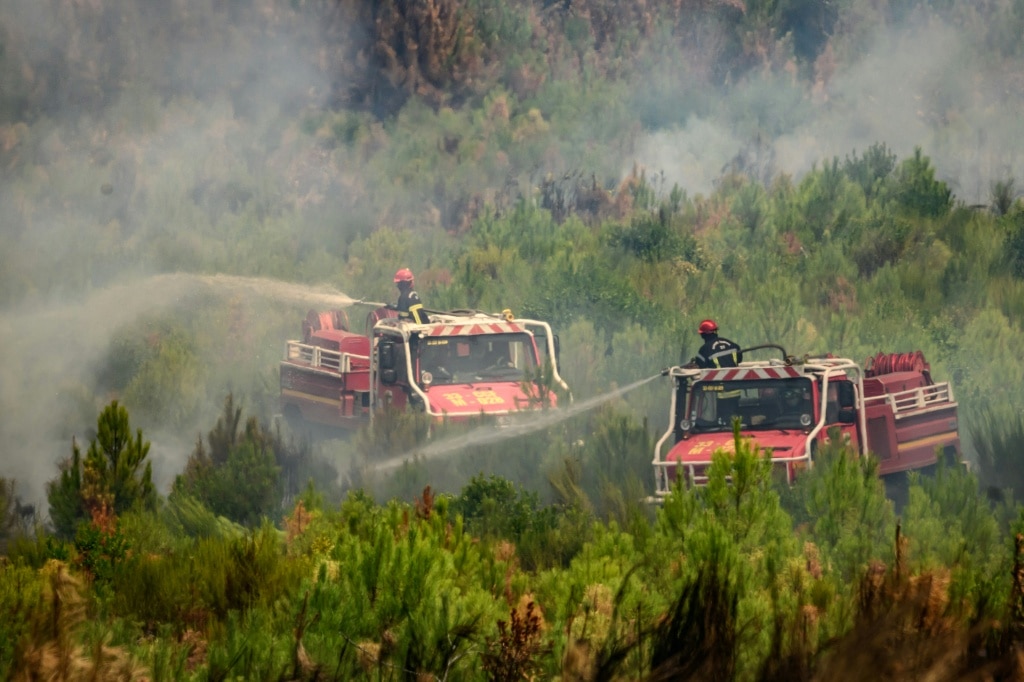
    Across Western and Southern Europe, nations are navigating a brutal season of unprecedented wildfires, driven by record-breaking heatwaves and long-term human-induced climate change. While thousands of displaced residents in Spain are finally heading back to their homes after days of fleeing raging blazes, French emergency crews are bracing for deteriorating weather conditions that could reignite already stubborn fires.

    Over the past week, neighboring Spain and France have faced some of the most destructive forest fires recorded in modern history. Vast swathes of forest and scrubland have been reduced to ash, forcing more than 40,000 people across both nations to evacuate their homes at short notice.

    In Spain, the most intense fire activity has been concentrated west of the capital Madrid. By late Tuesday, regional and national authorities lifted evacuation orders for more than a dozen affected municipalities, allowing residents to return. In total, 24,000 evacuees have been cleared to return to their properties, with a further 20,000 released from mandatory confinement orders across the Madrid region, according to Francisco Martin Aguirre, the central government’s delegate to the Madrid region, who shared the update on social media platform X. Similar repatriation steps have also been implemented in eastern Spain’s Valencia region, another area hit hard by recent blazes.

    For returning residents, the homecoming brought a quiet sense of relief after days of displacement. “I’m happy — I couldn’t wait to come home and have my coffee and breakfast,” said Maria Jesus Perez Blanca, a 70-something resident who was among the first returnees to visit local cafes in Aldea del Fresno, a small town west of Madrid, on Wednesday morning. Her daughter Susana Barrul, a 39-year-old housewife, echoed the sentiment, saying she was eager to return to the simple, familiar daily routine she had missed: “getting up in the morning, having coffee, going shopping, coming home, and cooking.”

    Improved overnight weather conditions have allowed fire crews to make significant progress, lowering fire intensity and stabilizing fire perimeters across Spain, according to the central government’s Madrid delegate office. Spanish Interior Minister Fernando Grande-Marlaska told reporters Tuesday that firefighters had largely contained active blazes, with a goal to fully stabilize and extinguish all remaining flames by Wednesday if conditions allow. Prime Minister Pedro Sanchez confirmed Wednesday that containment efforts for the major Madrid-area blaze were progressing “favourably”, adding that the next 12 hours would be decisive for cementing the gains made by civil protection teams.

    Across the border in France, the Gironde region, located west of the iconic winemaking capital Bordeaux, has also seen a second consecutive calm night, with the massive regional blaze currently holding stable. But authorities are warning that conditions are set to worsen Wednesday, as the fourth major heatwave of an already sweltering European summer settles over the region. The Gironde and neighboring Landes departments have been placed under orange-level extreme heat warnings starting at midday, with forecasts predicting inland temperatures as high as 41°C, and 38°C on the Atlantic coast.

    Emergency crews are particularly concerned that strengthening westerly winds, forecast to arrive by early afternoon with gusts between 30 and 45 km/h, combined with plummeting humidity, could fan smoldering embers and spark new flare-ups across fire perimeters. “Wednesday will be an important day that we will be watching very closely, given the extreme temperatures we are going to have,” said Gironde fire chief Lieutenant Colonel Eric Pitault on Tuesday. Despite the looming risks, authorities have cleared 57,000 residents evacuated from three towns near Bordeaux last weekend to return to their homes starting Wednesday.

    Local volunteers helping with fire response say the stakes remain high for permanent residents. “We fear today,” said Jeremy Presi, a local business owner who has been volunteering at a water refilling station for firefighters. “The tourists can get in their cars and get out of here. Here, it’s our home.”

    The wave of wildfires across Europe is not limited to the Iberian Peninsula and southwestern France. On Wednesday, Greek firefighters were battling a fast-moving blaze on the Aegean island of Paros, where strong winds have been fanning flames. The Greek fire service has deployed two fixed-wing fire aircraft, five helicopters, and roughly 100 ground crew to contain the blaze.

    Climate scientists have long linked this year’s string of extreme heatwaves and widespread drought across Europe to human-caused climate change. The prolonged extreme heat has dried out vegetation that grew unusually lush during wet winter and spring conditions, creating ideal tinderbox conditions for wildfires to spread rapidly. According to data from the European Forest Fire Information System, Spain has already seen 207,000 hectares of land burn between January and July 2023 — one of the largest areas recorded for the period in modern records. In France, more than 92,000 hectares have burned already this year, the highest total recorded in 20 years of record-keeping. The European Union has warned that fire-prone conditions are expected to spread further into central Europe over the coming days.

  • Chinese envoy calls for dialogue to end Ukraine crisis

    Chinese envoy calls for dialogue to end Ukraine crisis

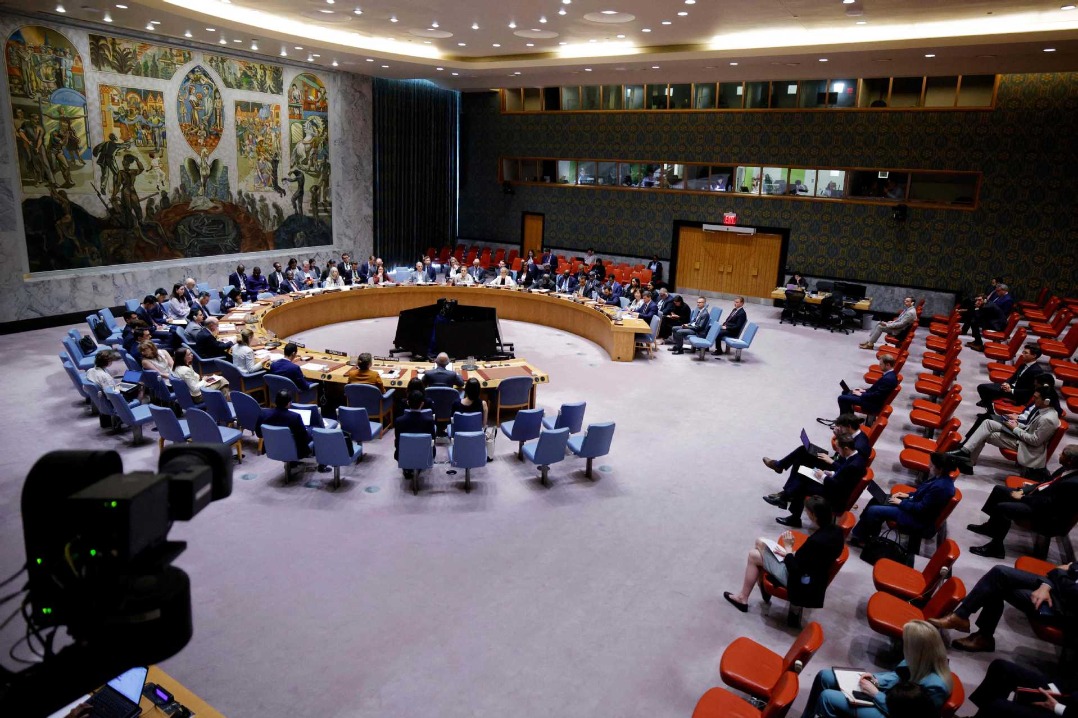
    Against a backdrop of intensifying cross-border attacks between Russia and Ukraine, a senior Chinese envoy to the United Nations has used a high-level Security Council meeting to reaffirm Beijing’s call for an immediate ceasefire and a negotiated political resolution to the ongoing Ukraine crisis.

    Sun Lei, charge d’affaires ad interim of China’s Permanent Mission to the UN, told the gathering that the unrelenting escalation of the Russia-Ukraine conflict serves no party’s interests, and only deepens civilian suffering and inflicts irreversible damage to critical civilian infrastructure.

    “The latest developments have once again proven that conflict and confrontation produce no winners,” Sun stated on Monday. He added that a rapid end to hostilities aligns with the core long-term interests of all involved parties, and matches the widespread desire for peace held across the global community.

    Sun’s remarks came just as the conflict saw a sharp uptick in violence over the 24-hour period spanning Monday and Tuesday. In the early hours of Tuesday, Moscow’s mayor confirmed that more than 390 Ukrainian drones had targeted the Moscow region overnight, with local authorities confirming damage to multiple residential properties. For its part, the Ukrainian Air Force reported that Russia launched more than 100 drones at Ukrainian targets between late Monday and early Tuesday.

    The spike in attacks also coincided with a scheduled high-stakes meeting between Ukrainian President Volodymyr Zelensky and U.S. President Donald Trump at the White House on Tuesday, a meeting that comes amid emerging reports of behind-the-scenes talks around a potential new peace initiative.

    In his address to the Security Council, Sun emphasized Beijing’s stance that all attacks targeting civilian populations must end immediately. He called on all belligerents to maintain calm and maximum restraint, adhere strictly to the provisions of international humanitarian law, prioritize the protection of civilians and civilian infrastructure, and take tangible steps to de-escalate tensions to keep the door open for a rapid return to peace.

    Russia has indicated it remains open to engaging with new proposals aimed at advancing the peace process, Russian Foreign Ministry spokesperson Maria Zakharova confirmed Monday. “We again confirm our readiness for possible discussions, proposals, ideas, which we will be ready to consider. No one here has ever refused this,” Zakharova said. She also claimed that Ukrainian strikes on Russian civilian areas had killed 86 people between July 15 and 24, and accused Western powers of abetting these attacks through continued large-scale arms supplies to Kyiv.

    Separate figures from the United Nations showed a sharp rise in civilian casualties in recent weeks. Kayoko Gotoh, director of the Europe and Central Asia Division of the UN Departments of Political and Peacebuilding Affairs and Peace Operations, told the meeting that more than 170 civilians have been killed in Russian aerial attacks across Ukraine since the Security Council last convened to discuss the crisis on July 9.

    Last week, a Ukrainian source disclosed to Reuters that U.S. and Ukrainian officials have been discussing a proposal for a limited air ceasefire that could be presented to Russian negotiators as a starting point for a new round of peace talks. The Kremlin, however, said Monday that it had not received any concrete details of this or any other new peace proposal.

    Closing his remarks, Sun stressed that the pursuit of common security must be at the center of any path out of the crisis, noting that Russia, Ukraine and all other European countries are permanent neighbors who cannot relocate or escape one another. Even with deep divides between the parties and significant challenges plaguing existing peace efforts, “Dialogue and negotiation remain the only viable way to resolve the crisis,” Sun said. “As long as the parties begin talks and remain committed to them, there is hope for peace.”

  • Dozens feared trapped in quake-hit Japan shopping mall

    Dozens feared trapped in quake-hit Japan shopping mall

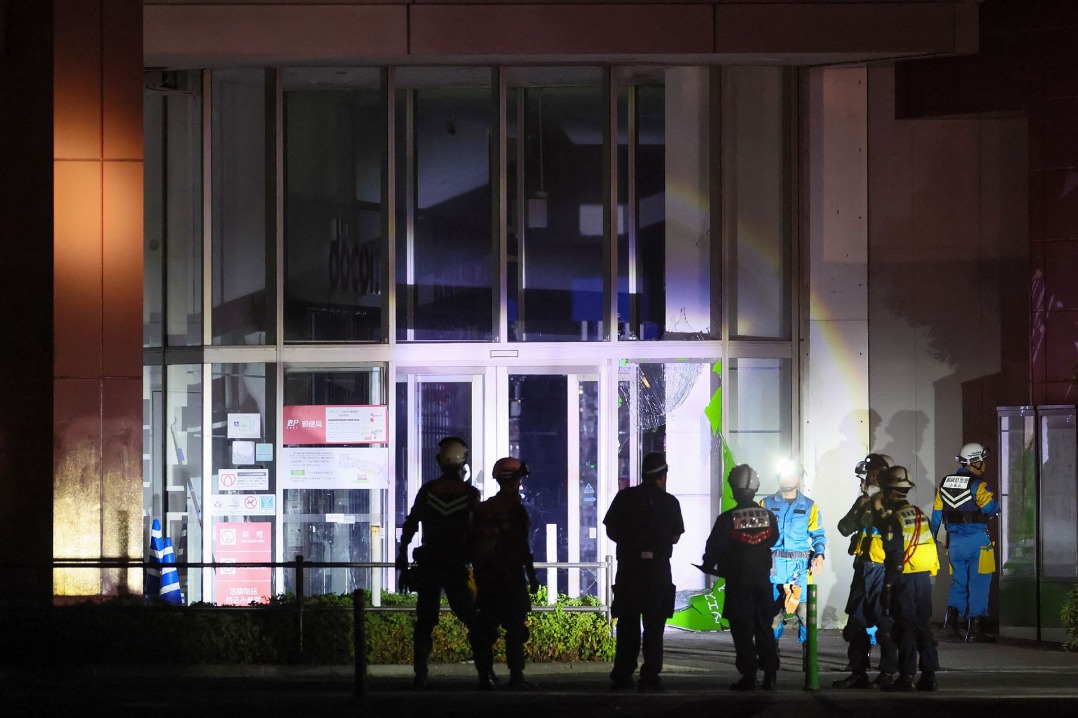
    On Tuesday, a powerful 7.1-magnitude earthquake shook southwestern Japan’s Kyushu Island, triggering widespread structural damage, multiple fires, and a developing emergency that has left dozens unaccounted for in a collapsed regional shopping mall. The Japan Meteorological Agency (JMA) recorded the tremor striking at 4:27 p.m. local time, registering a maximum intensity of 7 on Japan’s domestic Shindo intensity scale— the highest possible warning level for seismic activity, while the U.S. Geological Survey measured the quake at a magnitude of 6.8. A 6.1-magnitude aftershock followed just 41 minutes after the initial quake, adding to chaos across the affected region.

    The most urgent search-and-rescue operation is centered on a shopping mall in Kashima, where the building’s second floor collapsed during the tremor, according to local fire department statements. Japanese public broadcaster NHK, citing police sources, reports that between 20 and 30 mall employees remain unreachable, with footage showing fleets of emergency vehicles with flashing lights massed outside the damaged structure. Private broadcaster TBS has warned that a “considerable number” of fatalities may be confirmed inside the mall, though national police have not yet verified any deaths at the location. Kyodo News notes that four people were transported from the site to area hospitals, all arriving in conscious condition.

    Emergency response teams are also tracking multiple missing people at a paper manufacturing facility in Yatsushiro City, where the top of the plant’s chimney collapsed during the shaking. One confirmed fatality has been recorded: a resident killed when their private home collapsed, per Kyodo’s initial reporting. NHK’s on-the-ground footage from across Kumamoto Prefecture captures the full scope of the disaster: multiple active blazes, fractured and collapsed bridges, a derailed cargo train, and dozens of residential homes left teetering on the edge of collapse.

    Chiharu Hara, a 35-year-old recruitment agent working in Kumamoto, described the chaotic moments when the quake hit in an interview with Agence France-Presse. “The office swayed violently side-to-side. I was afraid it would collapse. Everyone panicked,” Hara said, adding that the experience left her “terrified.”

    Across the affected region, critical infrastructure has been severely disrupted. Major arterial roads have been closed to traffic, high-speed Shinkansen bullet train services were suspended immediately after the quake, and Kumamoto Airport halted all operations for several hours before reopening that evening. Two major local hospitals each reported admitting at least 50 injured patients, with staff overwhelmed by the steady flow of incoming casualties. “People are coming in with burns and fractures from being trapped under objects due to the earthquake, and ambulances are constantly bringing in injured people,” one hospital employee told NHK. “Inside the hospital, there are water leaks and electrical system failures.” Around 10 additional injuries were recorded at a local elderly nursing home.

    Japanese Prime Minister Sanae Takaichi confirmed that the disaster has caused “human casualties, building collapses, road damage, fires,” alongside widespread water and power outages across the prefecture. Japan’s Defense Ministry announced that 3,600 military personnel have been mobilized to lead disaster relief and search operations, with 20 aircraft deployed to conduct aerial damage assessments across the quake zone. The JMA initially issued a tsunami alert shortly after the quake, but canceled the warning at 6:10 p.m. local time after no dangerous sea level changes were recorded.

    This earthquake hits 10 years after a devastating pair of quakes struck the same Kumamoto region in 2016: a 6.5-magnitude tremor followed two days later by a 7.3-magnitude event that killed 273 people and injured more than 2,800. Located at the intersection of four major tectonic plates on the Pacific Ocean’s “Ring of Fire,” Japan is one of the most seismically active countries on Earth, recording hundreds of earthquakes annually. The vast majority of these events are minor and cause no significant damage, but large, destructive tremors remain a persistent threat to populated areas across the archipelago.

  • Trump’s new spy chief confirmed by Senate

    Trump’s new spy chief confirmed by Senate

    In a move that resolves weeks of political uncertainty over the top U.S. intelligence leadership post, the United States Senate has formally confirmed Jay Clayton as the nation’s next Director of National Intelligence, advancing President Donald Trump’s second pick for the role after his original nominee was rejected by bipartisan lawmakers.

    The final vote on Tuesday concluded with a narrow 51-49 margin in favor of Clayton, who will step into the role previously held on an acting basis by Bill Pulte. Pulte, a Trump loyalist who first took the interim post when former DNI Tulsi Gabbard departed the agency last month, drew fierce cross-partisan backlash shortly after his June appointment. Critics quickly raised red flags over Pulte’s total lack of national intelligence experience—his prior role was a federal housing regulator—and his controversial actions in that position, where he referred multiple of Trump’s political opponents for potential criminal prosecution and oversaw sweeping agency staffing cuts. Just hours before Clayton’s confirmation vote passed, Pulte took to social media platform X to announce he was implementing a fifth and near-final round of layoffs, bringing total staff reductions to roughly 30% from just a few weeks prior.

    Following the widespread bipartisan alarm over Pulte’s appointment, Trump quickly pivoted and nominated Clayton, a veteran federal law enforcement official with deep experience in high-profile national security and regulatory cases. Before being tapped for DNI, Clayton served as the U.S. Attorney for the Southern District of New York, where he led a number of high-stakes investigations, including a major drug trafficking prosecution against former Venezuelan President Nicholas Maduro. A former federal prosecutor and U.S. securities regulator, Clayton brings a decades-long record of public service in law enforcement to the intelligence role.

    President Trump voiced his full support for Clayton immediately after the confirmation vote, writing on his social media platform Truth Social that “Jay is outstanding in every way, and will do a spectacular job as Director!” The path to confirmation was not entirely smooth, however: Trump originally called off Clayton’s first scheduled confirmation hearing before the Senate Intelligence Committee on June 17, blaming lawmakers for allowing the broader Foreign Intelligence Surveillance Act (Fisa) to lapse temporarily.

    While initial reaction from congressional Democrats positioned Clayton as a far more conventional, mainstream pick than Pulte, shifting dynamics during his confirmation hearing earlier this month eroded much of that early optimism. During the hearing, Clayton faced repeated questioning from Democrats over the validity of the 2020 U.S. presidential election. In response, Clayton stated that Joe Biden had been formally certified as the 2020 election winner, adding that “I’m not an election denier.” Even so, Senate Intelligence Committee Vice Chair Mark Warner, a top Democrat, said he left the hearing with significant concerns about Clayton’s willingness to push back against political pressure from the White House. “I sincerely hope he proves those concerns unfounded, because the Intelligence Community deserves steadier leadership than it has received in recent months,” Warner said in a post-hearing statement.

    Beyond reshaping the leadership of the U.S. intelligence community, Clayton’s confirmation is widely expected to reopen stalled congressional negotiations over the reauthorization of Section 702 of FISA, a critical surveillance provision that allows U.S. intelligence agencies to collect communications of foreign targets located overseas without requiring individual warrants. Trump has been a vocal advocate for a long-term renewal of the controversial authority, and Senate Majority Leader John Thune, a Republican, noted Monday that he expects Clayton’s confirmation will break the current logjam on the legislation. “I hope [Clayton’s appointment] will encourage my colleagues to stop blocking reauthorisation of the Foreign Intelligence Surveillance Act,” Thune said.

  • Controversial segment on ABC depicting violence against billionaire Gina Rinehart referred to Ombudsman

    Controversial segment on ABC depicting violence against billionaire Gina Rinehart referred to Ombudsman

    Australia’s public broadcaster ABC has found itself mired in growing controversy after airing a graphic, violence-inciting short segment targeting one of the country’s most high-profile business figures, mining magnate Gina Rinehart. The incident has sparked cross-party criticism, forced the network into an internal review, and reignited long-running debates around editorial boundaries for public media.

    The contentious four-minute segment appeared as part of ABC’s long-running youth-focused documentary series *Race Around The World*. The short film closed with an explicit, grotesque voiceover that detailed a violent, fatal assault on Rinehart, describing in graphic detail how the attack would be carried out against the billionaire mining executive.

    Following the broadcast, Rinehart’s company Hancock Prospecting immediately issued a formal demand for ABC to issue a public apology and permanently remove the harmful segment from all its platforms. Initially, ABC stood by the content, releasing an official statement defending the segment as “editorially justifiable” and claiming the graphic violence was intended as political satire.

    But as public and political backlash mounted, ABC reversed course this week, announcing it would refer the entire matter to its internal independent Ombudsman for a full review. The ABC Ombudsman operates as an internal accountability body that reports directly to the broadcaster’s governing board, tasked with investigating complaints about editorial content and editorial decision-making.

    Australia’s federal Communications Minister Anika Wells weighed in on the controversy Wednesday, becoming the first senior government official to publicly condemn the segment. Wells, who holds ministerial oversight of the national broadcaster, confirmed that while she respects ABC’s legislated editorial independence, the content crossed a clear line.

    “My personal view is it unacceptable. Like any Australian, there’s stuff I see on TV that I don’t agree with,” Wells told reporters. “As the Minister for Communications, I respect the editorial independence of the ABC, but I understand they have now referred it to the Ombudsman. I think that was the right thing to do.”

    To date, Australia’s independent media regulator the Australian Communications and Media Authority has not announced any formal investigation or regulatory action into the broadcast, and has declined to comment on the ongoing internal review at ABC.