博客

  • Greenland row eases as tariffs shelved

    Greenland row eases as tariffs shelved

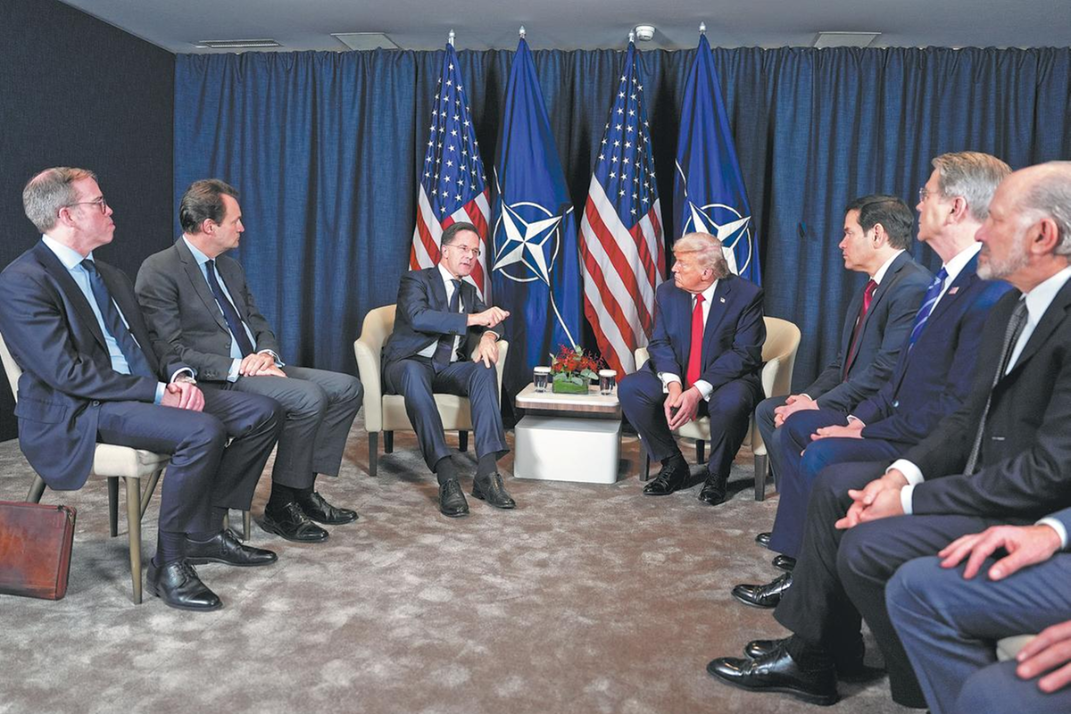
    A significant diplomatic confrontation between the United States and European allies over Greenland has been substantially de-escalated following high-level discussions at the World Economic Forum in Davos, Switzerland. President Donald Trump announced on Wednesday that he had established a “framework” for a future agreement concerning Greenland and the broader Arctic region through negotiations with NATO Secretary-General Mark Rutte.

    The breakthrough prompted the immediate withdrawal of threatened tariffs against eight European nations—the United Kingdom, Denmark, Norway, Sweden, France, Germany, the Netherlands, and Finland. These punitive measures, scheduled to commence on February 1st, had been proposed in response to European opposition to American ambitions regarding the Danish territory.

    President Trump characterized the developing arrangement as “the ultimate long-term deal” that would provide the United States with substantial strategic advantages, particularly in security and mineral access. He emphasized that the agreement contained “no time limit” and would theoretically endure indefinitely, though specific details remained undisclosed.

    However, Danish Prime Minister Mette Frederiksen promptly clarified that NATO possesses no authority to negotiate on Denmark’s behalf regarding Greenlandic sovereignty. “The position of Denmark and that of Greenland are the same, and no negotiations were held yesterday with NATO about our sovereignty,” she stated unequivocally in a television appearance.

    According to sources familiar with the discussions, the United States and Denmark will renegotiate their 1951 defense pact concerning Greenland, potentially allowing for enhanced American military presence while preserving Danish sovereignty. The agreement may grant Washington rights to mineral resources and involvement in maintaining the Golden Dome missile defense system.

    The European Parliament responded to the developments by suspending work on two legislative proposals related to EU-US trade relations, citing concerns over American “threats to territorial integrity and sovereignty.” Meanwhile, the Greenlandic government has issued emergency preparedness guidelines advising households to maintain five-day supplies of essential provisions, reflecting underlying tensions despite the diplomatic progress.
  • Winter camp solidifies cross-Strait youth ties

    Winter camp solidifies cross-Strait youth ties

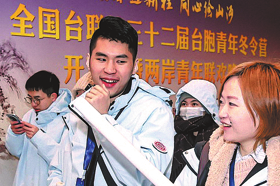
    HANGZHOU – More than 1,000 Taiwanese youth converged in Zhejiang province this week for the commencement of the 32nd Taiwan Compatriot Youth Winter Camp, marking a significant milestone in cross-Strait cultural diplomacy. The event, orchestrated by the All-China Federation of Taiwan Compatriots, unfolded at Zhejiang University’s Zijingang campus with an elaborate opening ceremony and cross-Strait youth gala.

    Ji Bin, leading official of the federation, characterized the organization as a ‘home for Taiwan compatriots’ during his keynote address. He emphasized the profound familial connections binding communities across the Strait, asserting that sustained youth exchanges substantially enhance mutual comprehension and emotional bonds. Ji encouraged attendees to immerse themselves in mainland China’s developmental landscape while forging enduring friendships that could inject youthful vitality into peaceful cross-Strait relations.

    Zhejiang University’s Deputy Party Secretary Fu Qiang outlined the institution’s longstanding commitment to educational collaboration with Taiwan, noting established partnerships with multiple Taiwanese universities and research institutes. The university has facilitated frequent faculty-student exchanges and expanding academic cooperation, with pledges to develop more diversified and sustainable platforms for cross-Strait engagement.

    Student representatives from both sides echoed these sentiments. A Taiwanese participant surnamed Yang highlighted shared linguistic heritage and cultural roots, while Zhejiang University volunteer Tang Kun emphasized common historical memories cultivated within the same cultural soil.

    The program features immersive experiences including campus tours, artificial intelligence lectures, and visits to innovation bases showcasing robotics and intelligent equipment. Participants will further explore Hangzhou’s Liangzhu Museum and Archaeological Ruins to examine Chinese civilization origins, alongside technological showcases at Hangzhou Future Sci-Tech City and Alibaba’s headquarters.

    Established in 1989, the winter camp has attracted over 9,000 Taiwanese youth throughout its history. This year’s edition expands across 24 mainland provincial regions, reinforcing its role as a crucial mechanism for fostering interpersonal connections and mutual learning among younger generations across the Strait.

  • Trump touts ‘massive’ US forces heading toward Iran

    Trump touts ‘massive’ US forces heading toward Iran

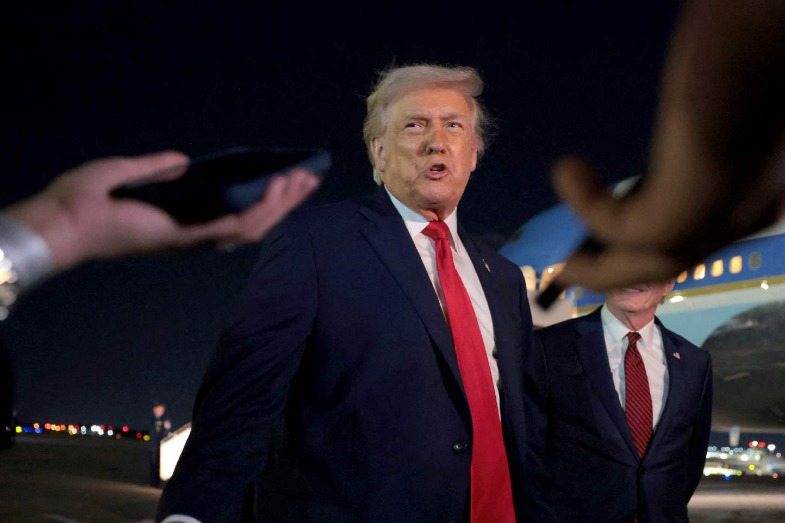
    President Donald Trump revealed on Thursday that the United States has dispatched a substantial naval contingent toward Iranian territorial waters, characterizing the movement as a precautionary measure amid ongoing regional tensions. The announcement came during the president’s return flight from the World Economic Forum in Davos, Switzerland, where he had engaged in diplomatic discussions with European allies.

    Speaking to journalists aboard Air Force One, Trump emphasized the scale of the deployment while suggesting the military presence might not necessitate active engagement. “We have a lot of ships going that direction just in case. We have a big flotilla going in that direction. And we’ll see what happens,” the president stated, adding that “We have an armada. We have a massive fleet heading in that direction, and maybe we won’t have to use it.”

    The naval mobilization occurs against a backdrop of heightened geopolitical friction in the Persian Gulf region, where Iran has been experiencing significant domestic unrest. While the president did not specify the exact composition of the naval force or its precise destination, the announcement represents the latest development in the complex relationship between Washington and Tehran.

    Analysts suggest the deployment serves both strategic and psychological purposes, demonstrating military capability while leaving operational intentions deliberately ambiguous. The timing following the Davos economic summit indicates the administration continues to prioritize security concerns alongside economic diplomacy.

  • Turkey celebrates as Syrian government makes gains against Kurdish-led force

    Turkey celebrates as Syrian government makes gains against Kurdish-led force

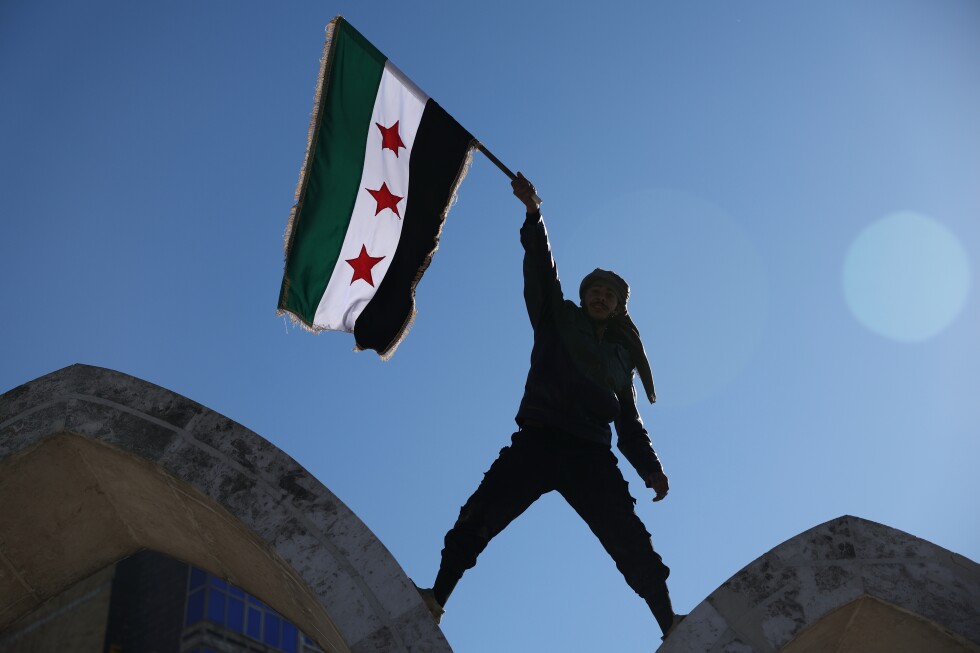
    ANKARA, Turkey — Turkey is witnessing a significant geopolitical shift in neighboring Syria following the swift collapse of the Kurdish-led Syrian Democratic Forces (SDF) under a new offensive by Damascus. The development marks a strategic triumph for Ankara, which has long considered Kurdish militias as direct threats to national security.

    The SDF, once the primary U.S. ally in the fight against the Islamic State, lost substantial territory in northern Syria within just two weeks. Facing military pressure from interim President Ahmad al-Sharaa’s government, the group agreed to dissolve and integrate its fighters individually into the Syrian national military—a move that effectively ends its autonomous presence.

    Turkey’s support for al-Sharaa’s administration has been instrumental. Turkish intelligence provided operational guidance during the offensive, facilitating SDF withdrawals from key areas like Aleppo while coordinating with the U.S.-led international coalition to minimize civilian casualties. President Recep Tayyip Erdoğan publicly praised the Syrian government, emphasizing Turkey’s commitment to a unified Syria free of separatist entities along its border.

    Washington’s decision not to intervene on behalf of the SDF signalled a major policy shift, aligning U.S. interests with the consolidation of Syria’s central government. Analysts attribute this change partly to Erdoğan’s diplomatic rapport with U.S. leadership and a strategic pivot toward engaging state actors rather than non-state armed groups.

    The dissolution of the SDF also strengthens Turkey’s domestic peace process with the Kurdistan Workers’ Party (PKK), which began disarming earlier this year. With the SDF neutralized, a major obstacle to reconciliation is removed—though concerns remain regarding potential backlash among Turkey’s Kurdish population.

    Despite calls from some SDF representatives for Israeli intervention, regional dynamics remained stable following behind-the-scenes agreements between Syria and Israel, further isolating the Kurdish force and enabling its rapid integration into state structures.

  • Canadian PM rejects Trump’s claim of US dependence

    Canadian PM rejects Trump’s claim of US dependence

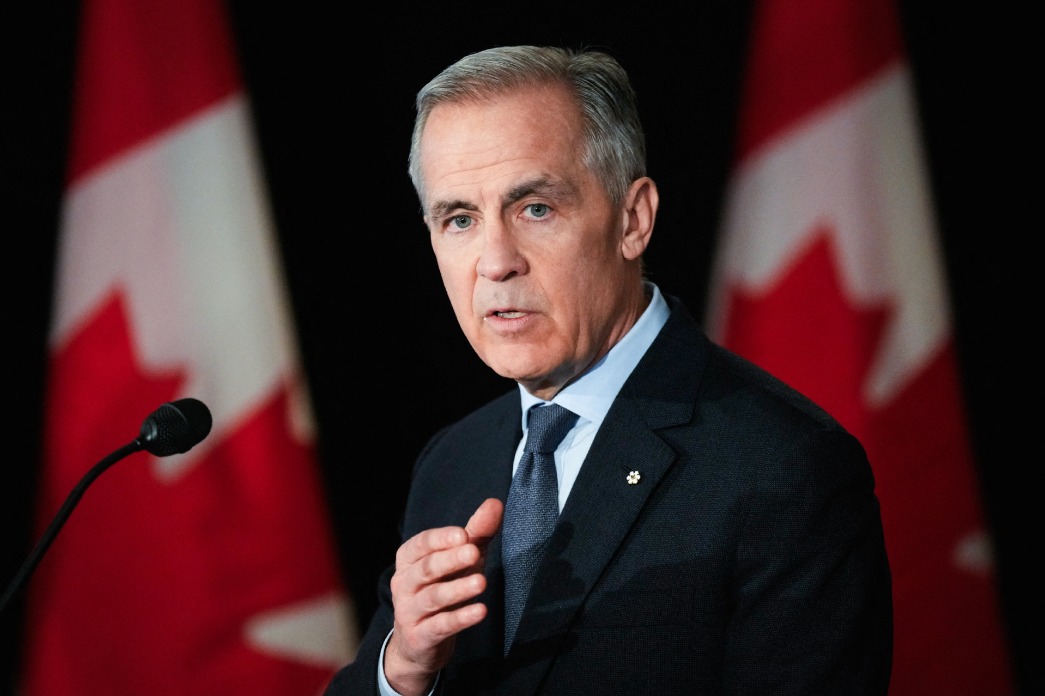
    In a robust diplomatic rejoinder, Canadian Prime Minister Mark Carney has publicly challenged recent remarks by former U.S. President Donald Trump suggesting Canadian existence depends entirely on the United States. The Prime Minister delivered his response during an address in Quebec City on Thursday, following Trump’s controversial statements at the World Economic Forum in Davos, Switzerland.

    Trump had asserted during the global economic gathering that “Canada lives because of the United States,” a characterization that prompted swift clarification from Canadian leadership. Prime Minister Carney, while acknowledging the special relationship between the neighboring nations, emphasized Canada’s autonomous sovereignty and distinct national identity.

    “Canada and the United States have cultivated an extraordinary partnership that spans economic cooperation, security collaboration, and vibrant cultural exchange,” Carney stated. “However, the premise that Canada exists solely because of the United States fundamentally misrepresents our relationship. Canada prospers not through dependency, but through the resilience, innovation, and distinct character of the Canadian people.”

    The exchange marks another chapter in the complex diplomatic dynamic between the two North American allies, particularly during periods when Trump’s unconventional foreign policy approach creates international tension. Carney’s response carefully balanced respect for the bilateral relationship with a firm assertion of Canadian national sovereignty, avoiding direct confrontation while clearly establishing Canada’s independent standing on the world stage.

    Political analysts suggest such public disagreements, while diplomatically sensitive, reflect Canada’s ongoing commitment to maintaining its distinct international identity while navigating its crucial relationship with its southern neighbor. The incident underscores the delicate balance Canadian leaders must strike in responding to provocative statements from U.S. political figures while preserving the fundamentally important cross-border partnership.

  • ‘He kept fighting’: Brave friend of shark attack survivor Nico Antic reveals moment he leapt into water to save his mate

    ‘He kept fighting’: Brave friend of shark attack survivor Nico Antic reveals moment he leapt into water to save his mate

    A harrowing tale of adolescent bravery has emerged from Sydney’s coastline, where a young companion risked his own safety to rescue a friend during a traumatic shark encounter. The incident, involving 12-year-old Nico Antic, occurred last Sunday afternoon while he was rock jumping with peers at Hermitage Foreshore Walk near Shark Beach in Vaucluse.

    According to eyewitness accounts, one of Nico’s friends demonstrated extraordinary courage by entering the water despite the visible presence of the predator to drag the injured boy to safety. “He kept fighting and breathing in my arms and he never gave up for a second,” the rescuer told 7News, describing Nico as “the most stubborn person I know.”

    The attack formed part of a concerning pattern along New South Wales coastline, with three additional shark incidents reported within the same week. These included an 11-year-old surfer whose board was damaged at Dee Why Point, 27-year-old surfer Andre de Ruyter encountering a shark at Manly Beach, and 39-year-old Paul Zvirzdinas being knocked from his board near Port Macquarie.

    Emergency response teams provided critical first aid before transporting Nico via boat to Rose Bay and subsequently to the Children’s Hospital in Randwick. NSW Police Superintendent Joseph McNulty publicly commended the “brave” actions of the young rescuers, noting the “very confronting injuries” they faced during the rescue.

    Community support has surged through a GoFundMe campaign organized by family friend Victor Piñeiro, which has raised over $224,000 of its $250,000 target to assist with medical expenses and related costs. The fundraiser description noted Nico had sustained “devastating injuries” from the encounter.

    In response to the incidents, Northern Beaches Council implemented temporary beach closures but has since reopened facilities ahead of the Australia Day long weekend with enhanced safety measures. These include increased aerial surveillance, jet ski patrols, additional drum lines, and reactivated lifeguard services. Mayor Sue Heins emphasized the importance of swimming between flags and heeding lifeguard instructions during this period of heightened shark activity.

  • Geothermal energy keeps Shandong town toasty

    Geothermal energy keeps Shandong town toasty

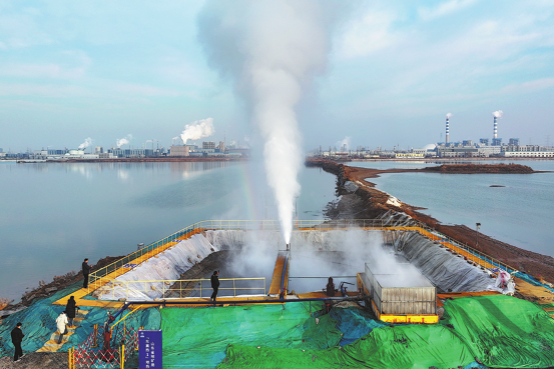
    In the frosty climate of the Yellow River estuary, resident Xing Yan experiences unprecedented winter comfort without conventional heating systems. His home maintains ideal temperatures through pioneering geothermal technology tapping into energy sources nearly two kilometers beneath the Earth’s surface.

    Niuzhuang township in Dongying, Shandong province, sits above extraordinary geothermal reservoirs where subterranean waters reach 85°C. The town’s heating facility operates through massive plate heat exchangers that transform 82°C geothermal water into 60°C heating fluid distributed through municipal pipelines.

    This renewable energy system now serves all 13 urban residential compounds, three rural communities, and over 60 institutions throughout Niuzhuang. Covering 750,000 square meters—98% of the town’s heating needs—the geothermal network benefits approximately 22,000 residents across 7,000 households.

    The environmental impact proves substantial: annual savings of 34,000 metric tons of standard coal and reduction of carbon emissions by roughly 80,000 tons. Unlike weather-dependent renewables, geothermal energy provides consistent baseload power unaffected by seasonal or diurnal variations.

    Local businesses report significant benefits. Shandong Shuangfu Flowers Company utilizes geothermal heating across 100,000 square meters of greenhouses, maintaining optimal 26°C conditions for year-round orchid cultivation. General Manager Li Binghai confirms heating costs dropped by 15 yuan per square meter, creating 25 yuan per square meter savings compared to coal heating.

    “Beyond cost reduction, geothermal provides unprecedented temperature stability,” Li noted. “We now control greenhouse climates via smartphone, extending flowering periods and enabling new variety development.” The company exports orchids to Vietnam, Russia, and Uzbekistan.

    Shang Xinjian, director of Niuzhuang’s construction service center, explains the multi-tier utilization system: 80°C water extracted from 1,950-meter depths first heats residential areas, then circulates 50°C tailwater to agricultural greenhouses before being reinjected underground, creating a closed-loop conservation system.

    China possesses enormous geothermal potential, with hydrothermal resources equivalent to 1.25 trillion tons of standard coal and annual exploitable capacity matching 1.86 billion tons. The nation leads global geothermal utilization efforts.

    Future plans include expanding geothermal applications to agricultural product drying and aquaculture, establishing integrated industrial chains combining advanced farming, processing, and leisure industries. As Deputy Party Chief Song Ke stated: “This subterranean treasure will bring continued warmth and development opportunities to our community.”

  • Leopard matriarch builds four-generation dynasty

    Leopard matriarch builds four-generation dynasty

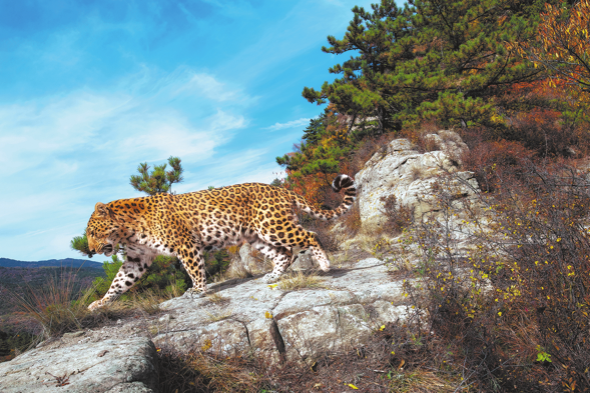
    In an extraordinary wildlife conservation breakthrough, a decade-old North China leopard designated F9 has defied biological expectations by establishing the nation’s first documented four-generation leopard dynasty. This remarkable matriarch, residing in the Taihang Mountains of Shanxi province, has not only become a great-grandmother but also successfully delivered three new cubs in 2025 despite her advanced age.

    The conservation organization Chinese Felid Conservation Alliance reported that F9’s story carries profound scientific significance as her thriving lineage exists primarily outside formal protected areas, spanning multiple villages in Heshun county. First identified in June 2016 through infrared camera footage that captured her distinctive curled tail tip, this feline has surpassed all expectations by building a multi-generational legacy in the wild.

    Her reproductive journey began in 2019 when infrared cameras captured her guiding three cubs—two females and one male—through their forest habitat. The dynasty expanded in 2022 when her eldest daughter, F26, was photographed with her own three cubs. The latest generational milestone occurred in late 2024 when F26’s daughter, nicknamed Pingping, was documented tenderly guiding her own offspring through moonlit forests.

    At approximately 10 years old (equivalent to human early 60s), F9 has produced six known litters totaling 11 cubs, with four already establishing independent territories within the Heshun mountains. Her descendants demonstrate remarkable expansion patterns: her eldest son M16 now dominates the nearby Qingcheng forest area, while granddaughter Pingping has crossed County Highway 337 to establish territory further east.

    This conservation success story stems from collaborative efforts between local authorities, research institutions, and community members. Since 2013, approximately 1,200 square kilometers in western Heshun have been designated as an ecological protection zone with stringent restrictions on polluting industries and large-scale development. The Laobaozi patrol team, established in 2015 with 20 local members, actively conducts biodiversity surveys, anti-poaching patrols, and community education.

    The North China leopard, a leopard subspecies native to China, receives top national-level protection and was included on the IUCN Red List of Threatened Species in 2012. Heshun county has been identified as a vital habitat, with 89 adult leopards documented between 2015-2020, though fewer than 400 are estimated to remain in the wild globally.

  • Researchers break robot ’emotional barrier’

    Researchers break robot ’emotional barrier’

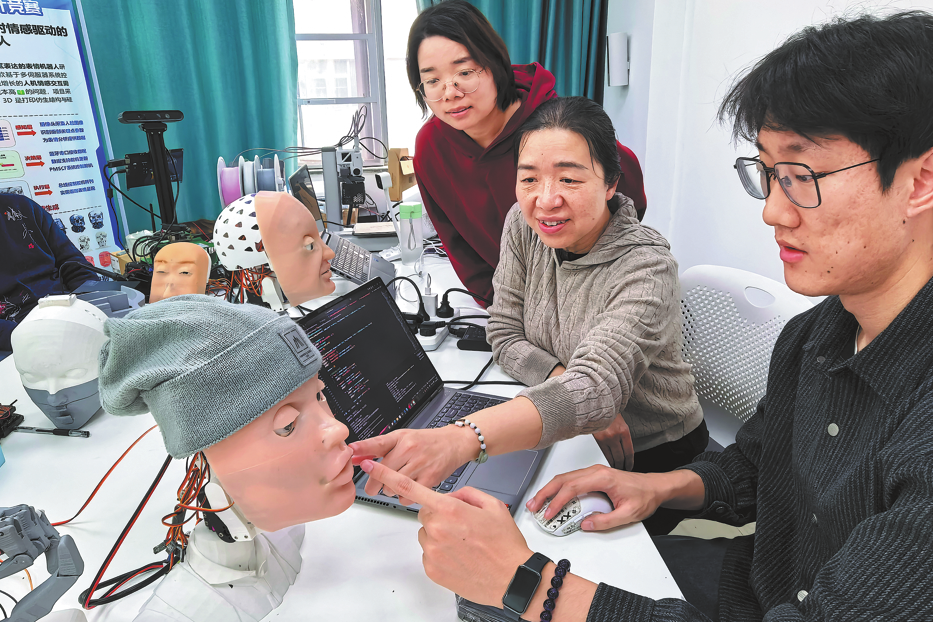
    A groundbreaking advancement in human-robot interaction has emerged from Wuhan’s Huazhong University of Science and Technology, where engineers have developed a sophisticated system capable of decoding and replicating complex human emotions with unprecedented accuracy. Led by Professor Yu Li, the research team has created algorithmic technology that analyzes subtle facial muscle movements to interpret emotional states, representing a significant leap forward in bridging the communication divide between humans and machines.

    The system operates by identifying distinct facial “action units” – minute muscular contractions around the eyes, nose, and mouth that form the visual language of human expression. Through high-precision algorithms, the technology can recognize seven fundamental emotions (anger, disgust, fear, happiness, sadness, surprise, and neutral) with 95% accuracy in real-world conditions. More impressively, it deciphers 15 compound expressions – blended emotional states like ‘happily surprised’ or ‘fearfully disgusted’ – with 70% precision, a rate described as exceptional within current AI capabilities.

    Professor Yu explains the technological breakthrough: “The human face contains dozens of action units corresponding to specific muscle movements. While happiness typically involves raised cheeks and upturned mouth corners, anger manifests through furrowed brows and tightened eyelids. Our system captures these detailed movements while filtering out individual physiological variations, enabling accurate emotional categorization.”

    The innovation extends beyond digital recognition into physical embodiment. The team’s robots feature 20 movable facial points that combine through specialized mechanical systems to produce naturalistic expressions. Unlike traditional robots limited to simplistic mouth movements, these machines achieve three-dimensional lip motion capable of reproducing 46 phonemes and nearly 20 distinct mouth shapes. Enhanced linkage mechanisms for nasal alae, cheeks, and malar regions enable subtle expressions like laughing and crying without the unnatural “segmented movement” typical of robotic faces.

    Real-world applications are already underway. The technology has been deployed in dozens of Chinese schools as digital psychological consultants that adjust responses based on students’ facial cues. In residential communities, these robots serve as emotional companions for isolated seniors, providing “natural, credible and comfortable” interactions when human companionship is unavailable. Expansion into commercial spaces, banking environments, and metaverse platforms is anticipated in the near future.

    Despite these advancements, Professor Yu emphasizes an important distinction: “Understanding emotion does not mean the robot itself has emotions. This technology provides care and support functions but should never replace genuine human social exchanges.” The research earned second prize in Hubei province’s technological invention awards in January, signaling recognition for its potential to transform human-machine interaction while maintaining ethical boundaries.

  • US-TikTok deal: A new reality for China’s tech champions?

    US-TikTok deal: A new reality for China’s tech champions?

    TikTok’s journey through the American regulatory landscape represents a watershed moment for Chinese technology expansion globally. With approximately one-seventh of the world’s population actively using the platform, its parent company ByteDance has navigated a complex maze of national security concerns that first emerged during the Trump administration’s initial term.

    The resolution came through an unprecedented arrangement: ByteDance will maintain partial ownership while establishing a separate U.S. entity through a consortium that includes Oracle. This restructuring effectively severs the American operation from its global network, addressing longstanding apprehensions regarding data sovereignty and potential foreign influence. The agreement mandates that U.S. user data will reside on domestic servers under American oversight, with ByteDance licensing rather than controlling the critical algorithm that powers the platform’s content delivery system.

    Industry analysts highlight the profound implications of this separation. Kelsey Chickering, Principal Analyst at Forrester, notes: ‘The platform’s core strength resides in its content graph—an sophisticated algorithm that processes thousands of user signals to deliver precisely targeted, engaging videos. Retraining this system exclusively on domestic data will fundamentally alter the user experience.’

    The financial architecture of the deal, valued at approximately $14 billion by the Trump administration, allows ByteDance to retain a 19.9% stake in the U.S. operation while relinquishing direct control over data management and algorithmic functions. This compromise enables continued access to America’s 200 million users and 7.5 million business accounts, though under significantly constrained conditions.

    From a strategic perspective, this arrangement mirrors broader geopolitical tensions between Washington and Beijing. Rather than representing an outright victory for either nation, the outcome demonstrates how technology platforms become negotiating chips in larger trade discussions. China can position the outcome favorably—exporting technology on negotiated terms while gaining leverage in other diplomatic areas.

    The operational consequences are substantial. Maintaining parallel algorithms for U.S. and global markets, divided development teams, and separate governance structures will inevitably increase engineering costs, slow innovation cycles, and create operational complexities according to technology architecture experts.

    For content creators and advertisers, the segmentation threatens to diminish the organic global virality that previously characterized TikTok’s ecosystem. Content that gained traction in one region could naturally proliferate across borders, but the newly fragmented system may require redesigned marketing strategies and potentially increased expenditures for U.S. market penetration.

    This development follows ByteDance’s earlier experience in India, where the complete prohibition of TikTok and approximately 200 other Chinese applications created opportunities for domestic alternatives—though none have achieved comparable market dominance. The current U.S. approach reflects an evolving strategy toward Chinese technology firms: rather than comprehensive exclusion, regulated operation within strictly defined parameters.

    While TikTok adapts to these international constraints, its sister application Douyin continues to thrive within China’s domestic market. This parallel success demonstrates ByteDance’s strategic diversification—maintaining a profitable, politically aligned platform at home while navigating increasingly complex global expansion challenges.

    Looking forward, this licensing model may establish a precedent for how Chinese technology companies operate in Western markets amid growing skepticism regarding data security and geopolitical influence. The fundamental question has shifted from data protection to cultural sovereignty—specifically, which nation controls the mechanisms shaping speech, trends, and cultural exchange through digital platforms.